Shorter assembly times, a Golf R with 270 PS and a Cabriolet that opened in 9.5 seconds, all on a platform shared with the Mk5.
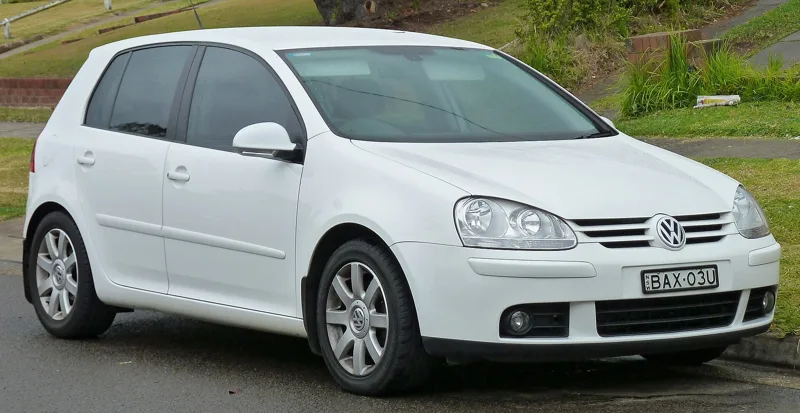
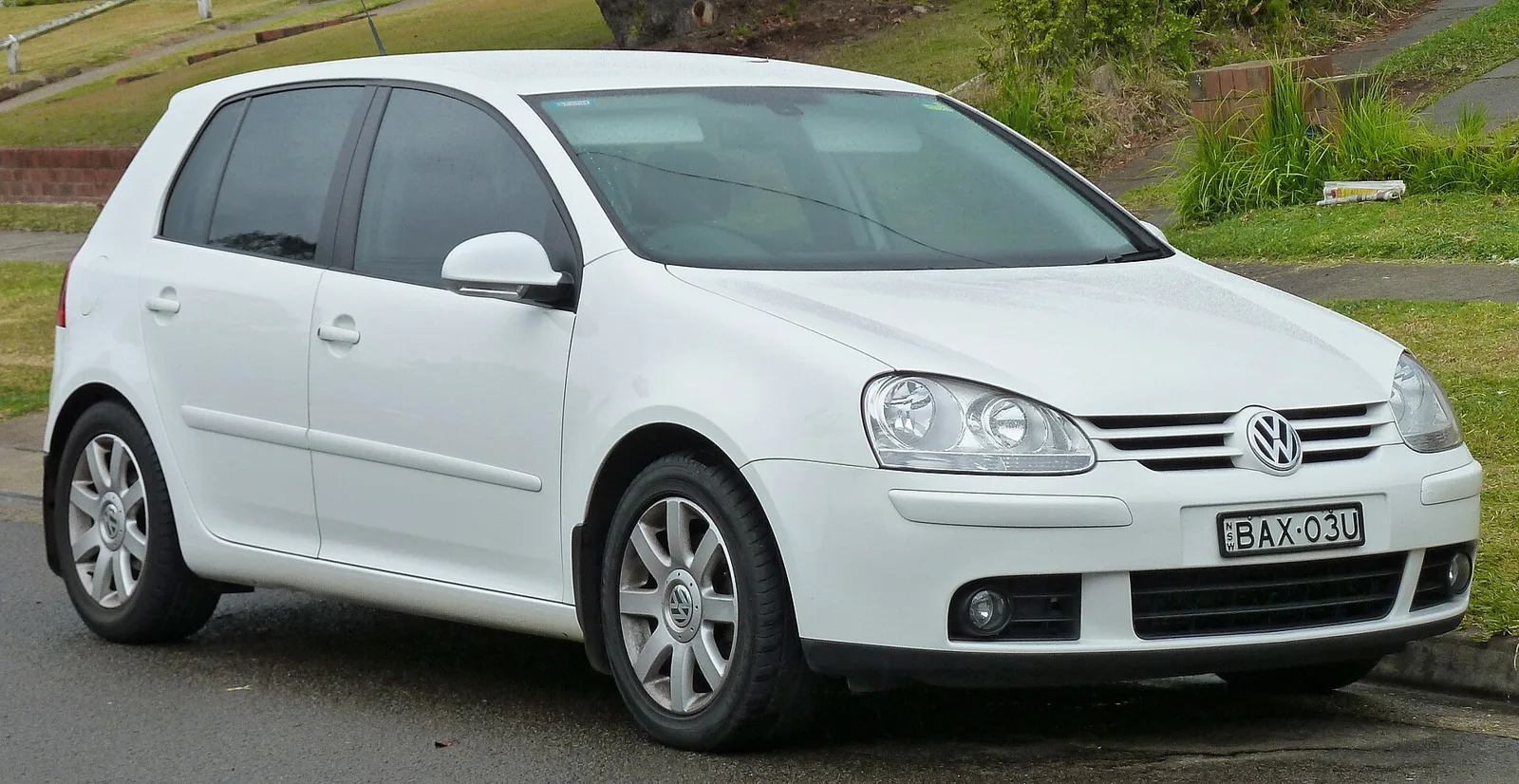
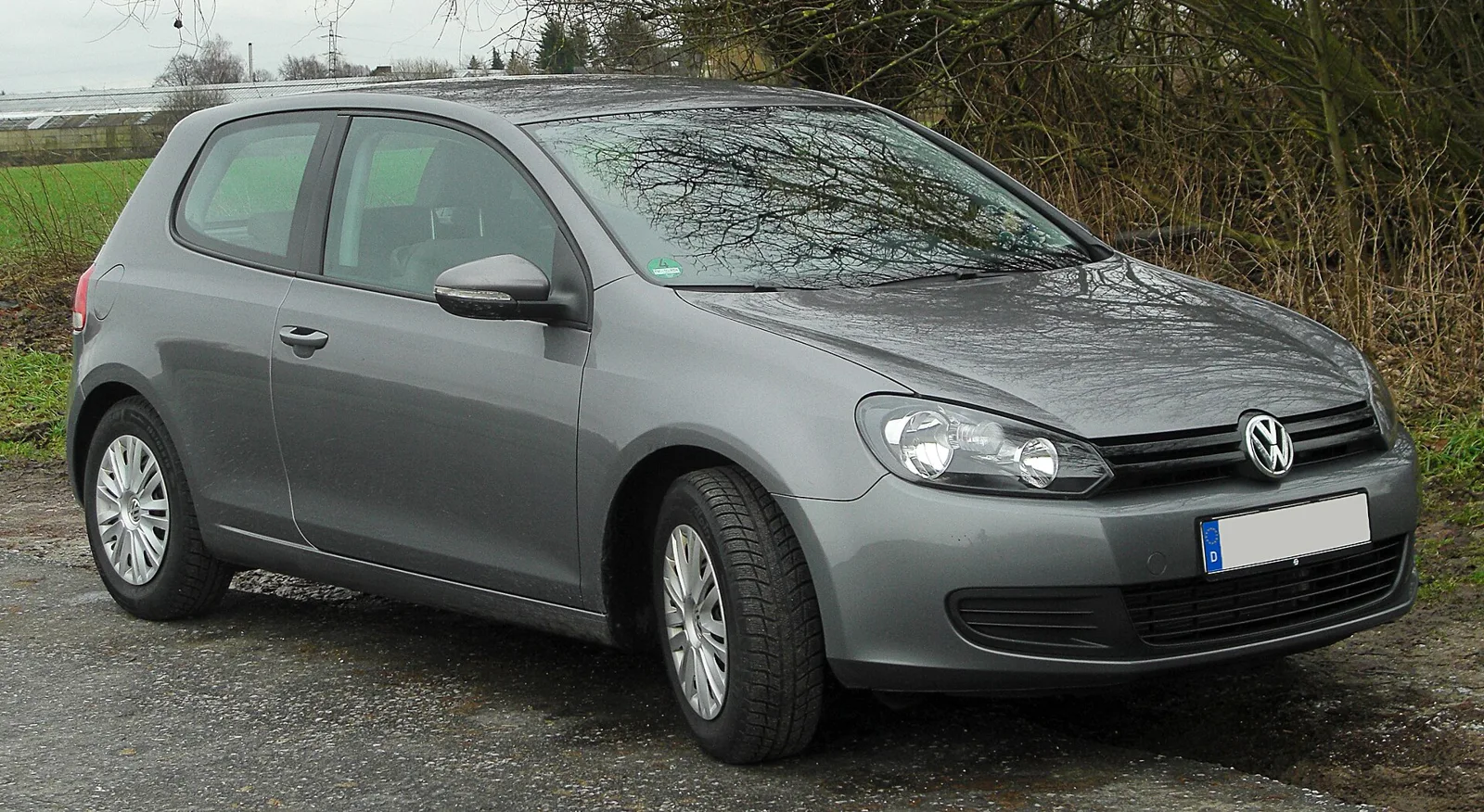
The Volkswagen Golf Mk6 was the sixth-generation Golf, unveiled in Paris in October 2008 and sold in Europe from late 2008. Built on the PQ35 platform, it was a re-engineered facelift of the Mk5 that cut assembly time, and it remained in production until the Mk7 replaced it in January 2013.
The Volkswagen Golf Mk6 is the sixth generation of the Golf, with the code name Typ 5K. It debuted in Paris in October 2008 as a 2009 model, and sales began in Europe in late 2008. Built on the PQ35 platform used by its predecessor, it was in effect a re-engineered facelift, and the Mk7 replaced it in January 2013.
What changed from the Mk5?
Very little under the skin. Volkswagen re-engineered the car to shorten assembly time and save money, and it claimed productivity rose by nearly 20 percent at launch, with further gains planned for the first year of production. The changes also answered complaints that the Mk5 interior felt cheapened compared with the Mk4 and Mk3.
Volkswagen said it had invested in production efficiency. The 2009 model year also became part of the Dieselgate scandal, which is a reminder that a model's history can be shaped by events outside its engineering.
Little changed under the skin, yet the Mk6 showed that a well-engineered Golf could still deliver a 270 PS flagship.
Which engines did the Mk6 use in North America?
North American showrooms received the car in October 2009 as the Volkswagen Golf, dropping the Rabbit badge used on the Mk5. The name change was the most visible difference, and the engines carried over from the earlier car, including the 2.0-litre TDI diesel.
The 2.5-litre five-cylinder came from the Mk5 Rabbit and Jetta, and the GTI used the 2.0-litre TSI. The GTI and TDI kept six-speed manuals, while the 2.5-litre took a five-speed manual, and its automatic was a six-speed Tiptronic.
In 2009 the company spoke confidently of a BlueMotion low-emission Golf for Germany, and it hinted that alternative fuels would appear in later products.
What was the Golf R?
The Golf R arrived at the Frankfurt IAA show on 15 September 2009 as the replacement for the R32. Its 1,984 cc turbocharged FSI four produced 270 PS (266 bhp; 199 kW) at 6,000 rpm, with 350 Nm of torque from 2,500 to 5,000 rpm.
Volkswagen claimed 0-100 km/h in 5.5 seconds for DSG-equipped cars and 5.7 seconds for the manual. The car used a revised fourth-generation Haldex 4motion all-wheel drive system, which was newer than the one fitted to the R32.
Hot-climate markets got a tuned-down car, with 256 PS (188 kW; 252 bhp) and 330 Nm of torque in place of the standard 270 PS and 350 Nm.
The United States received the Golf R from 2012, in two-door and four-door bodies, without the DSG transmission. Its engine was slightly detuned to 191 kW (256 hp) with 329 Nm. Canada got only a four-door version, with a six-speed manual.
What did the Cabriolet add?
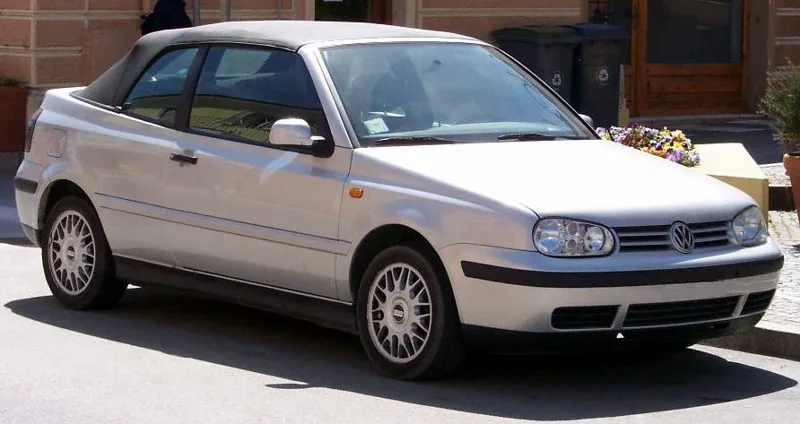
The Golf Cabriolet appeared at the 2011 Geneva International Motor Show as the first Golf convertible since 2002. Its four-seat soft top opens electro-hydraulically in 9.5 seconds, and the roof can be raised or lowered while driving below 30 km/h (19 mph).
Six turbocharged direct-injection engines powered the range, with outputs spanning 105 PS (77 kW; 103 hp) up to 211 PS (155 kW; 208 hp). Four TSI petrols and one TDI diesel could be paired with DSG, and three engines came with BlueMotion technology. A Cabriolet GTI with a 2.0-litre four was announced in February 2012. Volkswagen said in October 2016 that the Cabriolet would leave UK showrooms for financial reasons.
The convertible's styling matched the three-door hatchback, but it had a lower roofline and a more swept-back windscreen frame. Its rear lights were LED units, which were offered only on the R and GTI hatchbacks.
Was the wagon a new body?
The station wagon was a facelifted Mk5 Variant, with the Mk6 front fascia, interior styling and powertrain fitted to a body shell and underpinnings from the earlier car. It was sold as the Jetta SportWagen in the United States, the Golf Wagon in Canada and Mexico, and the Jetta Variant or Vento Variant in South America.
The Golf Plus was also facelifted, in December 2008 at the Bologna Motor Show. It kept the Mk5 rear end and interior but gained a front end like the Mk6. The Golf Plus gave way in 2014 to the Golf Sportsvan, which sat on the MQB platform.
The station wagon was also the only Golf model built in Mexico for North America, and it was restyled from the Mk5 car.
Which markets received the Mk6 first?
Europe came first, with late 2008 sales. Australians first saw the Mk6 at Melbourne's motor show, which opened on 27 February 2009, and the GTI reached showrooms there on 30 October 2009. South Africa and Japan took the Golf in April 2009, with their GTIs following that year.
The Golf won the Wheels Car of the Year title in Australia on 19 January 2010, the first win for the Golf since 1976. A 1.2-litre base car followed in September 2010, with sales starting in 2011.
In China, FAW-VW began building the Mk6 for the 2010 model year, replacing the Mk4 and the Bora HS. The local GTI used a 2.0-litre TSI rated 149 kW (200 hp), and production ended in 2013, when the Mk7 took over.
Mexico sold only a three-door GTI and the Mexican-built SportWagen until August 2011, when a five-door Comfortline with a 1.4 TSI was added. Chile presented the car in October 2010 with a 1.6-litre petrol engine, while India's launch was suspended to protect sales of the Vento.
How safe was the Mk6?
Seven airbags were standard, rising to nine in Europe and eight in the United States, and electronic stability programme came as standard. The car scored 36 out of 37 points for occupant protection, earning a five-star rating from Euro NCAP.
The car was one of the safest in its class when it arrived, and the Euro NCAP panel awarded it the Safest Car title for 2009.
What awards did the Mk6 win?
The Mk6 was named 2009 World Car of the Year, and Euro NCAP's safest-car honour went to it for the same year. It also took Australia's Wheels accolade, plus the Canadian and South African car of the year awards in 2010. Automobile Magazine named the GTI its 2010 Car of the Year.
Other honours included Best Performance Car under $60,000 in Australia for the GTI, Japan's Import Car of the Year for 2009 to 2010, and What Car? Best Small Family Car in Britain in 2009, 2010, 2011 and 2012. The 1.4 TSI engine won International Engine of the Year and Green Engine of the Year.
Which concept cars came before the Mk6?
The Twin Drive plug-in concept, announced by chief executive Martin Winterkorn in 2008, paired a 2.0-litre 122 PS turbodiesel with an 82 PS electric motor. It promised about 50 km of battery running and a combined output of 174 PS. The GTI Worthersee 09 concept added a tuned 2.0-litre TSI putting out 211 PS (155 kW; 208 bhp).
Volkswagen planned to develop Twin Drive with eight German partners and a trial fleet of 20 Golfs in 2010. A production version was expected to use a 1.5-litre turbodiesel and an electric motor, with an estimated arrival of 2015. It never reached showrooms in that form.
The Worthersee 09 car was a Firespark Metallic red machine with GTI stripes, high-gloss black 19-inch alloy wheels, smoked LED taillights and a lowered chassis. It was quoted at 6.9 seconds to 100 km/h and 238 km/h (148 mph) flat out.
How did the Golf24 race at the Nurburgring?
To celebrate the GTI's 35th anniversary, Volkswagen Motorsport entered three Golf24 cars in the 2011 24 Hours Nurburgring. Each used a 2.5-litre five-cylinder turbo rated at 441 PS (324 kW; 434 hp), with permanent four-wheel drive and a sequential six-speed gearbox.
In the third VLN race of 2011 a Golf24 placed sixth overall, and its quickest lap trailed the fastest race lap by nine seconds. That benchmark was set by a Ferrari 458. In the 24-hour race, the team hoped for rain. None of the three cars finished: one suffered a pit-entry accident, another blew a gearbox, and the third was retired after its gearbox began to overheat.
On the track, APR Motorsport led two MKVI GTIs to victory in the Grand-Am and Continental Tire Street Tuner classes.
Specifications at a glance
| Specification | Detail |
|---|---|
| Platform | Volkswagen Group A5 (PQ35) |
| Unveiled | Paris Motor Show, October 2008 |
| Golf R engine | 1,984 cc turbocharged FSI inline-four |
| Golf R output | 270 PS (266 bhp; 199 kW) at 6,000 rpm |
| Golf R torque | 350 Nm from 2,500 to 5,000 rpm |
| Golf R 0-100 km/h | 5.5 seconds with DSG, 5.7 with manual |
| Cabriolet roof | 9.5 seconds, electro-hydraulic |
| GTI Edition 35 | 232 bhp, 0-62 mph in 6.6 seconds |
| China GTI engine | 2.0-litre TSI, 149 kW (200 hp) |
| Euro NCAP | Five stars, 36 out of 37 points |
| Productivity gain at launch | Nearly 20 percent |