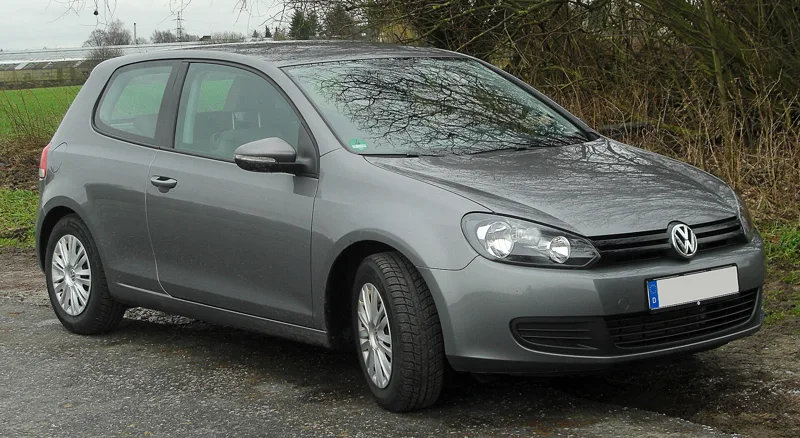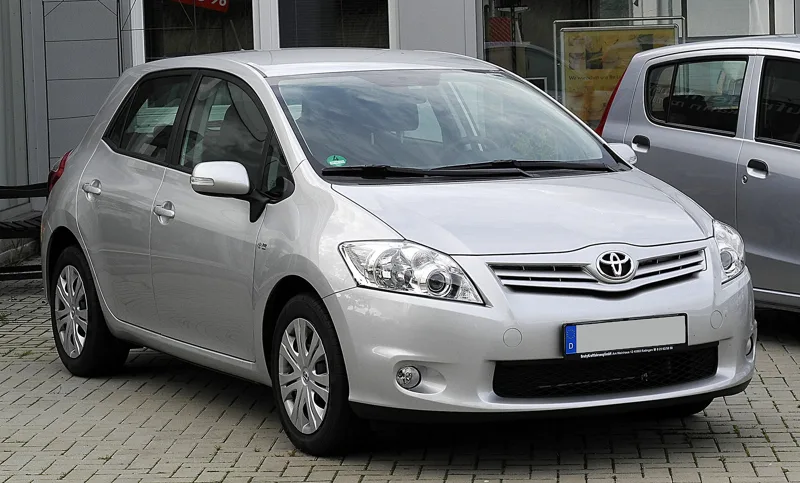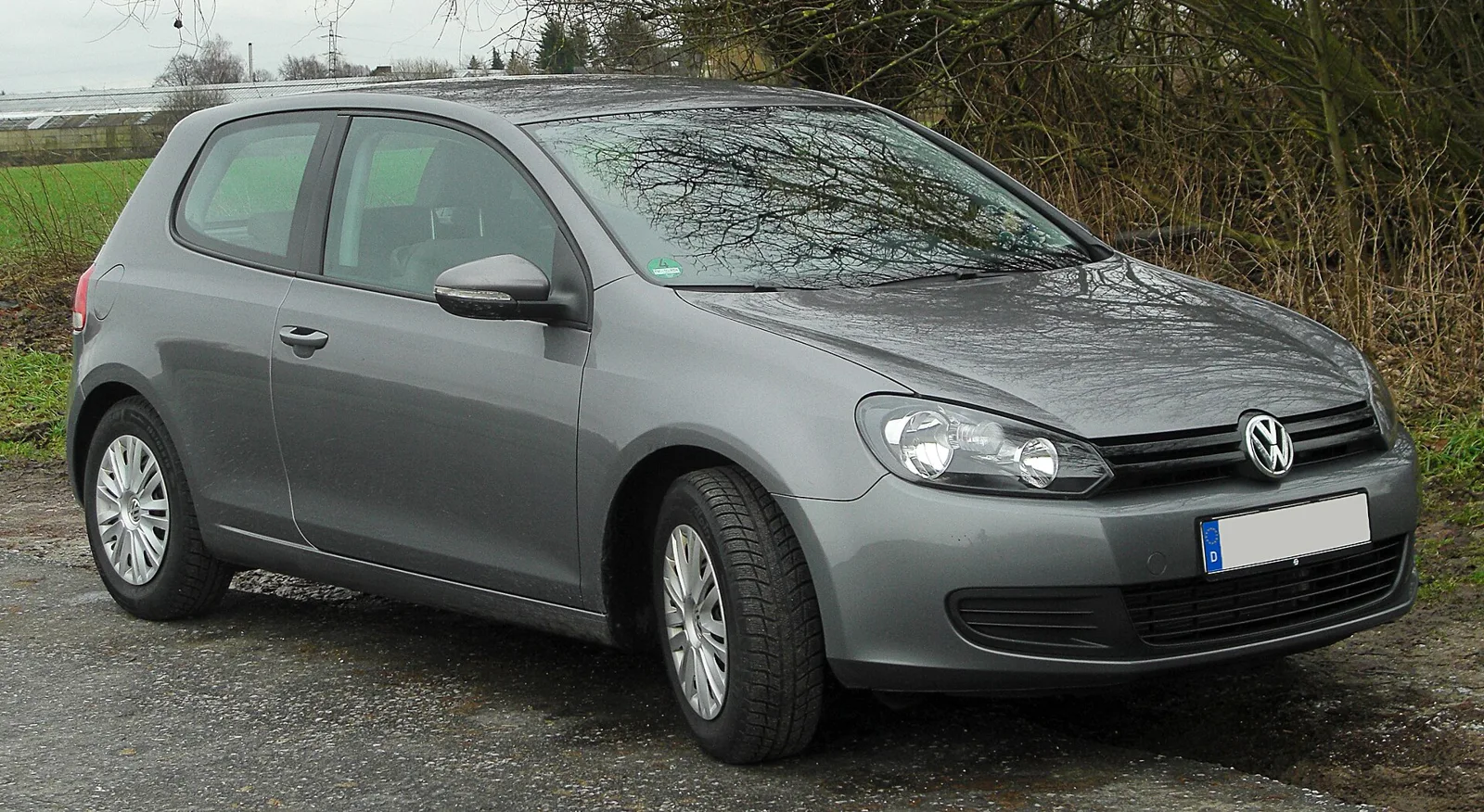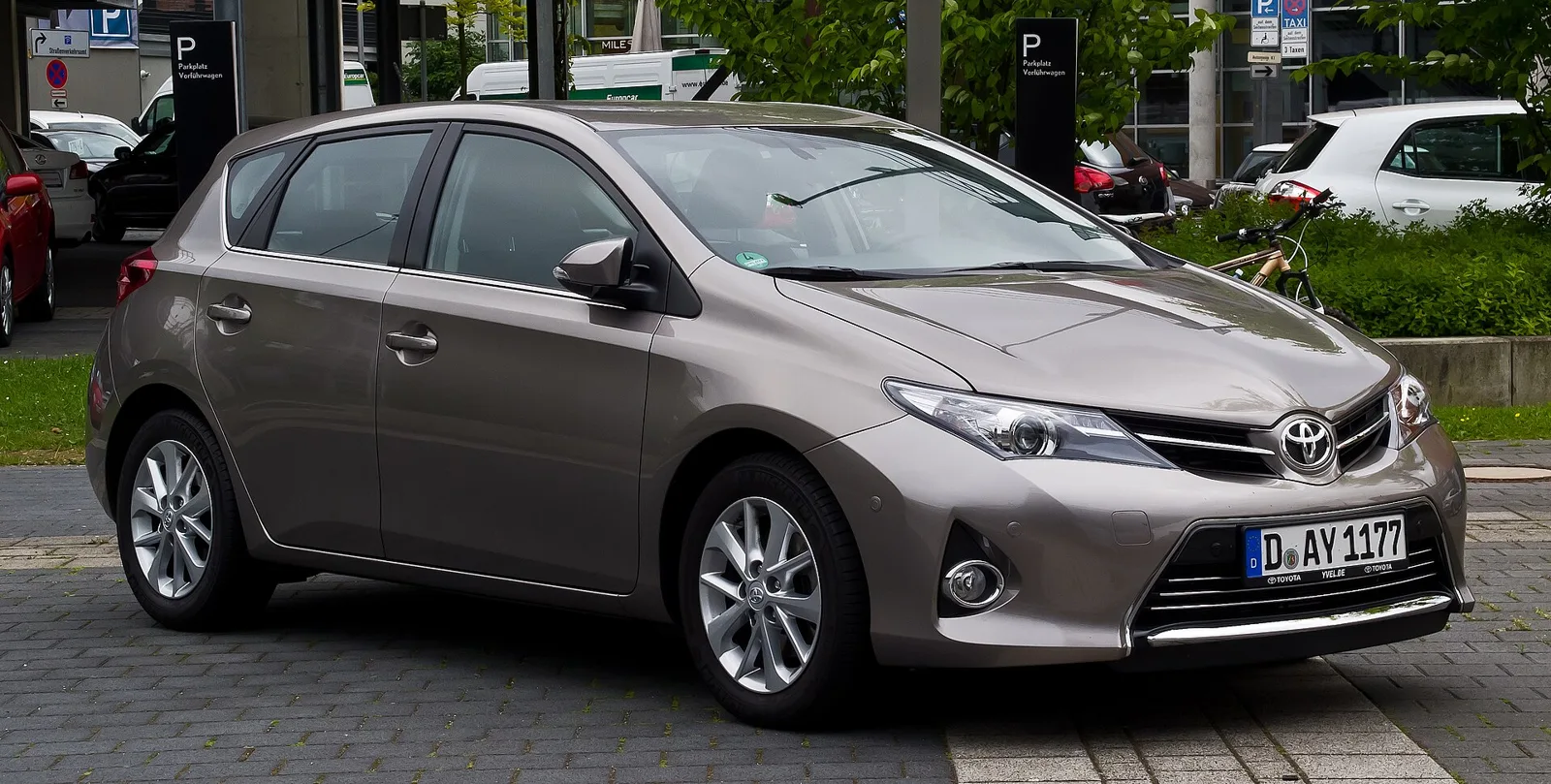
Two European-market compact hatchbacks from the late 2000s, with Toyota's Auris hybrid on one side and Volkswagen's refined Golf on the other.
The Toyota Auris was a Corolla-derived compact hatchback sold from 2006, with an Auris Hybrid that reached 74.3 mpg-imp. The Volkswagen Golf Mk6 was the sixth Golf, unveiled in 2008 with a five-star Euro NCAP rating and a Golf R that reached 0-100 km/h in 5.5 seconds with DSG.
The Toyota Auris and the Volkswagen Golf Mk6 were direct rivals in Europe's compact class, and Toyota built the Auris with the Golf in its sights. One car offered a hybrid with a strong economy figure, while the other offered a refined petrol and diesel range, a sporty R model and a top Euro NCAP result. Choosing between them depends on whether efficiency or driving pleasure matters more.
Where did each car come from?
The Auris was introduced in 2006 as a compact car derived from the Corolla. In Europe it replaced the Corolla hatchback, while the saloon kept the Corolla name. The Japanese model went on sale at Netz dealerships on 23 October 2006, and European models followed in early 2007, with the UK release on 1 February 2007.
The Golf Mk6 was the sixth generation of Volkswagen's Golf, unveiled at the Paris Motor Show in October 2008 for the 2009 model year. It was largely based on the Mk5 and was effectively a re-engineered facelift of its predecessor. Volkswagen replaced it in January 2013 with the Golf Mk7, built on the newer MQB platform.
Toyota was clear about the target. It positioned the Auris in the lower medium segment to compete with the Volkswagen Golf, along with the Vauxhall/Opel Astra, Hyundai i30 and Ford Focus. The Auris name comes from the Latin word for gold, aurum.
The Golf Mk6's development was about making the car easier to build. Volkswagen said productivity improved by nearly 20 per cent at launch compared with the Mk5, with further gains planned for the first twelve months of production.
A hybrid built for efficiency against a turbo range built around driving pleasure and a five-star safety record.
How did the designs differ?
The first Auris carried a Toyota design language shaped by the Vibrant Clarity philosophy, and its concept version had a panoramic glass roof, high window surfaces and 19-inch alloy wheels. Exterior styling was handled by ED2, Toyota's European design base in southern France.
The Golf Mk6 was a reskin of the Mk5 rather than an all-new design. Volkswagen used engineering changes to shorten assembly time and answered criticism that the Mk5's interior had become cheaper than those of the Mk4 and Mk3 Golfs.
The second-generation Auris was revealed on 20 August 2012, with a wider, lower stance and a more luxurious interior. Its estate, the Touring Sports, sat 285 mm longer than the five-door hatchback on the same 2600 mm wheelbase, which gave it more load space.
Volkswagen added a Cabriolet at the 2011 Geneva show, a four-seater with a soft top that opened in 9.5 seconds. It could be operated while driving, but only below 30 km/h (19 mph), and it was the first Golf Cabriolet since 2002.
How did the engines compare?
The Auris's European engines leaned toward efficiency. The 1.33-litre Dual VVT-i engine, built at Toyota's Deeside plant, introduced Toyota's first Stop and Start system sold in Europe, and a 1.6 Valvematic replaced the 1.6 Dual VVT-i engine.
The Auris Hybrid was the headline. It shared its powertrain and batteries with the Prius, achieved 74.3 mpg-imp (3.80 L/100 km; 61.9 mpg-US) combined, and emitted 89 g/km of CO2. Mass production began in May 2010 at Burnaston, making it the first mass-produced hybrid built in Europe.
The Golf range leaned on turbocharged engines. Its range included TSI petrols and TDI diesels from 77 kW (105 PS) up to 155 kW (211 PS). The GTI used a 2.0-litre TSI at 155 kW (211 PS; 208 hp), and the 2.0-litre engine in the Golf R made 270 PS and 350 Nm of torque.
The Golf R's 0-100 km/h time was 5.5 seconds with DSG and 5.7 seconds with a manual. It used a fourth-generation Haldex 4motion all-wheel drive system, and in the United States the car was detuned to 191 kW (256 hp) and 329 Nm.
What did the Auris offer in Japan?
The Japanese Auris arrived in 2006 to replace the Corolla Runx and Allex, with 150X, 180G and RS trim levels. For the 2007 model year Japanese buyers could add G-BOOK, a subscription telematics service, which was offered on Japanese models only.
Toyota also produced a 2007 limited edition designed by TUMI, the luggage maker. Its 1,000 units came with model-specific seat cloth, floor mats, a luggage mat, illuminated scuff plates and a shift knob, and prices for the version ran from 2,058,000 to 2,499,000 yen through Netz dealers.
A 2008 Grayge selection added a grey interior, dual-zone climate control and a passenger-side under-seat tray. Keyless entry and the under-seat tray then became standard across the range, and in 2011 Toyota revealed a sporty Auris GT concept at the Tokyo Auto Salon.
Specifications side by side
| Feature | Toyota Auris (first generation) | Volkswagen Golf Mk6 |
|---|---|---|
| Launch | 2006; Japan 23 October 2006; UK 1 February 2007 | Paris Motor Show, October 2008; 2009 model year |
| Platform | Shared with the E150 Corolla | Volkswagen Group A5 (PQ35) |
| Body styles | Three- and five-door hatchback; estate later | Hatchback, estate and Cabriolet from 2011 |
| Efficiency engine | 1.33-litre Dual VVT-i with Stop and Start | No figure |
| Hybrid | Auris Hybrid, 74.3 mpg-imp, 89 g/km CO2 | No figure |
| Performance model | Blade Master with 3.5-litre V6 at 280 PS (206 kW), in Japan | Golf R with 270 PS and 350 Nm, 0-100 km/h in 5.5 seconds (DSG) |
| Four-wheel drive | No figure | Haldex 4motion on the Golf R |
| Euro NCAP | Five stars for adults, four for children | Five stars; 36 of 37 points for occupant protection |
| Factory | Burnaston, UK (hybrid); Kanto Auto Works (Japan) | Mexico for the SportWagen; China through FAW-VW |
| European sales | 15,237 Auris Hybrids in 2010; 32,725 in 2011 | No figure |
| Awards | What Car? Green Car of the Year 2010 (Auris Hybrid) | 2009 World Car of the Year |
| Successor | Second generation (E180) revealed 20 August 2012 | Golf Mk7, January 2013 |
Which car was the safer choice?
The Auris earned a five-star cabin protection rating from Euro NCAP for adults, but only four stars for child occupants. That split result is a solid rather than a perfect safety profile.
The Golf Mk6 was rated five stars by Euro NCAP, with 36 of 37 possible points for occupant protection. It came with seven standard airbags, rising to nine in Europe and eight in the US, plus standard electronic stability programme, and it was one of the safest cars in its class at the time.
The model year was also part of the Dieselgate scandal, which matters to anyone weighing the diesel models.
How did the cars perform on the road?
The Golf Mk6 was the clear sporting choice. Its GTI used a 2.0-litre TSI, and its Edition 35 model, marking the GTI's 35th anniversary, reached 0-62 mph in 6.6 seconds with 232 bhp.
The Auris Blade Master, the Japanese luxury sibling, used a 3.5-litre V6 at 280 PS (206 kW), but it was sold in Japan rather than in Europe. The Auris in Europe offered economy and comfort rather than outright pace.
The Golf also had a motorsport identity. Volkswagen Motorsport entered the Golf24 for the 2011 24 Hours Nurburgring with a 2.5-litre five-cylinder turbo making 324 kW (441 PS). It finished sixth overall in the third VLN race of 2011, but none of the three cars finished the 24-hour event.
Which hybrid did buyers prefer?
The Auris Hybrid had a strong early run in Europe. Toyota sold 15,237 units in 2010 and 32,725 in 2011, and the car was selected as the What Car? Green Car of the Year for 2010.
The Auris Hybrid launched in the UK at GBP 18,950 (US$27,450), which was GBP 550 (US$800) less than the Toyota Prius. Its CO2 figure also exempted it from Vehicle Excise Duty for cars registered before 1 April 2017, and from the London congestion charge.
Volkswagen had no equivalent hybrid in the Golf Mk6's range. Its Golf Twin Drive plug-in concept of 2008 promised about 50 km of battery range, but it stayed a concept, and the Mk6 went on sale without a hybrid.
South Africa and Japan both received the Mk6 Golf in April 2009, with their GTI variants following in July and August of that year. The Mk6 GTI reached Australia on 30 October 2009, and a 1.2-litre base model arrived there in September 2010 for sale in 2011.
What did the Golf range add beyond the hatchback?
The Golf Mk6 went beyond the five-door hatchback. Its estate variant, a facelifted Mk5-based Variant, arrived in 2009 with the new car's front end and interior but the older body shell and underpinnings. It was sold in the United States as the Jetta SportWagen and in Mexico and Canada as the Golf Wagon.
Chile received the Mk6 in October 2010, with a 1.6-litre petrol engine rated at 101 hp, which made it the first South American country to sell the car. In India, Volkswagen suspended plans for a Golf to protect sales of its Vento, which shows how regional strategy shaped the range.
The Golf Plus, a taller model based on the Mk5, received a facelift in December 2008 and was replaced in 2014 by the MQB-based Golf Sportsvan, which had first been shown as a concept.
How far did each car travel in other markets?
The Golf went on sale in the United States in October 2009 as the Volkswagen Golf, dropping the Rabbit badge used on the Mk5, while the wagon kept the Jetta SportWagen name there. In Australia the Golf Mk6 won the 2009 Wheels Car of the Year title, the first time the Golf had won that award since 1976.
The Auris spread through Japan, Europe, Australia and New Zealand under various names. In Australia and New Zealand it was sold as the Corolla hatchback, and in Japan a Blade variant sat above it in the range.
The Golf's Chinese production by FAW-VW began for the 2010 model year and ended in 2013. The Auris's Japanese facelift arrived in April 2015 and it was dropped from Toyopet Store in March 2018.
What did the second-generation Auris offer in Japan?
The second-generation Japanese Auris came with a 1.2-litre turbocharged 8NR-FTS, a 1.5-litre 1NZ-FE or a 1.8-litre 2ZR-FAE, with the smallest engine reserved for the base 150X. The more powerful engines went into the luxurious 180S and the sporty RS, and both front-wheel drive and full-time four-wheel drive were offered.
The 180S came only with a CVT, while the RS used a six-speed manual, and every 1.8-litre car was front-wheel drive. In August 2013 Toyota ran an advertising campaign in Japan featuring Char Aznable from the Gundam anime, with a one-off styled car to match.
Which buyer should choose which?
A buyer who wanted the lowest running costs in a compact hatchback, with a hybrid that carried a strong economy rating, would look at the Auris. The Auris Hybrid also suited drivers who valued tax and congestion charge exemptions.
A buyer who wanted a more driver-focused car, with a range of turbo petrols, a GTI or R model and a strong crash-test result, would find the Golf the better match.
On the facts, neither car wins outright. The Auris was the efficiency specialist and the Golf the driver's choice, and the two did not compete in the same way at the top of their ranges.