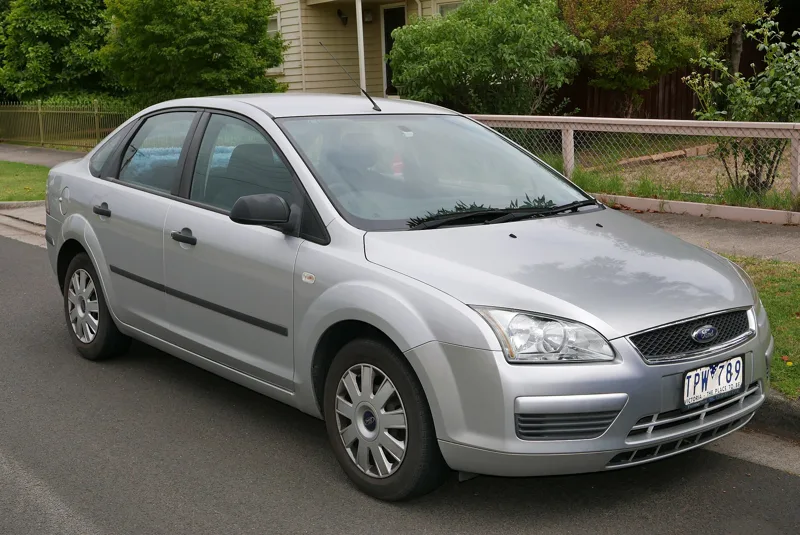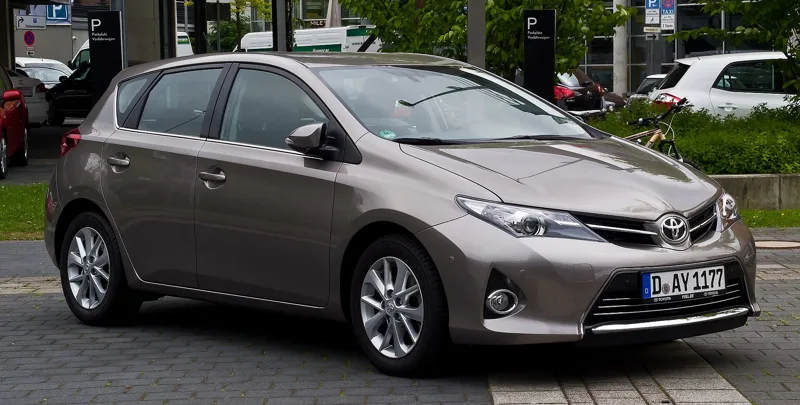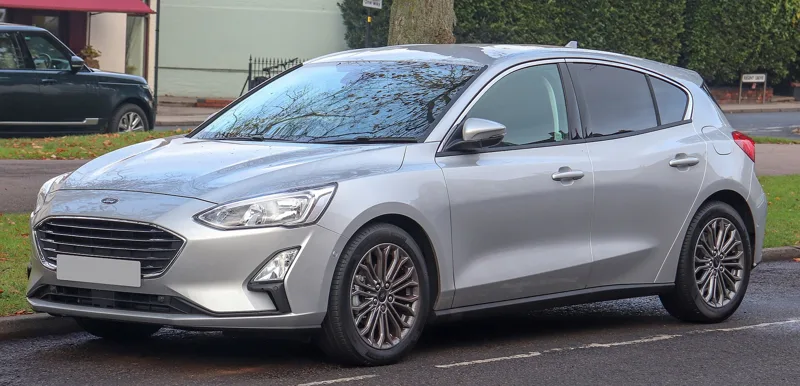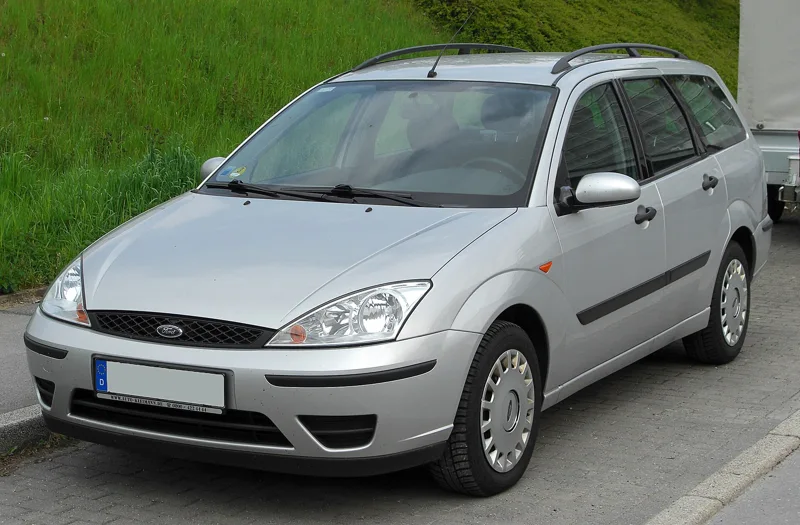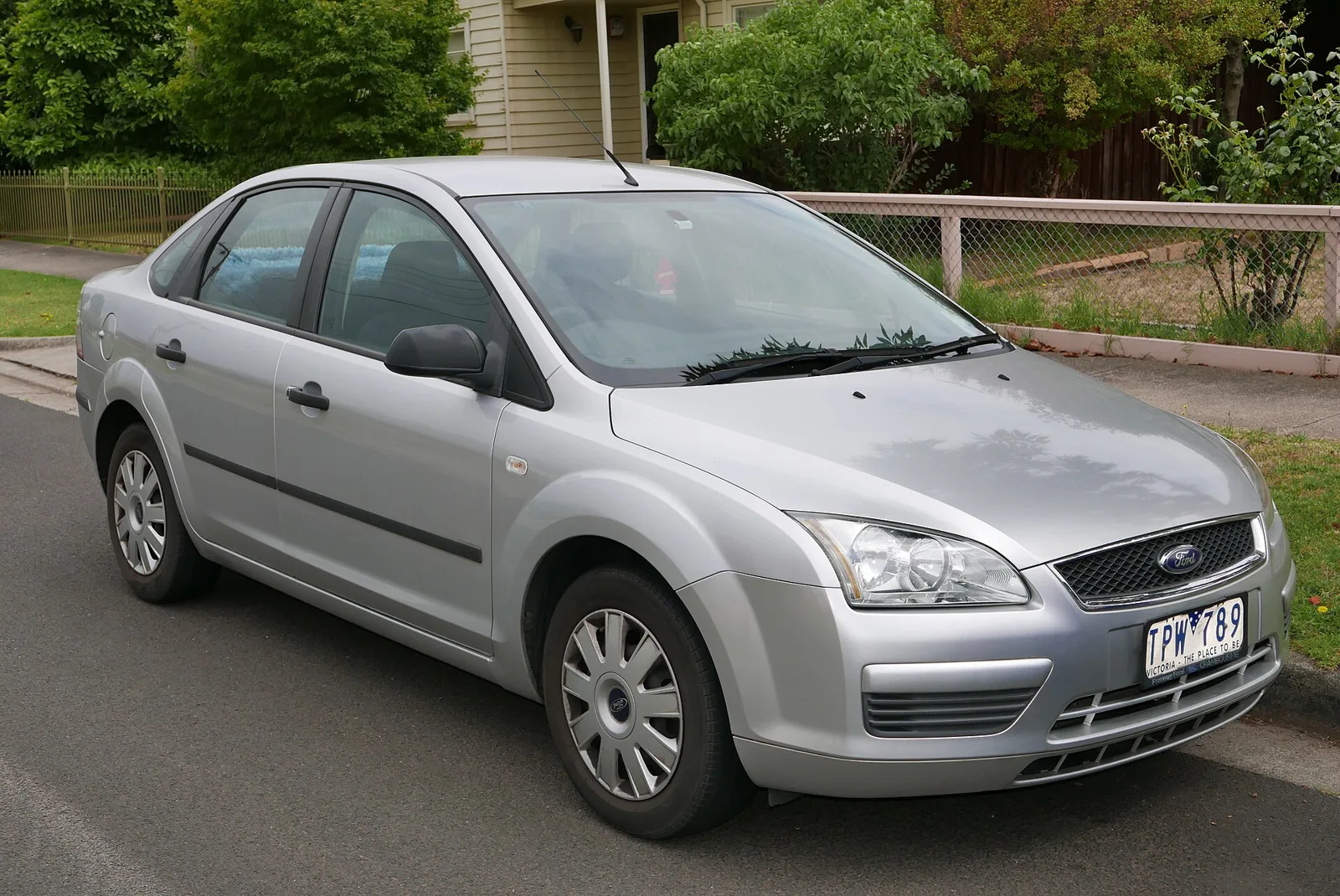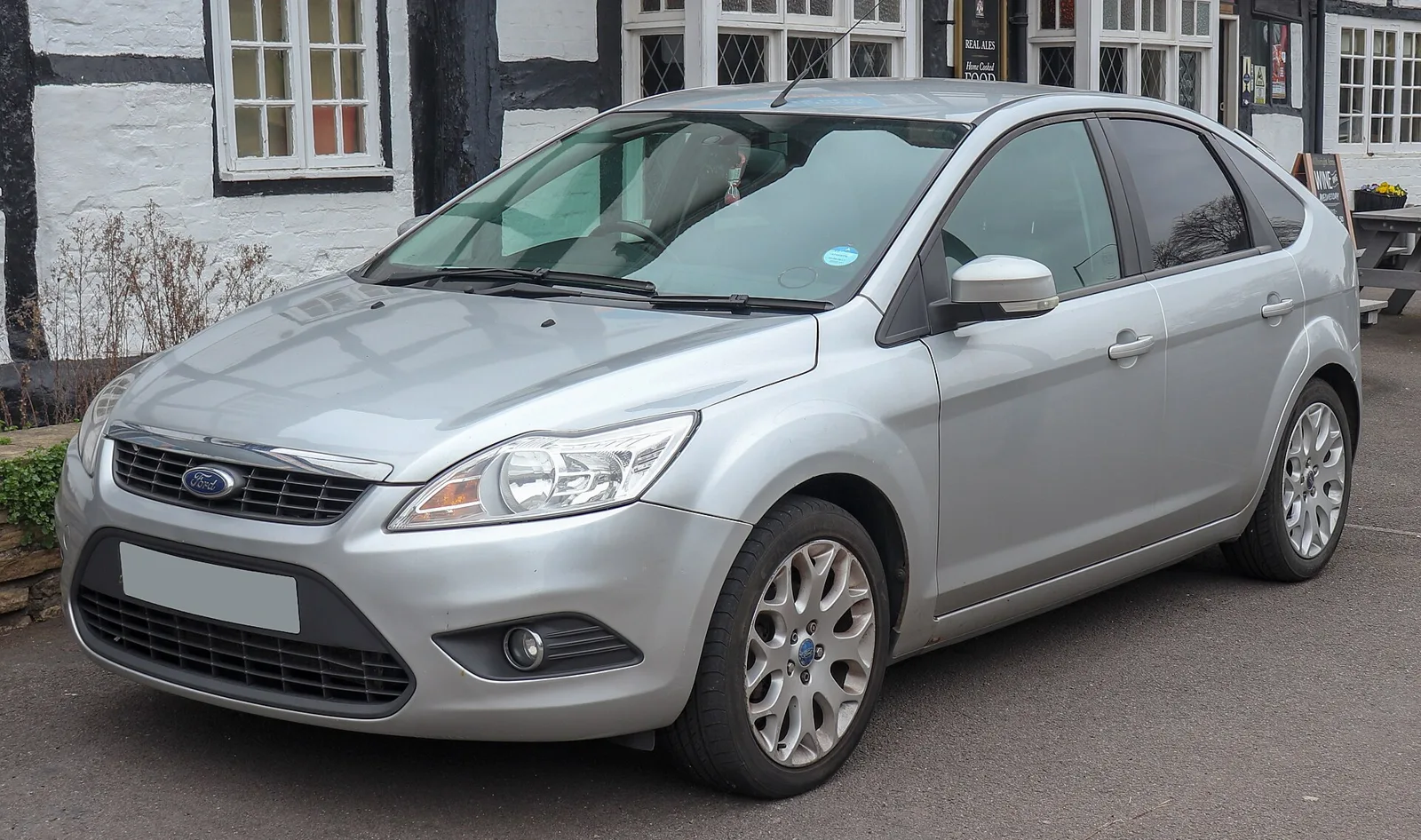
Two compact family hatchbacks that arrived within a few years of each other, one a Ford with a Volvo-linked platform and one a Corolla-derived Toyota with a hybrid option.
The Ford Focus Mk2 launched at Paris in 2004 on the C1 platform shared with Volvo, with turbo five-cylinder hot versions and five-star adult Euro NCAP protection. The Toyota Auris, introduced in 2006, was a Corolla-derived hatchback with a Hybrid version that reached 74.3 mpg-imp.
The Ford Focus Mk2 and the Toyota Auris were both compact family hatchbacks that reached showrooms within a few years of each other. The Focus was built on Ford's C1 platform, shared with the Volvo C30 and S40, while the Auris was a Corolla-derived car with a hybrid option. Engines, safety results and the way each car was sold in different markets separate the two.
Where did each car come from?
The Focus Mk2, code-named C307, debuted at the Paris Motor Show on 25 September 2004 in three- and five-door hatchback and estate forms. Ford had previewed it in four-door form as the Focus Concept at the Beijing Motor Show in June 2004, and the saloon arrived in mid-2005.
The Auris was introduced in 2006 as a compact car derived from the Corolla. Its first Japanese sales began at Netz dealerships on 23 October 2006, and European models followed in early 2007, with the UK release on 1 February 2007 replacing the E120 Corolla hatchback. Toyota's Australian and New Zealand arms kept the Corolla badge rather than adopt the European Auris name, and Japanese cars were built at Iwate and Kanto Auto Works.
Toyota was open about its target. The Auris was positioned in the lower medium segment to compete with the Volkswagen Golf, the Vauxhall/Opel Astra, the Hyundai i30 and the Ford Focus. The Focus was among the rivals Toyota named.
The Focus's role was also a global one. It was built at Silverton in South Africa for Australia and New Zealand, at Santa Rosa in the Philippines for ASEAN markets, and at Chang'an Ford in China from April 2005. It debuted in the Americas in Mexico in 2006.
Ford's C1 platform with a turbo five-cylinder against a Corolla-based hatchback with a hybrid.
How did the two cars differ in platform and size?
The Focus Mk2 used the Ford C1 platform, shared with the Volvo C30, S40, V50, C70, Mazda3 and the Focus C-Max. Ford called this sharing programme Global Shared Technologies, and it kept the basic suspension of the Mk1 largely unchanged.
The Focus was considerably larger than its predecessor. Its wheelbase grew by 25 mm, it was 168 mm longer overall, 8 mm taller and 138 mm wider, and its bodyshell was 10 per cent stiffer. Interior and boot space both increased as a result.
The Auris was a Corolla relative and its first generation shared the E150 Corolla platform. The estate version that arrived later, the Touring Sports, was 285 mm longer than the five-door hatchback on a 2600 mm wheelbase, with the steeper windscreen and extended roofline providing more load space.
How did the designs compare?
The Focus Mk2 took its styling cues from the Mondeo and Fiesta, and it borrowed elements from the abandoned B-Proposal for the original Focus. The new car remained recognisably a Focus.
The first Auris was shaped around a Toyota design philosophy called Vibrant Clarity, and its concept version had a panoramic glass roof and 19-inch wheels. Exterior styling was handled by ED2, Toyota's European design base in southern France.
Interior quality was a clear focus for Ford. The Mk2 added a padded, soft-feel dashboard, damped glovebox action and chrome-finish door handles, because the Mk1 had been criticised beside the Volkswagen Golf Mk4. The Coupe-Cabriolet variant brought a two-piece retractable hardtop, assembled by Pininfarina.
What engines did the two cars use?
The Focus Mk2 engine range mixed the old and the new. The 1.4 and 1.6 litre Zetec-SE engines of the previous car were upgraded and renamed Duratec, a 1.6 Ti-VCT with variable valve timing was added, and the 1.8 and 2.0 litre Zetecs gave way to the Duratec HE.
The petrol line-up ran from a 1.4-litre Duratec at 80 PS up to a 2.5-litre turbocharged five-cylinder in the RS, rated 305 PS, and a 350 PS RS 500 version. The diesels were 1.6, 1.8 and 2.0 litre TDCi units, from 90 PS up to 136 PS.
The Focus ST used the Volvo Modular 2.5-litre turbocharged five-cylinder from the Volvo C30 at 225 hp (168 kW; 228 PS). Ford rebadged it as the Duratec ST and added variable valve timing to both camshafts, and Mountune later raised output to 260 bhp (190 kW) with a kit.
The Auris's European engines were built around efficiency. The 1.33-litre Dual VVT-i, built at Toyota's Deeside plant, brought Toyota's first Stop and Start system sold in Europe, and a 1.6 Valvematic replaced the 1.6 Dual VVT-i engine.
The Focus ECOnetic was a more frugal model, shown at Frankfurt in September 2007. It used the 109 PS 1.6 Duratorq TDCi with a diesel particulate filter, and low-resistance tyres and aerodynamic touches helped it reach 65 mpg-imp (4.3 L/100 km; 54 mpg-US), a rival to Volkswagen's BlueMotion range.
Toyota's own efficiency push came under the Toyota Optimal Drive banner, introduced in 2008. The 1.33-litre engine was the first Stop and Start system Toyota sold in Europe, the 2.0 D-4D gained a diesel particulate filter, and the 1.6 Valvematic took over from the 1.6 Dual VVT-i.
Specifications side by side
| Feature | Ford Focus Mk2 | Toyota Auris (first generation) |
|---|---|---|
| Launch | Paris Motor Show, 25 September 2004 | Japan 23 October 2006; UK 1 February 2007 |
| Platform | Ford C1, shared with Volvo C30 and S40 | Corolla-derived, E150 platform |
| Body styles | Three- and five-door hatchback, estate, saloon from 2005 | Three- and five-door hatchback; estate later |
| Base petrol | 1.4-litre Duratec, 80 PS | 1.33-litre Dual VVT-i in Europe |
| Hot version | 2.5-litre turbo five-cylinder, 225 PS (ST); 305 PS (RS) | Blade Master 3.5-litre V6, 280 PS (206 kW), Japan |
| Diesel | 1.6, 1.8 and 2.0 TDCi, 90 to 136 PS | Diesel from 1.4 and 2.0 D-4D in some markets |
| Hybrid | No figure | Auris Hybrid, 74.3 mpg-imp, 89 g/km CO2 |
| Euro NCAP | 5 stars adults, 4 of 5 children, 2 of 4 pedestrians (2004) | 5 stars adults, 4 stars children |
| Latin NCAP | 4 stars adults, 3 stars toddlers (2011) | No figure |
| Build plants | Saarlouis; Silverton; Santa Rosa; Chang'an Ford | Kanto Auto Works and Iwate (Japan); Burnaston (UK hybrid) |
| Successor | Focus Mk3, with the saloon revealed January 2010 | Second generation (E180), 20 August 2012 |
Which car was safer in its class?
In 2004 the new Focus achieved the highest Euro NCAP ratings in its class, with 5 stars for adult protection, 4 out of 5 for children and 2 out of 4 for pedestrians. It beat the Vauxhall/Opel Astra and the Volkswagen Golf Mk5, and it earned full marks in the front impact test.
The Auris's Euro NCAP result was five stars for cabin protection for adults, but four stars for children. That matched the Focus's 4 out of 5 for children on the same scale, so the two were level on child protection.
In Latin America, the most basic Focus earned 4 stars for adults and 3 for toddlers from Latin NCAP in 2011, a rating that reflects a stripped-back specification. The 2008 facelift added front side airbags, curtain airbags, stability and traction control and Emergency Brake Assist in Australia, China and South Africa.
What did the trim ladders look like?
In the UK the pre-facelift Focus was offered as Studio, LX, Style, Sport, Zetec, Zetec Climate, Ghia and Titanium. The Ghia was the only model with standard cruise control, and Titanium added a Sony CD and MP3 player, privacy glass and sports seats.
The Auris followed a different ladder in each market. Japan offered 150X, 180G and RS, with the 2007 TUMI limited edition of 1,000 units and a G-BOOK telematics subscription on the list. In Australia the car was sold as the Corolla hatchback with Ascent, Conquest, Levin SX and Levin ZR grades, all with a 1.8-litre engine.
The Focus facelift for 2008 introduced PowerShift, a dual-clutch gearbox that Ford compared with Volkswagen's DSG, and a Zetec S trim with a body kit taken from the ST. Stability control became standard, which pushed prices up by at least GBP 250 over the pre-facelift car.
How did the Focus spread through other markets?
In Brazil the Mk2 came in GL, GLX, Ghia and Titanium trims, with 1.6 Sigma and 2.0 Duratec HE flexfuel engines. The Brazilian Ghia offered the 148 cv 2.0 flexfuel engine from 2009 to 2010, and the Titanium arrived in 2011 with the same engine.
In Argentina the range ran from Trend to the EXE Trend and EXE Ghia sedans, with the 1.6 Sigma at 110 cv and a 1.8 TDCi turbo diesel on the lower models. The Mk1 was built alongside the Mk2 at the Pacheco factory until 2008, and it was discontinued in 2010 when the Mk2 replaced it.
Which car sold more in its home market?
Sales records for these two cars do not give a clean head-to-head figure, and the available numbers mostly relate to different aspects of each range. The Auris Hybrid is the clearest sales datapoint, with 15,237 units sold in Europe in 2010 and 32,725 in 2011.
The Focus Mk2's sales story was about markets rather than a single total. Ford stopped selling the saloon in the UK and Western Europe in June 2009, but it continued in continental Europe, Russia, China and South Africa until 2011, and it lasted to 2014 in Brazil, China and Argentina.
The Auris Blade, the upscale Auris in Japan, was discontinued in April 2012 without a direct successor. The Auris itself stayed in production under the Corolla name in Europe and Japan.
What did the second-generation Touring Sports add?
The Touring Sports estate was the first model in its segment to be offered with a full hybrid powertrain, a claim Toyota made when it debuted at the 2012 Paris Motor Show. Its hybrid used a 1.8-litre VVT-i petrol engine with an electric motor for a combined output of 136 hp (100 kW).
That hybrid estate reached 100 km/h in 10.9 seconds and had a top speed of 180 km/h (112 mph). The rest of the estate's engine line-up matched the hatchback, with 1.33-litre and 1.6-litre petrols and a 1.4-litre D-4D diesel, and its sill sat 80 mm lower than the hatchback's.
Which buyer should choose which?
A buyer who wanted a Focus with a wide choice of petrol and diesel engines, including the ST and RS hot versions, would find the Ford more interesting. The Focus also had a more spacious body after its redesign, with more interior and boot room than its predecessor.
A buyer who wanted a Toyota with a hybrid option, and who valued the Auris Hybrid's economy and tax treatment, would look at the Auris. The hybrid carried a Vehicle Excise Duty exemption for cars registered before April 2017, and it was built in the UK.
Neither car takes an overall verdict on these facts, and the choice depends on which priorities a buyer ranks first. The Focus offered the wider petrol and diesel menu, including its hot versions, while the Auris answered the buyer who wanted hybrid economy from a compact hatchback.