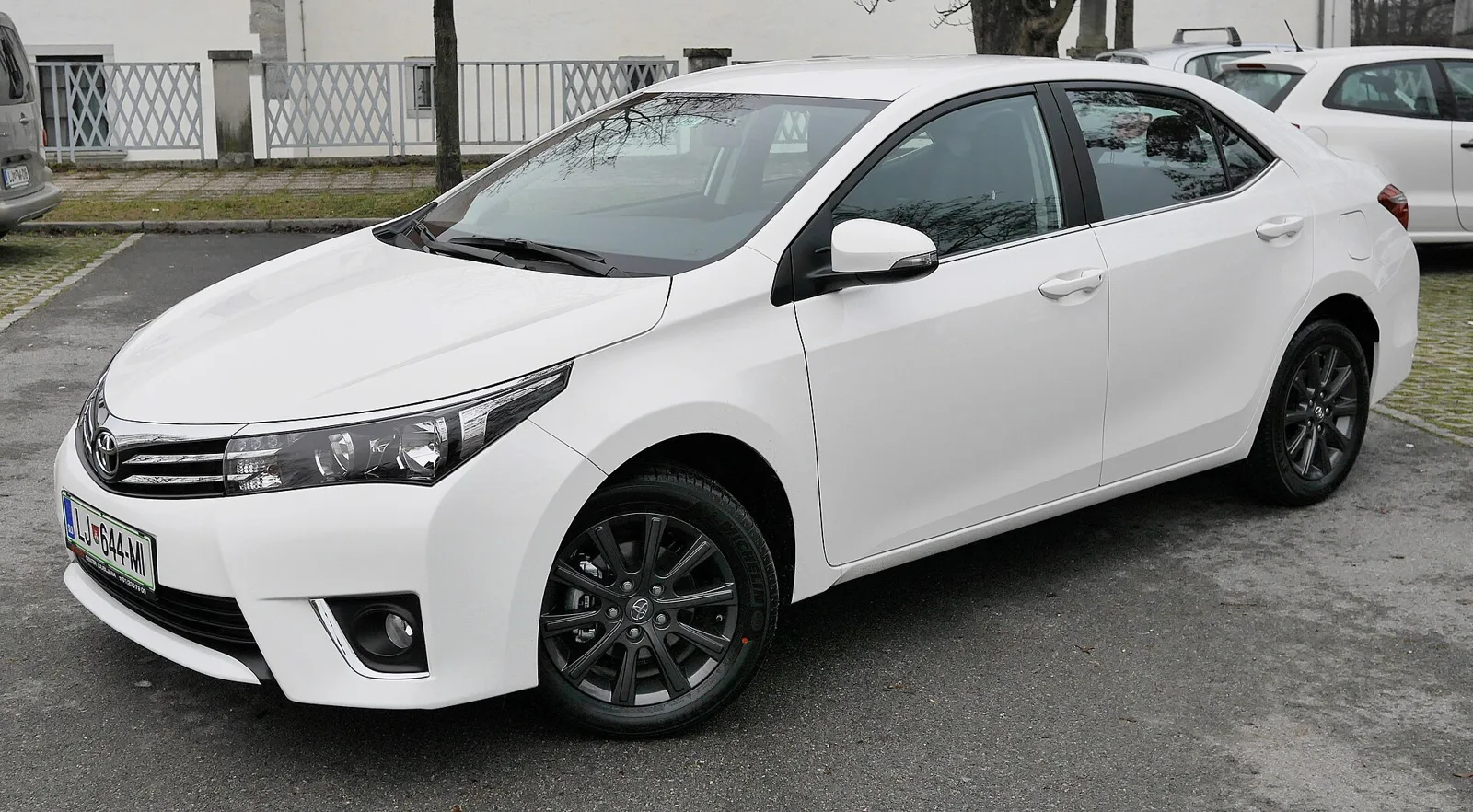
A Corolla that wore two faces and two platforms across more than a decade, sold as the Altis in Asia, the Auris-derived E180 in Europe and China, and a North American car with a 1.8 at its heart.
The Toyota Corolla E170 and E180 was the eleventh-generation Corolla, sold from 2013 to 2024. It used the New MC platform, was called the Altis across much of Asia, and the E180 variant served Europe, South Africa and China as an Auris-based sedan.
The E170 and E180 Corolla was the eleventh generation of the nameplate, sold internationally from 2013 to 2024. The E170 was a sedan for North America, Asia, Australasia and the Middle East, while the E180 was an Auris-derived sedan for Europe, South Africa and China, so the one name covered two quite different cars.
What is the Toyota Corolla E170 and E180?
Two front and rear styling treatments were fitted to the E170. The North American version debuted first, and a more conservative design for all other markets arrived later in 2013. The wheelbase grew by 100 mm (3.9 in), which gave the car more interior space.
The car was derived from the Toyota New MC platform. The smaller Japanese-made E160 was offered instead in Japan and Hong Kong, because it stayed within the Japanese government dimension rules, and it was built on the older B platform.
The E170 served a belt of markets running from ASEAN and Australasia through the Middle East and South Asia to North America. The E170 and E180 shared the New MC platform, but they used different body-in-white and electrical architecture and regional powertrains.
One nameplate, two platforms and a dozen regional identities, from the Altis in Asia to the Auris-based E180 in Europe.
Why did the E170 and E180 use different platforms?
The E180 aligned with the European Auris in its structure and electrical architecture, which made it a different car underneath even though it carried the same nameplate.
Most E170 cars came from Thailand, Taiwan and North American plants. In much of Asia it was sold as the Corolla Altis, and it kept a conventional torsion-beam rear suspension across all trims.
The E180 engines included a 1.33-litre 1NR-FE, a 1.4-litre D-4D diesel, a 1.2-litre turbo unit and petrol engines of 1.6 and 1.8 litres. The E180 was assembled in Turkey, South Africa and several plants in China, so the car had a wide production footprint.
How did the Corolla Altis reach Asia?
Indonesia was the first ASEAN country to receive the new Altis, on 8 January 2014. Only the 1.8-litre Dual VVT-i engine was offered there, with the 1.8 G manual and the 1.8 V automatic, because the 2.0-litre Dual VVT-i was withdrawn after small sales.
Malaysia launched the Altis in January 2014 with 1.8 E, 2.0 G and 2.0 V variants. The 2.0 G was replaced with the 1.8 G in November 2014, and a December 2016 facelift brought seven airbags, ABS with EBD, stability control and ISOFIX anchors as standard.
The Malaysian update of September 2017 added a DVR dash cam, a 360-degree Panoramic View Monitor and more USB ports.
In Singapore the Altis went on sale on 10 January 2014 with the 1.6-litre 1ZR-FE Dual VVT-i and a seven-speed Super CVT-i. It came as Classic and Elegance trims, and a mid-2017 facelift brought seven airbags, ABS with EBD and brake assist.
In the Philippines the Altis arrived in early 2014 with five trims. The 1.6 E had halogen headlamps and 16-inch alloys, and the 2.0 V had LED headlamps, paddle shifters, rain sensing wipers and a sport body kit.
What did Thailand's Altis line-up include?
Thailand unveiled the new Altis on 14 January 2014 in seven grades, plus a special edition called the E Sport. As the manufacturing base for several export markets, Thailand offered every grade of the Altis, while other countries took only some of them.
Unlike most Southeast Asian markets, Thailand offered CNG-powered grades for the 1.6-litre variants. The 1.8 engine was a 2ZR-FBE flexi-fuel unit.
The grades ran from the basic 1.6 J with a six-speed manual and 15-inch alloys up to the 1.8 V Navi with LED headlamps, a touchscreen display audio system and six-way power seats for the driver and front passenger.
Minor updates on 26 January 2016 made the 1.6 engine E85-compliant with the 1ZR-FBE and made stability control and traction control standard across the range. A facelift followed on 21 November 2016 with a new grille, revised tail lights and new instrument gauges.
How did the Gulf and Pakistan versions differ?
The Corolla launched across the Gulf Cooperation Council market in December 2013, with XLi and GLi trims. These used either a 1.6-litre 1ZR-FE or a 2.0-litre 3ZR-FE, depending on the market, and all Gulf cars were sourced from Taiwan.
In the United Arab Emirates the car was offered as S, SE, SE+ and Limited, and the XLi Exclusive joined the lineup in 2019. Bahrain also offered a Corolla X Sports Edition for the 2016 model year only, based on the Taiwanese Altis X.
Toyota Indus launched the eleventh generation in Pakistan in July 2014 with eight trim levels. The XLi was the base variant, and it lacked power mirrors, power windows and central locking that were standard on the other trims.
A 2018 facelift added redesigned headlights and taillights, DRLs and push start ignition on the Grande variants. The Grande gained auto-levelling LED headlamps, an Android-based touchscreen and rear seat USB charging ports, while 16-inch alloys became standard on the upper trims.
The Yaris launch in 2020 led Indus to drop the 1.3-litre variants. A 2021 facelift added new bumpers and side skirts, and by November 2025 five variants remained, with only one offered with a six-speed manual.
What was the E170 like in North America?
The North American Corolla was very similar to the international car apart from its front and rear styling. The model was announced on 6 June 2013, and the European version was announced the following day. Its styling elements had been previewed in the Furia concept at the 2013 Detroit Auto Show.
The car was offered in four grades: L, LE, LE Eco and S. It was a top-selling model in North America and the world, and Toyota increased fuel efficiency while also enlarging and adding weight to the car.
The 1.8-litre 2ZR-FE produced 132 horsepower (98 kW), and a Valvematic 2ZR-FAE on the LE Eco trim produced 140 horsepower (100 kW). The Eco engine had a 10.6:1 compression ratio, and Valvematic delivered a five percent improvement in fuel economy and output.
Transmissions included a four-speed automatic, a six-speed manual and Toyota's CVTi-S continuously variable transmission on the LE, LE Eco and S. On the S the CVTi-S had paddle shifters that allowed sequential shifts through seven speeds, and the LE Eco had an ECO driving mode.
The brakes were a 275 mm (10.8 in) ventilated front disc with a 229 mm (9.0 in) rear drum, or a 259 mm (10.2 in) solid rear disc on the S. Standard safety equipment included the Star Safety System, Smart Stop brake override and tyre pressure monitoring.
Wheels were 15-inch steel on the L and LE Eco, 16-inch on the LE and S, and 17-inch alloys on the S. Front suspension used MacPherson struts with a more rigid control-arm design, and the rear used a torsion beam with angled bushing attachments that improved grip and stability.
What did the E180 offer in Europe?
Toyota brought the E180 to Germany, the largest car market in western Europe, in February 2014. That marked the return of the Corolla badge to Germany after seven years, although the earlier E150 had been sold in smaller markets such as Belgium.
The line-up included a 1.4-litre D-4D turbo diesel and a range of petrols, from a 1.33-litre Dual VVT-i to a 1.6-litre with Valvematic and a new 1.8-litre Dual VVT-i. The 1.8 was fitted as standard with a Multidrive S automatic, while every other engine used a six-speed manual.
The E180 was the Auris-based sedan built for Europe, South Africa and China. It was aligned with the Auris in structure and electrics, and it was assembled in Turkey, South Africa and China, which gave it a varied supply chain.
How was the E180 sold in China and South Africa?
China had two versions of the E180. The FAW-Toyota Corolla resembled the Corolla Altis, while the GAC-Toyota Levin had a design closer to the North American car. Production in China began in June 2014 for the 2015 model year, with a 1.6-litre 1ZR-FE and a 1.8-litre 2ZR-FE paired with a five-speed manual or a CVT.
In October 2015 Toyota introduced a hybrid version in China with locally produced hybrid systems. The Levin was updated at the Auto Shanghai show in April 2017, with a front bumper design similar to the updated Taiwanese Altis X.
In 2017 both Chinese versions received a facelift and a 1.2-litre 9NR-FTS turbocharged engine. The E180 Corolla, the Levin and the Levin plug-in hybrid all ended production in September 2019.
In South Africa the E180 launched on 7 February 2014 with three petrol engines of 1.3, 1.6 and 1.8 litres and a 1.4-litre D-4D diesel. Every engine had a six-speed manual, while a CVT was offered on the 1.6 and 1.8. Trims were the Esteem, Prestige, Sprinter and Exclusive.
The facelifted South African car went on sale on 25 January 2017, and the Sprinter trim was discontinued. The E180 stayed in production there under the Corolla Quest name, which appeared in early 2020.
How did the Corolla sell in Australia and New Zealand?
Toyota launched the E170 sedan in Australia and New Zealand in late February 2014. The sedan was imported from Thailand and came in three variants: the base Ascent, the mid-range SX and the flagship ZR.
The Corolla hatchback sold in Australia was a rebadged E180 Auris that had been released earlier, in 2012. Together the Corolla sedan and hatchback were the top-selling car in Australia in 2014.
What changed in the facelifts?
The international E170 facelift was unveiled on 24 March 2016. It brought sleeker LED headlamps with new light guides, a thinner upper chrome grille and a full-width lower grille housing the fog lamps. At the rear the chrome strip was thinner and the tail lamps used single LED cluster strips.
The facelifted car reached Thailand on 21 November 2016, the Philippines on 8 December 2016, Malaysia on 9 December 2016, Indonesia on 16 January 2017, Singapore in July 2017 and Pakistan in August 2017. The timing shows how a single design spread across the region over the course of a year.
For the North American model year 2017 Toyota added SE and XSE grades and a seven-inch touch screen, along with a four-inch multi-information display. A new headlight design and redesigned taillights were also introduced.
How safe was the Corolla in crash tests?
The Latin American Corolla with the basic configuration of three airbags earned 5 stars for adult occupants and 4 stars for toddlers from Latin NCAP 1.0 in 2014.
A Latin NCAP 2.0 test in 2017 gave the car with seven airbags 5 stars for adults, 5 stars for toddlers and the Advanced Award. The seven-airbag car achieved the higher rating.
Which special editions did the Corolla get?
For the 2015 model year Toyota released a Special Edition based on the S model. It had gloss black-painted 17-inch alloy wheels, red stitching on the steering wheel, shift knob, door trim and seats, plus special floor mats and boot emblem.
In Canada the same car was called the 50th Anniversary Limited Edition. Absolutely Red, Super White and Black Sand Pearl were the only exterior colours offered on the Special Edition.
For the 2017 model year the facelift added aerodynamic scoops on the 50th anniversary edition, a restyled front fascia and new headlights. A seven-inch touch screen and a four-inch multi-information display were added, and the SE and XSE grades were introduced.
How did the eleventh generation end?
The generation was sold internationally until 2024, but several markets ended earlier. India stopped production of the Altis on 31 March 2020 because the car could not meet the Bharat Stage 6 emission standards, which meant the E210 model would not be introduced there.
China's E180 Corolla, Levin and Levin plug-in hybrid ended production in September 2019.
What are the Toyota Corolla E170 and E180 specifications?
| Specification | Detail |
|---|---|
| Generation | Eleventh Corolla, sold 2013 to 2024 |
| Wheelbase | 100 mm (3.9 in) longer than the previous generation |
| North American engine | 1.8 litre 2ZR-FE, 132 hp (98 kW) |
| Valvematic engine | 2ZR-FAE, 140 hp (100 kW), LE Eco only |
| Front brakes | 275 mm (10.8 in) ventilated disc |
| Rear brakes | 229 mm (9.0 in) drum; 259 mm (10.2 in) solid disc on S |
| Indian diesel | 1.4 litre (1,364 cc) D-4D |
| China turbo engine | 1.2 litre 9NR-FTS, added 2017 |
| Indonesian engine | 1.8 litre Dual VVT-i only |
| Singapore engine | 1.6 litre 1ZR-FE with 7-speed Super CVT-i |
| Latin NCAP 2.0 result | 5 stars adults, 5 stars toddlers, Advanced Award |