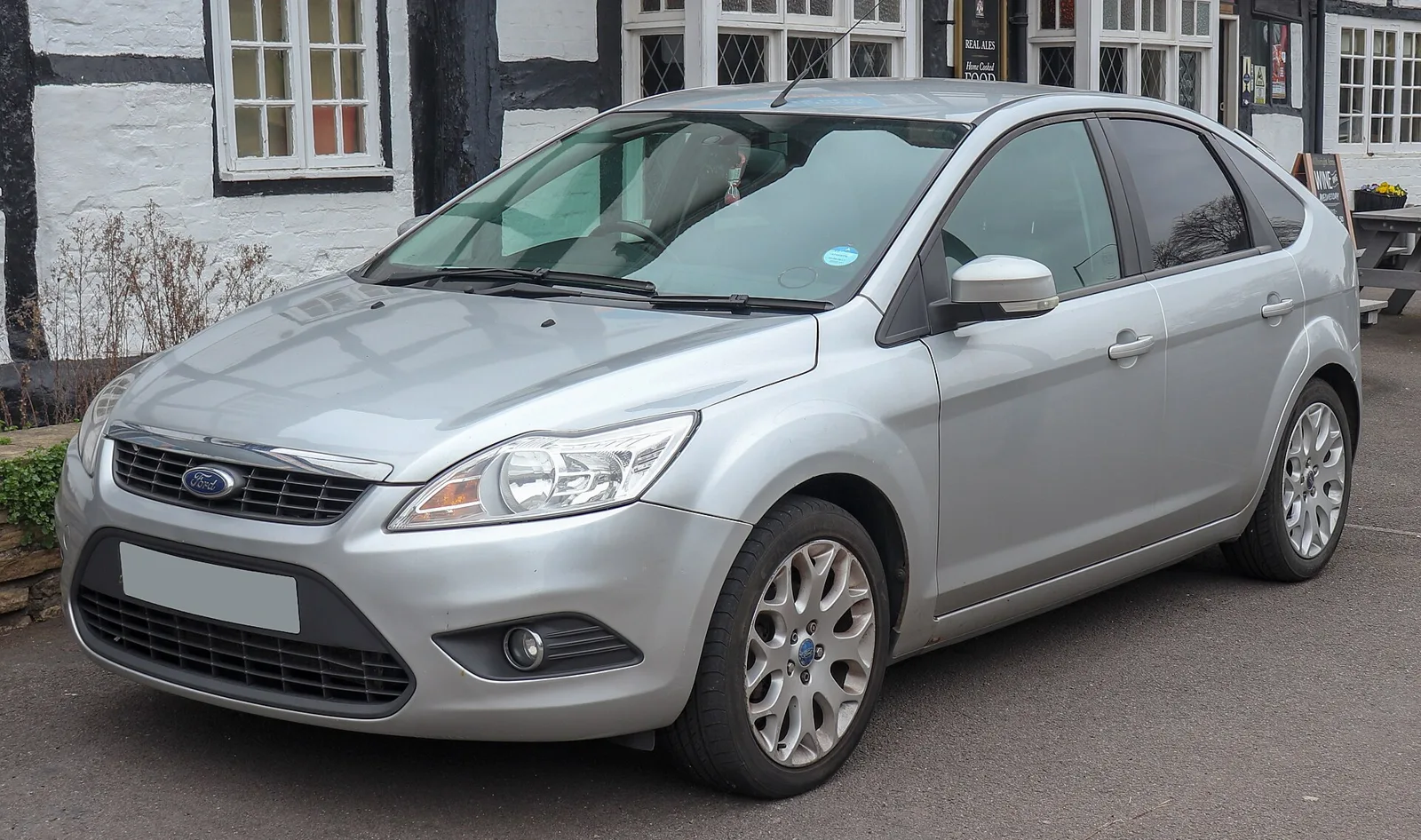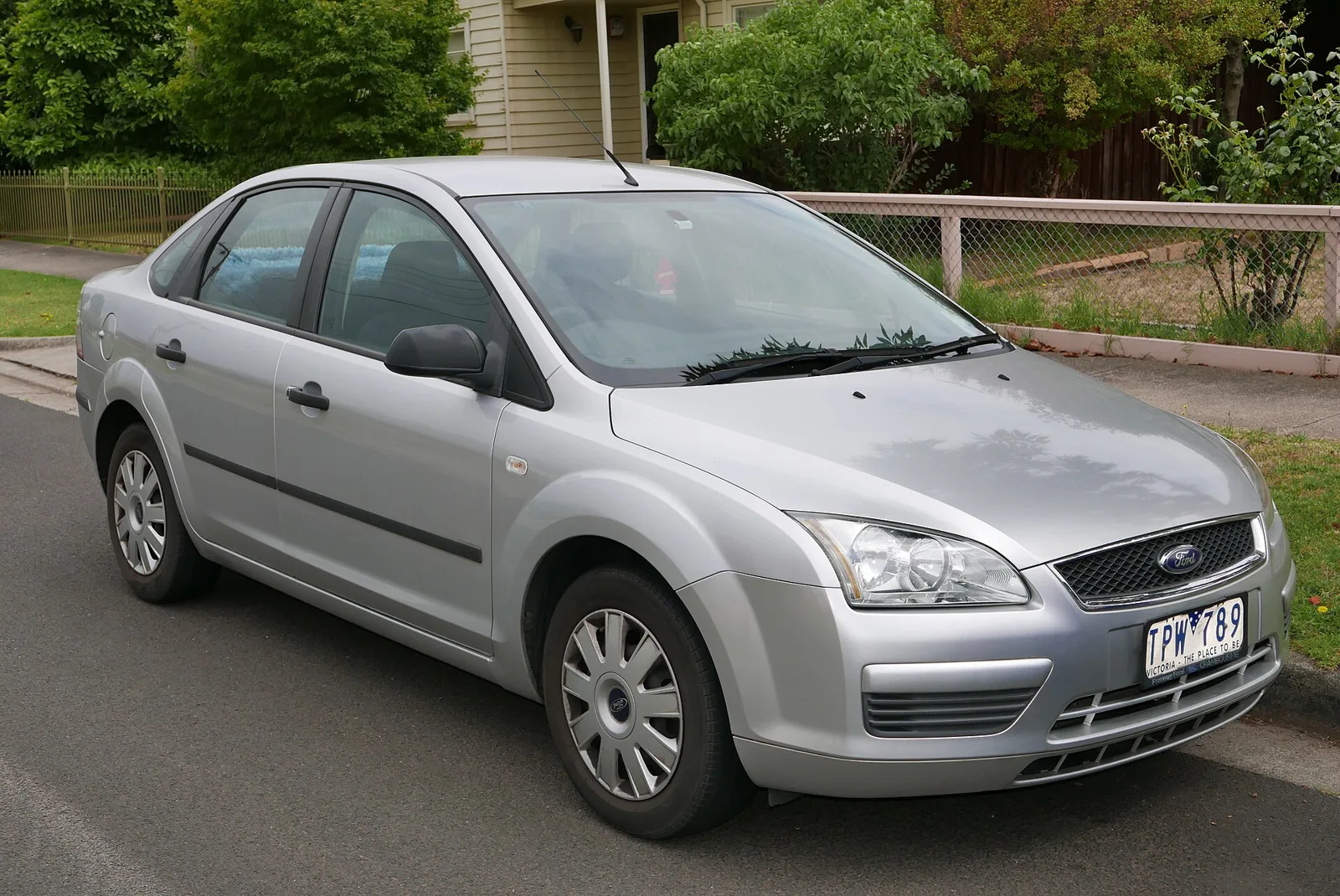
A larger, heavier Focus on the shared C1 platform that added the ST and RS hot hatches and a rally-winning WRC version.
Built from 2005 to 2010 on Ford's C1 platform, the Mk 2 Focus grew larger and heavier than the Mk 1. The range included the turbocharged ST and the 305 PS RS, and the WRC rally version took twelve world rally wins.
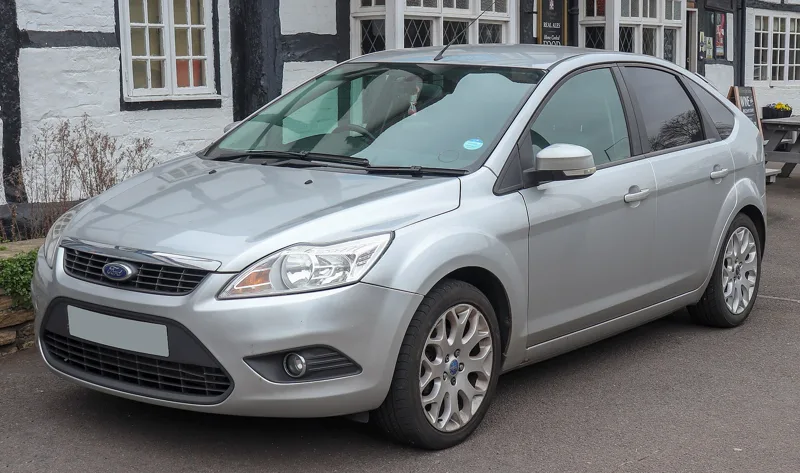
The Ford Focus Mk 2 was the second generation of Ford's small family car, built from 2005 to 2010 on the Ford C1 platform. It was launched at the Paris Motor Show in September 2004 as a three-door and five-door hatchback and an estate, and its engines ranged from a 1.4-litre petrol unit to the 350 PS RS500. The line also produced the ST and RS hot hatches and a rally-winning WRC version.
How was the Mk 2 Focus engineered?
The Mk 2 sat on the Ford C1 platform, which also underpinned the Volvo C30, S40, V50 and C70, the Mazda3 and the Focus C-Max. Ford called the programme Global Shared Technologies. The suspension design carried over largely unchanged from the Mk 1, but the bodyshell was 10 per cent stiffer, which Ford said gave a better ride.
Dimensions grew noticeably. The wheelbase rose by 25 mm (1 in), and the car was 168 mm (6.6 in) longer, 8 mm (0.3 in) taller and 138 mm (5.4 in) wider. The extra room lifted interior and boot space, and the car gained KeyFree entry, a solar-reflect windscreen, adaptive front lighting and voice control for audio, telephone and climate.
Build quality was an important step up. Critics had compared the Mk 1 unfavourably with the Volkswagen Golf Mk4, so the Mk 2 received a padded, soft-feel dashboard, damped glovebox action, interior grab handles, chrome interior door handles and better switchgear. Styling borrowed from the Mondeo and Fiesta, along with ideas from the abandoned B-Proposal for the original Focus.
Gearboxes included a Durashift 6-speed manual, a Durashift 4-speed automatic, a new Durashift advanced manual and a standard manual.
A larger, heavier Focus that added the ST and RS hot hatches and gave Ford a rally-winning car from the same family.
Where was the Mk 2 Focus built and sold?
The Mk 2 was first built in Silverton, South Africa, for Australia and New Zealand. Shortly after launch Ford New Zealand moved its supply to Saarlouis in Germany to meet Australia's high demand, and the Philippines built the car at Santa Rosa for ASEAN markets. The Mk 2 debuted in the Americas in Mexico in 2006.
In China Chang'an Ford built the Focus from April 2005 as a five-door hatchback or four-door saloon, with 1.8 and 2.0-litre petrol engines. In Argentina the Mk 1 was built alongside the Mk 2 until 2008 and was discontinued in 2010, when the Mk 2 replaced it. Ford then ended production of the European Mk 2 after the 2010 model year, replacing it with the globally assembled Mk 3.
In the United States and Canada the first-generation car continued in a redesigned form as a saloon or coupe, after the hatchbacks and wagon were dropped in 2008. Coupe sales were only a small fraction of the old three-door hatchback's, despite rising sales of the saloon.
How safe was the Mk 2 Focus?
The 2004 Focus achieved the highest Euro NCAP ratings in its class, with 5 stars for adults and 4 out of 5 for children. It earned 2 out of 4 for pedestrians, and beat rivals such as the Vauxhall Astra and the Volkswagen Golf Mk5 with full marks in the front impact test.
Latin NCAP later rated the most basic Latin American configuration of the car at 4 stars for adults and 3 stars for toddlers. The safety package was improved in the 2008 facelift, which added dual airbags and ABS with EBD as standard in the markets that received the update.
Which engines powered the Mk 2 Focus?
Petrol engines ranged from a small 1.4-litre Duratec to the 2.5-litre turbo five-cylinder ST at 225 PS and the 2.5-litre RS at 305 PS. Diesels were 1.6, 1.8 and 2.0-litre Duratorq TDCi units, with the 2.0-litre offering the most power.
The lineup mixed old and new. The 1.4 and 1.6-litre all-aluminium engines from the previous Focus were upgraded and renamed Duratec, and a 1.6-litre Ti-VCT variant with variable valve timing was added. The 1.8 and 2.0-litre Zetec petrol units of the original were replaced by the Duratec HE family.
| Engine | Output | Detail |
|---|---|---|
| 1.6-litre Duratec | 100 PS | Petrol entry engine |
| 1.6-litre Duratec Ti-VCT | 115 PS | Variable valve timing |
| 2.5-litre Duratec ST | 225 PS | Turbo five-cylinder, Volvo-derived |
| 2.5-litre Duratec RS | 305 PS | Turbo five-cylinder, front-wheel drive |
| Diesel 1.6 to 2.0 TDCi | 90 PS and up | Duratorq units |
What were the trim levels of the Mk 2 Focus?
The pre-facelift Mk 2 in the UK ran from Studio, the base model, through LX, Style, Sport, Zetec and Zetec Climate to Ghia and Titanium. Ghia was the only model with cruise control as standard. Other countries used different ladders, so South Africa had Ambiente, Si and Trend, while Australia kept the CL, LX, Zetec and Ghia names.
In Brazil the car came as GL, GLX, Ghia and Titanium, and in Argentina it ran from Trend through Trend Plus to Ghia, with five-speed manual gearboxes and a four-speed automatic on some Ghia models. These differences show how far the car was tailored to each market.
What changed in the 2008 facelift?
The facelifted Mk 2, unveiled at the Frankfurt Motor Show in September 2007, brought the Focus into line with Kinetic Design. Every exterior panel except the roof was reworked, with trapezoidal grilles, swept-back headlamps, bold wheel arches and a new rear bumper. UK sales began in February 2008.
Inside there were softer plastics, red-lit instruments and a new centre console for the Titanium and optional Zetec trims. A Ford Power button and a Ford PowerShift transmission, similar to Volkswagen's DSG, were added to the range. Stability control became standard, and prices rose by at least 250 pounds.
The Zetec S trim arrived in late 2008 with a body kit of spoilers and side skirts taken from the ST, plus aluminium pedals and a silver handbrake cover. In June 2009 Ford stopped selling the saloon in Western Europe, although sales continued in other markets until 2011.
What was the Focus ST?
The Focus ST was the hot hatch version launched in 2005, using a turbocharged 2.5-litre five-cylinder engine from Volvo that produced 225 hp (168 kW; 228 PS). Although the platform was the same, no saloon or estate version of the ST was ever released. Ford rebadged the engine as the Duratec ST.
Ford had also applied variable valve timing to both camshafts and recalibrated the throttle. Mountune's 2008 kit lifted output to 260 bhp (190 kW), using a K&N panel filter, a larger intercooler and a remap. The ST was known as the XR5 Turbo in Australia and New Zealand, where it was sold only as a five-door hatchback.
What was the Focus RS Mk 2?
The Focus RS Mk 2 was a front-wheel-drive performance car that reached the road on 5 January 2009, with a 305 PS turbo five-cylinder. It used a Quaife limited-slip differential and Ford's RevoKnuckle front suspension to tame torque steer, and it reached 0-100 km/h in under 6 seconds. Top speed was 263 km/h (163 mph).
The RS engine was rated at 305 PS (224 kW; 301 hp) at 6,500 rpm, with 440 N-m (325 lb-ft) of torque from 2,250 to 4,500 rpm. Ford UK claimed it was as close as buyers could come to driving a full-spec rally car, and the car came in three colours: Ultimate Green, Performance Blue and Frozen White.
What was the Focus RS500?
The RS500 was a limited run of 500 cars launched in April 2010, with 101 of them for Britain. Its output rose to 350 PS (257 kW; 345 bhp), and torque rose from 440 to 460 N-m (340 lb-ft). Each car carried a numbered plaque and was painted Panther Black.
Every car was then shipped to a dedicated 3M facility near Frankfurt, where a special film gave the bodywork its matte black effect. The changes included a larger air-to-air intercooler, a bigger air filter box, a larger diameter exhaust downpipe, an uprated fuel pump and updated software. The engine was modified by a team from Ford TeamRS working with Revolve Technologies, the firm behind the Mountune brand.
Was there an electric Focus?
A Focus battery electric prototype was shown in August 2008, and a version was unveiled at the 2009 Frankfurt Motor Show. The UK government's Ultra-Low Carbon Vehicles initiative supported a fleet of 15 Focus BEVs in the London Borough of Hillingdon from early 2010, run by a consortium that included Ford and the University of Strathclyde.
The Focus BEV also appeared on The Jay Leno Show in a Green Car Challenge segment, where celebrity guests drove the electric car.
How did the Focus compete in rallying?
The Focus RS WRC was built by Ford and M-Sport for the BP Ford World Rally Team. It was heavily modified from the road car, with four-wheel drive and a turbocharged 2.0-litre Duratec-based engine rather than the 2.5-litre road unit. The RS WRC 06 took twelve world rally wins, starting with the 2006 Monte Carlo Rally.
The first MkI Focus World Rally Car made its debut in 1999, and McRae later took several wins with it. The Focus RS WRC 06 debuted late in 2005, and Marcus Gronholm won the opening Monte Carlo round of 2006 in it. The car won four rounds in 2008 and recorded 36 WRC victories in total since the original model debuted in 1999.
How did the Focus perform in touring cars?
The Focus ST made its British Touring Car Championship debut in 2009 with Arena Motorsport. In its second season the car ran on liquefied petroleum gas and took the first BTCC win for an LPG car, at Brands Hatch. Motorbase Performance continued to run the ST.
Arena later entered Focus Mk3s in the World Touring Car Championship, and in South Africa modified Focus STs won the Class T title in 2009 and 2011.
How did the RS WRC evolve season by season?
Each season brought updates to the RS WRC. The 07 version, based on the 2006 car, aimed to save weight and improve driveability at the bottom end of the range, and it debuted with a one-two finish at the 2007 Rally Finland. The 08 car added new front aero design and grille styling that echoed the road-going RS Mk II.
Jari-Matti Latvala used the car to win the 2008 Swedish Rally, becoming the youngest driver ever to win a world rally. The 2009 version carried small design style changes in line with the Focus RS Mk II.