America measures a mid-size car in cubic feet, Europe never defined its letters, and Japan fixes classes by exact dimensions.
A mid-size car is the American name for the European D-segment large family car, and the US EPA defines it as 110-119 cubic feet of interior and cargo volume. Compact cars are smaller at 100-109 cubic feet. An executive car is the next step up, the E-segment, aimed originally at senior managers.
An American mid-size car is defined by a number: 110 to 119 cubic feet of combined passenger and cargo space. Its closest European counterpart, the D-segment, has no definition at all. The letters A to F were named in a 1999 European Union document and never explained, and carmakers have simply carried on comparing one model with another.
That gap between a measured class and a market habit explains why a compact in Detroit, a C-segment car in Munich and a "5 number" car in Tokyo are three slightly different ideas of small. Behind each one sit a regulator, a buyer and a price.
What is a car segment?
A segment is a market grouping: a set of cars that shoppers treat as rivals. A class, in the regulator's sense, is a legal grouping used for emissions, fuel economy, safety testing or tax. The two overlap but never match exactly. The international standard ISO 3833-1977 supplies terms for classifying road vehicles, yet most of the vocabulary used on dealer forecourts comes from the market.
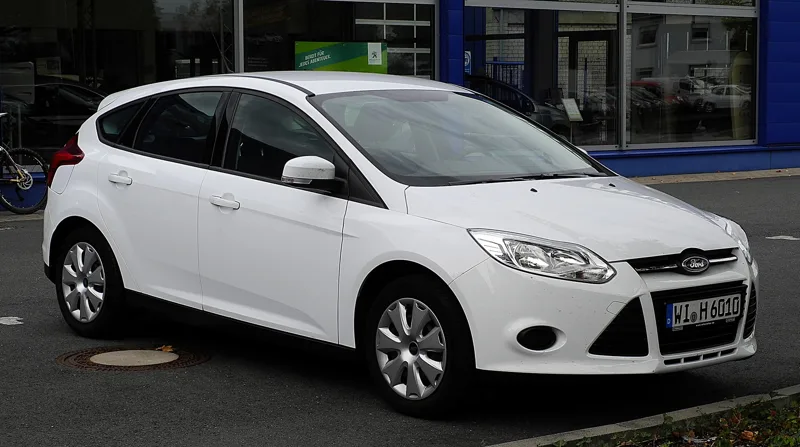
Europe's system is the loosest. Segments there have no formal characterisation or regulation, and a model is placed by comparison with well-known brands. A Golf can be called a Ford Focus rival for size, and a Focus a Golf rival. The smaller Polo drops a segment below, and the larger Passat climbs a segment above. The 1999 EU document, a merger case involving Hyundai and Kia, listed the names without defining them: A for mini cars, B small, C medium, D large, E executive, F luxury, J sport utility, M multi-purpose and S sports.
North America works the other way. Passenger cars are sorted by total interior capacity, and trucks by gross vehicle weight rating. The European Union uses linear measurements, while Asian systems tend to combine dimensions with engine displacement.
In America a mid-size car is a number of cubic feet; in Europe the D-segment is whatever sits next to a Ford Focus or a Golf.
Car segments from A to F
| Segment | European name | UK or US name | US EPA volume | Examples |
|---|---|---|---|---|
| A | City car | Minicompact | - | Fiat 500, Citroen C1, Toyota Aygo |
| B | Small car | Supermini (UK), subcompact (US) | 85-99 cu ft (2,410-2,800 L) | Volkswagen Polo, Hyundai Accent |
| C | Small family car | Compact | 100-109 cu ft (2.8-3.1 m3) | Toyota Corolla, Renault Megane, Volkswagen Golf |
| D | Large family car | Mid-size or intermediate | 110-119 cu ft (3.1-3.4 m3) | Ford Mondeo, Chevrolet Malibu, Kia K5 |
| E | Executive car | Full-size or mid-size luxury | - | Mercedes-Benz E-Class, Volvo S90 |
| F | Luxury saloon | Full-size luxury | - | BMW 7 Series, Lincoln Continental, Lexus LS |
What is the difference between a compact and a midsize car?
In the United States the Environmental Protection Agency (EPA) draws the line with volume. A subcompact has between 85 and 99 cubic feet (2,410-2,800 L) of combined interior and cargo space. A compact has 100-109 cubic feet (2.8-3.1 m3). A mid-size car has 110-119 cubic feet (3.1-3.4 m3). Every step is only about ten cubic feet.
Canada follows nearly the same pattern. Its six car classes come from the Fuel Consumption Guide published by Natural Resources Canada rather than from regulation, and because most Canadian cars share designs with American ones, the classes mirror those of the United States.
Two other American bodies measure differently. The National Highway Traffic Safety Administration groups cars for crash testing by weight class. The Insurance Institute for Highway Safety, which runs its own crash programme and whose classes most American insurers use, has six: micro, mini, small, midsize, large and very large. Since 2010 it has based them on a formula that combines footprint, meaning length times width, with weight.
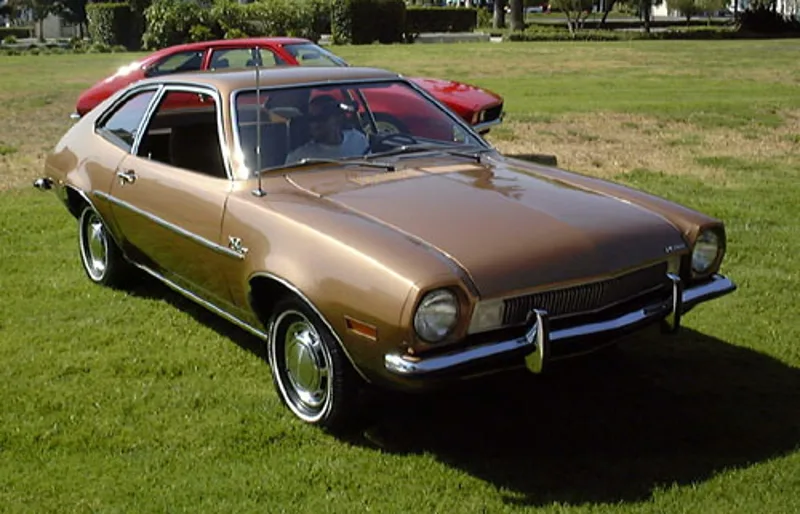
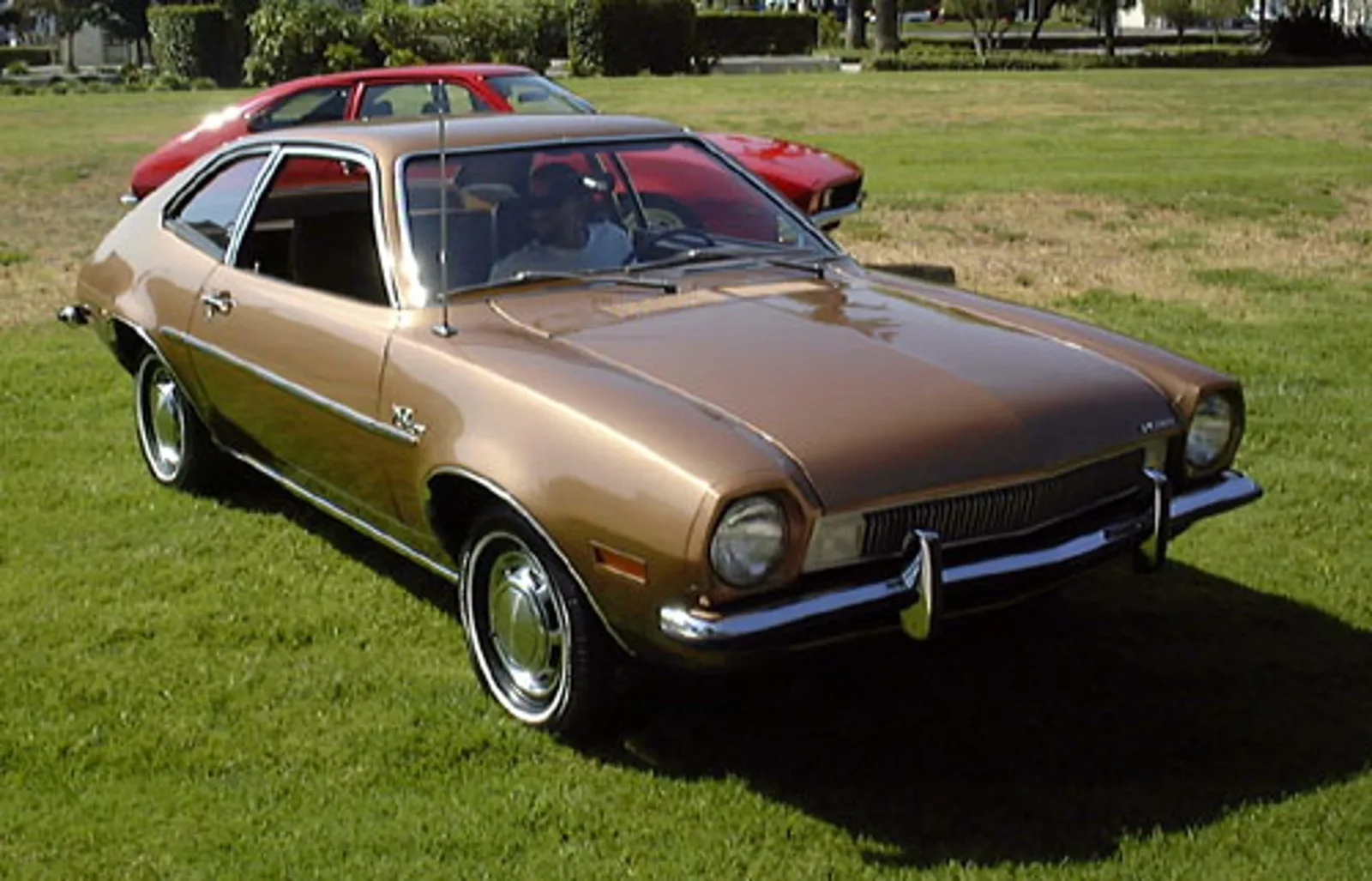
The terminology slides about on both sides of the Atlantic. The EPA's smallest class, minicompact, is rarely used, so A-segment cars are sometimes called subcompacts in America. The first American-built subcompacts arrived in 1970 as the AMC Gremlin, Chevrolet Vega and Ford Pinto. In Britain the supermini was a late-1970s idea, with the 1977 Ford Fiesta and Vauxhall Chevette as early examples.
Where do microcars and city cars fit?
Below the A-segment sit microcars and their Japanese equivalent, kei cars. They straddle the boundary between car and motorbike, are often covered by separate regulations with relaxed registration and licensing, and typically have engines of 700 cc (43 cu in) or less and three or four wheels. Microcars were born in Europe after the Second World War, with voiturettes and cycle cars as their predecessors. Kei cars have existed in Japan since 1949.
The smallest group registered as ordinary cars, the A-segment, has been around in some form since the early 1920s. It became popular in the late 1950s with the original Fiat 500 and the BMC Mini.
What is the D segment, and where does compact executive fit?
D-segment is Europe's third-largest passenger car category, the large family car, and the American equivalent is mid-size or intermediate. A compact executive car, such as the Audi A4, BMW 3 Series or Lexus IS, is a premium model that falls between the premium compact and the executive car in size. It matches mid-size cars in dimensions and counts as D-segment in the European scheme. North American shoppers would reach for the terms luxury compact or entry-level luxury car.
Smaller still is the premium compact, also called the subcompact executive, the entry point to luxury motoring. It became popular in the mid-2000s, when Audi, BMW and Mercedes-Benz introduced entry-level models smaller and cheaper than their compact executive cars. The Acura ILX, Mercedes-Benz CLA-Class and Lexus CT200h are examples.
What does executive car mean?
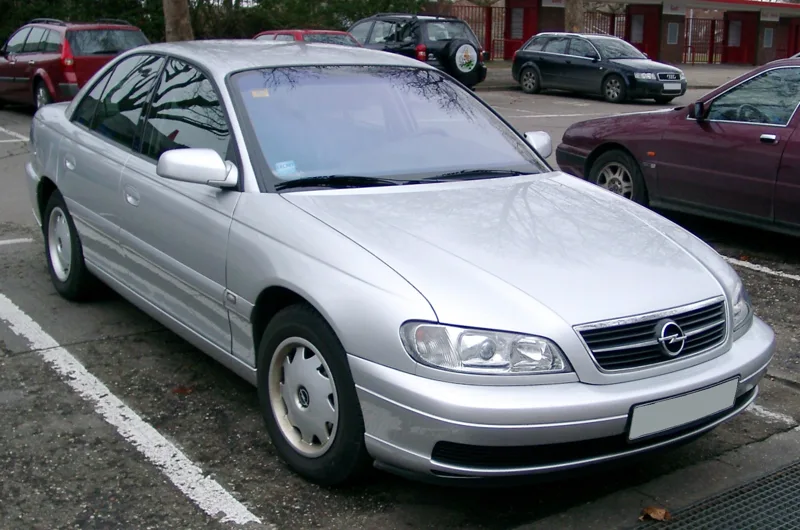
In Britain, executive car is the term for a large car, matching the European E-segment and the American full-size class. It sits above the compact executive and the non-luxury mid-size, and below the luxury saloon or full-size luxury sedan. Euro NCAP, the European safety-testing body, has adopted the term, applying it to expensive cars over 4.80 m long.
The word came out of the 1960s and described cars aimed at successful professionals and middle-to-senior managers. Firms gave them to senior staff as a perk and exploited British and European tax schemes that favoured company-owned cars. Early examples usually carried engines of 2.0-3.5 L (122-214 cu in). A large family car of similar size but plainer trim made do with 1.6-2.4 L (98-146 cu in).
Before the 1990s executive cars were typically saloons. Recently they have also come as estates, convertibles, coupes and five-door hatchbacks. The usual brief is that they should be comfortable and refined, with some driving pleasure on occasion. Rover, Saab, Renault and Citroen all leaned towards hatchbacks at various times, Ford offered alternatives through the 1990s, and Audi, BMW and Mercedes-AMG have offered hatchbacks as separate models since the 2010s.
Other languages carry their own labels. In France executive cars are known as routieres, comfortable long-distance cars, a class that first appeared on the French market in the 1930s. Germany's federal authorities call the class Obere Mittelklasse, upper-middle class, and cars larger than that are Oberklasse, upper class. In the United States an executive car is simply a full-size car.
Who builds executive cars, and who stopped?
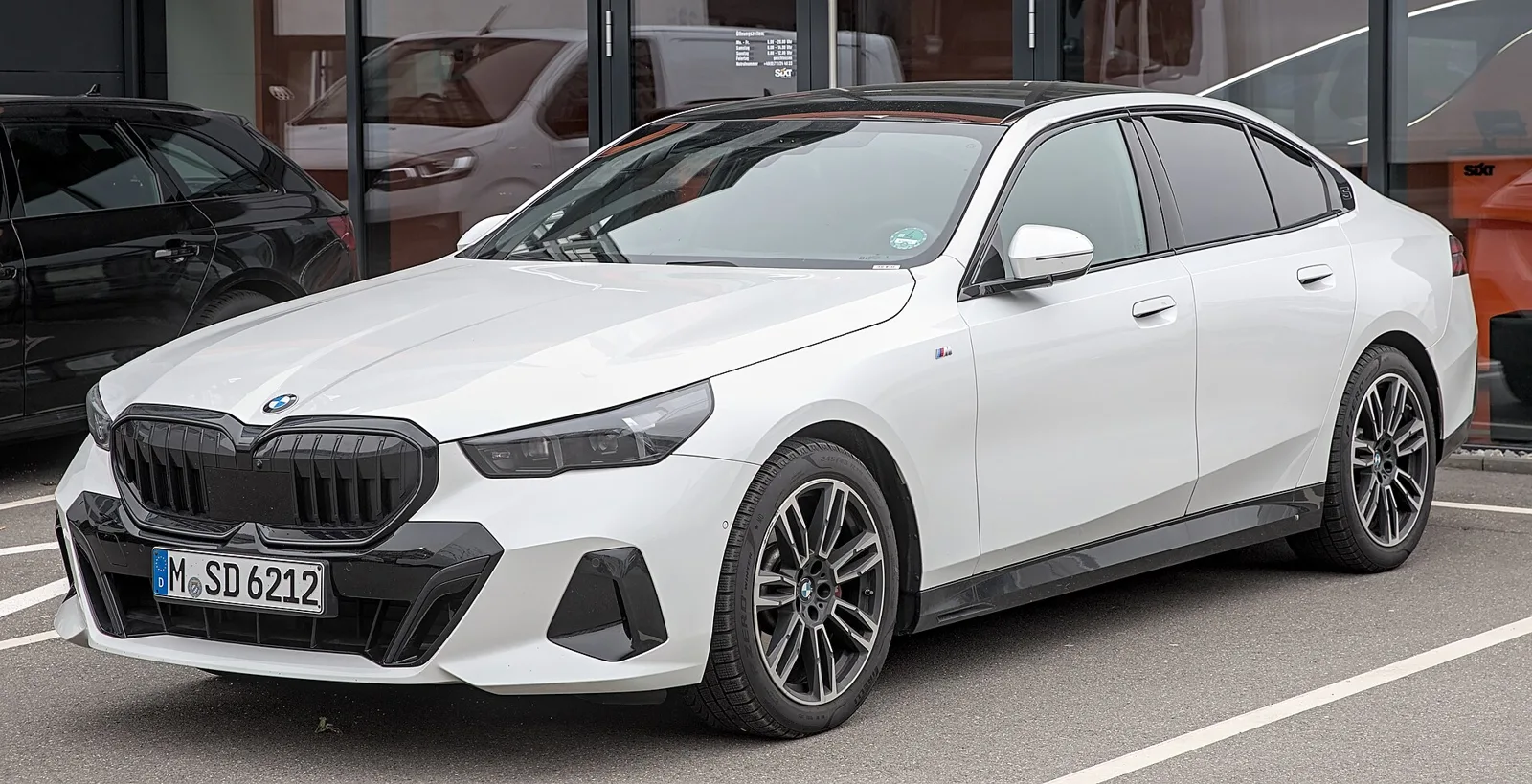
German makers have the longest unbroken runs. Mercedes-Benz has built big luxury cars since the early 1900s; after the war its first all-new models were the W120 executive cars. That line has been sold as the E-Class since 1993, with the CLS four-door fastback added in 2004 and a shooting brake offered from 2012 to 2017. BMW began with the 1936-1941 BMW 326 and then waited 21 years for the 1962 New Class. The 5 Series replaced that in 1972 and is still in production, built over seven generations as a saloon, estate and four-door hatchback. Audi released the 100 in 1968, replaced it with the A6 in 1994 and added the A7 fastback in 2010.
In Japan the Toyota Crown has been made since 1955 and is in its fifteenth generation. Nissan's longest-running executive car, the Gloria, lasted 12 generations until 2004. Honda introduced the Legend in 1985, built it until 2012, and sold it again from 2014 to 2021.
Several European names have gone. Peugeot has built no executive cars since the 607 ended production in 2010, and Citroen has built none since the C6 finished in 2012. Saab, whose first was the 1984 9000, went bankrupt in 2012. Jaguar's XF (X260) ceased production in 2024. Volvo, which started with the 164 in 1968, still builds the S90 and V90. The Rover 75, made until 2005, was big enough to straddle the executive and compact executive categories.
China has built its own. The Roewe 750 of 2006 was based on the Rover 75, the Roewe 950 of 2012 was a re-bodied 2010 Buick LaCrosse, and the BYD Han went on sale in 2020. Because many Chinese owners prefer to be driven by a chauffeur, overseas brands have built long-wheelbase versions for that market, among them the XF L, a 2016 Jaguar XF, and the Li, a 2017 BMW 5 Series. In South Korea the third-generation Hyundai Grandeur of 1998 is believed to have set the standard, and the semi-large saloon sells as a symbol of the middle class. Vietnam's first, the VinFast LUX A2.0, debuted at the 2018 Paris Motor Show and entered production in 2019.
How do governments sort cars?
Official schemes exist mostly for tax and rules. British vehicle tax depends on how a vehicle is built, its engine, its weight, its fuel and its emissions, plus what it is used for. In Australia the Federal Chamber of Automotive Industries publishes classifications, and for SUVs the size bands are set by exterior length multiplied by width: under 8.1 m2 (87 sq ft) is small or light, 8.1 to 8.8 m2 medium, 8.8 to 9.8 m2 large, and more than 9.8 m2 (105 sq ft) upper or extra large.
China's standard GB/T 3730.1, issued in 2021, sorts three-box saloons by length and two-box hatchbacks, SUVs and multi-purpose vehicles by wheelbase. For its crash-test programme, Category A covers two-box vehicles of 4 to 4.5 m, or saloons with engines below 1600 cc, and Category B covers cars longer than 4.5 m with engines above 1600 cc. In India the Society of Indian Automobile Manufacturers divides cars into A1 to A6, B1, B2 and SUV on length alone.
Japan is the strictest. Its Road Vehicle Act of 1951 defines three classes, enforced to exact measurements. A kei car has to stay under 3.4 m (11.2 ft) in length, 1.48 m (4.9 ft) in width and 2 m (6.6 ft) in height, with a 660 cc (40.3 cu in) engine and 64 PS (47 kW; 63 hp) at most. The small class, known as "5 number" after its plate prefix, is limited to 4.7 m (15.4 ft) in length, 1.7 m (5.6 ft) in width, 2 m in height and 2,000 cc (122.0 cu in). Anything beyond is a "3 number" normal-size car, though private passenger vehicles may not exceed 6 m (19.7 ft) in length or 2 m in width. Until 1989 the annual tax on normal-size cars was more than double that on the small class, so most Japanese cars were built to fit it. Now tax varies only with engine displacement, yet small-class cars remain popular, and manufacturers work to maximise interior space within the same outside dimensions.
In the United States the regulatory view of the vehicles themselves differs from the showroom view. Federal agencies treat pickups, vans, minivans and SUVs as trucks whatever their construction, and SUVs are always trucks, although some low-riding crossovers are counted as station wagons or hatchbacks.
Where do MPVs and SUVs belong?
People carriers have their own ladder. The mini MPV is often built on a B-segment hatchback platform, the compact MPV is mostly a European phenomenon, and the large MPV, or minivan, became popular after the 1984 Renault Espace and Dodge Caravan appeared. SUVs are less tidy. There is no common definition and usage varies by country, with some insisting on a light-truck chassis and others accepting any vehicle with off-road design features. The 1984 Jeep Cherokee (XJ) is regarded as the first modern-style SUV. A crossover differs by using a unibody shared with a passenger car, which typically brings better comfort and economy but less off-road ability.
What the labels mean for a buyer
For anyone comparing models, the practical lesson is that the same word can mean different things depending on the country. In America, compact and mid-size are separated by cubic feet. In Europe they are separated by whichever car the market uses as a yardstick. An executive car is a rung above both, and the British term has travelled further than the car it described: a company saloon for a manager in the 1960s is now just as likely to arrive as an estate, a coupe or a hatchback.