From Soviet-licensed trucks and knock-down kits to the world's largest vehicle exporter: the policies, joint ventures and companies behind the Chinese car industry.
China built its car industry through Soviet-assisted state plants from the 1950s, foreign joint ventures from 1983, WTO membership in 2001 and later electric vehicle policy. It passed the United States in vehicle production around 2008 or 2009, according to differing counts, and reached 28.879 million vehicles in 2017.
In 1985 China produced a total of only 5,200 cars. By 2017 the country was turning out 28.879 million vehicles a year, 30.19% of global output. Few industries anywhere have grown by that scale in a single working lifetime, and the way China did it, through Soviet trucks, borrowed designs, foreign partners and then an electric-vehicle push, explains most of the brand names now arriving in Western showrooms.
Before 1949: a first car, a charcoal burner and a bombed factory
The first car in China was bought from Hong Kong in 1902 by Yuan Shikai and given to Empress Dowager Cixi. Early in the twentieth century Ford, General Motors and Mercedes-Benz all had plants in Shanghai. The first Chinese-built motor vehicle, the Minsheng 75 truck, had a prototype finished in Shenyang on 31 May 1931, but bombing during the Japanese invasion of Manchuria wrecked the factory before series production could start.
War shaped what followed. Charcoal-powered vehicles carried goods in the Second Sino-Japanese War because of fuel shortages, with tung oil as a petrol substitute. Car numbers had been climbing, close to 70,000 in 1937, but fell to 16,000 in 1940 and only returned to pre-war levels in 1947. The Changan factory moved from Shanghai to Chongqing after the city was bombed.
In 1985 China made 5,200 cars. In 2017 it made 28.879 million vehicles.
1949 to 1980: Soviet help and trucks, not cars
After the People's Republic was founded, plants and licensed designs arrived with Soviet assistance in the 1950s. Output stayed small, never above 100,000 to 200,000 vehicles a year in the first three decades. Most of what was built was Jiefang trucks for military and industrial users and Hongqi sedans for a limited number of officials. Private cars did not exist as an idea.
The First Automotive Works produced the Jiefang CA-10 truck in 1956. On 10 March 1958 the Nanjing light truck NJ130, based on the Russian GAZ-51, was named Yuejin, meaning leap forward, and 1958 also saw the first production automobiles: the Dongfeng CA71, the Hongqi CA72 and the Feng Huang, later the Shanghai SH760. FAW had been founded on 15 July 1953 and is the oldest car manufacturer of the People's Republic. Changan dates its origins to 1862, but became a car maker in 1959 when it began building the Changjiang Type 46 jeep.
Reform and opening: how joint ventures changed the car industry in China
Reform from the late 1970s gave the industry a new direction. In July 1979 China adopted its first law on joint ventures with foreign investment. By 1983 American Motors had signed a 20-year contract to build Jeeps in Beijing, and in 1984 Volkswagen signed a 25-year contract to make cars in Shanghai, while Peugeot agreed a project in Guangzhou. These early ventures transferred little technology because most of the work was assembling knock-down kits.
The import spree of 1985
With little domestic supply, imports surged even behind a 260 percent duty. Japanese vehicle exports to China rose sevenfold in 1984, from 10,800 to 85,000, and in 1985 the country spent about $3 billion on more than 350,000 vehicles, including 106,000 cars and 111,000 trucks. The trade deficit forced a reversal. Customs duties were raised in March 1985, a regulatory tax followed, and in September 1985 nearly all vehicle imports were frozen for two years.
From kits to local parts
Until the late 1990s eight joint ventures built passenger cars: Shanghai Volkswagen, FAW-Volkswagen, Beijing Jeep, Guangzhou Peugeot, Dongfeng Citroen, Changan Suzuki, Changhe Suzuki and Soueast. The government's plan from April 1986 treated car making as a pillar industry, and localisation rose fast. The SAIC-Volkswagen Santana went from 60.09% local content six years earlier to over 90% in 1997, the FAW-Volkswagen Audi 100 reached 93% and the Jetta 84.02%. Companies from the defence industry (Changan, Changhe, Hafei), from state-owned groups (BYD, Brilliance, Chery, Changfeng) and from the private sector (Geely and Great Wall) entered from 1994. Capacity passed one million in 1992 and two million in 2000.
WTO entry and the surge of the 2000s
China joined the World Trade Organization in 2001. Tariffs on complete vehicles fell from 30% to 28% in 2006 and to 25% in 2010, and component tariffs eased from 13.5% to 12.9% and then 10%. Competition grew, prices fell and foreign firms brought newer models. From 2002 to 2007 the market grew by an average 21 percent a year, or one million vehicles annually.
The headline milestone depends on who is counting. One count says China became the largest auto producer in 2008. Another says that in 2009, with 13.79 million vehicles made (8 million passenger cars and 3.41 million commercial vehicles), it passed the United States as the world's biggest producer; a third count gives 13.83 million for 2009 and says China passed Japan. In 2009 sales of 13.64 million also made China the largest market, overtaking the United States. In 2010 production and sales both topped 18 million.
| Year | Milestone |
|---|---|
| 1985 | Total production of 5,200 cars |
| 1992 | Annual production capacity first exceeds one million |
| 2000 | Over two million vehicles produced |
| 2009 | 13.79 million vehicles produced |
| 2010 | Sales and production both above 18 million |
| 2017 | 28.879 million vehicles, 30.19% of global production |
| First half of 2023 | Exports of 2.34 million, ahead of Japan's 2.02 million |
| 2025 | 7.1 million vehicles exported |
Rules for foreign carmakers: from 50 percent to full ownership
From 1994 to 2018 Chinese policy required foreign carmakers to form joint ventures with a Chinese partner owning at least 50%. The aim was to protect local manufacturers and give them a chance to close the technology gap and develop their own brands. On 17 April 2018 the National Development and Reform Commission announced that foreign ownership limits would be phased out over five years. On 28 July 2018 restrictions on new energy vehicle production were lifted, which helped Tesla, and its Shanghai factory became the first wholly foreign-owned car plant in China. Lexus Shanghai was the second.
Liberalisation reached commercial vehicles in 2020 and passenger cars in 2022, when the rule against foreign carmakers having more than two joint ventures also ended. That made it possible to buy out local partners. In 2022 BMW took a 75% stake in its venture, and Volkswagen took 78.52% of Volkswagen Anhui in 2020. Strategy documents such as Made in China 2025 specifically prioritised electric vehicle manufacturing.
Which companies and brands make up the Chinese car industry
China now has about 150 active automobile brands, of which 97 are domestic and 43 are joint venture brands. Until 2010 the traditional Big Four state-owned makers dominated: SAIC, FAW, Dongfeng and Changan. They are now joined by a larger group that includes Geely, BAIC, BYD, Chery, GAC, Great Wall, JAC and Seres.
Central state-owned groups
- FAW, based in Changchun, owns Hongqi, Jiefang, Bestune and Yueyi and has joint ventures with Toyota, Volkswagen and Audi.
- Dongfeng, based in Wuhan, owns Voyah, M-Hero, Aeolus, Forthing and Dongfeng Nammi and has ventures with Honda, Nissan, Infiniti and Stellantis.
- Changan, based in Chongqing, sells Changan Auto, Deepal, Avatr and Kaicene cars and runs ventures with Ford and Mazda.
Local state-owned groups
- SAIC, controlled by Shanghai, sells IM, Rising Auto, Maxus, MG, Roewe, Wuling, Baojun and Yuejin, plus joint venture brands such as Buick, Chevrolet, Iveco, Volkswagen and Audi.
- GAC, controlled by Guangzhou, sells Trumpchi, Aion and Hyptec cars and works with Honda and Toyota.
- BAIC, controlled by Beijing, owns Arcfox, Beijing, Beijing Off-road and Foton, with Hyundai and Mercedes-Benz ventures.
- JAC, based in Hefei, owns JAC Motors, JAC Yiwei and JAC Refine and works with Huawei on the Maextro brand.
Mixed ownership and private companies
Chery, once state-owned, was restructured into a state-private mixed ownership company in 2025 and sells Chery, Exeed, Jetour and iCar cars; it also has a joint venture with Jaguar Land Rover. Seres is co-owned by the founder's family, Dongfeng and the Chongqing government and, after partnering with Huawei, began shifting to premium electric vehicles from 2021. Among private groups, BYD of Shenzhen is the largest electric vehicle maker in the world and runs Denza, Fangchengbao, Yangwang and Linghui. Geely, based in Taizhou, owns Volvo Cars, Polestar, Lotus, Zeekr, Lynk and Co, LEVC, Farizon, Proton and Smart. Great Wall Motor in Baoding sells Haval, Wey, Tank and Ora and runs Spotlight Automotive with BMW to make Mini electric cars.
The newer EV names include Leapmotor (founded 2015, Hangzhou), Li Auto (2015, range-extender electric cars), XPeng (2014, Guangzhou) and Nio (2014, Shanghai, with Onvo and Firefly launched in 2024). Xiaomi Auto, founded in Beijing in 2021, launched the SU7 in 2024 and is described as the only Chinese tech company directly involved in car manufacturing.
The reversal: Western brands now partner with Chinese firms
In the 1990s, Chinese makers looked to the West for technology. In the 2020s the flow has turned around, with Western carmakers seeking Chinese partners for electric technology and investing in start-ups.
- Stellantis paid 1.5 billion euros for 20% of Leapmotor in October 2023. In May 2026 Dongfeng and Stellantis signed a cooperation agreement worth over 8 billion RMB to build Peugeot and Jeep electrified vehicles at the Wuhan plant from 2027, and in August 2026 they announced a joint venture, Dongfeng Stellantis Automotive Technology.
- Volkswagen invested $700 million in July 2023 for 4.99% of XPeng, with the plan to co-develop two mid-size VW-brand electric models for China in 2026. Audi and SAIC agreed in 2023 to use IM Motors' platform, leading to the AUDI brand in 2024.
- Ford and Changan announced Changan Ford NEV in September 2023, with Changan holding 70% and Ford 30%.
- Renault agreed with Geely in August 2023 to form Horse Powertrain, 50:50, for engines and hybrid systems, and bought 50% of JMEV in 2019. BMW and Great Wall formed Spotlight in July 2018. Geely holds 50% of Smart, from a 2019 partnership with Mercedes-Benz.
- Toyota announced a venture with BYD in 2020, and its first electric sedan, the bZ3, was built with BYD's help.
- KG Mobility signed with BYD in November 2023 for battery packs and hybrid systems and with Chery in October 2024 to receive the T2X platform. In June 2024 Jaguar Land Rover and Chery signed a letter of intent covering a Freelander EV brand, and in June 2026 Tata Motors Passenger Vehicles formed Avinya, a premium EV brand supplied with Chery components.
The industry today
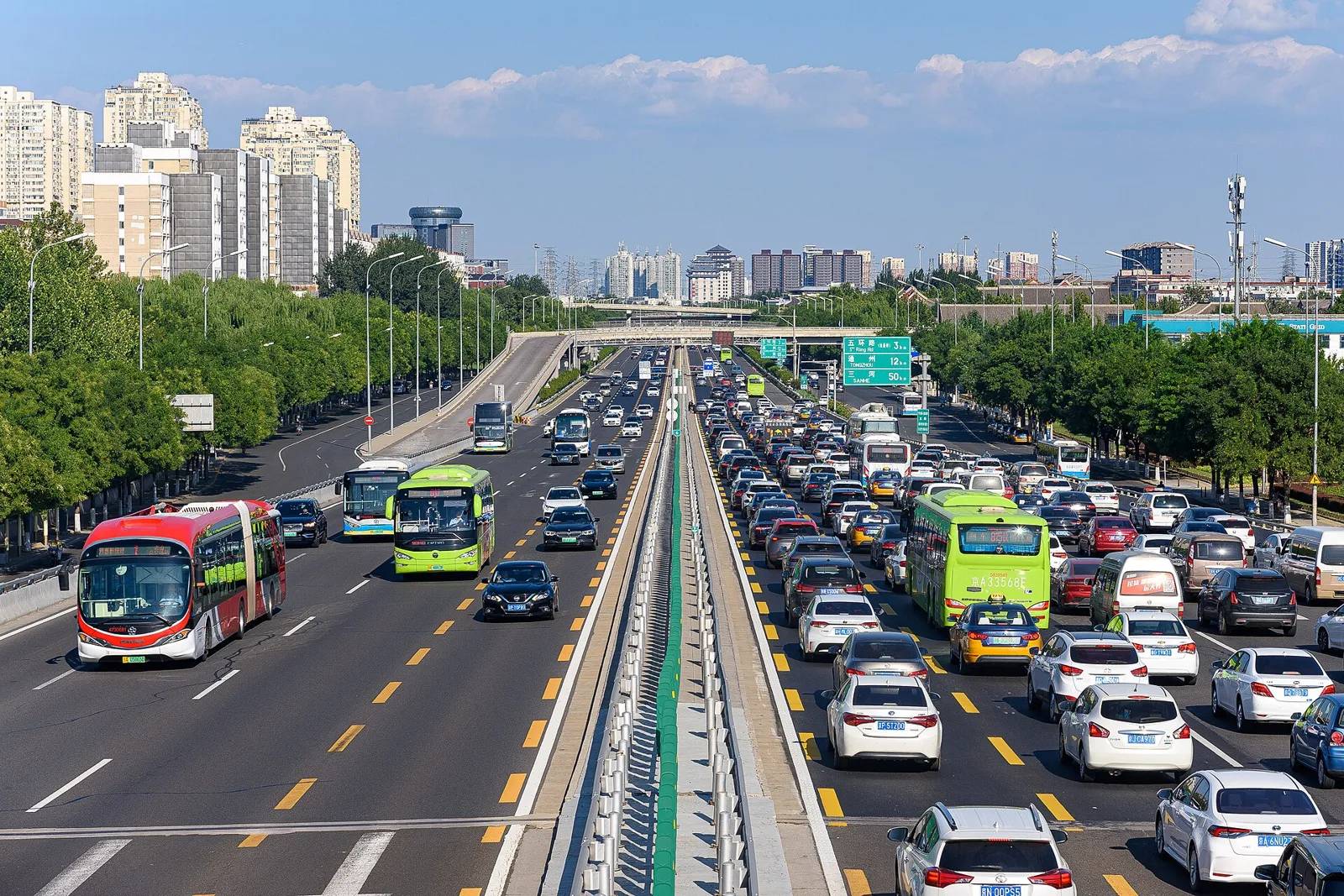
As of 2024 China is the world's biggest car market by both sales and ownership. In the 2020s domestic manufacturers have gained market share while foreign brands have lost it, and the industry focuses on electric vehicles and advanced driver assistance. In 2023 China overtook Japan as the world's largest car exporter, and in 2025 Chinese companies overtook Japanese ones in global vehicle sales, ending more than two decades of Japanese leadership. Exports that year reached 7.1 million vehicles.
The rise has drawn pushback. Other countries and trade blocs have raised scrutiny, tariffs and other restrictions, especially on electric vehicles, citing allegations of large state subsidies and industrial overcapacity.
What this means for drivers and buyers
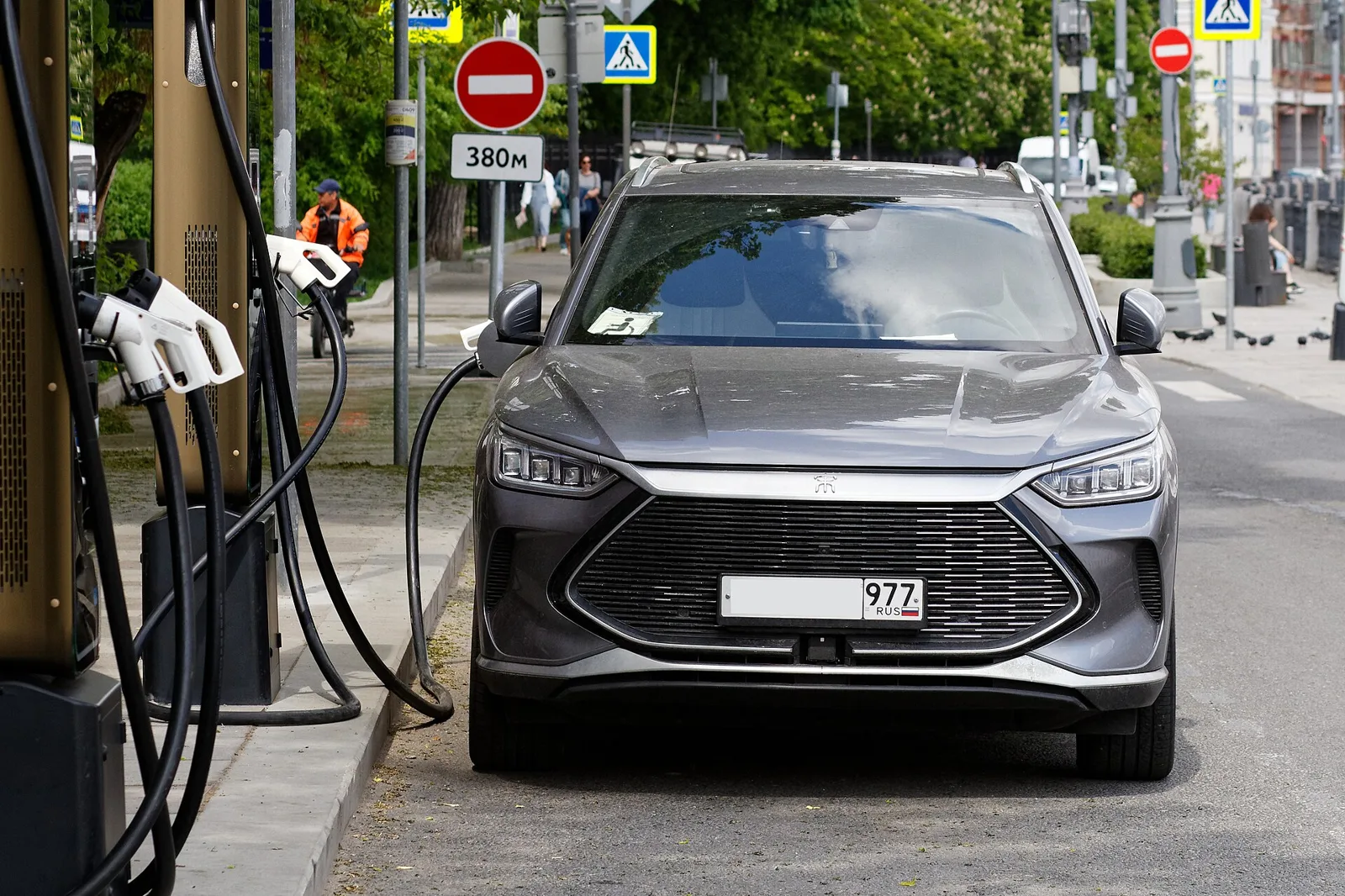
The labels on a modern car can hide its origin. Some of the cars on sale carry joint venture names such as Beijing Benz or GAC Toyota, others use Chinese brands that are only now going abroad, and a growing number are built on Chinese technology under Western badges: the Toyota bZ3 uses BYD's help, and a Smart is half Geely. Knowing which group sits behind a badge tells you who engineered the car and where the parts come from.
What dated plans does the Chinese car industry have?
The dated plans are modest. Dongfeng and Stellantis intend to begin building electrified Peugeot and Jeep models for China and export from 2027, with two off-road Jeep models first. Volkswagen and XPeng aim for two jointly developed mid-size models in China in 2026. Beyond that, the industry's direction is a matter of continuing reform, trade rules and the progress of the electric brands.