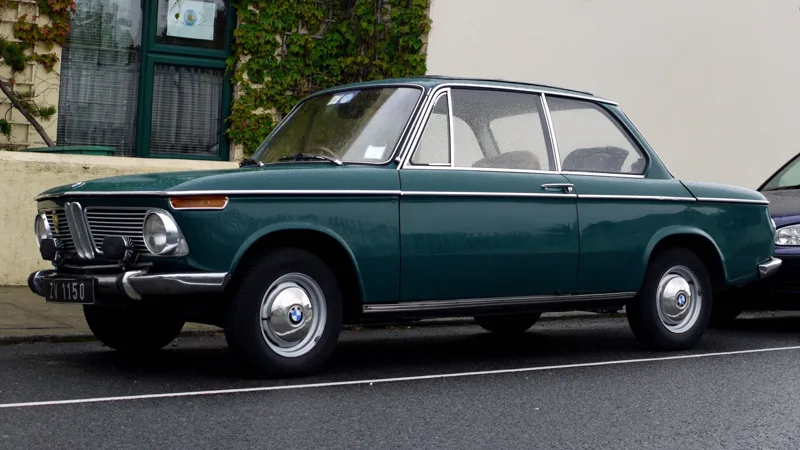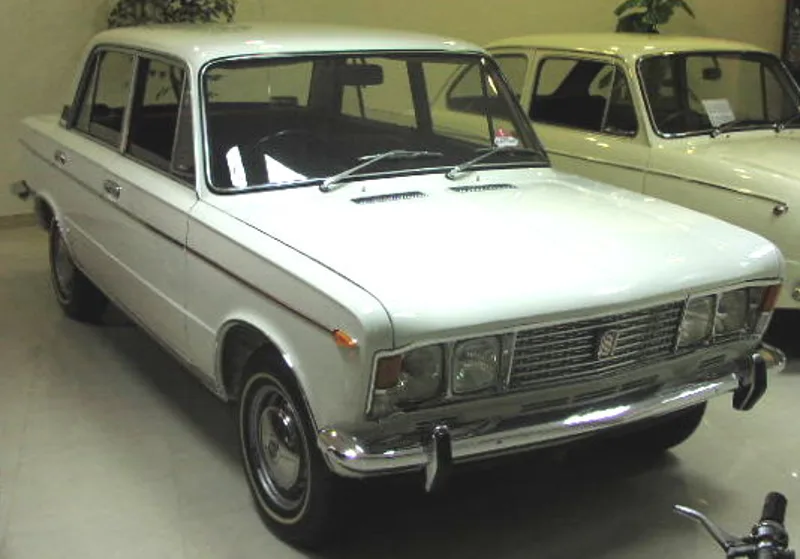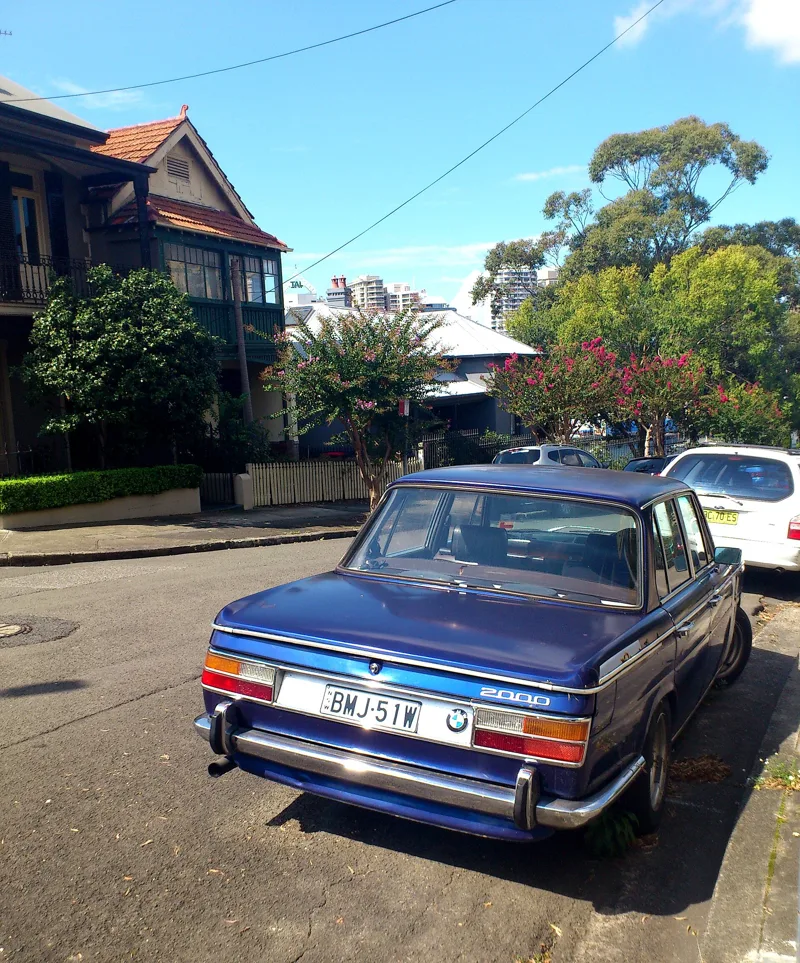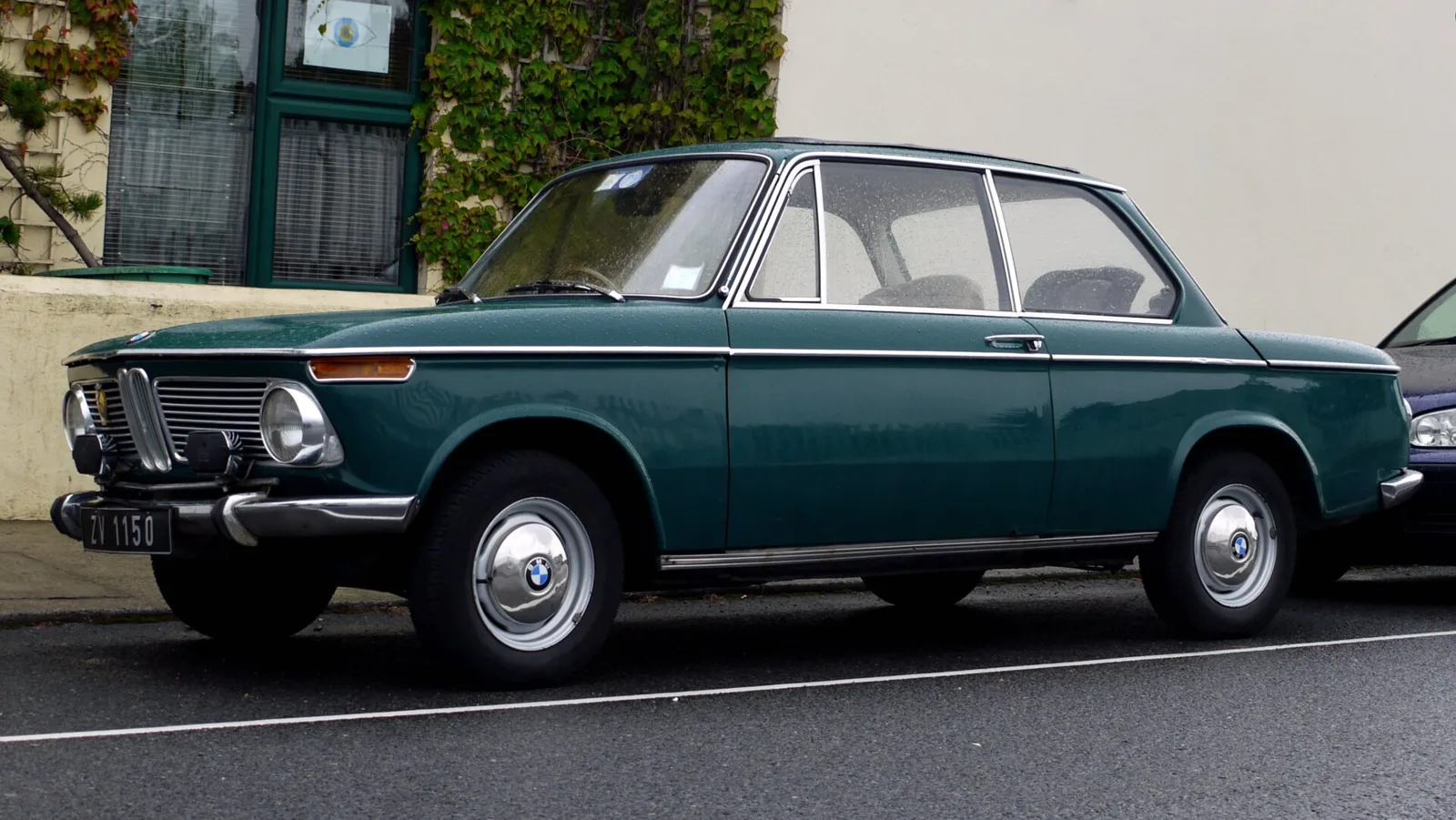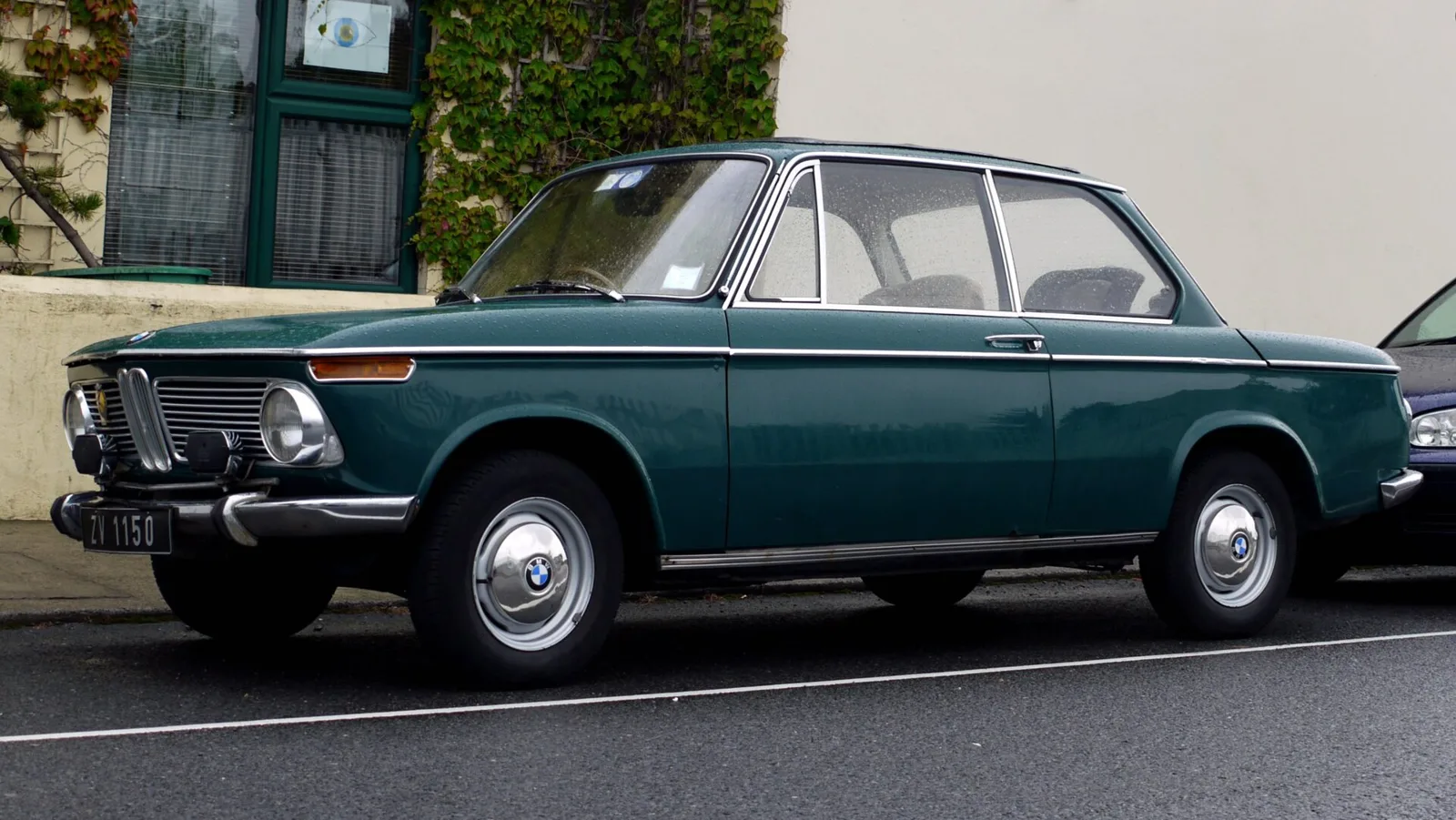
BMW's two-door 02 and Fiat's four-door 125 arrived within a year of each other, and each found its own buyers across Europe.
The BMW 02 Series and the Fiat 125 arrived within a year of each other in the late 1960s. The BMW was a two-door sports saloon from 1966, while the Fiat was a large four-door family car from 1967 that later gained a 100 PS S model.
BMW's 02 and Fiat's 125 began from different briefs. The 02 was a small two-door sports saloon for drivers who wanted more than a family runabout, while the 125 was a large four-door family car with an engine that had sports-car ambitions. They reached showrooms within a year of each other, and each found its own buyers across Europe.
Why did the 02 and 125 compete?
The BMW 1600-2 went on sale in 1966 and stayed in the range until 1975, while Fiat's 125 appeared in 1967. The two cars met most directly in Italy and Germany. The two-door BMW struggled in Italy, where buyers were drawn to four-door models such as the 125 and the Alfa Romeo Giulia 1300. In Germany, the 125 S took on the BMW 1600 and 1600 TI.
Both makers were chasing the middle of the market. BMW built a smaller, sportier two-door, while Fiat assembled its medium car from parts already in its catalogue. Buyers picked whichever car matched their priorities for a family car.
Two European family cars from the late 1960s, one built to be a sports saloon and one built to be a big four-door.
How did the 1600-2 start the 02 range?
In the mid-1960s BMW spotted room for a smaller and cheaper two-door version of its four-door New Class saloon. Wilhelm Hofmeister, the corporate design director, gave the project to Georg Bertram and Manfred Rennen. Their car ended up with a wheelbase 5 cm (2 in) shorter and an overall length about 25 cm (10 in) less, achieved largely by trimming the rear deck.
The 1600-2 made its Geneva debut in March 1966, carrying a badge that read simply 1600. Its 1.6 L M10 produced 85 PS (63 kW; 84 hp) at 5,700 rpm, along with 130 N m (96 lb ft) at 3,500 rpm. Road & Track judged the US$2676 car a great automobile for the money in 1968.
Against the New Class it was spartan, yet it was lighter, quicker and more agile in corners. The model caught on quickly across Western Europe, with Italy the notable exception.
What made the 2002 a performance car?
BMW enlarged the engine in 1968 to create the 2002, which gave the company a new reputation for affordable performance cars of real quality. The idea came from two figures inside the company, Helmut Werner Bonsch, who ran product planning, and Alex von Falkenhausen, who had designed the M10 engine. Each had quietly fitted a two-litre M10 to a personal 1600-2 and then proposed the change to the board together. Meanwhile the American importer Max Hoffman was pressing BMW for a sportier 02 for the United States.
The 2002 arrived with a single-carburettor 100 PS (74 kW; 99 hp) engine, and the dual-carburettor, higher-compression ti made 120 PS (88 kW; 118 hp). In 1971 the ti gave way to the tii, which borrowed the fuel-injected 130 PS (96 kW; 128 hp) engine from the 2000 tii and could reach 185 km/h (115 mph). A ZF three-speed automatic became available for the base car in 1969.
BMW 02 and Fiat 125 side by side
| Specification | BMW 02 Series | Fiat 125 |
|---|---|---|
| Launch | 1600-2 at Geneva, March 1966 | 1967 Geneva Motor Show; shown in May 1967 |
| Body | Two-door sports saloon; Touring hatchback from 1971 | Four-door large family car |
| Starting engine | 1.6 L M10, 85 PS (63 kW; 84 hp) | 1,608 cc inline-four, 90 PS (66 kW; 89 bhp) |
| Performance version | 1600 TI, 105 PS (77 kW; 104 hp), 960 kg (2,116 lb) | 125 S from 1968, 100 PS (74 kW; 99 bhp) |
| Top model | 2002 tii, 130 PS (96 kW; 128 hp), 185 km/h (115 mph) | 125 Special from 1970 |
| Gearbox | Four-speed manual; ZF three-speed automatic on the 2002 | Four-speed manual; five-speed on the S and Special; GM three-speed option on the Special |
| Turbo version | 2002 turbo, 1973, 170 PS (125 kW; 168 hp) | not given |
| Production | 1602 and 2002 across the range; Uruguayan CKD assembly of about 750 2002s | 603,877 built by Fiat in Italy |
| End of the model | Replaced by the E21 3 Series in 1975; 1502 to 1977 | Replaced by the Fiat 132 in 1972 |
| Foreign builds | Uruguay, Montevideo | Poland, FSO, 1967 to 1991 |
Production of the 2002 for Europe began in January 1968, and the US version followed in February 1968. About 2,850 American cars were built by the end of the 1968 model year in September, and a few early examples had been assembled in the third quarter of 1967 for emissions testing and as press cars.
Where else were the 1600-2 and 2002 built?
The 1600-2 and 2002 were assembled in Montevideo, Uruguay, from CKD kits under licence from Convex S.A. The first 58 kits for the 1600-2 were sent in 1967, and the 2002 replaced that model in local assembly from 1969. About 750 2002s were built there before the last batch of kits went out in April 1973.
What did the Fiat 125 do differently?
Fiat's 125 was an interim answer. The company's mid-size 1500 and 1800 were ageing, and their intended successor, Project 132, was still in early development. The engineer Dante Giacosa proposed assembling a new model from existing parts: the 1500's platform, the central body structure of the 124, and fresh front and rear ends. Eighteen months later the car was shown at the 1967 Geneva show.
The engine was a 1,608 cc inline-four with square proportions, its stroke lengthened from 71.5 mm to 80 mm. It produced about 90 horsepower, arriving at 5,600 rpm rather than the 6,500 rpm of the earlier 1,438 cc unit, which gave better torque and smoother delivery. Four disc brakes, a vacuum servo and a four-speed all-synchromesh gearbox with Porsche-style synchronizers completed the package.
Gear spacing was chosen with highway use in mind, and third gear alone gave 125 km/h where the 1500 C managed about 100 km/h in the same gear.
How did the Fiat 125 S change the car?
Buyers wanted more performance, so Fiat added the 125 S in 1968. It produced 100 PS (74 kW; 99 bhp) from a reworked cylinder head, camshafts and carburettors, and it came with a five-speed gearbox that was unusual for the time. Halogen lamps, servo-assisted twin-circuit brakes and optional magnesium wheels were part of the package.
Inside, black leather replaced the imitation wood on the dashboard, and the centre console was reshaped to suit the five-speed lever. The S was slightly shorter and wider than the standard car.
The S brought the 125 close to the performance of the Alfa Romeo Giulia, and it sold well in Germany, where it competed with the BMW 1600 and 1600 TI. The name changed in 1970, when the S became the Special with a facelift that widened the grille and moved the indicators to the bumper.
How quick was the 2002 turbo?
The 2002 turbo, coded E20, was unveiled at the 1973 Frankfurt Motor Show. It was the first turbocharged production car from Europe and from BMW. It made 170 PS (125 kW; 168 hp) at 5,800 rpm and 240 N m (177 lbf ft) of torque, and it could reach 211 km/h (131 mph).
Only 1,672 were built, since the car went on sale just before the 1973 oil crisis. Its engine was based on the 2002 tii unit, fitted with a twin-scroll turbocharger, a lower compression ratio of 6.9:1 to prevent knock, and a Kugelfischer mechanical injection system with boost enrichment and altitude compensation. A larger radiator, an oil cooler and a ventilated front brake from the tii completed the changes.
The body gained cut-back wheel arches for wider wheels, fibreglass arch extensions, a front airdam and a rubber spoiler on the boot lid. Only two colours were offered, Chamonix white and Polaris silver, and each car wore BMW motorsport stripes.
How did the 02 perform in motorsport?
The 2002 raced from 1968 to 1986 and was entered in 600 events. Of 2,449 car entries, 1,520 reached the finish and 707 retired, and the car took 50 overall event wins alongside 53 class wins.
In June 1969 Dieter Quester and Hubert Hahne won the European Touring Car race at Brands Hatch in a turbocharged factory 2002 TiK. In 1970 Hans-Joachim Stuck and Clemens Schickentanz took the inaugural 24 Hours Nurburgring in a 2002.
Rally success was the biggest of all. In 1971 the Polish driver Sobieslaw Zasada won the European Rally Championship in a 2002 ti. In 1975 a 2002 ti prepared by Max Heidegger finished the Le Mans 24 Hours, last overall, after 252 laps, and Schnitzer Motorsport built a Group 5 version from 1974 to 1979 with wide rear arches that housed sideways radiators. In Trans Am the two-litre class was dominated by Alfa Romeo, Porsche and Datsun, though BMW took two wins in 1970.
Which special versions did BMW build?
BMW built twelve custom 2002 ti models, the Diana cars, to mark the wedding of the racer Hubert Hahne to Diana Korner. They had twin headlights from the 2800 CS, leather trim and Italian aluminium wheels, and each was painted a different colour. Only four are known to survive.
For the 1972 Munich Olympics BMW built the 1602 Elektro, its first electric car. Two were made, and they carried VIPs and supported the long-distance walkers and marathon runners. A 350 kg (772 lb) pack of twelve lead-acid batteries under the bonnet gave a range of about 30 km (19 mi), with a claimed top speed of 100 km/h (62 mph).
Bertone showed a concept based on the 2002 tii, called the Garmisch, at the 1970 Geneva Motor Show. The fastback 2002 GT4 concept, unveiled at the 1969 Paris Motor Show, never reached production.
What about the 1802 and 1502?
The 1802 arrived in 1971 with a 1.8-litre engine producing 90 PS (66 kW; 89 hp). The 1502 followed in 1975 as an economy model that could run on cheaper low-octane petrol, and its lower compression ratio of 8.0:1 cut power to 75 PS (55 kW; 74 hp).
The 1802 kept the two-door sedan body, and the Touring hatchback continued until 1974, with the sedan ending production the year after. The 1502 was the last of the 02s, carrying on until 1977, by which time the E21 3 Series had replaced the rest of the range in 1975.
What became of the Fiat 125?
Fiat ended production in Italy in 1972, when the 132 arrived. A total of 603,877 cars had been built by then, although the model continued to sell in other markets for years.
The decision drew mixed reactions. Enthusiasts later formed clubs in Italy to preserve the car, and Fiat chairman Gianni Agnelli reportedly said years afterwards that ending it had been premature.
A licence copy was built by Fabryka Samochodow Osobowych (FSO) in Poland from 1967 to 1991, sold as the Polski Fiat 125p and later under FSO names. It used older 1300 or 1500 cc engines and had four round headlights rather than the Italian square ones.