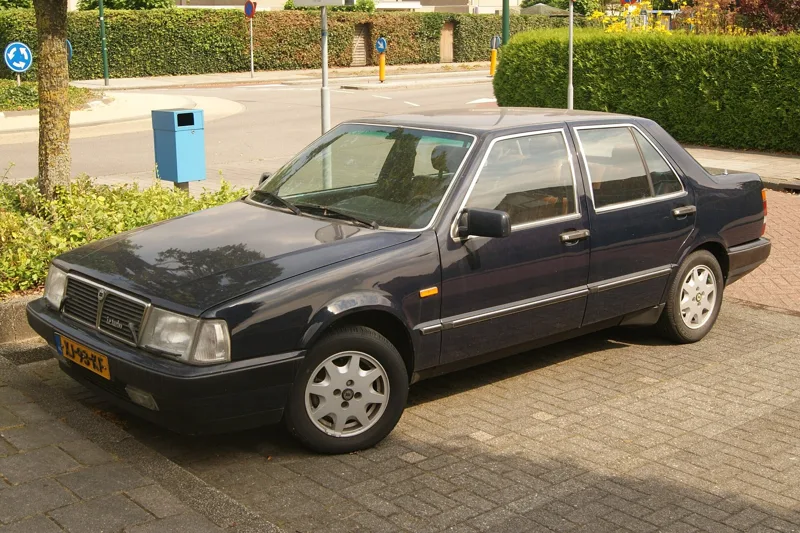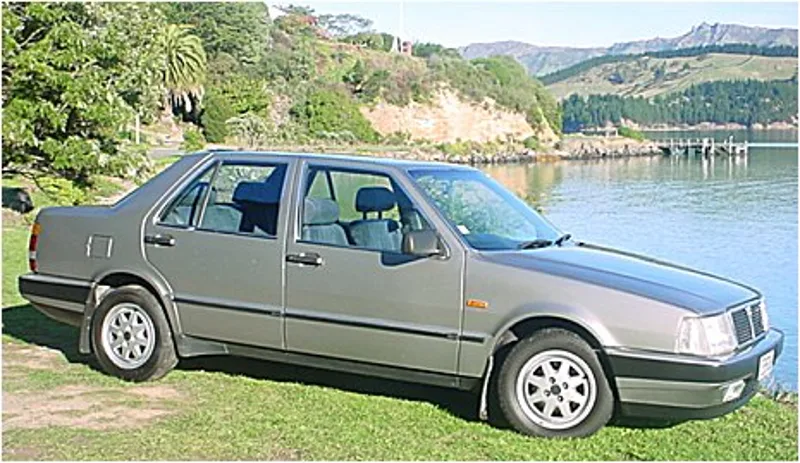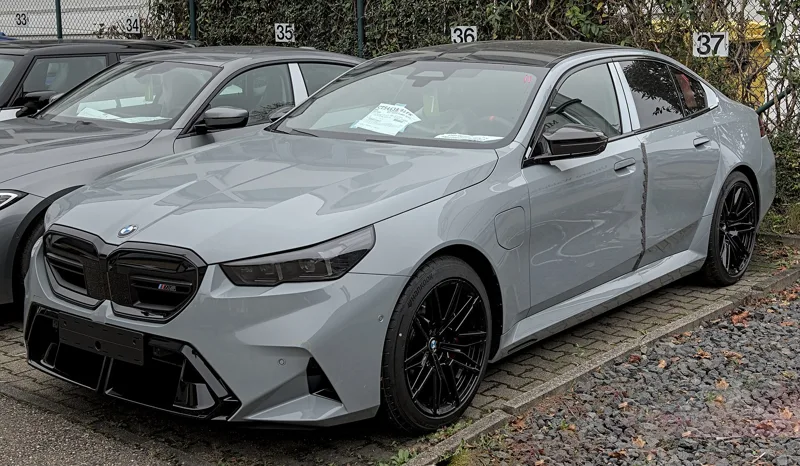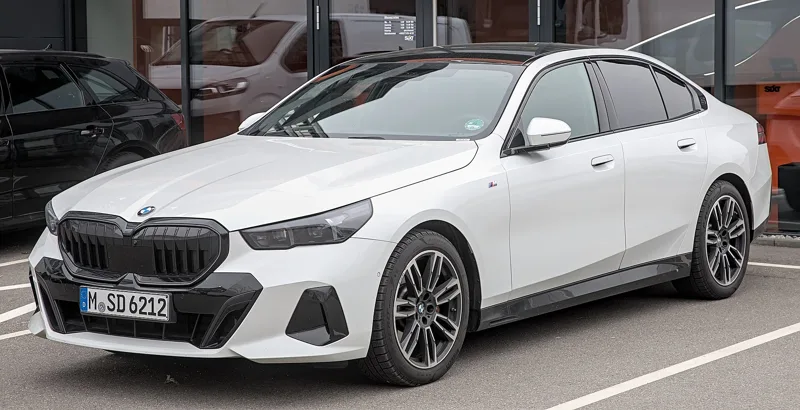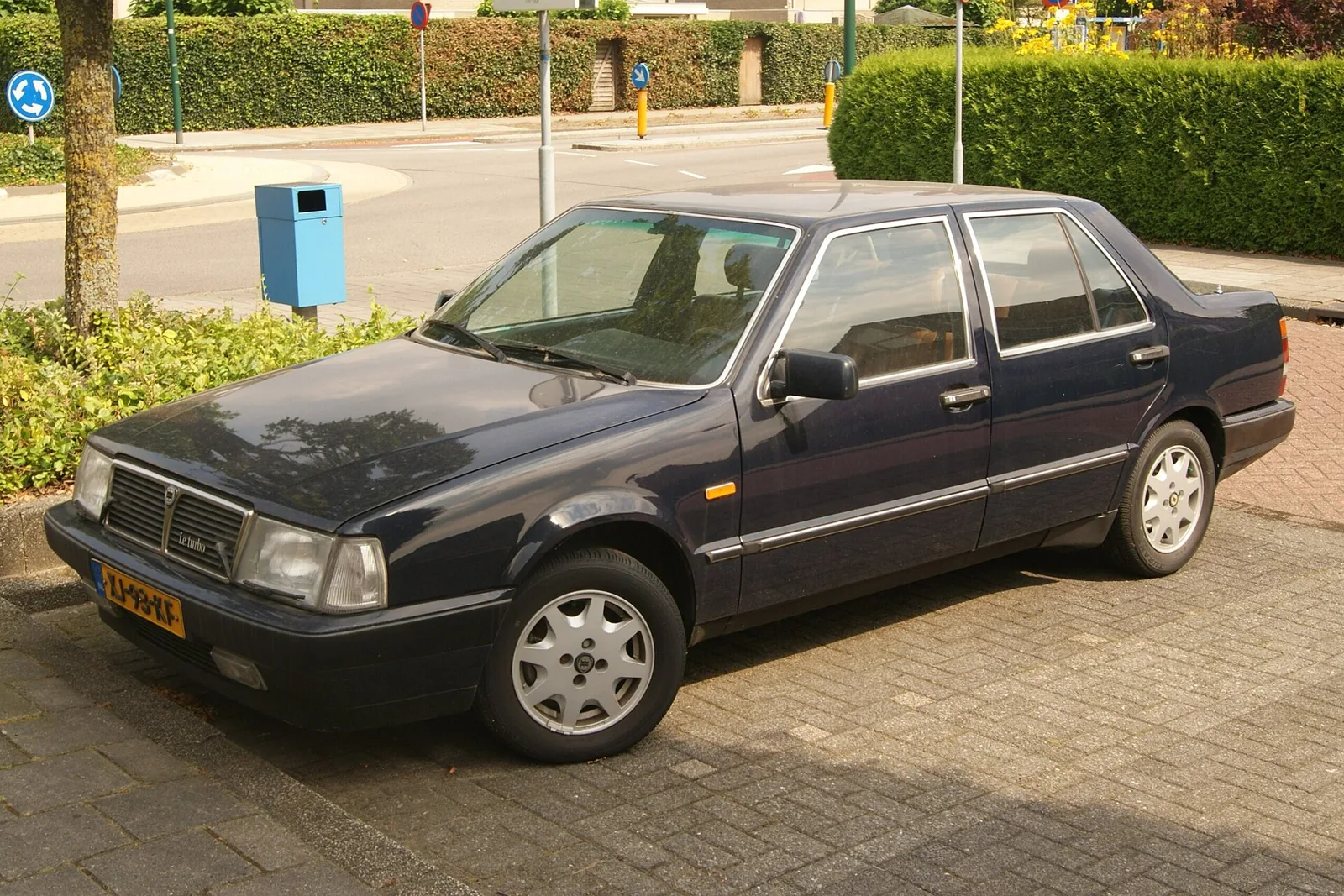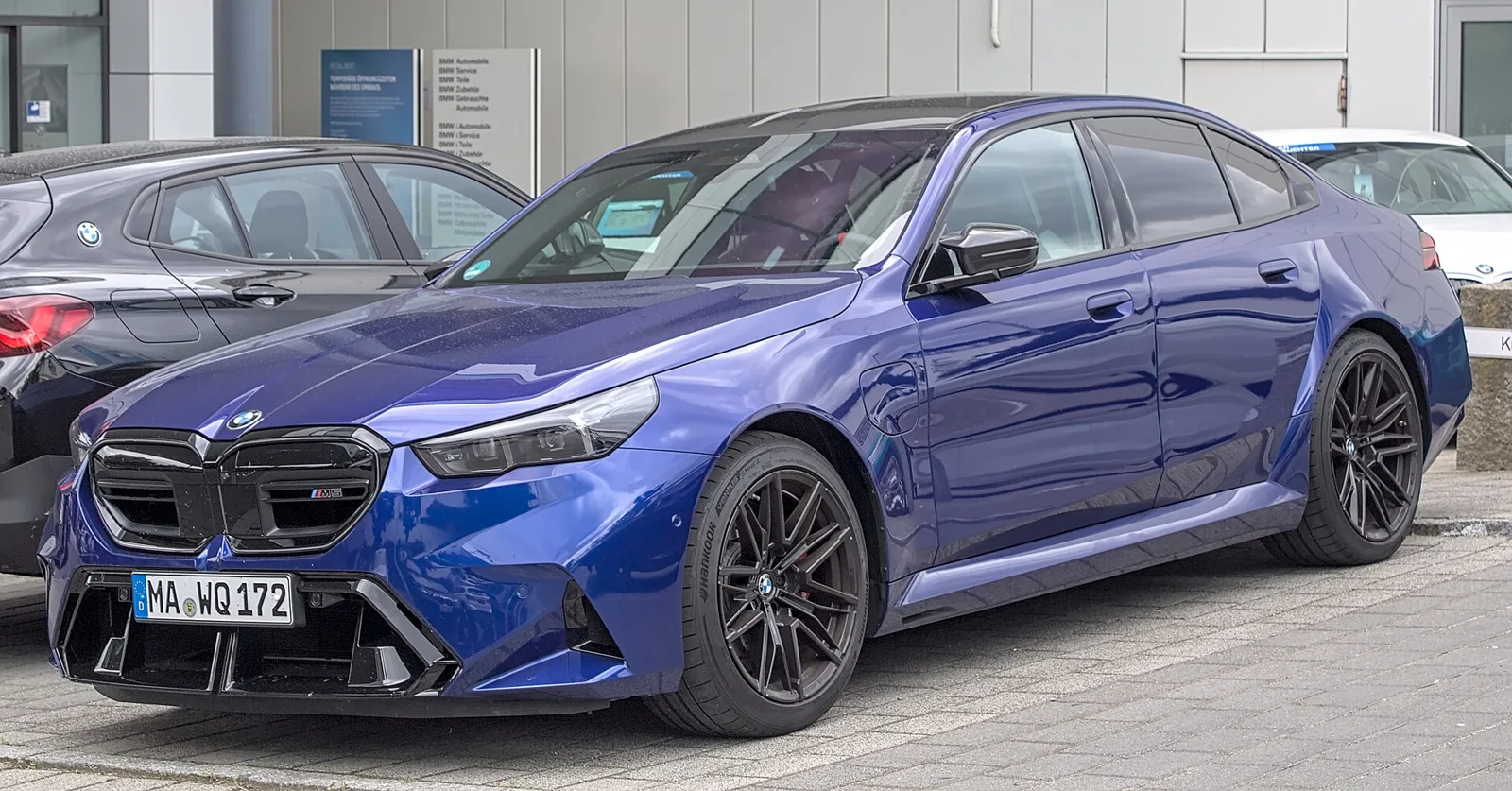
BMW's M5 and Lancia's Thema both offered sporting saloon performance in the 1980s, but the M5 was a motorsport-built car while the Thema's fastest version borrowed a Ferrari V8.
A BMW M5 is a 5 Series performance saloon engineered by motorsport specialists since 1984, and its first car used an engine derived from the M1. A Lancia Thema is an executive saloon from 1984 to 1994, and its 8-32 model carried a 2.9-litre Ferrari V8 with a five-speed manual.
The BMW M5 and the Lancia Thema were both large saloons with serious performance ambitions in the 1980s, and both were built to appeal to drivers who wanted executive comfort with real pace. Their routes to speed were entirely different, one through BMW's motorsport division and the other through a Ferrari engine fitted into an Italian executive body.
The comparison is between a car built by a motorsport arm and a car whose fastest variant borrowed from a sports car maker. Both show how the executive saloon of the era could carry much more power than its base specification suggested.
Why was the M5 developed, and the Thema launched?
BMW's M5 is a performance version of the 5 Series, engineered by the company's motorsport arm, BMW M GmbH, and built since 1984 with breaks in production. It has been produced in saloon form for every generation of the 5 Series, and in some countries as an estate.
The Lancia Thema was an executive car produced by Lancia between 1984 and 1994. It was one of four cars to share the Type Four platform with the Alfa Romeo 164, the Fiat Croma and the Saab 9000, and it was first shown at the Turin Motor Show in 1984.
The Thema's saloon and station wagon were built in several forms, and the station wagon was designed and produced by Pininfarina. The M5 and the Thema therefore came from very different development processes, with one tuned in a motorsport workshop and the other shared across a platform family.
A motorsport-built BMW saloon against a Lancia that hid a Ferrari V8 under an executive body, two different answers to the same question about speed.
How did the M5 and Thema engineer their powertrains?
The first M5, built on the E28 535i chassis from October 1984 to June 1988, used the M88/3 engine. That unit was shared with the E24 M635CSi grand tourer and descended from the M1 sports car's engine, which made the M5 the fastest production saloon at launch.
The Thema's engines came from Fiat's family designed by Aurelio Lampredi, including a straight-four 2.0-litre petrol engine in naturally aspirated and turbocharged forms. Earlier Themas also used a 2.8-litre PRV V6 developed with Peugeot, Renault and Volvo.
The 8-32's engine was a 2,927 cc Ferrari V8, based on the unit used in the Ferrari 308 GTB, but with a cross-plane crankshaft and different firing order to suit a four-door luxury saloon. In non-catalysed form it produced 215 PS (158 kW) at 6,750 rpm.
The E34 M5 generation moved to the S38 straight-six, and its second generation used the S38B36 engine producing 232 kW (315 PS; 311 hp). The later 3.8-litre S38B38 raised output to 250 kW (340 PS; 335 hp), and the E39 M5 became the first M5 with a V8.
How did the two cars perform?
The Thema 8-32 went from 0-100 km/h (62 mph) in 6.8 seconds, with a 240 km/h (149 mph) top speed in non-catalysed form. Catalysed versions produced 205 PS (151 kW), giving 7.2 seconds to 100 km/h and a top speed of 235 km/h (146 mph).
The E34 M5's second generation reached 0-97 km/h (60 mph) in 6.3 seconds, with its top speed electronically limited to 250 km/h (155 mph). The 3.8-litre version brought that time down to 5.9 seconds.
The E39 M5's S62 V8 produced 294 kW (400 PS; 394 hp), with a 0-97 km/h time of 4.8 seconds before the 250 km/h (155 mph) limiter took effect. In testing, an unrestricted M5 went past 300 km/h (186 mph), and its Nurburgring lap time was 8:20.
What design and chassis choices set them apart?
The E34 M5 had unique front and rear bumpers and side rocker panels, with a drag coefficient of 0.32 compared with 0.30 for the standard car. Its interior added a unique gearshift surround, trunk lining with storage partitions and rear headrests.
The E39 M5 introduced aluminium front suspension parts alongside a multi-link rear end, a first for the M5 line. It was produced on the same assembly line as the regular 5 Series at Dingolfing, unlike its hand-built predecessors.
The Thema 8-32 had a handmade wood and Alcantara interior, with optional Poltrona Frau leather. It also used Bosch KE3 Jetronic injection, ABS, ZF Servotronic power steering and a retractable rear spoiler that sat flush with the boot lid when closed.
How many were built, and how did they sell?
The E28 M5 totalled 2,241 units, and the E34 M5 totalled 12,254, of which 8,344 were 3.6-litre and 3,910 were 3.8-litre. The E39 M5 reached 20,482 cars from 1999 to 2003, a clear sign of the model's growth, and it was built on the same line as the regular 5 Series.
Lancia built over 336,000 Thema saloons, and the station wagons totalled 21,074 between 1986 and 1994. The 8-32 was far more limited, with 2,370 Series 1 cars built from 1986 to 1988 and 1,601 Series 2 cars from 1989 to 1992.
The Thema Limousine was built only on request, with just 24 cars made for wealthy customers and Fiat Group executives. Its wheelbase was extended to 2,960 mm (116.5 in), making it a very rare variant of the range.
Which special editions and competition results matter?
The E34 M5 had four special editions, including the Cecotto with 22 cars, the Winkelhock with 51, the 20 Jahre with twenty and the UK Limited with fifty. Each was a small, collectable run that focused on a particular styling or weight idea.
BMW Australia entered an E34 M5 in the 1992 Bathurst 12 Hour production car race, finishing second overall and first in class. The car was driven by Alan Jones, Neville Crichton and Tony Longhurst.
The Thema 8-32's competitors included the Audi 100 Quattro, the BMW M535i, the Ford Sierra RS Cosworth and the Saab 9000 Turbo S. Road & Track described the 8-32 as a sleeper of the 1980s, a judgement that reflected its quiet appearance.
How were the early M5 and the special editions built?
The E28 M5 was built largely by hand, and 96 cars were assembled in kit form at BMW's plant in Rosslyn, South Africa, while the rest were built in Germany. Its rarity is part of its appeal today, with 2,241 cars built in total.
Production moved from BMW Motorsport's Preussenstrasse plant in Munich to Garching, where the remainder were built. The production run also ran past BMW's original forecast, which led to a class action from US owners, who received vouchers for US$4,000 in 1993.
In 1991 BMW asked two race drivers to design their ideal E34 M5. The Cecotto Edition added luxury items such as Nappa leather for the steering wheel and heated seats, while the Winkelhock Edition was a stripped-down, lightweight car with a smaller battery and reduced sound deadening.
The E39 M5 used the S62 V8 with electronically actuated throttle bodies, an aluminium block and heads, and double-VANOS variable valve timing. Its semi-dry sump oil system and 25% limited-slip differential were tuned for road and track use.
How was the Thema's interior and styling finished?
The 8-32 wore a double hand-painted pinstripe, with the upper line in body colour and the lower in yellow, running along the sides and rear. Its only obvious exterior details were yellow 8-32 badges, a silver eggcrate grille and twin exhaust outlets.
The 8-32 interior used a bespoke dashboard with matte burr wood veneers, triple round air vents and a wood-and-Alcantara finish, with optional Poltrona Frau leather. Its seats were trimmed in beige or date brown Alcantara as standard, and brown interiors had matching switchgear.
The station wagon was never offered in right-hand drive, and Pininfarina built 21,074 of them at its Borgo San Paolo plant between 1986 and 1994. A single 8-32 was modified for right-hand drive by TAK Motor Co. in South Africa in 1987.
Which rivals and owners shaped the two cars' reputations?
The 8-32 was judged against a field of fast saloons of the late 1980s. Its quiet looks made it a sleeper, a point the Thema's enthusiasts still mention. The 8-32 was a rare combination of executive looks and genuine pace.
The Thema's Ferrari and Pininfarina connections show how Lancia drew on outside expertise for its range. The Limousine stood at the top of that range, with its extra length and interior trim reserved for special customers.
The E34 M5's special editions and its Bathurst result gave the car a motorsport credibility that the Thema never sought. That contrast is one of the clearest differences between a sports saloon and an executive car with a sporty variant.
How do the specifications compare?
| Specification | BMW M5 (E39) | Lancia Thema 8-32 |
|---|---|---|
| Years built | 1998 to 2003 | 1986 to 1992 |
| Engine | S62 V8 | 2,927 cc Ferrari V8 |
| Power | 294 kW (400 PS; 394 hp) at 6,600 rpm | 215 PS (158 kW) non-catalysed |
| Torque | 500 N-m (369 lb-ft) at 3,800 rpm | no figure given |
| 0-100 km/h | 4.8 seconds to 97 km/h (60 mph) | 6.8 seconds non-catalysed |
| Top speed | 250 km/h (155 mph) limited | 240 km/h (149 mph) non-catalysed |
| Transmission | six-speed Getrag 420G manual | five-speed manual, no automatic |
| Production | 20,482 cars | 2,370 and 1,601 cars in two series |
| Notable figure | Nurburgring lap of 8:20 | Enzo Ferrari owned one |
Which buyer suits each car?
The M5 suits a buyer who wants a high-performance saloon with a motorsport pedigree and a strong record of owner interest. The Thema suits a buyer who wanted an Italian executive car with a Ferrari V8 variant and a more unusual character.
Collectors of rare executive cars will find the 8-32 and the Thema Limousine especially interesting, given their small numbers. Enthusiasts who value engineering depth will look more closely at the M5's generations and its special editions.
The record gives no current values for either car, so buyers should check present-day prices and condition before comparing purchase costs.