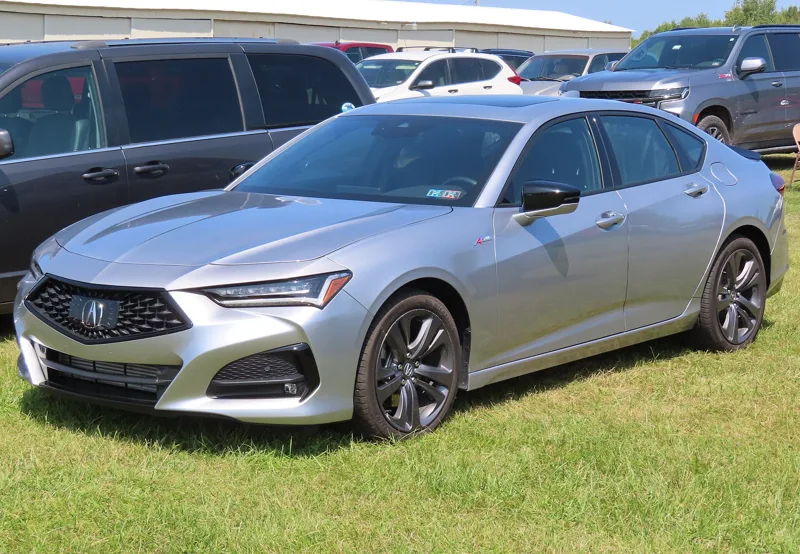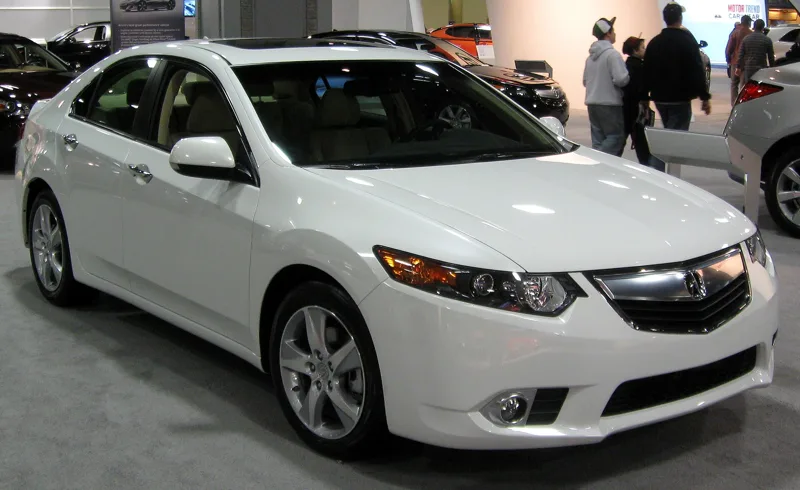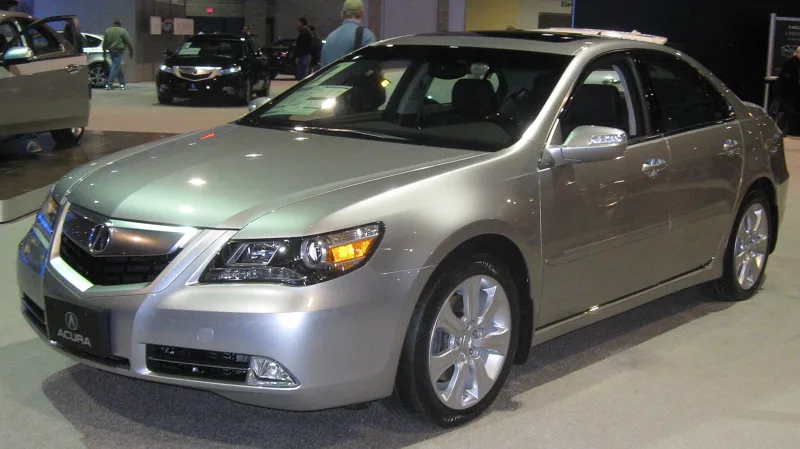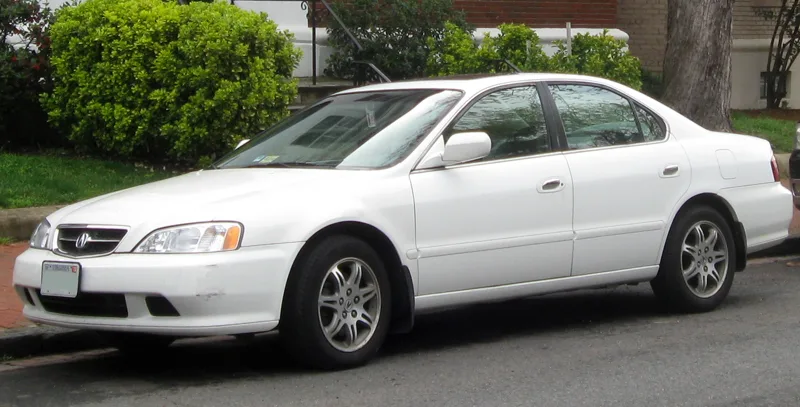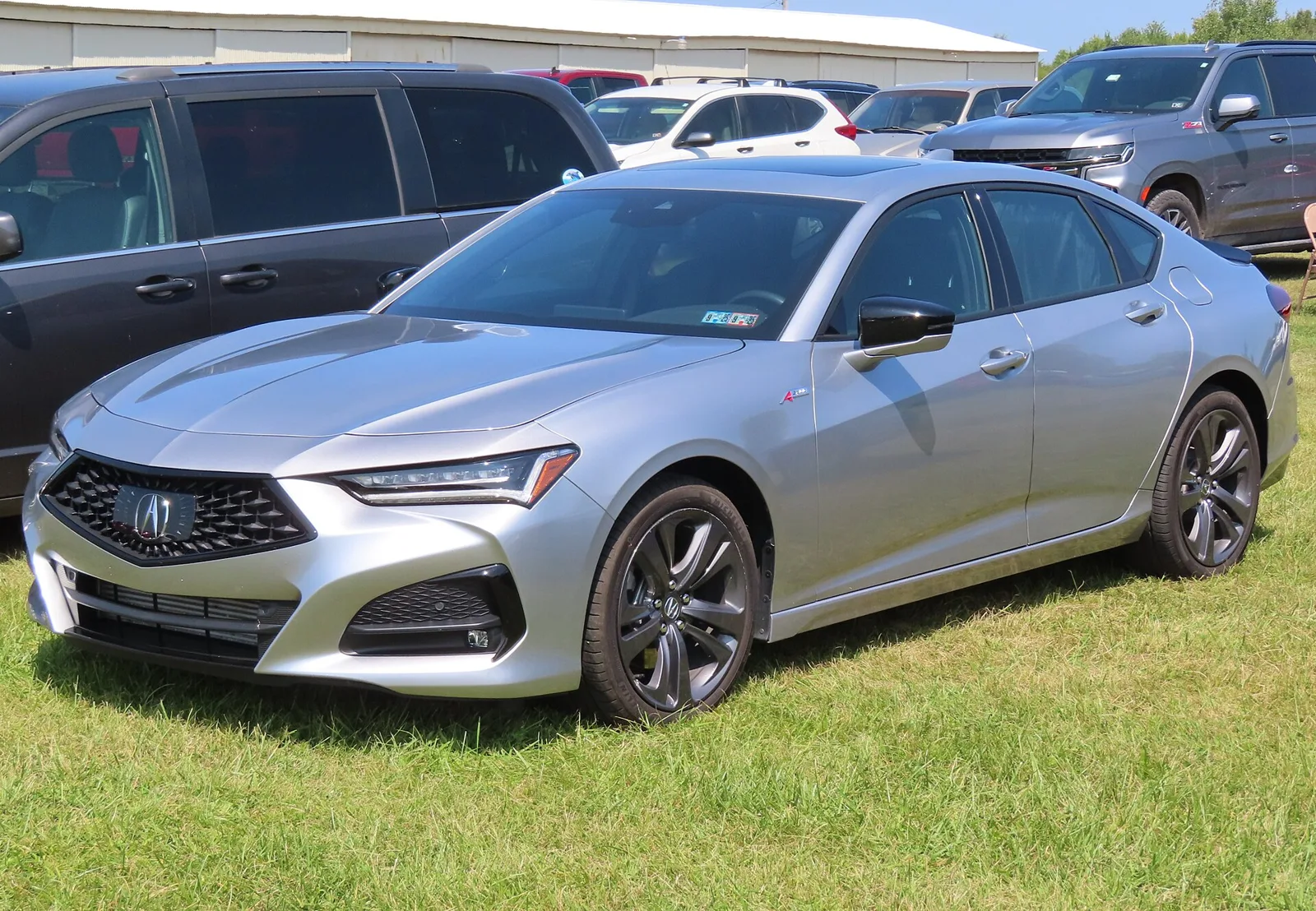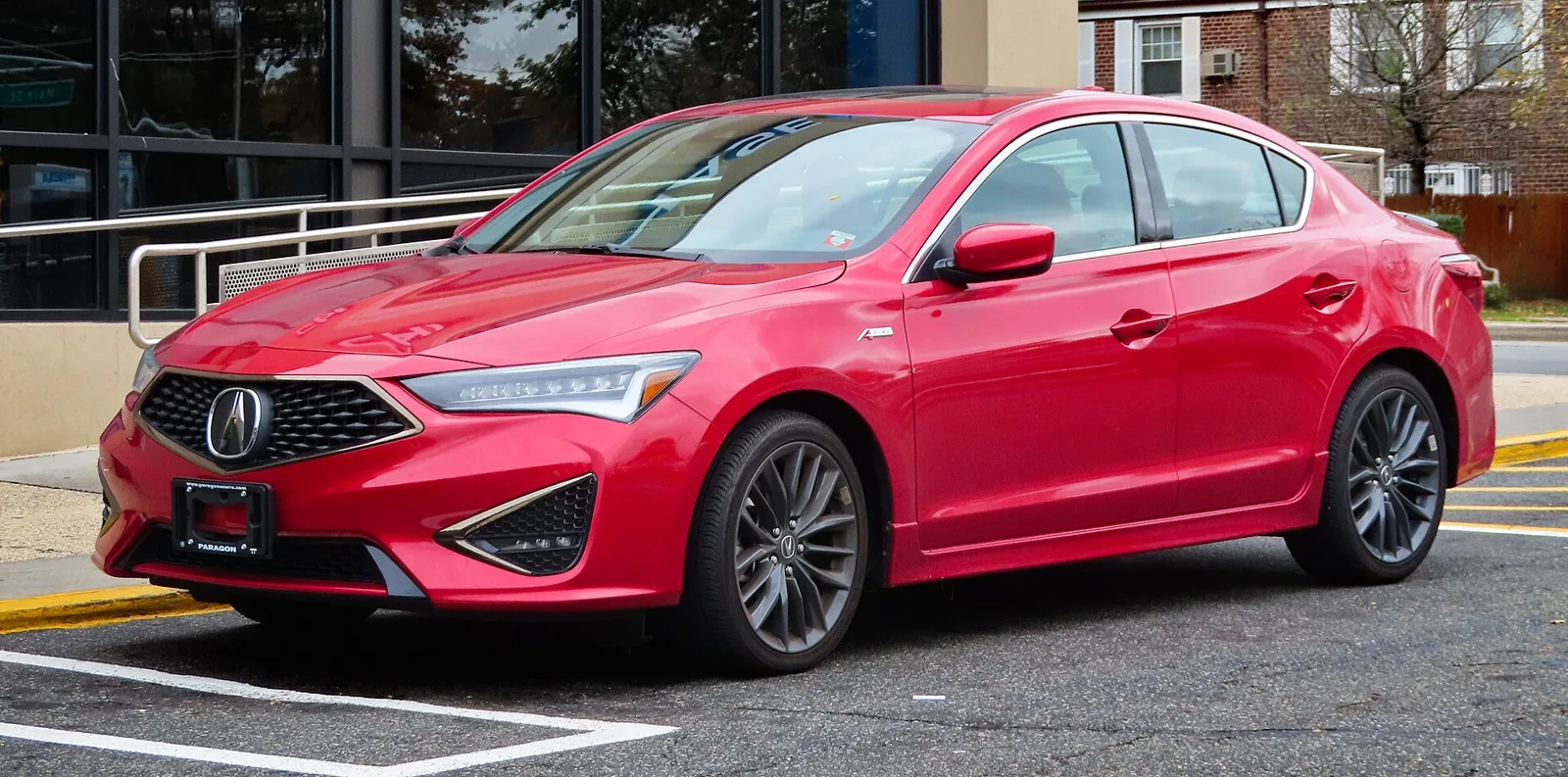
A coupe that lost its manual, a Civic-based sedan, a flagship that SUVs overtook and an electric crossover that lasted a year and a half.
The Acura CL was a 1997 to 2003 coupe, the ILX a 2013 to 2022 compact sedan, the RLX a 2014 to 2020 flagship and the ZDX a crossover sold in two short runs. They ended through a redesign gap, a replacement, a shift to SUVs and low sales.
Acura's electric ZDX lasted about a year and a half. Production began in March 2024 and stopped in September 2025, and the badge it wore had already been retired once before, after the 2013 model year, for the same reason: too few buyers.
That sort of story repeats across Acura's catalogue. The CL coupe, the ILX compact sedan, the RLX flagship and the ZDX crossover each had a clear purpose when they arrived, and each left the range for a different reason.
What was the Acura CL?
The Acura CL was a mid-size four-seat coupe sold for the 1997 to 2003 model years, in two generations. It was the first Acura built in the United States, and it grew from the CL-X concept that Honda's Los Angeles studio showed in Detroit in 1995. Fewer than 31,000 were sold from 2000 to 2003.
The name belonged to a new naming scheme. When the TL and 3.5RL arrived in 1996, Acura moved away from the old word names toward letters and numbers. The CL-X concept previewed the shape: a two-door coupe on a 106.9 in (272 cm) wheelbase, with a reported top speed of 140 mph (225 km/h).
The production car reached showrooms for 1997. Buyers chose between the 3.0CL, with a 3.0-litre J30A1 V6 making 200 hp (149 kW), and the 2.2CL, whose 2.2-litre four made 145 hp (108 kW). From 1998 the four grew to 2.3 litres and 150 hp (112 kW). Only the four-cylinder could be had with a 5-speed manual. Galvanised body panels were there to fight rust, and a Premium trim added leather until it was folded into the standard car for 1999.
Four Acuras, four different reasons to stop: a redesign, a replacement, a market shift and poor sales.
Why did the second-generation CL matter?
The second CL arrived late. Its sibling, the TL, was redesigned for the 1999 model year, but the coupe skipped 2000 altogether and reappeared in March 2000 as a 2001 model. It carried a 3.2-litre SOHC VTEC V6 rated at 225 hp (168 kW) and 217 lb ft (294 N m).
The Type-S went further. Its V6 made 260 hp (194 kW) at 6,100 rpm and 232 lb ft (315 N m), and it added 17-inch wheels, stiffer suspension tuning, bigger brakes and firmer seats. At that point it was the most powerful front-wheel-drive machine Honda had ever built.
Then came the car enthusiasts remember. For 2003 the Type-S could be ordered with a close-ratio 6-speed manual and a helical limited-slip differential, which answered the main complaint about the redesign: the manual gearbox had vanished in 2001. The stick-shift car gave up a few comforts: the centre console light went, the heated seats had one setting instead of two, and stability and traction control were left off.
The numbers explain why it is a collector's detail. Acura built 2,690 manual cars without navigation and 824 with it, 3,514 in all for the American market, plus 331 for Canada, all without navigation. Demand beat the company's expectations. One critic ranked the 6-speed behind only the NSX and the Integra Type-R among Acura performance cars.
Honda's own tuning arm went further still. In 2002, Honda Access America worked with Comptech on a supercharged Type-S, using an Eaton twin-screw Roots-type blower plus changes to the suspension, exhaust, brakes and drivetrain. The 0 to 60 mph time fell from 6.0 seconds to 5.7 seconds, and the claimed 369 hp (275 kW) and 302 lb ft (409 N m) were both crank figures.
What went wrong with the CL automatic?
Second-generation cars with the automatic gearbox developed a reputation for trouble, while the manuals were unaffected. After roughly 40,000 miles, owners reported downshift problems, slipping, flaring, failure to shift and leaks. A worn third-gear clutch pack was named as the main cause, shedding debris that choked the flow of fluid.
Replacement transmissions did not always cure it. Many owners said the rebuilt units failed too. Acura extended the automatic's warranty on nearly every second-generation CL to 84 months or 100,000 miles (160,000 km), and a class-action lawsuit later stretched cover for affected American owners to 93 months or 109,000 miles (180,000 km). Similar complaints surfaced on the Accord, MDX, TL and Odyssey.
A separate safety recall dealt with a different fault: a gear that could overheat and break, locking the transmission and bringing the car to a sudden stop.
The CL did not outlast the next TL. With that sedan due for its 2004 redesign, Acura let the coupe go and offered no mid-size luxury coupe in its place. The manual gearbox lived on in the third-generation TL and the seventh-generation Accord.
What was the Acura ILX?
The Acura ILX was a compact luxury sedan built on the ninth-generation Honda Civic for the 2013 to 2022 model years. It replaced the Canadian-market CSX and gave Acura its first hybrid. Production began on 23 April 2012 in Greensburg, Indiana, and sales started a month later.
Like other Acura models, it was never offered in Japan. The concept had been shown at the 2012 Detroit show before the production version appeared in Chicago. Under the skin, 59% of the body in white was high-strength steel, graded from 440 to 980 MPa, with aluminium for the bonnet and front bumper beam. Acura fitted its Amplitude Reactive dampers and a larger, stiffer steering shaft than the Civic used.
Three engines launched the car. The base 2.0-litre made 150 hp (112 kW) through a five-speed automatic. A 2.4-litre borrowed from the Civic Si made 201 hp (150 kW) at 7,000 rpm with a six-speed manual. The hybrid used a 1.5-litre engine and a CVT to make 111 hp (83 kW), and its US fuel economy rating was 39 mpg-US in town (6.0 L/100 km) and 38 on the highway (6.2 L/100 km).
Why did the ILX hybrid and manual disappear?
Slow sales ended the ILX Hybrid in July 2014, just before the 2015 model year. Through May of that year Acura had sold only 2,660 of them.
The manual went next. The facelifted 2016 ILX, shown in Los Angeles in November 2014 and on sale from February 2015, used one engine only: a direct-injected 2.4-litre four with an 8-speed dual-clutch transmission, closely related to the TLX powertrain. It made 201 hp (150 kW), with 180 lb ft (244 N m) of torque arriving at 3,800 rpm. Only about 4% of the 2013 to 2015 cars had been manuals. The same update brought Jewel Eye LED headlamps and a new A-Spec trim, and production moved to Marysville, Ohio, in January 2015.
A second facelift, revealed in September 2018 for the 2019 model year, added the Diamond Pentagon grille and a 30% faster infotainment system, and made AcuraWatch standard.
Acura announced the end of the ILX in February 2022, after the 2022 model year. The Integra liftback, built on the eleventh-generation Civic, took over as the brand's entry-level model.
Why did Acura stop making the RLX?
Acura ended the RLX after the 2020 model year because the market had moved toward SUVs and crossovers. The TLX then became the brand's flagship sedan, even though the RLX was the larger car. The Honda Legend, the car the RLX was based on, followed it out of production.
The RLX had been a car of changing intentions. In October 2009, executives admitted to the Car and Driver blog that the bigger fourth-generation TL had made the old RL hard to market. A month later Honda's chief executive, Takanobu Ito, told Automotive News that Acura would change course. He described the brand's future as something between high performance and high technology, a merger of BMW and Audi in his words, and said Acura faced a low-growth period for new products. Premium, he said, would be expressed through advanced environmental technology rather than glamour.
Acura showed the RLX Concept in New York on 4 April 2012, and the production car followed at the Los Angeles show later that year with few changes. RL production ended at Saitama on 16 June 2012, and the new car went on sale on 15 March 2013 for the 2014 model year.
How did the RLX Sport Hybrid work?
Two versions were offered: a front-drive car with four-wheel steering that Acura called Precision All-Wheel Steer, and a hybrid built around Super Handling All-Wheel Drive. The base car used a direct-injected 3.5-litre V6 delivering 310 hp (231 kW) and 272 lb ft (369 N m) through a six-speed automatic. Variable Cylinder Management could run it on six cylinders or three; engineers skipped a four-cylinder mode to keep noise and vibration down.
The Sport Hybrid added a start-stop system and could run on electric power alone up to 58 mph under light throttle. A 35 kW (47 hp) motor sat inside its 7-speed dual-clutch gearbox, and each rear wheel had its own 27 kW (36 hp) motor, so the rear axle was driven only by electricity. Think of it as a front-drive petrol car with an electric rear axle bolted on, free to send more or less torque to either rear wheel. A 72-cell, 1.3 kWh lithium-ion pack weighing 66 pounds sat behind the rear seat.
Combined, the system produced 377 hp (281 kW) and 341 lb ft (462 N m), peaking at 6,500 and 4,700 rpm respectively. EPA fuel economy was 29 mpg combined, against 23 for the petrol car. The hybrid weighed 357 lbs more, but its weight distribution moved from 61:39 front to rear to 57:43. Production was small: 250 for the 2014 model year and 250 more in 2015 for the 2016 model year. In Japan it was sold as the Honda Legend.
What did the RLX offer inside and out?
The front subframe was aluminium, with double wishbones at the front and a multi-link rear suspension. ZF Sachs supplied the Amplitude Reactive dampers. The RLX was the first Acura to carry standard Jewel-Eye LED headlamps, each unit packing five LED light sources behind ten polished lenses. Aluminium for the bonnet, front wings and outer door panels saved 79.1 lbs against steel.
The 2018 facelift, on sale from November 2017, brought the Diamond Pentagon grille, new lights and the AcuraWatch safety suite as standard, including Acura's first Traffic Jam Assist. The base car gained a 10-speed automatic and the hybrid a smaller battery. Length grew to 5,032 mm (198.1 in), making it the longest Honda or Acura sedan and the first to pass 5 metres (16 ft 5 in).
Why was the Acura ZDX discontinued twice?
Both ZDX generations ended on low sales. The first, built from 2010 to 2013, was withdrawn after the 2013 model year, and Honda said the brand wanted to concentrate on new models and its core products. The second, an electric car, was built from March 2024 to September 2025.
The original ZDX debuted at the New York show on 8 April 2009 as a 2010 model, and it was the first Acura designed entirely at the brand's studio in Torrance, California. Lead designer Michelle Christensen called it a four-door luxury sports coupe. Teaser images showed a sloping roofline in the manner of the BMW X6, and the name was once planned as MSX.
It looked like the Honda Crosstour but shared nothing with it. The Crosstour was based on the Accord, while the ZDX was built on the Pilot and MDX. Power came from a 3,664 cc SOHC VTEC V6 making 300 bhp (220 kW) at 6300 rpm, with a 6-speed automatic, Acura's first, and Super Handling All-Wheel Drive. The Advance package added blind spot monitoring, collision-mitigating braking, adaptive cruise control and magnetorheological dampers. For 2013 Acura sold a single trim, swapping some of those systems for forward collision warning and lane departure warning, and cut the price below the previous Advance model.
Only 7,191 were produced and sold in North America, making it the rarest US-built Acura at the time.
What was the electric Acura ZDX?
The electric ZDX was Acura's first EV, co-developed with General Motors and unveiled in August 2023. It used GM's Ultium architecture, the same one underneath the Cadillac Lyriq, Chevrolet Blazer EV and Honda Prologue, and it shared its powertrain with the Lyriq and several controls with the Blazer EV. The roofline was more conventional than that of the first ZDX.
Three versions were offered. The rear-drive A-Spec offered 358 hp (267 kW), with torque of 324 lb ft (439 N m). With a second motor on the front axle, the all-wheel-drive A-Spec made 490 hp (365 kW) and 437 lb ft (592 N m), and the Type S made 500 hp (373 kW) and 544 lb ft (738 N m), the most powerful SUV Acura has produced. All used a 102 kWh battery, the same one as the Lyriq.
EPA range was 313 miles (504 km) for the single-motor car, 304 miles (489 km) for the dual-motor car and 278 miles (447 km) for the Type S on its 22-inch wheels. DC fast charging reached 190 kW. Acura claimed 81 miles (130 km) of range in 10 minutes and a charge from 20 to 80% in 42 minutes, plus 29.4 miles (47.3 km) per hour from the onboard AC charger. Towing was rated at 3,500 lb (1,600 kg).
Several features were new to Acura: an 18-speaker Bang and Olufsen audio system, Google built-in software and the AcuraWatch 360+ driver assistance system with Hands Free Cruise.
Sales began in May 2024. They reached 5,543 through November 2024, and January to May 2025 brought 9,017, including 1,873 in May alone. It was not enough. In September 2025 Acura announced that production had ended, and that the ZDX, which was meant to start its 2026 model year after skipping 2025, would not continue. In May 2026 Honda recalled 15,688 ZDXs, along with 44,199 Prologues, over moisture getting into the backup camera housing.
How do the four models compare?
| Model | Years | Body | Top power quoted | How it ended |
|---|---|---|---|---|
| CL | 1997-2003 | Mid-size coupe | 260 hp (194 kW), Type-S | Dropped as the TL was redesigned, no coupe replacement |
| ILX | 2013-2022 | Compact sedan | 201 hp (150 kW) | Replaced by the Integra liftback |
| RLX | 2014-2020 | Mid-size luxury sedan | 377 hp (281 kW), Sport Hybrid | Market moved to SUVs; TLX became flagship |
| ZDX, first | 2010-2013 | Luxury crossover | 300 bhp (220 kW) | Poor sales; 7,191 built |
| ZDX, electric | 2024-2025 | Electric crossover | 500 hp (373 kW), Type S | Low sales; production ended September 2025 |
What does this mean for someone buying a used Acura?
Each car carries its own history into the used market. A second-generation CL with an automatic gearbox has a documented record of transmission failures, while the manual cars, only 3,514 in the US, escaped them. Anyone looking at an early ILX should know that only about 4% of the 2013 to 2015 cars had a manual, and that the ILX Hybrid sold just 2,660 units before it was dropped. The RLX Sport Hybrid is a low-volume machine too, with only 500 built across two model years.
The ZDX is the newest question mark. The first generation's 7,191 cars make it the rarest US-built Acura of its period. The electric car's sales reached 5,543 through November 2024 and 9,017 for January to May 2025. The May 2026 recall of 15,688 cars over the backup camera is one to check against any 2024 example.
What replaced the ILX, RLX and ZDX in Acura's range?
For the ILX, the answer already arrived: the Integra liftback is the entry point. The TLX holds the flagship sedan role the RLX left behind. For the electric end of the range, Acura said in September 2025 that it planned to introduce the RSX as its electric vehicle in 2026, in place of the ZDX.