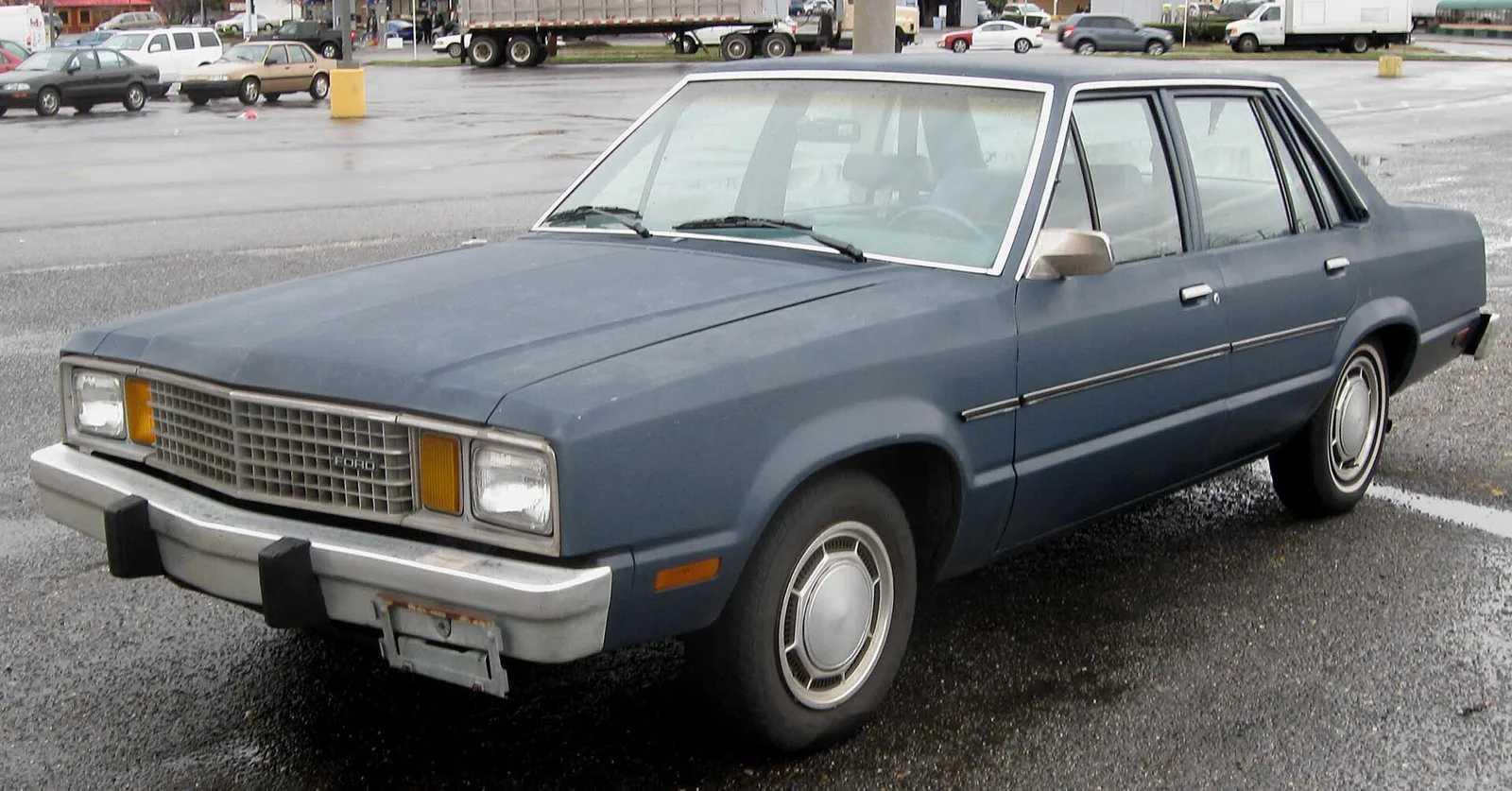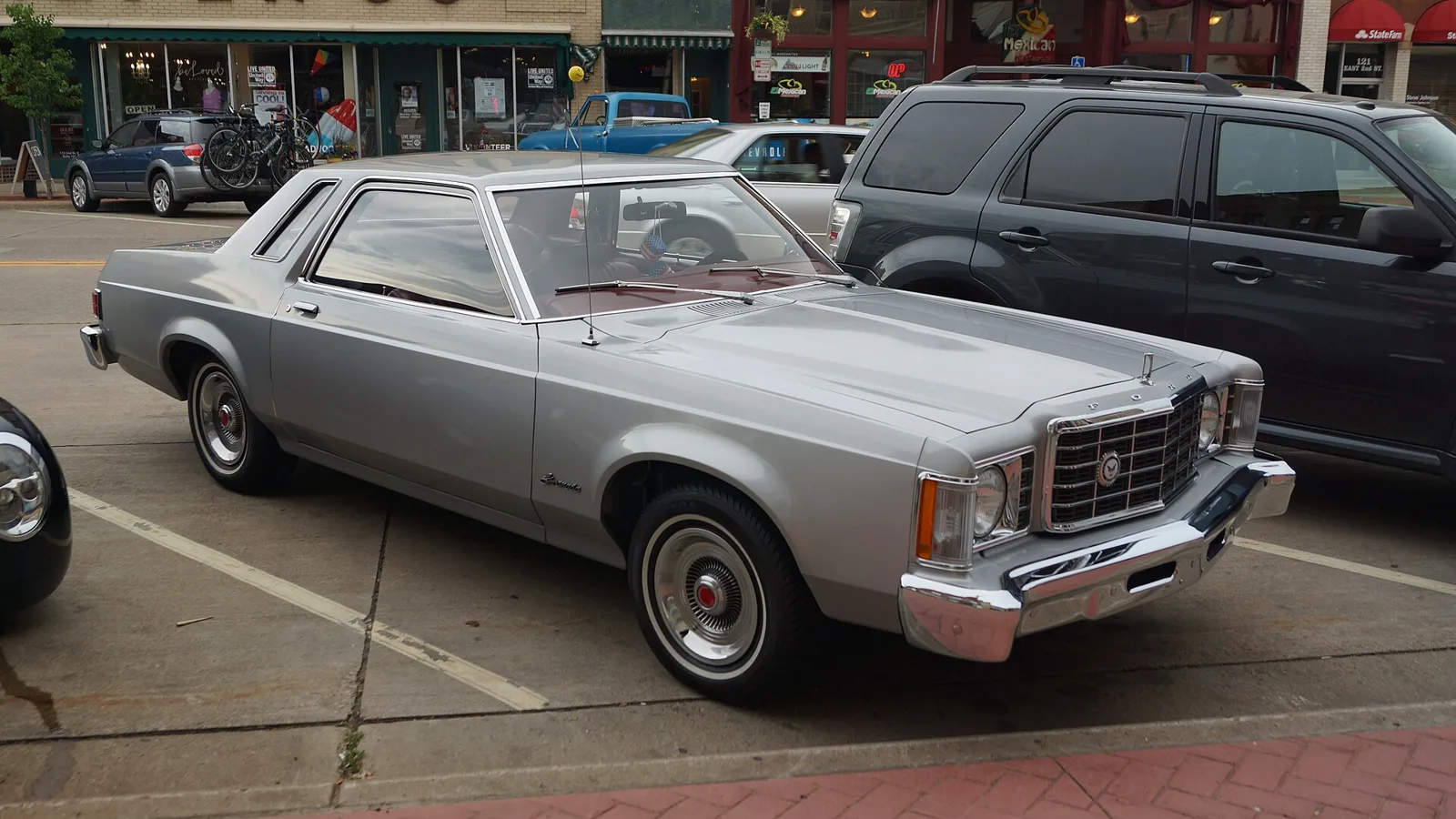
Ford's answer to the luxury compact, built on a Falcon-derived chassis in 1975 and later reborn as a Fox-platform mid-size sedan before the nameplate was withdrawn.
The Ford Granada was a North American luxury compact sold in two generations from 1975 to 1982. The first used a Falcon-derived chassis, and the second moved to the Fox platform before the nameplate became the Ford LTD in 1983.
The Ford Granada was a North American range of sedans and coupes built over two generations from 1975 to 1982. Ford positioned it as a luxury compact, intended to replace the Maverick and to expand that segment in the United States. Over two million examples were built for the US market before the nameplate was withdrawn for 1983.
Why did Ford build the Granada?
Ford wanted a compact with the comfort of a larger car, and it began researching the luxury compact segment in 1969. Work on a prototype followed in 1970, and the program was shaped by gasoline prices, multiple-vehicle families and urban traffic. The 1973 fuel crisis then reinforced the case for a smaller premium car.
The car was originally meant to replace the Maverick. Its name was shared with the flagship sedan of Ford of Europe, but Ford did not import that car. The European Granada was considered and rejected as cost-prohibitive, so the American version was developed locally.
Ford did not aim the Granada directly at Mercedes-Benz or BMW. Its targets were buyers moving down from a larger intermediate or full-size car who still wanted comfort and convenience features, plus owners upgrading from a basic compact.
A luxury compact built on a Falcon-derived chassis, then reborn on the Fox platform before becoming the LTD.
What did the first-generation Granada look like?
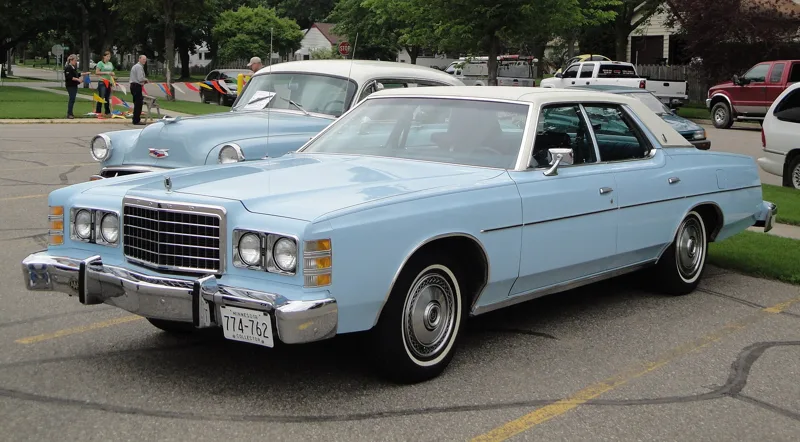
The first generation launched in 1975 and sat between the Maverick and the Torino in the Ford range. It was offered as a four-door sedan and a two-door coupe, with a style that blended American and European cues rather than the rounded Coke-bottle look of the Maverick.
The four-door roofline was heavily influenced by Mercedes-Benz, and the proportions of the taillamps and grille were shaped the same way. Ford benchmarked the Mercedes-Benz 280 (W114) for its styling and dimensions, which became a central theme of the car's marketing.
The two-door received a separate roofline with a trapezoidal door window and an opera window in the B/C-pillar. That treatment was later used on the Thunderbird, the LTD two-door, the LTD II and their Mercury counterparts.
In its most basic form the Granada offered little over the Maverick. It lacked power steering and power brakes and had a column-shifted manual gearbox, so buyers were expected to choose from a long option list instead. Many of those options had been standard on the Gran Torino and the LTD.
What engines and chassis did the first Granada use?
The first Granada used a rear-wheel drive chassis derived from the 1960-1965 Ford Falcon, which gave it mechanical links to the first-generation Mustang and the Mercury Cougar. It used a unibody, with coils at the front and a live rear axle on leaf springs, and its 109.9-inch wheelbase came from the four-door Maverick.
Although the car was largely clean-sheet, the forward part of the Maverick floorpan was carried over, along with elements of the steering gear and suspension. The standard brakes were front discs with 11-inch rotors and rear drums with 10-inch rotors. Four-wheel disc brakes were optional with an anti-skid anti-lock system.
The standard engine was a 200 cubic-inch (3.3-litre) inline-six. A 250 cubic-inch inline-six was optional, and the 302 small block V8 was shared with the Maverick. The 351 Windsor V8 was offered only on the Granada. A three-speed manual was standard, with a three-speed automatic as an option, and a four-speed manual arrived in 1976.
Which trims did the first Granada offer?
Beyond the unnamed base trim used from 1975 to 1980, Ford offered three additional first-generation trims. Two of them shared names with the Mercury Monarch, which was an unusual break from Ford's usual nomenclature. The Sports Coupe, the ESS and the Ghia each gave buyers a different kind of character.
The Sports Coupe ran for the 1976 and 1977 model years, with styled steel wheels, exterior striping, bucket seats and interior trim. It had heavy-duty suspension and larger front brakes. A 1977 and a half variation followed from May 1977 through the end of that model year, with blacked-out molding and revised colours.
The ESS, or European Sport Sedan, replaced the Sports Coupe and was built from 1978 to 1980. Its blacked-out exterior trim came with bucket seats and a floor-mounted shifter as standard, while a bench seat was optional. Ford visually compared the Granada to the Mercedes-Benz W123 in its marketing for the trim.
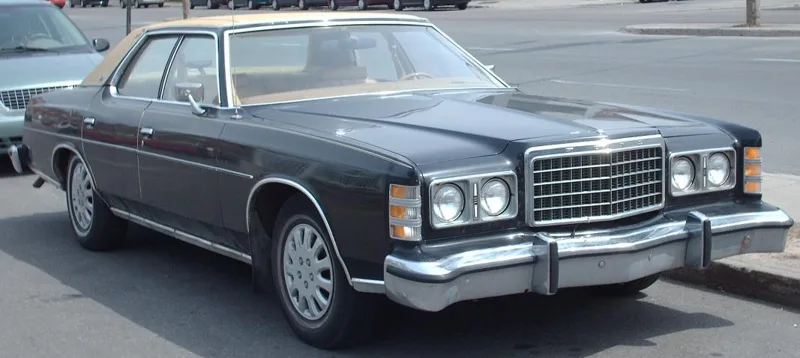
The Ghia sat at the top of the range. It had a vinyl roof and an upgraded interior, with cloth or leather seats offered as options and a wood-trimmed dashboard. Ford had no direct counterpart to the Mercury Grand Monarch Ghia, since that trim was repackaged as the Lincoln Versailles instead.
Did the first Granada get a facelift?
Yes. A mid-cycle revision for 1978 concentrated on the front fascia. Rectangular headlamp units replaced the round ones and sat stacked above the signal lenses, the grille was redesigned, and the side mirrors changed from rectangular to oval.
The rear fascia received revised taillamp lenses and a revised centre panel trim where it was fitted. The European Granada Mark II, built from 1977 to 1982, adopted similar roofline and rear fascia ideas, even though the two cars were designed independently.
What was the Lincoln Versailles?
For 1977, Lincoln-Mercury repackaged the Mercury Grand Monarch Ghia as the Lincoln Versailles. It was the first Lincoln in 17 years without the Continental nameplate, and it was developed to answer the Cadillac Seville. It was the smallest Lincoln at the time and the most expensive vehicle the division sold.
The Versailles was priced at nearly twice the cost of the Mercury Monarch that it resembled. Apart from its halogen headlamps, clearcoat paint and Continental-tire trunklid, it was close to identical to the Monarch. It was built outside the Lincoln Wixom plant, which had been exclusively devoted to Lincoln vehicles since 1957.
Sales fell far short of projections, and the Versailles was withdrawn early in the 1980 model year. It is still viewed as one of the most controversial examples of badge engineering in the industry, alongside the later Cadillac Cimarron.
What changed for the second-generation Granada in 1981?
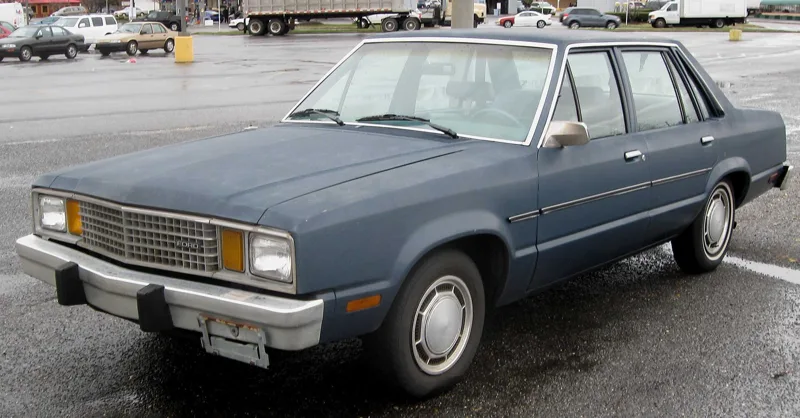
For the 1981 model year, Ford introduced a second generation that slotted between the Fairmont and the LTD. It was a premium version of the Fairmont and moved the model line into the larger mid-size segment, even though its exterior footprint became smaller.
The car shed an inch in length, four inches of wheelbase and roughly 300 pounds of curb weight, depending on the powertrain. The change was far less extensive than the downsizing applied to the 1979 Ford LTD, but it still tightened the package considerably.
The second generation rode on the rear-wheel drive Ford Fox platform, which it shared with the Fairmont and the Mercury Zephyr. Its 105.5-inch wheelbase was shared, and the car used MacPherson strut front suspension with a coil-sprung live rear axle in place of the old leaf springs.
Which engines did the second-generation Granada use?
The standard engine was a 2.3-litre Lima inline-four shared with the Fairmont, and a 3.3-litre inline-six was optional. For 1982 the inline-six was replaced by a 3.8-litre Ford Essex V6. A 4.2-litre V8 became an option, taking the place of the 4.9-litre V8 that the Fairmont used.
An automatic transmission was standard on every engine, although the 2.3-litre car could be ordered with a four-speed manual. Four-wheel disc brakes and anti-lock brakes were dropped in this generation, while power brakes became standard equipment. A rack-and-pinion steering system replaced the earlier recirculating-ball unit.
How was the second-generation Granada bodied and trimmed?
The second generation came as a two-door and four-door sedan for 1981, with a five-door station wagon following for 1982 in the style of the Fairmont. The Granada shared many visible body parts with the Fairmont, including the doors, but it received a formal notchback roofline to tell the two apart.
Trim levels were the base Granada L, the mid-level Granada GL and the top Granada GLX. The GLX effectively took over from the ESS and Ghia names of the first generation, reflecting the car's move towards the mainstream Ford range of the 1980s.
What was the Granada's place in the Mercury and Lincoln line-up?
The Granada was also sold by Lincoln-Mercury under other names. The first generation became the Mercury Monarch and the Lincoln Versailles, and the second generation was sold by Mercury as the Mercury Cougar, replacing the Monarch.
The Mercury Monarch arrived alongside the Granada in 1975 and sat above the Mercury Comet. It had its own grille, fascia and interior trim, and Mercury also offered a Grand Monarch Ghia as a junior version of the Grand Marquis.
For 1980 Mercury moved the Cougar onto the Fox chassis and sold only the XR7 coupe. Sales collapsed, falling nearly 65 percent from 1979. For 1981 the Cougar expanded to the full mid-size range, adding sedans and a station wagon that were nearly identical to their Granada counterparts.
What happened to the Granada nameplate?
The Granada nameplate was withdrawn for 1983 as part of a major realignment of the Ford and Mercury lines. The model line effectively continued as the Ford LTD after a mid-cycle revision, while the full-size LTD Crown Victoria stayed in the range.
Following the 1986 model year the mid-size LTD was replaced by the Ford Taurus, as Ford moved its mid-size sedans to front-wheel drive. Venezuela kept the Granada name for a while, building 1983 to 1986 versions of the North American LTD with uplevel Elite badges.
What were the Ford Granada specifications?
| Specification | Detail |
|---|---|
| Production | 1975 to 1982, with a 1983 mid-cycle conversion to LTD |
| First generation chassis | Rear-wheel drive, derived from the 1960-1965 Ford Falcon |
| First generation wheelbase | 109.9 inches |
| First generation brakes | Front discs with 11-inch rotors; rear drums with 10-inch rotors |
| First generation standard engine | 200 cubic-inch (3.3-litre) inline-six |
| First generation options | 250 cubic-inch inline-six; 302 small block V8; 351 Windsor V8 |
| Second generation platform | Ford Fox, shared with the Fairmont and Mercury Zephyr |
| Second generation wheelbase | 105.5 inches |
| Second generation standard engine | 2.3-litre Lima inline-four |
| Second generation options | 3.3-litre inline-six; 3.8-litre Ford Essex V6 from 1982; 4.2-litre V8 |
| Second generation body styles | Two-door sedan, four-door sedan; five-door station wagon from 1982 |
| Second generation trims | L, GL and GLX |
| US production | Over two million examples |