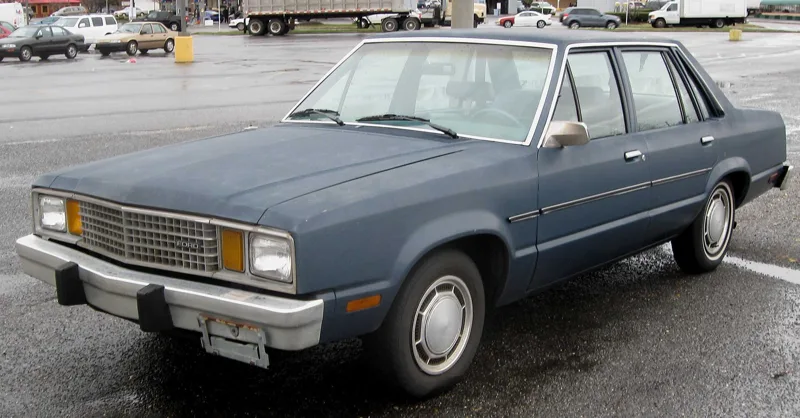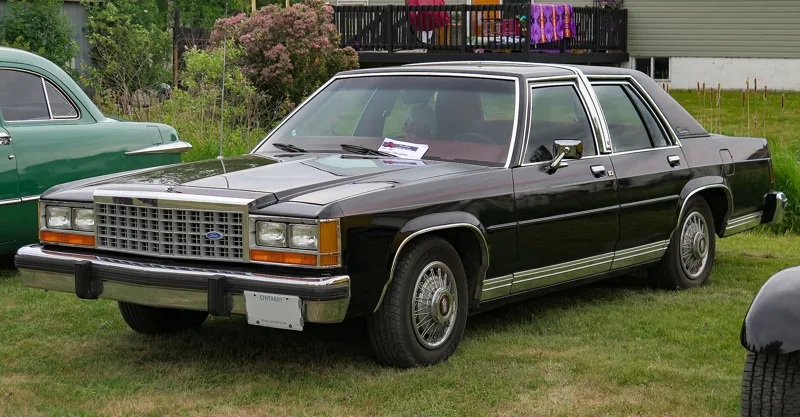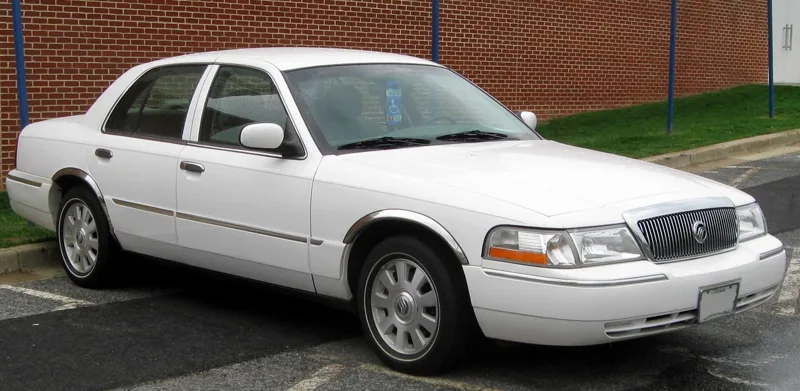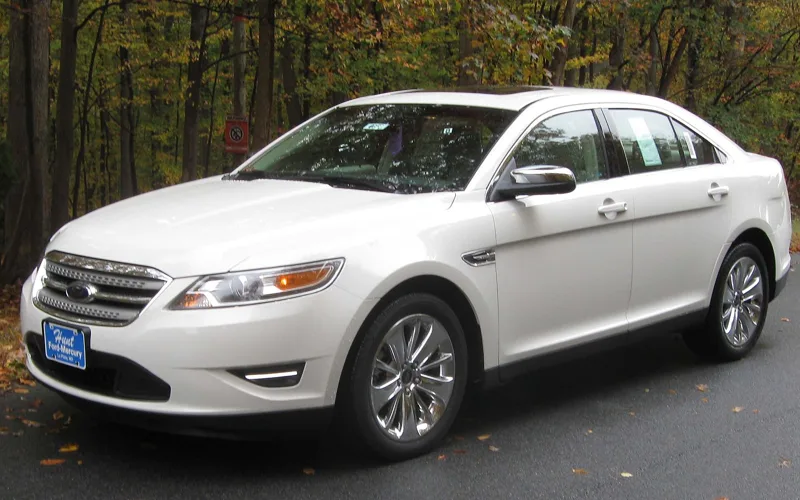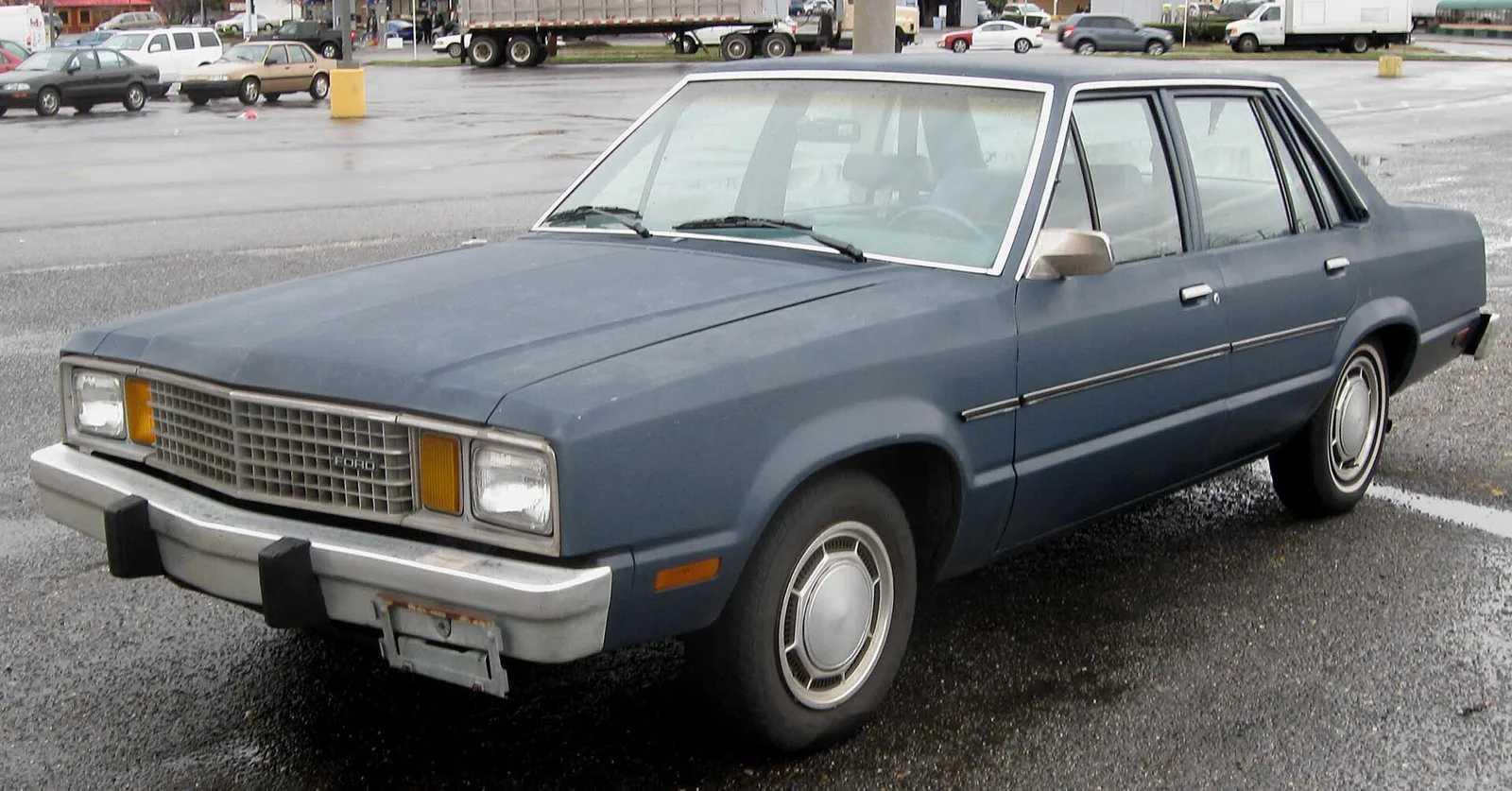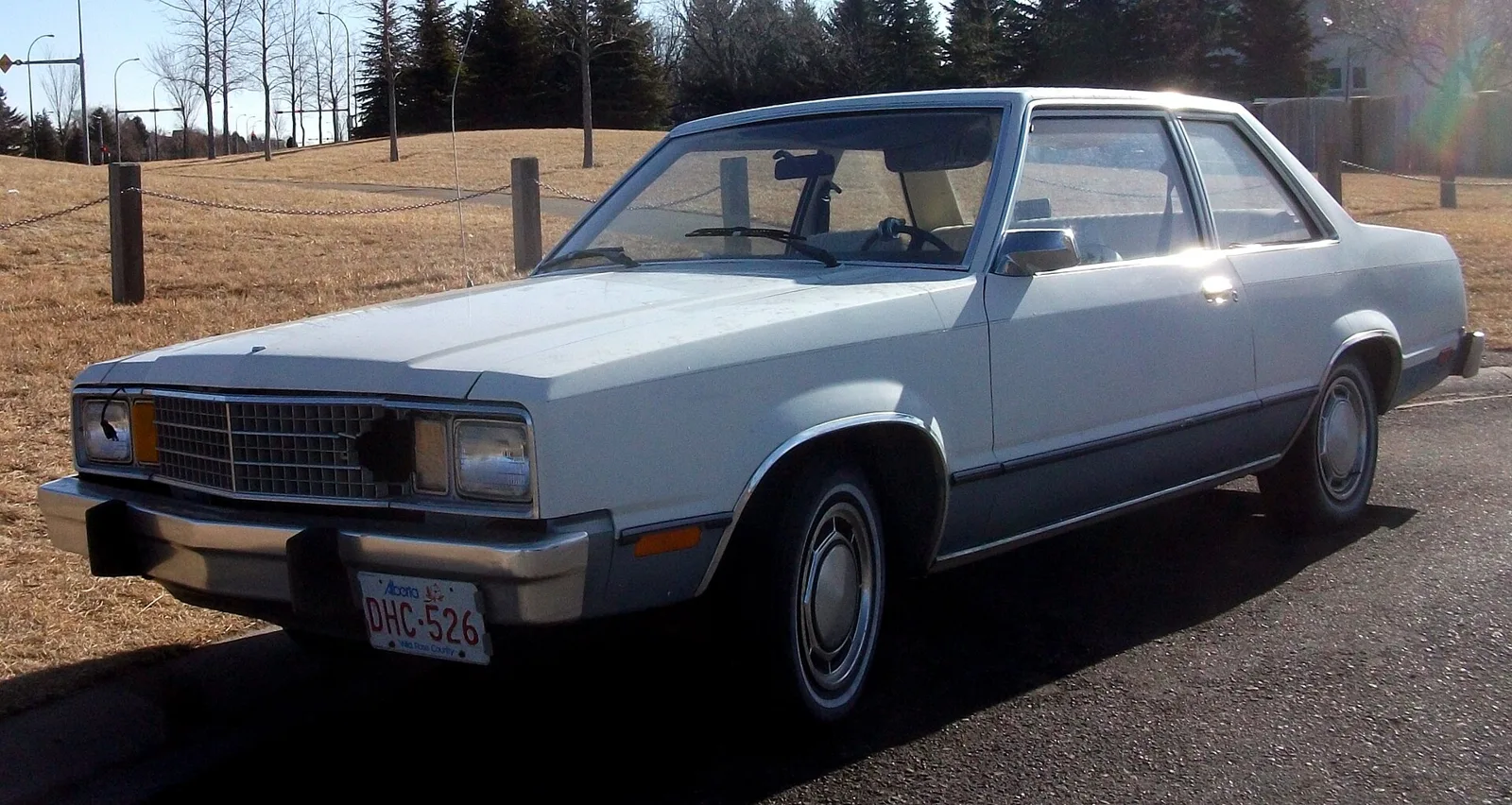
A light unibody for compact cars and Mustangs, and a body-on-frame sedan chassis that outlived its rivals: what each carried, how each worked, and why each finally stopped.
Ford's Fox platform was a rear-drive unibody used from 1978 to 1993, and to 2004 in Mustang form, for the Fairmont, Mustang and Thunderbird. The Panther was a body-on-frame V8 chassis used for 33 model years, until 2012, for the Crown Victoria, Grand Marquis and Town Car.
The final mass-produced passenger car built on a separate frame was a Ford Crown Victoria, the 2012 model. It rode on the Panther platform, which Ford kept in production for 33 model years. A smaller sibling, the Fox platform, carried everything from the Fairmont to the Mustang and ran for 26.
What was the Ford Fox platform?
The Fox platform was a rear-wheel-drive architecture used by Ford from the 1978 to the 1993 model years. It began as the basis for compact sedans and spread to Ford and Lincoln-Mercury cars in several size classes. In its updated SN-95 form it carried the Mustang to 2004, making 26 model years in all.
It was designed to be light and simple. Where the big Fords and Mercurys of the day used a separate frame, the Fox was a unibody, with MacPherson strut front suspension and a live rear axle. Cars started with rear drum brakes, though four-wheel discs were added on higher-performance models such as the Mustang SVO and the Thunderbird Turbo Coupe. The strut front end let engineers cut a wider engine bay than on the Falcon chassis it succeeded, and that allowed a long list of engines: a 2.3-litre four, naturally aspirated and turbocharged, an inline-six, a V6, and a V8 as big as 5.0 litres. For Lincoln, Ford adapted the platform to take BMW diesel inline-six engines in the 1980s to improve fuel economy.
Four wheelbases covered the range: 100.5 inches for the Mustang and Capri, 104.2 inches for the 1983 to 1988 Thunderbird and Cougar, 105.5 inches for the standard sedans and wagons, and 108.5 inches for the long cars, including the 1980 Thunderbird and the Lincoln Mark VII.
The Panther's last Crown Victoria was the final mass-produced car designed with a separate frame.
Why did Ford build the Fox?
The Fox grew out of 1973, a year of transition for Detroit. In May the EPA published its first comprehensive fuel economy list, and in October an oil crisis pushed petrol to US$.55 a gallon. With Henry Ford II as chairman and Lee Iacocca as president, Iacocca formally approved development of the Fox that December, to replace the long-running Falcon architecture.
The idea began as something bigger. Hal Sperlich, who ran product planning and research, dreamed up a World Car for sale on both sides of the Atlantic. Ford's small-car range then consisted of the Pinto, the Mustang II and the Falcon-derived Maverick, while Lincoln-Mercury imported the Capri. The Fox shared a name with the Audi Fox without being named after it, and its designers benchmarked a popular European subcompact. By 1974, conflicting regulations in different markets and the different production methods of Ford's divisions had killed the World Car. The Fox survived as a multiple-wheelbase design, and in 1975 North American Automobile Operations took over from Sperlich's group.
The first running prototype was a Cortina with reworked suspension, carrying MacPherson struts and torsion bars, though the bars were dropped before production.
Which cars used the Fox platform?
Fifteen distinct vehicles were built on it. Five lived only on this architecture: the Fairmont, the Zephyr, the Durango, the Mustang SVO and the Continental Mark VII. Body styles ranged from two- and four-door sedans to hatchbacks, wagons and convertibles, which marked the return of the body style to Ford, plus a coupe utility that was the last coupe utility Ford built in North America.
The Fairmont and Zephyr arrived first. For 1979 the third-generation Mustang replaced the Pinto-based Mustang II on the Fox, growing slightly toward the size of the 1964 original, with a new Mercury Capri alongside. Ford cut the wheelbase by 5 inches compared with the Fairmont. In 1980 the Thunderbird and Cougar XR7 were downsized onto a long-wheelbase variant, and unlike the well-received Mustang they were poorly received, and sales collapsed. For 1981 the Fox replaced the Falcon chassis entirely, carrying the second-generation Granada and a Cougar sedan.
The early 1980s then brought a wide reshuffle of Ford nameplates. Sales of the Granada, Thunderbird and Cougar had slumped, and as fuel prices stabilised buyers drifted back to full-size cars, so Ford postponed the planned end of its Panther-platform cars. For 1983 the Thunderbird and Cougar were redesigned, and they became the first Fords sold in North America with a body shaped for aerodynamics, and the Granada and Cougar sedans were renamed LTD and Marquis. Lincoln also rearranged its range, renaming the Continental the Town Car and replacing the Mark VI with the Mark VII in 1984. By that year the revision had effectively tripled the size of the Lincoln line-up.
What did the Fox bring to the Mustang?
The Fox gave the Mustang its third generation, from 1979 to 1993, nicknamed the Fox body. Ford chose it to keep development and construction costs down, and the car almost ended up replaced by a front-wheel-drive Mazda-based design. Consumer opinion swayed executives, the rear-drive Mustang stayed, and the front-drive version was renamed the Ford Probe.
The 1979 car used a 2,553 mm (100.5 in) wheelbase, 127 mm (5 in) shorter than the Fairmont, and came as a coupe or a three-door hatchback. It was the Indianapolis 500 pace car that year, and 10,479 replicas were built. The Cobra package ran from 1979 to 1981, with 17,579, 5,550 and 1,821 built in successive years.
The power story was lean at first. After the second oil crisis in 1979 the 302 V8 gave way to a 4.2-litre (255 cu in) V8 of only 118 hp, later 120 hp, the lowest output ever for a Mustang V8. That left a troubled 2.3-litre turbo as the only performance engine. Then came a recovery. In 1982 the GT returned after 13 years, with the slogan "The Boss is Back!" and a 157 hp High Output 302. The convertible came back for 1983 after nine years away, and the 302 rose to 175 hp. The 1984 SVO used a turbocharged 2.3-litre four with 175 hp, rising to 205 hp midway through 1985 and settling at 200 hp for 1986, with four-wheel disc brakes and a bi-plane rear spoiler. A 210 hp GT in 1985 was the last carbureted Mustang V8, and 1986 brought the first multiport fuel-injected 302, rated at 200 hp.
Opinions differ on when the dull years ended. The insurer Hagerty marks the first 200 hp Mustang in 1985 as the end of the Malaise era, although most enthusiasts point to the 1982 GT and its 5.0 HO engine.
How did the Fox platform end?
Front-wheel drive killed it. As Ford shifted compact and mid-size cars that way in the mid-1980s, the Fox declined. The front-drive Tempo and Topaz replaced the Fairmont and Zephyr for 1984. The LTD and Marquis ended at the close of 1985, the Capri was discontinued, and for 1988 the Lincoln Continental became a longer Taurus, ending sedan production on the Fox.
The all-new MN12 platform took over the Thunderbird and Cougar in 1989, leaving only the Mark VII and the Mustang on the Fox. When the Mark VIII replaced the Mark VII for 1993, the Mustang stood alone. For 1994 the Mustang was redesigned under the Fox-4 program, carrying over only the floor pan and the front suspension crossmember, and the updated platform was called SN-95. Its ultimate development was the 2003 to 2004 SVT Cobra, with a 390 hp supercharged 4.6-litre DOHC V8. For 2005 the Mustang moved to the all-new D2C platform.
What was the Ford Panther platform?
The Panther was Ford's body-on-frame, rear-wheel-drive platform for full-size cars, used from the 1979 to the 2012 model years under the Ford and Lincoln-Mercury brands. It replaced the 1969 Ford chassis and was first developed in response to the federal CAFE rules. Every Panther car had a V8.
Few chassis anywhere in North America have lasted so long. Originally slated to end in the early 1980s, it lasted 33 model years and outlived its closest rival, the 1977 to 1996 GM B platform, by 15 years. GM had downsized its B-bodies and C-bodies two years before, and the Panther was the last of the full-sized American sedans.
Production moved over time. From 1978 to 1985 Ford and Mercury versions came from Hazelwood, Missouri; from 1986 production shifted to Talbotville, Ontario. Lincolns were built at Wixom, Michigan, until it closed in 2007, then at St. Thomas Assembly. The last Crown Victoria rolled out of St. Thomas on 15 September 2011, the final vehicle the plant built and the last of the Panther platform. Only a short run of 2012 models was built, for export.
Why did police and taxi firms love the Panther?
Its construction was the reason. Body-on-frame cars are durable and easier to repair after minor collisions, and the design was simple, so the Panthers appealed to fleet buyers including police departments and taxi operators. Today that layout belongs almost entirely to large SUVs and pickup trucks.
The Lincoln Town Car suited livery work and was the most common limousine in North America, because a longer frame stretches the car without costing it chassis strength. The same logic produced special builds. The Presidential State Car made for George H. W. Bush was based on a 1989 Town Car, armoured and fitted with a 7.5-litre V8 from the F-250 pickup. China's Hongqi built about 100 stretch limousines from the 1990-1997 Town Car, and later luxury sedans for government and military officials with final bodywork in China. The 1993 Aston Martin Lagonda Vignale concept used a modified Town Car chassis and a 4.6-litre V8.
How did the Panther change across three generations?
The first generation, from 1979 to 1991, was the only one built as sedan, coupe and wagon, and the only one with the Windsor V8. Few fundamental changes were made apart from the 1980s shuffle of nameplates. Lincoln introduced a four-speed overdrive automatic and fuel injection on the 5.0-litre V8 in 1980, and Ford and Mercury got them in 1981. The first airbags came in 1990. Two-door Ford and Mercury sedans were dropped after 1987, and the Country Squire and Colony Park wagons after 1991.
These cars were also, in other respects, the end of an era. They were the last American cars with functional vent windows, as an option in 1989, and the last American-brand cars available with a carbureted engine, a 351 cubic inch V8 offered through 1991.
The second generation, from 1990 to 2002, took an unusual route. Ford chose not to downsize the cars further or move to front-wheel drive, and instead gave them sleeker styling, a look the smaller Taurus had popularised, along with an all-new powertrain. The 4.6-litre SOHC Modular V8 debuted in the Town Car in 1991 and reached the Crown Victoria and Grand Marquis in 1992. Its torque peak came 1,200 rpm higher than the 302's, but it offered up to 60 more horsepower. For the 1998 model year a Watt's linkage took the place of the triangulated rear control arms on the live axle, to sharpen handling.
The third generation, from 2003 to 2012, brought the biggest chassis rethink. Engineer Trever Skilnick designed a hydroformed steel frame with a bolt-in cast aluminium member carrying the powertrain, and rack-and-pinion steering replaced the old recirculating-ball design. The cast aluminium crossmember won a Casting of the Year award for its supplier, and The Wall Street Journal's Dan Neil reviewed the chassis favourably. Mercury also introduced the Marauder, a high-performance Grand Marquis with the Mustang Mach 1 engine. It sold poorly, and just over 11,000 were built before it was dropped after 2004.
How do the Fox and Panther compare?
| Feature | Fox platform | Panther platform |
|---|---|---|
| Model years | 1978 to 1993, SN-95 to 2004; 26 years | 1979 to 2012; 33 years |
| Construction | Unibody | Body-on-frame |
| Rear suspension | Live axle | Live axle |
| Engines | 2.3-litre four to 5.0-litre V8, plus inline-six and V6 | V8 only |
| Key cars | Fairmont, Mustang, Thunderbird, Mark VII | Crown Victoria, Grand Marquis, Town Car |
| Replaced by | Front-wheel-drive cars, MN12, then D2C for the Mustang | Front-wheel-drive D3 cars; a planned rear-drive successor was cancelled in 2009 |
Why did the Panther stop?
Ford looked for a successor during the 2000s, imagining the first all-new rear-wheel-drive full-size chassis in three decades and previewing it with the Ford 427, Lincoln MKR and Ford Interceptor concepts. Elements of each reached other cars but none made production whole.
For 2005 Ford brought in its initial front-drive chassis for full-size cars, the D3, derived from a Volvo design, under the Five Hundred and Mercury Montego. The Five Hundred was phased in to replace both the Taurus and the Crown Victoria. By 2007 the Crown Victoria depended almost entirely on fleet sales. Ford ended retail sales after that year, and in January 2009 cancelled design work on its global rear-wheel-drive platform. The final Police Interceptor came in 2011, and on 4 January the last Grand Marquis was built, the final Mercury ever produced.