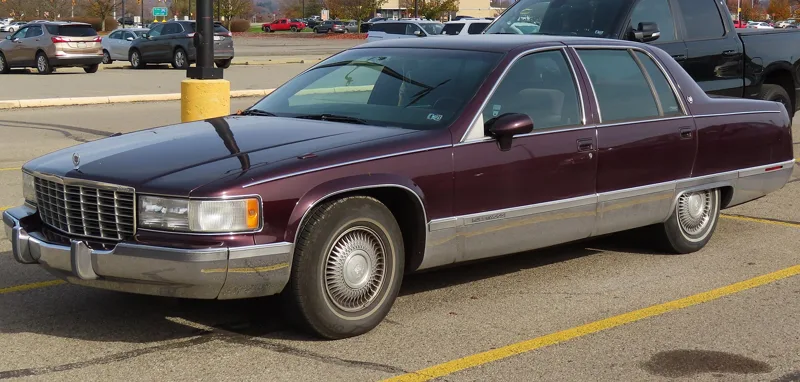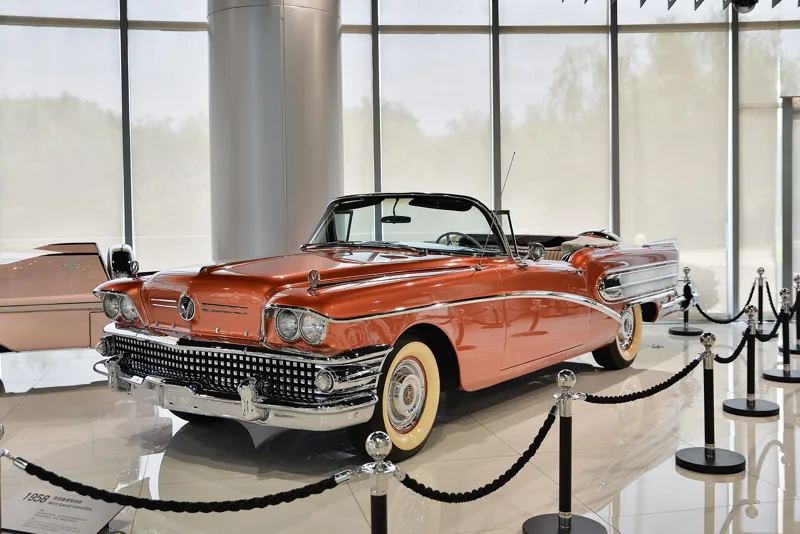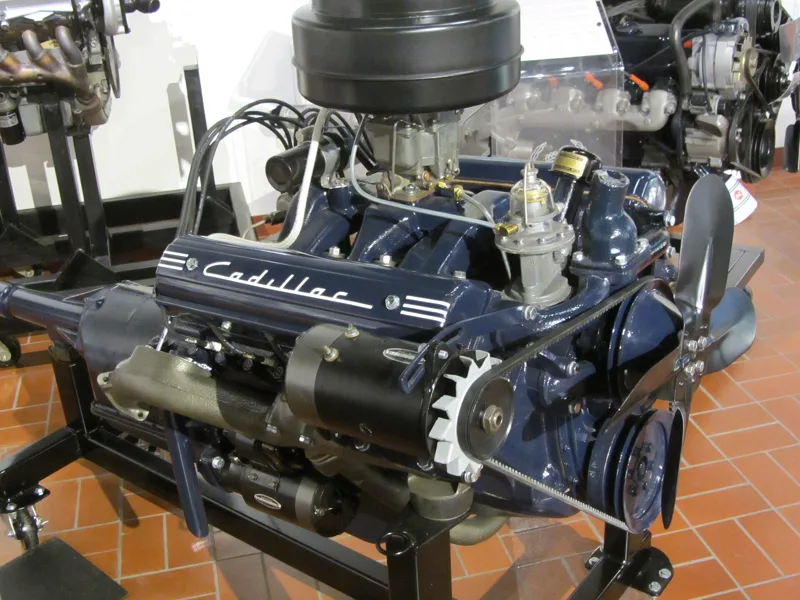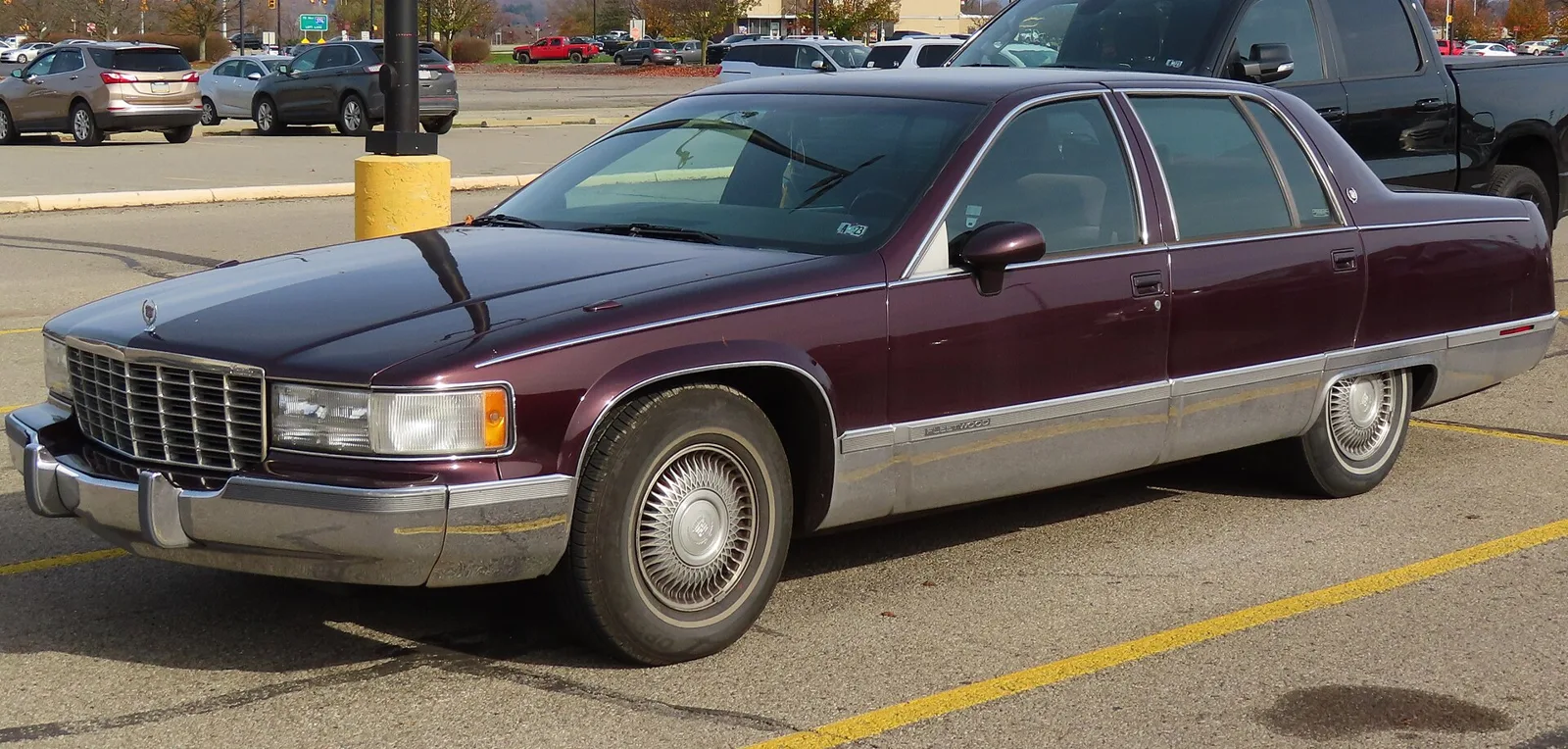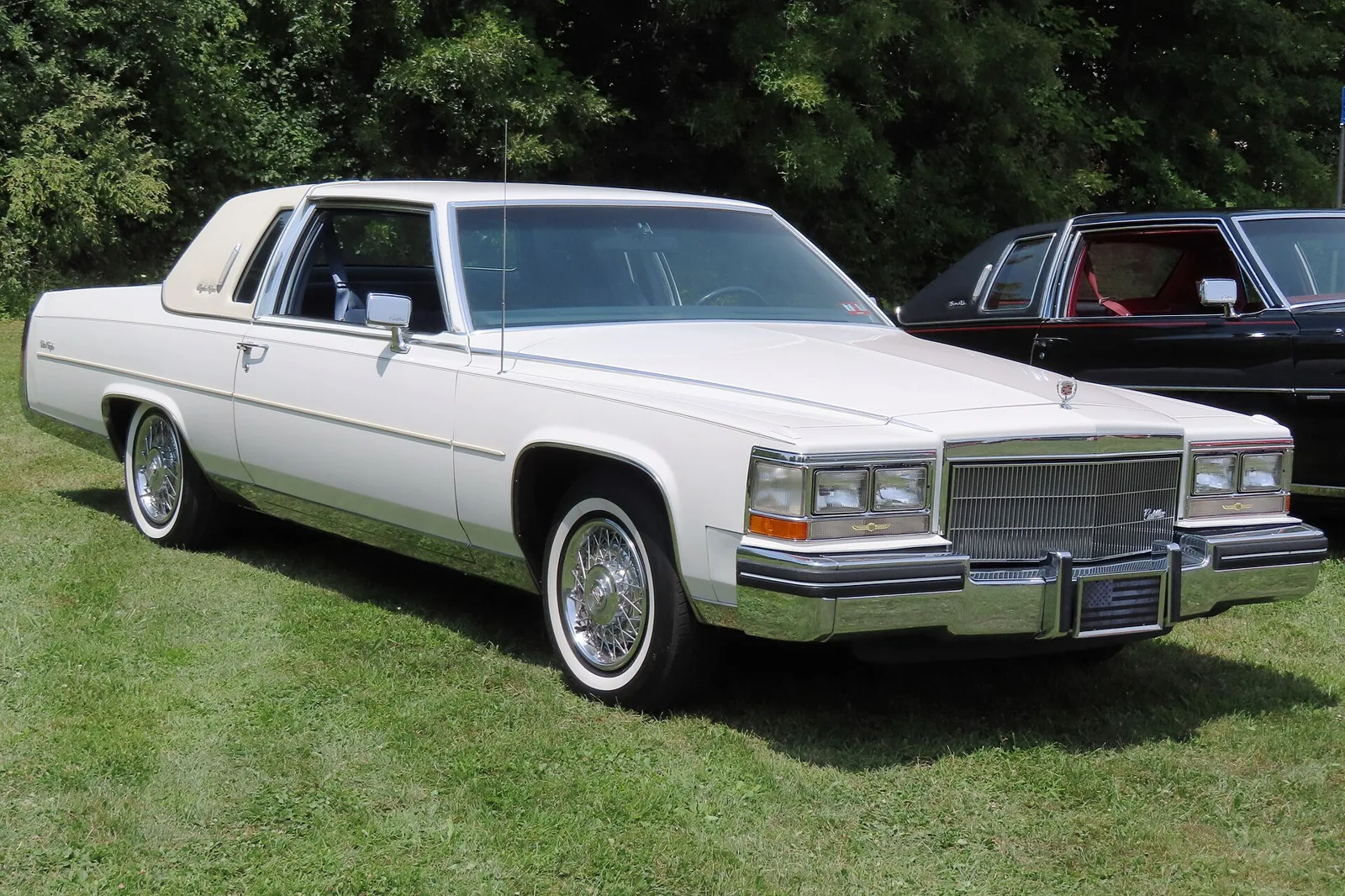
From a 1939 mainstream coupe and the long-wheelbase limousines to an entry-level Calais that offered the first airbags and a Brougham that outlived its Fleetwood prefix.
The Cadillac Calais (1965-1976) was the entry-level model, the Series 61 a mainstream range of the 1939-1951 era, the Series 70 and 75 the top limousines, and the Fleetwood Brougham (1977-1992) the largest owner-driven sedan.
In 1974 General Motors introduced the industry's first airbag system, a dual setup with one bag in the steering wheel hub and another in the dashboard, and Cadillac was among the brands that offered it. The option was expensive, customers shunned it, and it was dropped after 1976. Cadillac did not offer airbags again until the 1990 model year. One of the cars that carried it was the entry-level Calais.
What was the Cadillac Calais?
The Cadillac Calais was an entry-level model built from 1965 to 1976. The division renamed its Series 62 as the Calais in 1965, after the French port city, and it was identical in styling and mechanics to the better-equipped, pricier De Ville. No convertible was offered. The name later turned up on the Oldsmobile Cutlass Calais and the Holden Calais.
The Calais came as a two- or four-door hardtop or a formal-roof four-door sedan, a hybrid with frameless windows and a pillar between them. A perimeter frame let Cadillac position the engine forward and lower the transmission hump for more interior room.
Cadillac offered the industry's first airbag option in 1974, dropped it after 1976 and did not offer it again until 1990.
How did the Calais differ from the De Ville?
Mainly in trim and equipment. A De Ville came with AM/FM radio, power windows and power seats as standard, but the Calais had hand-cranked windows and manual seat adjusters, with the radio costing US$165 extra and power windows US$119 in 1965. It had power brakes, power steering, an automatic gearbox, cornering lights, dual back-up lamps, wheel covers and seat belts. The seats were a high-grade cloth and vinyl like those in top-line Buick Electras and Oldsmobile 98s, with no leather and, at first, no vinyl roof. Cadillac's high-gloss firemist paint was not offered either.
Even so, it was not cheap. Prices started just under US$5,000, nearly $1,000 (about 25%) more than an Electra 225 or Oldsmobile 98 and about $500 above the top-line Buick Riviera. Most De Ville options could be ordered, including Twilight Sentinel and the GuideMatic headlight dimmer. In 1965 the Turbo-Hydramatic automatic became standard across the line, and the 429 cu in (7.0 L) V8 with 254 kW (340 hp) remained the standard engine.
How did the Calais change from 1966 to 1970?
The 1966 car brought variable-ratio steering and optional front seats with carbon cloth heating pads, along with headrests, reclining seats, an AM/FM stereo and automatic level control. In 1967 the Calais was extensively restyled with a forward-leaning front, sculptured body lines and a coupe roofline inspired by the Florentine show car shown at the 1964 New York World's Fair. Power windows became standard that year, though power seats stayed optional even in the 1970s. It was the last model year for pillared sedans.
For 1968 every Cadillac, the Calais included, received the 472 cu in (7.7 L) OHV V8. It was the last year for stacked headlights and for vent windows, and shoulder belts became standard for the driver and front passenger on cars built from 1 January 1968. The 1969 restyle moved to horizontal headlamps and a ventilation system that removed the need for vent windows. A 1970 facelift gave a grille with 13 vertical blades.
What happened to the Calais in the 1970s?
All Cadillacs were completely restyled for 1971, with the Calais wheelbase stretched to 130 in (3,302 mm). The new GM full-size bodies set a record for interior width that no car matched until the early to mid-1990s. Traditional touches returned in 1972, when the V emblem was restored to the hood and deck lid after a two-year absence. Energy-absorbing bumpers arrived on all GM cars for 1973.
The 1974 Calais, De Ville and Fleetwood received a major facelift with a wider eggcrate grille, and coupes were no longer hardtops but wore broad coach windows. A new two-tier dashboard housed a standard quartz-controlled digital clock. That year GM's Air Cushion Restraint System appeared, giving front occupants dual airbag protection, one in the wheel hub and one low on the passenger side of the dashboard. The glove compartment was replaced by a storage box to make room. Although it saved lives, the option cost too much to be popular, and it ended after 1976.
What was the Cadillac Series 61?
The Cadillac Series 61 was Cadillac's mainstream range, priced and equipped more modestly than the limousines above it. It was upgraded to Series 62 in 1940 only to return for 1941, replacing the cancelled LaSalle Series 50. Production was suspended from 1943 to 1945 for the war, and it stayed the junior line until 1951. Owners usually drove them themselves, whereas the longer cars had chauffeurs. It was priced at the same level as Buick products of the time.
The 1939 car had a Fisher body on a 126 in (3,200 mm) wheelbase and a torpedo shape with a protruding bow, a look inspired by new ocean liners that looked futuristic when exhibited at the Futurama display of the 1939 New York World's Fair. It came as a club coupe, convertible or sedan, with the same 346 cu in (5.7 L) L-head V8 as the Sixty Special, rated at 101 kW (135 hp) and rising to 112 kW (150 hp) for 1941. These were Cadillac's most affordable cars: US$1,695 for the two-passenger coupe, $1,805 for the Touring Sedan and $2,265 for the five-passenger convertible sedan. In 1941 the Hydramatic automatic cost an extra $125.
The similar Series 63 was a sedan only for 1941 and 1942, on the same 126-inch wheelbase, using the six-window B-body of the fastback Series 61 but with a separate boot rather than a fastback, at US$1,695. At least three mockups had been made for possible LaSalle models before that brand was dropped, and the Series 63 is thought to have used the design most likely to have been a LaSalle. Sales were 5,030 in 1941 and 1,750 in 1942, before production stopped on 4 February 1942 for the war effort.
How did the Series 61 change after the war?
The 1942 cars had Airfoil fenders and a more massive grille, the beginning of the traditional eggcrate look. After the war the Series 61 returned on the 126-inch wheelbase with the same V8. In 1948 it moved onto the C-body platform shared with the Series 62, with tailfins inspired by the Lockheed P-38 fighter. The 1949 news was a new overhead-valve V8 of 331 cu in (5.4 L) and 119 kW (160 hp).
For 1950 the 61 went back to the shorter B-body, four inches shorter than before, with no rear vent windows on the sedan. It had a rear wraparound backlight and no rocker panel mouldings or chrome underscores.
In 1950 Briggs Cunningham took two Series 61 cars to the 24 Hours of Le Mans. The modified one, Le Monstre, finished 11th after Cunningham spent 30 minutes stuck in sand, while the almost standard Petit Petaud, a coupe, finished 10th. A 1939 convertible stood in as the Batmobile in the 1943 Batman film serial, and a Series 61 was also in the 1946 film The Chase.
What were the Cadillac Series 70 and 75?
The Series 70 and 75 were full-size V8 Cadillacs built from the 1930s into the 1980s. They replaced the 1935 355E as the mainstream car just as the much cheaper Series 60 appeared, and for much of the postwar era the Series 75 was the top-of-the-line Cadillac and its factory limousine. The Series 72 (1940 only) and Series 67 (1941 and 1942) were similar, on slightly shorter and longer wheelbases.
The short-wheelbase Series 70 stopped in 1938 but reappeared briefly in 1957 and 1958 as the expensive Series 70 Eldorado Brougham four-door hardtop. The long-wheelbase Series 75 made a final appearance in the 1987 model year.
| Name | Years | Place in the range | Notable fact |
|---|---|---|---|
| Series 61 | 1939, 1941-1951 | Junior mainstream line | Raced at Le Mans in 1950 |
| Series 70 and 75 | 1936-1987 | Top of the range, limousines | Fleetwood-bodied from 1938 and sold until 1987 |
| Calais | 1965-1976 | Entry level, below the De Ville | Carried the industry's first airbag option from 1974 |
| Fleetwood Brougham | 1977-1992 | Largest owner-driven sedan | Engine family was the last cast-iron big-block Cadillac V8 |
How did the Series 70 and 75 evolve?
The 1936 Series 70 and 75 wore V-shaped windshields by Fleetwood and used the new 346 cu in (5.7 L) Monobloc V8 with 101 kW (135 hp), which was cheaper and more powerful than before. But the price, from US$2,445, limited their appeal in the Great Depression, and only 5,248 sold for 1936 and 4,332 for 1937. For 1938 the Series 70 and the Fisher-bodied Series 75 Specials were dropped, leaving a Series 75 on a 141 in (3,600 mm) wheelbase with only Fleetwood bodies. It had 104 kW (140 hp) from a higher 6.70:1 compression ratio that needed better fuel.
In 1940 the one-year Series 72 arrived as a cheaper partner, three inches shorter on a 138 in (3,500 mm) wheelbase. The 1941 Series 67 had Fisher coachwork on a 139 in (3,531 mm) wheelbase and was 228 in (5,791 mm) long, listed at US$2,890 with a passenger divider available as an option. The Fleetwood-bodied Series 75 rode on a 136.5 in (3,467 mm) wheelbase at $4,045.
After the war the Series 75 returned as Cadillac's largest model, with five touring sedan configurations and a body not shared with other GM divisions. In 1948 Cadillac considered dropping the long wheelbase line, but competition from Packard in the luxury market meant it stayed. The 331 cu in V8 of 119 kW (160 hp) arrived in 1949.
An all-new Series 75 for 1950 rode on a 146.8 in (3,730 mm) wheelbase and had six windows, a one-piece windshield, no running boards and a high-headroom limousine look. Power windows were standard, and Hydramatic was optional. For 1952, the 50th anniversary, the emblems were cast in gold and output reached 142 kW (190 hp). Although every Series 75 had been Fleetwood-bodied since 1938, Fleetwood script only appeared on the rear deck lid in 1952. The 1954 to 1956 cars were eight-passenger limousines or sedans with jump seats, with the wheelbase up to 149.
What was the Cadillac Fleetwood Brougham?
The Cadillac Fleetwood Brougham was a luxury car made from 1977 through 1986. In 1987 the name was shortened to Brougham, and production continued through 1992 with minor updates. The two names had separate histories before they met: Fleetwood as a prefix on Cadillac's most expensive models from 1934 to 1976, and Brougham, from 1957 until 1961, as a sub-designation on the four-door Eldorado.
In 1965 Brougham was affixed to the Fleetwood Sixty Special as an option package with a vinyl roof and script on the sides. In 1966 the Fleetwood Brougham became a separate model beside the Fleetwood 60 Special, and in 1971, with the Brougham outselling the 60 Special by a wide margin, they merged into the Fleetwood 60 Special Brougham, which continued through 1976. Downsizing in 1977 shortened the name to Fleetwood Brougham, and it took the Sixty Special's place as Cadillac's largest owner-driven sedan.
Where do the Fleetwood and Brougham names come from?
Fleetwood goes back to Lawrence P. Fisher, who was Cadillac general manager from 1925 through 1934. He started adding exclusive custom bodies, and in September 1925 Fisher Body bought the Fleetwood Metal Body Company. The Fleetwood Body Company of Fleetwood, Pennsylvania, claimed 300 years of coach-building tradition. After the 1925 purchase its bodies were reserved for Cadillac, and by 1929 GM owned both firms.
A brougham was originally an enclosed carriage drawn by one horse, named after the British statesman Henry Brougham. Cadillac first used the word in 1916 for an enclosed sedan, and in the thirties for a formal body with an open chauffeur compartment. It reappeared on the 1955 Eldorado Brougham show car and the 4-door hardtops built from 1957 to 1960, and in 1959 production moved from Detroit to Pininfarina in Turin.
What changed on the Fleetwood Brougham in 1977 and after?
For 1977 GM downsized its full-size cars. The Fleetwood Brougham and De Ville shared a 121.5 inch wheelbase and a 425 cu in (7.0 L) V8. Against the 1976 Fleetwood Sixty Special Brougham, the new car had an 11.5 inch shorter wheelbase and weighed nearly 400 kg (900 lb) less, so it was virtually the same as the Sedan de Ville apart from the name, a reshaped B-pillar and a plusher interior. The 1980 refresh removed even that distinction and added a two-door Fleetwood Brougham Coupe with a landau vinyl roof.
To meet CAFE rules the engine was debored to 368 cu in (6.0 L) for 1980 and 1981. For 1981 it received an Eaton-designed modulated displacement system, which shut off intake and exhaust valves on two or four cylinders at light load in third gear over 56 km/h (35 mph). Reliable, but not smooth enough, this V8-6-4 was dropped after 1981 on everything except limousines. The engine family was the last cast-iron Cadillac engine and the last big-block. Alternatives included a Buick 252 V6, a diesel Oldsmobile 350 V8 and Cadillac's own HT-4100 alloy V8, which was troublesome and prone to early failure. The first two ended in 1982 and the HT-4100 lasted through 1986.
The front-wheel-drive DeVille and Fleetwood of 1985 had the first transverse V8 ever and were the first cars with a high-mounted rear stop lamp, mandated from 1986. The rear-drive Brougham carried on almost unchanged, the coupe ended after 1985, and in 1986 an Oldsmobile 307 cu in (5.0 L) V8 replaced the HT-4100.
For 1987 Cadillac renamed the car the Brougham to reduce confusion with the smaller front-drive Fleetwood. After 1992 the D-body car was restyled and rebranded as the Cadillac Fleetwood for 1993, and the Brougham name returned as a trim package.