From a handmade convertible that listed at over US$5,000 to muscle-era big-blocks and a turbo V6 that beat a Camaro, the Skylark, Century, Gran Sport and Regal share one story.
Buick's mid-size line ran from the 1953 Skylark through the Gran Sport option of 1965 and the Century of 1973 to the Regal, a separate line from 1976. Its turbocharged Grand National returned in 1984 with 149 kW (200 hp), and the Regal left North America after 2020.
In 1984 a turbocharged Buick V6 covered the quarter-mile in a listed 15.9 seconds, against 17.0 for a Chevrolet Camaro V6 and 15.2 for a Corvette. The car was the Regal Grand National, and its little V6 kept up with bigger V8s.
The Regal was the end point of a family tree that runs through the Skylark, the Century and the Gran Sport. Each of those names took turns as Buick's mid-size flagship, its performance badge or its plain family car, and tracing them shows how Buick swapped one role for another.
How do the Buick Skylark, Century, Gran Sport and Regal connect?
The Skylark was a luxury convertible in 1953 and then a mid-size line from 1964, the Gran Sport was the performance package added to it in 1965, the Century replaced the Skylark name on Buick's mid-size cars in 1973, and the Regal began that year as a Century coupe before becoming its own line in 1976.
The Century had existed long before, as a fast full-size car in the 1930s and again in the 1950s. The Regal later became the basis for the Grand National, Gran Sport and GNX coupes.
| Year | Car | Engine | Power | Torque |
|---|---|---|---|---|
| 1965 | Skylark Gran Sport | 401 cu in (6.6 L) Nailhead V8 | 242 kW (325 hp) | 603 Nm (445 lb ft) |
| 1968 | GS 400 | 400 cu in (6.6 L) V8 | 253 kW (340 hp) | 597 Nm (440 lb ft) |
| 1970 | GS 455 Stage 1 | 455 cu in (7.5 L) V8 | 268 kW (360 bhp) | 691 Nm (510 lb ft) |
| 1982 | Regal Sport Coupe | 3.8-litre turbo V6 | 130 kW (175 hp) | 373 Nm (275 lb ft) |
| 1983 | Regal T-Type | 3.8-litre turbo V6 | 134 kW (180 hp) | 380 Nm (280 lb ft) |
| 1984 | Regal Grand National | 3.8-litre turbo V6 | 149 kW (200 hp) | 407 Nm (300 lb ft) |
| 1986 | Regal Grand National | 3.8-litre intercooled turbo V6 | 175 kW (235 hp) | 447 Nm (330 lb ft) |
A turbocharged Buick V6 ran the quarter-mile in a listed 15.9 seconds, faster than a Camaro V6 at 17.0.
Buick Skylark: from handmade convertible to mid-size line
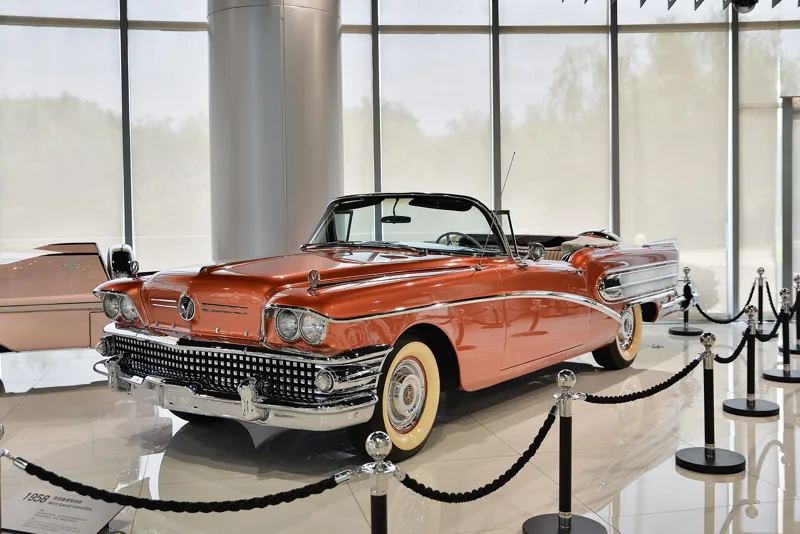
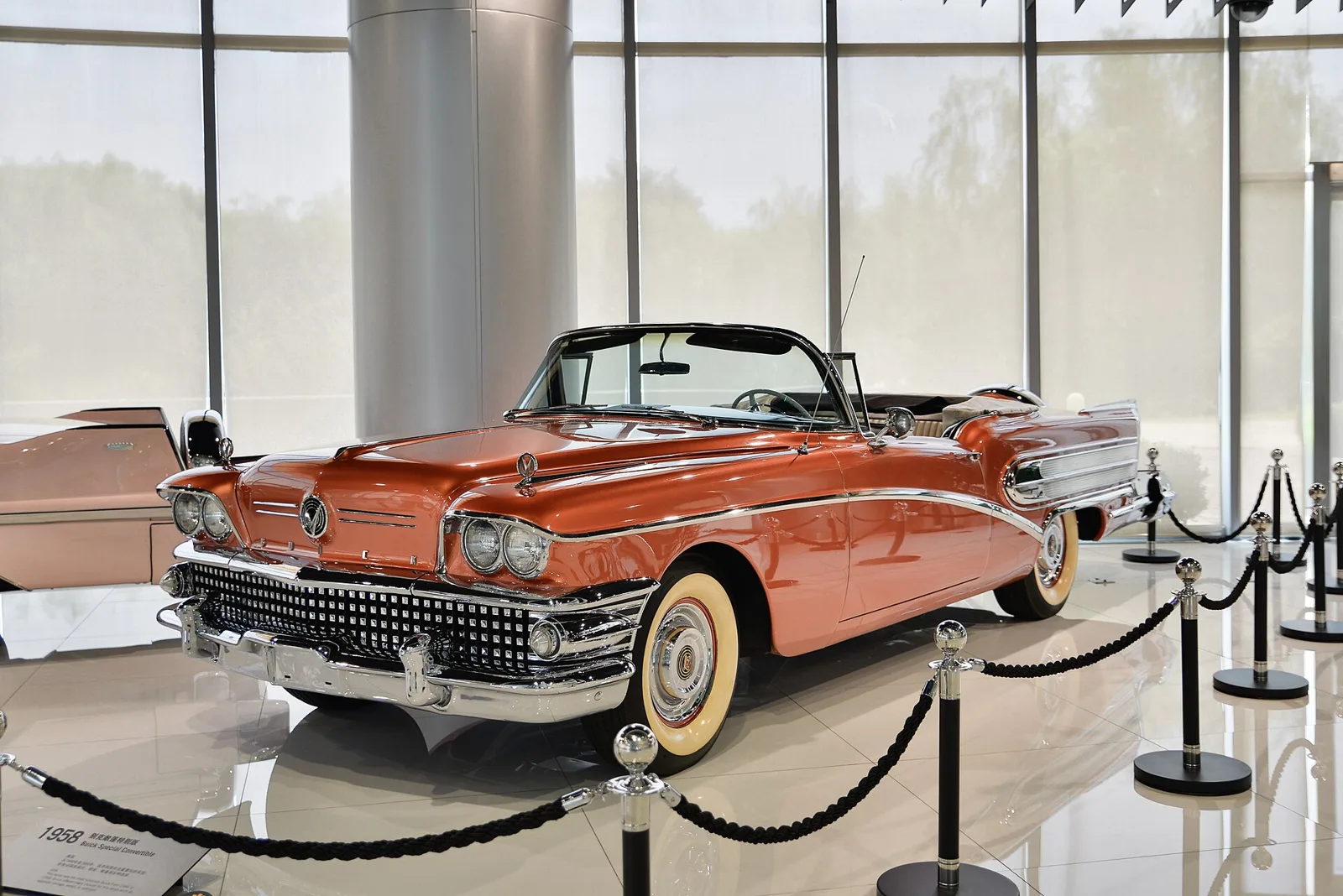
The first Skylark was a showpiece. For Buick's 50th anniversary in 1953 the Roadmaster Skylark joined the Oldsmobile 98 Fiesta and Cadillac Eldorado as one of three limited-production convertibles meant to promote General Motors' design leadership. Of the three, the Skylark's run of 1,690 cars was the most successful, though it listed at slightly over US$5,000, more than 50 percent above the Roadmaster convertible beneath it.
It was largely handmade. The windshield was cut almost 3 inches shorter, the inner doors were made by slicing Roadmaster doors in two and welding the halves back at an angle, and the body was finished with lead filler. It debuted Buick's 322 cu in (5.3 L) Fireball V8, replacing the old straight-eight, and a 12-volt electrical system, both firsts for the division. The Sweepspear trim line that ran along its flank would reappear on Buicks for years.
A restyled 1954 Skylark on the shorter Century chassis did badly. At US$4,843 it still cost a great deal, and buyers saw a step down from the big Roadmaster platform. Only 836 were built before it was cancelled.
The Skylark returns in 1961
The name came back in the middle of the 1961 model year as a luxury trim on the Buick Special, one of three new GM compacts alongside the Pontiac Tempest and Oldsmobile F-85. The Skylark swapped the Special's engine for a higher-compression four-barrel version of the aluminium 215 cu in V8, raising power from 155 to 185 hp.
For 1962 it became a model in its own right. The 198 cu in Fireball V6 introduced that year made the Skylark Special the first American car to use a V6 in volume production, and it earned Motor Trend's Car of the Year award for 1962. Road & Track found the new engine so practical that it sounded and performed much like the aluminium V8. From 1964 the Skylark had its own line on a 115 in wheelbase chassis shared with the F-85, Tempest and new Chevelle. The aluminium V8 was dropped, and its tooling eventually went to Rover, which built it as the Rover V8 until 2006.
Buick Gran Sport: when the Skylark became a muscle car
Buick followed the success of the Pontiac GTO with a Gran Sport option in mid-1965. It put the 401 cu in Nailhead V8, labelled a 400 in sales literature to stay under a GM limit on intermediate engines, into the Skylark. Output was 242 kW (325 hp) and 603 Nm (445 lb ft). More than 15,000 Skylarks were sold with the option that first year and almost as many the next.
The Gran Sport has been used on Buick's high-performance cars since 1965. Cadillac, which built no performance models, was the only GM division that ranked above Buick for luxury, so the GS cars were the most lavishly equipped sport models GM made. The idea harked back to the 1930s Century, the so-called banker's hot rod, and promised cars that were fun to drive with a luxury approach.
GS 400 and GS 455
The model became its own series in about 1967 as the GS 400, with a new 400 cu in big-block replacing the Nailhead. The same year brought the cheaper GS 340, of which fewer than 4,000 were sold, replaced in 1968 by the GS 350. In 1968 and 1969 the GS 400 was offered as a convertible and hardtop with a four-barrel Quadrajet carburettor and dual exhaust, rated at 340 hp and 440 lb ft. The Stage 1 option arrived in 1969 on fewer than 1,500 cars, with published ratings for it ranging between 340 and 350 hp. In that year GS sales excluding the California coupe reached 12,465, split between 4,933 GS 350s and 7,532 GS 400s.
For 1970 the 400 gave way to the 455 cu in (7.5 L) V8. The base GS 455 was rated at 261 kW (350 bhp) and 691 Nm (510 lb ft), and the Stage 1 at 268 kW (360 bhp). Motor Trend ran a 3,810 lb Stage 1 coupe through the quarter-mile in 13.38 seconds at 105.5 mph, which implied roughly 360 net horsepower, so the figure on the sticker was conservative.
Dynamometer evidence is less tidy. A rebuilt Stage 1 engine tested in 2004 produced 360.9 gross horsepower, or 381.7 with optimal tuning, while a separate test of a 1970 Skylark GS Stage 1 showed 471 SAE gross. Buick's Dennis Manner recalled the lowest of 15 production-line Stage 1 engines tested in 1970 at roughly 425 hp. The 455 also had weaknesses: two-bolt main bearing caps, an undersized oil system for high revs and thin walls in the lifter valleys that promoted cracking.
The Stage 1 argument and the end of the V8s
In the 1980s a list of the 50 fastest muscle cars ranked the Stage 1 ahead of every Chrysler Hemi car, which started a Hemi versus Stage 1 argument that remains unsettled.
The Gran Sport 350 outlived its big brothers. V8 Gran Sport production stopped in 1975, and the Gran Sport 231, a V6 car, took over. The name returned in the late 1980s on the front-wheel-drive Skylark with assorted performance options.
Buick Century: the banker's hot rod and its mid-size revival
The Century name first appeared in 1936 when Buick renamed its Series 60. The recipe was to mate the Special's short-wheelbase body to the Roadmaster's large straight-eight, here a 5.2-litre (320 cu in) engine with 105 kW (141 hp). It could sustain 100 mph (161 km/h), which explains the name, and became known as the banker's hot rod. Production halted in February 1942 for the war, and the shortened 1942 run made up about 10 percent of Buick's output.
Buick reintroduced the Century in 1954 using the same recipe, now with the 322 cu in V8 and Dynaflow automatic. In mid-1955 the four-door Century Riviera was among the first four-door hardtops ever produced. That year the California Highway Patrol ordered 270 two-door Century sedans, a body style closed to the public, and Broderick Crawford drove one in the first season of the TV series Highway Patrol. Power climbed from 200 hp in 1954 to 300 hp from a 364 cu in (6.0 L) V8 in 1957 and 1958. For 1959 Buick renamed the Century the Invicta.
The 1973 Century
The Century returned for 1973 on the rear-drive A-body intermediate platform, replacing the Skylark name. GM's Colonnade styling had removed true hardtop rooflines in anticipation of rollover rules. A Century Regal coupe sat at the top of the range, and the Century inherited the Gran Sport option, available with any engine and including upgraded suspension, extra gauges and special trim.
The 1973 car could be had with a Stage 1 455 V8 rated at 201 kW (270 hp) and 529 Nm (390 lb ft). For 1975 a 231 cu in V6 with 110 hp became standard and the 455 disappeared, and the Gran Sport option ended with the last 1,288 cars offered as an appearance and suspension package only. Centurys served as Indianapolis 500 pace cars in 1975 and 1976, with the original pace car carrying a turbocharged 231 V6.
The 1978 Century shrank, losing 4 in (102 mm) of wheelbase and nearly half a ton in curb weight, with a new 196 cu in (3.2 L) V6 as standard. A rare Century Turbo Coupe of 1979 and 1980 used a turbocharged 3.8-litre V6 to offer V8-like performance with better fuel consumption. The Century went front-wheel drive in 1982 and the name ran until 2005.
Buick Regal history: from Century coupe to separate line
The Regal arrived for 1973 as the Century Regal Colonnade Hardtop coupe, Buick's answer after it had lagged behind Chevrolet, Oldsmobile and Pontiac in the personal coupe class. GM's Buick Riviera had started that segment in the full-size class in 1963, and the intermediate version followed with the Pontiac Grand Prix in 1969 and Chevrolet Monte Carlo in 1970. The Regal had a notchback roofline with side opera windows and its own grille and tail lamps.
A four-door sedan joined it in 1974, and from 1976 the Buick Regal became a distinct model line above the Century. Interiors were upgraded with woodgrain trim and door-pull straps, and the Regal S/R coupe of 1976 and 1977 offered corduroy-covered reclining bucket seats. More than 500,000 Regal coupes were sold in this first generation, though the Monte Carlo and Cutlass Supreme sold better. A 1976 Regal listed at US$4,910.
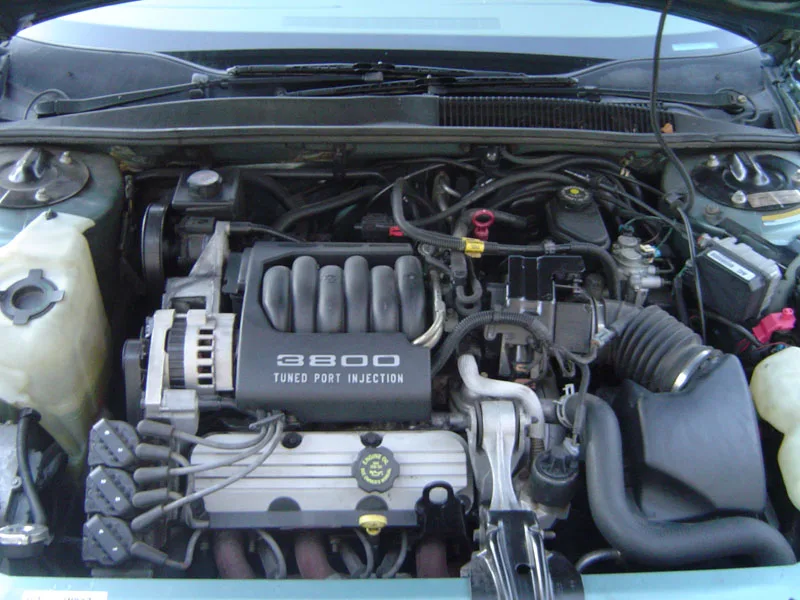
Engines began with a 350 cu in (5.7 L) V8 as standard and an optional 455 (7.5 L). For 1975 a 231 cu in (3.8 L) V6 became standard. That engine had a long history: Buick designed it in the early 1960s, sold the tooling to Kaiser Motors for Jeep in 1967, and bought it back from American Motors in 1974. In 1975 and 1976 no other mid-size car on sale in America offered a V6 apart from the Century and Regal.
Buick Regal Grand National and the turbo years
A downsized Regal arrived in 1978 and could be had with a turbocharged 3.8-litre V6, as the Regal Sport Coupe. At the time, apart from the Buick LeSabre, the only other turbo cars on sale in the United States were imports from Mercedes-Benz, Porsche and Saab. Early turbo output was 150 or 165 hp, rising to 170 hp in 1979, 175 hp in 1982 and 180 hp in 1983.
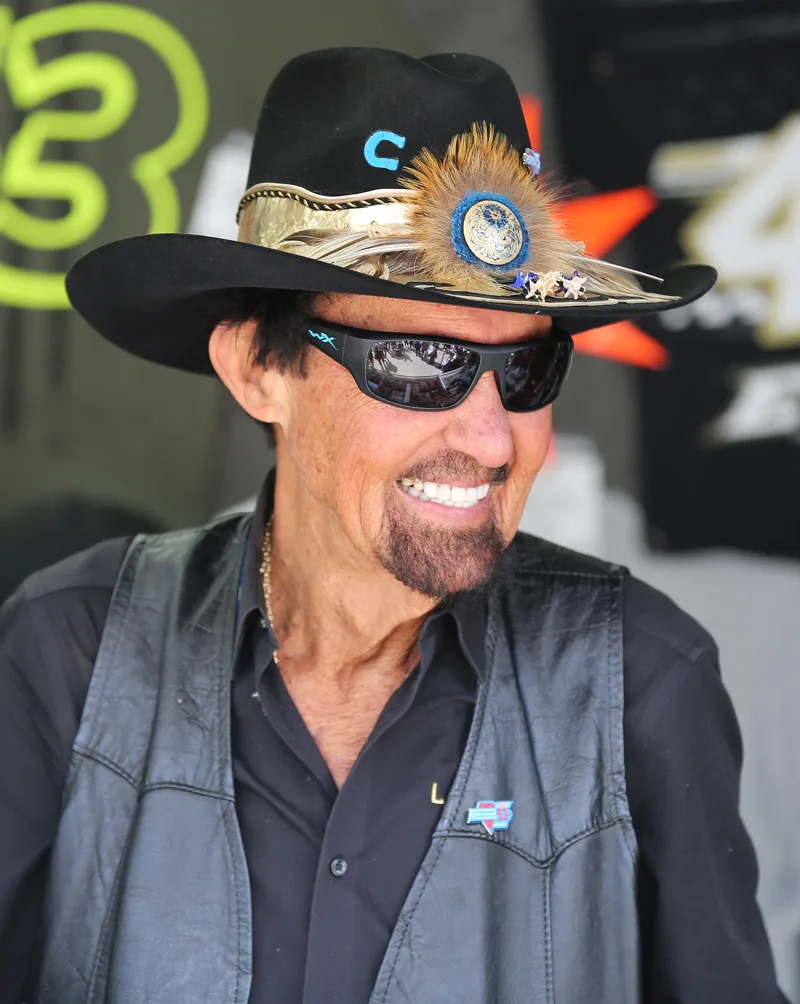
A major facelift for 1981 cut the drag coefficient by eighteen percent and made the car competitive on the NASCAR circuit. Richard Petty won the 1981 Daytona 500 in one, and Buick took the NASCAR manufacturers title in both 1981 and 1982. It was the last marque other than Chevrolet or Ford to win it until Toyota did in 2016, and Buick climbed to third in sales for the first time in 26 years.
1982: the first Grand National
The Grand National debuted in February 1982, named after the NASCAR Winston Cup Grand National Series, with the slogan that what wins on Sunday sells on Monday. It was meant to revive the performance image of the 1960s Skylark Gran Sport. The plan was for 100 cars, but Cars and Concepts of Brighton, Michigan retrofitted 215 Regals with the package, adding Firemist silver-grey paint, red pinstripes, a front air dam, a rear spoiler and special Lear Siegler seats.
Most of them did not have the turbo engine. The standard 1982 GN carried a naturally aspirated 252 cu in (4.1 L) V6 with 93 kW (125 hp), and at least 35 of the 215 were built on the turbo Sport Coupe with 130 kW (175 hp). There was no Grand National in 1983, when the Sport Coupe was renamed the T-Type and 3,732 were built with 134 kW (180 hp), dual exhaust and stainless headers.
1984 to 1986
The Grand National came back in 1984, painted black, with sequential fuel injection and a distributorless computer-controlled ignition on the turbocharged 3.8. That gave 149 kW (200 hp) and 407 Nm (300 lb ft). Only 5,204 turbo Regals were built that year, about 2,000 of them Grand Nationals, and it is often considered the start of the development of the intercooled cars. The listed quarter-mile time of 15.9 seconds at 10 psi of boost compared with 17.0 for the Camaro V6 and 15.2 for the Corvette.
The Grand National stayed unchanged for 1985. In 1986 an air-to-air intercooler lifted output to 175 kW (235 hp) and 447 Nm (330 lb ft). Production that year was 5,512 Grand Nationals and 2,384 T-Types. In the 1990s the V6 was boosted again, with a supercharger this time instead of a turbo.
What happened to the Buick Regal and Century
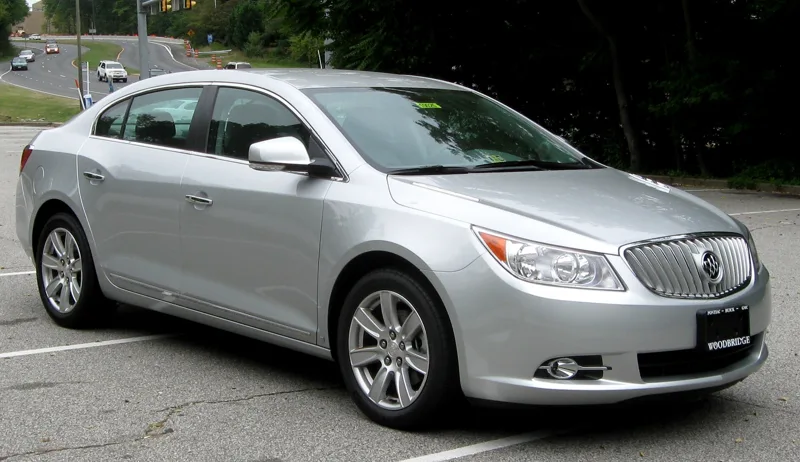
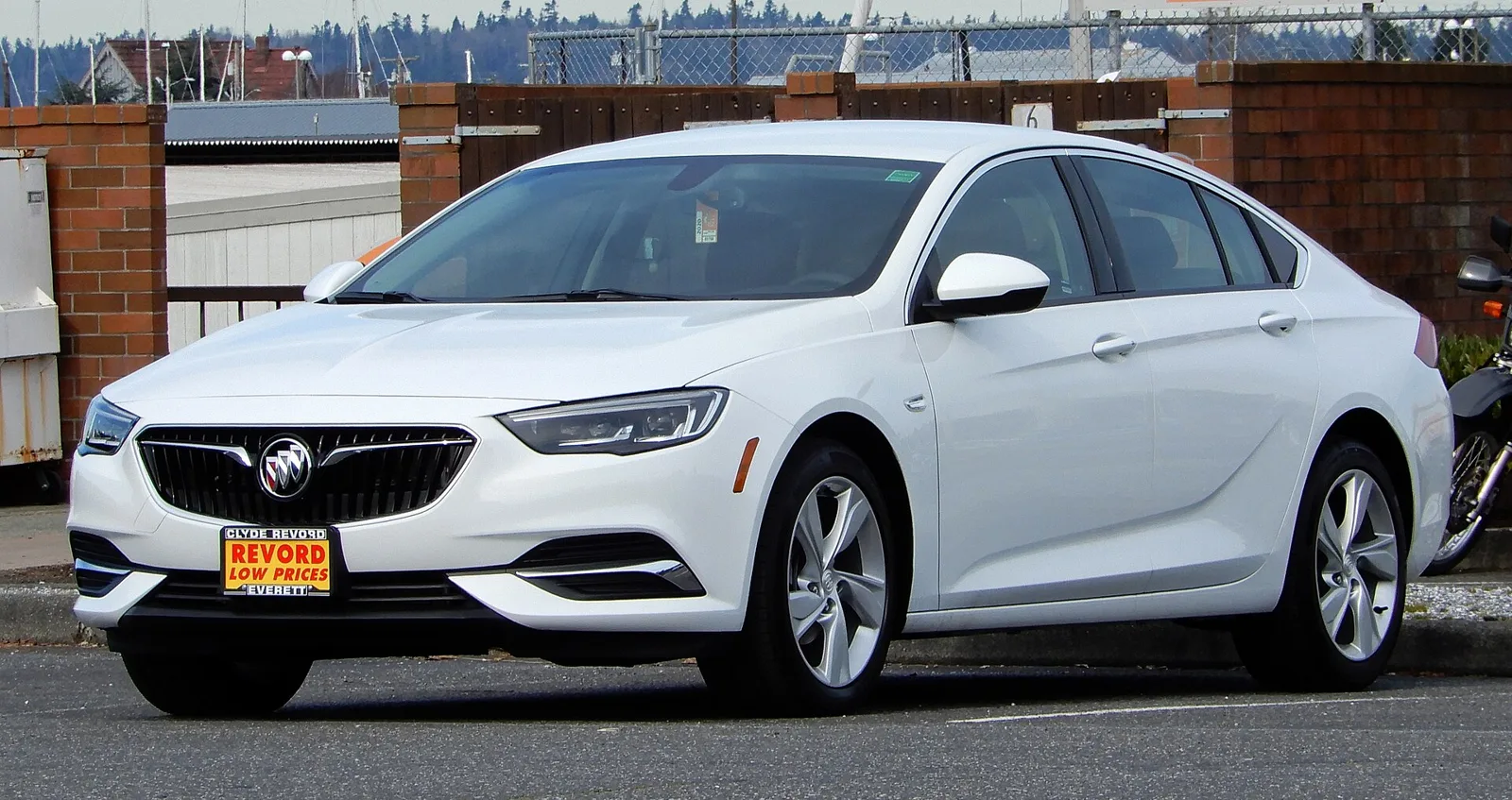
In 1999 General Motors began selling cars in China with the Buick Regal as the introductory model of the SAIC-GM joint venture. After 2004 Buick retired the Regal and Century in North America, replacing both with the LaCrosse. A second-generation Regal for China appeared for 2008, and the Regal came back to North America for 2011, now a rebadged Opel Insignia that sat a little under the LaCrosse.
The sixth-generation Regal of 2018 came entirely from Germany, and included the Regal TourX, the first Buick station wagon since the Century and Roadmaster Estates were retired after 1996. GM then sold Opel to PSA, now Stellantis, and North American sales ended after the 2020 model year. SAIC-GM continues to build the Regal in its Insignia B-based form.
What this means if you are looking at one of these Buicks
If you are shopping for a classic from this family, the useful distinctions are practical ones. The 1965 to 1969 Skylark Gran Sport and GS 400 are the muscle-era cars. The GS 455 Stage 1 is the one with the argument about its true power and the engine-block weaknesses. The Regal T-Type and Grand National of 1983 to 1986 are the turbo V6 cars, and the 1982 Grand National is the oddity, since most examples were not turbocharged.
The Century is a different proposition: a 1930s banker's hot rod, a 1950s full-size V8, or the 1970s intermediate that carried Gran Sport until 1975. Totals are a guide to rarity, with 215 Grand Nationals in 1982, 5,512 in 1986 and fewer than 1,500 Stage 1 GS cars in 1969.
Where this goes next
The Regal name is still in use, though no longer in North America. The Gran Sport name was last used on the front-drive Skylark in the late 1980s, and the Century name ended in 2005.