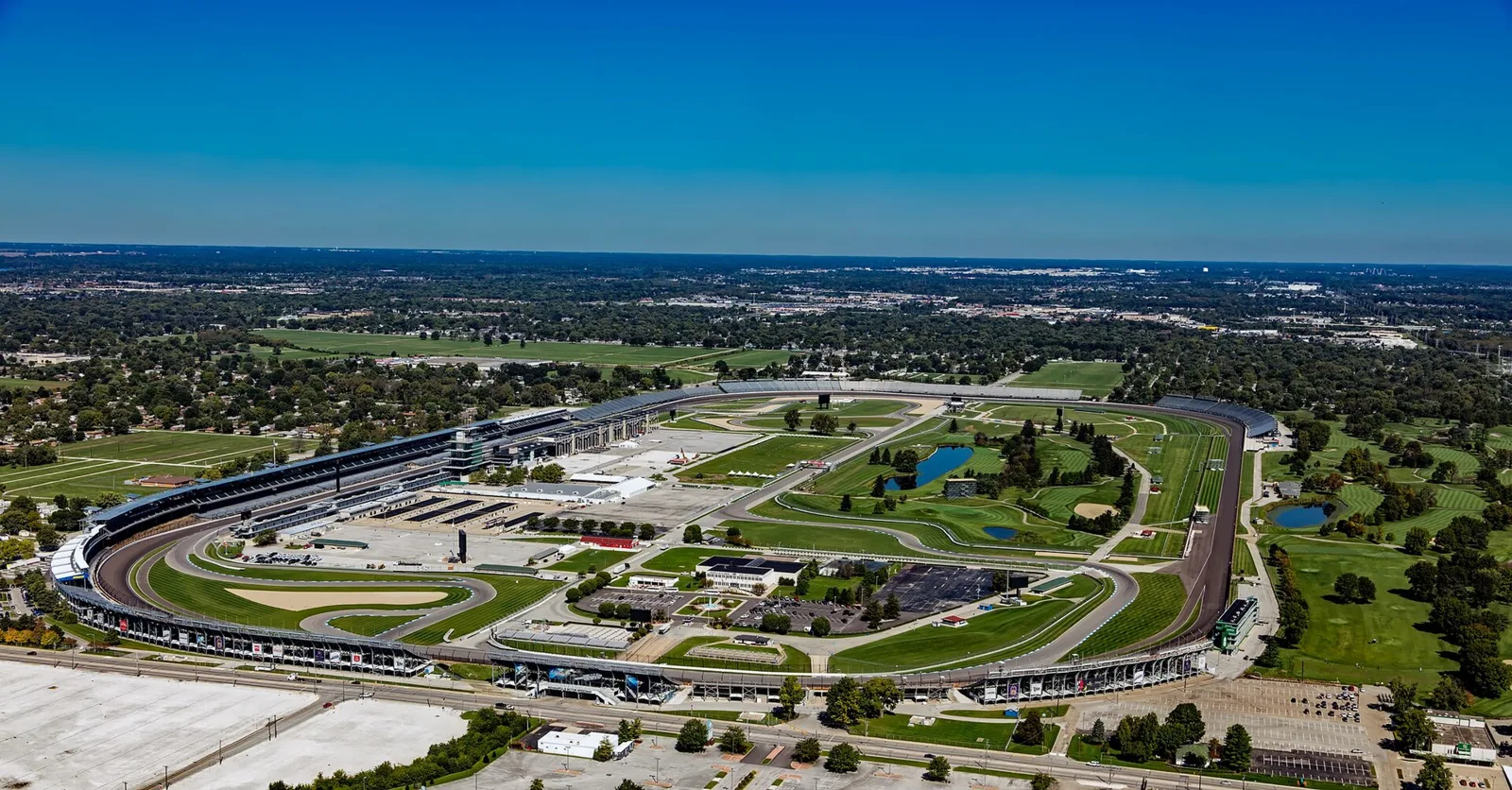
From Carl Fisher's rolling start in 1911 to a Chevrolet exclusive, the pace car has led the field, bunched it under caution and sold a generation of showroom cars.
The Indianapolis 500 pace car has led the field since the first race in 1911, setting the start and bunching cars under caution. Since 2002 Chevrolet has supplied the car, and the race winner traditionally receives one of the year's pace cars.
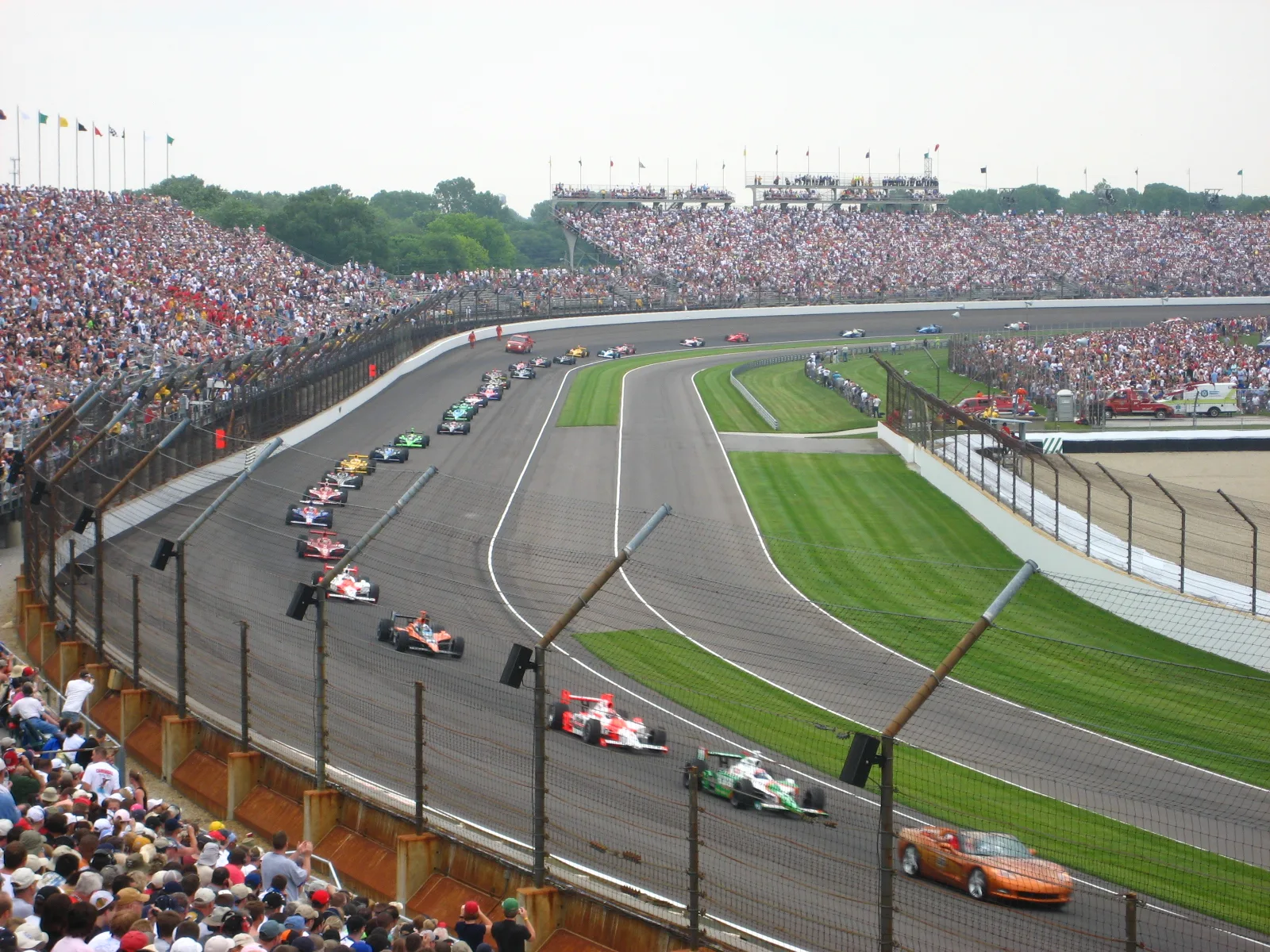
The Indianapolis 500 has used a pace car every year since 1911, and it does two jobs at the start and two more during the race. The car leads the assembled grid around the track for unscored warm-up laps, then releases the field at a suitable speed. During yellow flag caution periods it returns to the track, picks up the leader and bunches the field at reduced speed.
What does the pace car do?
The pace car exists to make the start of a race safe and orderly. Before the first 500 in 1911, Indianapolis Motor Speedway founder Carl G. Fisher is commonly credited with the idea of a rolling start led by a pace car. Nearly all races of the time used a standing start, and Formula One still does, so the Indianapolis approach is distinctive.
Under caution the pace car does a different job. It takes the field in hand so that the cars are held at a reduced speed until the track is clear. That makes the pace car a working safety vehicle as well as a ceremonial one, and the two roles have run in parallel for more than a century.
The pace car has led the Indianapolis 500 through more than a century of starts, cautions and celebrity drivers.
Why is the pace car a prize for manufacturers?
Supplying the pace car has long been a coveted honour for each automaker, and a marketing showcase for the particular make and model. Since 1936 the winner of the race has almost always been presented with one of that year's pace cars, or a replica of it. The driver at the start is usually an invited celebrity, a former racing driver or a notable figure in the car industry.
The honour also ties the car to the race's history. Winners since 1936 have often driven away with a replica of the car that led the field that year.
How did pace laps work from 1911 to 1956?
In the early years the pace car took the starting field on one unscored lap. The cars used the lap to warm their engines and tyres, and at the end, at a prescribed speed, the pace car pulled off the track and allowed a rolling or flying start. Fisher drove the pace car himself in several early years, but the role became honorary, with invitations going to former winners and figures from auto racing or the car industry.
Tony Hulman, who ran the Speedway, was a regular passenger, typically riding in the car just after he gave the start-engines command. His main job was to marshal the start, and in some years he also operated a film camera housed in the car's trunk.
The early pace cars were often painted in special liveries with logos, lettering and pinstriping. Flagpoles, lights and other motoring equipment were sometimes added to make them easy to identify. Manufacturers used the chance to show off higher-end or luxury models, and many of the early cars were convertibles, which helped the officials marshal the start. Because the car was used only at the start in those years, a sports car was not essential.
| Period | Warm-up format | Main change |
|---|---|---|
| 1911 to 1956 | One unscored lap | Rolling start, honorary pacemaker |
| 1957 | Two warm-up laps | Grid lined up in single file from the new pit lane |
| 1959 onward | Two warm-up laps | Grid returned to the main stretch |
| 1977 | Three laps: two parade and one pace | Parade laps added |
| 2012 | Four laps: three parade and one pace | Introduced with a new engine and chassis formula |
Why did the warm-up laps change in 1957?
Until the early 1950s the field usually completed one warm-up lap behind the pace car. Many drivers waved to the crowd, and the rolling grid made for striking photographs. By 1957 the procedure changed so that the pace car led the field for two warm-up laps. That gave extra time to warm engines, oil and tyres, and let drivers survey the whole track before the green flag.
The change also let fans on the main stretch, where the largest grandstands stand, see the whole field go past before the start. Previously only fans elsewhere around the circuit had seen the grid pass for photographs and waves. Yet the 1957 and 1958 races lined up single file from the newly built pit lane, which proved difficult in practice.
Both 1957 and 1958 saw incidents at the start, and in 1959 the field went back to lining up on the main stretch, where it has stayed ever since. Pit lane was separated from the racing surface for the first time in 1957, when the new pit lane was built.
Who drove the pace car in the 1960s and 1970s?
By the late 1960s a special driver sat behind the wheel, and numerous celebrities were invited to ride along as passengers. Guests ranged from car executives and astronauts to broadcasters from ABC Sports and the IMS Radio Network.
In 1971 the local Indianapolis Dodge dealer Eldon Palmer crashed the pace car into a photographer's stand at the south end of the pit area, injuring several people. From then on the driver was an experienced race driver. Former Indy winner Jim Rathmann served six times, once only for caution periods. James Garner and Marty Robbins were chosen in part because of their racing experience.
How did the 1977 format change the start?
In 1977 the format changed to three warm-up laps: two parade laps and one pace lap. Several replica festival pace cars joined the field during the parade laps, usually carrying celebrities or guest drivers. The 1978 race was the first with several pace cars circulating during the parade laps.
Since 2010 an IndyCar two-seater, a retired Indy car modified with a passenger seat, has also led the field at the front, carrying a celebrity or special guest. Extra cars withdraw after one or two laps, leaving the official car alone at the head for the pace lap. The warm-up grew to four laps in 2012, with three parade laps and one pace lap, as a new engine and chassis formula arrived.
From about 1994 the field was often strung out during the parade laps, and drivers weaved to build tyre temperature. The final pace lap was meant to form the field into eleven rows of three on the backstretch, but it was often loose. Fans and the media criticised the single-file starts, and in 2010 officials announced closer policing to keep the rows of three throughout the warm-up.
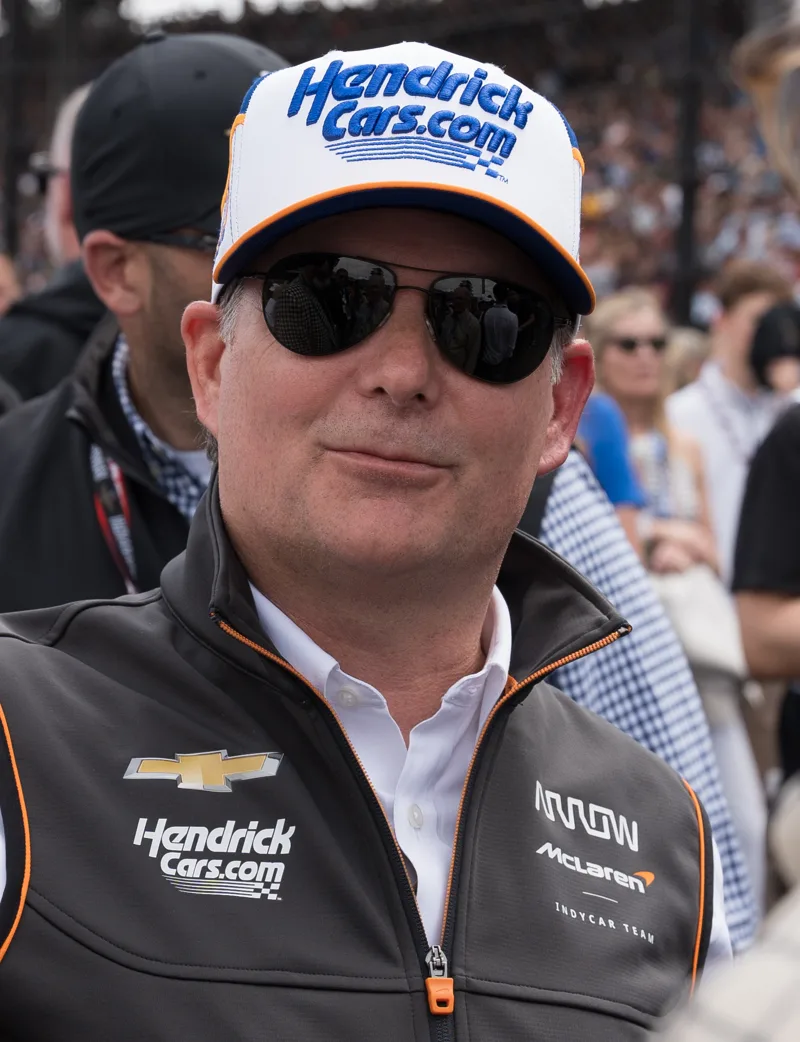
Later the Speedway began using pop culture celebrities as drivers, with mixed responses from fans. Racers have taken the position more recently. A. J. Foyt drove in 2011, Dario Franchitti in 2014, and Jeff Gordon, a five-time winner of the Big Machine Vodka 400, in 2015. With NBC Sports as its broadcast partner, the Speedway chose Dale Earnhardt Jr. for 2019, a driver who had also owned a two-time winning car at the track.
What happened during the extra pace laps?
Incidents on the pace laps repeatedly forced extra unscored laps. In 1958 the front row escaped from the pace car while the field was lining up from the pit lane, which needed an extra lap to assemble before the green flag. In 1967 the race was red-flagged for rain after 18 laps and resumed the next day. Mauri Rose drove the pace car, and two unscored laps preceded the restart on lap 19.
In 1970 Jim Malloy hit the outside wall as the field was about to take the green, and the start was waved off. Teams were allowed to top up a few gallons of fuel before the field left for two new pace laps. A crash in 1973, in which Spike Galhausen hit the outer wall warming his cold tyres, also led to a red flag and two more laps.
In 1982 Kevin Cogan was involved in a crash that also took out Mario Andretti and Dale Whittington, and the drivers took two extra pace laps. In 1986 Tom Sneva crashed on the pace lap, and during the stoppage officials had teams' fuel tanks topped up with 3 gallons of methanol before two warm-up laps. In 1992 Roberto Guerrero crashed on a parade lap, and officials extended the warm-up rather than halting the proceedings, leaving the race with 85 laps of yellow flag conditions.
In 1997 a three-car crash on the original pace lap led to more unscored laps. In 2009 the flagman waved off the start for the first time in modern history, because the field had not formed up properly in its eleven rows of three. It received the green flag on the next pass, with a better formation.
How does the caution pace car work?
Through 1978 the pace car was used only at the start of the race. Since 1979 it has also been used to pack up the field during caution periods. The ceremonial driver drives only at the start, while a trained official drives during caution periods. In some years two identical pace cars were used, one for the start and one for the cautions.
The caution driver is the same person who drives the pace car for the IndyCar Series at its other events.
How were the pace cars built and sold?
From the mid-1950s the manufacturer that supplied the official pace car began selling replicas to the public. The track car was often modified from its street version. Strobe lights, roll bars, multi-point harnesses, television camera mounts and two-way radios for officials were common additions, and air conditioning was often removed. Some cars also had suspension, transmission or engine changes, as the 1990 Chevrolet Beretta did.
Race-duty pace cars often have their fuel tank replaced with a fuel cell and carry an on-board fire extinguisher. Public replicas usually come with full paint and Indy 500 decals, and may form part of a performance package. The track also uses dozens of base-model cars as festival cars throughout the month, a practice that dates back to the mid-1920s.
Some choices have been dramatic. In 1994 the Ford Mustang Cobra was the primary pace car, with Mustang GTs as festival cars. In 1996 the Dodge Viper GTS was chosen, and rather than supply a fleet of Vipers, Chrysler provided Stratus, Intrepids and Special Edition Rams for festival duty.
Traditionally the pace car has been an American brand. In 1991 the Dodge Stealth was named pace car, but the United Auto Workers and traditionalists protested that it was a captive import built by Mitsubishi in Japan. It was shortly downgraded to a festival car, and a pre-production Dodge Viper RT/10 took its place on race day.
Trucks replaced pace cars in 2001 and 2003. For 2005 a restored 1955 Bel Air marked the golden anniversary of the Chevrolet V-8. Only one was built, and it was painted black, while the original 1955 track cars were red and cream.
Why does Chevrolet supply the pace car?
Chevrolet has been the exclusive supplier of pace cars and other official vehicles at the Indianapolis 500 since 2002. Oldsmobile, as series engine provider, had a similar arrangement from 1997 to 2001 and supplied the pace car three times in that five-year period. Chevrolet has also supplied the pace car for the Brickyard 400 since 1994.
The make has changed over time. Manufacturers were rotated from 1911 until 2001, but since 1997 all pace cars have come from General Motors. Since 1936 the race winner has traditionally received a pace car, and in some years the winner is presented with one of the official street-legal replicas.