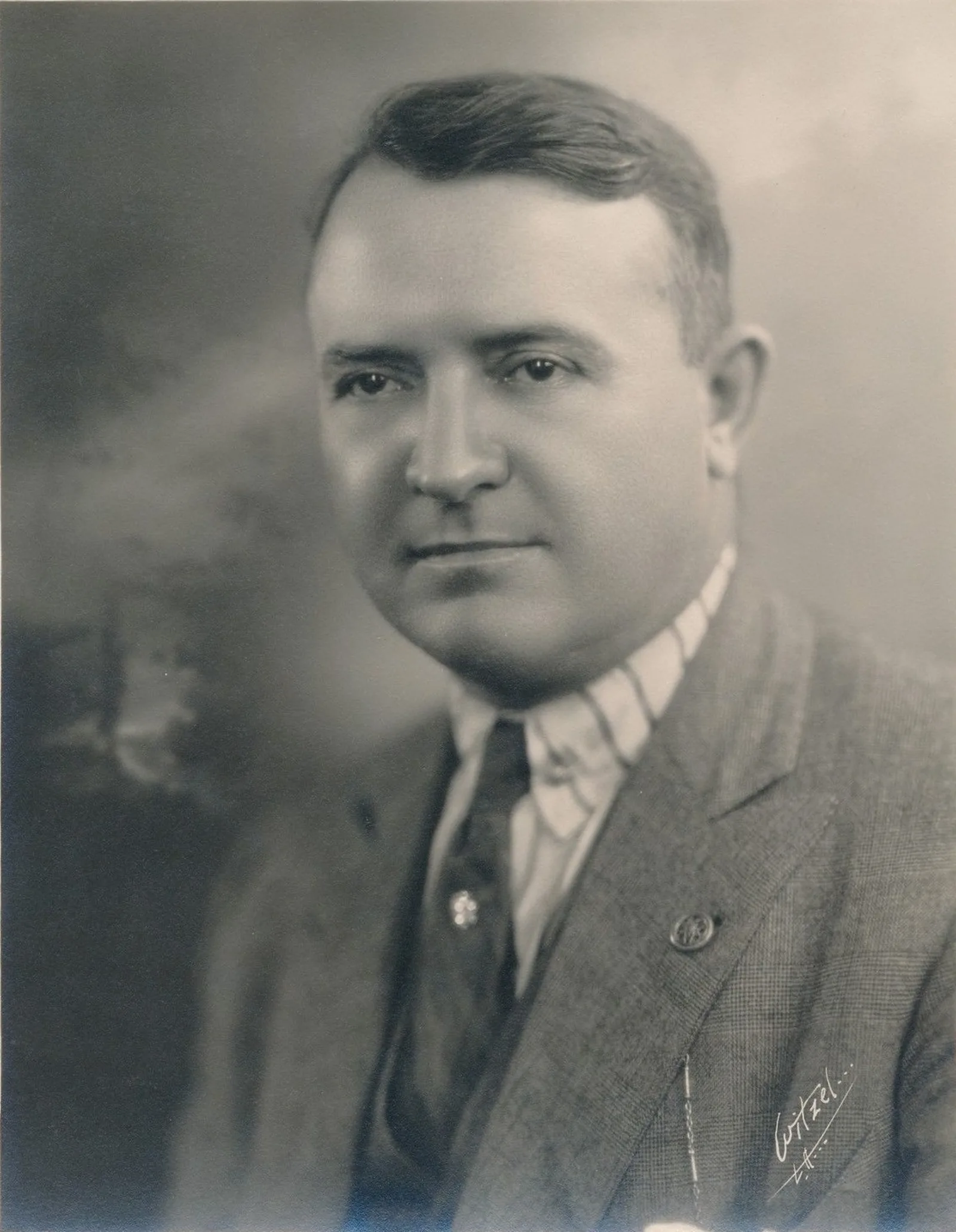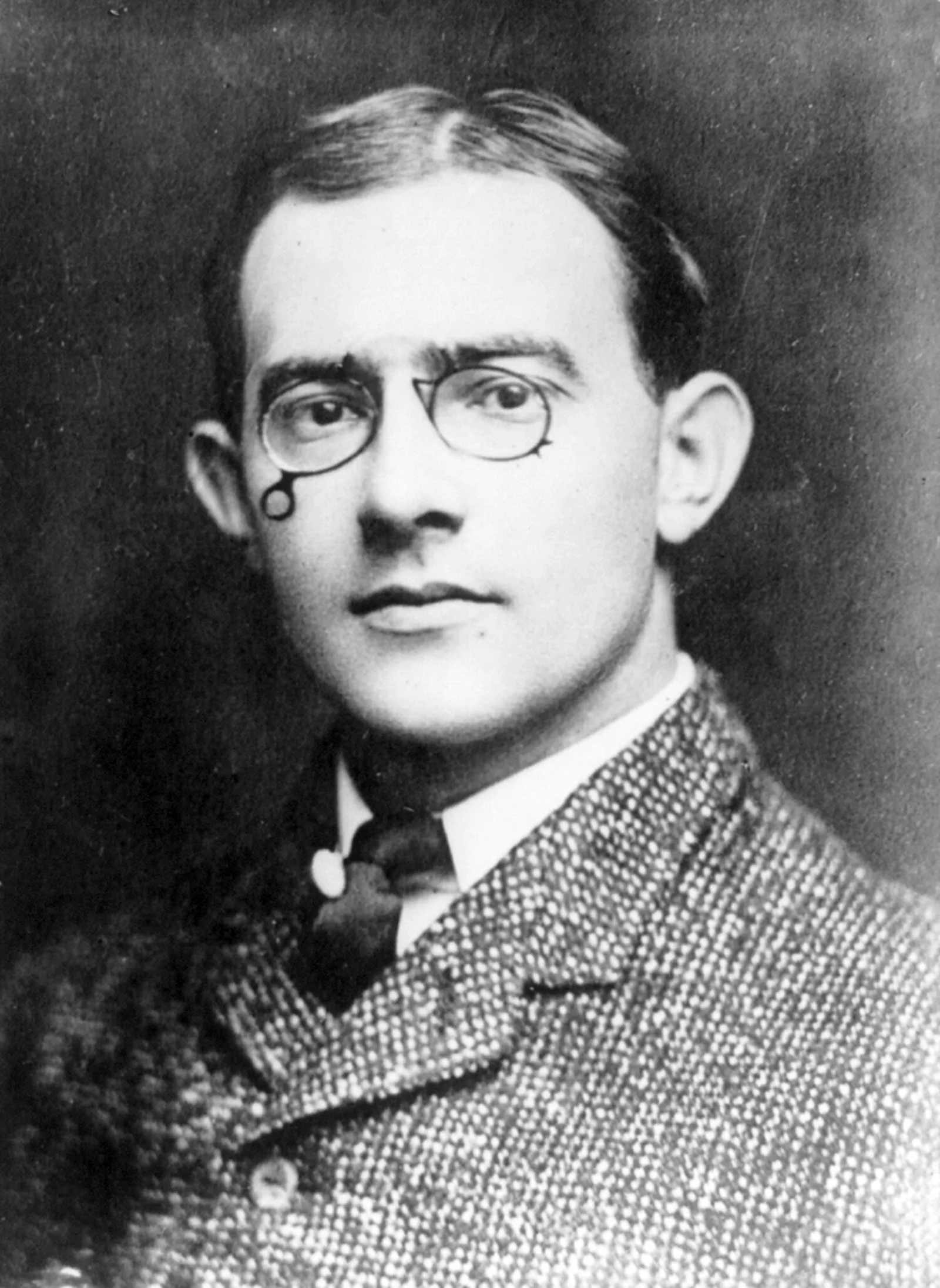
From headlight patents and the first Indianapolis 500 to the Lincoln Highway, the Dixie Highway and a Florida land boom that ended with a hurricane.
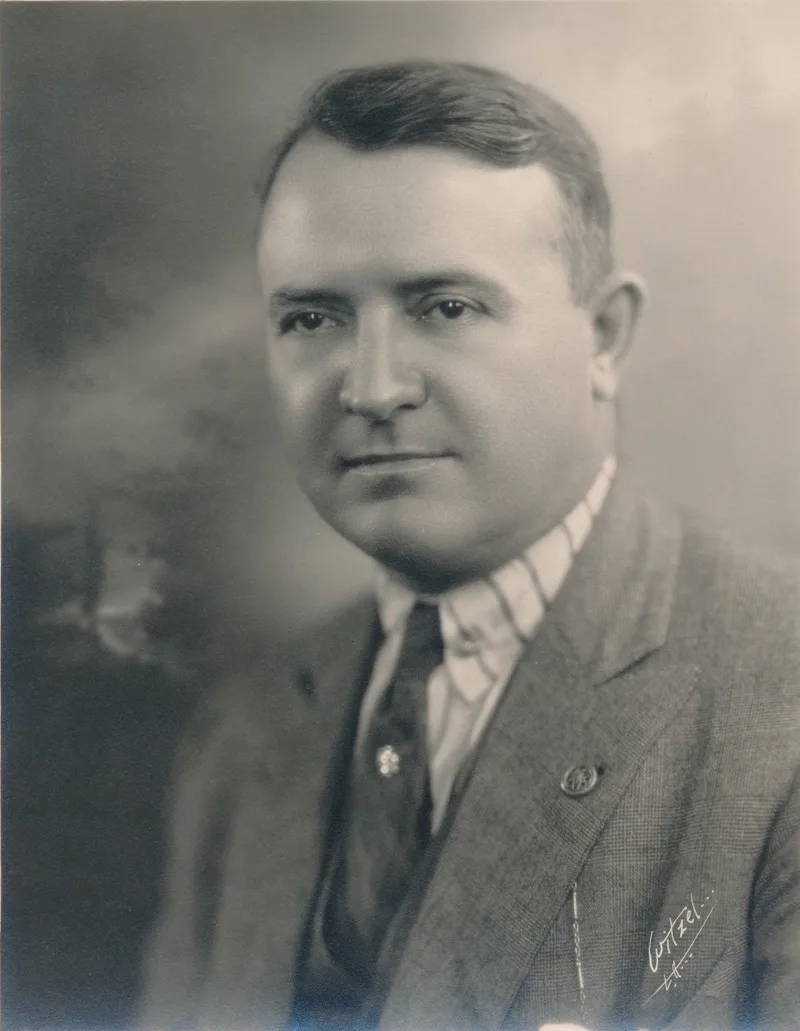
Carl G. Fisher was an American automotive parts supplier, highway promoter and Florida developer. He conceived the Lincoln Highway, invested in Indianapolis Motor Speedway and died in Miami Beach in 1939.
Carl Graham Fisher was an American entrepreneur whose career ran through the automobile industry, highway building and Florida real estate. Born in Greensburg, Indiana, in 1874, he is remembered for the brickyard at Indianapolis Motor Speedway, the Lincoln Highway and the transformation of Miami Beach into a resort.
How did Fisher move from bicycles into car parts?
Fisher grew up around bicycles and opened a repair shop in 1891 with two brothers. From cycling he drifted into automobiles, and in 1904 he and James A. Allison bought into a patent for acetylene headlights that would make him wealthy.
The headlight venture grew fast. Its products went onto nearly every car headlamp sold in the United States as factories sprang up nationwide to meet demand. When Allison and Fisher sold the Prest-O-Lite business to Union Carbide in 1913, the price was $9 million.
Fisher also sold cars directly. His Indianapolis dealership, the Fisher Automobile Company, may have been the first such outlet in the country, and it stocked Oldsmobile, REO, Packard and Stutz, among other makes. He worked in showroom business alongside Barney Oldfield.
Publicity came naturally to him. One stunt lifted a Stoddard-Dayton car by hot-air balloon over downtown Indianapolis, and Fisher drove back into town to become a media sensation.
His own stunts often left him hurt on the dirt and gravel roads of the day. Those injuries helped drive his early interest in automotive safety, and he later worked on paved racetracks and public roads.
A bicycle shop owner who helped build the Indianapolis 500 and the first road across America, then lost a Florida fortune to a hurricane.
What part did Fisher play in the Indianapolis Motor Speedway?
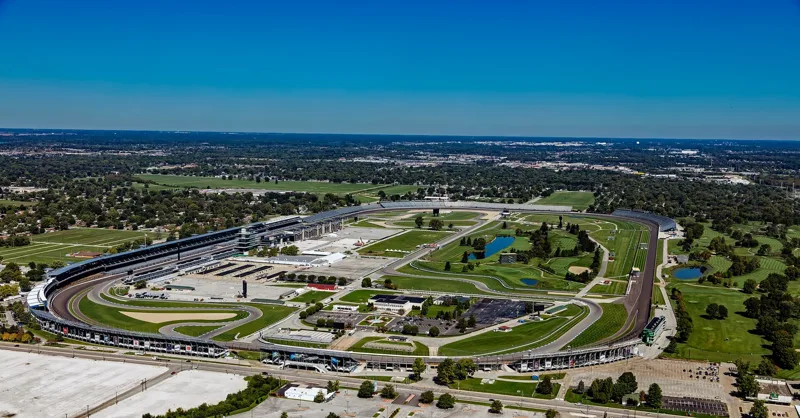
Fisher was one of the investors who put money into the Indianapolis Motor Speedway in 1909. The first race that August was a disaster: a loose rock surface caused crashes, fires and deaths, and the event was stopped and cancelled halfway through.
Rather than abandon the project, Fisher pressed the group to pave the track with 3.2 million bricks. That decision produced the brickyard nickname, which survives even though the surface has since been resurfaced.
On May 30, 1911 the reopened speedway drew 80,000 spectators to a 500-mile race, the first running of what became the Indianapolis 500. He was later honoured by the Indianapolis Motor Speedway Hall of Fame, into which he was inducted in 1952.
How did the Lincoln Highway get started?
Fisher conceived the Lincoln Highway in 1913 as a road that would connect New York City with San Francisco, and it became the first road across the United States. Its estimated cost was $10 million for a hard-surfaced route of almost 3,400 miles (5,500 km).
He needed partners and money. Frank Seiberling and Henry Bourne Joy used their promotional skills to set up the Lincoln Highway Association, and manufacturers and suppliers contributed much of the cost. Henry Ford was against that approach to funding.
Friends such as Theodore Roosevelt and Thomas Edison sent checks, and Woodrow Wilson, then president, also gave the venture his support.
The road's significance grew over time. In 1919 the US Army made its first transcontinental motor convoy along the route, and one of its young officers, Dwight David Eisenhower, later credited that trip when he backed the Interstate Highway System as president.
What was the Dixie Highway?
The Dixie Highway was Fisher's north-south counterpart to the Lincoln Highway, a route from Michigan to Miami that would carry drivers from the Midwest to the Florida coast. He began work on it in 1914 and led a motor caravan from Indiana to Florida to promote it.
The route opened in 1916 with a celebration attended by Fisher and Indiana Governor Samuel M. Ralston, marking the link from Indianapolis to Miami. Its southern end led straight to the foot of the Collins Bridge, which became part of the Miami Beach story.
How do Fisher's major projects line up by date?
Fisher's major projects ran across roughly a quarter century, from the Lincoln Highway in 1913 to the Caribbean Club in 1938. The table lists each one with its start year, its scale and its outcome.
| Project | Start | Scale | Outcome |
|---|---|---|---|
| Lincoln Highway | 1913 | Almost 3,400 miles (5,500 km), estimated at $10 million | Army convoy in 1919; Eisenhower credited it later |
| Dixie Highway | 1914 | Route from Michigan to Miami | Celebrated opening in 1916 |
| Collins Bridge | 1913 | 2+1/2-mile toll bridge | Opened June 12, 1913 |
| Miami Beach Railway | 1920 | Electric street railway | Rail service ended October 17, 1939 |
| Montauk | 1926 | 9,000 acres (36 km2) | Receivership in 1932 |
| Caribbean Club | 1938 | Fishing club on Key Largo | Later turned into a casino |
How did Miami Beach become a resort?
Fisher spotted potential in Miami Beach's swampy coastline around 1910, then put down roots with a vacation home in 1912 and began acquiring land. He then invested in the infrastructure that would make the island reachable, most notably the Collins Bridge, which opened as a toll crossing on June 12, 1913.
He had lent John S. Collins the money to finish that bridge in exchange for 200 acres of land. The new wooden toll span carried traffic across Biscayne Bay to the barrier island, and it was a link that later drivers relied on.
Transport was the next piece. The Miami Beach Railway, an electric streetcar line, began service on December 14, 1920, linking downtown Miami with the island. Florida Power and Light later took over the streetcar business around 1926, and rail service between the two cities ended on October 17, 1939.
To draw wealthy visitors and buyers, Fisher built luxury hotels, including the Flamingo Hotel, and he staged publicity. In 1921 a baby elephant named Rosie served as a golf caddy for president-elect Warren Harding, and Fisher bought a large illuminated sign reading It's June in Miami in Times Square.
What did Fisher gain and lose from the Florida land boom?
The 1920s land boom transformed the area. Fewer than 1,000 people lived in Miami Beach year-round in 1920, and the resident population rose by 440% over the next five years.
Fisher was among the best-known promoters of that boom, and his estimated fortune reached $50-100 million by 1926. That September a hurricane reduced the resort to rubble, and his finances never fully recovered.
Speculation then collapsed, and the 1929 crash deepened his losses, leaving him with far less than he had once held.
Early on the resort struggled to sell land. Wealthy visitors came to vacation, but few bought property or built homes, and Fisher's investments did not begin to pay off until he returned to the promotional methods that had served him in Indiana.
What was the Fisher Island deal?
Fisher's dealings also reached the islands near Miami Beach. In 1919 he began developing about 200 acres that now form Fisher Island, land he had bought from Dana A. Dorsey, who is remembered as South Florida's first African American millionaire.
Half a decade later he traded seven acres of the island to William Kissam Vanderbilt II for the steam yacht Eagle. Vanderbilt used that land to create an enclave even more exclusive than many of the resort's finest properties, and the island still bears Fisher's name.
What was the Miami Yacht Club?
Fisher also built the Miami Yacht Club in 1924. The club sat alongside his hotels and the waterfront development push that he led, a reminder that his Miami Beach plans always combined leisure, property and transport.
What was the Montauk venture?
In 1926 Fisher turned to Montauk, on the eastern end of Long Island in New York State, with the aim of building a Miami Beach of the North. He and four associates bought 9,000 acres (36 km2) to create a summer complement to the Florida resorts.
The Montauk plan rested on the same idea as Florida: buyers would come for a resort that combined hotels, transport and land sales in one development. Fisher had already tested that model at Miami Beach, and he expected it to work again on Long Island.
The site received roads, nurseries, water pipes and houses, along with Montauk Manor, which still operates as a luxury resort. The project itself did not survive the downturn, and it went into receivership in 1932.
By 1925 his wealth was estimated above $50 million, but in later years he had borrowed heavily to fund his projects. When the hurricane of 1926 and the crash of 1929 arrived, that debt left him with little room to recover.
What were Fisher's later years like?
After the Florida reversals Fisher lived in a modest cottage on Miami Beach and worked on small jobs for old friends. His final notable project was the Caribbean Club on Key Largo, built in 1938 as a fishing club. After his death the club was turned into a casino.
He died on July 15, 1939, aged 65, in a Miami Beach hospital. He was buried at Crown Hill Cemetery in Indianapolis.
How is Fisher remembered?
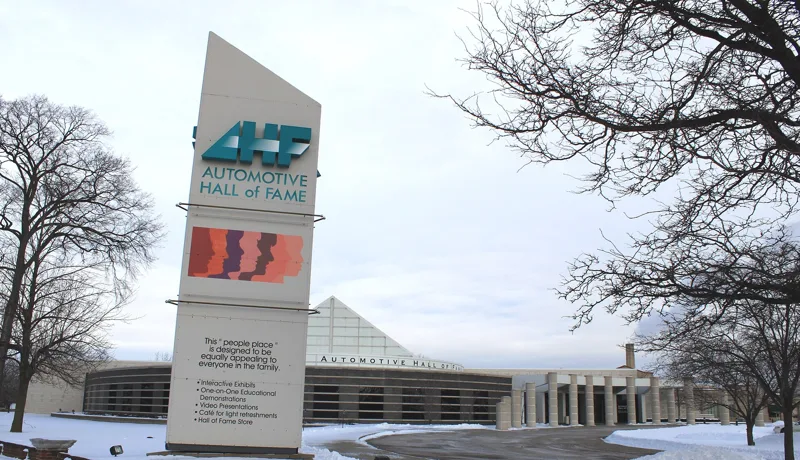
Fisher is remembered as a pioneer of the motor age, linked to the brickyard, the Lincoln Highway and the Florida resorts. Few figures of the early automobile era touched so many parts of American travel, from the track and the highway to the resort. He was honoured by the Automotive Hall of Fame in 1971, and in 2018 the Motorsports Hall of Fame of America added him.
His record also contains a painful chapter. He pioneered and promoted whites-only property deed restrictions, and under his influence the island became a sundown town where people of colour could not live or remain after dark. That history left lasting marks on the island's housing patterns.
Will Rogers called Fisher a Florida pioneer, and the sand-and-dredge story of Miami Beach became part of how the state remembers him. Fisher Island, named for him, is now an upscale residential enclave off Miami Beach.
A 1998 PBS American Experience documentary, Mr. Miami Beach, looked at his career. A historic marker went up in Greensburg in 2014, and a school in Speedway, Indiana, carries his name.