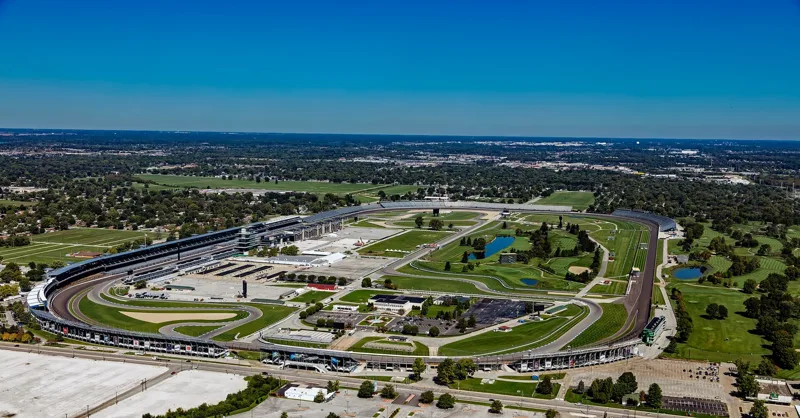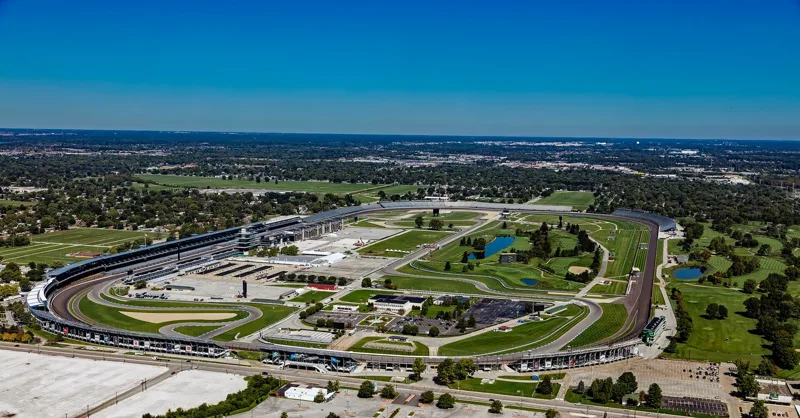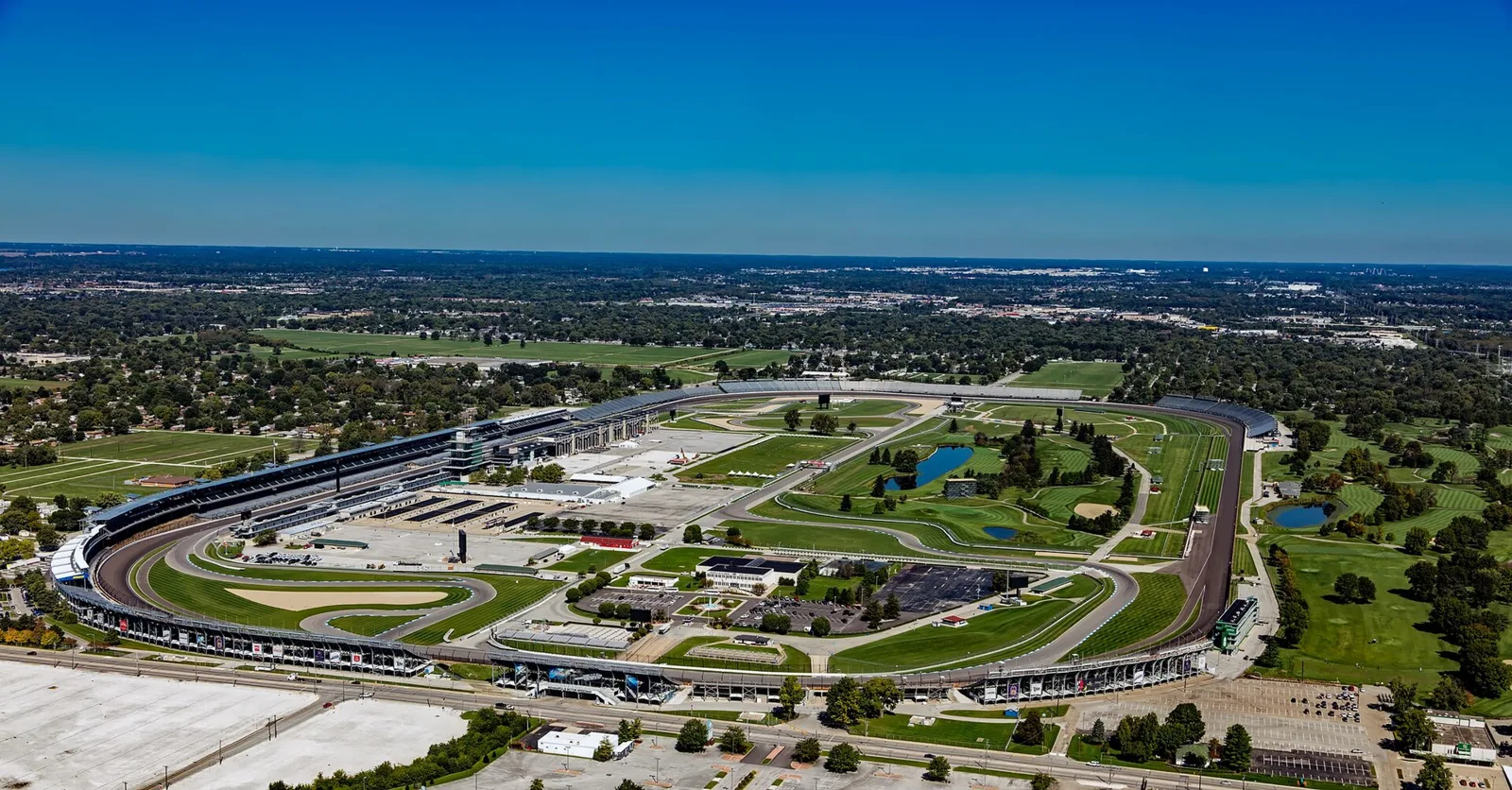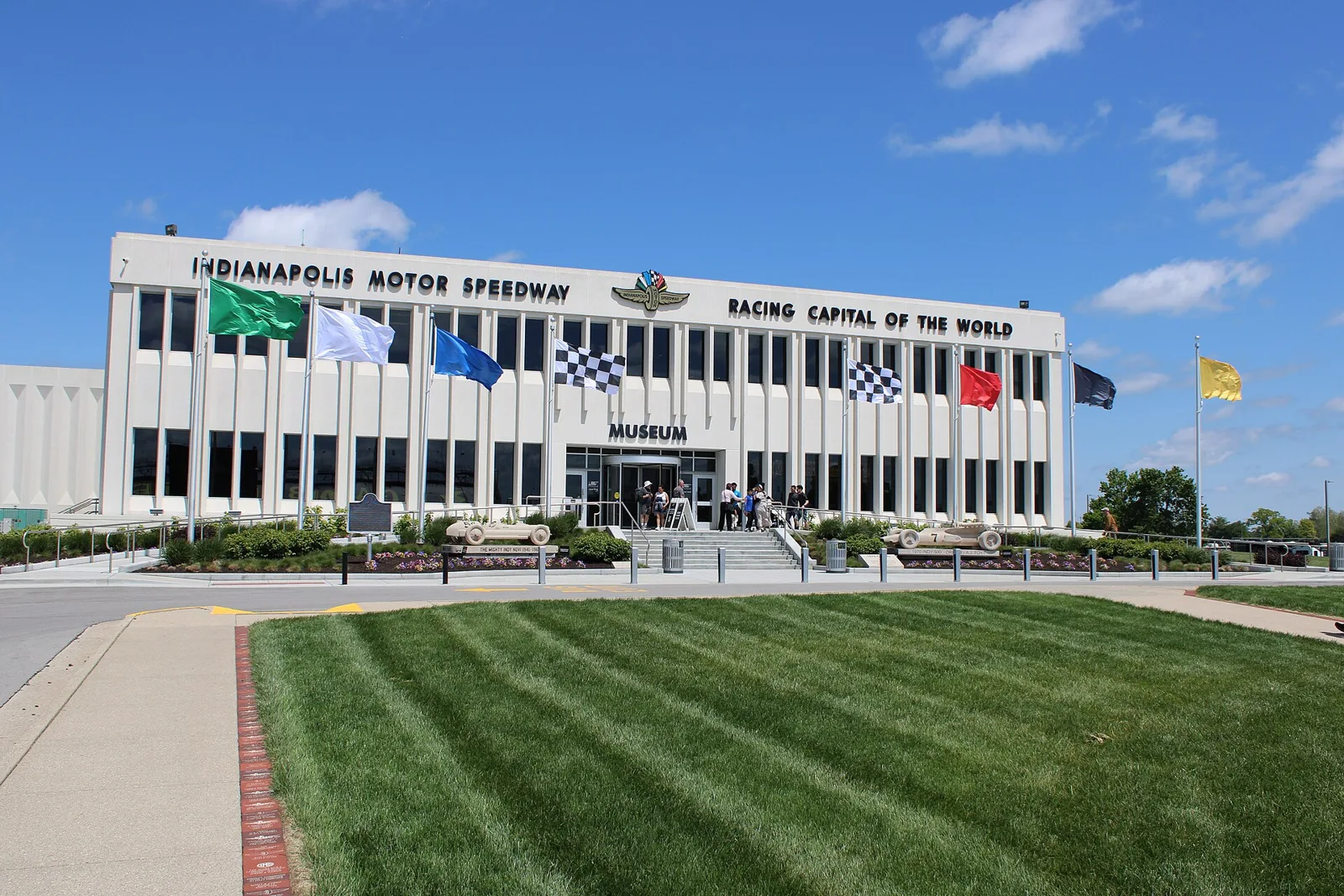
Inside the infield museum that holds more than thirty Indianapolis 500 winners, reopened in 2025 after an $89 million renovation.
The Indianapolis Motor Speedway Museum was founded in 1956 and moved into its current infield building in 1976. It holds more than thirty Indianapolis 500 winning cars and reopened on 2 April 2025 after an $89 million renovation.
Based in the infield of the speedway in Speedway, Indiana, the Indianapolis Motor Speedway Museum is a motor-racing and automotive museum. It is intrinsically linked to the Indianapolis 500 and the Brickyard 400. It houses the speedway's Hall of Fame and holds several former Indianapolis 500 winning cars, which rotate onto the display floor. It reopened on 2 April 2025 after a renovation that cost $89 million. The museum also celebrated its 50th anniversary in 2006, and its displays go beyond the Indianapolis 500 to cover other forms of motorsport and general automotive history.
When did the museum open?
The first museum at the speedway was finished on 7 April 1956. C. Wilbur Foster and Associates drew the plans, and the building stood on the south-west corner of the property, where 16th Street meets Georgetown Road. Its opening exhibits included Ray Harroun's 1911 Indianapolis 500-winning car, and Karl Kizer became the first curator.
Demand soon outgrew the space, and by 1961 around 5,000 people a week were passing through outside the May rush. In 1975 work began on a new museum and administration building in the infield, a 96,000-square-foot structure that opened to the public on 5 April 1976, during the United States Bicentennial year.
The first building outside turn one was small, and it started with only six cars. Within a few years dozens of collector cars had been donated or acquired, so the exhibits quickly outgrew the space. The 1975 infield building was a two-storey complex that also housed the Speedway's administrative offices, its ticket office, a gift shop and the photography department.
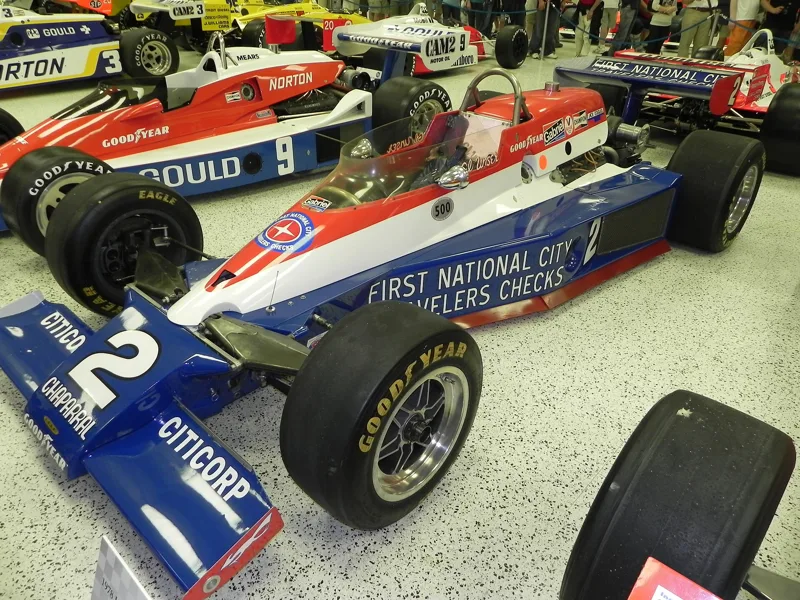
More than thirty Indianapolis 500 winners, one infield building and a 2025 reopening.
How has the museum changed since 1976?
The original building outside turn one was demolished in the summer of 1993, and a new administration building was erected in its place. The offices and ticket sales moved out of the infield museum, which freed up floor space for a larger gift shop.
The museum also ran a series of race-weekend displays. In 1993 the parking lot hosted the first Indy 500 Expo, an outdoor spectator exhibit that became Indy 500 FanFest in 1995 before it was discontinued after 1997. Smaller displays sponsored by Chevrolet later featured former pace cars.
In 2016 a revitalisation and modernisation project began, and the museum was renamed the Indianapolis Motor Speedway Museum that April. Its mission was changed to focus on achievement at, and contributions to, the speedway itself. A deaccession process refined the collection, and the museum closed for substantial renovations in late 2023.
The new building opened during the year-long Bicentennial celebration. Official recognition followed for the track: a 1975 listing on the National Register of Historic Places, then a landmark designation in 1987. A plaque marking that status hangs inside the museum.
How much did the recent renovation cost?
The museum was closed from late 2023 until the reopening. The renovation and modernisation project cost $89 million. It added seven permanent galleries and three rotating galleries, a new area for non-vehicle artefacts, and interactive displays. One of the new attractions is a pit stop challenge, which lets visitors simulate a race-day tyre change.
The reopened museum has about 75 cars on display at any given time, across 37,500 square feet (3,480 m2) of floor space. Much of the collection is kept in storage and rotated in, which is why the displays change regularly.
The photography department's archive is another part of the story. Original film negatives, and even glass plates, for every race held at the track since the inaugural Indianapolis 500 in 1911 were stored there. A Halon fire suppression system was added to the storage room during the 1990s, and no known negatives survive from the 1909 balloon race.
Which cars are in the collection?
The collection includes more than thirty Indianapolis 500 winning cars, along with other Indy cars, racing cars from other disciplines, pace cars and passenger cars. It has a particular focus on vehicles built in Indiana and by Indiana companies, and it includes trophies, helmets, gloves and driver's suits.
The winning cars include the 1911 Marmon Wasp, which Ray Harroun drove to win the first Indianapolis 500. The 1912 National, driven by Joe Dawson, and the 1922 Duesenberg, which had also won the 1921 French Grand Prix at Le Mans, are among the early examples.
| Year | Car | Driver | Note |
|---|---|---|---|
| 1911 | Marmon Wasp | Ray Harroun | First Indianapolis 500 winner |
| 1922 | Duesenberg | Jimmy Murphy | Also won the 1921 French Grand Prix at Le Mans |
| 1939 and 1940 | Boyle Special Maserati | Wilbur Shaw | Back-to-back winner |
| 1947 and 1948 | Blue Crown Spark Plug Special | Mauri Rose | Back-to-back winner |
| 1961 | Bowes Seal Fast Offy | A. J. Foyt | A. J. Foyt's winning car |
| 1972 | Sunoco McLaren | Mark Donohue | Mark Donohue's winning car |
| 1990 | Domino's Pizza Hot One Lola/Chevrolet | Arie Luyendyk | Chevrolet-powered winner |
| 1995 | Player's Ltd Reynard/Ford Cosworth | Jacques Villeneuve | Ford Cosworth-powered winner |
Other notable Indy cars include the 1931 Cummins Diesel, driven by Dave Evans, which was the first car to finish the Indianapolis 500 without a pit stop. The 1963 Lotus powered by Ford was driven by Jim Clark, and the 1977 Bryant Heating and Cooling Lightning, driven by Janet Guthrie, was the car of the first woman to qualify for the race.
The 2005 Panoz/Honda driven by Danica Patrick was the car of the first female driver to lead a lap of the Indianapolis 500. The 1961 Cooper Climax, driven by Jack Brabham, was a back-up car from the first wave of the European rear-engined revolution. It was a normal Cooper Grand Prix car rather than the one Brabham drove.
Passenger cars include an 1886 Daimler Motor Carriage, an 1886 Benz Patent Motorwagen, an 1903 Premier, an 1909 Haynes and a 1914 Marmon roadster. The race-car section also holds a 1965 Le Mans-winning Ferrari 250 LM, a 1954 to 1955 Mercedes-Benz W196 Formula One car and a 1965 Spirit of America Sonic 1 land speed record car.
Trophies are a major part of the display. The Borg-Warner Trophy has a permanent home in the museum, as does the PPG trophy awarded to the winner of the Brickyard 400. The Wheeler-Schebler Trophy, which predates the Borg-Warner, is also displayed, alongside the Historic Race of Two Worlds trophy and a case of historic medals from many racing events.
Stock cars and Formula One cars sit alongside the Indy machinery. A NASCAR Winston Cup stock car, driven and donated by Richard Petty in 1993, is on show, and so is the car Tony Stewart drove to win the 2007 Allstate 400 at the Brickyard. Formula One is represented by a 1998 Stewart SF02-Ford and a 1991 Benetton B191B-Ford.
At least one Indianapolis 500 pace car from 1911, 1930, 1964, 1966 and 1975 to the present is part of the collection, reflecting the track's long tradition of using pace cars.
What special exhibits has the museum held?
In recent years the museum has featured one or two special exhibits each year, with one running from early spring into the autumn and another in the months between. J. Foyt's fourth Indianapolis 500 win, and The Amazing Unsers in 2018.
The 2022 exhibit Roadsters 2 Records focused on front-engined Indy roadsters from the 1960s. Exhibits like these rotate in and out, so the displays a visitor sees can differ from one trip to the next.
What is the Hall of Fame?
The hall of fame began in 1952 under the earlier name Auto Racing Hall of Fame. The American Automobile Association and the Ford Foundation backed it at the start. The idea came from Tony Hulman, who had wanted a racing hall of fame shortly after he bought the speedway in 1945.
The hall went dormant after the AAA left racing following 1955. Hulman revived it in 1961 and folded it into the museum's organisation. As of 2025 there have been 169 inductees.
Candidates can be nominated once twenty years have passed since their first professional participation in racing, and they do not have to be retired. A panel of roughly 150 members elects the inductees. In 2018 the scope was broadened to cover the Indianapolis 500, the Brickyard 400, the US Grand Prix and major AMA motorcycle racing. Jeff Gordon became the first driver inducted primarily for a race other than the Indianapolis 500.
Voting is held every year, and inductees are typically announced in the spring. A ceremony is held in May, a few days before the Indianapolis 500. The 2026 inductees were Scott Dixon and Giampaolo Dallara, announced ahead of the next ceremony.
Can visitors see the storage areas?
Yes, since the reopening in 2025. Before the renovation, the storage areas were off-limits except by invitation, and photography was strictly forbidden. Some of the stored cars had become the subject of folklore because few visitors had seen them.
The basement is now open to all visitors. It holds many cars that are rotated into the displays, while others remain in storage. The 2016 North Hall, added when the speedway's staff offices moved to another building, provides 7,500 square feet of extra display space and a view of part of the road course.
What is a visit like?
Doors stay open through the year, with a few holiday closures such as Thanksgiving and Christmas. It sits in the infield of the speedway, and an additional admission can include a bus tour of the track. The Tony Hulman Theatre shows a short film about the history of the race.
Special exhibits run through the year, usually one or two at a time. Past exhibits have included the Team Penske 50th anniversary, a Mario Andretti exhibit called Icon in 2019 and a Rick Mears exhibit called Rocket Rick Mears in 2021. Visitors can also try the pit stop challenge.