How the Indy 500 works, how IndyCar differs from Formula 1, and what a driver must win to complete the Triple Crown of Motorsport.
The Indianapolis 500 is a 500-mile IndyCar race held each year at Indianapolis Motor Speedway, first run in 1911 with 33 cars on the grid. It is one leg of the Triple Crown of Motorsport, alongside Le Mans and either Monaco or the Formula 1 title.
The Indianapolis 500 is 500 miles long because, in 1910, the men who owned the track reckoned that was about as far as a car could run before darkness fell. They had weighed a 24-hour race in the style of Le Mans and a thousand-mile marathon, and settled on daylight instead. More than a century on, that practical guess has grown into one of the three jewels of motorsport's unofficial Triple Crown.
What the Indy 500 is and how it works
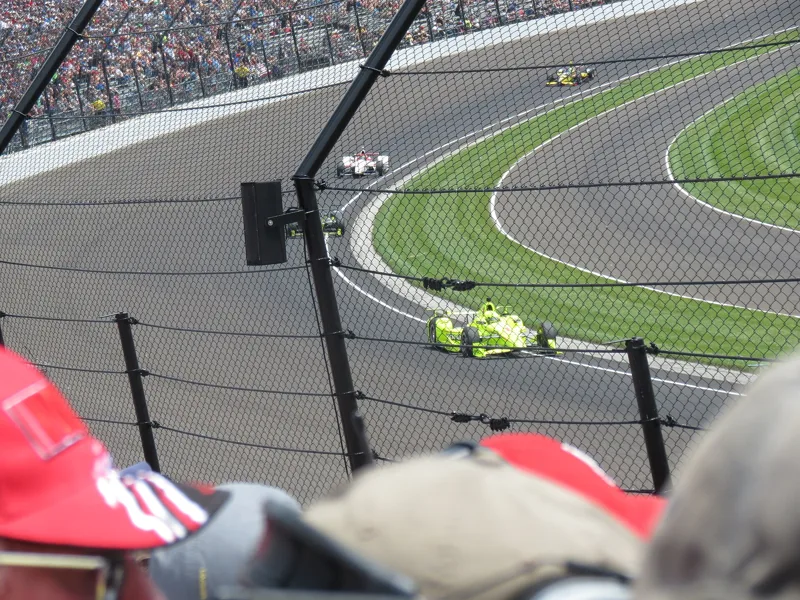
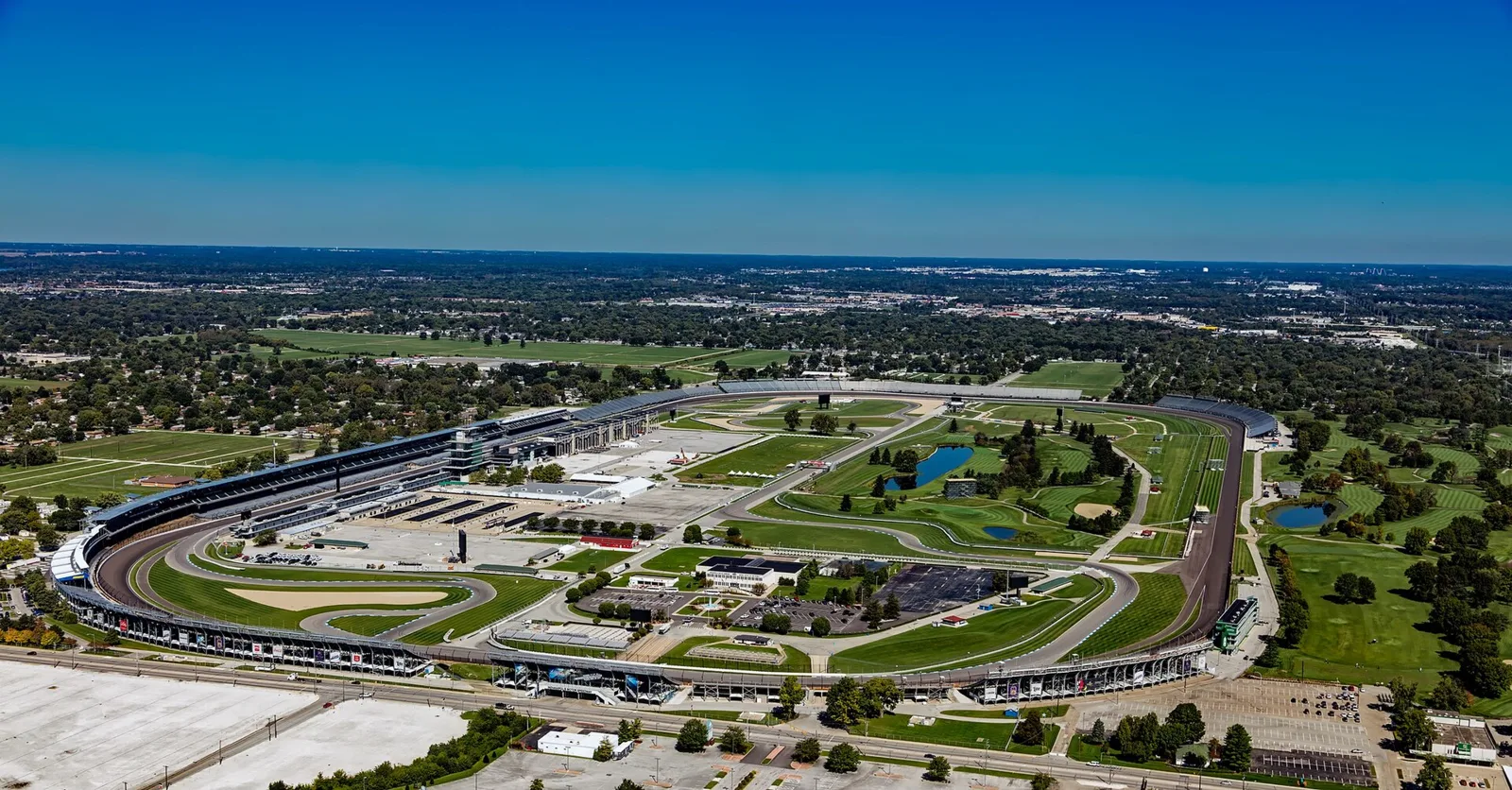
The Indianapolis 500, usually shortened to Indy 500, is run every year on the grounds of the Indianapolis Motor Speedway, which sits in the town of Speedway, Indiana, an enclave suburb of Indianapolis. It is traditionally held over Memorial Day weekend, normally the last weekend of May, as a round of the IndyCar Series, the top level of American open-wheel racing. The organisers bill it as The Greatest Spectacle in Racing.
The field is 33 cars, lined up in rows of three. That number was fixed in 1912 and has never moved. Qualifying asks for four timed laps rather than a single flier, and the time trials take place on a separate weekend from the race.
Tradition runs deep. Before the start comes a rendition of "Back Home Again in Indiana", a custom that began in 1946 when the tenor James Melton stepped in at short notice at the request of Speedway president Tony Hulman. Jim Nabors sang it from 1972 until 2014, and Jim Cornelison has done so since 2017. The winner drinks a bottle of milk in victory lane. The Purdue All-American Marching Band has hosted the pre-race music since 1919.
Official attendance is not disclosed. Permanent seating is put at roughly 235,000 to 257,325, and the infield pushes a typical race-day crowd to between 350,000 and 400,000.
The 500 miles were chosen as the distance a car could cover before dark, and the race has outlived every rival idea.
Why is the Speedway called the Brickyard?
Carl G. Fisher, an Indianapolis businessman, first dreamed of the track in 1905 after helping friends race in France and seeing how far Europe led in design and craftsmanship. He visited Brooklands outside London in 1907 and came home determined. In December 1908 he and three investors, Wheeler, Allison and Newby, bought farmland for $72,000, and the company was incorporated on 20 March 1909.
The first surface was gravel and tar, and it did not last. Early events broke it up, cars were showered in dirt and oil, and a series of crashes killed drivers, mechanics and spectators. The AAA boycotted the Speedway until it improved. Fisher's answer was bricks: 3.2 million of them, each weighing 10 pounds (4.5 kg), bedded in sand and filled with mortar. A 33-inch (0.84 m) concrete wall went up to protect the crowd. A final brick of gold-plated brass was laid by Governor Thomas R. Marshall, and locals were already calling the place the Brickyard. One yard of the original bricks still shows at the start-finish line.
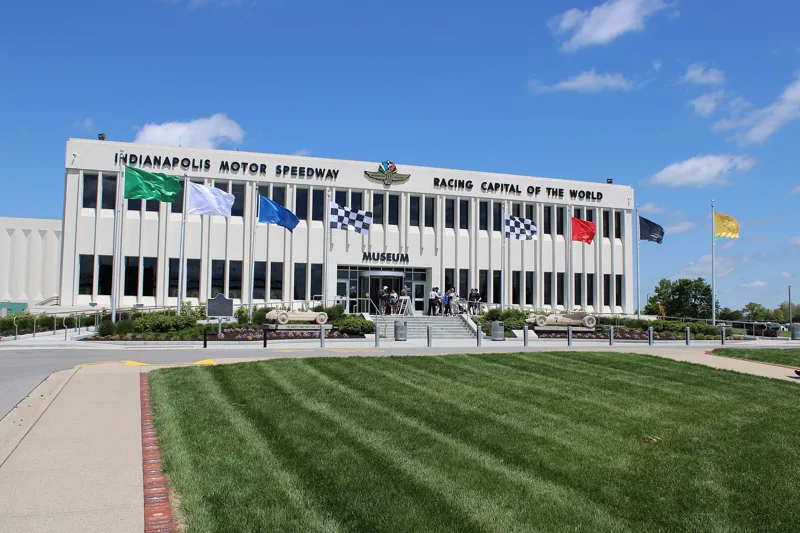
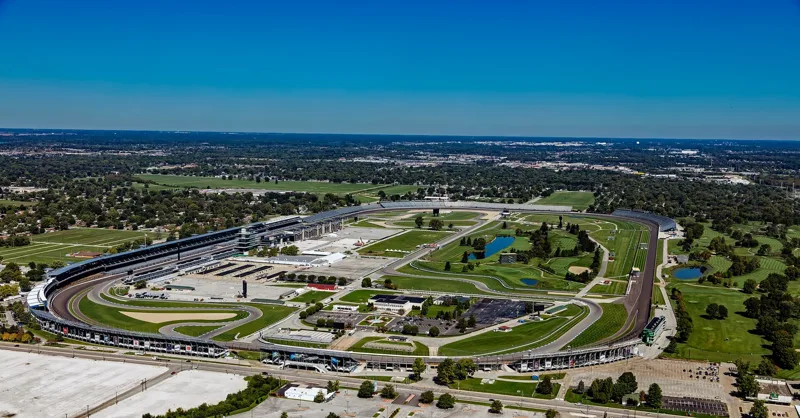
The oval measures 2.500 miles (4.023 km), made of two 0.625-mile (1.006 km) straights, four 0.250-mile (0.402 km) turns and two short 0.125-mile (0.201 km) chutes. The turns are banked at only 9 degrees 12 minutes, which counts as flat by American standards. A road course of 2.605 miles (4.192 km) opened in 2000 and uses part of the oval, and the venue now covers more than 559 acres (2.3 km2). The Speedway has been on the National Register of Historic Places since 1975 and a National Historic Landmark since 1987, the only such site tied to car racing. It also houses a museum and a golf resort, and about 1 million guests visit it each year.
How the first Indy 500 happened in 1911
Crowds drifted away after the track was repaved, so the owners dropped the busy calendar of short races and bet on one big event. A purse of $25,000 set it apart. The first 500 was run on 30 May 1911, then known as Decoration Day, and drew an estimated 80,000 spectators to watch 40 cars.
Ray Harroun won, averaging 74.602 mph (about 120 km/h), with relief from Cyrus Patschke, though Ralph Mulford protested the result. Harroun was the only driver without a riding mechanic, so to see traffic behind him he fitted a rear-view mirror to his Marmon Wasp, the first time such a device had been used on a car. Some rivals thought him a hazard.
The 1912 race raised the purse to $50,000, made a riding mechanic compulsory and capped the field at 33. Ralph DePalma lost a five-lap lead when his Mercedes broke with five laps to go, and Joe Dawson passed the pushing DePalma to win in a National. European makers such as Fiat and Peugeot won from 1912 to 1919. Pete DePaolo became the first to average over 100 mph (160 km/h) in 1925, at 101.13 mph (162.75 km/h).
How the engines and the cars changed
For decades the rules told engine builders how big they could be. The limit was 600 cubic inches (9,800 cc) in 1911, 450 cubic inches (7,400 cc) in 1913, then a squeeze through 183 cu in (3,000 cc) and 122 cu in (2,000 cc) down to 91 cu in (1,490 cc) across the 1920s. Gaston Chevrolet won in 1920 with the first eight-cylinder engine to take the race. Riding mechanics ended in 1923, and a supercharged car won for the first time in 1924. When Eddie Rickenbacker bought the Speedway in 1927 he banned supercharging, raised the cap to 366 cu in (6,000 cc) and brought back the riding mechanic.
The engine that defined the Brickyard was the four-cylinder Offenhauser, or Offy. It first won in 1935 and ended up with a record 27 victories, including 18 consecutive years between 1947 and 1964.
Europe came back in 1963. Colin Chapman brought Team Lotus, drawn by prize money far bigger than a European race offered. Jim Clark, in a mid-engined car, finished second in 1963, led in 1964 until a suspension failure on lap 47, and won in 1965. That win broke the Offy's run and gave the 4.2-litre Ford V8 its first success. Graham Hill won in a Lola-Ford the following year. By 1978 most chassis and engines were European, and the Ford and Chevrolet engines came from Cosworth and Ilmor in the UK.
IndyCar vs F1: how the two worlds compare
The IndyCar Series sits at the top of American open-wheel racing, and the Indy 500 gives the series its name. It dates from 1996, when it launched as the Indy Racing League, created by Tony George as a rival to CART, and after the split healed in 2008 it absorbed the Champ Car World Series and its statistics. Today the series is self-sanctioned by IndyCar, LLC.
The technical formula is the first big difference from Formula 1 on paper. Every IndyCar team uses the same Dallara chassis, while Honda and Chevrolet supply competing engines. The Dallara IR-12, adopted in 2012 as a cost-control measure, was priced at $349,000 per chassis and nicknamed DW12 in honour of Dan Wheldon. After aero kits from the two engine makers added cost between 2015 and 2017, every car has run one universal bodywork kit since 2018. Aeroscreen cockpit protection followed for 2020.
The drivetrain is simple to describe. A 6-speed semi-automatic sequential gearbox from Xtrac is shifted by paddles, with a clutch needed only to pull away from rest. Every car is rear-wheel drive with the engine behind the driver. Firestone has been the sole tyre supplier since 2000, and the front and rear tyres are different sizes, 305/45-R15 and 415/40-R15. Indy cars have used methanol in the past and currently run on ethanol.
The two worlds have crossed paths more than many fans realise. The Indy 500 counted as a round of the Formula 1 World Drivers' Championship from 1950 to 1960, although European entries were few. Alberto Ascari drove a Ferrari there in 1952. Giuseppe Farina failed to qualify in 1956 and 1957, and Juan Manuel Fangio failed to qualify in 1958. The Speedway later hosted the Formula 1 United States Grand Prix on its road course from 2000 to 2007.
Drivers have moved between the two as well. Nigel Mansell left Formula 1 for CART in 1993 as reigning world champion, finished third in the 500 and won the CART title. Fernando Alonso is the most recent active F1 driver to have entered the race, and the first to do it while still racing in F1 since Teo Fabi in 1984. His best result was 21st in 2020.
What is the Triple Crown of Motorsport?
The Triple Crown is a motorsport honour with no official body behind it, borrowed from the triple crown of thoroughbred racing. The oldest version asks a driver to win the Indy 500 and the 24 Hours of Le Mans, and also to be Formula 1 world champion. A more recent popular definition replaces the championship with the Monaco Grand Prix.
| Event | First held | Earliest version | Recent popular version |
|---|---|---|---|
| Indianapolis 500 | 1911 | Yes | Yes |
| 24 Hours of Le Mans | 1923 | Yes | Yes |
| Formula 1 World Drivers' Championship | 1950 | Yes | No |
| Monaco Grand Prix | 1929 | No | Yes |
No driver other than Graham Hill has completed the Triple Crown under either definition. Among teams and manufacturers, three entities have done it as of 2026. McLaren did so as a team and chassis maker with its 1995 Le Mans win. Mercedes completed it as chassis and engine maker through the 1952 Le Mans victory, and Ford did it as an engine maker only, by winning the 1968 Monaco Grand Prix. Mercedes has also won the Indy 500 as an engine maker, in 1994.
Several active drivers sit two-thirds of the way there. As of February 2026, Juan Pablo Montoya and Fernando Alonso have each won two legs of the traditional version. Montoya won Monaco in 2003 and the Indy 500 in 2000 and 2015. Alonso won Monaco in 2006 and 2007 and Le Mans in 2018 and 2019, plus the Formula 1 titles of 2005 and 2006. On the alternative version, Jacques Villeneuve also has two legs, having won the Indy 500 in 1995 and the Formula 1 title in 1997. Alonso is the only active driver with two legs in both versions.
Other disciplines have their own crowns. Endurance racing pairs Le Mans with the 24-hour race at Daytona and the 12-hour race at Sebring. IndyCar once had a Triple Crown of three 500-mile races, which ran from 1971 to 1989 and was revived in 2013 with a $1 million bonus. Only six drivers have completed any version of it, and Al Unser alone did it in one season, 1978. Only two drivers, A. J. Foyt and Mario Andretti, have taken both the Indy 500 and the Daytona 500.
Indy 500 winners and the records that matter
Helio Castroneves, Rick Mears, Al Unser Sr. and A. J. Foyt have four wins each, the record. Castroneves is the active driver with the most. Mears also has the most career poles, six, while Scott Dixon has led more laps than anyone. Roger Penske's team is the most successful car owner, with 20 wins and 19 poles. Felix Rosenqvist, the 2026 winner, is the reigning champion.
The Offenhauser still holds the record for most victories by an engine. By the CART era the only American-based chassis to win were the Wildcat in 1982 and the Galmer in 1992, and the Galmer was technically built in Bicester, England.
The Split and the road back
In 1996 Tony George formed the Indy Racing League and made the 500 its showpiece, but the most popular drivers and teams stayed with CART. The two series did not unify until 2008. Sportswriters called the damage to open-wheel racing immeasurable. The Indy 500 failed to sell out until the 2016 running, and NASCAR's Daytona 500 overtook it as the most watched race on television until 2011.
Danica Patrick drew attention back in 2005, when she became the first woman to lead laps. A fuller recovery in viewership and interest has followed the 2020 purchase of the series by Roger Penske and the 2025 broadcast partnership with Fox Sports. The Speedway itself is owned by Penske Entertainment, which is 67% controlled by Penske Corporation, with Fox Corporation holding 33% since July 2025.
Where this goes next
A successor to the Dallara DW12 was first raised in public on 5 March 2024, when the series pointed to the chassis' age and to the habit of open-wheel series swapping cars roughly every five years. On 16 December 2024 IndyCar said wind tunnel work on a brand-new Dallara IR-27 would start, with a debut expected for 2027. On 12 June 2025 it said the new car would be delayed to 2028 and renamed the IR-28. Dallara remains the series' official chassis builder and supplier.