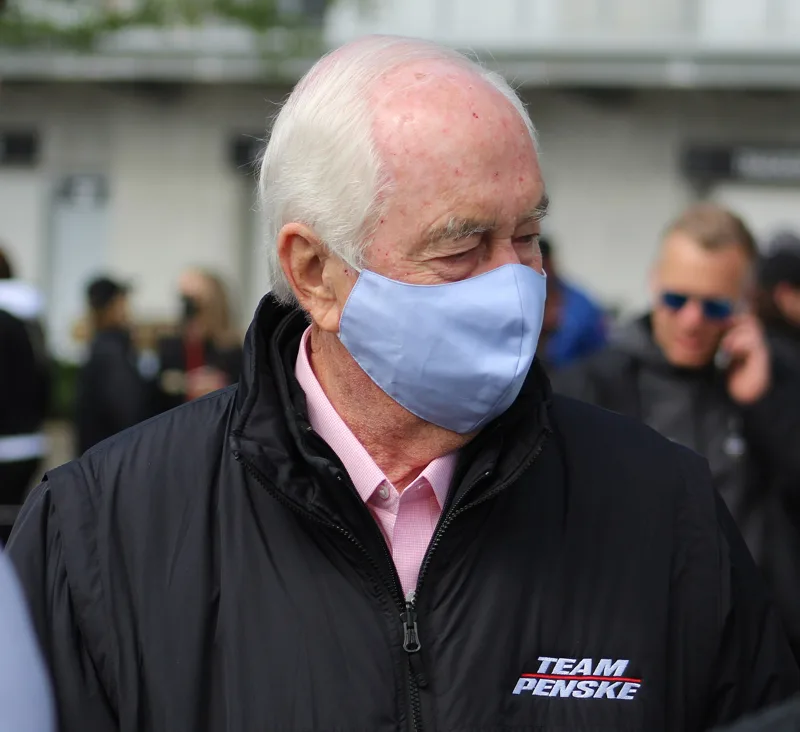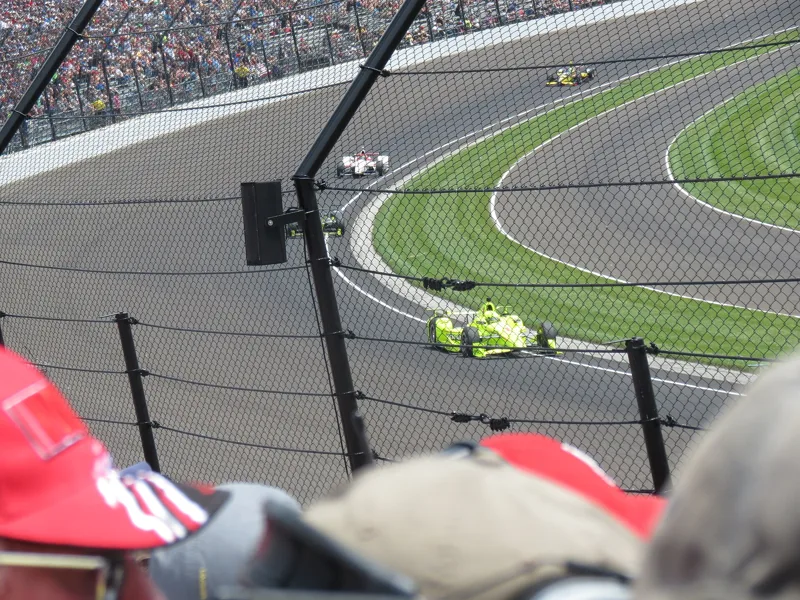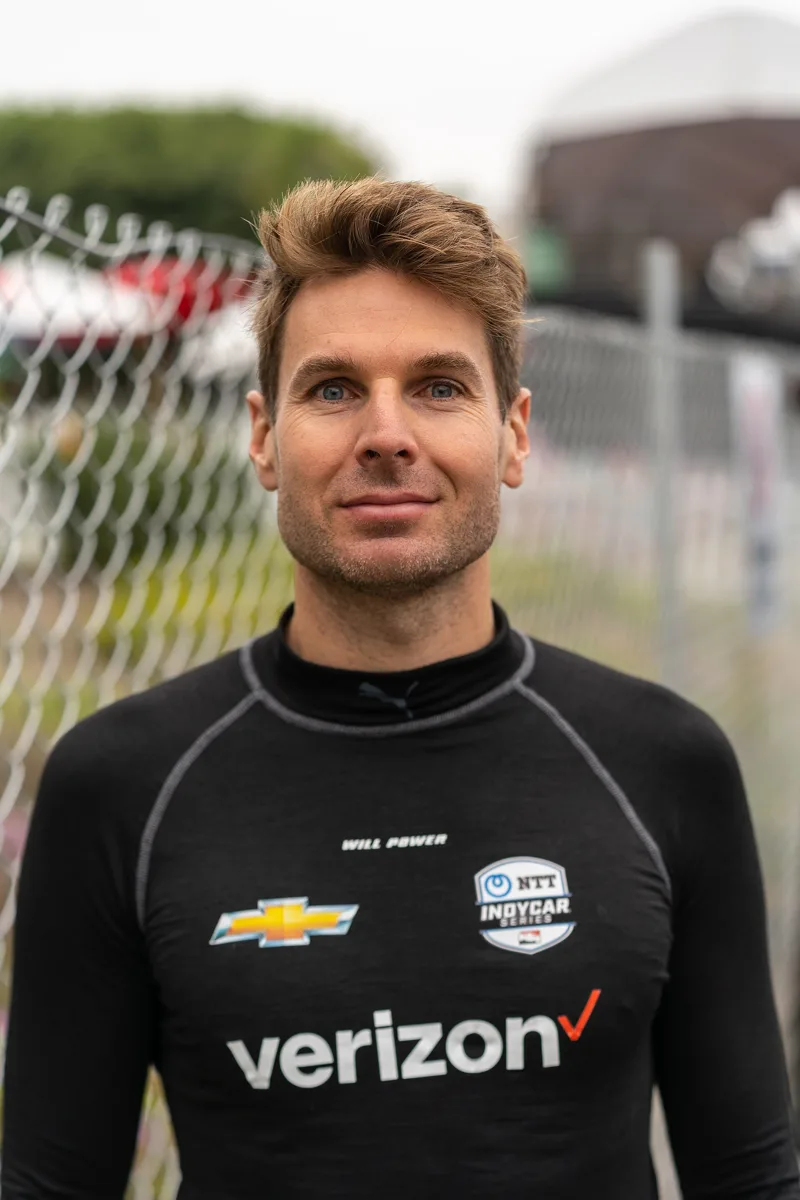
The 25th IndyCar season opened under new Penske ownership, with a new safety screen, new teams and a calendar that COVID-19 rewrote more than once.
The 2020 season was run under new owner Roger Penske, with the Aeroscreen debuting and a schedule rebuilt after ten cancellations. Honda was the defending manufacturer champion, and McLaren returned as a partner to Arrow Schmidt Peterson.
The 2020 IndyCar Series marked the 25th year of the championship and the 109th official title in American open-wheel racing. It opened under new Penske ownership, introduced the Aeroscreen and Halo cockpit protection, and was rebuilt around the COVID-19 pandemic, which cancelled ten races and forced six replacements onto the calendar.
What was the 2020 IndyCar Series?
This was the 25th year of the IndyCar Series and the 109th official championship in American open-wheel racing. Its premier event was the 2020 Indianapolis 500, and Josef Newgarden entered the year as the defending National Champion. Honda was the defending Manufacturers' Cup champion for a second consecutive season.
The season was also the first run under Penske management, following a change of ownership that completed in early 2020. It was not a conventional year: the entry list, the chassis, the safety equipment and the calendar all carried the marks of a series in transition.
A season built on a new owner, a new safety screen and a calendar that changed almost every month.
How did Penske change ownership of the series?
Roger Penske bought IndyCar LLC and the Indianapolis Motor Speedway, a deal announced on 3 November 2019. Penske also stepped down as the team's full-time race strategist, and the transaction was formally completed on 6 January 2020.
Penske became only the fourth owner in the Speedway's history, and the first change of hands since 1945. The purchase put the series and the Speedway under one owner.
Why was the Aeroscreen introduced?
The IndyCar Series announced on 24 May 2019 that it would introduce cockpit protection from the 2020 season, combining an Aeroscreen and the Halo used in Formula One. Red Bull Advanced Technologies produced the system jointly with Dallara.
The Aeroscreen and Halo combination is designed to deflect debris away from a driver's head. The idea was first developed for Formula One and then taken into IndyCar, before its use spread to other open-wheel championships. For 2020 it was the most visible safety change in the series.
Which teams joined or changed for 2020?
McLaren said on 1 August 2019 that it would enter the series in 2020 alongside Arrow Schmidt Peterson Motorsports, fielding two full-time cars. As part of the deal, the Schmidt Peterson team ended its Honda engine arrangement so that Chevrolet could supply it, as confirmed on 9 August 2019. On 25 October 2019 the partnership revealed a new logo and settled on the name Arrow McLaren SP.
Andretti Autosport added a fifth car for Colton Herta, racing as Andretti Harding Steinbrenner Autosport, announced on 21 September 2019. The entry partnered Mike Harding and George Michael Steinbrenner IV of the independent Harding Steinbrenner Racing team.
Meyer Shank Racing had competed part-time in 2017, 2018 and 2019, and it announced on 8 November 2019 that it would expand to a full-time programme in 2020 with Jack Harvey. The team kept Honda engines and formed a technical tie-up with Andretti Technologies, ending two years alongside Schmidt Peterson.
Dale Coyne Racing partnered with Team Goh, the winners of the 2004 24 Hours of Le Mans, to run Alex Palou for the full season, announced on 19 December 2019. DragonSpeed released a schedule of six races for 2020 that included the 104th Indianapolis 500, and on 20 May 2020 it was reported that the team was revising its plans to start at Indianapolis.
Dreyer and Reinbold Racing expanded to a four-race programme for 2020, with Sage Karam driving in St. Petersburg, Indianapolis and Toronto. Citrone/Buhl Autosport, a partnership between two sets of brothers, aimed to enter the GMR Grand Prix and qualify for the Indianapolis 500 with an existing team, and Rahal Letterman Lanigan Racing agreed a partnership with it on 27 February 2020, with Spencer Pigot driving that entry.
Carlin's No. 31 entry would not race at Texas because of funding issues, announced on 2 June 2020.
Which drivers moved for 2020?
Marcus Ericsson joined Chip Ganassi Racing on 8 October 2019, moving from Schmidt Peterson to drive the revived No. 8 car. Arrow McLaren SP released James Hinchcliffe on 28 October 2019 and signed Oliver Askew, the 2019 Indy Lights champion, and Pato O'Ward, the 2018 Indy Lights champion, to fill its two seats.
Ed Carpenter Racing did not keep Spencer Pigot, and it signed Rinus VeeKay for the No. 21 car full-time. Sebastien Bourdais left Dale Coyne Racing and the series, joining JDC-Miller Motorsports in the WeatherTech SportsCar Championship. Santino Ferrucci, who had driven the No. 19 car for Dale Coyne in 2019, took over the Vasser-Sullivan supported No. 18 entry in his place.
Conor Daly was signed by Ed Carpenter Racing for the road and street races in the No. 20 car, backed by the United States Air Force, and for a third entry at the Indianapolis 500. He replaced Ed Jones, who moved to Audi Sport Team WRT for the 2020 DTM season. Daly also took the oval events in Carlin's No. 59, replacing Max Chilton, who had stopped racing ovals in 2019.
Charlie Kimball returned to full-time competition with A. J. Foyt Enterprises. Tony Kanaan said 2020 would be his last full-time primary season. He would race six ovals in the No. 14 car, while Sebastien Bourdais and Dalton Kellett shared the road and street events in it.
Team Penske confirmed that the defending Supercars champion, Scott McLaughlin, would make his IndyCar debut at the GMR Grand Prix. The race was later rescheduled, and McLaughlin's debut moved to the final race at St. Petersburg. Helio Castroneves drove a Penske car only at the Indianapolis 500, while James Hinchcliffe raced three events for Andretti Autosport and Fernando Alonso drove at the Indianapolis 500 with Arrow McLaren SP.
Felipe Nasr made his IndyCar debut at St. Petersburg for Carlin. Later in the season Zach Veach left Andretti on 23 September 2020, and Hinchcliffe took over the No. 26 entry two days afterwards. Oliver Askew was not medically cleared for the Harvest Grand Prix after reporting balance and coordination problems following Mid-Ohio, and Castroneves stepped in for him.
How did the calendar change?
The 17-race schedule was first announced on 1 September 2019. Richmond Raceway replaced Pocono Raceway, and Richmond returned to the series for the first time since 2009. Then the pandemic began to change the plan, and changes were announced through the summer.
| Date announced | Change |
|---|---|
| 13 March 2020 | St. Petersburg cancelled, with all races through April also cancelled |
| 26 March 2020 | GMR Grand Prix and Indianapolis 500 moved to 4 July and 23 August |
| 6 April 2020 | Detroit Grand Prix cancelled; Iowa and Monterey became double-headers |
| 7 May 2020 | Season to open at Texas Motor Speedway as a one-day event with no spectators |
| 13 May 2020 | St. Petersburg confirmed as the season finale on 25 October |
| 21 May 2020 | Road America moved to July as a double-header; Toronto and Richmond cancelled |
| 27 July 2020 | Portland and Laguna Seca double-headers cancelled; Mid-Ohio, Gateway and Harvest GP made double-headers |
| 5 September 2020 | Mid-Ohio double-header confirmed for 12-13 September |
Some of the changes were practical. On 6 April, Detroit was cancelled because Michigan's stay-at-home order and other scheduled events at Belle Isle made preparation impossible, so IndyCar converted the Iowa 300 and Monterey Grand Prix into double-headers. On 13 May the season finale at St. Petersburg was set for 25 October, and it became the only street course race on the schedule.
How did COVID-19 change the start of the season?
The pandemic forced the season to begin in June instead of May. Races through April were cancelled, and IndyCar had announced an intent to begin with two Month of May races in Indianapolis, the first time since 1957 that the Speedway would have started the season.
The season opener was moved to Texas Motor Speedway as a condensed one-day event with no spectators. The race had been planned at 248 laps, about 600 kilometres, and was cut to 200 laps, roughly 300 miles (480 kilometres). Social distancing rules and personal protective equipment were required for team personnel.
Tire rules were adjusted too. Unused tires from the 2019 DXC Technology 600 were used at the Genesys 300, so tire stints were limited to a maximum of 35 laps. The Indianapolis 500 was capped at 25% capacity on 22 July and then closed to the public on 4 August, after COVID-19 cases rose in Marion County, Indiana.
Other format changes followed. The Iowa races used a new qualifying format in which the first lap set the grid for race one and the second lap set the grid for race two. The double-header road course format was repeated at Mid-Ohio and Indianapolis, and the oval format from Iowa was used again at Gateway. Many IndyCar drivers took part in the INDYCAR iRacing Challenge during the delay.
How did the points system work?
Points at most races were shaped by qualifying and the race itself. Pole position earned one point at every race except the Indianapolis 500, and the fastest qualifier of each double-header group earned one point. Any driver leading at least one race lap earned a point, and the driver leading the most laps scored two more.
The Indianapolis 500 had its own rules. The top nine qualifiers scored points, with nine points for pole. Early engine change-outs before the engine reached its required distance cost ten points, and the usual double points for the season finale were suspended for 2020.
Ties were broken by the number of wins, followed by second places, third places and so on, then by finishing position in the previous race, and then by random draw.
How were manufacturers scored?
Manufacturer points were only available to full-season entrants that used an engine from their initial allocation, or had mileaged out all engines used before. The top two finishing entrants from each manufacturer scored points in each race, and the manufacturer that won a race was awarded five additional points.
At the Indianapolis 500 the fastest Saturday qualifier earned one point for their manufacturer, while the Sunday pole winner earned two. At every other race the manufacturer on pole earned one point. Cars that were ineligible were removed from the finishing order used for race finish points.