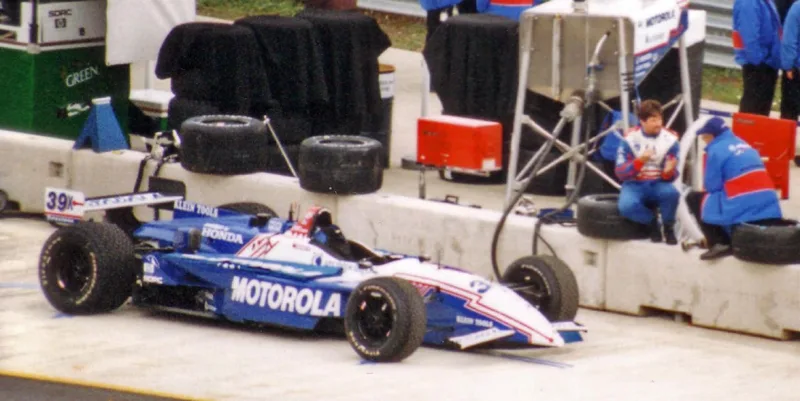
Bobby Rahal bought a struggling team in late 1991, won the CART title on his first attempt and went on to take Indianapolis 500 wins in 2004 and 2020.
Rahal Letterman Lanigan Racing grew out of a team Bobby Rahal bought in late 1991. It won the 1992 CART championship, took Indianapolis 500 wins in 2004 and 2020, and has raced in IndyCar and IMSA sportscars with Honda and BMW.
Rahal Letterman Lanigan Racing, or RLL, is an auto racing team that has competed in the IndyCar Series and the WeatherTech SportsCar Championship. It is co-owned by the 1986 Indianapolis 500 winner Bobby Rahal, the former television host David Letterman and the businessman Mike Lanigan. The team won the 1992 CART championship and has won the Indianapolis 500 twice, in 2004 and 2020.
How did Bobby Rahal take over Patrick Racing?
The team was established in late 1991, when the driver Bobby Rahal and his business partner Carl Hogan bought the distressed Patrick Racing team from U.E. "Pat" Patrick. The original name was Rahal-Hogan Racing, which became Team Rahal in 1996 after Hogan departed.
The Patrick operation had been in trouble. Rumours had surfaced that one of its Ilmor Chevrolet V8s had been sent to the Alfa Romeo engine developers in Italy, and it came back in pieces. Patrick's Alfa contract had ended, and Ilmor refused a lease because of the suspected misconduct, leaving the team with an uncompetitive engine outlook for 1992.
In December 1991 Patrick sold the team outright to Rahal and Hogan. They kept nearly all the employees and key personnel, kept the Miller Genuine Draft sponsorship and secured the Ilmor Chevrolet lease, and the handover was smooth enough that the Patrick sign came down the same month.
A rescued Patrick team that won the 1992 CART title, two Indianapolis 500s and a string of sportscar championships.
How did the 1992 CART title come about?
In 1992 the team won the CART championship on its first try. Owner-driver Bobby Rahal fielded a Lola T92/00-Chevy A to four victories and three poles. The Phoenix race was a wire-to-wire win in which he led all 200 laps.
Further victories came at Detroit, Loudon and Nazareth. He was sixth at Indianapolis but retired early from the Michigan 500. He clinched the title by four points after finishing third at Laguna Seca.
The result was the fifth consecutive championship for the Ilmor Chevy A engine. Rahal beat newer engines that had entered the series in 1992, including the Ford-Cosworth XB and the Ilmor Chevy B used exclusively by Penske. Michael Andretti finished runner-up to him for the third time, and then left IndyCar for Formula One.
What happened with the Truesports chassis?
In late 1992 Rahal-Hogan absorbed the Truesports team, where Rahal had started his CART career. The headquarters moved from Indianapolis to Hilliard, into the old Truesports facility, and the team took over Truesports' two-year-old chassis programme.
Rahal started 1993 with an updated Truesports chassis, the R/H-001, powered by the Ilmor Chevy C. A second place at Long Beach offered some promise, but the car struggled on ovals and superspeedways. Rahal missed the Indianapolis 500 field after being bumped with fifteen minutes left in the day.
The team then switched Rahal to a Lola T93/00. He rebounded with eleven top-ten finishes in the final twelve races to take fourth in the points standings. By season's end the team had abandoned its in-house chassis project.
How did the Honda years begin in the mid-1990s?
Rahal-Hogan introduced the full-works Honda HRX Indy V-8 to IndyCar in 1994, after development testing in 1993. The team ran two cars, with Mike Groff promoted to a full-time schedule. The first iron-block Honda engines were underdeveloped, and both drivers were near the bottom of the speed charts at Indianapolis.
On the second weekend of time trials Rahal and Groff withdrew their Honda cars and requalified using two loaned Penske chassis with Ilmor engines. Rahal then finished a strong third in the race with the borrowed chassis. Results with the Honda were disappointing, and Rahal-Hogan ended the partnership at the end of 1994.
For 1995 the team signed Raul Boesel and moved to Ilmor-Mercedes Benz D engines. Rahal took third at the 1995 Indianapolis 500, his last Indy start, and finished third in points. The team remained winless for a third straight season.
What were the Team Rahal years like?
In 1996 Carl Hogan left to run his own outfit, and the operation was renamed Team Rahal. Rahal's Miller deal was extended by five years, and the team moved to the Reynard 96I chassis. Boesel left for Team Green, and Bryan Herta replaced him in the second car, with sponsorship from Shell.
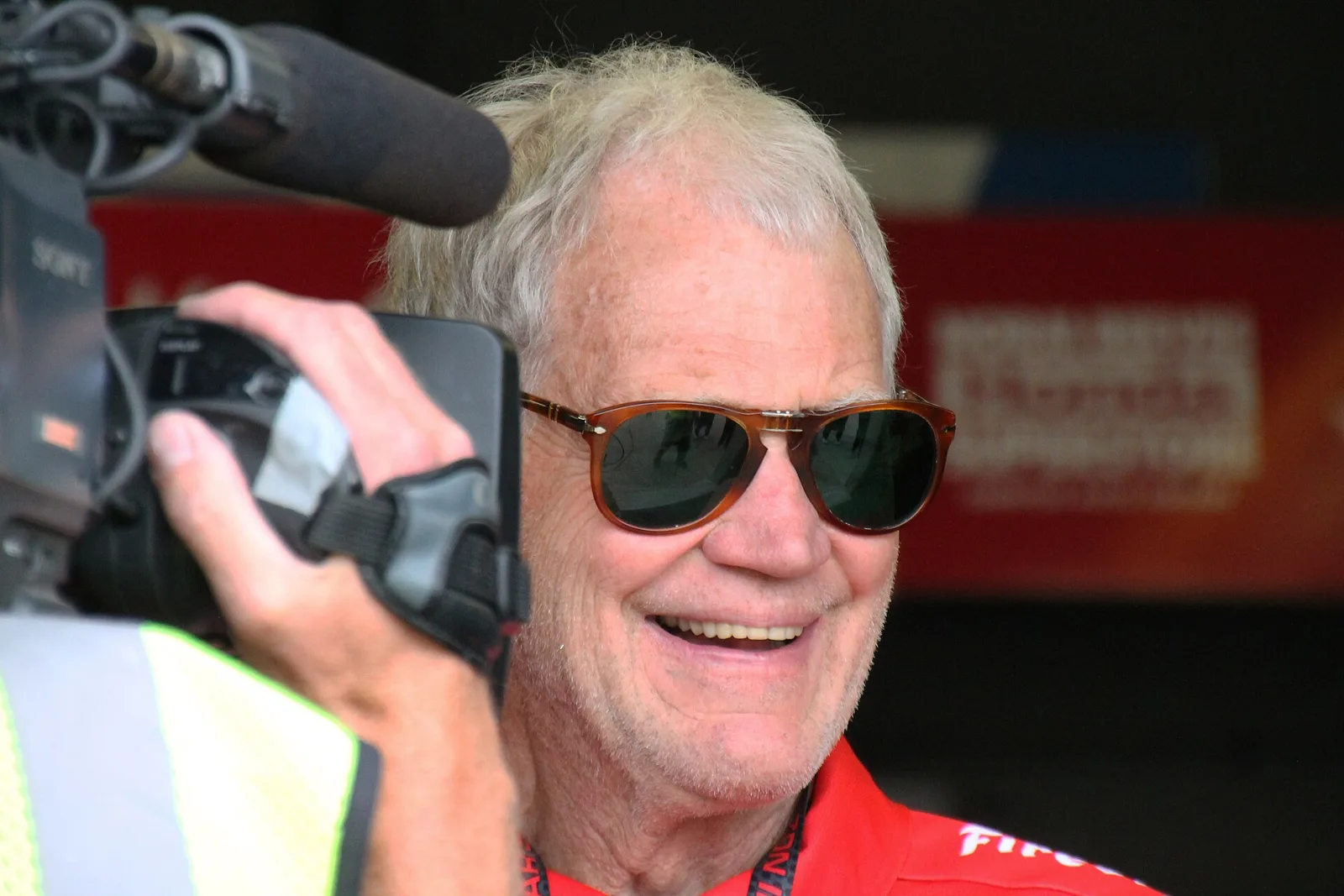
In February 1996 the comedian and talk show host David Letterman bought a minority interest in the team. The split between open-wheel series meant the team sat out the Indianapolis 500 that year. Herta qualified on the front row at Michigan but was caught up in the big start crash.
At the season finale at Laguna Seca, Herta nearly won his first career Indy car race. On the final lap Alex Zanardi made a daring pass at the Corkscrew to take the victory. The incident became known simply as The Pass, and the team finished seventh and eighth in points with five podiums between Rahal and Herta.
In 1997 the team switched to the Ford-Cosworth XD engine and to the Miller Lite brand. Rahal had only one podium, and at Rio he ran out of fuel with a lap to go while leading. Rahal and Herta finished eleventh and twelfth in points. Rahal announced that he would retire from driving after the 1998 season.
In 1998 Herta led 81 of the 83 laps at Laguna Seca from pole for his first Indy car win, and it was the team's first race win since 1992. Rahal's final season ended with a third place at Mid-Ohio.
How did the team handle the CART drivers' changes?
With Rahal now retired as a driver, the team employed Bryan Herta, Max Papis, Kenny Brack, Jimmy Vasser and Michel Jourdain Jr. over the next few years. Rahal took on other roles, serving as interim president of CART in 2000, taking a managerial post at Jaguar and co-owning a NASCAR Craftsman Truck Series team.
In 2000 the team signed the 1998 IRL champion and 1999 Indianapolis 500 winner Kenny Brack. Brack's 2001 campaign brought four victories and a runner-up finish in points. Papis, meanwhile, collected three wins across three seasons, with a best of fifth in points in 1999.
In 2002 Vasser and Jourdain replaced Papis and Brack, Vasser took one win and seventh in points, while Jourdain posted fourteen top-ten finishes. In 2003 the team dropped to a one-car CART effort, and Jourdain won two races and finished third in points before the team moved permanently to the IndyCar Series.
How did the 2004 Indianapolis win change the team?
The 2004 season saw the operation formally renamed Rahal Letterman Racing, and the CART programme was dropped for good. Buddy Rice was hired as a substitute for the injured Kenny Brack, and his role became full-time when it was clear Brack could not return.
At Indianapolis Rice won the pole, the pit stop contest and the race, his first victory in championship-level competition. It was also Honda's long-awaited first Indianapolis 500 win. Rice won again at Kansas and Michigan and finished third in points.
In 2005 the team ran Rice, Vitor Meira and the rookie Danica Patrick. Patrick qualified fourth, led 19 laps and finished fourth at Indianapolis, the highest finish ever for a woman in the race at that time. She went on to win rookie of the year.
What happened in the 2006 tragedy and the years after?
In March 2006 the IndyCar driver Paul Dana was fatally injured in the morning warm-up for the Toyota Indy 300 at Homestead-Miami Speedway. All three RLL cars withdrew, and they were credited with half points under the rules. The team later took a third car out of respect for Dana.
In 2007 the team ran two cars, one for Jeff Simmons and one for Scott Sharp. After eleven races Simmons was released, and Ryan Hunter-Reay took his place. Consistent finishes earned Hunter-Reay the rookie of the year award despite only six starts.
In 2008 the team dropped to a single car for Hunter-Reay, who scored a win at Watkins Glen and finished eighth in points. The team's ethanol council sponsorship then ended, and it could not find full-time sponsorship going into 2009.
From 2009 to 2011 the team ran part-time. With DAFCA sponsorship Oriol Servia started ninth row at the 2009 Indianapolis 500 and advanced to tenth before mechanical trouble ended his race. In December 2010 Mike Lanigan joined as a co-owner, and the operation took its current name, Rahal Letterman Lanigan Racing.
How did Graham Rahal and Takuma Sato bring the wins back?
In 2012 the team returned to full-time IndyCar competition with a single Dallara-Honda for Takuma Sato, who took two podiums at Sao Paulo and Edmonton. Sato came close to winning at Indianapolis that year, crashing out on the final lap while trying to pass Dario Franchitti.
Graham Rahal returned to the team for the full 2013 season and had a breakout year in 2015. That season he snapped a six-year winless streak at Auto Club Speedway and dueled Justin Wilson to win at his home track of Mid-Ohio. In 2016 he won at Texas by a fraction of a second, and in 2017 he took back-to-back wins at Detroit.
In 2018 the team re-signed Sato, who had won the 2017 Indianapolis 500 with Andretti Autosport. He won his first race for the team at Portland, and won twice more in 2019 at Barber and Gateway. He then won his second Indianapolis 500 in 2020, with Rahal third.
How did the team fare in the 2020s?
In 2021 the team expanded to three cars, with Rahal and Sato in full-time entries and a third car backed by the Hy-Vee supermarket chain. Santino Ferrucci posted a top-ten finish at Indianapolis that year, and the third car went to several drivers in a series of shootout-style tests.
For 2022 Sato departed, and Jack Harvey drove the No. 45 Hy-Vee car. Christian Lundgaard won the chance to drive the No. 30 car full-time, with a multi-year deal from 2022 onward.
In 2024 Graham Rahal continued in the No. 15 car, joined by Pietro Fittipaldi and Christian Lundgaard, and in 2025 by Devlin DeFrancesco and Louis Foster. The team struggled, with only a handful of top-ten finishes. Sato returned for the Indianapolis 500 as an extra entry in 2024 and 2025, and in 2025 he qualified second and led 51 laps. In 2026 Mick Schumacher replaced DeFrancesco.
What about the sportscar years?
In 2007 the team fielded a Porsche 911 GT3 RSR in nine of twelve races in the American Le Mans Series. Its best results were second at Road America and third at Petit Le Mans, and it finished fourth in the GT2 team championship.
From 2009 the team ran BMW M3 GT2s with factory support from BMW, and it took the team championship in 2010. In 2011 it won the GT Teams and Manufacturers championships, with Joey Hand and Dirk Muller winning the drivers' title. The team was second in the championship in 2012 with its BMW M3s.
In 2014 the team ran Z4 GTE cars in the United SportsCar Championship, which later became the IMSA SportsCar Championship. Through the late 2010s it won several races, including the 2017 6 Hours of the Glen and Petit Le Mans. The No. 24 car won the 2020 24 Hours of Daytona, and in 2023 the team took its first class win in the IMSA GTP category with BMW M Hybrid V8s at the Six Hours of The Glen.
What are the key results?
| Series or race | Result | Year |
|---|---|---|
| CART | Championship, Bobby Rahal | 1992 |
| Indianapolis 500 | Win, Buddy Rice | 2004 |
| Indianapolis 500 | Win, Takuma Sato | 2020 |
| IndyCar, Mid-Ohio | Win, Graham Rahal | 2015 |
| IndyCar, Detroit | Back-to-back wins, Graham Rahal | 2017 |
| American Le Mans Series | GT Teams and Manufacturers championships, BMW M3 | 2011 |
| IMSA, Daytona 24 Hours | Win in the No. 24 car | 2020 |
| IMSA GTP | First class win, Six Hours of The Glen | 2023 |
What is the legacy of Rahal Letterman Lanigan Racing?
RLL's legacy is a team built on Bobby Rahal's 1992 title and on a long relationship with Honda that dates back to 2003. Its two Indianapolis 500 wins and its sportscar championships show how a small team could compete across formats.
The team's future depends on sponsorship and on developing new drivers, as its struggles in 2024 and 2025 showed. Its Honda partnership remains the core of its identity.