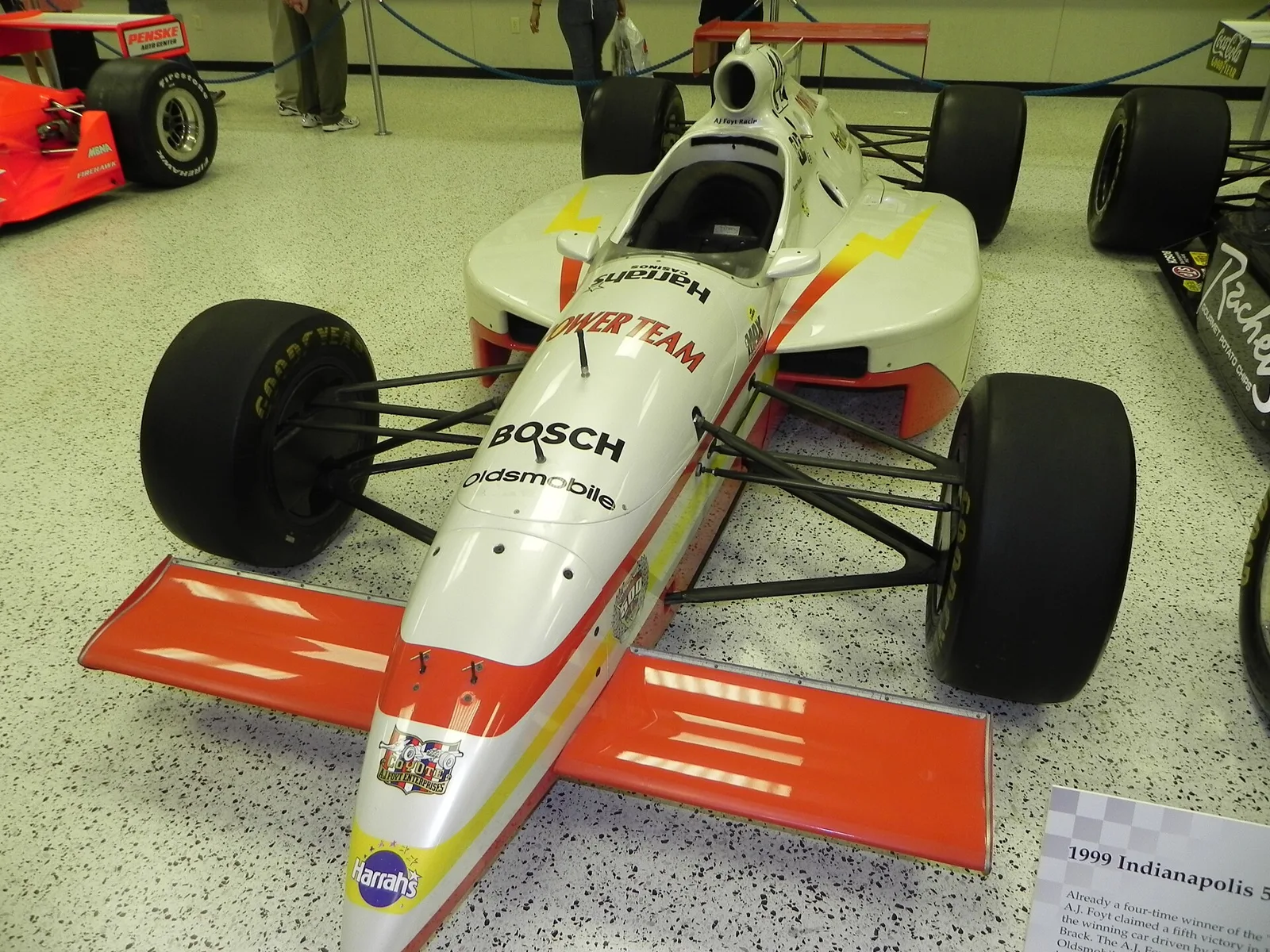
Kenny Brack took the lead for good on lap 199 after Robby Gordon ran out of fuel in turn four, giving A. J. Foyt his fifth Indianapolis 500 win, the only one of them as an owner.
The 1999 Indianapolis 500 was the eighty-third running of the race, held on 30 May 1999. Kenny Brack, the first Swedish winner, took the lead for good on lap 199 when Robby Gordon's tank ran dry in turn four, with Foyt's car taking the win.
Kenny Brack won the eighty-third Indianapolis 500 on Sunday 30 May 1999, and he held the lead from the end of lap 199. Robby Gordon, who had been in front, ran out of fuel in turn four with two laps to go, with Foyt's car taking the win.
Why does the 1999 race matter?
The race was the first Indianapolis 500 won by a Swede, and it gave A. J. Foyt a fifth win, the only one of his five that came as an owner. It was also a finish decided by fuel rather than by the leader's pace.
The Indy Racing League sanctioned the event, which counted toward its 1999 season. The IRL and CART split had entered its fourth year, and for the third year running no major CART teams entered at Indianapolis.
The defending IRL champion, Kenny Brack, had started eighth, and he went on to become the first Swede to win the race. The result was one of the most important moments in the league's early years.
A fuel gauge, a lead lost in the final laps and a Swede who took the win for A. J. Foyt.
How did the CART split shape the field?
The CART series ran its Motorola 300 at Gateway, near St. Louis, on the Saturday of Memorial Day weekend. Two regular CART drivers, Robby Gordon and Roberto Moreno, tried to race at both events on consecutive days. The events ran on consecutive days, which tested both drivers' stamina.
Gordon's ties to the full-time IRL team of John Menard were central to having a competitive Indy 500 attempt. Moreno had raced regularly in CART since 1996 and finished fourth at Gateway, while Gordon crashed and finished 27th there.
Both drivers then flew to Indianapolis and raced the next day. The double was an unusual weekend for both men, and neither of them raced in the IRL again that season.
What was the Double Duty story?
Tony Stewart had switched full-time to NASCAR for 1999, but he still entered a car at Indianapolis to attempt the Indy and Charlotte Double Duty. Previous attempts by John Andretti in 1994 and Robby Gordon in 1997 had not been completed.
On pole day Stewart qualified late in the session, settling for a slow run that left him 24th on the grid. He then had to leave for Charlotte, where he won the Winston Open that night and finished second in The Winston.
On race day Stewart finished ninth at Indianapolis, four laps down, and then finished fourth at Charlotte after a quick flight across the country.
How did pole day go?
Pole Day on Saturday 22 May began with overcast skies and Stewart's busy schedule as the main early talking point. Kenny Brack took the provisional pole with eight cars in the field. Stewart's slow run was the talking point of the day, and the field took shape through the afternoon.
Arie Luyendyk then ran a four-lap average that secured the pole, his third pole in the race after 1993 and 1997. Greg Ray finished second in qualifying, only 0.075 seconds behind Luyendyk, and Billy Boat was third-fastest.
By 6 o'clock the field was full at 33 cars, the first time since 1983 that the grid had been completed in one afternoon. Robby Gordon qualified fourth, and Luyendyk started from the front row in what was planned to be his final Indianapolis 500.
What happened on Bump Day?
Bump Day on Sunday 23 May started with rain in the forecast and a small group of drivers looking to bump their way in. Lyn St. James was bumped out of the field and missed the race for a second straight year.
Raul Boesel bumped his way into the field early, and Johnny Unser went faster still. Robbie Buhl had lost an engine during his warm-up, forcing a hurried swap of motors.
Foyt Racing prepared a car for Buhl at the last moment, using spare parts and tape to hold the number on. His run was enough to make the field, and heavy rain began to fall just after the checkered flag.
What did practice look like?
The month was compressed into a two-week schedule for the second year running. Rookie orientation ran on 8 and 9 April, with ten drivers taking part and nine passing all four phases. The open testing and rookie work were squeezed into those weeks as well.
Greg Ray led the speed chart on several days, and Arie Luyendyk was another quick driver in the early running. Practice also had its share of crashes. Mike Borkowski crashed in turn two on 17 May, and Dave Steele crashed hard in turn one on 19 May, suffering a concussion that ended his month.
Opening day was Saturday 15 May, when Stephan Gregoire rolled out first, continuing a tradition set by a team owner's entries.
How did the start go?
Polesitter Luyendyk led the first 32 laps, and the first caution came on lap 9 when Eliseo Salazar slammed the inside wall. The early caution was costly for several cars. The restart drama that followed kept the leaders busy for the next stint.
During that caution, Jimmy Kite's car clipped Jeret Schroeder's wheel in the pits and slammed into Robby McGehee's pit box. The collision injured crew chief Steve Fried, who was taken to hospital with a head injury, and Kite's car later retired with engine trouble.
Fried faced a lengthy recovery, and the incident left a lasting mark on pit safety. The episode showed how close the crews were to the cars when the pits were busy.
How did the first half unfold?
Luyendyk and Greg Ray traded the lead for nearly the first 60 laps, until Kenny Brack first led on lap 60, passing Ray in turn two. Brack was driving for A. J. Foyt, the four-time Indianapolis winner. The changes at the front were frequent, and no driver held a long lead.
Caution periods kept the field bunched, including one for Sam Schmidt, who backed into the turn one wall on lap 63. Luyendyk regained the lead after pit stops, but Brack passed him soon after the restart.
On lap 84 Greg Ray passed Brack to lead again, and the battle at the front kept changing hands as the leaders worked their way through traffic.
What happened in the second half?
Luyendyk led on lap 118 before he crashed in turn three after tangling with the lapped car of Tyce Carlson. With Luyendyk out, Greg Ray took over, but he was caught in a collision in the pits with Mark Dismore and dropped out with front suspension damage.
Eddie Cheever led the restart on lap 124, but Brack and Jeff Ward passed him as the green flag fell. Brack pulled out as much as 5 seconds of advantage, and Cheever later retired on lap 140 with engine trouble.
Brack pitted under green on lap 150, and Billy Boat moved up to third with less than 40 laps to go. Robby McGehee was fifth, and his team manager, Linda Conti, was a notable figure in the paddock.
Robby Gordon remained in contention for Team Menard. On lap 164 he pitted and topped off his fuel, gambling that it would last to the finish, and on lap 169 Dismore kissed the wall at turn two, which brought out another caution.
Gordon stayed out, shuffled to the lead, and led the restart on lap 174. From there the race became a question of fuel, not speed.
How did the finish decide the race?
With twenty laps to go Gordon had a comfortable lead, although his crew insisted he was fine on fuel. With 12 laps remaining, Brack moved around Jeff Ward for second and began to close the gap. He was 3.5 seconds behind on lap 195, and under 2 seconds by lap 198.
With two laps to go Brack was 1.5 seconds behind as they approached turn three. Gordon's car sputtered in turn four, and he ran out of fuel and coasted toward the pits, so Brack took the white flag lead and won.
Brack finished with 66 laps led, and his final pass came on lap 199. That lead change was the latest in the race's history until 2006, and it ended with Gordon settling for fourth.
Who finished where?
Brack won, with Billy Boat third and Robbie Buhl sixth, which made three Foyt cars in the top six. The table lists the main finishers and retirements, and the positions are the official results. Those retirements are shown in the lower rows.
| Position | Driver | Note |
|---|---|---|
| 1st | Kenny Brack | Won for A. J. Foyt; led 66 laps |
| 3rd | Billy Boat | Third for the Foyt team; moved up to third late |
| 4th | Robby Gordon | Out of fuel in turn four, two laps from the finish |
| 5th | Robby McGehee | Rookie; team manager Linda Conti |
| 6th | Robbie Buhl | Charged from 32nd on the grid |
| 9th | Tony Stewart | Double Duty entry; four laps down |
| 15th | Jeret Schroeder | Top Infiniti-powered finisher |
| Retired | Arie Luyendyk | Pole sitter; crashed in turn three on lap 118 |
| Retired | Greg Ray | Collision with Mark Dismore in the pits |
| Retired | Scott Sharp | Air blocks left in the radiator inlets; out before halfway |
The retirements shaped the race as much as the finishing order did, and the table reflects that by listing the drivers whose races ended early.
What were the other notable moments?
Scott Sharp's crew left protective air blocks in place over his radiator inlets as he left the grid. The car overheated quickly and dropped out before halfway, which turned a routine pit job into a costly mistake. These moments added to the sense of a race where luck counted as much as pace.
Eliseo Salazar, who crashed out early, won the Scott Brayton trophy for the spirit that Brayton had shown. Robbie Buhl charged from 32nd to sixth, joining Brack and Boat as three Foyt cars in the top six.
The Oldsmobile Aurora engine dominated the engine battle, leading 196 of the 200 laps. Eddie Cheever led the four laps that Aurora did not lead, and Jeret Schroeder was the top Infiniti-powered finisher in 15th.
How was the race broadcast?
ABC Sports carried the race flag to flag, after ABC and ESPN split their IRL and CART crews. Paul Page, who had broadcast the 500 since 1974, moved to the CART series, and Bob Jenkins moved into the ABC-TV booth.
On radio, Mike King took over as chief announcer, the fifth man to be the voice of the 500. The broadcast was heard on 556 affiliates, and Gerould handled the victory-lane interview with the winner.
Why did wheel tethers become mandatory?
Wheel tethers became mandatory in time for the race after a crash at Charlotte on 1 May 1999, when a loose wheel went into the grandstands. Three spectators were killed and eight were injured, and the rule was introduced to stop tyres flying off cars.
Sports Illustrated covered the Charlotte tragedy in its 10 May edition, which led to a row between IRL president Tony George and the press. George banned writer Ed Hinton from the 500, but after newspapers announced a boycott, he retracted the ban within days.