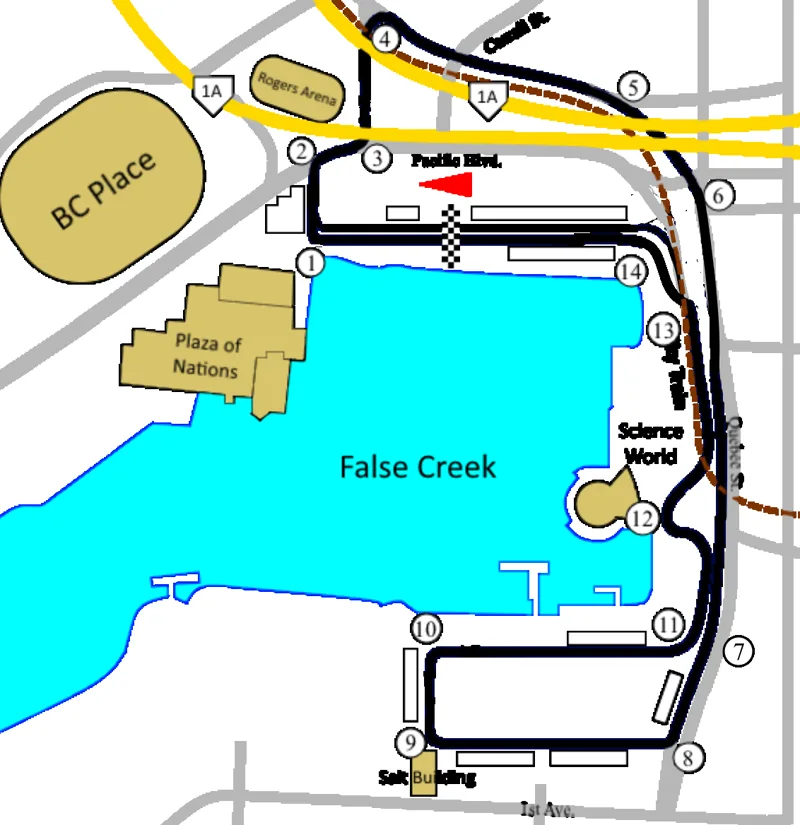
A rain-hit qualifying session, a first-lap pile-up and a fuel strategy that ran dry on the finish line gave Dario Franchitti a win at Burke Lakefront Airport.
Dario Franchitti won the 2001 Marconi Grand Prix of Cleveland on July 1, 2001, by three tenths of a second over Memo Gidley. He came through a first-turn pile-up, then ran a fuel-saving plan that ended with his car dry just past the line.
The 2001 Marconi Grand Prix of Cleveland was a Championship Auto Racing Teams race held on July 1, 2001, at Burke Lakefront Airport in Cleveland, Ohio. Team Green's Dario Franchitti took the win after surviving a first-turn pile-up and then running a fuel-saving strategy that left his car out of fuel just past the finish line.
What was the 2001 Cleveland race and why did it matter?
The race was the ninth round of the 2001 CART FedEx Championship Series. Franchitti ended a wait that stretched back to 1999, and the win was the first for Team Green since Vancouver in 2000. It vaulted him to third in the points standings.
Memo Gidley took second place, in only his second outing for Chip Ganassi Racing. He had stepped in for Nicolas Minassian at the Portland round. It was his first career podium, and it was also the first podium for Chip Ganassi Racing that season.
Bryan Herta finished third and gave Forsythe Racing its first podium of the season. Forsythe had made a dismal start to 2001, so the podium was a welcome result for the team.
A three-tenths finish, a fuel tank that ran dry after the flag and a qualifying session that the rain decided.
What was the wider context for the weekend?
A week earlier, Max Papis had taken a rain-hit win at Portland for Team Rahal, and his teammate Kenny Brack still led the drivers' championship. The team had won three of the last four events, and the next race was in the home state of owner Bobby Rahal.
The Cleveland race was popular with fans and unusual on the calendar for its speed and the room it gave drivers to pass. The track surface was bumpy, and the forecast for race day predicted rain, which worried the race engineers.
The weekend also came after an announcement that CART would not return to Michigan International Speedway in 2002. The speedway had hosted the series every year since 1970, and the Indy Racing League would take over the venue from 2002 to 2007. Michigan joined Texas, Nazareth, Detroit, Lausitz and Houston as events that would not appear on the 2002 CART calendar.
CART kept a marquee event at Fontana through 2004.
How did rain shape qualifying?
Friday morning practice ran for 1 hour, 45 minutes, and Cristiano da Matta was the only driver to break into the 58-second range, with a 58.905. Several drivers had difficulty with the surface, and Alex Zanardi, Shinji Nakano, Roberto Moreno and Alex Tagliani all made contact with barriers in different corners.
Da Matta topped the second Friday session with a 57.905, and the top twelve cars were separated by less than a second. Saturday morning practice stayed dry, and Bryan Herta beat da Matta's best with a 57.902, leaving da Matta fourth in that session.
Saturday's forecast promised thunderstorms during qualifying, and the rules split the field into two groups that ran one after the other. A split like that could leave one group at a serious disadvantage if the rain fell between them, and that was what happened.
The first group, made up of the bottom thirteen drivers in the points, qualified at 1:45 PM over a 30-minute session. The track stayed dry, and Mauricio Gugelmin set a 57.356 on his final lap to top the time sheets. Adrian Fernandez followed him, with rookie Max Wilson third.
The second group was due to qualify at 2:30 PM, and light rain began to fall as it prepared to go out. Drivers stayed on slick tyres, and Brack, Scott Dixon and Paul Tracy spun on the slippery track within minutes of the session starting.
At 2:47 PM CART suspended qualifying because lightning was spotted near the track, and high winds and more rain arrived with it. The rules guaranteed both groups at least twenty minutes of green-flag running, so the session resumed with five and a half minutes left to finish qualifying.
When Franchitti's 59.803 was posted before the stoppage, it left him fourteenth, behind all of the first group. When the green flag came out almost thirty minutes later, standing water covered several areas of the track, and no driver in the second group could improve on the first group's times.
Who won the pole and how did the drivers respond?
The stoppage gave Gugelmin his first pole since the 1997 Marlboro 500, and it was the fourth pole of his career. He said afterwards that his lap would have held up even without the rain in the second group, but he also argued that two-session qualifying was open to the kind of result the day produced.
Fernandez, second on the grid, and Wilson, third, both acknowledged that they had been lucky. Fernandez said he did not feel bad for the drivers at the back, because he had also had good cars that started in the rear, and he hoped the system would change to make qualifying fairer for everyone.
Tracy, who was last, admitted that his team had been slow to act when the rain started. They did not go out at once, and by the time they had made their decision the track had become faster, which was a mistake.
What happened at the start?
Morning warm-up had been overcast, and Helio Castroneves set the fastest time in it at 59.907. As race time approached, a storm system that had brought a tornado watch 50 miles west of Cleveland moved south of the track. The skies stayed grey, and winds of 25 mph blew across the circuit.
The race began a little after 1:00 PM. Gugelmin led the field into the hazardous Turn 1, but he locked his brakes and went wide, and the cars behind him bunched up. Wilson took the lead as several cars were forced off the track and onto the grass.
Patrick Carpentier and Michel Jourdain Jr., who had started in the midfield, both spun after being hit by Tony Kanaan and defending winner Moreno. Only Jourdain could be restarted, but he limped back to the pits and retired.
The first-corner accident brought out the caution. Wilson led his first laps in CART, followed by Tagliani and Gidley. Brack had jumped from 17th to 6th in a few corners by hugging the inside line to avoid the trouble. Several cars near the back used the caution to top off with fuel, hoping for a different strategy.
On lap 4 the green flag came out, and Wilson led the field single-file into Turn 1. Herta, who had dropped from fourth to tenth after the first corner, began to climb back through the field. On lap 7 Tracy stopped in the pits and retired because of an engine failure.
How did the leaders take their stops?
Gidley passed Tagliani for second on lap 13, and two laps later Fernandez and Brack passed him for third and fourth. Gidley continued to stalk Wilson, and on lap 21 he finally got past for the lead through Turn 4.
The leaders made their first pit stops on lap 31. Gidley handed the lead back to Wilson, who ran on for a few more laps, and Fernandez and Brack followed. They battled side by side out of the pits before Brack got through.
Bruno Junqueira ran into the back of Christian Fittipaldi as the field entered the pits, and his car stopped at the pitlane entrance. Wilson, who was about to pit himself, could not reach his box, and he drove through the pitlane without service, losing valuable time and having to come back on the next lap.
Moreno, Jimmy Vasser, Kanaan and Papis stayed out a lap longer before pitting and handing the lead back to Gidley. Franchitti gained positions in that round of stops, and by lap 41 Gidley was lapping the rest of the field. Nakano's turbocharger failed on course, which forced him to limp to the pits and retire.
Zanardi passed Fernandez for third on lap 53. On lap 59 Zanardi made his second stop, and as he rejoined Wilson clipped his wing on Zanardi's rear tyre. Wilson had to make a lengthy stop to change the wing, while Zanardi also needed a pit visit for a flat tyre.
Brack led the field for a lap before he pitted. Fernandez stayed out a lap longer than him and then handed the lead to Franchitti. The fuel game was now in full swing. Cars that saved fuel could run two stops, while drivers such as Gidley and Gil de Ferran who had made earlier stops committed to three.
How did the fuel strategy decide the race?
The fuel strategy decided the race. Two-stop runners such as Franchitti, Herta, Moreno, Dixon and Vasser had to save fuel and hope for caution laps. Three-stop runners could run flat out, knowing they would need a splash-and-go at the finish.
Franchitti and Herta made their final stops on lap 66, along with much of the field. Vasser stayed out until lap 69, and Moreno until lap 70. After the second round of stops, Gidley was back in the lead with de Ferran second, Franchitti third, Herta fourth and Brack fifth.
Dixon made contact with Tora Takagi going into Turn 6 on lap 74, and both cars went off track. Dixon's front suspension was damaged, and by the time he was back on track he was five laps down. De Ferran made his final stop on lap 80, but a fuelling problem meant that it took fourteen seconds instead of the expected four, and he dropped back to seventh.
On lap 86 Fernandez retired from eighth with an engine problem. Two laps later Moreno and Herta were involved in a collision in Turn 8, and Moreno stalled and had to be restarted, which dropped him to 12th.
Gidley made a splash-and-go stop on the next lap. The gap was not large enough for him to keep first, and he came out just ahead of Brack. He did not have to save fuel, so he could run faster and catch Franchitti. Brack pitted for fuel on lap 94 and fell back to fifth.
How did Franchitti hold on for the win?
Gidley closed in fast on Franchitti as the laps ran out. By lap 97 the only car between them was the lapped car of Michael Andretti, and Gidley locked his brakes going into Turn 1 as he tried to get past. He cleared Andretti on the next lap, but Franchitti had lapped Wilson and put four seconds between himself and Gidley.
On the last lap Franchitti slowed more, and halfway round Gidley got past Wilson and closed the gap. It was too little, too late. Franchitti came out of the Turn 9-10 chicane onto the front straight and took the checkered flag by just three tenths of a second, and then ran out of fuel as he entered Turn 1.
| Finish | Driver | Note |
|---|---|---|
| 1 | Dario Franchitti, Team Green | Won by three tenths of a second; out of fuel after the finish |
| 2 | Memo Gidley, Chip Ganassi Racing | First career podium |
| 3 | Bryan Herta, Forsythe Racing | Forsythe's first podium of 2001 |
| 4 | Gil de Ferran | Moved up three places in the standings |
What did the result mean for the 2001 championship?
Franchitti's win was his seventh career CART victory and his first since Surfer's Paradise in 1999. It was also Team Green's first win of the season, and it moved him into third in the points standings. It remained his only victory of 2001, although he added two more podiums before the year was out.
De Ferran's fourth place moved him up three positions to fourth overall in the standings. Gidley's second place was the first of three podiums he would take in 2001, and Herta's third was a high point in a season that otherwise lacked good results for him.
The race also showed how much strategy could matter at a track where the grid had been shaped by rain. Fuel mileage, the number of stops and an early first-lap incident all shaped the finish, and the final result came down to a few tenths of a second.