Founded after a 2000 crash left Sam Schmidt quadriplegic, the Indianapolis operation became a McLaren IndyCar team with seven wins between 2012 and 2019, two wins in 2021 and a new Racing Center.
Arrow McLaren is an Indianapolis IndyCar operation founded by Sam Schmidt in 2001. McLaren became its majority owner in 2021 and bought the remaining stakes in 2025.
The Arrow McLaren IndyCar Team is an Indianapolis-based operation that McLaren now owns outright. It began in 2001 as Sam Schmidt Motorsports, set up by the former driver Sam Schmidt after a 2000 crash left him a quadriplegic. Today the team runs Pato O'Ward, Scott Dixon and Felix Rosenqvist, and McLaren has owned most of it since 2021.
Who founded Sam Schmidt Motorsports?
Sam Schmidt, a former IndyCar driver, founded the team in 2001, about 14 months after a serious accident that left him a quadriplegic. The early years were lean, with changing drivers and sponsors, and the team struggled to find a stable footing.
The crash happened on 6 January 2000, during practice at Walt Disney World Speedway in Orlando. Schmidt's car hit the outside wall at roughly 180 mph after leaving turn two. He was flown to hospital in extremely critical condition, diagnosed with a spinal cord injury at the C-3/C-4 level, and kept on a respirator for five months.
The Indy Pro Series was founded in 2002, and Schmidt refocused the team's effort on that series. In the IndyCar Series the team ran only the Indianapolis 500, with Richie Hearn at the wheel of its car from 2003 to 2005, and Airton Dare in 2006.
A quadriplegic founder's team became a McLaren-owned IndyCar operation with seven wins and a new $30 million home.
How did the early drivers shape the team?
Davey Hamilton drove five races for the team in 2001, including its first Indianapolis 500, before an injury at Texas Motor Speedway ended his stint. Jaques Lazier replaced him for four races, and several other drivers filled seats for a race or two each.
Richie Hearn made nine starts in 2002, moving between the team's two cars, the number 99 and the number 20. Anthony Lazzaro drove the first three races that year in the number 99, then gave the Indianapolis 500 seat to Mark Dismore, a one-off starter for the team in that race.
The 2009 Indianapolis 500 brought a joint entry with Chip Ganassi Racing, piloted by Alex Lloyd, and the same arrangement carried into 2010 with Townsend Bell at the wheel.
The 2011 season brought a larger change. The team bought the assets of the FAZZT Race Team, kept some of its personnel and all of its sponsors, and signed Alex Tagliani. Bell, Howard and Cunningham were among the other drivers in its cars that season.
How did the team cope with the 2011 losses?
That year the team lost two people close to it. Chris Griffis, the team manager for its Indy Lights operation, died on 12 September 2011 at the age of 46. Both losses came in the same season, and both hit the organisation hard.
A month later, Dan Wheldon died after a 15-car crash at Las Vegas, where he was driving the number 77 car in a joint deal with Bryan Herta Autosport.
The season ended in grief, but the organisation kept going. Its Indy Lights programme had been among the strongest in the series in recent years, and its IndyCar operation continued to build around new partners.
Why did Pagenaud and Hinchcliffe matter?
From 2012 to 2019 the team won seven races, almost all with Simon Pagenaud and James Hinchcliffe. Pagenaud, a Frenchman backed by Hewlett-Packard in 2012, was named Rookie of the Year that season and scored four podiums. Bell returned to drive at Indianapolis that year and finished ninth.
In 2013 Pagenaud was joined by another Frenchman, Tristan Vautier, while Schmidt brought in a new investor. Pagenaud won at Detroit's second round and at Baltimore, and he finished third in the points. He went on to win the inaugural Grand Prix of Indianapolis and placed fifth in the standings before leaving for Team Penske.
Ric Peterson, a Canadian businessman and former Champ Car Atlantic owner, had bought his stake in 2013, and the team's name reflected that partnership.
Hinchcliffe, a Canadian, drove for the team from 2015 and won at Long Beach in 2017. In 2016 he sat on pole for the 100th Indianapolis 500. He was badly hurt in a crash in qualifying at Indianapolis in 2015, and that injury ended his season early.
Leena Gade became his lead race engineer in 2018, the first woman to hold that role in IndyCar. That year Robert Wickens, a fellow Canadian, suffered a severe crash at Pocono Raceway that left him paralysed. He said his spinal cord was bruised rather than fully severed, and he hoped to walk again within two years.
| Year | Change | Detail |
|---|---|---|
| 2001 | Founded | Sam Schmidt Motorsports |
| 2012 | Renamed | Schmidt Hamilton Motorsports after Davey Hamilton's sponsorship |
| 2013 | Investor | Ric Peterson stake creates Schmidt Peterson Motorsports |
| 2019 | Title sponsor | Arrow Electronics; the team becomes Arrow Schmidt Peterson |
| 2020 | Joint entry | Arrow McLaren SP |
| 2021 | Majority stake | McLaren buys 75 percent |
| 2023 | Name change | Arrow McLaren IndyCar Team |
| 2025 | Full ownership | McLaren buys all remaining stakes |
How did McLaren come to own the team?
In 2019 Arrow Electronics became the team's title sponsor, and in August of that year a collaboration with McLaren was announced for the 2020 season. The combined operation was named Arrow McLaren SP, with Schmidt and Peterson remaining co-owners at first.
Marcus Ericsson left at the end of 2019 for Chip Ganassi Racing, and James Hinchcliffe was dropped.
On 8 August 2021 McLaren bought a 75 percent stake, leaving Schmidt and Peterson with 25 percent and places on the board of governors. Arrow extended its role as lead sponsor through the 2029 season. The SP suffix was dropped in 2023, and the operation was renamed the Arrow McLaren IndyCar Team.
January 2025 brought the final step: McLaren bought the remaining stakes from Schmidt and Peterson. McLaren's chief executive, Zak Brown, had already been installed as the team's chairman after the 2021 purchase.
Schmidt and Peterson had held their 25 percent stake through 2024 and remained on the board of governors.
How did the McLaren-era team perform?
The 2020 season was disrupted by the COVID-19 pandemic, and the team took a Paycheck Protection Program loan along with many other race teams and tracks. O'Ward and Oliver Askew were the drivers that year, and Askew was let go afterwards. Felix Rosenqvist took his place for 2021.
In 2021 the team became the first Chevrolet-powered operation outside Team Penske to take a win since 2016, when O'Ward won at Texas. He added a second victory at Detroit's race two, which gave the team two wins in a season for the first time since 2014 and its first win on a road or street circuit since 2017.
Rosenqvist was injured in a crash the day before the Detroit race, and Oliver Askew stepped in briefly for that race in Detroit. Kevin Magnussen, a former McLaren F1 driver, filled in for Rosenqvist at Road America.
At the 105th Indianapolis 500 the operation fielded three cars, with Juan Pablo Montoya in the third. McLaren's team went on to score its best Indianapolis result to date in 2022, when O'Ward and Rosenqvist finished second and fourth. Rossi was signed as a third full-time driver for 2023, joined by a new general manager, Brian Barnhart, from Andretti Autosport.
Who drove for the team in the mid-2020s?
In 2024 Rosenqvist left for Meyer Shank, and David Malukas, who had come from Dale Coyne Racing, took his seat. Callum Ilott and Theo Pourchaire stood in before McLaren signed Pourchaire for the rest of the season, bar the Indianapolis 500.
Malukas was released after a pre-season wrist injury that kept him out for four races. The team then cut its ties with Juncos Hollinger Racing after a social media dispute in which one of that team's drivers sent threats to Pourchaire following the Detroit Grand Prix. Pourchaire was released, and Nolan Siegel took his seat.
On 6 July 2026 the team announced the signing of six-time IndyCar champion Scott Dixon and the return of Felix Rosenqvist, the 2026 Indianapolis 500 winner. The line-up of O'Ward, Dixon and Rosenqvist is the one now running the Nos. 5, 6 and 7 cars.
What is the new McLaren Racing Center?
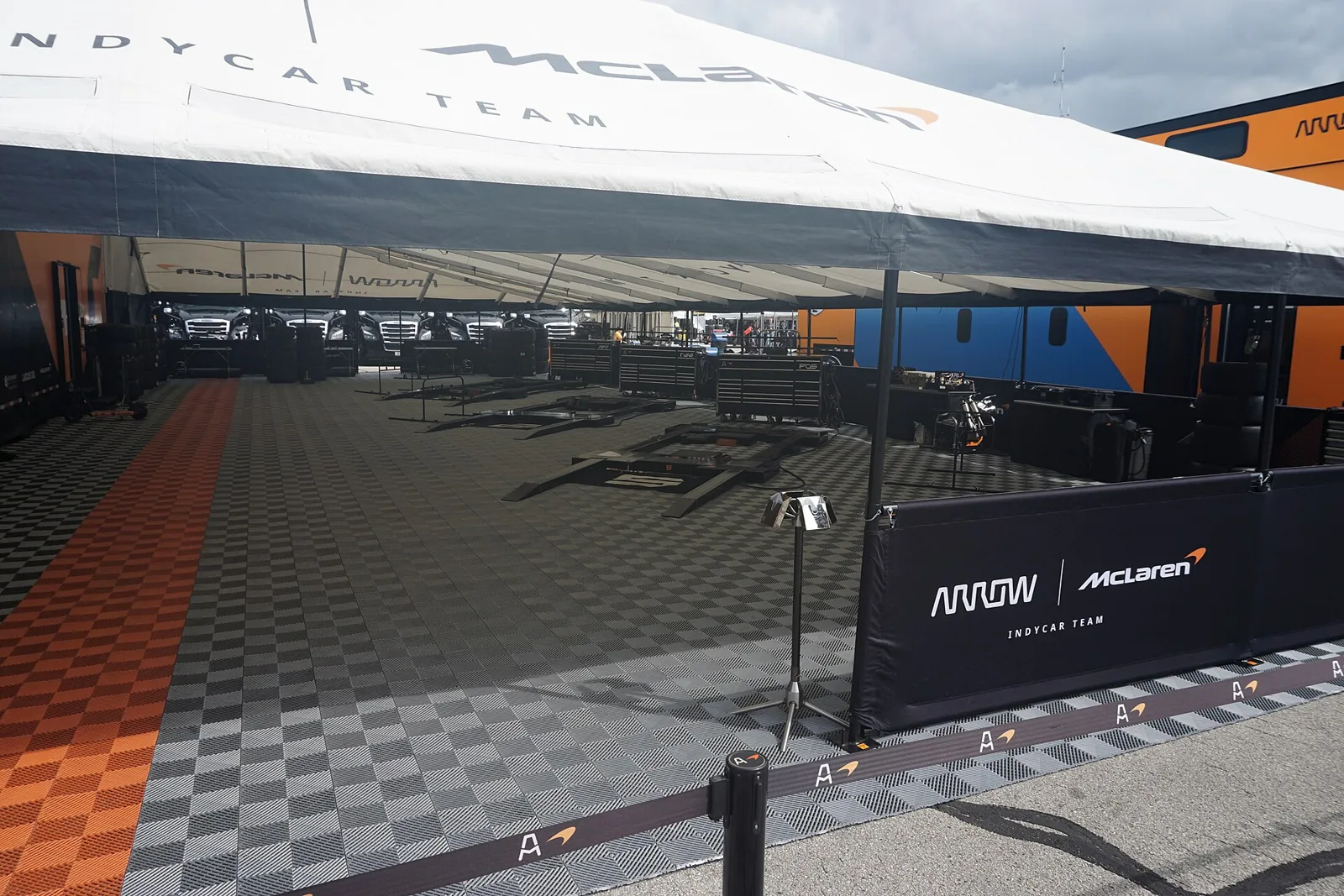
In 2026 the team opened a renovated facility in Indianapolis, known as the McLaren Racing Center, at a cost of $30 million. It grew the team's footprint from about 33,000 square feet to around 86,000, to support better workflow between mechanics, engineers and other staff.
The centre adds 12 car bays, room for every team hauler indoors, a pit-stop practice area, offices and a gym and recovery space for athletes.
What was the Indy Lights record?
Schmidt's Indy Pro programme, later renamed Indy Lights, ranked among the most productive feeder operations in the series. It won the title in 2004 with Thiago Medeiros, in 2006 with Jay Howard and in 2007 with Alex Lloyd. Jean-Karl Vernay gave it a third title in 2010, and Tristan Vautier took the 2012 championship.
Sage Karam won the 2013 title and became the eighth rookie to win the series championship. Jack Harvey was runner-up in both 2014 and 2015, while Santiago Urrutia took the most race wins in 2016 but lost the title to Ed Jones of Carlin. Schmidt ended the Lights programme in late 2016 to focus on the IndyCar operation.
In April 2017 Schmidt Peterson announced a development deal with the Belardi Auto Racing Indy Lights outfit, and Arrow Electronics sponsored Belardi driver Santiago Urrutia as part of the deal.
How does McLaren's own history fit in?
McLaren has a long record in American open-wheel racing, both as an entrant and as a chassis builder. As an entrant it took the Indianapolis 500 in 1974 and 1976, and a McLaren-built chassis also won the race in 1972.
After one-off Indianapolis returns in 2017 and 2019, McLaren said it would race a full IndyCar programme from 2020, in partnership with Schmidt Peterson. In 2023 the team marked McLaren's 60th anniversary with a special livery for the Indianapolis 500, honouring the M16C/D of 1974, the MP4/2 from the 1984 Monaco Grand Prix win, and the McLaren F1 GTR that took the 1995 Le Mans 24 Hours.