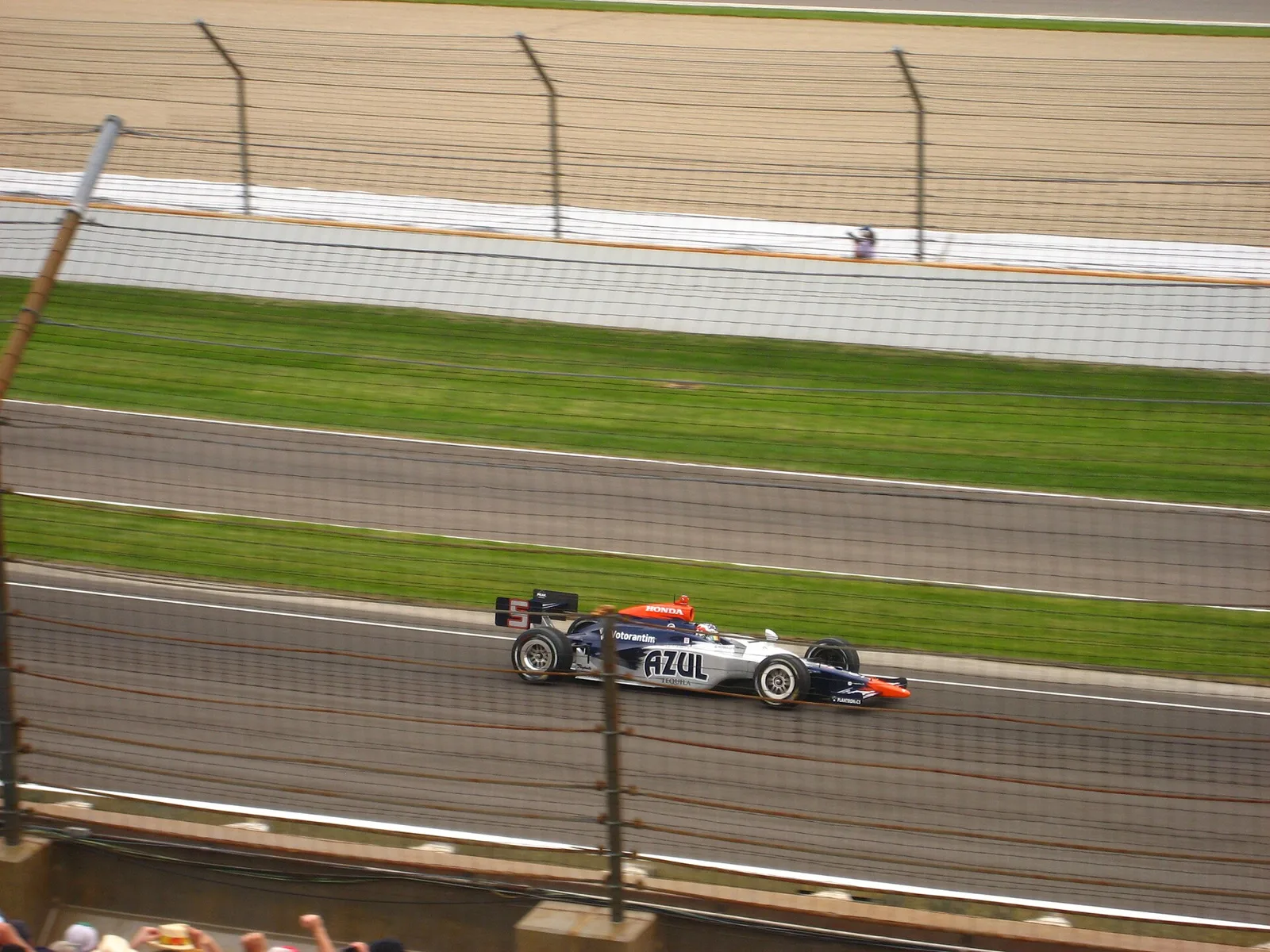
Helio Castroneves won from pole after a trial acquittal and a season of tight qualifying, with Danica Patrick finishing third.
The 2009 Indianapolis 500 was the 93rd running of the race, held on Sunday, 24 May 2009. Helio Castroneves won from pole, his third Indy 500 victory, while Danica Patrick took third, the highest finish a woman has achieved in the race.
The 93rd Indianapolis 500 took place on Sunday, 24 May 2009, and it launched the three-year Centennial era. Castroneves started from pole and collected his third Indy 500 title, in a race that featured eight crashes. Danica Patrick finished third, the best result ever recorded by a woman in the event.
Why did the 2009 race open a new era?
The race began the three-year Centennial era, which celebrated the 100th anniversary of the track's opening in 1909 and of the first race in 1911. The race was the Indy Racing League's 14th sanctioned Indy 500, and it headlined the 2009 IndyCar calendar. The anniversary shaped the month's programme, which opened with a balloon festival.
The race also marked the end of an era for Team Penske. The 2009 event was the last time the team ran the Marlboro colours at the Speedway, because Philip Morris ended a 21-year partnership with Penske during the offseason that followed. The team's car owner, Roger Penske, saw his 15th Indy 500 triumph in the result, which extended the team's own record.
The field itself was a mix of the familiar and the new. The official entry list was released on 20 April and initially included 77 cars for 40 entries. Five former winners were entered, namely Lazier, Castroneves, Wheldon, Franchitti and Dixon, along with six rookies. Paul Tracy returned for the first time since the controversial 2002 race.
A centennial-era opener, a trial acquittal and a record-setting third place made the 2009 Indy 500 a race of firsts.
How did Castroneves' legal case affect the build-up?
Castroneves had been acquitted of federal tax evasion and conspiracy charges less than two months before the race. The trial was held in March 2009 at the US District Court in Miami, and a guilty verdict would likely have sent him to prison and ended his driving career.
The victory also gave Firestone its 60th Indy 500 win. Castroneves was a native of Brazil and the first foreign-born driver to win the race three times. His wins came in 2001, 2002 and 2009, which tied the record for three victories in one decade.
What did practice show in the first week?
Practice on the first Thursday produced an early incident, when Ryan Hunter-Reay spun as he left turn two and struck the outside wall on the back straight. He was unhurt. Robert Doornbos and Scott Sharp both crashed hard in turn two on Fast Friday, and Doornbos was out again the next day.
Practice ran into trouble in other ways. A tow helped both Penske cars break the 225 mph barrier on Fast Friday, while a light shower delayed the session for an hour. Loose bricks from the famous start-finish line also came out of their mortar during practice, and one chunk flew out and stopped the session.
The opening week began with rookie orientation on the first day, when nine drivers took to the track. Robert Doornbos, Raphael Matos, Alex Tagliani and Mike Conway completed all four rookie phases, while Nelson Philippe completed three phases and Stanton Barrett finished two. Rain then washed out the Wednesday veteran session, and the cars returned on Thursday for 2,199 laps.
On Fast Friday, Doornbos crashed in turn two at 12:30 p.m., and a light shower halted practice for an hour. Those interruptions kept the time pressure high as the teams prepared for pole day, and the Penske cars were the quickest on the speed chart before the weekend.
What did the second week of practice show?
Practice resumed after three off-days, and track activity was busy once the teams returned. Oriol Servia joined the Rahal Letterman line-up and ran his first laps of the month. He posted 221.353 mph, the quickest time among non-qualified drivers, and Townsend Bell led the non-qualified cars on Fast Friday.
Tomas Scheckter took his first laps of the month on the Friday, and Mike Conway returned after his crash earlier in the week. Teams spent most of the day in race trim, with cars running in drafting packs. The practice was briefly halted at 5:33 p.m. when several bricks from the famous start-finish line came loose.
What publicity and ceremonies came before the race?
The drivers of the starting field took part in the annual New York City publicity tour, which visited Herald Square on 18 May. Richard Petty Motorsports collaborated with Dreyer and Reinbold Racing in fielding an entry for the veteran John Andretti, with both teams running the entry through May.
The ceremonies followed the usual format. Miss America Katie Stam sang America the Beautiful before the race, and Jim Nabors traditionally sang Back Home Again in Indiana. Two vintage B-25 Mitchell bombers flew the pre-race fly-by, and a ten-member firing detail executed a three-volley salute.
How did pole day play out?
Ryan Briscoe led the morning practice at 225.182 mph, and Helio Castroneves followed in the speed chart. Qualifying itself was tense. Marco Andretti briefly took the provisional pole, but Briscoe pushed the speed higher, and Castroneves rounded out the first wave to put himself second on the grid.
Castroneves then withdrew his earlier speed and went out again, taking the pole with a 224.864 mph run. Several drivers tried to beat that time, but none could. Paul Tracy sat on the bubble for much of the day, and his car was reinstated to the field seven times, yet he was eventually bumped.
Alex Lloyd made his first attempt with five minutes left in the day, and he surprised the field by bumping his way into the top 11. Patrick withdrew her earlier time to take a second attempt that was faster by nearly a mile per hour.
What happened during the second weekend of time trials?
Mike Conway crashed hard in turn one on only his second lap of the day on Sunday, and he was taken to hospital with bruised lungs. Raphael Matos qualified at 223.492 mph, the seventh-fastest car overall and the first rookie to make the field. Townsend Bell had led the speed chart at 223.580 mph on Saturday.
Robert Doornbos set the fastest qualifying speed of the Saturday at 221.692 mph, while Milka Duno's 221.568 mph practice lap was 3 mph above her qualifying speed. On the final Sunday, Sharp bumped E. J. Viso with 222.162 mph.
John Andretti bumped Ryan Hunter-Reay, and Hunter-Reay then bumped Alex Tagliani by 0.0324 seconds. The six o'clock gun fired during Hunter-Reay's run, leaving Tagliani and Buddy Lazier in the queue. Shortly before midnight Conquest Racing announced that Tagliani would replace Bruno Junqueira in the 36 car, moving him to the back of the grid at 33rd.
How did the race unfold from the start?
Castroneves hit the accelerator in the middle of turn four before the field was set, and the first start was waved off. The second attempt was given the green flag. On the first lap Mario Moraes squeezed Marco Andretti into the wall, and both drivers were out of the race, although Andretti later returned briefly.
Hunter-Reay crashed on lap 20 and slid into the pit lane. Rahal and Hamilton each crashed later, on laps 56 and 83, after slowing between turns three and four and drifting into the wall on the front straight. The leaders were hard to pick out during the early laps as Scott Dixon, Castroneves and Dario Franchitti swapped the lead.
Tony Kanaan suffered a driveshaft failure on lap 98 while running third. His car was pitched into the wall, and he bounced off the backstretch wall before hitting the turn 3 wall. Dixon led from lap 91 to lap 141, with Franchitti shadowing him. A later caution left Franchitti's fueler stuck in the car, which cost the team its place.
On the restart, Dixon was powerless to stop Castroneves from passing him, and the Penske car cleared Dixon before the cars entered turn 1. It proved to be the winning move. The scariest incident of the day came on lap 173, when Vitor Meira and Raphael Matos collided in turn 1. Meira's car flipped on its side and slid along the wall before landing back on its wheels.
The race ran its full 200 laps, and the leaders were so closely matched that the gap between the front runners often came down to a few car lengths. Castroneves and Wheldon were running at much the same pace of 218 mph near the end, while Patrick was close on Wheldon's tail as the flag approached.
Who finished where in the 2009 race?
Castroneves took the win ahead of Wheldon and Patrick, with Townsend Bell among the leaders in the closing laps. A podium place for Patrick was historic, and the table below lists the leading results. Castroneves' pole-to-win run was his third Indy 500 victory.
| Place | Driver | Detail |
|---|---|---|
| 1 | Helio Castroneves | Pole, third Indy 500 win, first foreign-born three-time winner |
| 2 | Dan Wheldon | Former winner, second place |
| 3 | Danica Patrick | Best finish ever by a woman in the event |
| - | Ryan Briscoe | Short-fueled late to claim second, then pitted for the Meira caution |
| - | Townsend Bell | Ran in the closing laps behind the leaders |
Briscoe had dropped back with a poor set of tyres before short-fueling in a late round of pit stops to climb to second. He later tried to take the lead to help Castroneves save fuel, but a pit stop under the Meira-Matos caution ended his chance to win.
Why did the 2009 result matter?
Castroneves became the sixth driver to win three Indianapolis 500s, joining that select group. His win gave Roger Penske his 15th Indy 500 triumph, which extended the team's own record. The race also featured eight crashes, which made the finish a test of endurance.
Wheldon, a former winner, finished second. Patrick's third place was the best finish ever by a woman in the event.
How was the race covered?
The race was televised in high definition on ABC for the 45th consecutive year, and ABC Sports signed a four-year extension to keep covering the race through 2012. Marty Reid anchored the telecast for the fourth year. Time trials and Carb Day were shown on Versus.
The IMS Radio Network carried the race, with Mike King as anchor. Three living Voices of the 500 joined the pre-race broadcast, and Jake Query moved from the pits to the turn two location. The out-cues were recordings of past Voices of the 500, rotating through the chief announcers.