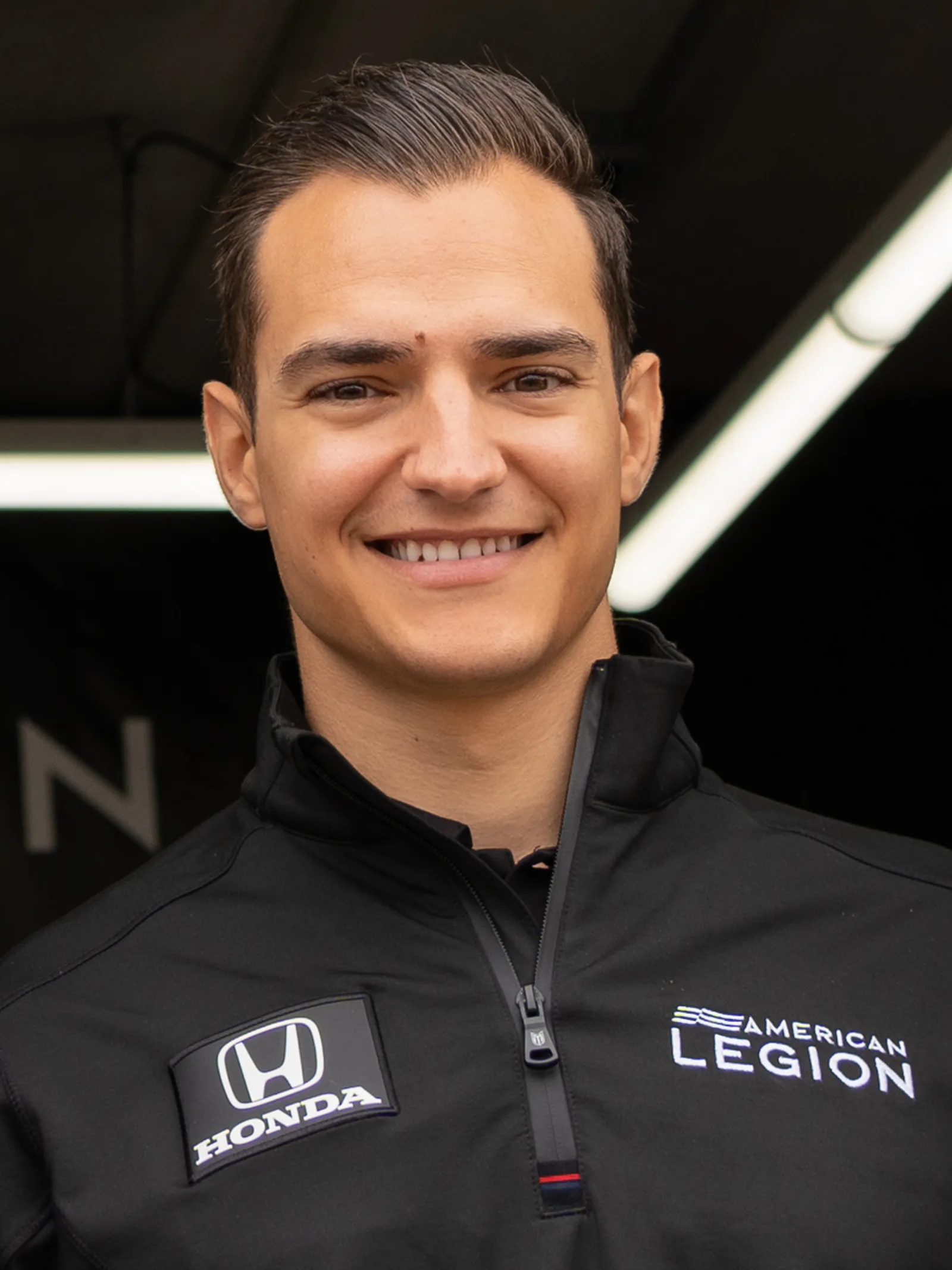
Alex Palou claimed a third straight-era crown, Josef Newgarden won the Indianapolis 500 back to back and the hybrid system arrived at Mid-Ohio after a long delay.
Alex Palou won the 2024 IndyCar championship for Chip Ganassi Racing, his third title, after a season decided by consistency. Josef Newgarden took back-to-back Indianapolis 500 wins, Colton Herta finished second after winning the Nashville finale, and the hybrid system made its debut at Mid-Ohio.
Counted as the 113th official championship season of American open-wheel racing, 2024 was also the 29th year run under IndyCar Series sanction. Alex Palou won his third title for Chip Ganassi Racing, becoming the first three-time and back-to-back champion of the DW12 era, while Josef Newgarden won the 108th Indianapolis 500 to take a second consecutive victory.
The season was shaped by a technical shift, a new broadcast partner in the following year, and a championship fight that stayed close for most of the year. Palou's consistency kept him in front, but Scott McLaughlin, Will Power and Pato O'Ward all had runs that threatened his lead.
What changed in the rules and broadcasts for 2024?
The most important change was the hybrid system, which had been planned for the St. Petersburg opener but was delayed until after the Indianapolis 500. The series also introduced a restart line that drivers had to pass before attempting an overtake, and it mandated stronger rear suspension uprights on all ovals. NBC Sports broadcast its final season of the contract.
The hybrid timeline moved more than once. On 7 December 2023 IndyCar postponed the debut, and on 14 May 2024 it confirmed Mid-Ohio as the first event with the new system. The planned 2.4-liter hybrid engine formula itself was pushed back to 2027, so the teams ran a hybrid add-on to the existing 2.2-liter twin-turbocharged V6.
The uprights were a direct response to the 2023 Indianapolis 500, where a rear wheel assembly broke free after a collision involving Kyle Kirkwood and flew over the catch fence. The restart line was aimed at a string of incidents from drivers who tried to overtake too early on restarts during the previous year.
Early running with the hybrid was not smooth. Qualifying at Iowa saw several drivers unable to deploy energy, and critics questioned whether the extra technology would add to the on-track action or simply complicate the strategy. That question stayed open for much of the season.
Palou's third title was built on consistency rather than dominance, with a top-five finish in most of the season's races.
Who were the main driver and team moves?
The biggest moves were the ones at Andretti and Chip Ganassi Racing. Marcus Ericsson left Chip Ganassi Racing for Andretti Autosport, replacing Romain Grosjean, and Linus Lundqvist took the vacated seat at Chip Ganassi Racing full-time. Grosjean left Andretti after two seasons and started an arbitration process against the team before signing with Juncos Hollinger Racing.
Other seats changed hands too. Felix Rosenqvist signed a multi-year deal with Meyer Shank Racing, while Simon Pagenaud left the team after two seasons to focus on his recovery from injuries. David Malukas moved to Arrow McLaren, Kyffin Simpson went full-time at Chip Ganassi Racing and the team expanded to five cars, and Sting Ray Robb was signed full-time by A. J. Foyt Racing.
Kyle Larson made an Indianapolis 500 appearance for Arrow McLaren, an entry co-owned by his NASCAR car owner Rick Hendrick. Meanwhile, Andretti rebranded its race teams under the Andretti Global name and cut from four entries to three, and Arrow McLaren ended its alliance with Juncos Hollinger Racing in June after online abuse aimed at its driver Theo Pourchaire.
Injuries and withdrawals created a steady flow of substitutes. Malukas missed the opening race after a wrist injury from a mountain bike accident, and Callum Ilott stepped in. Alexander Rossi broke a thumb in practice at Toronto, so Theo Pourchaire took his place there, and Rossi was confirmed to return at Gateway on 8 August.
Juncos Hollinger Racing parted ways with Agustin Canapino on 7 August, and Conor Daly took over the car for the remainder of the year. Those changes meant that several drivers spent the season in cars they had not started with, which made the team battles harder to predict.
How did the early rounds unfold?
The season opened at St. Petersburg, where Newgarden took pole but was later disqualified along with McLaughlin for illegal use of push-to-pass. The win went to Pato O'Ward, while Will Power was penalized ten points. At the Thermal Club, a non-points exhibition paying $1 million to its winner, Palou led McLaughlin and Rosenqvist home in a format that drew mixed feedback.
Long Beach produced Rosenqvist's first pole for Meyer Shank Racing, but Scott Dixon won the race by 0.9 seconds and took the championship lead. Alabama brought McLaughlin a win from pole, with Linus Lundqvist claiming his maiden podium and Colton Herta recovering from a crash to finish eighth and move into the standings lead.
At the Sonsio Grand Prix on the Indianapolis road course, Palou narrowly beat Christian Lundgaard to pole, but Power and Palou traded the lead in the final stages. Herta, who had qualified poorly, rose from 24th to seventh, but he finished that stretch third in the championship with Palou and Power ahead of him.
What happened at the 108th Indianapolis 500?
Newgarden won the 108th Indianapolis 500 after a race that was delayed by four hours of rain and interrupted by five safety car periods. McLaughlin took pole with a record four-lap pole speed and led his teammates early on, but attrition was heavy across the field and several Honda-powered cars suffered engine issues.
Herta crashed from second place on lap 88, and Power crashed on lap 147 before a clutch problem ended McLaughlin's day. Scott Dixon, McLaughlin and Newgarden swapped the lead repeatedly until Alexander Rossi and O'Ward joined the battle for the front. O'Ward took the lead with five laps to go, but Newgarden retook it and then pulled off a late move two corners from the finish. That made him the first repeat winner since Helio Castroneves in 2002.
How did the title fight develop through the summer?
Newgarden had only a week to celebrate before the Detroit Grand Prix, where Dixon used fuel saving to hold off Kirkwood and then Ericsson and Armstrong to take the win and the points lead. The race at Road America followed, where Lundqvist took his maiden pole and Power won, his first victory since 2022. That result put Power five points clear of Palou in the standings.
Palou struck back at Monterey, winning from pole after a series of cautions and restarts. Power finished 15th in qualifying there and still had to cede the lead, leaving Palou 23 points clear of him. The Honda Indy 200 at Mid-Ohio was the first race with the hybrid system, and Palou took the first hybrid-powered pole. Dixon had to park his car during warm-up because of a fault in the system, and O'Ward went on to take the win ahead of Palou, who could not get past in the closing laps.
Power finished eleventh at Mid-Ohio and was 48 points behind Palou. Iowa was another difficult weekend for the hybrid system, with several drivers unable to deploy energy in qualifying. McLaughlin won the Homefront 250 for his first oval victory, and Palou spun across the line to finish 23rd. Power took the second race and reduced Palou's lead to 35 points, before the points race moved on to Toronto, where Herta won from pole for his first win since 2022.
| Event | Winner | Notable detail |
|---|---|---|
| St. Petersburg | Pato O'Ward | Newgarden and McLaughlin disqualified later |
| Long Beach | Scott Dixon | Won by 0.9 seconds, took the lead |
| Alabama | Scott McLaughlin | Lundqvist maiden podium |
| Indianapolis 500 | Josef Newgarden | Back-to-back Indy 500 win |
| Detroit | Scott Dixon | Won on fuel saving |
| Road America | Will Power | First win since 2022 |
| Monterey | Alex Palou | Took the lead 23 points clear |
| Mid-Ohio | Pato O'Ward | Hybrid debut weekend |
| Iowa Homefront 250 | Scott McLaughlin | First oval win |
| Toronto | Colton Herta | First win since 2022 |
How did the closing rounds decide the title?
The closing stretch was full of collisions and strategy calls. O'Ward won the first Milwaukee Mile race ahead of Power and Conor Daly, who secured the Juncos Hollinger Racing team's maiden podium after starting 25th. At Portland, Ferrucci took his maiden pole, Foyt's first since 2014, but Power won by 9.8 seconds and was 54 points behind Palou.
The penultimate round was won by McLaughlin, who held Dixon behind him, while Power finished tenth and Palou 19th after high attrition. Palou was 33 points ahead of Power going into the finale in Nashville, where Kyle Kirkwood took pole for the Music City Grand Prix. Herta won the race for his first oval victory and finished second in the championship, and Palou finished 11th to secure the title.
What were the final standings?
Scott Dixon remained a serious contender for most of the year, winning at Long Beach and Detroit and staying near the top of the table through the summer. His steady pace kept him within reach of Palou, but he could not close the gap at the finish. Power's season had high points at Road America and Portland and a low point at the penultimate race, where a spin dropped him a lap down.
Palou's third title was less dominant than his second, but his consistency was remarkable. He finished in the top five 14 times out of 18 races, and that steady scoring kept his rivals from building the momentum they needed. Herta finished second in the standings after his win in the finale, while Power dropped to fourth after finishing 24th in the closing race.
The points system rewarded consistent finishing and penalised lost ground. Entrant-initiated engine change-outs before the required distance cost ten points, which made reliability as important as speed on a long season. The Penske push-to-pass scandal also raised questions about whether the disputed actions were intentional, a debate that lingered over the season.
How did the 2024 schedule change?
The calendar was reshaped for 2024. The series dropped Texas and the Gallagher Grand Prix, added a Milwaukee Mile double-header, moved Laguna Seca to June to make room for a new Nashville finale, and brought back night racing at Iowa and Gateway.
The Nashville finale was announced on 3 August 2023 with a planned route through downtown, including the Korean War Memorial Bridge. Construction at the new Nissan Stadium threatened that layout, so on 14 February 2024 the race was moved about 30 miles east to Nashville Superspeedway in Lebanon, Tennessee, the first IndyCar race at the track since 2008.
The Thermal Club exhibition on 24 March 2024 was a non-points event that paid $1 million to its winner. Riverside County had not hosted a championship car race since 1983, and the format returned to a calendar that had not offered a race without points since the 2008 Surfers Paradise round.
Why does the 2024 season matter?
The 2024 season was the last under the NBC Sports contract, and it still drew high viewer numbers, even with the Olympic Games taking the network's attention. The introduction of the hybrid system brought early technical problems and questions about how much on-track action it would add. The finale moved to Nashville Superspeedway, and the next season moved to Fox.
For Palou, the season added a third championship to his tally, a total no other driver had reached in the DW12 era. For the championship, it showed how a single consistent driver could hold off a field full of race winners. The points race was tight in the middle, but Palou's steady results made the difference in the end.