How a New Zealand karting graduate won three straight Supercars titles, then moved to Team Penske's IndyCar programme and started winning races there.
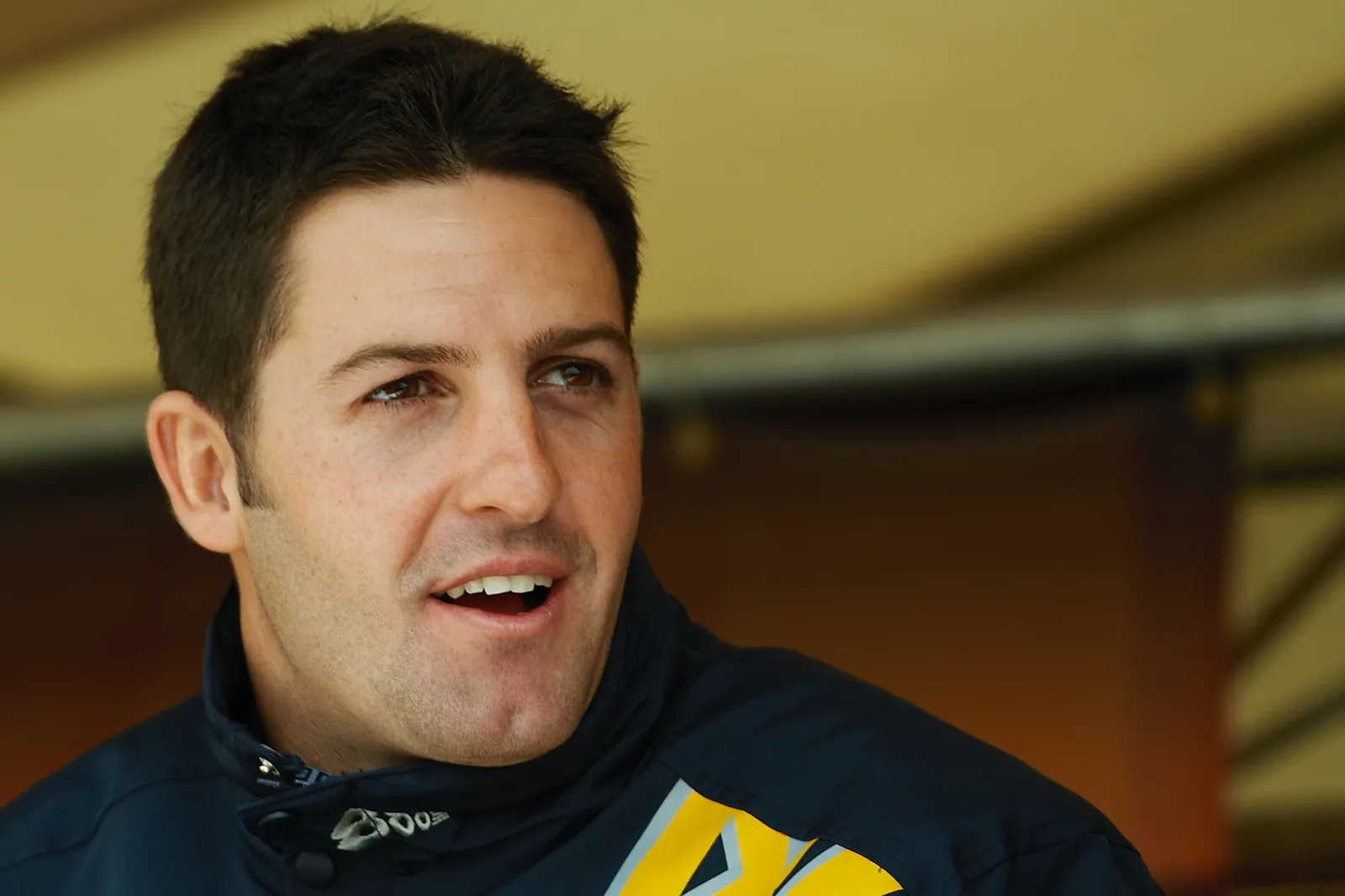
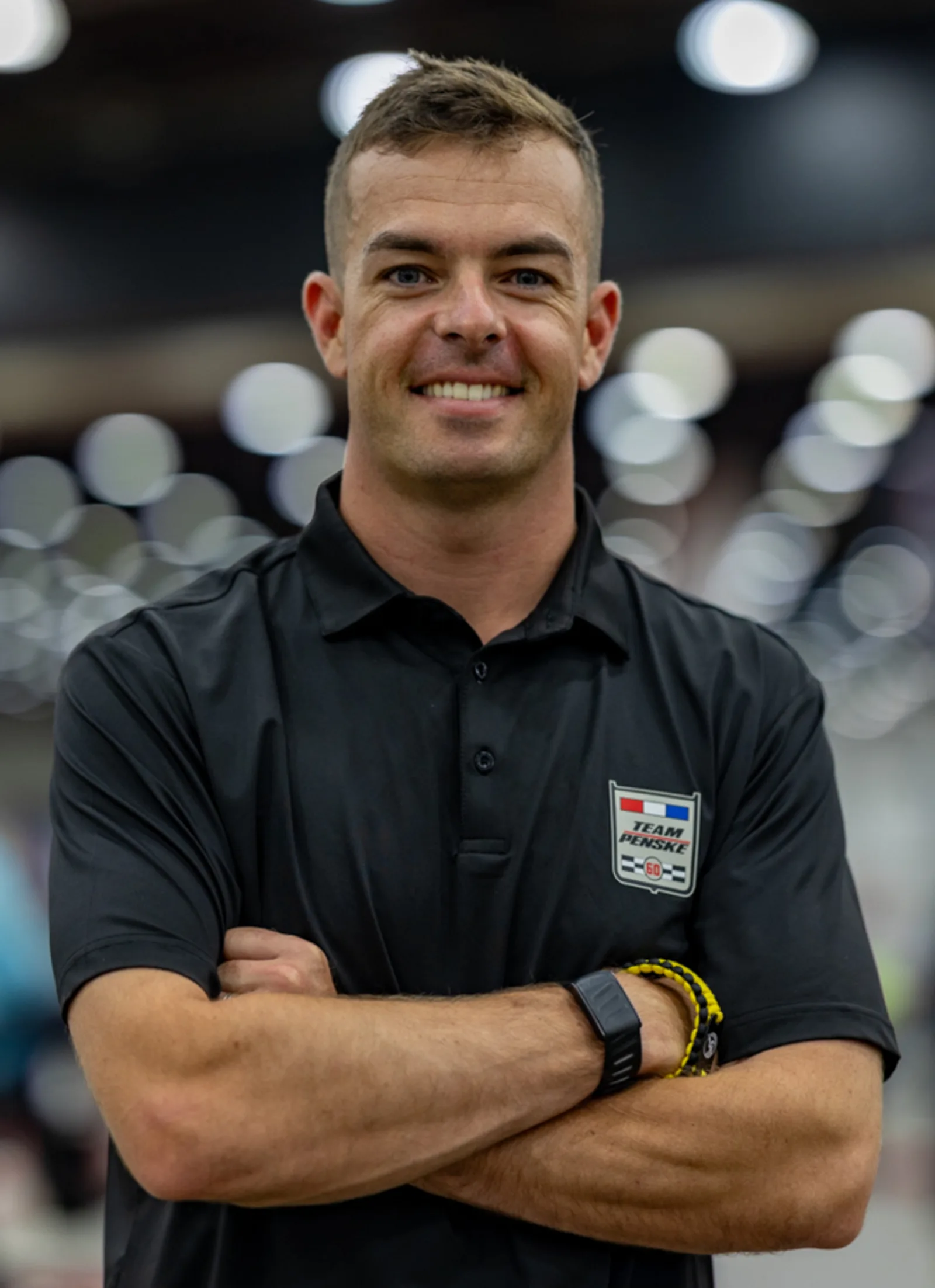
Scott McLaughlin is a New Zealand driver who won three consecutive Supercars titles and later became a full-time IndyCar racer for Team Penske. He won the Supercars title in 2018, 2019 and 2020, and his IndyCar wins include races at St. Petersburg, Mid-Ohio, Portland, Barber, Iowa, Milwaukee and Laguna Seca.
Few drivers have moved between touring cars and open-wheel racing as cleanly as McLaughlin. He spent his early Supercars years building toward three title wins, and he has spent the seasons since in IndyCar with the same Penske organisation.
Where did Scott McLaughlin grow up?
McLaughlin was born in Christchurch, New Zealand, on 10 June 1993. His family moved to Hamilton when he was three and then to Australia's Gold Coast when he was nine. He attended Saint Stephen's College, and the move to the Gold Coast in 2003 opened up Australian karting titles to him as well.
Karting came first. Karting began for him in 1999 at a track near Hamilton, New Zealand, and his first title followed in 2002. He kept racing in New Zealand after the move, so his early years were split between two countries.
Three straight Supercars titles came first, then an IndyCar rookie year that ended as Indianapolis 500 Rookie of the Year.
How did karting prepare him for cars?
A first karting title came in 2002. In 2008 he lined up for New Zealand's Junior squad at the Rotax Max Challenge grand finals. He started that final sixth, was involved in a first-lap incident and finished nineteenth. Karting gave him competitive experience before he moved into cars.
The step from karts to cars came through a scholarship that linked him with a V8 Supercar team in Australia.
How did McLaughlin break into V8 Supercars?
McLaughlin joined the Britek Motorsport scholarship in 2008 and attended the Bathurst 1000 with the team. After a short spell of work experience with Stone Brothers Racing in 2009, the team offered him a four-year deal beginning in 2010. His first V8 Supercar test followed that December.
The test took place on 17 December 2009 at Queensland Raceway, where he covered over seventy laps in one of the team's Ford BF Falcons. He was only a little over a second off the pace of the team's full-time drivers, Alex Davison and Shane van Gisbergen.
He missed the opening round of the 2010 Fujitsu V8 Supercar Series because he did not yet hold the required competition licence. Rather than that, he entered two Australian Mini Challenge rounds and a single Victorian Formula Ford Series round. He then made his debut in round two at Queensland Raceway, becoming the youngest driver ever to race a V8 Supercar.
He qualified seventh and finished ninth in the first race. In race two his clutch overheated at the start, he could not move, and Owen Kelly and Ryan Hansford hit his car, which ended his weekend. He ended the year twelfth overall, qualifying second at best at Sydney Olympic Park.
What did McLaughlin achieve in 2011 and 2012?
In 2011 McLaughlin scored his first race win at Queensland Raceway and finished fourth in the championship. In 2012 he switched to Matt Stone Racing, an SBR satellite outfit, and took the Dunlop V8 Supercar Series title by 73 points from Scott Pye.
That title fight was close. Chaz Mostert, Scott Pye, Nick Percat and McLaughlin were all in contention going into the final rounds, and the four became known as the Dunlop Series 'Class of 2012'. All four later won races in the Supercars Championship.
He also drove in the V8 SuperTourer Series that year. He won six races for MPC Motorsport in a Holden VE Commodore on the way to becoming the inaugural series champion.
When did McLaughlin make his Supercars debut?
McLaughlin made his Supercars Championship debut at the 2012 Sandown 500, sharing the car with Jonathon Webb at Tekno Autosports. The pair finished tenth at Sandown and sixth at Bathurst. Garry Rogers Motorsport then signed him as a full-time driver for 2013.
His first win came in the sixth race of 2013, making him the youngest driver to take a Supercars Championship race. He finished tenth in the standings that year.
The team then became Volvo Polestar Racing, and McLaughlin scored a podium on 1 March 2014 at the Clipsal 500 Adelaide. He finished fifth in the standings that year. In three seasons with the team he collected seventeen poles and eight wins, and his best championship finish was third in 2016.
When and how did McLaughlin join Team Penske?
The move to DJR Team Penske was announced in July 2016, and McLaughlin raced for the team from the 2017 Supercars season. He partnered Fabian Coulthard and took a record sixteen pole positions and eight race victories that year. Whincup finished ahead of him for the title, leaving him second.
The title was decided at Newcastle. McLaughlin started the final round strongly, but a chaotic second race brought three penalties, and they contributed to him narrowly missing the championship. Whincup took his seventh title in that final race.
How did McLaughlin win three straight Supercars titles?
McLaughlin won the Supercars Championship in 2018, 2019 and 2020, all with DJR Team Penske. The 2018 title came after a close battle with Shane van Gisbergen, the 2019 title was dominant, and the 2020 title came in a season shortened by COVID-19.
That year he won seven of 34 races, including the Melbourne and Phillip Island rounds and three more at Barbagallo, Hidden Valley and Ipswich. He finished third at Bathurst alongside Alexandre Premat, the Ford Falcon's final appearance on Mount Panorama. At Newcastle van Gisbergen was stripped of a win after a pit lane violation, and McLaughlin finished second in the last race to clinch the title.
The 2019 season was the strongest of his career. The Ford Mustang replaced the Falcon, and McLaughlin took eighteen wins, a record for most wins in a single season. He added fifteen poles, eighteen fastest laps and 22 podiums to that total, and he became the first driver to claim the Darwin Triple Crown.
On 13 October 2019 he won the Bathurst 1000 with Premat as co-driver. Two weeks later he suffered a 43g impact at the Gold Coast, the biggest crash of his career, and he had to drive a new car for the last two rounds. The title was settled with a round left at Sandown.
The 2020 season, shortened by COVID-19, gave him a third consecutive title, the last one DJR Team Penske would win. He scored thirteen wins, eight podium finishes and fifteen pole positions over the year.
Why did McLaughlin move to IndyCar?
McLaughlin wanted the challenge of open-wheel racing, a long-held goal of competing in the Indianapolis 500, and the chance to race against his childhood hero Scott Dixon. Team Penske had first considered a sports car role for him, but he pushed for an IndyCar seat instead.
Tim Cindric, the team president, was sceptical, since McLaughlin had not raced an open-wheel car since Formula Ford. McLaughlin changed that view by reworking his strength and conditioning and using private simulator time to show he could handle the Dallara DW12 during the 2019 Supercars season.
In January 2020 he tested a Penske IndyCar at Sebring International Raceway, and in February he ran his first oval laps at Texas Motor Speedway. A planned fourth Penske entry at the Indianapolis Grand Prix fell through because COVID-19 kept him from travelling to the United States.
On 17 September 2020 Penske confirmed that his IndyCar debut would come at St. Petersburg on 25 October. He signed a multi-year contract with the team the day before that race.
How did McLaughlin's 2021 IndyCar rookie season go?
In 2021 McLaughlin raced a full IndyCar schedule for the first time, mostly with PPG Paints as his sponsor. He averaged sixteenth in qualifying on road and street courses, but he took second at Texas and was named Indianapolis 500 Rookie of the Year after finishing twentieth at Indianapolis.
The car was the biggest adjustment. The DW12 depends on downforce rather than mechanical grip, and it is turbocharged, with temperature-sensitive tyres and carbon-ceramic brakes. He later said that managing tyre and brake temperatures in short road-course qualifying was his biggest struggle, and road and street courses made up 75% of the calendar.
Ovals suited him best. At Texas, where qualifying was cancelled by bad weather, he started fifteenth on championship points and finished second behind Scott Dixon, ahead of all his Penske teammates. He credited the oval qualifying format, which resembled Supercars, and oval tyres that came to temperature faster.
He also qualified sixth and finished eighth at the IMS road course, his first top-six qualifying on a road course. He did not finish in the top ten on a road course again until Portland.
For the 105th Indianapolis 500 he was mentored by four-time winner Rick Mears. He qualified seventeenth, the best Penske qualifier in what was the team's weakest 500 qualifying performance since 1995. A drive-through penalty for speeding in the pit lane on lap 116 dropped him to twentieth at the finish.
Of the three, McLaughlin alone raced a complete calendar, with Jimmie Johnson and Romain Grosjean as the other notable rookies. He finished ahead of Grosjean four times over the season.
What happened in IndyCar from 2022 to 2026?
McLaughlin became a championship contender in 2022, winning at St. Petersburg, Mid-Ohio and Portland. He finished fourth in the standings that year. In 2023 he won once, at Barber, and finished third, the best championship result of his IndyCar career so far.
The 2024 season started badly. He finished third at St. Petersburg, but the result was removed after the team's ECU software was found to have been illegally altered, allowing push to pass on restarts. He still won at Barber, qualified on pole for the 108th Indianapolis 500 and finished sixth there.
The 2024 season picked up on the ovals. At Iowa he won the first race of a double header, his first oval victory in IndyCar, and he followed it with the second race at Milwaukee, his third win of the year. That result lifted him into the championship's top five.
He crashed during the pace laps before the 2025 Indianapolis 500. So far in 2026 he has qualified on pole at St. Petersburg, Milwaukee 1 and Laguna Seca, and he won the race at Laguna Seca.
What does McLaughlin's career record look like?
| Season | Series | Team | Result or highlight |
|---|---|---|---|
| 2010 | V8 Supercars | Stone Brothers Racing | Twelfth; youngest driver to race a V8 Supercar |
| 2011 | V8 Supercars | Stone Brothers Racing | Fourth; first race win at Queensland Raceway |
| 2012 | Dunlop V8 Supercar Series | Matt Stone Racing | Champion by 73 points |
| 2013 | Supercars | Garry Rogers Motorsport | Tenth; youngest driver to win a Supercars race |
| 2014 | Supercars | Volvo Polestar Racing | Fifth in the standings |
| 2017 | Supercars | DJR Team Penske | Runner-up; sixteen poles, eight wins |
| 2018 | Supercars | DJR Team Penske | Champion; seven wins |
| 2019 | Supercars | DJR Team Penske | Champion; eighteen wins, fifteen poles, Bathurst 1000 winner |
| 2020 | Supercars | DJR Team Penske | Champion; thirteen wins, fifteen poles |
| 2021 | IndyCar | Team Penske | Rookie of the Year; twentieth at the Indianapolis 500 |
| 2022 | IndyCar | Team Penske | Fourth; three wins |
| 2023 | IndyCar | Team Penske | Third; one win at Barber |
| 2024 | IndyCar | Team Penske | Three wins; pole for the 108th Indianapolis 500 |
| 2026 (to date) | IndyCar | Team Penske | Pole at St. Petersburg, Milwaukee 1 and Laguna Seca; race win at Laguna Seca |
What is McLaughlin's legacy?
McLaughlin's legacy rests on three Supercars titles, a single-season record of eighteen wins in 2019 and a move to IndyCar that brought an Indianapolis 500 rookie award. He was also the youngest driver to win a Supercars race.
His IndyCar wins have come on ovals and on road and permanent circuits. That range shows how far he moved from the grip-based touring cars of his early career.