How a Buenos Aires formula team became an Indianapolis operation that builds drivers through Indy Pro 2000 and Indy NXT, then races in IndyCar.
Juncos Hollinger Racing grew from Ricardo Juncos's 1997 Argentine start-up into an Indianapolis operation. It races in IndyCar and has produced several development champions, plus a surprise 2019 Indianapolis 500 qualifier. Its base is in Indiana, the home of the race itself.
Known as JHR, this Argentine-American outfit competes in IndyCar and Indy NXT. It began in Argentina in 1997 under Ricardo Juncos and grew into an Indianapolis-based operation that builds young drivers and has surprised the field at the Indianapolis 500.
Who founded Juncos Hollinger Racing and where is it based?
Ricardo Juncos, a former Formula Renault driver, formed the team in 1997 in Argentina. After moving to the United States the operation settled in Indianapolis, Indiana, and took the Hollinger name in 2021 when Williams F1 shareholder Brad Hollinger became a partner in the team.
Juncos came to the sport through karting at the age of 14, and he later worked for several race teams while studying mechanical and electrical engineering. That grounding gave him an understanding of every part of the car, which became the foundation of the team's growth.
A karting start in Argentina became an Indianapolis IndyCar team that builds its own drivers, one ladder rung at a time.
From Argentina to Indiana, 1997 to 2008
Based in Buenos Aires, the team became a full-service formula racing operation in 1997. Between 1997 and 2003 it competed in the Formula Renault 1600 and Formula Renault 2000 championships, and also Argentina's national sports prototype series.
In 2003 the team moved to Miami, Florida, to run a karting operation. Its karting years brought 19 local, regional and national titles in the United States, which gave the business a strong base for the next step.
Operations moved north to Indiana in 2008, where the team grew into an open-wheel racing outfit. The move placed it at the heart of the American open-wheel scene, and the Indianapolis base has been its home ever since.
How did the team build its reputation in Star Mazda and Pro Mazda?
The team entered Star Mazda in 2009 and finished second in the drivers' standings with Peter Dempsey. In 2010 it won the title with Conor Daly, who took seven wins from thirteen races, and the Pro Mazda years that followed added further championships including the 2014 Winterfest title.
Star Mazda was a proving ground for drivers who wanted to move up. When Daly left for Indy Lights in 2011, Joao Victor Horto took his seat and finished fourth. Tatiana Calderon ended the season sixth, and her third place at Barber Motorsports Park made her the first woman to reach the podium in the series.
By 2012 the Star Mazda line-up included Connor De Phillippi, who won twice and finished fourth, and Diego Ferreira, who was named the series' Most Improved Driver. Ferreira then finished second in the 2013 Pro Mazda standings, trailing only Matthew Brabham.
In 2014 the team ran four full-time cars. Spencer Pigot won six of the fourteen races on his way to the title, and Kyle Kaiser and Jose Gutierrez took late wins at Sonoma. The Indy Pro 2000 era followed when Mazda left the series in 2019, and the team took the teams' championship that year.
Rasmus Lindh finished just 2 points behind champion Kyle Kirkwood in 2019, and Sting Ray Robb clinched the 2020 drivers title with two races remaining. Those results made the team a regular winner in the development ranks.
Indy NXT and the route to IndyCar
The team first tried Indy Lights in 2012, running one car for six races. In November 2014 it announced two full-time cars for 2015, with Pigot and Kaiser stepping up from Pro Mazda to drive them.
The 2014 Winterfest success mattered because it showed the team could win in a crowded field before its drivers had reached the top category.
Pigot began 2015 with five straight podiums and then won both races of a doubleheader at Barber Motorsports Park. He ended with six wins and nine podiums across 16 races to take the title, ahead of Jack Harvey and Ed Jones.
Kaiser's own title came in 2017, with three wins and eight podiums. It earned him a $1 million scholarship to race in the 2018 IndyCar Series, a prize that linked the development ladder directly to the top category.
The Indy NXT programme was paused on 13 February 2025 so the team could focus on IndyCar. Miguel Maria Garcia had signed for the No. 75 car only months earlier, and the pause cost him the seat.
When did Juncos first race in IndyCar?
The team's IndyCar story began in 2017, when Spencer Pigot was announced for the Indianapolis 500 debut. In 2019 Kyle Kaiser put the team's lone car into the field in the closing position, and the effort kept a two-time Formula One champion out of the race. Plans for a Speedway, Indiana, base had been laid out in 2015.
The first phase was short-lived in parts. The team sat out 2020 because of COVID-19 difficulties, and in 2021 it lent its chassis to Paretta Autosport, which ran it for Team Penske at the Indianapolis 500. Simona de Silvestro qualified in the last spot but retired during the race.
Investment from co-owner Brad Hollinger brought the team back for the last three races of 2021, starting at Portland. Callum Ilott, a 2020 Formula 2 runner-up and Ferrari test driver, joined for those rounds and finished 25th on debut after completing 77 of 110 laps.
The Juncos Technical Center and full-time racing
The Indiana base also meant the team could prepare for IndyCar in the same town as the sport's most famous race, a practical advantage that grew more useful as the programme developed.
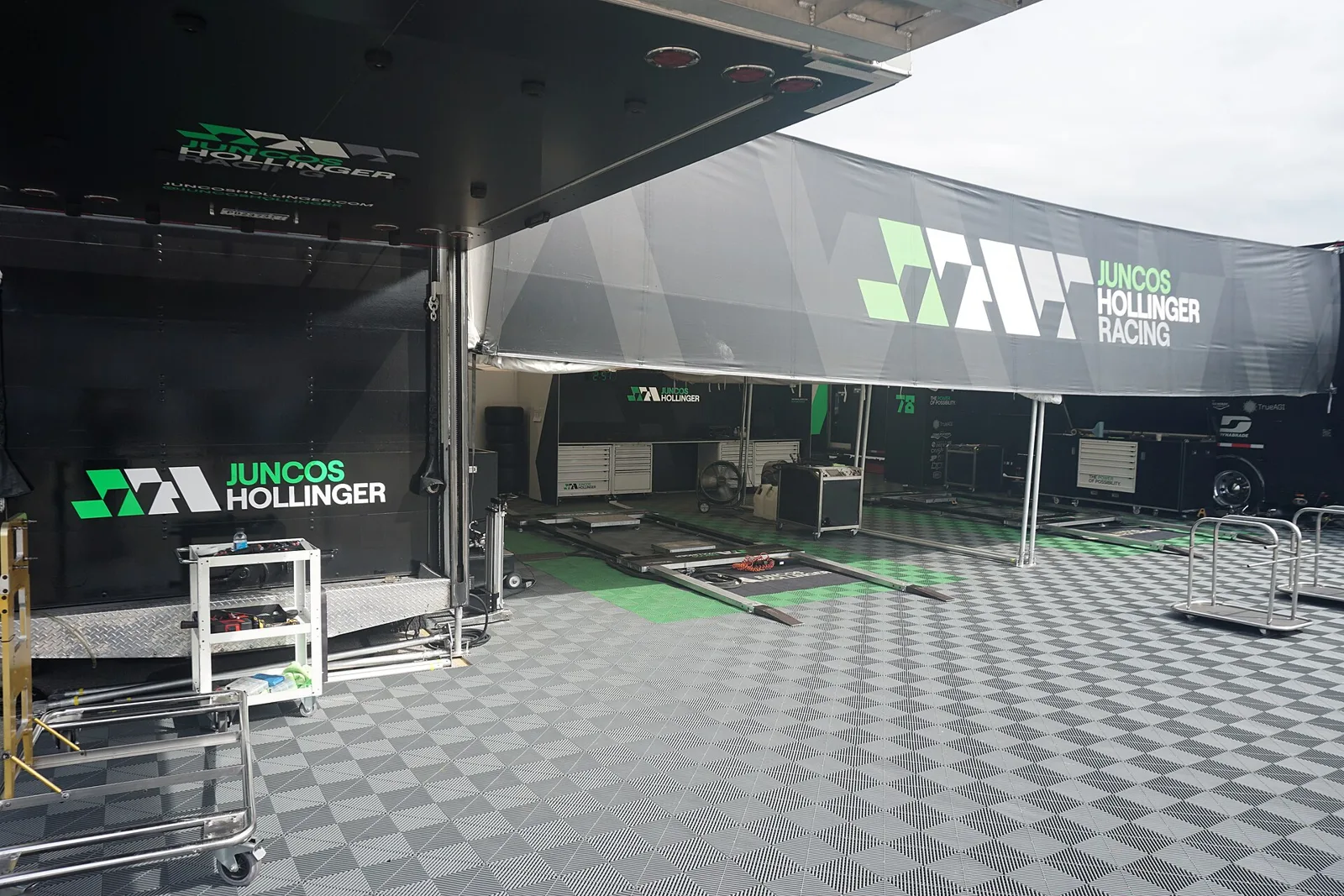
The team announced plans in May 2015 for a facility in Speedway, Indiana, the home of Indianapolis Motor Speedway. The Juncos Technical Center cost three million dollars and covers 41,000 square feet, giving the operation space to build and prepare its own cars.
The team returned full-time in 2022 after buying assets previously owned by Carlin. Ilott finished 20th in the championship that year, and in September 2022 the team confirmed a two-car entry for 2023.
In January 2023 Agustin Canapino became the team's other full-time driver, racing the No. 78 entry. The line-up of Ilott and Canapino gave the team two experienced drivers for the first time in its IndyCar history.
How did the Arrow McLaren partnership end?
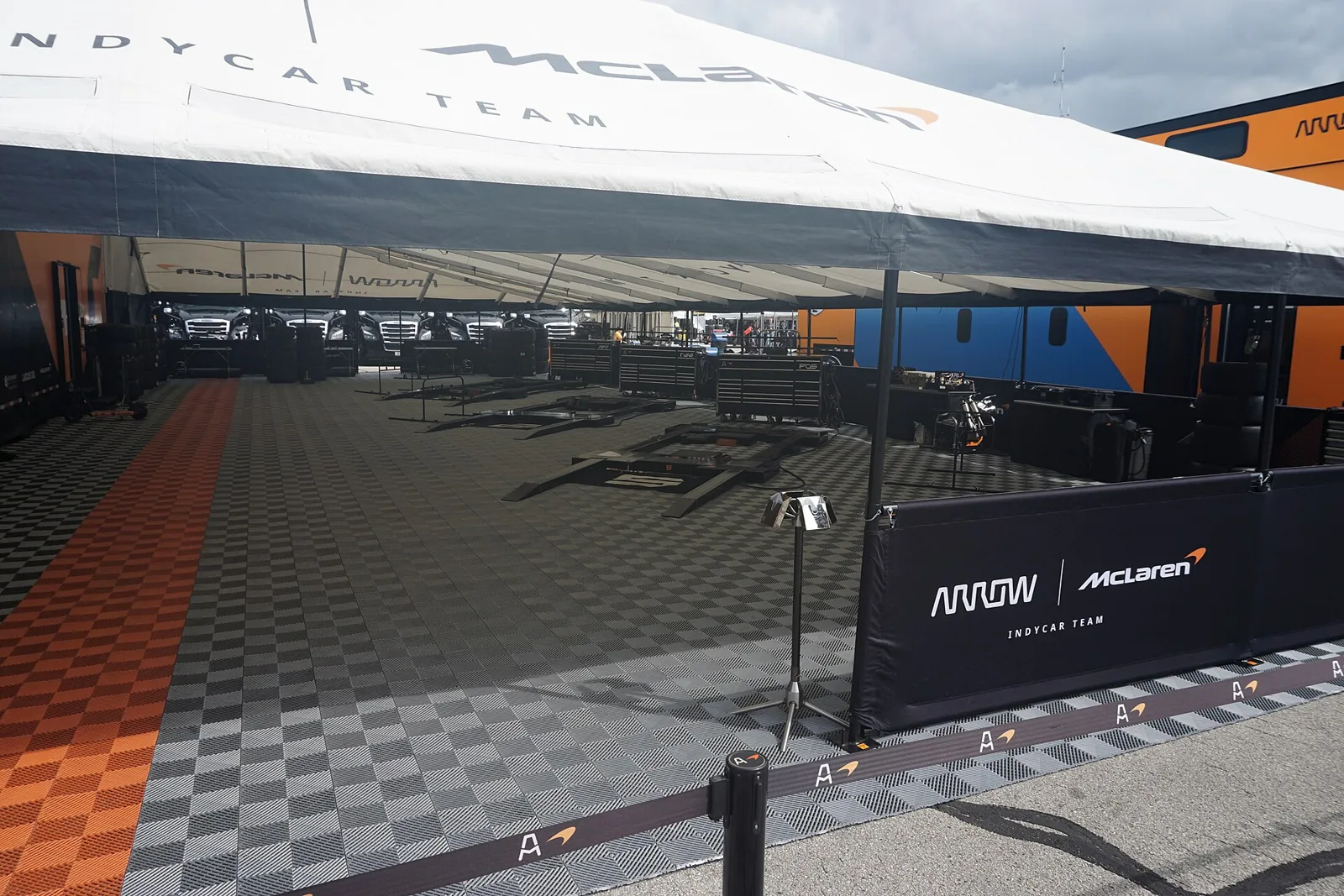
The alliance with Arrow McLaren was formed in October 2023. After an incident involving Canapino and Arrow McLaren's Theo Pourchaire at the 2024 Detroit Grand Prix, and the social media furore that followed, Arrow McLaren ended the technical partnership with immediate effect.
Earlier, Callum Ilott's departure in October 2023 had already changed the line-up. Romain Grosjean replaced him for 2024, while Canapino remained with the team until the events at Detroit led to his leave of absence.
The team's name also reflects its partnership model. Hollinger's role showed how one investor can bring a racing operation back into a series after a break, a lesson that matters across the sport.
Stability proved valuable across the team's history. Callum Ilott's run across 2021, 2022 and 2023 produced the team's strongest IndyCar campaigns of the period, and drivers who stayed for more than a season tended to deliver the best results.
Nolan Siegel took Canapino's place at Road America in 2024 and then moved to Arrow McLaren for 2025, with Sting Ray Robb taking his seat. The changes showed how fragile a technical partnership can be when outside events intervene.
Conor Daly and the first IndyCar podium
Conor Daly earned the team's first IndyCar podium in race one of the 2024 Milwaukee Mile 250s. He had stepped into the No. 78 for the final five races of the season, and his result helped the entry reach the Leaders' Circle.
The podium was a milestone for a team that had worked for years to reach that point. It also showed that drivers coming in late in a season could still deliver results, a lesson the team took into the years that followed.
Who drove for the team in IndyCar?
| Year | Driver | Notable moment |
|---|---|---|
| 2017 | Spencer Pigot | Indianapolis 500 debut for the team |
| 2019 | Kyle Kaiser | Qualified the only entry for the last spot in the Indianapolis 500 |
| 2021 | Callum Ilott | 25th on IndyCar debut |
| 2022 | Callum Ilott | 20th in the championship |
| 2023 | Agustin Canapino | Other full-time driver, in the No. 78 entry |
| 2024 | Conor Daly | First team IndyCar podium at Milwaukee |
| 2025 | Sting Ray Robb | Took over the seat after Nolan Siegel moved on |
| 2026 | Rinus VeeKay | 10th in the championship |
Several of them were promoted from the team's own development programmes, and the table shows the years each driver was linked with the operation.
The list shows how often the team has turned over its line-up. Each change gave a different driver the chance to define a season, and the team's better results have usually followed when a driver stayed for more than a single year.
What did the 2026 season show about VeeKay?
Rinus VeeKay joined in 2026 to drive the No. 76 and delivered the best season in the team's history. He set team records with 8 top-10 finishes and 4 top-5 finishes in a single season, a clear sign of consistency.
VeeKay also finished third in the opening race of the 2026 Snap-on IndyCar Weekend, giving the team its second-ever IndyCar podium. He finished 10th in the championship, the team's highest driver result, comfortably ahead of Ilott's 16th place in 2023.
What is the team's legacy?
Juncos Hollinger Racing has built a reputation as a development team, producing Indy Pro 2000 and Indy NXT champions and a steady line of IndyCar drivers. Its Indianapolis 500 qualification in 2019 remains one of the more memorable stories in the race's recent history.
Ricardo Juncos's path from karting in Argentina to a dedicated engineering facility in Indiana shows how the team grew step by step. Its titles in Indy Pro 2000 and Indy NXT are the clearest proof of that development model.
The team's future rests on its IndyCar results and its ability to keep developing talent. With VeeKay's record season as a benchmark, the operation now has a clear target for the years ahead.