A universal aerokit and the IR18 chassis, a sponsor exit, Honda's first engine title since 2005 and a season overshadowed by Robert Wickens's crash at Pocono.
The 2018 Verizon IndyCar Series, the 23rd season of the series, ran as the 107th official championship of American open-wheel racing. Dixon claimed his fifth title, Power won the 102nd Indianapolis 500, and Honda took the engine manufacturers' championship.
The 2018 IndyCar season opened a new technical era, with a universal aerokit and an all-new chassis arriving together. Scott Dixon won his fifth title, Will Power took the 102nd Indianapolis 500, and the year was overshadowed by the crash that ended Robert Wickens's season at Pocono. It was also the last year of Verizon as title sponsor.
What was the 2018 IndyCar Series?
It was the 23rd season of the series, and the 107th official championship in American open-wheel racing. Josef Newgarden entered as the defending national champion, and Takuma Sato was the defending Indianapolis 500 winner. Those two names framed a year of new equipment, new drivers and a new broadcast deal to come.
Honda won the engine manufacturers' championship for the first time since 2005. Dixon's fifth crown moved him into second place on the all-time list of United States open-wheel titles, behind A. J. Foyt, and he won three races during the season.
A universal aerokit and the IR18 chassis, Honda's first engine title since 2005, and Scott Dixon's fifth championship.
Why did the sponsor and broadcaster change?
Verizon Communications announced in October 2017 that it would leave its title sponsorship after the 2018 season, although it kept its vehicle sponsorship with Team Penske. In March 2018 NBC Sports announced that it would become the sole television rights-holder from 2019 through 2021, with eight races a season on NBC including the Indianapolis 500.
The change ended a split in which ABC and NBC Sports shared coverage. From 2019 one broadcaster would carry the series, and the 2018 season was the last to be shown by both networks. PFC also became the brake caliper supplier from the same season.
What changed in the cars?
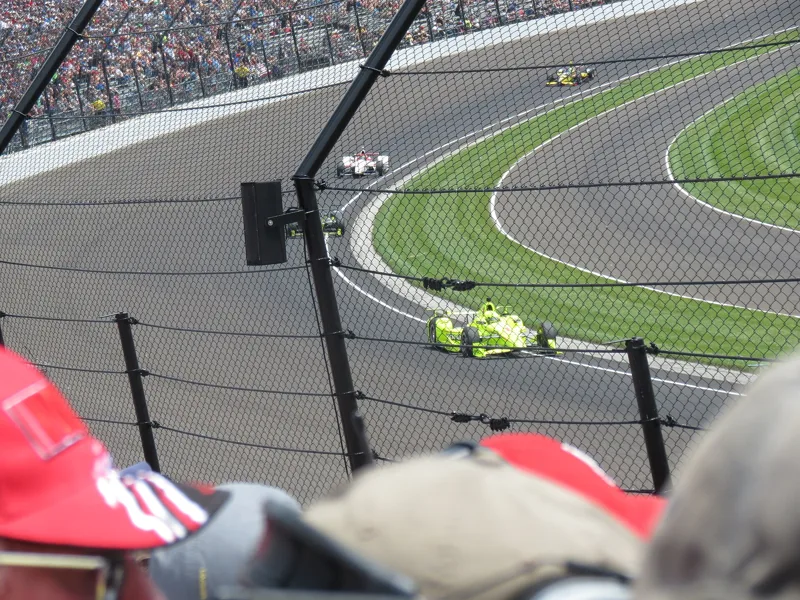
Every car ran a new universal bodywork, a second facelift of the Dallara DW12 called the IR18. Its roll hoop dropped the airbox, a layout last seen in the 1996 and 2007 eras, and the chassis was planned for use until 2027.
The cockpit gained F1-style LCD steering wheel dashes and a new Cosworth CCW Mk2 steering wheel with a configurable display unit. The Cosworth Sigma dash, in use since 2000, was retired, although some teams kept it for one more season to control costs.
The 2018 aero kits produced less downforce, so Firestone introduced new rain tyres for road and street courses. Driver protection was also under review. Scott Dixon tested a windscreen at ISM Raceway on February 8 as a possible alternative to the halo used in Formula One.
Which teams changed their line-ups?
Chip Ganassi Racing dropped to two cars for the first time since 2010, Team Penske ran three, and Carlin fielded two full-time Chevrolet-powered entries. Several smaller operations also changed shape, including Harding Racing and a renamed Michael Shank Racing.
Chip Ganassi kept Scott Dixon in the No. 9 car, and Ed Jones took the No. 10 car in place of Tony Kanaan. Helio Castroneves moved to Penske's sportscar team, although he returned for a one-off Indianapolis 500 with the outfit.
Michael Shank Racing became Meyer Shank Racing on April 6, after SiriusXM chief executive Jim Meyer joined as a co-owner. Harding Racing ran Gabby Chaves full-time, and Brian Barnhart became its president after leaving his race director post at IndyCar. Lazier Partners Racing missed the Indianapolis 500 for the first time since 2012, after crash damage to its only car at the 2017 race.
Harding Racing also signalled plans to run two cars as early as late 2018, naming Sonoma as a possible start. Patricio O'Ward and Colton Herta, the 2018 Indy Lights champion and runner-up, made their IndyCar debuts with Harding at the final round in Sonoma.
Who were the notable driver moves?
Robert Wickens switched from the German DTM to Schmidt Peterson Motorsports, Danica Patrick's final race came at Indianapolis, and Takuma Sato moved back to Rahal Letterman Lanigan Racing after one season at Andretti. Matheus Leist became the youngest IndyCar rookie since Marco Andretti in 2006.
Patrick returned to Indianapolis for the first time since 2011 with a third entry for Ed Carpenter Racing, carrying sponsorship from GoDaddy. She had spent six seasons with Stewart-Haas Racing in NASCAR before that.
Zach Veach made his first full season with Andretti, Spencer Pigot made his full-season debut with Ed Carpenter Racing, and Tony Kanaan left Chip Ganassi after four seasons for A. J. Foyt Enterprises. Kyle Kaiser, the 2017 Indy Lights champion, made four IndyCar starts with Juncos Racing. Juncos Racing also announced that Rene Binder, a Formula V8 3.5 driver, would contest four road and street races.
The Indianapolis 500 grid also drew several part-time entries. Sage Karam returned for Dreyer and Reinbold Racing, the third straight Indianapolis 500 for the pair, with WIX Filters as primary sponsor. Conor Daly raced for Thom Burns Racing with Air Force as primary sponsor, Pippa Mann ran a fourth car for Dale Coyne Racing with support from Donate Life Indiana, and J. R. Hildebrand joined Dreyer and Reinbold for its second entry. James Davison drove a car fielded by a group working with A. J. Foyt Enterprises.
Dale Coyne Racing used several drivers in its No. 19 car. Pietro Fittipaldi was signed for seven races, but he was injured in a crash while qualifying for the 6 Hours of Spa-Francorchamps. Zachary Claman DeMelo took over the car for both Indianapolis races and Texas, and Santino Ferrucci was signed for the two Detroit races.
How did Wickens's crash affect the season?
Robert Wickens suffered severe injuries in a crash at the ABC Supply 500 at Pocono, and he missed the rest of the season. Carlos Munoz replaced him at Portland and Sonoma, and Wickens was still named Rookie of the Year.
The crash left Wickens paralysed, and it overshadowed what had been a strong debut year in the series. Because of the damage, his No. 6 car was withdrawn for the next race at Gateway. Schmidt Peterson Motorsports announced Munoz as his replacement on August 29.
What schedule changes were made?
Phoenix International Raceway became ISM Raceway after a $100 million naming deal, and Watkins Glen left the calendar after only two races since its return in 2016. Portland International Raceway took its place, ending an eleven-year absence from the series.
The naming change followed an announcement on September 26, 2017. A race in Mexico City was explored for August, but the deal was not completed and the event never reached the calendar.
The Honda Indy Grand Prix of Alabama started on April 22, was stopped by rain on lap 22 and resumed on April 23.
How did the points system work?
The Indianapolis 500 and Sonoma paid double points. The number 1 qualifier earned one point at every race except the Indy 500, and an entrant who changed an engine before it reached its required distance lost ten points.
Manufacturer points came only from full-season entrants. The top two finishing entrants from each maker scored, and the winning manufacturer picked up five extra points at each race. At the Indianapolis 500 the fastest Saturday qualifier earned one point and the Sunday pole winner earned two, while an engine that reached 2,000 miles added bonus points equal to its finishing position.
Who won the titles and awards?
Scott Dixon won the drivers' title, his fifth, and Honda took the engine crown, its first since 2005. Robert Wickens was named Rookie of the Year, James Hinchcliffe won the most popular driver award, and Will Power won the 102nd Indianapolis 500.
| Honour | Winner | Note |
|---|---|---|
| Series champion | Scott Dixon | Fifth IndyCar title; three race wins |
| Indianapolis 500 | Will Power | 102nd running of the race |
| Engine manufacturers | Honda | First title since 2005 |
| Rookie of the Year | Robert Wickens | Missed the final three races |
| Most popular driver | James Hinchcliffe | Award for the most popular driver |
Dixon's fifth title placed him among the most successful drivers in the series' history, although A. J. Foyt still held the all-time record for United States open-wheel titles.