A race moved from May to August, run without spectators, and a Scott Dixon lead that ended on lap 172.
Takuma Sato won the 2020 Indianapolis 500 on 23 August 2020 for Rahal Letterman Lanigan Racing. The race was postponed from May, run without spectators, and covered 200 laps of the oval. Scott Dixon led 111 laps before Sato passed him on lap 172.
Takuma Sato won the 2020 Indianapolis 500 on 23 August, a race moved from May and run without spectators. He passed Scott Dixon for the lead on lap 172 and then held it, while a late crash meant the final four laps were run under caution.
Why was the 2020 Indianapolis 500 held in August?
The race had been set for 24 May but was postponed because of COVID-19 in Indiana. Organisers moved it to 23 August, the first running not held on or around Memorial Day. On 4 August the speedway announced that the race would run without spectators.
Other events fell away with it. The open test was cancelled along with two practice days, and the Freedom 100, the Pit Stop Challenge and the concerts were also dropped. Practice ran from 12 to 14 August, time trials from 15 to 16 August, and Carb Day had been set for 21 August.
Roger Penske had said in June that the race would go ahead with fans. On 21 July the attendance cap was cut to a quarter of capacity, with face coverings required, and the speedway then decided on no spectators at all, citing COVID-19 case trends in Marion County.
A race moved from May, run without fans, and won by Sato after a Dixon-led first half.
What changed at the speedway before the race?
Penske Entertainment, a subsidiary of the Penske Corporation owned by Roger Penske, bought the Indianapolis Motor Speedway, the IndyCar Series and IMS Productions. The purchase was announced on 3 November 2019 and finalised in January 2020. Penske stepped down as full-time race strategist to focus on the new roles.
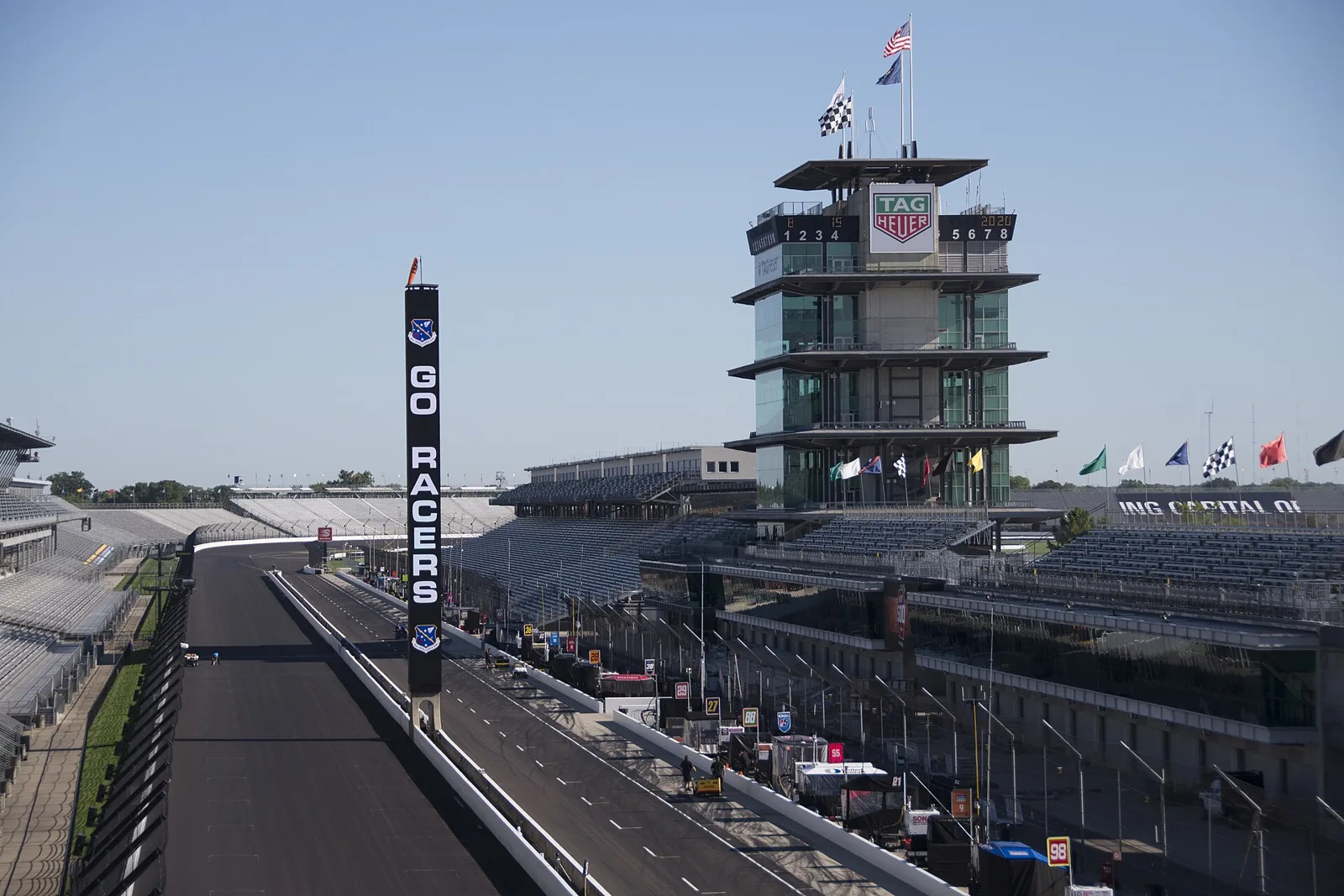
The new owners upgraded the spectator areas before the race. Thirty new video boards went up along the main straight grandstands, and a new 104-foot (32 m) video screen was added on the back of the Pagoda. Restrooms, concession stands and walkways were refurbished, and the victory lane podium gained a platform hoist to lift the winning car.
Gainbridge had become the presenting sponsor under a four-year deal announced on 31 January 2019, so 2020 was the second year of that agreement.
What is the aeroscreen and why did it matter in 2020?
The aeroscreen is a cockpit shield combined with a Halo, built by Red Bull Advanced Technologies and introduced for the 2020 IndyCar season. It deflects debris away from the driver's head. It had its first major test at Iowa on 17 July 2020.
During an aborted restart at Iowa, Colton Herta's car went airborne over the left-rear tyre of Rinus VeeKay's car. Herta's nose slid up the screen and over VeeKay's cockpit, and the aeroscreen was credited with saving VeeKay from apparent serious injury.
Drivers had reported stifling heat in the cockpit during the first two races of the season, because the screen limited airflow. A supplemental air duct was added at Iowa, and the aeroscreen attendant was allowed to hand a drink bottle to the driver.
Who entered the 2020 field?
The official entry list was published on 10 August with 33 car and driver combinations. All entries used Dallara IR12 chassis with Firestone tyres. Eight former Indianapolis 500 winners were included, the most in a field since ten in 1992.
Helio Castroneves made his 20th consecutive start, the ninth driver in the race's history to reach 20. It was also his last Indianapolis 500 for Team Penske. Fernando Alonso made his third attempt, in a third Arrow McLaren SP entry, while Oliver Askew, the defending Indy Lights champion, signed with the same team.
Byrd Racing could not field its own car, but a patchwork deal fielded one for James Davison. DragonSpeed became the 33rd entry after finding funding the weekend before practice. For the first time since 1999 there was no female driver in the starting lineup.
How did qualifying end with Marco Andretti on pole?
Marco Andretti took pole for Andretti Autosport, the first Indianapolis pole for the team since 2005. It came 33 years after his grandfather, Mario Andretti, took his third pole in 1987. Marco is the son of Michael Andretti.
Andretti finished 13th in the race. The previous year's winner, Simon Pagenaud of Team Penske, finished 22nd. The Last Row Shootout was extended to a 75-minute session, but only 33 cars entered, so no shootout was held.
Boost was turned up for Fast Friday and the time trials. Engines were permitted 150 kPa of turbocharger boost, adding 45 horsepower (34 kW) for those sessions.
How did the race unfold?
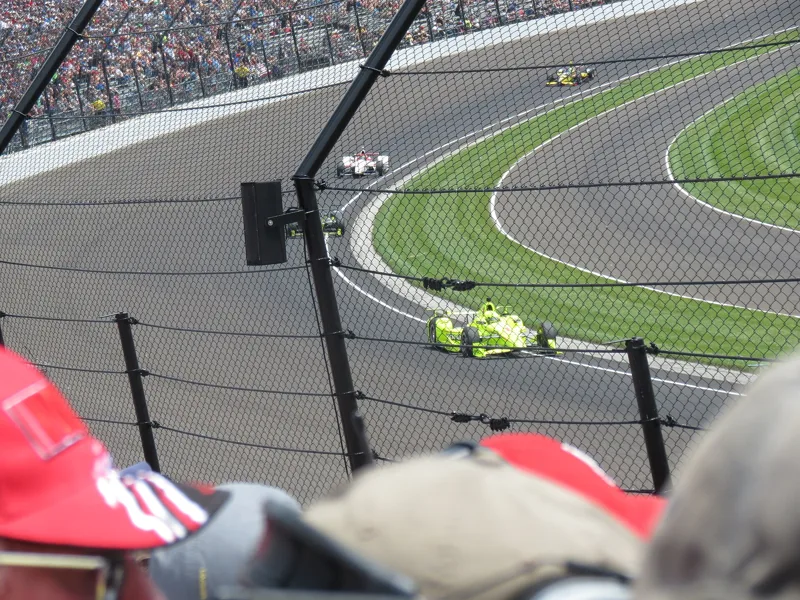
Scott Dixon led 111 laps from the middle of the front row, at one point by as many as seven seconds. Takuma Sato passed him on lap 172 after the final round of pit stops and took the lead on lap 186. A crash on lap 196 finished the race under caution.
Dixon's margin had been large in the first half, but the stops reshuffled the order. Once every car had cycled through its final stop, Sato was in command, and he stayed there to the end.
Spencer Pigot crashed heavily at the pit lane attenuator on lap 196. There was not enough time to red-flag the race for cleanup, so the last four laps were run under caution, and Sato took the chequered flag.
Who were the key runners?
| Entry | Driver | Note |
|---|---|---|
| Winner | Takuma Sato | Rahal Letterman Lanigan Racing, second Indianapolis 500 win |
| Pole | Marco Andretti | First Indianapolis pole for Andretti Autosport since 2005 |
| Most laps led | Scott Dixon | 111 laps led from the middle of the front row |
| Thirteenth | Marco Andretti | Finished 13th after taking pole |
| Twenty-second | Simon Pagenaud | Previous year's winner |
What did rookies and veterans do before the race?
Rookie orientation ran on 12 August from 1 pm to 3 pm, at 84 F (29 C) under partly cloudy skies. Five rookies took part alongside seven veterans, including Helio Castroneves and Fernando Alonso. The rookie test had three phases of ten laps each, the first two at 210-215 mph (338-346 km/h) and the third above 215 mph (346 km/h).
The refresher test for veterans consisted of only the second and third phases. Earlier in February an oval test at Texas had put Oliver Askew, Alex Palou, Rinus VeeKay and Scott McLaughlin on high-speed ovals, with five hours of track time available.
How did the aeroscreen first get tested?
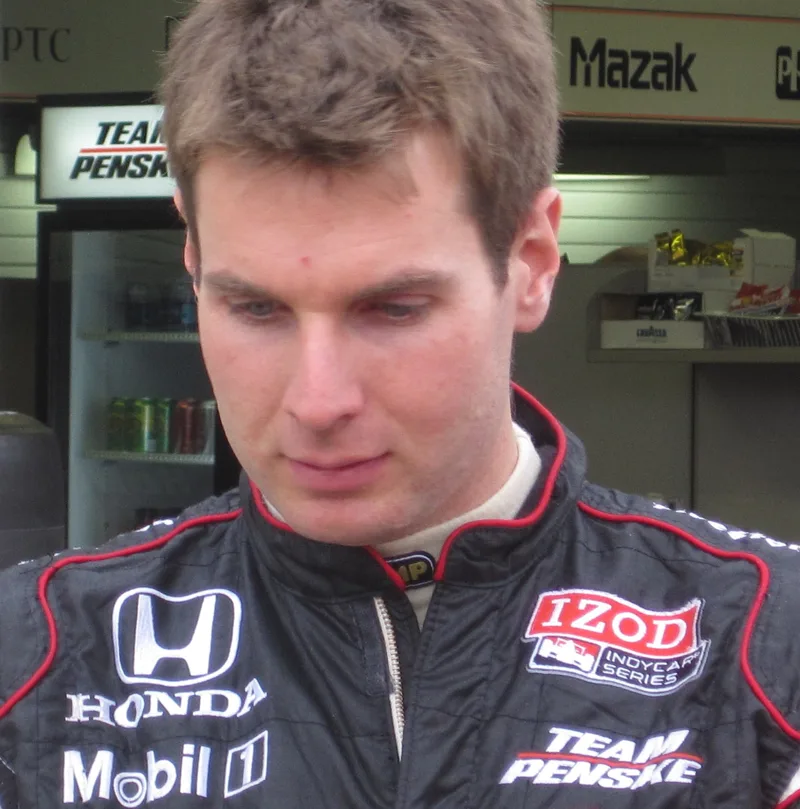
The aeroscreen had its first official evaluation on 2 October 2019 at Indianapolis, when two teams ran it. Scott Dixon and Will Power covered more than 600 miles (1,000 km) of laps between them, and the test produced mostly positive results before the device was set for the 2020 season.
Simon Pagenaud and Alexander Rossi also took demonstration laps in the new screens for an NBC special in May. None of those laps were run at racing speed.
The race was the fourth of six oval races that season, and the second superspeedway event after Texas. It was also the first superspeedway race held before the Indianapolis 500 since 2010, when Kansas hosted one.
What did the result mean for Honda and the owners?
Takuma Sato won for Rahal Letterman Lanigan Racing, his second Indianapolis 500 win after 2017. The result gave owners Bobby Rahal and David Letterman their second Indianapolis 500 win, after 2004. It was also Honda's first Indianapolis 500 win of the Reiwa era.
For Rahal it was his third overall victory in the event, counting the 1986 win he took as a driver.
Why did the start time move back?
The Speedway moved the start from 12:45 pm to 2:30 pm EDT because of summer heat. It was the latest scheduled start in the race's history, and it let the Open Championship finish on NBC the same day.
The race had started at 11 am local time for many years after World War II. A start at 12 pm EDT was used from 2011, and NBC's contract moved it to 12:45 pm in 2019. NASCAR ran a Dover doubleheader on the same day on NBCSN.
What rules applied to the 2020 pit crews?
Teams were allowed seven crew members over the wall, one more than the six used from 1988 to 2019. The seventh member had one job, to clean or remove tear-offs from the new aeroscreen. The rest of the crew covered four tyre changers, one fueler, one pneumatic jack operator and the aeroscreen attendant.
Any unapproved work during a red flag now brought immediate disqualification, under Rule 7.1.4.2.4. Previously cars had faced only a two-lap penalty for it. Grid penalties for unapproved engine changes were reinstated, but none were served at the 500.
How did the schedule change through 2020?
The schedule moved again on 13 March, when IndyCar cancelled the first four races of the season and the open test scheduled for 30 April. The GMR Grand Prix was held on 4 July, and the Indy Lights season was cancelled, so the Freedom 100 did not run.
In late June spectators had initially been allowed in at half capacity. The cap was then cut to a quarter of capacity, and the speedway banned spectators altogether. The Last Row Shootout was cancelled on 7 August because the final entry list had not exceeded 33 cars.
What happened with the festivities and ceremonies?
The 500 Festival Mini-Marathon, Legends Day, the parade and the Last Row Party were all cancelled. The 2020 Hall of Fame class of Janet Guthrie and Dale Earnhardt Sr. was inducted alongside the 2021 class, and the traditional balloon release was dropped from the pre-race programme.
The Singing Surgeons, Dr Elvis Francois and Dr William Robinson, sang The Star-Spangled Banner, and Jim Cornelison performed Back Home Again in Indiana for a fourth year.