From Columbus racing mechanic to First World War fighter ace, car maker, Indianapolis Motor Speedway owner and head of Eastern Air Lines.
A First World War ace with 26 aerial victories and a Medal of Honor, Rickenbacker also raced cars in the 1910s and bought the Indianapolis Motor Speedway in 1927. He led Eastern Air Lines for decades, and he was born in Columbus, Ohio in 1890.
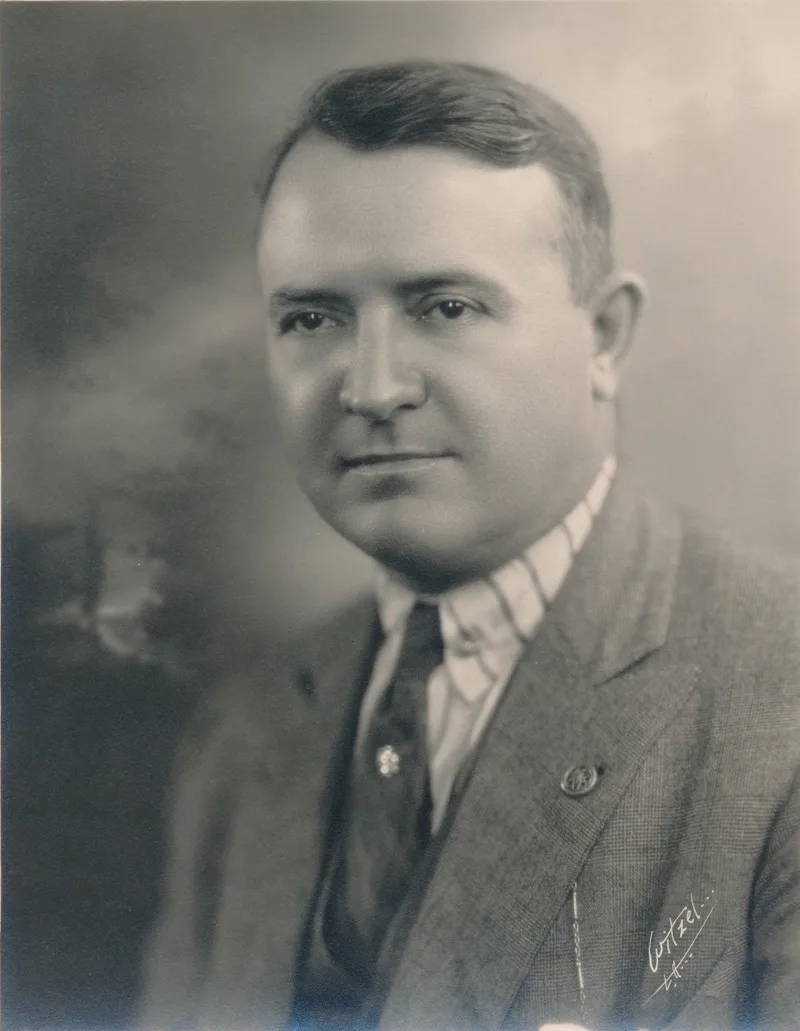
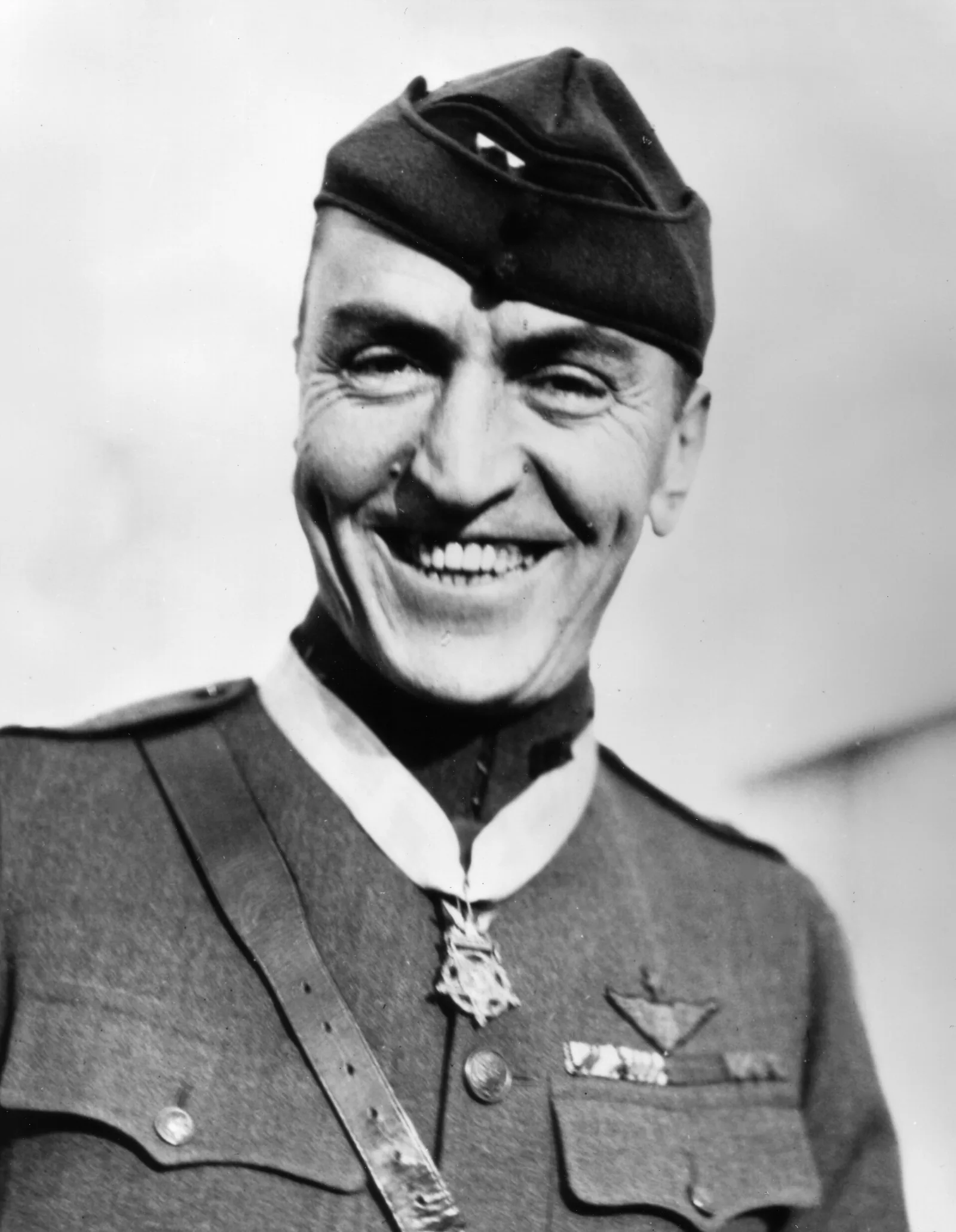
Eddie Rickenbacker was an American fighter pilot in the First World War and a Medal of Honor recipient, who finished the war with 26 aerial victories. He was also a racing driver, a car designer and a long-time head of Eastern Air Lines, a career that spanned motorsport, aviation and business.
Who was Eddie Rickenbacker?
Rickenbacker was born Edward Rickenbacher on 8 October 1890 in Columbus, Ohio, the third of eight children born to German-speaking Swiss immigrants. His early life was shaped by family hardship and a fascination with machines. He later changed the spelling of his surname and adopted the middle name Vernon.
He was the most successful and most decorated United States flying ace of the First World War, and his record spanned several careers. He died at the age of 82 in Zurich on 23 July 1973, leaving a record that ran from the racing circuits of the 1910s to the airline boardrooms of the 1930s and 1940s. He is remembered as a pilot, a driver and an executive, each in a different field.
Race mechanic, fighter ace, car maker and airline chief: a life that moved from the Indianapolis track to the skies over France and the Pacific.
How did Rickenbacker start in motor racing?
Rickenbacker left school in seventh grade to help support his family after his father's death in 1904, which followed an injury in a brawl. He worked at the Oscar Lear Automobile Company and took an engineering course from the International Correspondence School in 1905.
His mentor, chief engineer Lee Frayer, took him to New York in 1906 as his riding mechanic for the Vanderbilt Cup. Their engine overheated after two practice runs, and they failed to reach the starting line for qualifying.
Harvey S. Firestone hired Rickenbacker at the age of sixteen and sent him on special assignments. In Omaha he later earned $125 per week as the manager of the Upper Midwest agency, which covered sales, distribution and maintenance across four states.
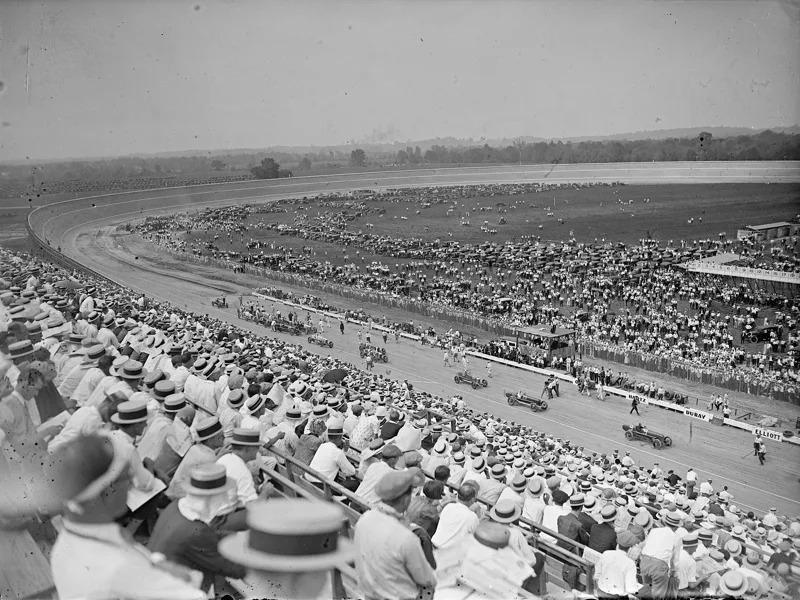
He first raced to promote his company's car, and he went on to win most of the dirt-track races he entered that summer. His first big event was the first Indianapolis 500, where he replaced Frayer in the middle of the race and helped his former boss finish thirteenth.
Why was Rickenbacker barred from racing?
In October 1912 the American Automobile Association cracked down on drivers who ignored safety rules, and Rickenbacker was barred from the track for twelve months. He spent the year working in the Duesenberg workshop in Des Moines, where he worked sixteen-hour days for $3 a day.
His return to racing was made possible by a dispensation that let him compete again, and he kept his reinstatement for the rest of the season. He later won the Fourth of July race at Sioux City, a result that helped the Duesenberg team keep going.
Newspapers were soon describing him as Fast Eddie. The top-ranked Peugeot team tempted him away from Duesenberg in 1915, but a couple of poor outings led him to switch to Maxwell, a move he later called the major mistake of his racing career.
He still finished fifth among all racers in 1915, with three victories. That season and the next he ran with the Presto-Lite team, backed by Carl Fisher and Fred Allison, and he finished third in the 1915-16 standings with a win at Los Angeles.
Did Rickenbacker's British trip change his path?
Yes. He signed with the British Sunbeam team for the next season and sailed to England to work on a new race car. On arrival at Liverpool he was briefly detained by Metropolitan Police officers, after a newspaper report had wrongly named him as a disowned Prussian baron.
Amid the First World War, the officers suspected him of being a German spy. He was released and worked at the Sunbeam shop in Wolverhampton. In 1917, to anglicise his name, he officially changed the spelling from Rickenbacher to Rickenbacker.
How did Rickenbacker become a fighter pilot?
Rickenbacker first offered his services to the military in 1917, when he suggested an aero squadron of race drivers and mechanics. The military did not take up the idea, but in late May 1917 he sailed to England with General John J. Pershing.
He enlisted in the United States infantry and was made a Sergeant First Class. He drove Army officers around France, then took a chance encounter with Captain James Miller that led to a role at the flight school at Issoudun.
He received five weeks of training, or 25 hours in the air, in September 1917. He then trained with Major Raoul Lufbery at Villeneuve-les-Vertus, and the other fliers came to know him as Rick.
Rickenbacker joined the 94th Aero Squadron, known as the Hat-in-the-Ring Gang, which had chosen an Uncle Sam stovepipe hat as its emblem.
How many aerial victories did Rickenbacker claim?
Rickenbacker claimed 26 aircraft officially, the most of any United States pilot in the war. His first sortie came on 13 April 1918 with Reed Chambers, and his first enemy aircraft fell on 29 April. His fifth victory on 28 May made him an ace.
He claimed his sixth on 30 May 1918, but a fever and an ear infection then grounded him for much of the Chateau-Thierry campaign. In hospital he decided he needed more self-discipline and less impetuosity as a pilot.
He returned in time for the St Mihiel offensive, which began on 12 September 1918. By then the squadron had converted to the Spad XIII, which suited his attacking style, and he added more victories within days.
He had brought down fifteen aircraft in the final six weeks of the war, and he had flown 300 combat hours, more than any other pilot in the service. The 94th had the highest number of air victories of the American squadrons by the end of the war.
How did Rickenbacker lead the 94th Squadron?
Major Harold Hartney chose Rickenbacker as commander of the 94th after a sluggish summer, passing over several captains. Rickenbacker set out to turn the men into a team, reminding the mechanics that he was one of them and stressing the importance of their work.
He promoted a principle of calculated caution. Pilots were not to attack without at least a fifty-fifty chance of success, and they were to break off any hopeless engagement. He flew more patrols than most, while keeping the squadron focused on the mission.
He received the rank of captain in September 1918. When the Armistice came, he flew over No Man's Land to watch the ceasefire at 11:00 a.m. on 11 November 1918, and he later described the trenches erupting as the men threw their helmets into the air.
What honours did Rickenbacker's war service bring?
Rickenbacker received the Distinguished Service Cross a record eight times. One of these awards was replaced by the Medal of Honor on 6 November 1930, which recognised his actions near Billy, France, during the war. The eight citations reflected his repeated actions in the air.
He also received the Croix de Guerre and the Legion of Honor from France. Richard Bong's forty victories in the Second World War later surpassed his American record of 26.
His return to the United States was celebrated with 600 guests at the Waldorf-Astoria. He turned down several endorsement offers and a film role, and signed a book deal worth $25,000 for his memoir, Fighting the Flying Circus. The celebrations and the book deal gave him a national platform from which to build his later businesses.
What was the Rickenbacker Motor Company?
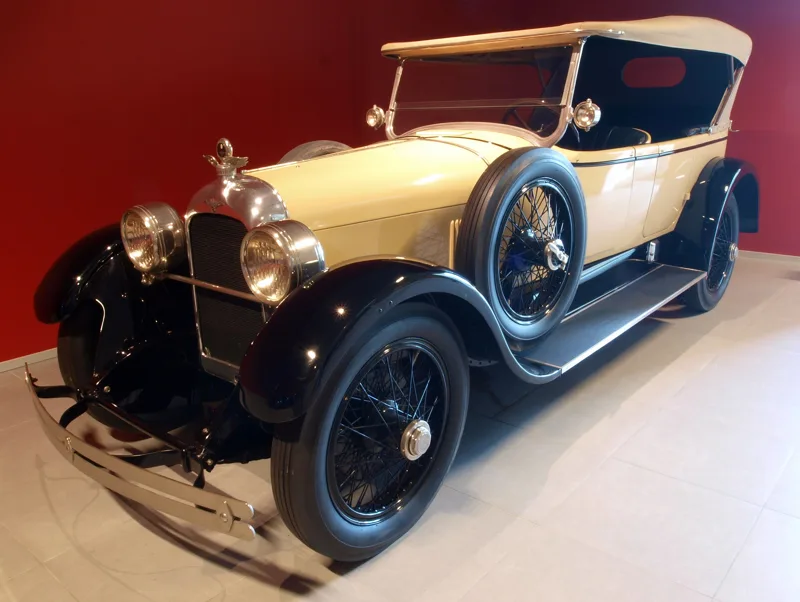
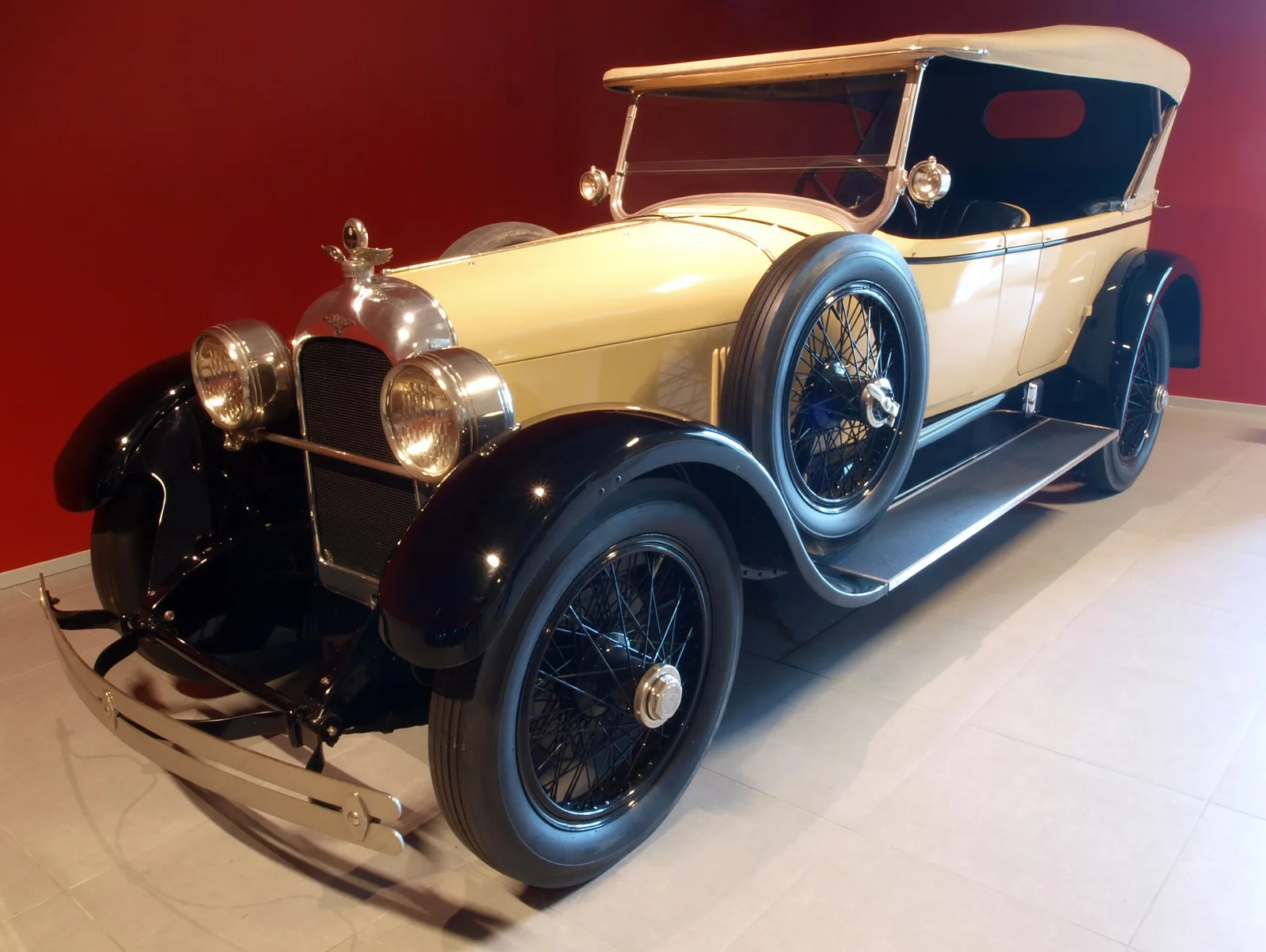
Rickenbacker Motor Company was founded in October 1919, when Rickenbacker accepted an offer from Byron F. Everitt to develop a new car. He designed the car himself and tested it for 100,000 miles before it was unveiled at the New York Auto Show in 1922.
The company marketed its cars as high-quality mid-priced vehicles, selling for $1,500 to $2,000. His most significant innovation was a tandem flywheel construction at the rear of the crankshaft, which reduced vibration.
In mid-1923 he introduced four-wheel brakes, which he had used on the race track. The Model 8 Rickenbacker was the pace car of the 1925 Indianapolis 500, but the company declined as Rickenbacker turned his attention to aviation.
The company went bankrupt in November 1927, and as a founder he was responsible for $250,000 of debt. The failure was one of the most public setbacks of his business career.
How did Rickenbacker run the Indianapolis Motor Speedway?
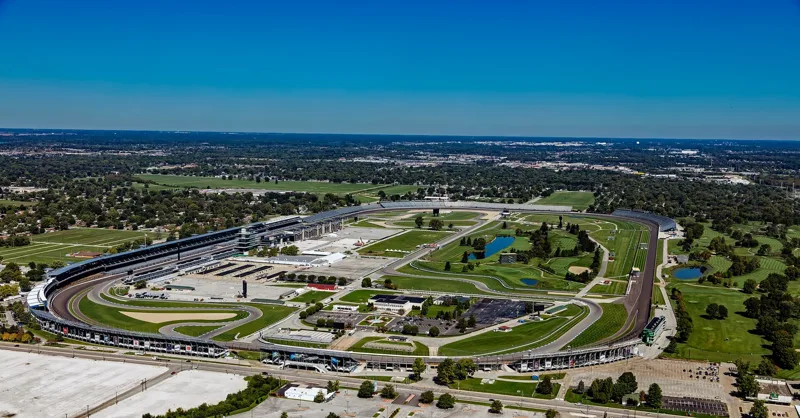
On 1 November 1927 Rickenbacker bought the Indianapolis Motor Speedway from Carl Fisher for $700,000. He drove the speedway's pace car for several years and oversaw many improvements to the facility. The purchase came from Carl Fisher, who had backed his racing team years before.
He closed the Speedway after a final 500-mile race in 1941 to conserve fuel, rubber and other resources during the Second World War. In 1945 he sold the racetrack to Anton Hulman Jr. The track was therefore a central part of his business life for more than a decade.
What was Rickenbacker's role in airlines between the wars?
Rickenbacker's aviation ventures followed the car business. Florida Airways, which he had started in 1926 with Reed Chambers, was out of business within a year after the 1926 hurricane, the decline of the Florida real estate boom and a failed airport promise.
He later steered Eastern Air Transport and Florida Airways into Eastern Air Lines, and in April 1938 he bought the company for $3.5 million after learning that General Motors was considering selling it.
Under his leadership Eastern grew from a small operator into a major airline. He negotiated for air mail routes, bought larger airliners and worked with pioneers such as Donald W. Douglas on new aircraft.
He was also an outspoken critic of Roosevelt's New Deal policies in 1934, and when inexperienced Army pilots died while hauling mail, he called the situation legalized murder. The criticism led NBC to stop broadcasting his views on the administration.
What did Rickenbacker publish outside aviation?
Rickenbacker wrote for the comics as well as the air. From 1935 to 1940 he scripted the Ace Drummond Sunday strip for King Features Syndicate, drawn by Clayton Knight, and the strip was adapted into a film serial, a radio programme and a Big Little Book.
Knight and Rickenbacker also created a second Sunday strip, The Hall of Fame of the Air, which featured the aircraft and battles of famous aviators. It too became a Big Little Book.
How did Rickenbacker survive at sea in 1942?
In October 1942 Rickenbacker was sent on a tour of Pacific air bases, with a secret message for General Douglas MacArthur. Faulty navigation equipment took the B-17D far off course on its way to a refuelling stop at Canton Island, and the pilot had to ditch the aircraft when it ran out of fuel.
For 24 days he drifted in life rafts with the surviving crew, rationing food that ran out early. A tern landed on his head on the eighth day, and it became a meal and fishing bait. The men were rescued on 13 November 1942 in the Ellice Islands. Rickenbacker himself had lost 40 pounds in the ordeal.
Rickenbacker described the ordeal in Seven Came Through, published in 1943. He completed his assignment after resting and delivered the message to MacArthur.
What did Rickenbacker do for the war effort after the ditching?
In April 1943 Rickenbacker began a fact-finding mission to the Soviet Union and other theatres of the war, with help from Stimson and the War Department. He travelled on an aircraft provided by General Henry H. Arnold, and he reported unfavourably on the Hump airlift.
He was awarded the Medal for Merit for his civilian service during the war. His mission gave him a close view of several Allied operations, and he later sat down with Winston Churchill to talk about what he had seen.
What happened to Rickenbacker's career after the war?
Eastern was the most profitable airline in the postwar era, but its fortunes declined in the late 1950s. Rickenbacker was forced out as CEO on 1 October 1959, and he resigned as chairman on 31 December 1963, at the age of 73.
Earlier, on 26 February 1941, he had been a passenger on Eastern Flight 21, a Douglas DC-3 that crashed outside Atlanta. He survived with a fractured skull and other severe injuries, and he spent ten days critical at Piedmont Hospital in Atlanta.
How did Rickenbacker die?
Rickenbacker died at the age of 82 in Zurich in July 1973, where he had gone seeking treatment for his wife's failing vision. He contracted pneumonia while there, and he died on 23 July 1973. His memorial service and burial took place in the United States, where his life's work was remembered.
He was buried at Green Lawn Cemetery in Columbus, Ohio. At his death he was the last surviving Medal of Honor recipient from the Army Air Service.
How do the main chapters of his life compare?
| Period | Role | Milestone |
|---|---|---|
| 1906 | Racing mechanic | Vanderbilt Cup, engine overheated before qualifying |
| 1915 | Racing driver | Fifth among all racers, with three victories |
| 1917 | Army | Sergeant First Class, then Issoudun training |
| 1918 | Fighter pilot | Fifth victory on 28 May; ace |
| 1918 | 94th Aero Squadron | Commander, with 300 combat hours |
| 1919 | Car maker | Rickenbacker Motor Company founded |
| 1927 | Speedway owner | Purchased the Indianapolis Motor Speedway for $700,000 |
| 1938 | Airline executive | Bought Eastern Air Lines for $3.5 million |
| 1942 | Passenger and envoy | 24 days adrift after a B-17D ditched |
| 1959 | Airline executive | Forced out as CEO of Eastern |