Eighty-two of 123 AAA championship races from 1920 to 1931 ran on wood. How the boards, the AAA Contest Board and the United States Auto Club built American racing.
Board track racing was American racing on wooden oval tracks in the 1910s and 1920s. The AAA Contest Board sanctioned championship racing from 1904 to 1955, and after AAA withdrew, the United States Auto Club took over, running the Indianapolis 500 from 1956 to 1997.
Between the start of 1920 and the end of 1931, the American Automobile Association sanctioned 123 national championship races on 24 different tracks, and 82 of them were run on wooden surfaces. For a decade, the most important cars in the United States raced round planked bowls at speeds that sometimes beat 100 mph, watched by crowds as big as those at Indianapolis. Then the boards rotted, the sport moved on, and two organisations, the AAA Contest Board and later the United States Auto Club, decided how American racing would be run.
Board track racing explains where oval racing in America got its steep banking, its wide tracks and its giant grandstands. The AAA Contest Board and USAC explain who wrote the rules. Together they trace a line from a plank velodrome in Los Angeles to the modern Indianapolis 500.
What was board track racing?
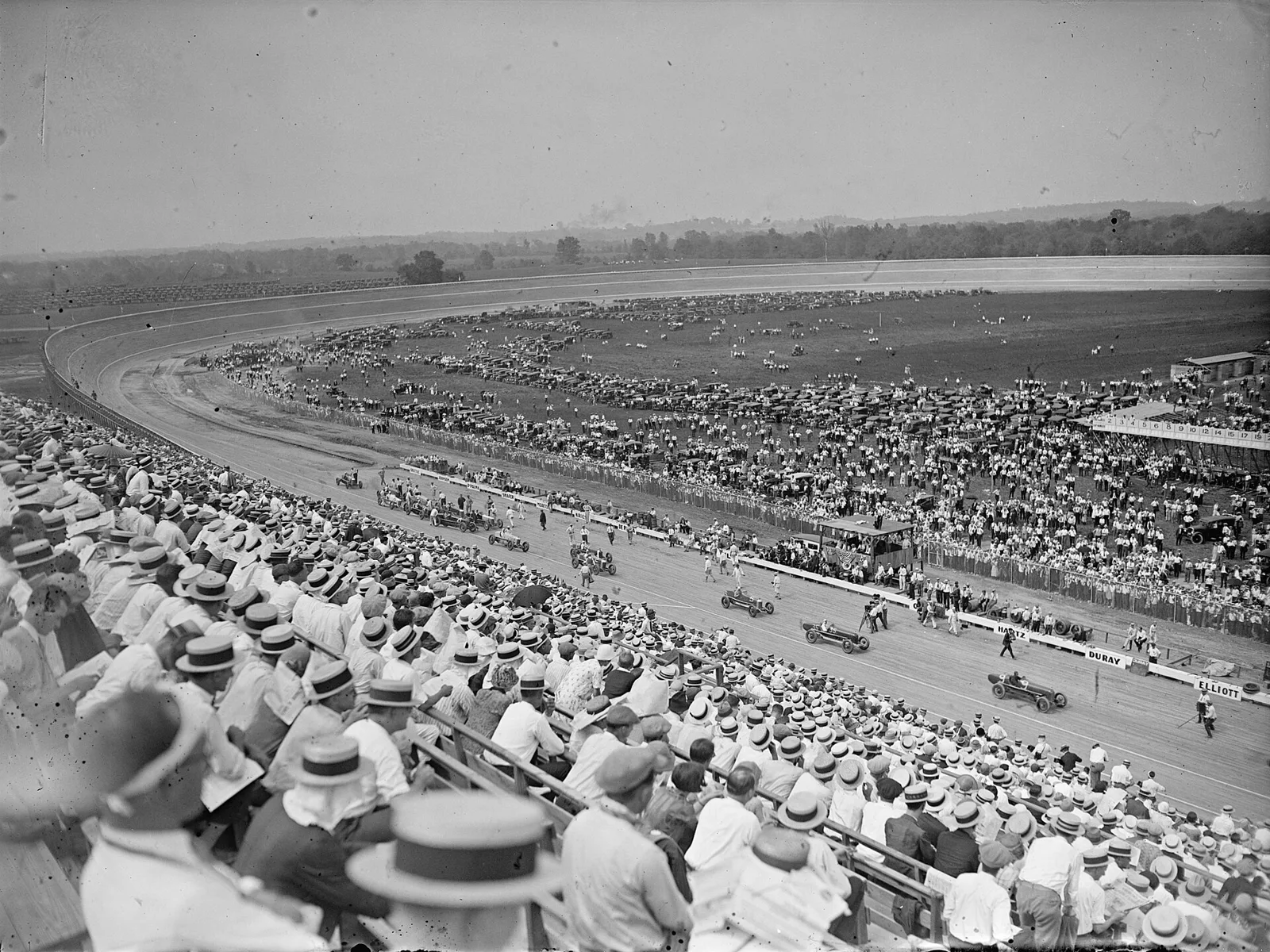
Board track racing was a form of motorsport popular in the United States during the 1910s and 1920s. Racing took place on circular or oval courses with surfaces made from wooden planks. The tracks were first used for motorcycle contests, where they were called motordromes, before cars adopted them.
The majority of American national championship races in the 1920s were contested at such venues. Board tracks multiplied because they were cheap to build, but they lacked durability and needed constant maintenance, and many were abandoned after as little as three years. When the Great Depression arrived in the early 1930s, board track racing vanished quickly.
Its influence is still visible. Three habits of American oval racing trace back to the boards: a focus on raw speed made possible by steep banking, tracks wide enough to let cars pass each other steadily, and big grandstands or stadium-style seating built around the course.
Boards left the National Championship in 1932, but their steep banking, wide tracks and stadium seating stayed in American racing.
How were board tracks built, and how fast did they go?
Motor racing's first board track was the Los Angeles Motordrome, a circular bowl put up in 1910 in what is now the Playa del Rey district of the city. Its builders copied the European velodromes used for bicycle racing and laid 2x4 boards over a steeply banked bowl.
Turns were often banked at up to 45 degrees, and at Culver City the angle reached 50 degrees or more. Longer tracks followed, some up to 2 miles (3.2 km) around by 1915, and laps at over 100 miles per hour became commonplace.
Cost was the attraction. The 2-mile (3.2 km) Tacoma Speedway cost just $100,000 to build in 1915, while paving the 2.5-mile (4.0 km) Indianapolis Motor Speedway had swallowed $700,000 in 1909. Crowds paid to watch. A crowd of 80,000 was reported at Chicago in 1915, three weeks after only 60,000 had attended the Indianapolis 500. Tacoma, a small and isolated city with a population of 83,000 in 1910, had drawn 35,000 spectators to a race the year before. Promoters offered what were then thought of as sensational sums to attract entrants and fans, and a total purse of $25,000 was not unusual around the time of the First World War.
By 1929 at least 24 board tracks had been built around the country, yet by 1931 20 of the 24 had closed or been abandoned. From 1932 there were no more championship races on boards.
Why was board track racing so dangerous?
Board track racing was dangerous because of speed, steep banking and the wood itself. Flying splinters and debris hit drivers, tyres and head protection were primitive, and cars lacked seat belts, roll bars and fire protection. Drivers were often thrown clear and could fall several metres.
The first track at Playa del Rey was banked at a 3:1 pitch, about 20 degrees, but later circuits were steeper and some motorcycle tracks reached 60 degrees. Builders understood the physics, yet only with the Beverly Hills track in 1919 did they start to use engineering that railways had known for decades. Designer Art Pillsbury, who eventually worked on more than half of the championship-calibre board tracks in the country, used the Searle Spiral Easement Curve there, an eased transition into the bend, and the effect on car handling was striking. According to Pillsbury, a correctly engineered track could be lapped without the driver touching the steering at all.
The result was higher cornering speeds and greater G-forces on drivers, but not necessarily more safety. Fatalities kept mounting into the 1920s. They included four Indianapolis 500 winners: three of them died at Altoona in Pennsylvania, another Pillsbury design, and three died in the same year that they won at Indianapolis. Howdy Wilcox, the 1919 winner, was killed at Altoona on 4 September 1923. Joe Boyer, co-winner in 1924, and Ray Keech, who won in 1929, both died there in the years of their Indianapolis victories, Keech only seventeen days after his win, on 15 June 1929. Gaston Chevrolet, the 1920 Indianapolis winner, died on 25 November 1920 in a Thanksgiving Day race at Beverly Hills.
The motordromes
The motorcycle versions were worse. Spectators sat above the top of the track looking down, and a rider who lost control could slide up off the banking into the crowd. The Nutley Velodrome in New Jersey, a 1/8 mile oval banked at 45 degrees with lap times of 8 seconds or less, was called unquestionably the deadliest. On 8 September 1912 Eddie Hasha was killed at a motordrome in Newark, in a crash that took the life of a second racer and four spectators, with ten more hurt. The front page of The New York Times carried the news, and newspapers began to call the short circuits murderdromes. The 1913 motorcycle championship races were moved to dirt, and in 1919 the national motorcycle body banned competition on board tracks shorter than 1 mile (1.6 km). Manufacturers withdrew their support one by one because of the bad publicity.
Why did board track racing end?
Maintenance did most of the damage. No suitable wood preservative existed, and depending on the climate, tracks needed new boards about every five years. Resurfacing took as much as a million board feet of lumber for every 1.25 miles (2.01 km) of track, at a cost of around $125,000 at the prices then.
In the last decade of board tracks, carpenters repaired the surface from below, sometimes during a race, while cars raced overhead at 120 mph (190 km/h) or faster. Speed also hurt the spectacle. As it increased, overtaking got harder, and the fastest car almost always won as long as it held together. Spectators turned to the less predictable racing on dirt tracks.
Boards left the National Championship in 1932, although a few smaller tracks carried on. Midget cars kept turning laps on the boards of the Coney Island Velodrome until at least 1939, and in the Bronx the Castle Hill Speedway ran them on into the 1940s.
What was the AAA Contest Board?
Within the American Automobile Association, the Contest Board looked after motorsport. From 1904 until 1955 it sanctioned car races and set up American championship racing, and today's IndyCar racing descends directly from those events.
Every race at the Indianapolis Motor Speedway in that period carried AAA sanction, the Indianapolis 500 included. AAA also sanctioned the Vanderbilt Cup, and in 1905 it ran the National Motor Car Championship, the first national championship for major American auto racing. It resumed the championship in 1916 and again from 1920 to 1955.
The association was established in Chicago on 4 March 1902, and by June it had set up a Racing Board with A. R. Pardington as chairman. The board sanctioned its first race, the 1904 Vanderbilt Cup on Long Island. It is unclear why William K. Vanderbilt chose AAA over the Automobile Club of America, then the leading sanctioning body for American racing.
The success of 1904 prompted a national track championship for 1905, the first time in American racing that a points system decided an annual champion. Then, strangely, no official championship was recognised from 1906 through 1915, although the board kept sanctioning individual events, the Vanderbilt Cup and races at Indianapolis.
Politics intervened in 1908. The Automobile Club of America created the American Grand Prize, a grand prix style race to sit beside the Vanderbilt Cup, and a feud began. It was settled by deciding that AAA would sanction all big-time racing nationally while the ACA handled international events on American soil. On 2 December 1908 AAA dissolved the Racing Board and soon created the Contest Board, probably so that it could oversee automobile events in general rather than racing contests alone.
The First World War suspended the championship, ended the Vanderbilt Cup and American Grand Prize, and folded the ACA. After the war the Contest Board held championships regularly from 1920 until the United States entered the Second World War in 1941, with specifications mostly aligned with what the Indianapolis Motor Speedway wanted for its Memorial Day race, as they largely are today. AAA restarted the championship for 1946 and ran it uninterrupted through 1955.
Who really won the early American championships?
For 1902 to 1919, AAA declared an official national champion in only two years, 1905 and 1916. Later record keepers filled the gaps with calculated results, and those retrospective titles remain disputed by historians.
Between 1926 and 1929, Arthur Means, assistant secretary of the Contest Board, working with secretary Val Haresnape, recalculated results for 1909 to 1915 and 1917 to 1920 using points tables from the mid-1920s. By adding five exhibition races to the 1920 schedule, they stripped Gaston Chevrolet of his 1920 title and gave it to Tommy Milton, then handed it back to Chevrolet by 1929.
In 1951 Russ Catlin, a sportswriter and publicist for the Contest Board, revised the early record again with a points system of his own. He published his list in the 1952 Indianapolis 500 program and created seven new champions for 1902 to 1908. He named Victor Hemery, winner of the Vanderbilt Cup, as the 1905 champion, apparently unaware that Barney Oldfield had been declared the official champion that year. For 1909 he picked George Robertson, where Means and Haresnape had settled on Bert Dingley, and he put Milton back in as the 1920 champion.
IndyCar currently recognises Catlin's list for 1909 to 1919 but names Chevrolet as the 1920 champion. Professional historians consider all of the retrospective titles unofficial, and most call the effort revisionist history. Official IndyCar statisticians, under Randy Bernard, made significant corrections to the series' Official Historical Record Book between 2011 and 2013. As of 2024, though, the Astor Challenge Cup, awarded to American National Champions, still sits on a granite base that leaves out Oldfield's 1905 title and names Milton rather than Chevrolet for 1920.
How did the AAA hand racing over to USAC?
AAA left racing in 1955, citing the Le Mans disaster and the loss of Bill Vukovich at Indianapolis. On 13 July 1955 Senator Richard Neuberger called for a bill to ban automobile racing. It did not pass, but the pressure was enough, and on 3 August 1955 AAA announced it would disband the Contest Board and stop sanctioning motorsport.
Promoters from the Midwest, with the Indianapolis Motor Speedway among them, put together a Temporary Emergency Committee to fill the gap. It later became the United States Auto Club. In 1957 USAC, NASCAR and the Sports Car Club of America formed the Automobile Competition Committee for the United States, which took over from the Contest Board as the national sporting authority representing the United States at the FIA. NASCAR and the SCCA had both been floated as possible successors to AAA.
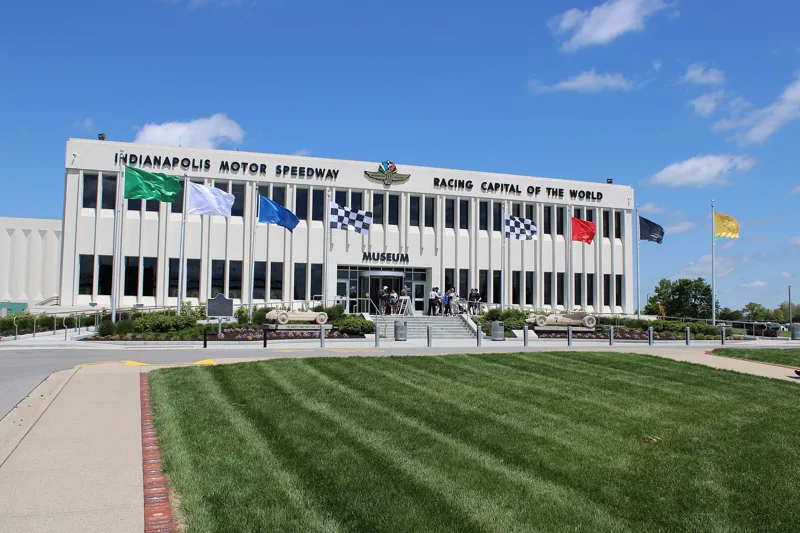
USAC was formed by Tony Hulman, owner of the Indianapolis Motor Speedway. It became the arbiter of rules and car design for what it called championship auto racing, the top level of USAC racing. For a while there was a separate set of specifications for championship cars built to race on dirt rather than paved tracks.
How do the AAA Contest Board and USAC compare?
| Detail | AAA Contest Board | United States Auto Club |
|---|---|---|
| Years sanctioning | 1904 to 1955 | From 1956 |
| National Championship | 1905, 1916, 1920 to 1941 and 1946 to 1955 | 1956 to 1979, then again from 2010 |
| Indianapolis 500 | All Indianapolis races in the period | 1956 to 1997 |
| Founder | American Automobile Association, established 1902 | Tony Hulman and Midwestern promoters |
| How it ended or changed | Disbanded in August 1955 after the Le Mans disaster | Lost Indy 500 sanctioning after 1997 officiating errors |
What does the United States Auto Club run?
USAC sanctions a spread of series, among them the Silver Crown Series, National Sprint Cars, National Midgets, the Speed2 Midget Series, Stadium Super Trucks and GT World Challenge America. Levi Jones, a seven-time USAC champion, is its Competition Director.
From 1956 to 1979 it ran the United States National Championship and from 1956 to 1997 it sanctioned the Indianapolis 500. Beginning in 1971, dirt races were split from the National Championship. The resulting series was the National Dirt Car Championship from 1971 to 1980, then the Silver Crown Series from 1981. USAC's sprint car championship was divided into regional Midwest and East divisions from 1956 to 1960.
Road racing has grown. GT World Challenge America began as Pirelli World Challenge in 1990, switched to USAC sanctioning in 2017 and is owned by SRO Group. Since 2022 a Road Racing Division under Randy Hembrey has sanctioned the USF Juniors, USF2000 and USF Pro 2000 series, a ladder to Indy NXT, plus the Radical Sportscars North American Championships, Skip Barber Racing School and the Porsche Sprint Challenge North America.
The triple crown and the national title
A USAC triple crown goes to a driver who wins the Silver Crown, sprint car and midget championships. In a single season only Tony Stewart (1995) and J. J. Yeley (2003) have done it, and in 2012 car owners Mike Curb and Cary Agajanian did it together. The national title was awarded until 1979, when A. J. Foyt won it for the seventh time, and it returned in 2010. The best 25 finishes count, and the 2010 winner received $40,000. Bryan Clauson took the first title, ahead of Levi Jones by 14 points, and Logan Seavey was champion in 2024.
Why did USAC lose the Indy cars?
USAC lost the top level of American open-wheel racing because car owners wanted more money and more say. They felt events outside Indianapolis were poorly attended and that television rights had been poorly negotiated, and they wanted bigger payouts, especially at Indy. The owners formed Championship Auto Racing Teams in 1978, with its first race in 1979.
A tragedy came first. On 23 April 1978, returning from a race at Trenton Speedway, eight USAC officials and the pilot were killed when their Piper Navajo Chieftain crashed in a thunderstorm 25 miles southeast of Indianapolis. It closely followed the death of Tony Hulman. Some have argued the crash was used to force change, but the dissent had been growing for years, and claims that the crash directly caused the 1979 CART and USAC split are considered largely unfounded.
Engines were another sore point. USAC tried to keep the ageing Offenhauser competitive with the newer, much more expensive Cosworth DFX through boost-limiting pop-off valves and fuel limits, and the owners disliked it. USAC tried to ban all CART owners from the 1979 Indianapolis 500 and lost in court before the race. Both bodies ran multi-race schedules that year.
Indianapolis Motor Speedway president John Cooper helped create the Championship Racing League as a joint body in March 1980, but forced USAC to renounce it in mid-1980 if it wished to keep officiating the Indy 500. A USAC 500-mile race at Pocono was boycotted by the CART teams, so USAC filled the field with Silver Crown cars. The two bodies settled into peaceful coexistence: USAC sanctioned the Indy 500 and no other championship car races, while CART included the race in its schedule.
When the Indy Racing League split from CART in 1996, USAC sanctioned its races, the Indy 500 included, until the agreement was terminated after officiating errors at the 1997 Indianapolis 500 and the 1997 True Value 500. Later Indy 500s have been sanctioned by the league itself, renamed the IndyCar Series in 2003.