Why a stainless steel sports car was built in Northern Ireland, how John DeLorean's company collapsed, and how Back to the Future gave the DMC-12 a second life.
The DeLorean DMC-12 was built near Belfast because the British Government funded a factory in a high-unemployment area. The company collapsed in 1982 after producing about 9,000 cars, and John DeLorean was arrested and acquitted of drug charges. Back to the Future later made the car famous.
The company that built the DeLorean was bankrupt, and its founder had been arrested and acquitted, before Back to the Future turned the car into a time machine.
Who was John DeLorean?
John DeLorean was a Detroit-born engineer and executive who became the youngest division head in General Motors history. He managed the development of the Pontiac GTO, Firebird and Grand Prix, then ran Chevrolet, before leaving GM in 1973 to start his own car company.
He came up through Chrysler and Packard, where he improved the Ultramatic automatic gearbox into the Twin-Ultramatic. In 1956 he moved to Pontiac, and the GTO, named after the Ferrari 250 GTO and launched in 1964 as an option package, made his name. In 1965, at 40, he took over the division. The 1969 Grand Prix he developed sold over 112,000 units, against 32,000 for the previous year. On 15 February 1969 he was promoted to head Chevrolet, where record sales in 1971 topped 3 million. He earned $200,000 a year with bonuses of up to $400,000, and cultivated a reputation as a corporate rebel with long sideburns and unbuttoned shirts.
The company was founded in Detroit on 24 October 1975. Backing came from Bank of America loans, private investors including Johnny Carson, Roy Clark and Sammy Davis Jr., and a dealer scheme that turned dealerships into shareholders.
The company had closed before the first film was made.
Why was the DeLorean built in Northern Ireland?
Because the money was there. DeLorean wanted a first factory in an area of high unemployment, where governments offer incentives. He tried Ireland and Puerto Rico before accepting an offer from the Northern Ireland Industrial Development Board, and the British Government wanted jobs to reduce sectarian violence.
In Ireland he proposed a site at Limerick, but the minister for industry and commerce, Desmond O'Malley, declined to support it, later calling it all too good to be true. A Puerto Rico deal was close when the Northern Ireland offer arrived. According to The Times, the British Government supplied about $120 million of the $200 million start-up cost. DeLorean believed the offer included export credit financing, a loan of 80% of the wholesale cost of each car, which was US$20,000, once vehicles were delivered for shipping.
Construction of the plant at Dunmurry, on the south-western edge of Belfast, began in October 1978. It had six buildings covering 660,000 sq ft (61,000 square metres), was built in 16 months, and had a test track alongside. Production was planned for 1979, but engineering delays and budget overruns pushed it back: the assembly lines started between December 1980 and early 1981, and the first production car was announced on 21 January 1981. Many workers had never had a job, which may have contributed to the early quality complaints. DeLorean set up quality assurance centres in California, New Jersey and Michigan to fix problems with panel fit, alternators and gull-wing door adjustment before cars reached dealers.
How did the DMC-12 come together?
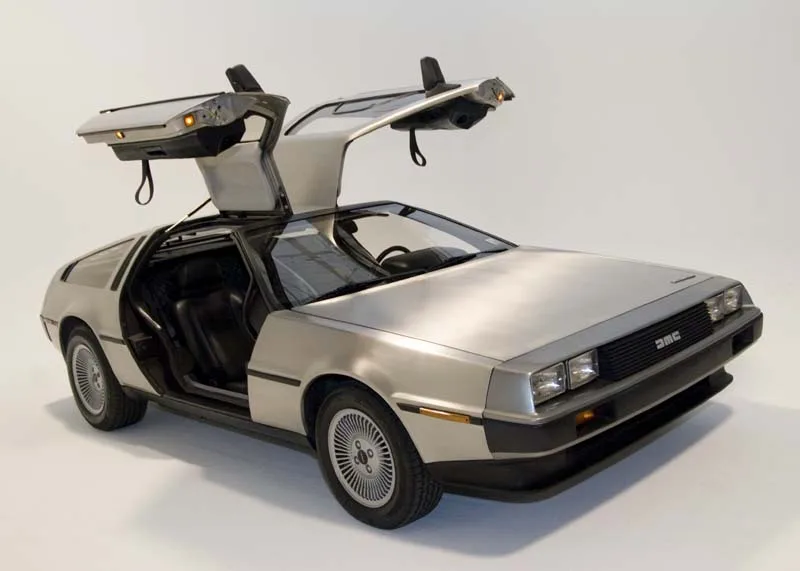
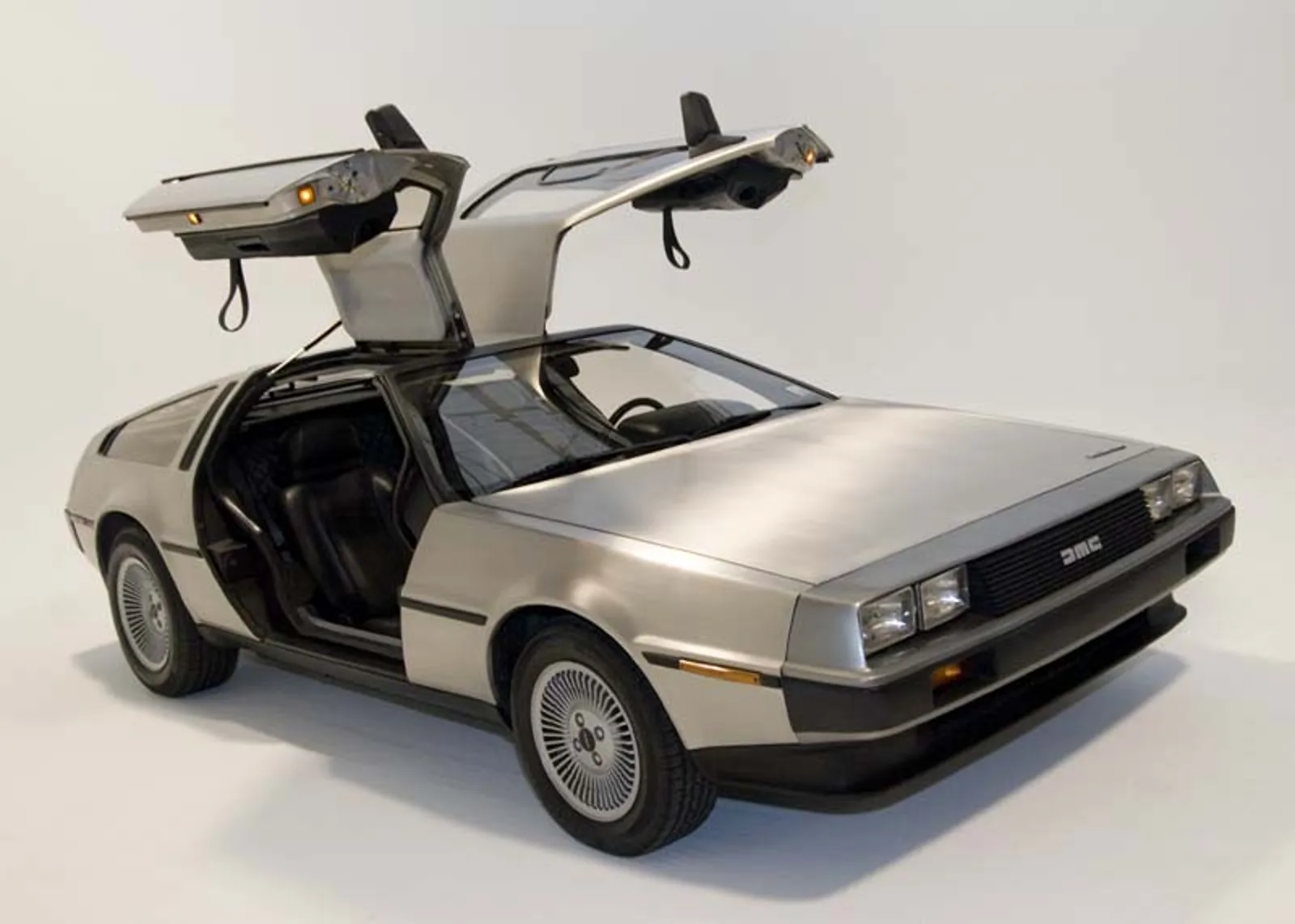
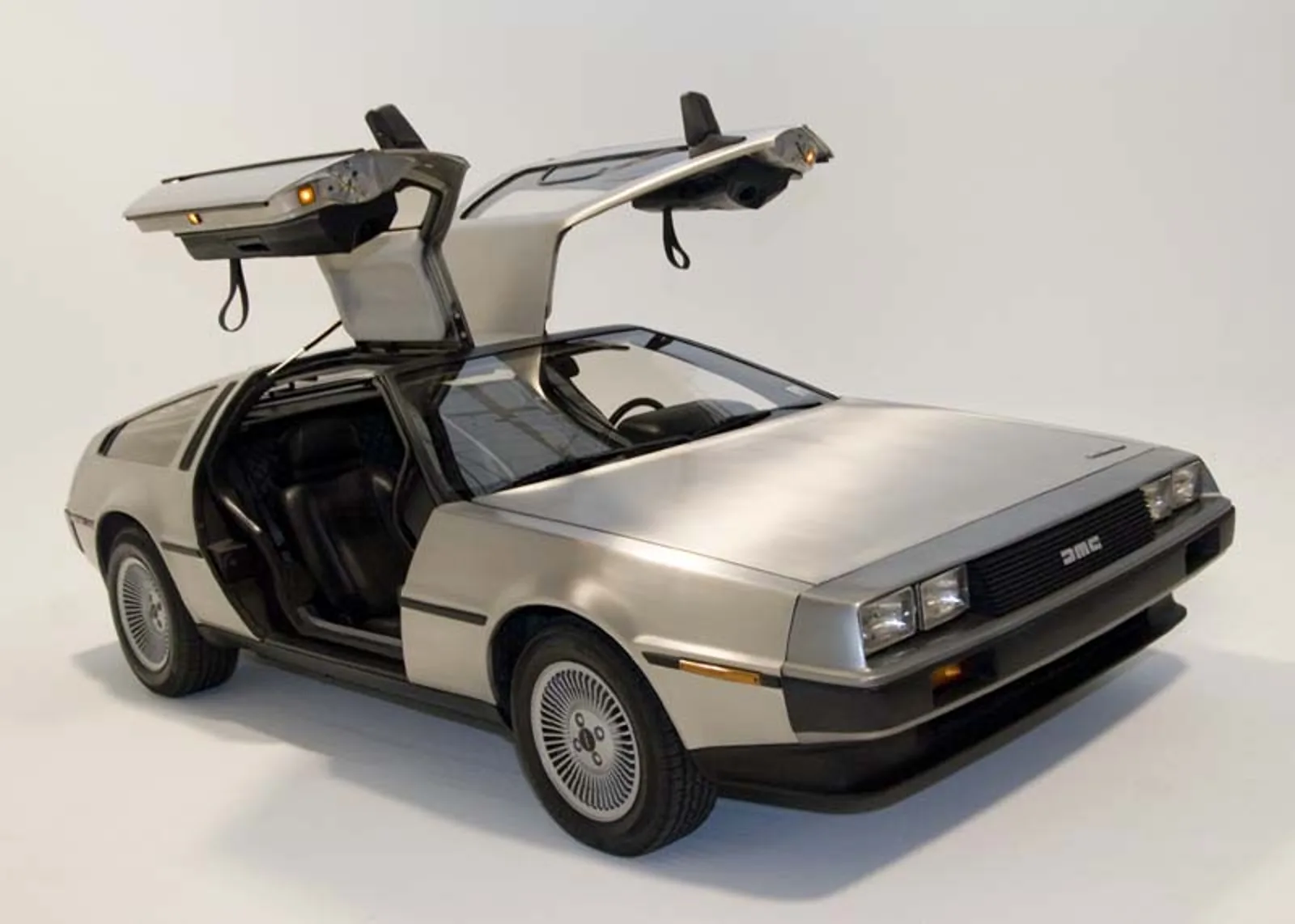
Giorgetto Giugiaro of Italdesign drew the body, using his 1970 Porsche Tapiro concept as a starting point. The panels were brushed stainless steel, and the rest of the engineering changed repeatedly, from the chassis to the engine, until Lotus founder Colin Chapman was asked to re-engineer almost the entire car.
Stainless steel was chosen because of a paint-finish problem with the plastic chassis process DeLorean had planned, which was called Elastic Reservoir Molding. He had bought the patent rights to that essentially untested technology and found it unsuitable. The engine hunt was just as messy. The car was first meant to have a centrally mounted Wankel rotary engine, then a Ford Cologne V6, then the whole drivetrain of the Citroen CX 2000. The 1,985 cc four-cylinder was underpowered, and when Citroen learned DMC planned to turbocharge it, Citroen suggested DMC look elsewhere. The fuel-injected PRV V6 finally won, and the engine had to move from the middle of Prototype-1 to the rear of Prototype-2.
The first prototype appeared in October 1976, finished by chief engineer Bill Collins. It began as the DSV-1, for DeLorean Safety Vehicle, then became the DSV-12 and finally DMC-12, the 12 coming from a target list price of $12,000. Chapman replaced most of the unproven materials and methods with ones used at Lotus, including a steel backbone chassis. The underbody was fibreglass, and the gull-wing doors used torsion bars and nitrogen-charged struts developed by Grumman Aerospace. Early cars suffered faulty striker plates and weather seals, which owners mostly tolerated because the doors let occupants get in and out of tight parking spaces.
| Feature | Plan or rumour | Production car |
|---|---|---|
| Chassis | Plastic unibody using Elastic Reservoir Molding | Steel backbone chassis derived from the Lotus Esprit platform |
| Engine | Mid-mounted Wankel rotary, then Ford V6, then Citroen four | Rear-mounted 2.85 L PRV V6 |
| Safety and tyres | Driver airbag, 10-mph bumpers, ultrawide Pirelli P7 tyres | None of these appeared |
| Price | Target of $12,000 | $25,000 |
What was the DeLorean like to drive?
Modest. The 2.85 L (2,849 cc) PRV V6 was derated, with a catalyst, to 130 hp (132 PS; 97 kW) at 5,500 rpm, with 153 lb ft (207 N.m) of torque at 2,750 rpm. Road & Track measured 0 to 60 mph in 10.5 seconds and said that was not quick for the price.
With the V6 mounted at the rear, the weight distribution was 35%-65% front to rear. Buyers chose between a 5-speed manual and a 3-speed automatic. A handful of cars that stayed in Europe kept a 154 hp (156 PS; 115 kW) rating. The suspension was independent all round, double wishbones at the front and a multi-link rear. The nose-high look many owners noticed came from poor quality springs of the same rate at both ends, and not, as some believed, from a late change to US bumper height rules.
The stainless panels were attractive and impervious to corrosion, but they showed fingerprints and could not easily be painted, so every DeLorean looked the same. Some dealerships painted their cars, and DMC tested translucent paint, but no cars left the factory with painted panels. At $25,000, roughly $89,000 in 2025 money, the list price was out of reach for most of the market, particularly for a car many saw as an underpowered plaything.
Why did the DeLorean Motor Company collapse?
It built far more cars than it could sell, then ran out of both money and political support. By the end of 1981 DMC had produced 7,500 cars and sold only 3,000, and in February 1982 the company went into receivership.
A waiting list had formed before the car was released, with some buyers paying over the sticker price, but the enthusiasm faded fast. October 1981 was the best month, at 720 cars. A recession and rising interest rates followed, and instead of cutting output John DeLorean doubled it. The company had estimated its break-even point at 10,000 to 12,000 units; sales were around 6,000. In January 1982, Securities and Exchange Commission questions forced DMC to cancel a planned stock issue meant to raise about $27 million. In March, Bank of America sued over missed loan payments and asked for 1,979 cars as repayment, while telegrams to all 343 dealerships asking each to buy six cars produced not a single order. Production stopped at the end of May 1982. A July offer of discounts and a 5-year/50,000-mile (80,000 km) warranty failed too.
Bruce McWilliams, DMC's vice president of marketing, said after resigning that John DeLorean's predicted sales figures were never achievable. The British Government had refused further aid unless matching funds came from other investors. Hours before DeLorean's arrest in October 1982, it announced it would close the plant. DMC filed for bankruptcy on 26 October 1982, taking 2,500 jobs and over $100 million in investments with it. DeLorean later claimed the Northern Ireland company was deliberately closed for political reasons, when it was solidly viable with millions in the bank and two years of dealer orders.
What happened to John DeLorean after the arrest?
In October 1982 he was charged with conspiring to traffic cocaine, after an FBI informant, James Hoffman, approached him as a financier for a scheme to sell 220 lb (100 kg) of cocaine worth around $24 million. DMC was insolvent and $17 million in debt at the time.
The key prosecution evidence was a videotape of DeLorean discussing the deal with undercover agents. His attorney, Howard Weitzman, showed the court that agents posing as legitimate investors had coerced him into the deal. DeLorean had no prior criminal record, and the jury returned a not guilty verdict in August 1984 on the grounds of police entrapment. By then the company had gone. Acquittal on every charge did not repair his reputation, which was permanently tarnished. Afterwards he joked about whether anyone would buy a used car from him. He retired to New Jersey and died on 19 March 2005.
How did Back to the Future make the DeLorean a time machine?
In the 1985 film directed by Robert Zemeckis, eccentric scientist Doc Brown builds a time machine from a modified DeLorean, and teenager Marty McFly, played by Michael J. Fox, is sent back to 1955 when the car hits 88 miles per hour (142 kilometres per hour). It needs 1.21 gigawatts to jump again, which in 1955 means a lightning bolt.
The project was a hard sell. Zemeckis and Bob Gale conceived it in 1980, and studios rejected it more than forty times. A development deal at Universal followed Zemeckis's success with Romancing the Stone. Released on 3 July 1985, it earned $381.1 million and became the highest-grossing film of 1985 worldwide. Two sequels followed in 1989 and 1990, and in 2007 the US Library of Congress selected the first film for preservation in the National Film Registry.
Production had ended in December 1982, and the company had closed before the first film was made. As a time machine the car entered popular culture, and that did much to keep the model alive. The DeLorean still has a strong following despite a name for poor build quality and a disappointing drive; an estimated 6,500 were still on the road as of 2015.
What should you know about owning a DeLorean?
Production records were lost or scattered when DMC shut down, and owners have pieced the totals together from VIN data. Total output was about 9,000 cars.
The breakdown pieced together from VINs is 6,700 cars for 1981 (VIN 500 to 7199), an estimated 1,999 for 1982 (VIN 10001 to 11999) and an estimated 276 for 1983, giving 8,975 in all. The 1983 cars are re-numbered 1982 builds: after Consolidated International bought the unsold and part-built cars and finished about 100 more by 24 December 1982, their VINs were changed by adding 5000 and replacing "CD" with "DD". DMC did not follow a model-year calendar either, because it made changes mid-production, such as removing the hood fuel flap in August 1981.
Factory options were few. Automatic was the only one at first, and a grey interior joined the standard black later in 1981. Painted cars exist, but they were painted after sale. After the bankruptcy, a separate company, DeLorean Motor Company (Texas), was founded in 1995 by Liverpool-born mechanic Stephen Wynne. It has no connection to the original, though it acquired the remaining parts inventory.
What else did DeLorean plan, and what became of the factory?
DMC drew up three other vehicles that never reached production: the DMC-24, a four-seat sedan keeping the gull-wing doors; the DMC-44, a lightweight 4x4 using Polski Fiat 126p components; and the DMC-80, a bus mooted in the autumn of 1981. The DMC-24 mock-up, made by Italdesign, was never paid for by DMC and was later reworked into the Lamborghini Marco Polo concept.
The Dunmurry plant was taken over in 1989 by the French supplier Montupet, which cast aluminium cylinder heads there and employed more than 600 people in 2015. Enthusiasts meet on the old test tracks, which they renovated for low-speed use. Their fleet of DeLoreans reached 62 in June 2024. Irish folk tales blame the company's failure on the destruction of a sacred fairy fort to build the factory.