From the 1911 Ideal Motor Car Company to the Blackhawk revival, the Indianapolis maker of sports and luxury cars and its long afterlife.
Founded in 1911 as the Ideal Motor Car Company, this Indianapolis firm built roughly 39,000 automobiles before going defunct in 1938. The name returned in 1968 as the neoclassic brand Stutz Motor Car of America, and factory sales ended in 1995.
The Stutz Motor Car Company was an American maker of high-end sports and luxury cars based in Indianapolis, Indiana. It began in 1911 as the Ideal Motor Car Company, produced roughly 39,000 automobiles at its Indianapolis factory, and went defunct in 1938, although the name was revived in 1968.
How did the Stutz company begin?
Harry C. Stutz and his friend Henry F. Campbell organised the Ideal Motor Car Company in June 1911 to build Stutz cars in Indianapolis. The business grew out of a racer that Stutz had assembled in less than five weeks, entered under the Stutz Auto Parts name, which finished 11th at Indianapolis.
That finish produced the slogan the car that made good in a day. Ideal produced near-replicas of the racer, complete with fenders and lights, and sold them as the Stutz Bearcat, a name taken from the racing car itself.
The Bearcat used a 389 cu in (6.4 L) Wisconsin four-cylinder T-head engine with four valves per cylinder, which made it one of the earliest multi-valve engines. The engine was matched to one of Harry Stutz's transaxles.
An Indianapolis sports and luxury maker that began with a racer and returned in 1968 as a neoclassic revival.
What did Stutz contribute to engineering?
Stutz is credited with developing the underslung chassis, a design that improved the safety and cornering of motor vehicles and is still in use today. The company's White Squadron race team won the national championships of 1913 and 1915 before withdrawing from racing in October 1915.
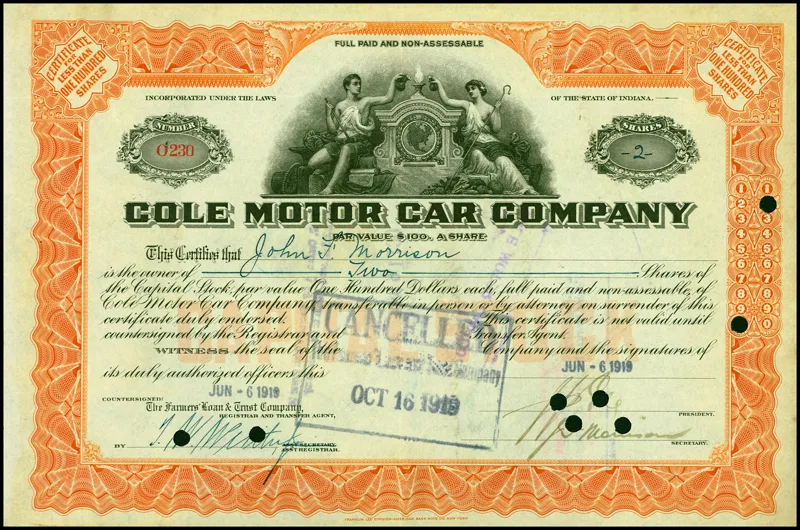
The capital of the company consisted of 500 shares with a par value of $100, which were split 2-for-1 on 12 November 1912. In June 1913 the Ideal company took the name Stutz Motor Car Company of Indiana, and the Stutz Auto Parts Company was merged into it, because it made the transaxle that Stutz used.
How did the company become a New York holding firm?
The Stutz Motor Car Company of America was incorporated in New York on 22 June 1916. It issued 75,000 no par shares at $5 each for cash, and used the money to acquire the whole Indiana company. The holding company was listed on the New York Stock Exchange that same year.
Stutz was president of the new holding company, with Allan A. Ryan as vice president, alongside Campbell and four other directors. Harry Stutz left the business on 1 July 1919 and, with Campbell, set up the H. C. S. Motor Car Company and the Stutz Fire Apparatus Company.
The next owners were less stable. Allan Aloysius Ryan was left in control of Stutz Motor, and stock manipulation in April 1920 led to the company being delisted. The Stutz corner is remembered as the last deliberate squeeze of its kind that regulators detected, and Ryan was bankrupt by August 1922.
Two friends of Thomas Fortune Ryan then found themselves with large parcels of Stutz stock. They were Charles Michael Schwab and Eugene Van Rensselaer Thayer Jr., who was president of the Chase National Bank.
What was the Moskowics era like?
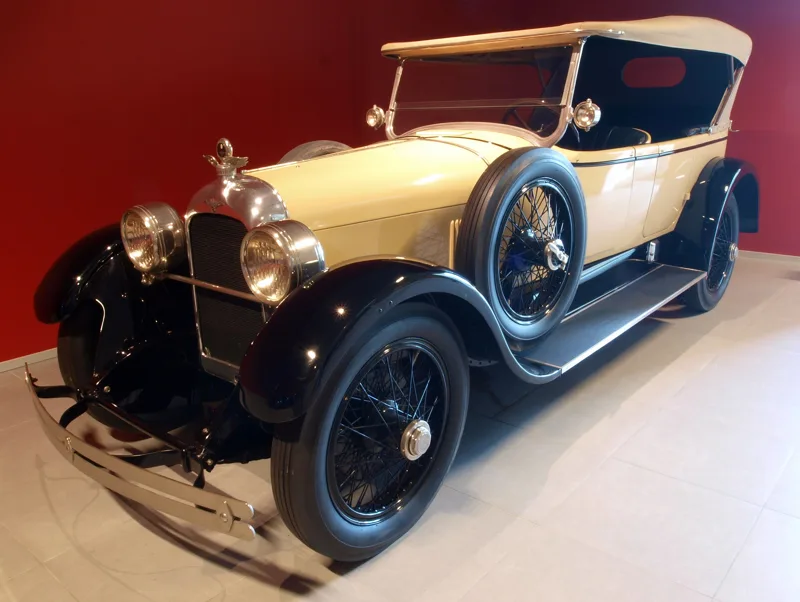
The new owners brought in Frederick Ewan Moskowics in 1923. He had worked at Daimler-Motoren-Gesellschaft, Marmon and Franklin, and he quickly refocused the company as a developer of safety cars. Its cars came with safety glass, a lower centre of gravity for steadier handling, and a Noback gearbox that held hills.
Engineering stayed central to the brand. A significant advance was the 1931 DOHC 32-valve in-line eight, called the DV32 for dual valve. The company kept its performance name around the dual overhead cam, in-line eight layout, and brochures claimed top speeds of more than 100 mph (160 km/h).
Racing kept the name in view. A 4.9-litre (300 in3) Stutz entered by the wealthy French pilot and inventor Charles Weymann was driven by Robert Bloch and Edouard Brisson to second place at the 24 Hours of Le Mans. The car lost top gear 90 minutes from the flag, and it was the best result for an American car until 1966.
The AAA Championship came to Stutz in 1927, with every race won and every entered car reaching the finish. Gil Andersen drove a Stutz to 106.53 mph (171.44 km/h) at Daytona Beach, which made it the fastest production car in America. Frank Lockhart's Stutz Black Hawk Special streamliner, which used a pair of supercharged 91-cubic-inch DOHC engines, was a land speed record car.
In 1929 three Stutzes with bodies designed by Gordon Buehrig ran at Le Mans. They were built by Weymann's US subsidiary and powered by a 155 hp (116 kW) supercharged straight eight. Two of the cars fell out with split fuel tanks, and de Rothschild and Bouriat placed fifth.
Why did Stutz turn to delivery vehicles?
Stutz acquired the manufacturing rights to the Pak-Age-Car, a light delivery vehicle it had sold since 1927. Charles Schwab unveiled 15 new models at the 1932 New York show, the vehicle among them, and the Pak-Age-Car went into production in March 1933.
Automobile production stopped alongside that launch, and by the time production ended in 1935, 35,000 cars had been manufactured. Stutz was charged with stock manipulation again in 1935, though without the excesses seen in 1920.
Stutz filed for bankruptcy in April 1937, even though its assets still exceeded its liabilities. Creditors could not agree a revival plan, and in April 1939 the court ordered liquidation.
What did the Stutz factory become?
The factory, at 1060 North Capitol Avenue in Indianapolis, is now known as Stutz I, and the nearby Ideal Motor Car Company building is Stutz II. Both buildings were recognised on the National Register in 2022, and together they form a complex of concrete buildings linked by brick bridges.
The factory was built as seven interconnected buildings from 1914 to around 1967, in the Daylight Factory style. Eli Lilly and Company moved into the space in 1940 and used it for its Creative Packaging division until 1982. Turner Woodard bought the factory in 1993 and turned it into an artist community.
In 2021 Woodard sold the building to SomeraRoad, and after a $100 million redevelopment the site reopened in May 2023 with eateries, a cafe, a bakery and a bar. The annual Butter fine art fair is also held there.
How did the Stutz name return in 1968?
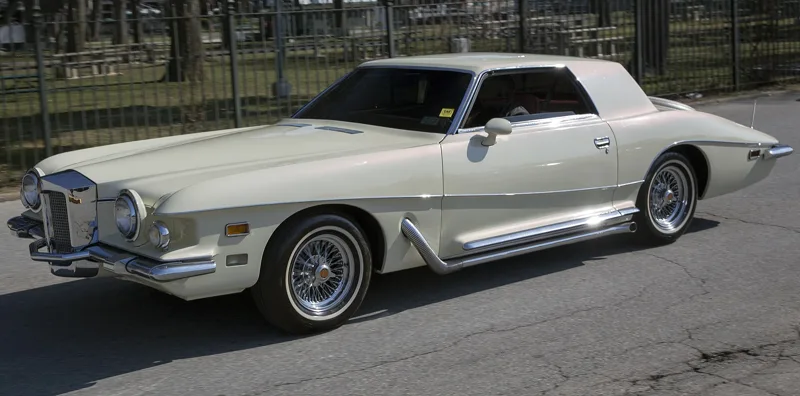
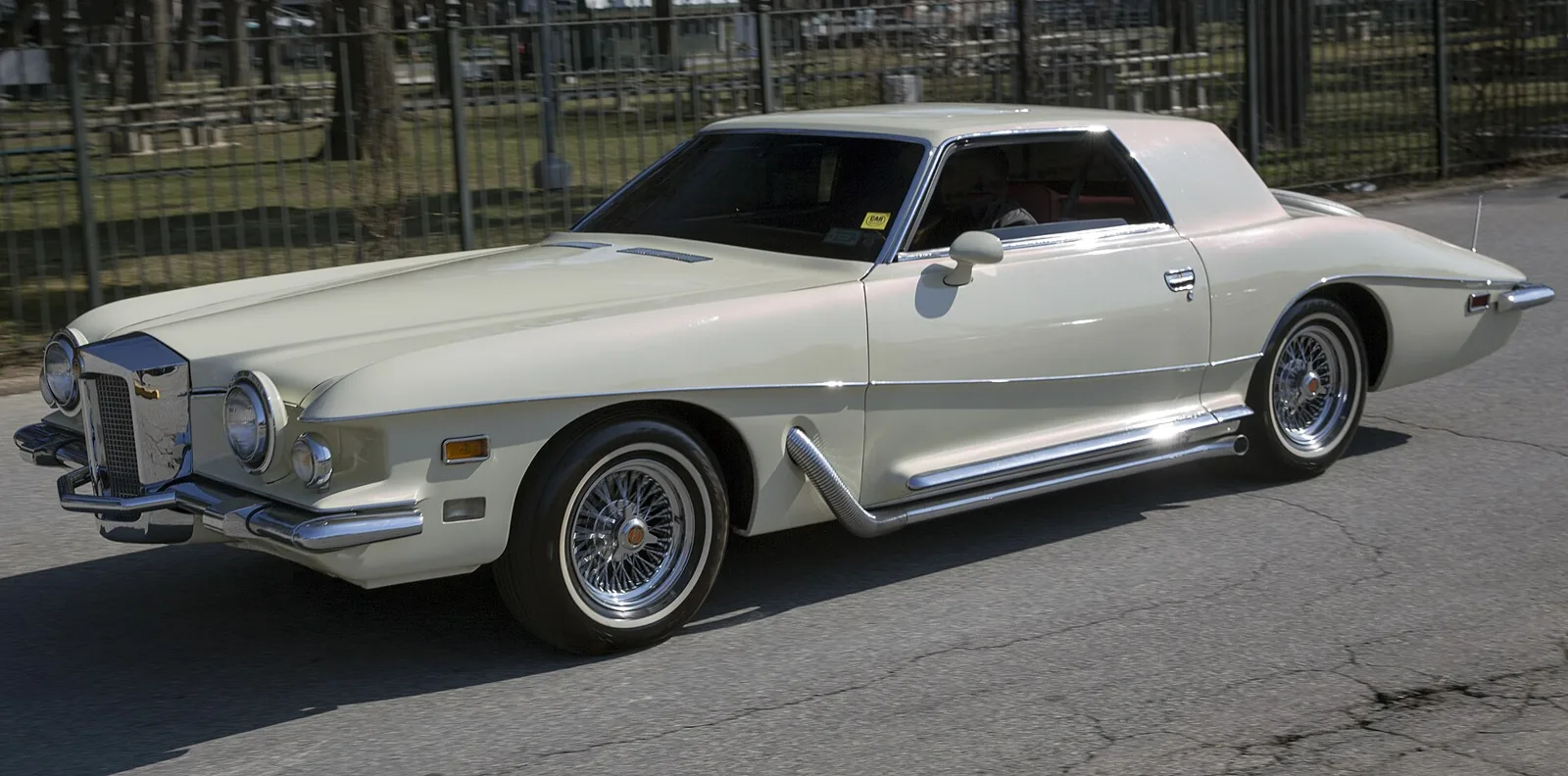
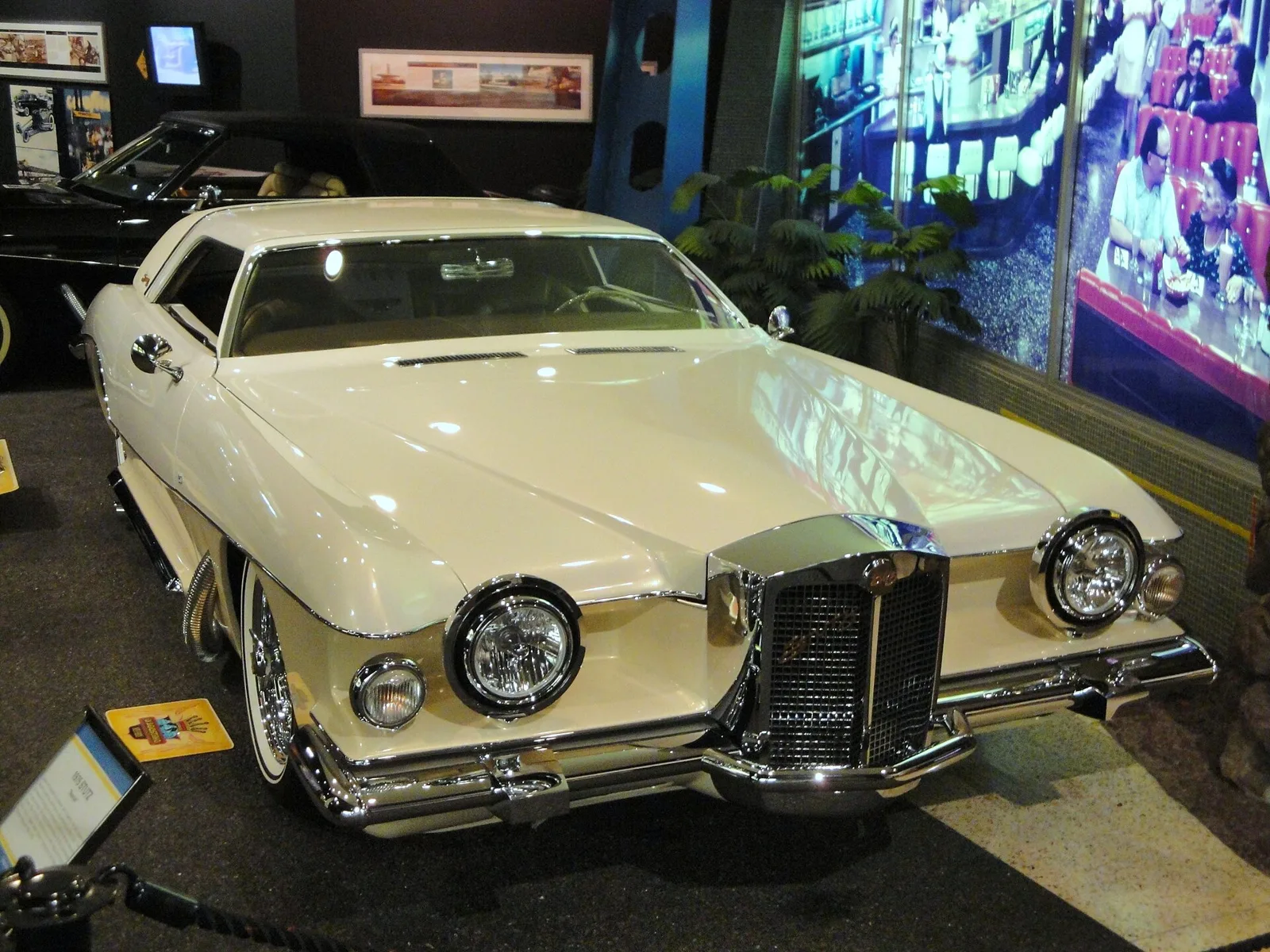
In August 1968 James O'Donnell raised money and set up Stutz Motor Car of America. Ghia built a prototype from a design by Virgil Exner, and the Blackhawk debuted in 1970. The cars used General Motors running gear, with V8 engines and features such as electric windows and air conditioning.
Celebrity owners gave the revived brand publicity. Elvis Presley bought the first Blackhawk in 1971 and later bought three more, and among the other owners were Dean Martin, Sinatra, Knievel, White and Sammy Davis Jr.
Pricing was high. In 1984 a Royale limousine was priced at $285,000 and a Blackhawk coupe at over US$115,000, and the company was marketed as the World's Most Expensive Car. Two years later the much more expensive Ferrari F40 appeared.
Production stayed limited. An estimated 617 cars were built across the first 25 years of the revived company, from 1971 to 1995. Warren Liu took over ownership in 1982, and sales began to wane in 1985 before factory sales ceased in 1995. The company is still in existence.
What were the key Stutz dates?
| Year | Milestone | Detail |
|---|---|---|
| 1911 | Ideal Motor Car Company | Organised in June by Harry C. Stutz and Henry F. Campbell |
| 1913 | Stutz Motor Car Company of Indiana | Ideal takes the Stutz name, merged with Stutz Auto Parts |
| 1916 | New York holding company | Incorporated 22 June 1916, listed the same year |
| 1919 | Founder leaves | Harry Stutz leaves on 1 July 1919 |
| 1923 | Moskowics joins | Refocus on safety cars |
| 1932 | New models | 15 new models at the New York Motor Show |
| 1937 | Bankruptcy | Filed in April 1937 |
| 1968 | Revival | Stutz Motor Car of America incorporated in August |
| 1995 | Factory sales end | Sales of factory-produced vehicles cease |