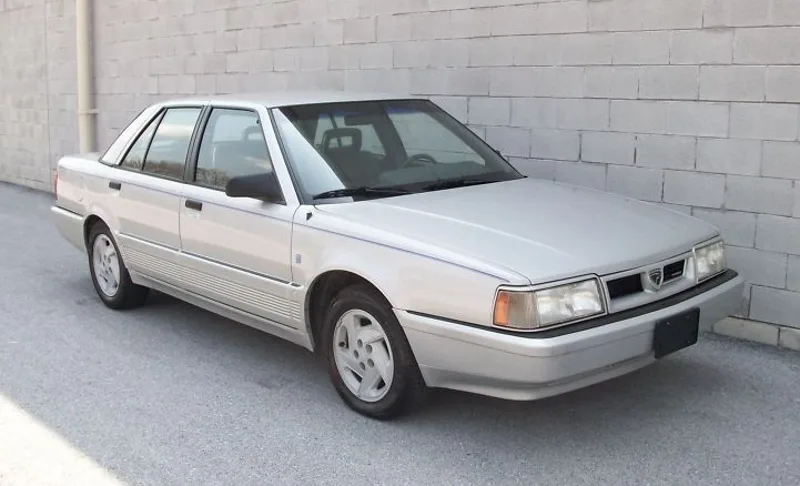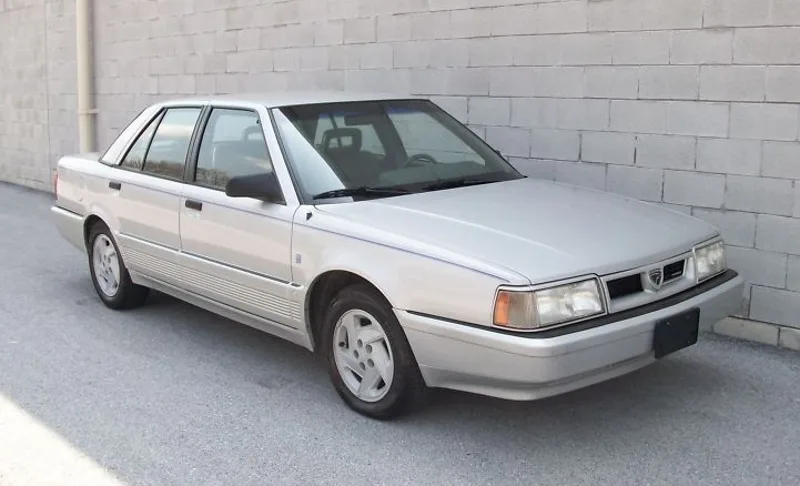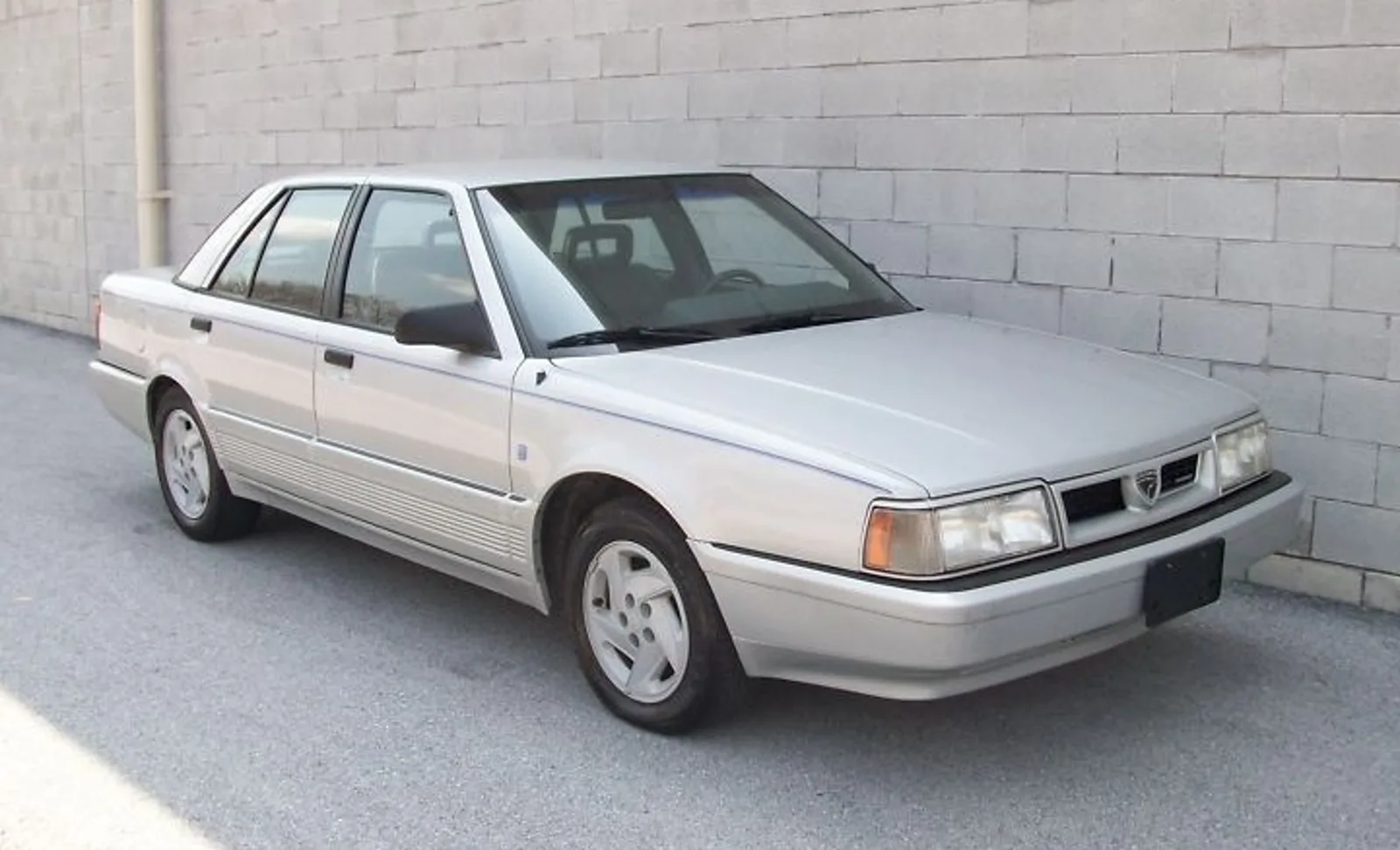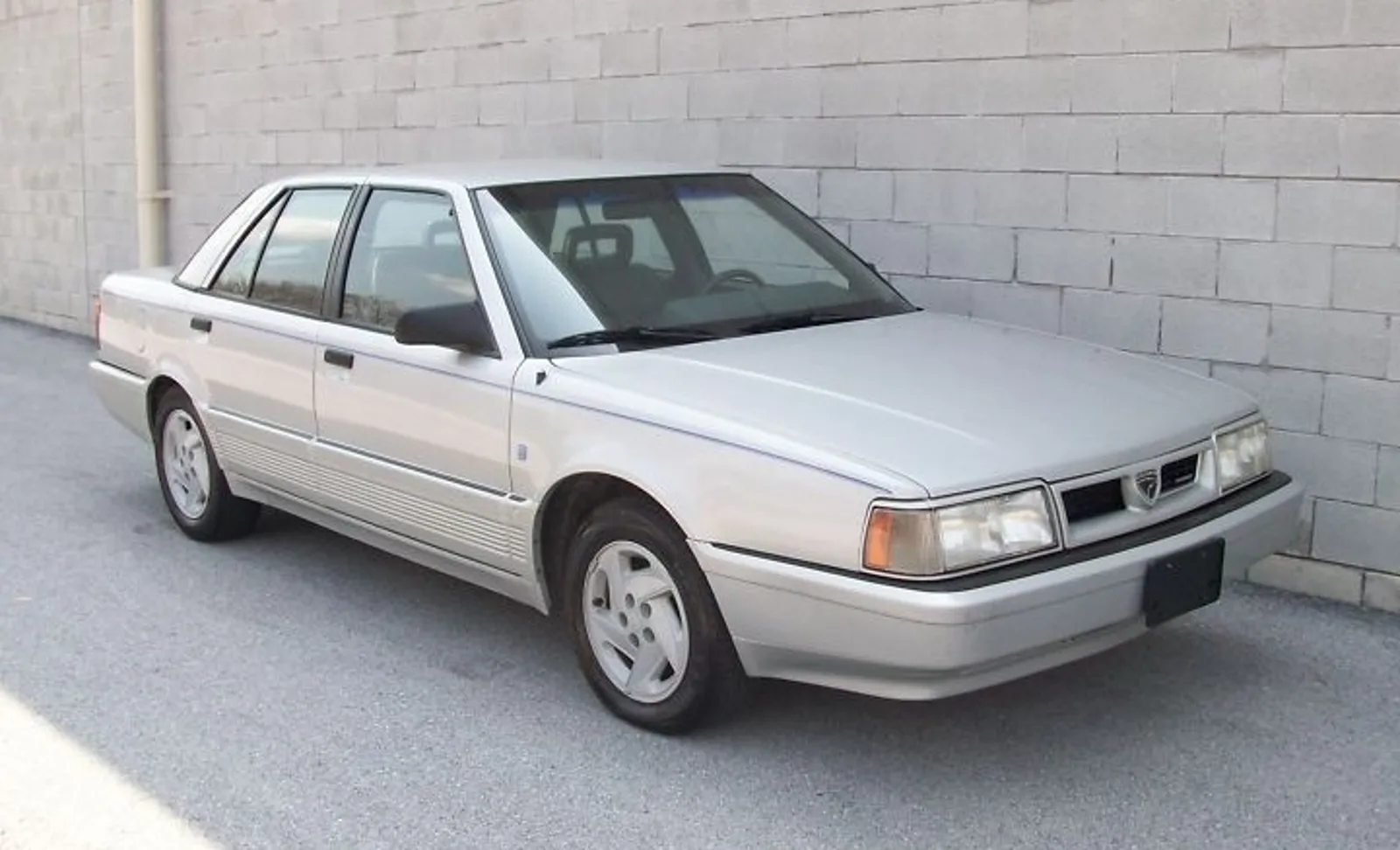
The Premier was AMC's last large push, built on Renault underpinnings, while the Taurus became one of the best-selling cars in America and a turning point for Ford.
The Eagle Premier was AMC's full-size executive sedan, developed with Renault and sold from 1987 to 1991. The Ford Taurus was a mid-size family car from 1985 that Ford built as a showcase for its quality drive, and it sold in very large numbers through the 1990s.
The Eagle Premier and the Ford Taurus were both family-size cars aimed at the same buyers in the late 1980s, but they reached the market by very different routes. The Premier was AMC's ambitious executive car, built on Renault underpinnings and assembled in Canada. The Taurus was Ford's first car designed under a new quality culture, and it went on to become one of the best-selling cars in America.
How did the Premier and the Taurus reach the market?
The Premier was developed by American Motors through its partnership with Renault during the 1980s. Its four-door sedan was built at the new Brampton Assembly in Canada from September 1987 until December 1991, and its first production models rolled off the line on 28 September 1987.
The Taurus was launched in 1985 as a 1986 model, replacing the slow-selling mid-size Ford LTD. It was a major step for Ford because it was the first car built using the statistical process control methods that Ford had adopted on W. Edwards Deming's advice.
Both cars were aimed at family-size buyers, and the Premier's own development plan named the Taurus as one of the cars it had to compete with. The two cars therefore shared a target market from the start.
A short-lived executive car from AMC and Renault against a family car from Ford that became one of the best-selling cars in America.
What was the quality story behind the Taurus?
Ford lost about $3 billion between 1979 and 1982, and the company began a new team approach to design and manufacture in the spring of 1980. That approach led to the Taurus, and it marked a change in how the company thought about quality.
Ford brought in W. Edwards Deming to help start a quality movement. Deming argued that most problems in building better cars came from management decisions, and he put that share at 85%.
By the summer of 1981, Quality is Job 1 had become Ford's calling card, and the Taurus was the first product to carry that message into the showroom. The Premier's own story was different, because it was built around a partnership and a shift in ownership.
How did the two cars look?
The Taurus's outline was rounder than rival cars, and critics compared it to a jelly bean or a flying potato. It drew on the Audi 5000 and the Ford Sierra for its look, and it used a smooth bottom-breather nose with no conventional grille.
The Premier's exterior was styled by Giorgetto Giugiaro's Italdesign, and its drag coefficient of 0.31 was slightly lower than that of the 1986 Taurus. The Premier body was finished with a baked enamel clearcoat in every colour, and it was covered by a seven-year, 100,000-mile body warranty.
The Premier's boot had room for 464 litres (16.4 cu ft) of luggage. The Taurus's shape helped it meet tougher fuel economy standards, which was one of the reasons the design became so influential.
What engines did the two cars offer?
The Premier's base LX used a 2.5-litre AMC four-cylinder engine rated 111 hp (83 kW; 113 PS), with a four-speed ZF automatic. Its optional 3.0-litre PRV V6 produced 150 hp (112 kW; 152 PS) at 5,000 rpm, and it was standard in the ES.
The first-generation Taurus was available with a V6 or an inline four, with either a manual transmission or an automatic. The manual was a five-speed called the MT-5, and the Mercury Sable twin never offered one.
The Premier had a manual-free range, which reflected the automatic-led market of the late 1980s. The Taurus gave buyers the choice of a clutch pedal, which was a distinctive option for a family car of its size.
How did the Premier's economy and performance compare?
The Premier's four-cylinder LX was rated at 22 mpg-US in the city and 31 mpg-US on the highway, which gave it a 527-mile (848 km) range from its 17-gallon tank. The V6 was rated at 18 mpg-US in the city and 27 mpg-US on the highway.
Factory estimates for the Premier put 0 to 60 mph at 11.5 seconds for the four and 10 seconds for the six. Those figures placed the Premier among the quicker family sedans of its era, while its warranty was longer than most competitors offered.
The Taurus's performance story was built on its aerodynamic shape and its V6 options, which kept it competitive in the family-car market. The two cars therefore offered similar V6 power in their different ways.
How did the Taurus's sales compare with the Premier's?
The Taurus sold strongly from its launch, and its first generation built over 200,000 cars in the 1986 model year. The Taurus reached a million sales in 1989, and by the end of 1991 its first generation had passed two million cars.
The Taurus later became the best-selling car nameplate in the United States from 1992 to 1996. In 1996, 51% of its sales went to rental fleets, which was a notable share for a car of its kind.
The Premier's sales figures are not given, and the sedan's run was short. The two cars cannot be compared on sales, which is one of the clearest differences between their histories.
What came after the Premier and the Taurus?
The Premier ended in December 1991, after a rebadged Dodge Monaco had joined the range from 1990. The Premier's design was then used as the foundation for Chrysler's next generation of cars, which shows how far its engineering reached.
The Taurus went on through several generations, moving to the DN101 platform in 1996 and then to a New Edge look in 2000. It was assembled at Chicago Assembly, and it became the fifth best-selling Ford nameplate in North America.
The Taurus also entered NASCAR in 1998, replacing the Thunderbird. That racing role gave the car a presence that the Premier never had.
How do the two cars compare side by side?
| Feature | Eagle Premier | Ford Taurus |
|---|---|---|
| Years on sale | September 1987 to December 1991 | 1985 to 2019 in the United States |
| Drive layout | Front-wheel drive | Front-wheel drive |
| Engines | 2.5-litre four, 111 hp; 3.0-litre V6, 150 hp | V6 or inline four, with manual or automatic |
| Drag coefficient | 0.31 | Slightly higher than the Premier, per the 1986 comparison |
| Cargo space | 16.4 cu ft (464 L) | Not given |
| Production or sales | Not given | 7,519,919 built from 1985 to 2007 |
| Notable honour | Not given | Motor Trend Car of the Year, 1986 |
What did the Taurus's later generations change?
The second generation arrived for 1992 on the same chassis, with revisions to every exterior panel except the doors. It gained several inches in length and more than 200 pounds in curb weight, and it was sold only with V6 engines and automatic transmissions.
The interior was also revised, with an optional passenger-side airbag that became standard for 1994. That step made the Taurus the first mid-size sedan sold in the United States with standard dual airbags, and the second generation went on to reach 1.4 million cars before it ended in 1995.
The third generation came for 1996 on the DN101 chassis, which was heavily upgraded. Its oval rear window and rounded styling drew mixed reaction, and Ford found that customers disliked the oval-shaped exterior.
How did the Taurus feel to use from the driver's seat?
The first-generation interior was designed to be recognisable by touch, so drivers could work the controls without taking their eyes off the road. The power window and lock switches were shaped so that one half was raised and the other recessed, which made each function distinct to the fingers.
The main controls sat in the central area of the dashboard, within easy reach. The left side of the dash curved slightly around the driver, which gave the car a cockpit feel and kept the controls accessible.
The Taurus offered several trim levels and seating arrangements, from a column shifter with a front bench to bucket seats with a floor shifter. The base L had an AM radio and a cloth bench, while the LX came with more equipment as standard.
How did the Premier's cabin compare with the Taurus's?
The Premier's instrument panel carried a heavy dose of electronics, with the driver's controls within a fingertip's reach of the steering wheel. Its dash-mounted gear selector recalled the shifter of a 1955 Chrysler PowerFlite, and the lever dropped into the dash when the gear was selected downward.
The Premier's climate system was unusual: a single up-down button stepped through the heating modes, with lights showing the setting. The optional cruise control sat inside the leather-wrapped steering wheel, and the car's wipers adjusted their speed to the amount of water on the glass.
Both cars put their controls within easy reach of the driver, but the approaches differed. The Taurus stressed touch recognition across simple switches, while the Premier relied on electronic controls and a more unusual layout.
How did the Premier's development history unfold?
In 1982 AMC and Renault started a smaller front-drive full-size car, known internally as X-58 and due in late 1986. A two-door partner, called X-59, was to appear for 1988.
The two body styles were meant to be the first full-size AMC cars since the 1978 Matador. The plan aimed to widen AMC's range beyond its sub-compact Alliance and Encore, as the demand for family-size cars grew.
Chrysler's purchase of Renault's stake changed those plans. The wagon and coupe were cancelled, and the Premier sedan became the only body style in the range.
How did the Taurus's racing career develop?
The third-generation Taurus replaced the Thunderbird in NASCAR from the 1998 season, and it became the first four-door sedan approved for competition. Dale Jarrett won the Winston Cup championship in a Taurus, driving for Robert Yates.
Greg Biffle won the Busch Series championship in a Taurus for Jack Roush. Over time the Taurus won three Winston Cup championships and two Busch Series championships in total.
The Premier had no comparable motorsport presence, which left the Taurus with a racing heritage that the Eagle could not match. That contrast says much about the two companies' different priorities.
Which buyer suits each car?
On the facts given, the Premier suits a buyer who wanted a full-size car with a long warranty, a V6 option and a spacious trunk. The Taurus suits a buyer who wanted a family car with a long production history, a manual option and a strong record for quality.
Premier buyers had a car with a clear European touch, including its styling and its electronically controlled controls. Its interior was designed by AMC's in-house team under Dick Teague, which made it a distinctive choice in the Chrysler range.
Taurus buyers had a car that was easy to use, with controls designed to be recognised by touch. Its shape and quality campaign made it one of the most successful cars in the country for several years.
Neither car is shown to be better overall, and the Premier's sales figures are not given. The choice depends on whether a buyer wanted a short-lived executive car from AMC or a long-running family car from Ford.