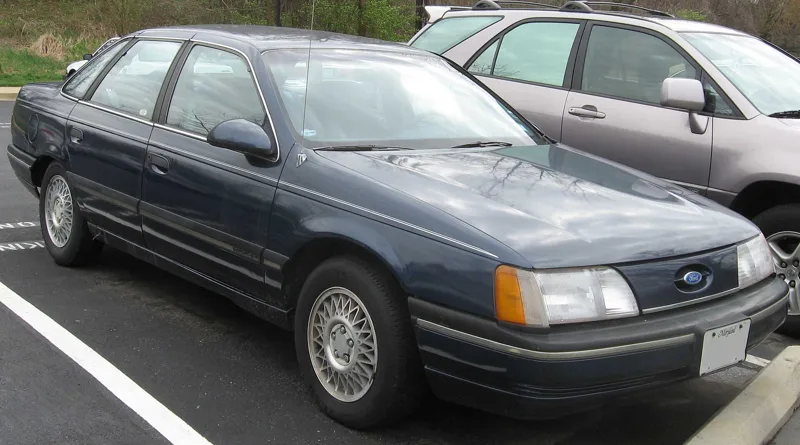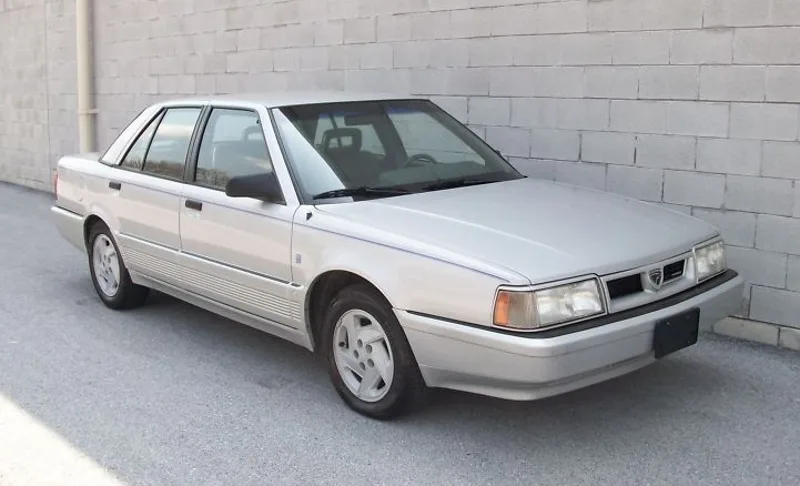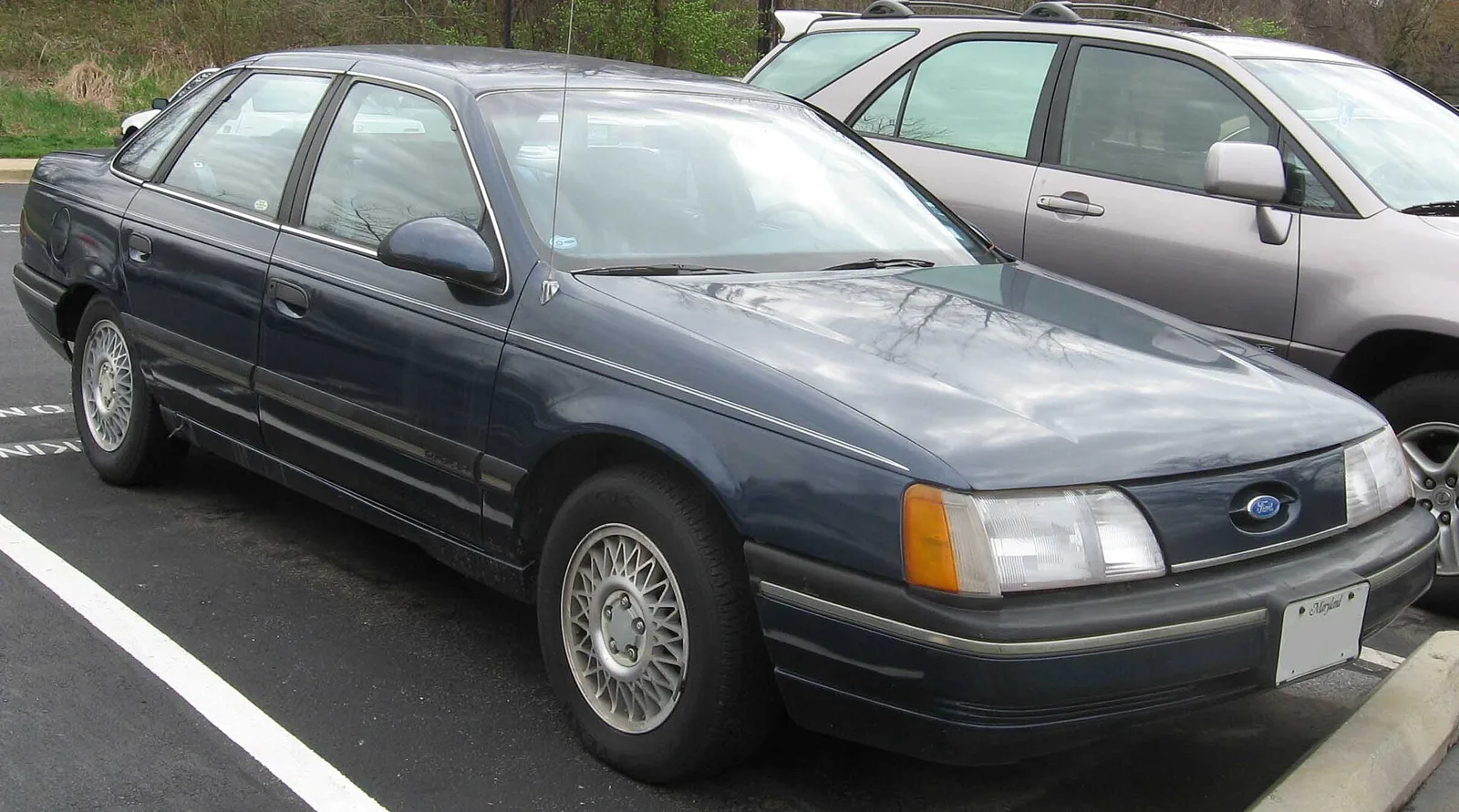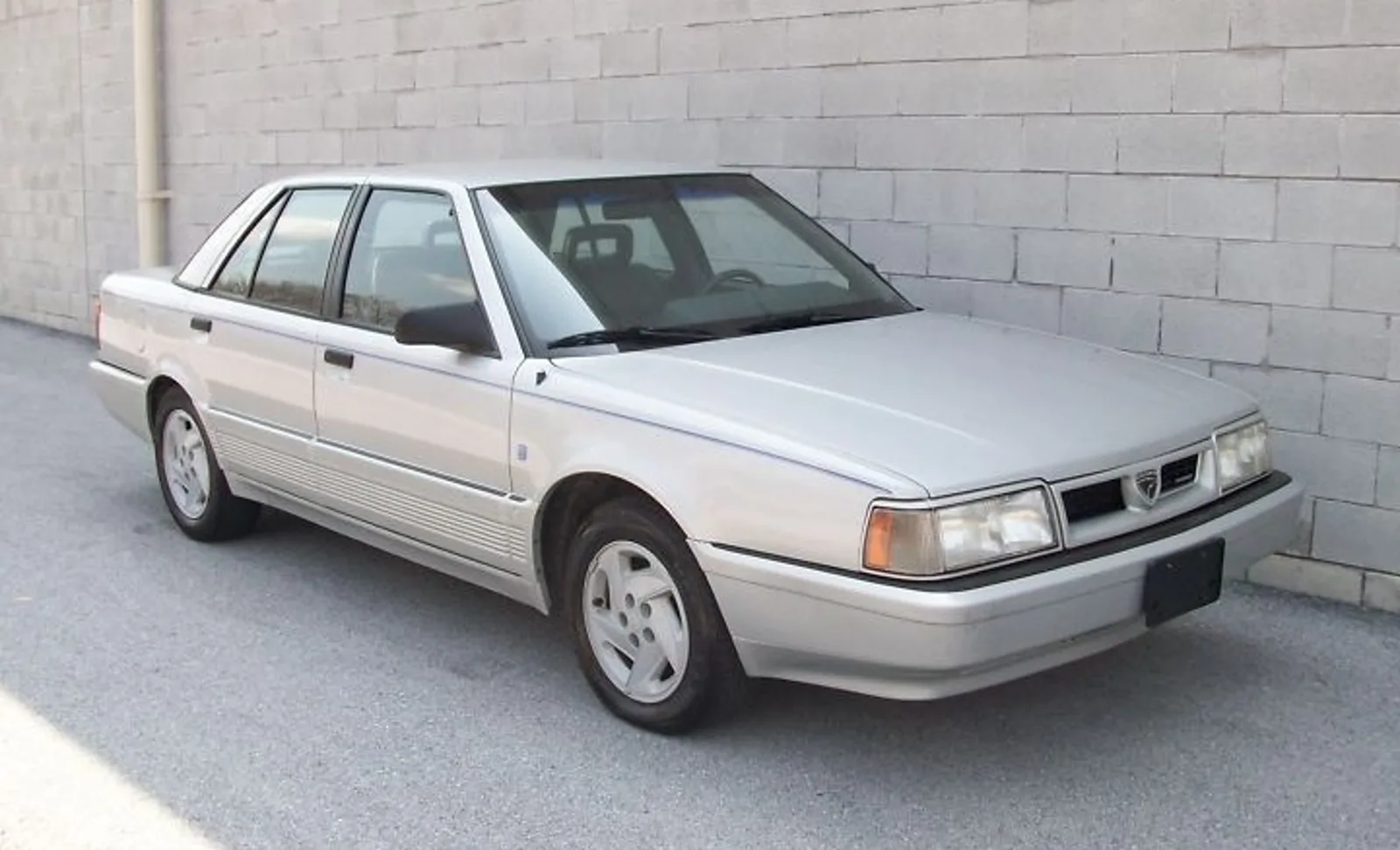
A Renault-based Chrysler-era Eagle with a 122 cubic-foot cabin, against the Ford that had launched the aerodynamic American sedan a few years earlier.
The Ford Taurus launched in December 1985 as a 1986 model and became the aerodynamic benchmark of its time. The Eagle Premier was built on a Renault 25 platform at Brampton, Ontario, from 1987 to 1991, with a 150 hp V6 and 122 cubic feet of interior room.
The Eagle Premier and the first-generation Ford Taurus were both aerodynamic American-market sedans of the late 1980s, and they shared a showroom for a few model years. The Taurus had launched the aerodynamic trend that rivals chased, while the Premier was a Renault-based car that Chrysler inherited with the rest of AMC. One came from Detroit's most ambitious programme, the other from a company that had just bought a smaller rival.
Which launched first, and how long did each last?
The Taurus came first. It was launched on 26 December 1985 as a 1986 model, and it became one of the most influential cars of its decade. The Premier followed. Its first production cars were built on 28 September 1987, and the car was launched in January 1988.
The Taurus ran through 1991, and more than 2,000,000 first-generation cars were sold by the time production ended. The Premier's four-door sedan was built from September 1987 for the 1988 model year until December 1991, which made its run much shorter.
Chrysler bought Renault's stake in AMC in 1987 and began selling the Premier under the new Eagle brand. The Taurus had been a Ford project from the start, built in an effort that Ford's board treated as a bet on the company's future.
A Renault-based Eagle with a huge cabin, against the Ford that made the aerodynamic American sedan the standard.
What were the two cars built on?
The Premier was a downsized full-size front-drive car, built on the Renault 25's monocoque and adapted for AMC. Its suspension was derived from the Renault Medallion, with four-wheel independent suspension, MacPherson struts at the front and four torsion bars across the car at the rear.
The Taurus was an entirely American project, developed by Ford engineers at its headquarters. Its front-wheel drive layout was central to the design, and its suspension was tuned against the Toyota Camry, Honda Accord and the BMW 5 Series.
The Premier was designed to be the first full-size AMC car since the 1978 Matador, and it was meant to reposition the company. The Taurus, by contrast, was designed to replace the Ford LTD.
How did the two designs take shape?
The Premier's exterior came from Giorgetto Giugiaro's Italdesign, which was picked over other concepts from AMC's styling department and independent firms. Its drag coefficient of 0.31 was slightly lower than that of the 1986 Taurus, which had been known for its aerodynamic shape.
The Taurus was styled by Ford's own team under Jack Telnack, with the sedan exterior led by Ray Everts and the wagon by Jeff Teague. Its drag coefficient was 0.32, and its jelly-bean look was inspired by the Audi 100 and Ford's own Tempo.
The Taurus also introduced flush composite headlights, which American rules had to be changed to allow. Its nose had a bottom-breather design, with a front panel in place of a grille, and its wheels were pushed out to the ends of the frame.
How did the interiors compare?
The Premier's interior was designed in-house by AMC under Dick Teague, and its 122 cubic feet of interior room was more than most of its contemporaries offered. The dash-mounted gear selector recalled the 1955 Chrysler PowerFlite shifter, and most driver controls sat within fingertip reach of the steering wheel.
The Premier had other features that were unusual at the time. Its turn signal stopped itself after a turn with a sounding gong, cruise control sat in the steering wheel, and its variable-speed wipers reacted to how much water hit the windscreen.
The Taurus interior was built around touch. Its switches were shaped so that drivers could identify them without looking, and the main controls were grouped in the centre of the dash. The car offered three interior configurations, from the spartan L with its AM radio and cloth bench to the LX.
What engines did each car offer?
The Premier's base engine was a 2.5-litre AMC four with electronic throttle-body fuel injection, rated 111 hp (83 kW; 113 PS) and 142 lb-ft (193 N-m). It was paired with a ZF four-speed automatic, and the car was rated at 22 mpg-US in the city and 31 mpg-US on the highway.
The Premier's 3.0-litre PRV V6 was optional on the LX and standard on the ES. It produced 150 hp (112 kW; 152 PS) at 5,000 rpm and 171 lb-ft (232 N-m) at 3,750 rpm, with an EPA rating of 18 mpg-US city and 27 mpg-US highway. Acceleration to 60 mph took 10 seconds with the V6, against 11.5 seconds for the four.
The Taurus was offered in a four-cylinder MT-5 for Japanese buyers, along with its 2.5-litre four and 3.0-litre V6 engines, and the SHO brought the high-performance version. The Taurus's engine and drivetrain also went into the 1988 Lincoln Continental.
Specifications side by side
| Specification | Eagle Premier | Ford Taurus (first generation) |
|---|---|---|
| Launch | January 1988; first production cars 28 September 1987 | 26 December 1985 as a 1986 model |
| Production end | December 1991 (1992 model year) | 1991; over 2,000,000 built |
| Body styles | Four-door sedan only; wagon and coupe cancelled | Sedan, wagon, SHO and Sable variants |
| Platform | Renault 25 monocoque, adapted for AMC | Ford front-wheel drive, developed in-house |
| Suspension | Four-wheel independent, MacPherson struts front, torsion bars | Tuned against Camry, Accord and BMW 5 Series |
| Base engine | 2.5-litre AMC four, 111 hp (83 kW; 113 PS) | Not given |
| V6 engine | 3.0-litre PRV V6, 150 hp (112 kW; 152 PS) | 3.0-litre V6, offered to Japanese buyers |
| Transmission | ZF four-speed automatic | Not given |
| Fuel economy | Four-cylinder 22 mpg-US city, 31 mpg-US highway; V6 18 and 27 mpg-US | Not given |
| 0 to 60 mph | 11.5 seconds four-cylinder; 10 seconds V6 | Not given |
| Drag coefficient | 0.31 | 0.32 |
| Cargo or trunk space | 16.4 cu ft (464 L) | Not given |
| Interior room | 122 cubic feet | Not given |
| Warranty | Seven years or 100,000 miles on the body; seven years or 70,000 miles on powertrain | Not given |
| Build location | Brampton, Ontario | Not given |
| Japanese sales | Chrysler Premier ES, 1989 and 1990 | Autorama dealers from 1988 to 1991 |
How did the Premier change over its model years?
The 1988 LX seated six, with reclining 55/45 split front benches and a rear seat with a fold-down centre armrest. The ES had individual front bucket seats with see-through headrests and a full-length console, and it seated five adults.
The Premier launched in 1988, arriving a little more than a year after the Taurus had already become a sales phenomenon. The second model year added cruise control and a mid-year ES Limited, with monochrome paint and eight Accusound speakers. A two-door companion that was announced never appeared.
In 1990 the Premier was substantially reengineered, with standard four-wheel disc brakes and a stainless exhaust. Chrysler's own electrical parts replaced the original system, and the four-cylinder engine was officially dropped, leaving the V6 as the only engine.
That year Dodge also sold a badge-engineered Premier as the Dodge Monaco, a name Dodge had used on a full-size rear-drive sedan until 1978. The Premier was intended to be the base for Chrysler's next generation of cars, and it ended production in December 1991.
How did the Taurus develop through its run?
The Taurus was not a static car either. The 1989 model year brought new door panels with armrests and side speakers, along with a new grille and headlights. The 1990 model year redesigned the dash, and the steering wheel gained an airbag as Ford made it standard across its cars.
The Taurus also gained a family of variants. The Mercury Sable, the high-performance SHO and the Lincoln Continental engine all came from the same basic car, which helped the first generation sell well into the 1990s.
How did Ford and Chrysler approach their launches?
Ford's Taurus team consulted customers closely. Radios, steering wheels, seats, wheels and whole suspension setups were chosen by large numbers of ordinary people in surveys, and engineers took apart the Camry, Accord and BMW 5 Series to study their parts.
The Taurus was unveiled in mid-1985 at a studio where Gone with the Wind had been filmed, with a space-themed event that drew the press and executives. Many journalists and executives at Ford and Chrysler expected it to fail, and Ford's own executives knew a too-advanced design could repeat the Edsel's fate.
Chrysler's view of the Premier was more measured. Bob Lutz, then a Chrysler vice president, counted it among the new products Chrysler gained from AMC, a small automaker with few resources. Eagle marketing built on the car's independent suspension and on its seven-year, 70,000-mile protection plan.
How did the cars sell and get reviewed?
The Taurus sold over 200,000 units in its 1986 model year and passed a million sales by 1989. Motor Trend named it Car of the Year for 1986, and Car and Driver placed it on its Ten Best list for the same year.
The Premier also had a press following. Car and Driver's road test found it competitive, and journalists described it as a world-class car with the most powerful conventional engines in its field.
The 1986 Taurus has kept its reputation. It placed sixth on USA Today's 2007 list of 25 cars that made a difference, and the Henry Ford Museum displays the Motor Trend test car in its automotive history showroom.
The Taurus was used in films, including RoboCop in 1987 and Back to the Future Part II. Modified Taurus sedans played police cars in the first, and one of them is on display at the Branson Auto Museum in Missouri.
How did the Taurus reach Japan?
In 1988 the Taurus was exported to Japan in limited numbers through Autorama, a joint venture with Mazda. The LX and SHO were sold there in sedan and wagon form with left-hand drive until 1991.
Japanese buyers saw the Taurus as a luxury car. Its size and engine capacity exceeded the Japanese regulation limits, so owners paid extra tax, and the larger engines also added to annual road tax, which hit sales.
The Premier had its own Japanese run. It was sold there from 1989 as the Chrysler Premier ES, with the 3.0-litre V6, a four-speed automatic and a model code of E6U, with amber rear indicators added to meet local rules.
Which buyer suits each car?
A buyer who wanted a large sedan with a long cabin, flush styling and a V6 would have looked at the Premier. Its cabin room and warranty were strong selling points for a car with a short run.
A buyer who wanted a car that set the aerodynamic standard, with a wide range of body variants and a long run, would have looked at the Taurus. Its record of sales, awards and film appearances suited a car that stayed at the centre of the market.
The Taurus won the sales race by a wide margin, but the Premier's interior and warranty gave it a case of its own. Neither car set a clear winner in every measure, and the choice depended on which set of features a buyer valued.