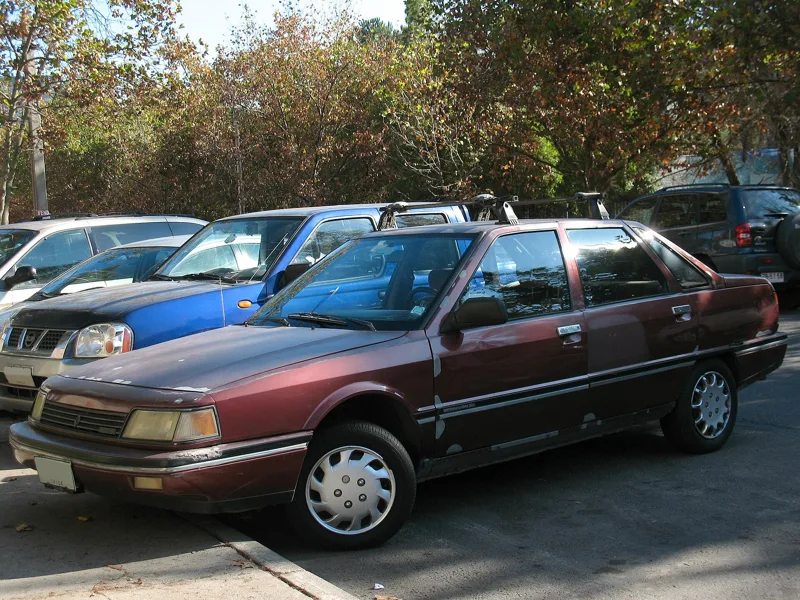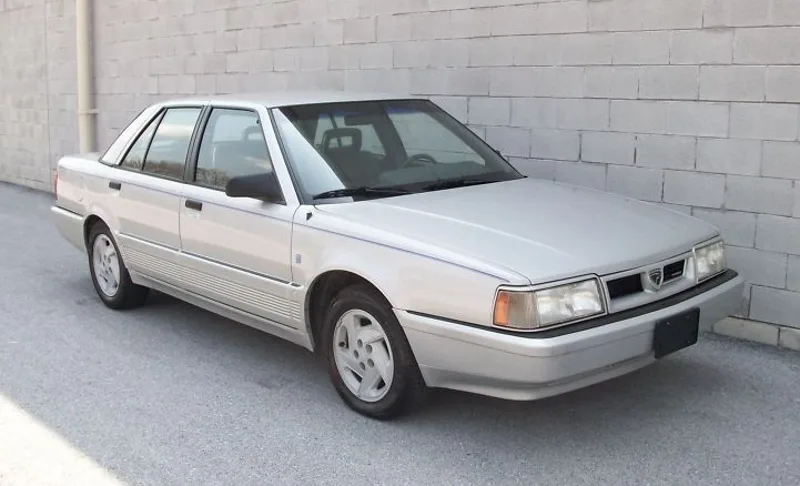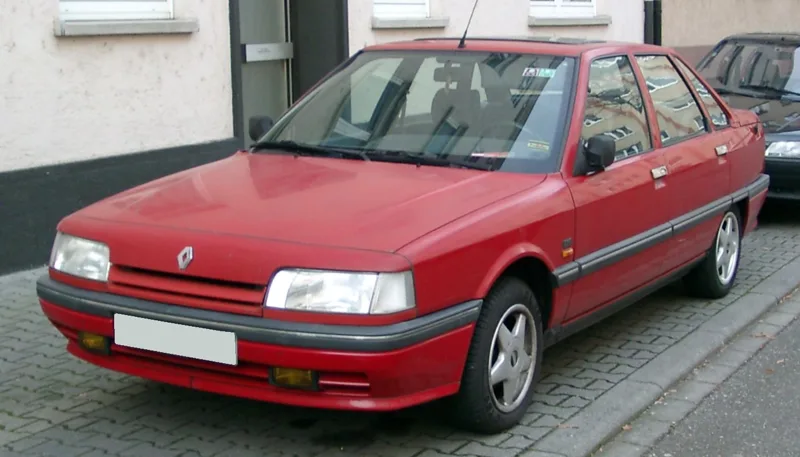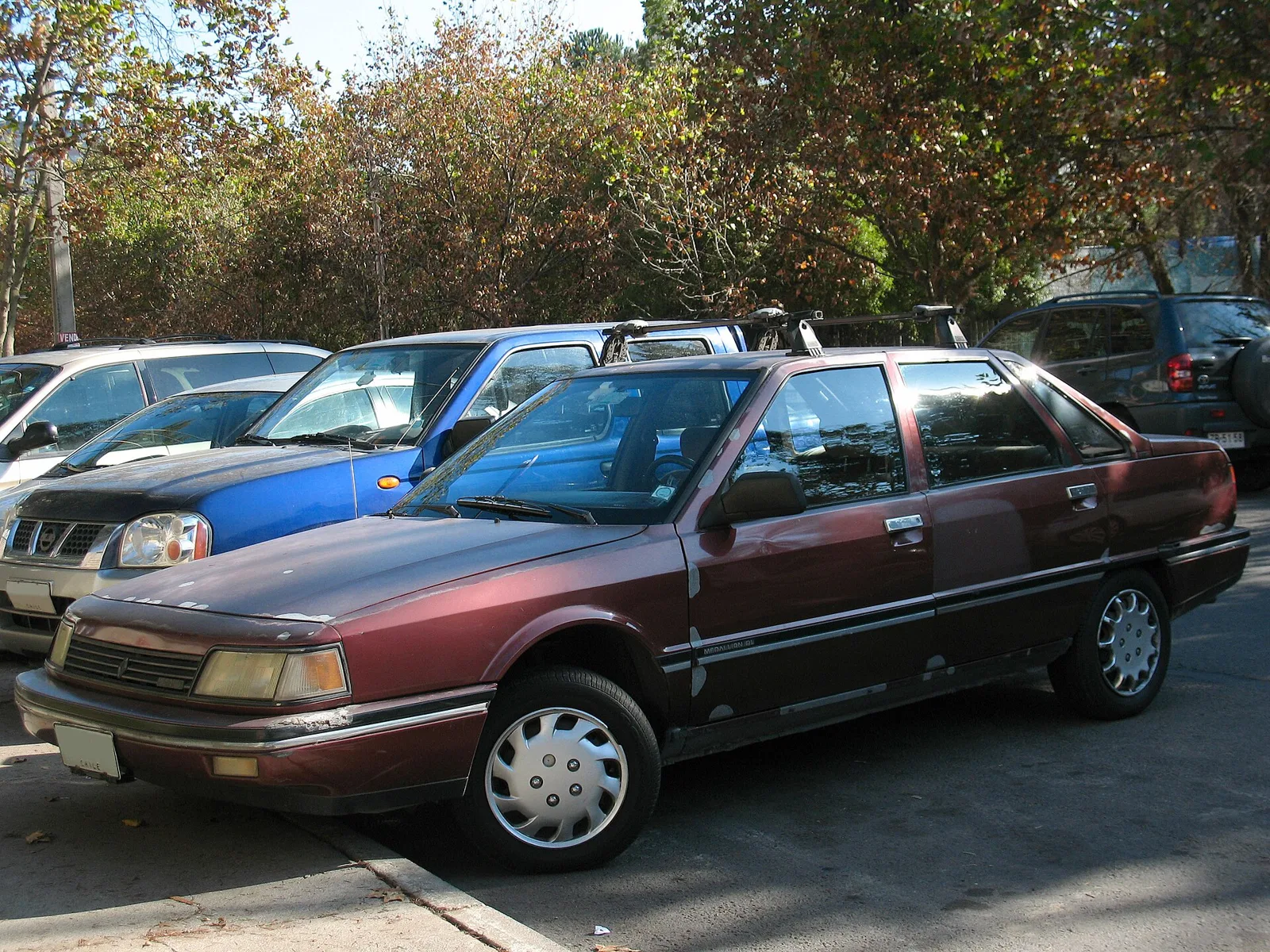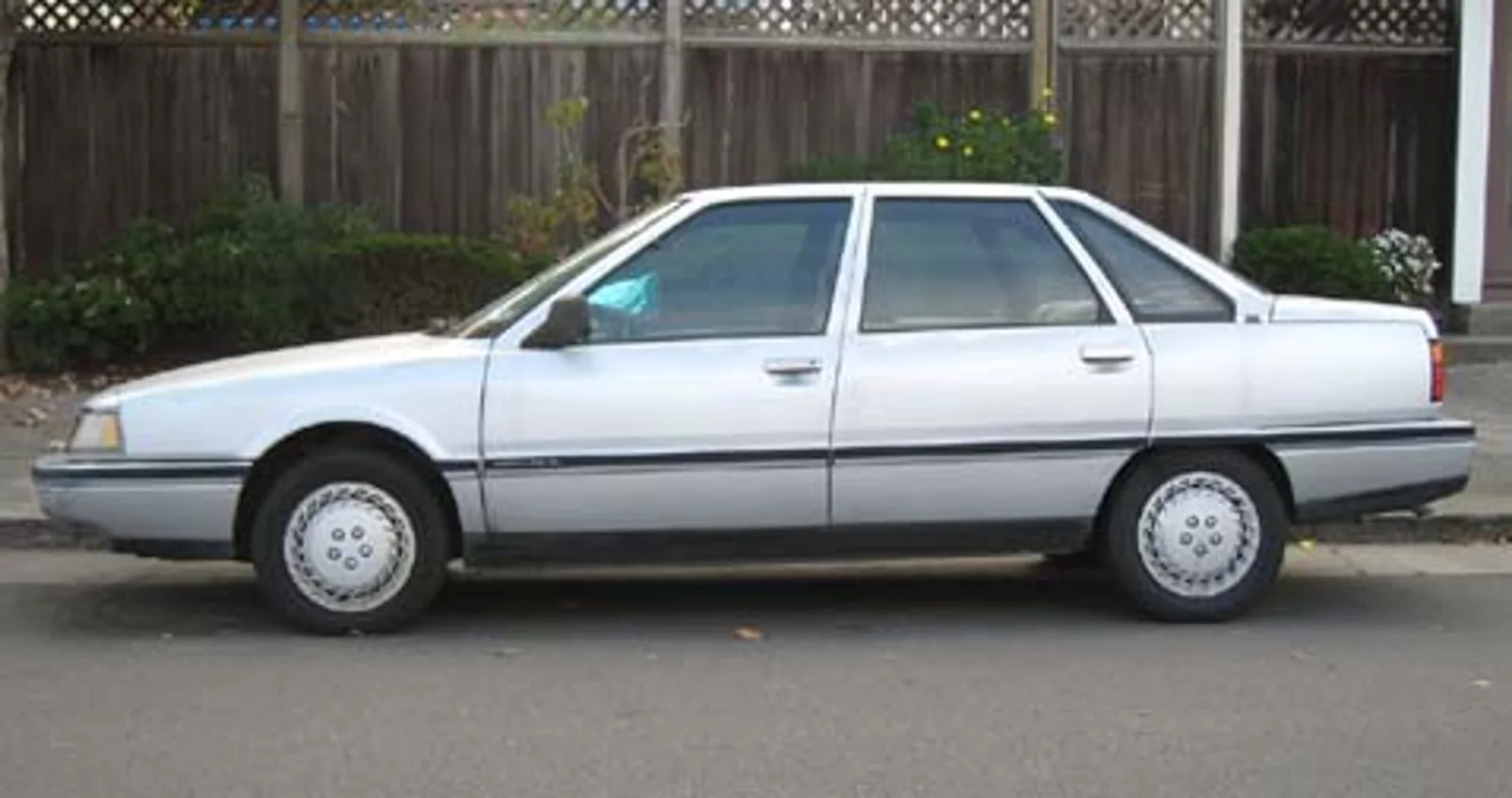
A Renault 21 rebadged for North America, a front-wheel drive family car with a 103 hp engine, a Chrysler buyout in the middle of its life and an Eagle badge in its final year.
The Eagle Medallion was a rebadged Renault 21 sold in North America from 1987 to 1989. It used a 2.2 L engine producing 103 hp (77 kW; 104 PS), had front-wheel drive and sold 25,672 units in the US over three calendar years.
The Eagle Medallion was a mid-size four-door built on the French Renault 21 and sold in North America from 1987 to 1989. It was marketed as a Renault first, then as an Eagle after Chrysler bought American Motors, and it never had a direct successor in the United States.
What was the Eagle Medallion?
The Medallion was a rebadged, mildly re-engineered North American version of the Renault 21, a front-wheel drive four-door in the D-segment. It was sold under the Renault brand for the 1988 model year and under the Eagle name for 1989, after Chrysler took over American Motors.
The Renault 21 had been introduced in Europe in 1986 to compete in the large family car market, where the VW Passat was a key rival. Giorgetto Giugiaro designed the body, and it was later modified to meet United States requirements for safety and emissions.
The car was built at Maubeuge in France on the European platform, then re-engineered for North American buyers. Final assembly of options and trim took place at a facility at the US port of entry.
A Renault 21 with a Chrysler badge: a well-engineered family car that arrived just as its owner changed.
How did the Medallion look?
The Medallion had a crisp, wedge-shaped body that was described as contemporary and aerodynamic. Its flush-mounted composite headlamps were a first for an AMC vehicle, and the flush grille carried three horizontal black bars under a prominent Renault diamond logo on the front of the car.
The rear wheel arches were slightly skirted, and the fixed chromed door handles hid squeeze-type actuators. The decklid wrapped over the tops of the rear fenders, and the taillights differed by trim, with DL sedans showing smoked lenses and LX sedans red ones.
The Renault 21 design most closely resembled the aerodynamic look of the Audi 100 introduced in 1983, which set it apart from the more rectilinear cars of its era. One automobile journalist judged the wagon arguably the most stylish compact wagon on the market.
Why did American Motors import the Renault 21?
American Motors needed a larger car for its dealers. From 1984 until 1987 its Renault dealers had no sedan larger than the Alliance, and the Medallion was meant to fill that gap as the second part of a three-model plan.
The plan began with the Alliance for the 1983 model year, and the Eagle Premier followed ten months after the Medallion. Together the three models were meant to widen the range beyond the four-wheel-drive Jeep utility vehicles that the dealers had relied on.
American Motors planned to sell 40,000 to 45,000 Medallions a year. The Medallion followed the slow-selling Renault 18i Sportwagon and the AMC Concord, which had left the line after 1986 and after 1983 respectively.
How did the Medallion change owners?
The Medallion went on sale on 1 March 1987, just eight days before Renault sold its stake in American Motors to Chrysler on 9 March 1987. It had been badged Renault at its winter 1986 press launch and kept that name through the 1988 model year.
Chrysler formed the Jeep/Eagle division in the fall of 1987, but it waited until the 1989 model year to rebrand the Medallion as an Eagle. Eagle was Chrysler's first new brand since 1955, and the cars carried the Eagle head logo rather than the Chrysler badge.
The buyout also kept AMC's programme of distributing Renault cars in the United States for five years, although Chrysler did not sell the originally contracted number of imports.
What engine did the Medallion use?
The Medallion used the aluminum 2.2 L four-cylinder that also powered the European Renault 25. Its overhead cam engine, fitted with Bendix multi-point fuel injection, made 103 hp (77 kW; 104 PS) at 5000 rpm, with peak torque of 168 N m (124 pound force-feet) at 2500 rpm.
The engine sat longitudinally, which was unusual for a front-wheel drive car of the period. Renault used transverse engines below 2 litres and longitudinal engines above 2 litres, because the larger units needed stronger gearboxes than a transaxle could take.
The longitudinal layout let Renault use equal-length half-shafts from a central gearbox, and that reduced torque steering from the larger engines. Audi, Saab and Subaru also used longitudinal engines with front-wheel drive in that era. Power went to the front wheels through a 5-speed manual or a 3-speed computer-controlled automatic.
Fuel economy depended on the gearbox. With the manual, EPA ratings were 42 mpg-US on the highway, 27 mpg-US in the city and 33 mpg-US combined. The automatic managed 33 mpg-US on the highway, 22 mpg-US in the city and 26 mpg-US combined.
How did the Medallion ride and handle?
The Medallion had four-wheel independent suspension, with MacPherson struts at the front set with negative offset and inclined lower wishbones for anti-dive. At the rear a V-section cross-member carried four transverse torsion bars and inclined shock absorbers.
Press reactions to the ride were broadly favourable. One long-term test by Popular Mechanics described the car as low on flash but high on comfort, particularly on long journeys and on the roughest roads in New York City.
Milwaukee Sentinel praised the car's peppy performance and smooth ride, but it criticised the sedan's light weight of 2,420 lb (1,098 kg) on open roads in the wind. The insulation against road noise also seemed inadequate to that reviewer.
How much space did the Medallion offer?
The sedan had a total volume index of 115 cubic feet (3,256 L), which placed it in the mid-size class under EPA rules. The station wagon offered 100 cubic feet (2,832 L) of passenger space and 42 cubic feet (1,189 L) of cargo volume behind the second row.
The wagon's wheelbase was 5.9 inches (150 mm) longer than the sedan's, which followed French station wagon practice of using length for interior room. Its rear doors were also longer, to help people reach the optional third seat.
The sedan also had a rather commodious trunk. The wagon could seat five adults plus two children on an optional bench, and that third-row bench faced forward in the cargo area. For a family looking at mid-size cars, it was a practical layout that few rivals offered at the time.
What did the 1988 Medallion include?
The 1988 line-up comprised DL and LX sedans and a DL wagon. Standard equipment included a tachometer, digital clock, AM/FM stereo, tinted glass, tilt steering, power steering, power brakes and a driver's seat-height adjuster.
Kiplinger's Personal Finance called the wagon surprisingly comfortable for its $10,693 base price, with a long list of standard features. The magazine described the interior as spartan but spacious and comfortable.
An optional Ultra Plan warranty with scheduled maintenance was offered for the 1988 model year, and George C. Scott fronted commercials for Renault products that year. The advertising stressed the car's larger size, competitive power and warranty coverage.
Why did the Medallion struggle to sell?
The Medallion sold 25,672 cars in the United States over three calendar years, well short of the volumes American Motors had planned. Its launch was hampered by the company's limited marketing resources, and the car was caught in the change from American Motors to Chrysler ownership.
Chrysler was focused on import intenders rather than working with an independent Renault. The Medallion also sat alongside numerous domestic and imported rivals that were easier to sell to buyers of mid-size cars.
Acura had launched the Legend and Integra in 1986, adding a further competitor in a crowded segment. Robert Lutz, who ran Chrysler at the time, wrote in his 2003 book Guts that the Medallion and the larger Premier were sales proof. He meant that no matter how attractive and competitive the cars were, buyers in large enough numbers would not take notice.
What was the 1989 Eagle Medallion?
For 1989 the Medallion became an Eagle, sold through the Jeep-Eagle division with Chrysler's 7/70 Protection Plan covering the whole vehicle for seven years or 70,000 miles (110,000 km). Its rear carried an imported for Eagle badge, and it was the last year Chrysler imported the car.
Chrysler ended imports despite generally favourable reviews, and it discontinued the Medallion soon after buying American Motors. Its plans had called for a four-wheel-drive wagon to replace the sedan by 1990.
That wagon never reached US showrooms in the form Chrysler intended. The Eagle division did not offer a four-wheel-drive station wagon until the 1992 Eagle Summit Wagon, while a four-wheel-drive Eagle Vista was sold in Canada from 1989 through 1991.
Did the Medallion have a successor?
No direct successor reached the US market. Eagle studied several mid-size concepts in later years, including the Eagle Jazz and the Eagle Optima, but in Canada the Medallion was replaced by the Mitsubishi Galant-based Eagle 2000GTX.
The Eagle range was largely badge-engineered from Chrysler's Japanese partner, Mitsubishi Motors, a relationship that dated back to 1971. Chrysler was investing in the Diamond-Star Motors venture and building a plant in Normal, Illinois, able to turn out almost a quarter-million vehicles a year.
The Medallion enjoyed a nine-year model run outside the States, a longer life than its short North American career suggests. Its story is closely tied to the ownership changes of 1987 and 1989.
What are the Eagle Medallion specifications?
| Specification | Detail |
|---|---|
| Launch | 1 March 1987 in North America |
| Model years | 1988 to 1989, as Renault and then Eagle |
| Engine | 2.2 L aluminum I4, 103 hp (77 kW; 104 PS) at 5000 rpm |
| Torque | 124 pound force-feet (168 N m) at 2500 rpm |
| Transmission | 5-speed manual or 3-speed computer-controlled automatic |
| Manual economy | 42 mpg-US highway, 27 mpg-US city, 33 mpg-US combined |
| Automatic economy | 33 mpg-US highway, 22 mpg-US city, 26 mpg-US combined |
| Sedan volume | 115 cubic feet (3,256 L) |
| Wagon passenger space | 100 cubic feet (2,832 L) |
| Wagon cargo volume | 42 cubic feet (1,189 L) behind the second row |
| Wagon base price, 1988 | $10,693 |
| US sales | 25,672 over three calendar years |