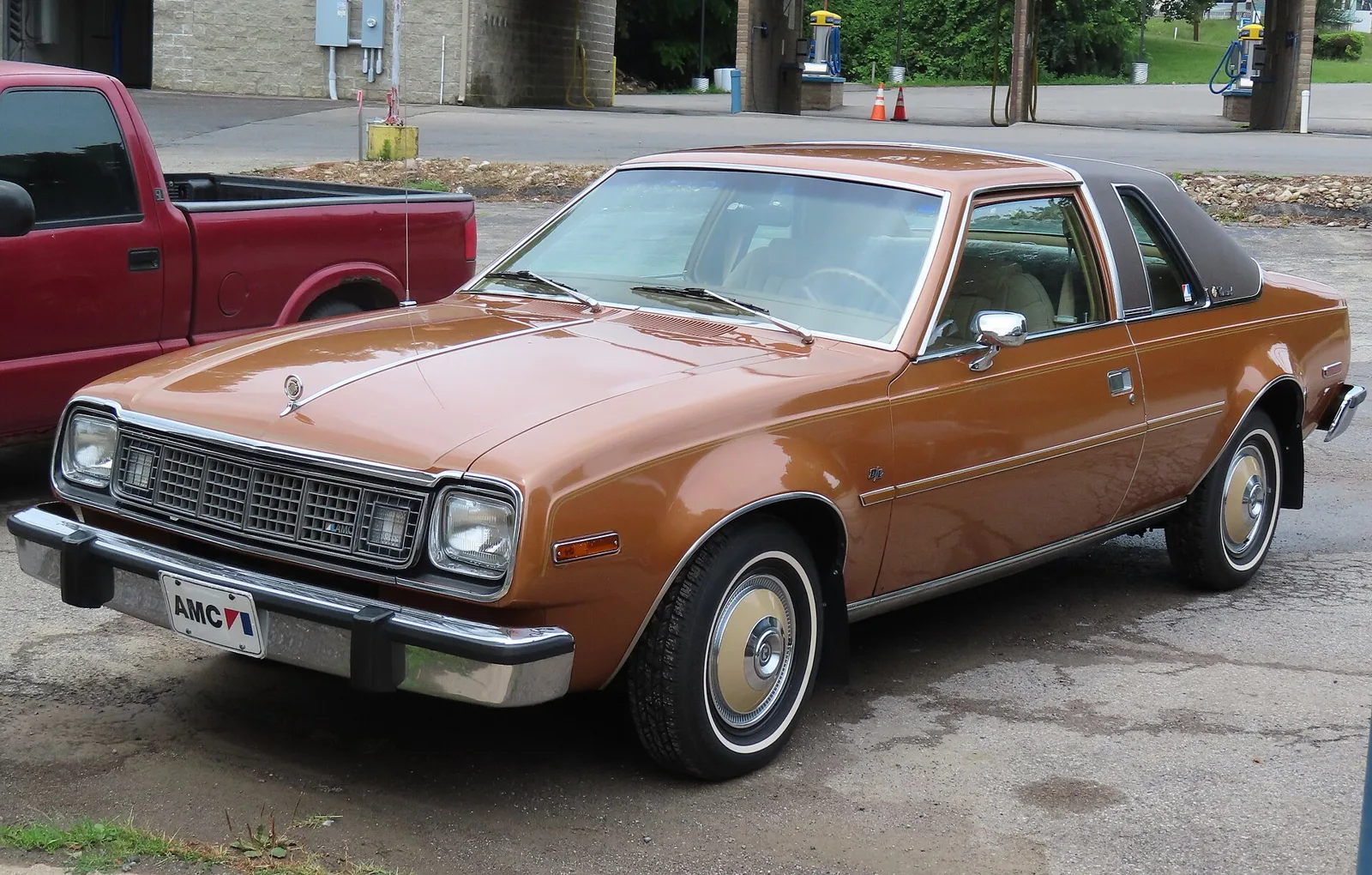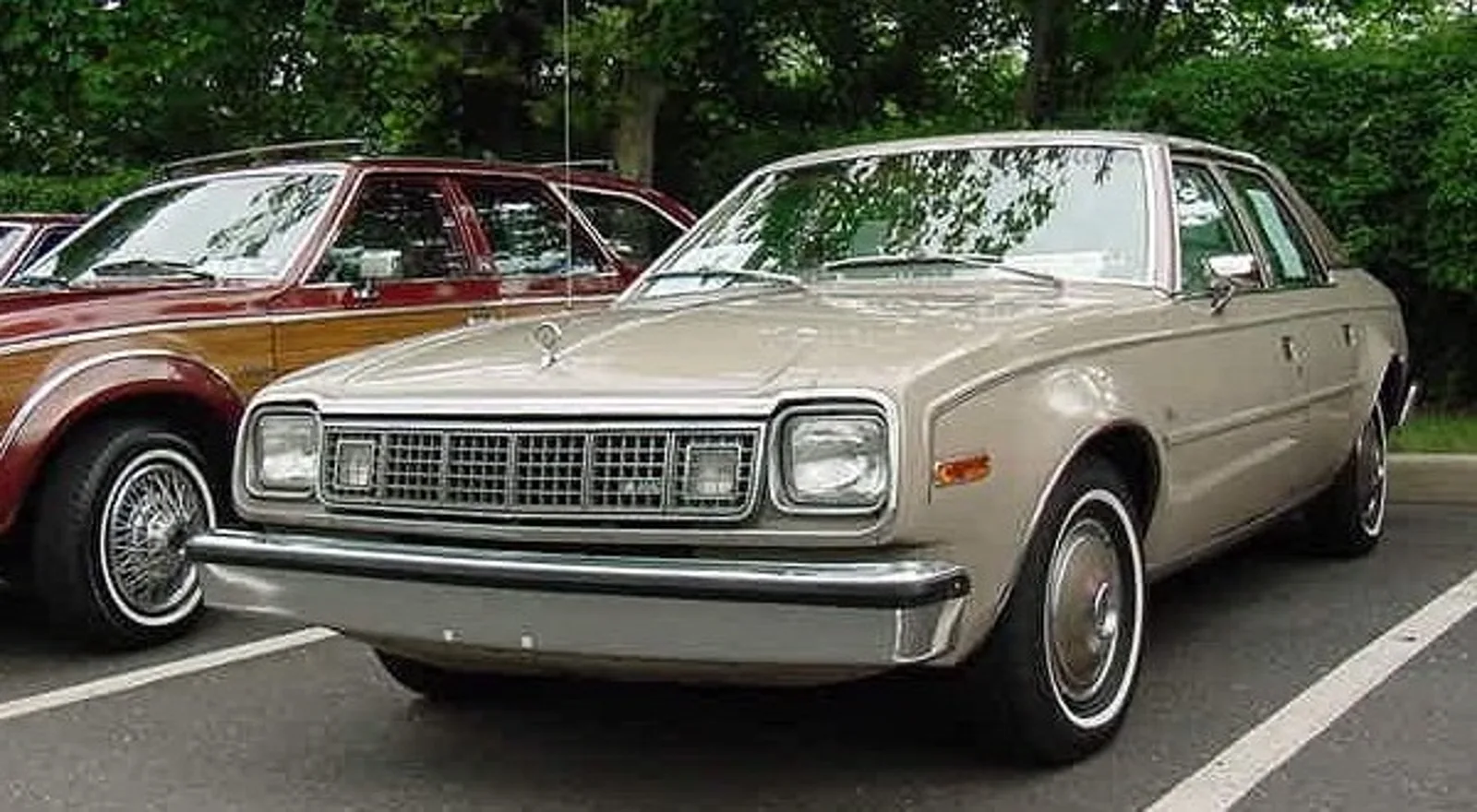
A restyled and better-equipped Hornet, the 1978 to 1983 Concord ran as a sedan, coupe, hatchback and wagon, spawned a sporty AMX and built over 406,000 cars.
The AMC Concord was a revised, better-equipped Hornet sold from the 1978 to 1983 model years as a sedan, coupe, hatchback and wagon. It sold more than any other AMC car line in its first year and passed 406,000 units before production ended.
The AMC Concord was a compact car made by American Motors Corporation for model years 1978 through 1983. It was essentially a revision of the Hornet, but quieter, better equipped and smoother riding, and it became AMC's volume seller until the Renault Alliance arrived. Sedan, coupe, hatchback and wagon bodies were offered at different times.
Where did the AMC Concord come from?
American Motors lacked the money to develop an entirely new car to replace its aging Hornet, so the Concord was a revision of that design. The competition was tough: Ford's Fox platform arrived for 1978 as the Fairmont and Zephyr, and GM was downsizing its rear-drive intermediates to the same 108-inch wheelbase as the Hornet.
The goal was a premium compact with a competitive opening price in the mid-US$4,000 range, which came to US$19,745 in 2025 dollars after adjusting for inflation. Gerald C. Meyers led the company that transformed the austere Hornet, while Dick Teague, AMC's top car designer, shaped the new look.
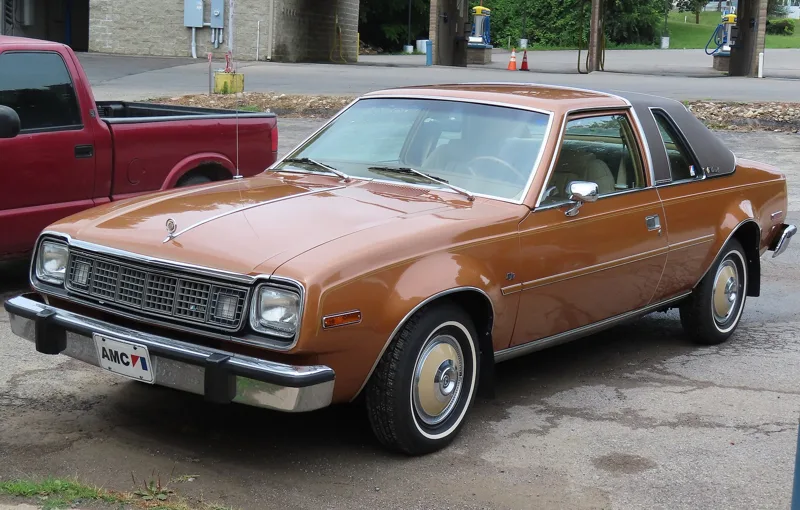
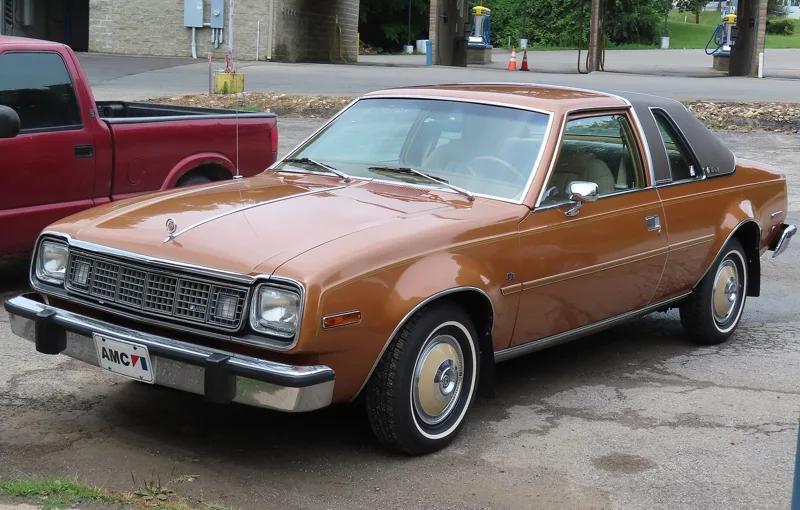
Teague borrowed the facelifted 1977 Gremlin's front fenders and put a new hood over a six-section chrome egg-crate grille with white parking lights. Rectangular headlights, new bumpers, tri-colour taillights and a stand-up hood ornament with a Concord emblem completed the restyle. Cars with the optional D/L package could also have a quarter-vinyl roof.
A revised Hornet with a quieter ride, a luxury trim list and a sporty AMX sibling that kept AMC in the market.
What did the 1978 Concord offer?
The first Concords came in base and top-line D/L trim across four body styles. The base sedans were aimed at fleet buyers, while the D/L was the model AMC chose to promote, with no extra charge for its luxury features.
Engineers focused on quietness. The new car gained extra sound insulation, and its front suspension and rear axle were isolated from the body structure. All Concords had insulation in the dashboard and front floor, and top models added molded fiberglass headlining and sound-absorbing pads behind the interior panels.
The D/L brought the period's luxury cues, including a landau vinyl roof with opera windows on the coupe, colour-keyed wheel covers, velveteen reclining seats and woodgrain instrument panel overlays. A Touring Wagon package added a beige interior with orange and brown accents, extra-thick 24 oz carpet and a beige leather-wrapped steering wheel.
The Concord also had a stiff body inherited from the Hornet. Crash tests run by the National Highway Traffic Safety Administration gave the four-door Concord a nine percent probability of injury for a struck vehicle, against 97 percent for the two-door Nissan Sentra.
The result sold well. The Concord outsold all other AMC car lines combined in its first year, and the two-door coupe made up almost half of 1978 production.
How did critics and owners judge the Concord?
Popular Science rated the Concord top for trim level. Its reclining seats were covered in a velvet-like fabric that the magazine said would do a Cadillac proud, and its inline six was described as close to a V8 in smoothness, power and noise levels.
The same comparison warned that the car's high-quality materials and attractive dashboard would have looked expensive, were it not for poor quality control. Even so, the Concord stood out among the new compacts it was tested against, including the Ford Fairmont, Plymouth Volare and Pontiac Phoenix.
A Popular Mechanics survey of owners recorded 1,127,000 miles of combined driving. Drivers reported few and rather minor gripes, and 30 percent of Concord owners listed no complaints at all. That beat the 17 cars surveyed by the magazine in 1977, including the Honda Accord, which managed an 18.9 percent no-complaints rate.
AMC's advertising pitched the car as the luxury America wanted in the size America needed.
What changed from 1979 to 1983?
The 1979 model added a waterfall grille with a chrome vertical bar treatment, quad rectangular headlights and lighter aluminium bumpers. A Limited trim arrived with leather upholstery, thick carpeting, full courtesy lighting and a standard AM radio. The Sport package and the AMX version were dropped, and the three-speed manual became a downgrade option.
The 1980 model smoothed the car's appearance with a horizontal bar grille and script Concord lettering, and the hatchback was discontinued. The General Motors Iron Duke four replaced the rarely ordered Volkswagen-Audi four, while the V8 and the smallest six were dropped, leaving the 151 cu in four and the 258 cu in six.
Ziebart factory rust protection came with 1980 cars, along with a five-year No Rust Thru warranty. AMC also kept its twelve-month, 12,000-mile buyer protection plan, which had been introduced in 1972.
The 1981 model was described by journalists as the most luxurious of all US compacts. It gained a new grille of chrome bars with extra vertical bars, and the four-cylinder engine became available. The carbureted six, rated at 110 hp (82 kW; 112 PS), remained the popular choice.
The 1982 model was hard to tell from the 1981 car, since AMC made no appearance changes that year. A five-speed manual arrived, and according to EPA estimates it let a 151 cu in car reach up to 37 mpg-US on the highway. The 1983 model dropped the two-door body and the top Limited sedan, and the four-cylinder engine was withdrawn, leaving every car with the 258 cu in six.
Was there a sporty Concord?
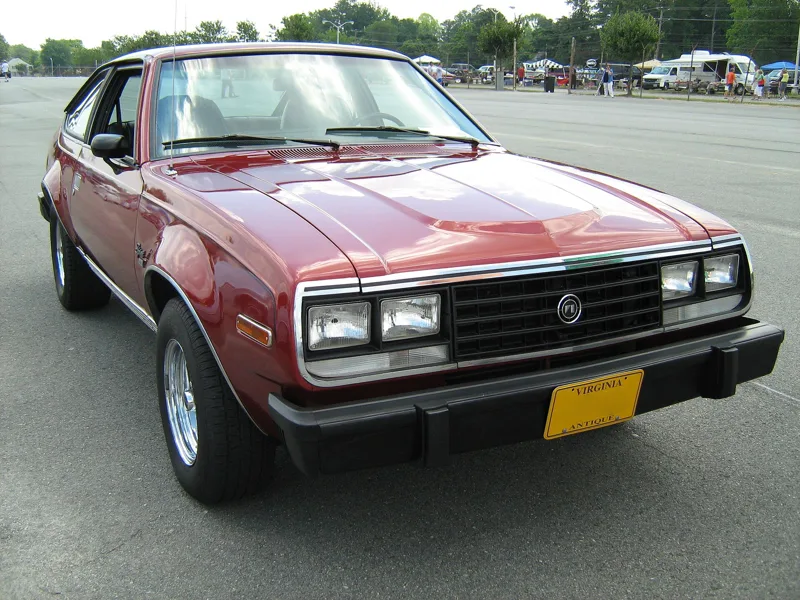
The AMX was a separate model based on the Concord hatchback. It arrived for 1978 with no Concord badges, and its sixth VIN digit was 9 rather than 7. Journalists called it the performance expression of the Concord line, and about 2,500 were built for 1978.
The AMX wore single round headlights and a flush grille, with amber parking lamps and a power bulge hood borrowed from the Gremlin. The standard engine was the 258 cu in six, with an optional 304 cu in V8 that came only with the three-speed automatic. A factory 401 cu in V8 was possible as a special order.
The automotive journalist Michael Lamm praised the AMX's tighter shocks, firm and comfortable ride and a four-speed gearbox with long gears. Product placement in the Wonder Woman series helped the image, and the 1978 AMX is now regarded as a collectible.
The Concord also appeared on screen. The 1978 film The Betsy showed Concords being completed and painted on AMC's line in Kenosha, Wisconsin, and AMC later sponsored the Wonder Woman series.
How did the Concord become the VAM American in Mexico?
Vehiculos Automotores Mexicanos, the Mexican government-owned automaker, assembled and marketed modified Concords as the VAM American under licence from AMC. Mexican-built cars had to use at least 60 percent locally sourced parts, and VAM's cars came with different trim and interiors from the US models.
VAM also developed the Lerma, a unique model based on the Concord coupe and sedan but with the hatchback and rear end design of the AMC Spirit. Its quarter glass treatment was also its own, and it was intended as the most luxurious model in the VAM range.
The most collectible Concord-based VAM was the 06/S of 1979. It used a modified 282 cu in engine, codenamed 4.6/X, rated at 172 hp (128 kW; 174 PS) net at 4200 rpm. Only 499 units were produced, and the 06/S was a one-year model before the Spirit liftback Rally GT replaced it in 1980.
Mexico's 1982 recession and currency devaluation hit the car market hard. A government decree banned imports of accessories considered luxurious and non-vital, so VAM dropped features such as power windows and locks from its high-trim cars. In February 1983 Renault de Mexico took over VAM and ended its passenger car line to avoid competing with Renault's own products.
How did the Concord perform in racing?
Tom Reffner, who had won sixty-seven features in an AMC Javelin in the 1975 season, campaigned a 1978 Concord AMX in races. He won the April 8, 1979 ARTGO opener at Madison Capital Raceway, and in time trials he also posted a track record at Wisconsin International Raceway, averaging 89.3 miles per hour (144 km/h).
Reffner had 21 feature wins in the season and added 16 more in 1979 with the AMX. His outstanding record in AMC cars ran from 1975 until a wreck at Elko in 1979.
In February 1978 a Concord entered the World Challenge for Endurance Drivers. It started the Six-Hours of Talladega with 40 other cars, though Bo Montgomery drove it for only one lap. Buzz Cason and Rick Knoop then took it to Daytona three days later, where it finished 17th of 71 cars after 130 laps.
Buzz Dyer campaigned a 1979 Concord on the west coast from 1978 to 1981, with a Traco-prepared 366 cu in V8 that had earlier powered a Penske AMC Matador. On 24 June 1982 he set a record 37-position improvement, starting 48th and finishing eleventh at Portland, a mark that stood until the 1998 season.
Did the Concord test alternative engines?
Yes. A VAM Lerma served as a promotional and test vehicle for the Stirling engine. A 1980 four-door Lerma sedan carried a P-40 Stirling engine, and AM General, an AMC subsidiary, was the major subcontractor for the Automotive Stirling Engine Development Program, awarded to MIT by NASA with Department of Energy funding.
A 1980 Concord was also the test vehicle in the conceptual design study of the Improved Gas Turbine powertrain, a NASA contract for the US Department of Energy. Williams Research designed the turbine engine, and AM General supplied the vehicle, transmission and drivetrain.
The turbine two-door sedan used a dual-rotor gas turbine with a three-speed automatic and rear-wheel drive. The final report estimated a 10 percent higher cost than a piston engine, but a life-cycle saving of 9 percent after lower maintenance and better fuel economy.
What was the Solargen electric Concord?
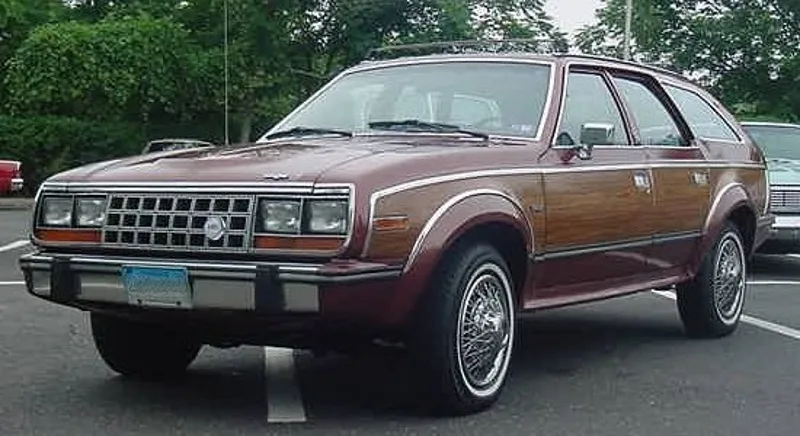
Solargen Electric Motor Car Company converted Concord station wagons into battery electric cars in 1979 and 1980. The idea came from Steven J. Romer, a Manhattan lawyer who secured a Department of Energy grant to build electric cars that year. Cortland, New York, added incentives and empty buildings to the package.
Solargen planned to buy Concord station wagon gliders from AMC and fit them with batteries and direct current electric motors. The target was a range of 60 to 65 miles (97 to 105 km) on one charge, a top speed of 90 miles per hour (145 km/h) and a price of US$9,500. Regular 110 volt house current would recharge the car in about six hours, or half that on 220 volts.
Problems with the advanced batteries meant production cars carried 20 regular lead-acid batteries, under the hood and beneath the wagon's rear storage. Range was 30 to 32 miles (48 to 51 km) after a twelve-hour charge, the cars could not reach highway speeds, and the price rose to about US$17,000.
Production halted in late December 1979 over a delay in a major component. Solargen then sued AMC for US$2.2 billion, alleging that it had reneged on a deal to supply 3,000 gliders at US$3,000 each and had raised the price to US$4,593. Romer was later convicted of defrauding US$7 million from investors and handed a 22-year prison sentence.
What did the Concord leave behind?
The Concord was AMC's last serious attempt to stay in the market with an American-designed car, and it was discontinued after 1983. After building more than 406,000 Concords, AMC turned instead to the Renault Alliance, a smaller front-drive car that many AMC loyalists resented.
The Concord sat on AMC's junior platform, which also underpinned the four-wheel-drive Eagle. Author Don Sherman said the Eagle pioneered the crossover SUV, and the Eagle stayed in production until Chrysler bought AMC in the middle of the 1988 model year.
Owners who wanted open air could buy a Sundancer convertible conversion from the Griffith Company through any AMC dealer in 1981 and 1982. The conversion added fourteen steel reinforcements, a steel targa roll bar and a removable fiberglass front roof section, but fewer than 200 were made.
The Medallion, an import, replaced the Concord for 1987 and also sold poorly. Chrysler later introduced the LH platform for 1993, and its flagship, the Chrysler Concorde, took a name that echoed the car that had kept AMC going through the early eighties.
AMC Concord specifications at a glance
| Specification | Detail |
|---|---|
| Model years | 1978 to 1983 |
| Body styles | Four-door sedan; two-door coupe (to 1982); three-door hatchback (to 1979); four-door wagon |
| Wheelbase | 108 inches (2,743 mm), the Hornet-era figure |
| Base engine (1978) | 232 cu in (3.8 L) straight six |
| Optional engines (D/L) | 258 cu in (4.2 L) six; 304 cu in (5.0 L) V8 |
| Transmissions | Three-speed manual, three-speed automatic, four-speed manual |
| 1978 V8 acceleration | 0 to 60 mph (0 to 97 km/h) in 10.4 seconds |
| 1981 six with automatic | 19 mpg-US (12 L/100 km; 23 mpg-imp) city; 26 mpg-US (9.0 L/100 km; 31 mpg-imp) highway |
| Total built | More than 406,000 Concords |