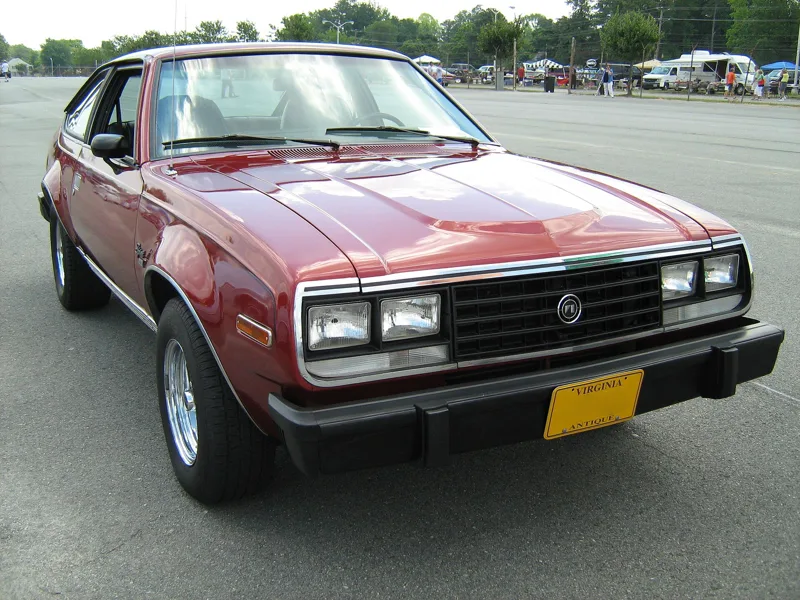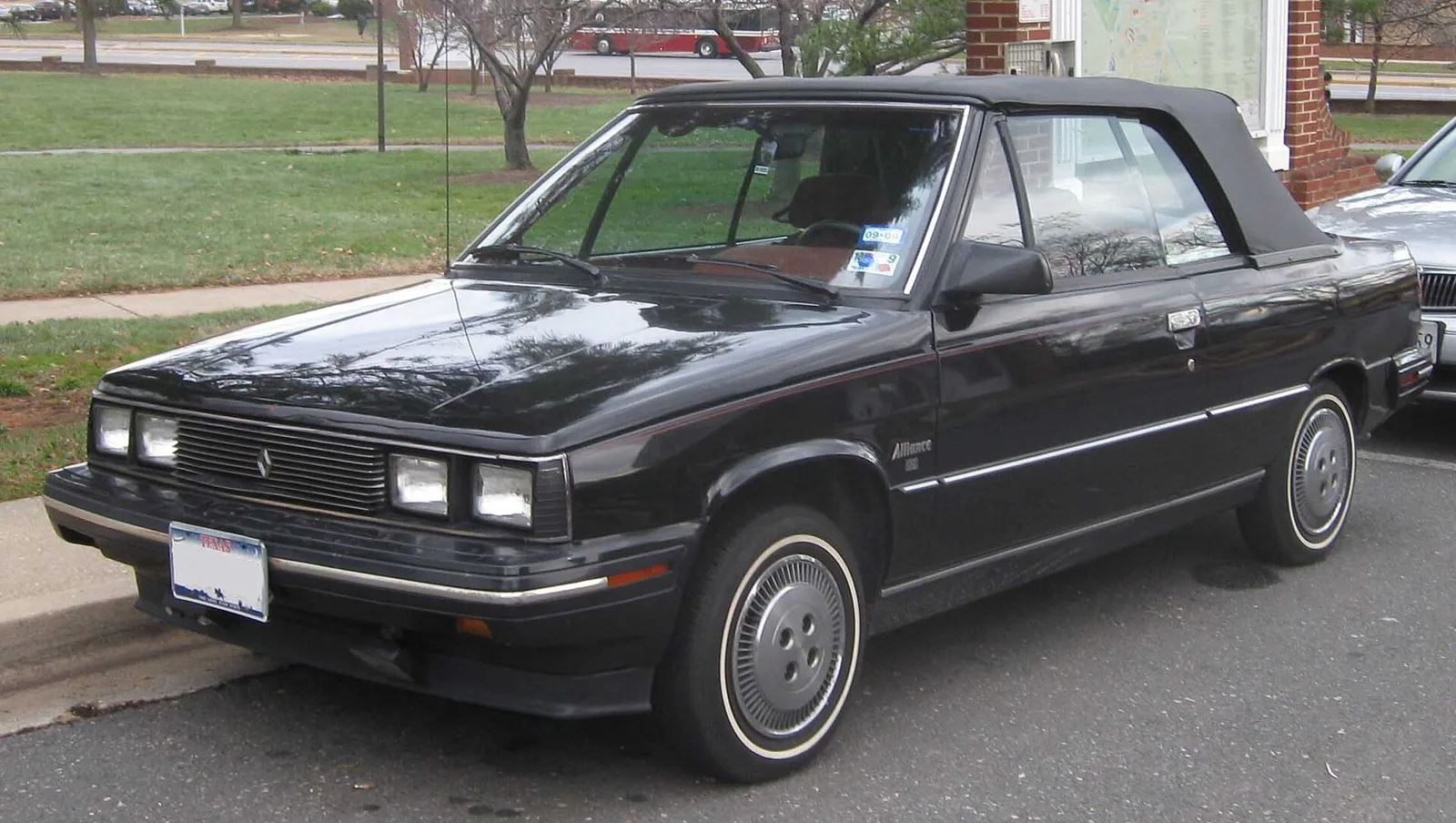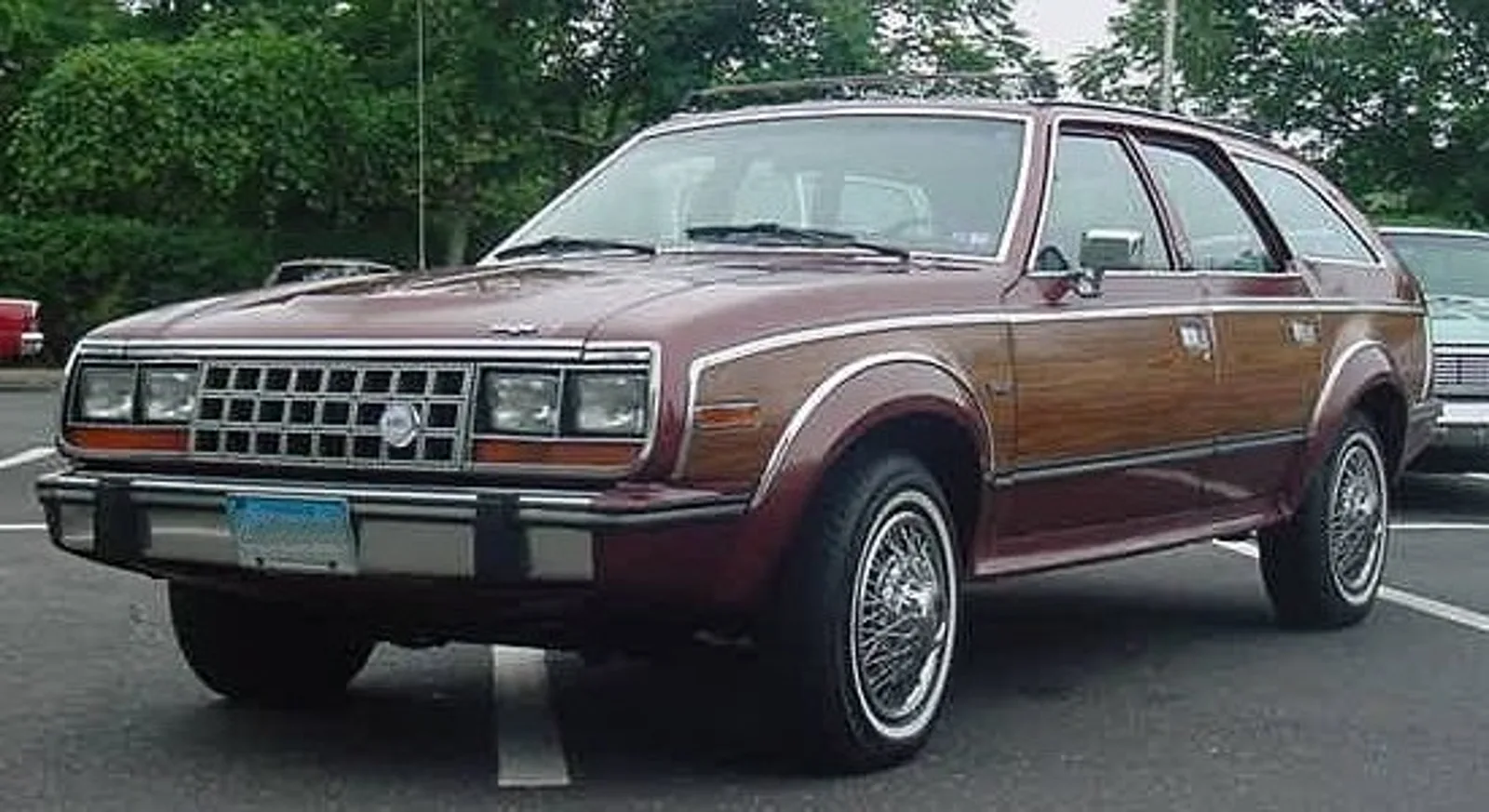
AMC's Concord-based four-wheel drive car of 1980, sold until 1988 and widely called the first crossover.
The AMC Eagle was a Concord-based four-wheel drive car sold from 1980 to 1987, with Chrysler keeping a final wagon going for 1988. Its permanent all-wheel drive, independent front suspension and raised body made it an early crossover, and it inspired later vehicles from several makers.
Among the first mass-produced four-wheel drive cars sold in the United States, the Concord-based Eagle ran from 1980 to 1987, and Chrysler kept one wagon going for 1988. It is widely recognised as the first crossover.
What was the AMC Eagle?
The AMC Eagle was a compact four-wheel drive passenger car built by American Motors Corporation for the 1980 to 1987 model years. Chrysler continued a single station wagon as the Eagle Wagon for 1988 after buying AMC in 1987. The car's body styles at launch were coupe, sedan and station wagon.
The first Eagles were introduced in August 1979 and were based on the Concord. In 1981 the subcompact SX/4 and Kammback, both based on the Spirit, joined the line, aimed at first-time buyers and fleet sales.
A Sundancer convertible conversion was offered for the larger two-door model in 1981 and 1982. By 1984 only sedan and station wagon versions remained in the range.
A Concord-based station wagon with permanent four-wheel drive, widely recognised as the first crossover.
Why did AMC build the Eagle?
AMC built the Eagle to fill a gap between its aging, economical passenger cars and its off-road focused Jeep line, which had lost sales as fuel economy worried buyers after a second energy crisis in 1979. The Eagle used the existing Concord platform, which kept its cost low.
According to CEO Gerald C. Meyers, a four-wheel drive car was a logical step for the company. Roy Lunn, AMC Jeep's chief design engineer, had proposed the project as Project 8001 plus Four, a line of four-wheel drive vehicles with the handling of a standard rear-wheel drive car on a unibody platform.
AMC contracted FF Developments in February 1977 to build a prototype based on a V8 Hornet, with the drive torque split 33% front and 66% rear. Testing pushed the split closer to 50/50, with 15-inch wheels and more ground clearance, and Lunn recommended the AMC straight-six with an automatic.
The Eagle also filled a price gap between cheap imported Subaru four-wheel drive models and large domestic 4WD vehicles such as the Jeep Wagoneer. Sales were brisk from the first day.
How did the Eagle's four-wheel drive work?
The Eagle had a full-time automatic system that ran in permanent all-wheel drive, using a viscous fluid coupling in the central differential behind the TorqueFlite automatic. The system added about 300 pounds (136 kg) to the curb weight, and the front suspension was independent.
The central unit used closely spaced, wavy clutch plates running in a silicone fluid, which acted as a limited-slip between the front and rear drives. Under poor conditions it sent torque to whichever axle had the most grip.
The front differential was mounted to the engine block, with universal joints and half shafts driving the front wheels. That layout gave the Eagle its independent front suspension, and it was one of the first production cars with an all-wheel drive system.
Rivals were much simpler. Subaru's early systems were part-time and could not be engaged on dry pavement, while the Eagle was designed to run on any surface without wearing the driveline.
A Select Drive option arrived mid-year in 1981, allowing two-wheel drive for economy, and by 1982 it was standard. Changing between modes required the car to be stationary.
Was the Eagle the first crossover?
The Eagle is widely recognised as the first crossover vehicle, although the term was not in use when it launched. It combined the comfort of a car with four-wheel drive and raised ground clearance, which later crossovers copied. The category it created became one of the most popular in the market.
Four Wheeler magazine called the Eagle the beginning of a new generation of cars in 1980. Motoring journalist Marty Padgett described the 1980 Eagle as the first crossover, and the BBC later described it as a segment-busting product.
Its concept, a station wagon with all-wheel drive, raised ground clearance and rough-road ability, inspired models from Subaru, Audi, Volkswagen and Volvo, among others.
How did the Eagle change through its model years?
The Eagle was revised most years, with a 2.5 litre four added in 1981, a five-speed option and low-drag disc brakes in 1982, and a power bulge hood in 1985. Production was 45,379 in the launch year and fell to 2,306 wagons in 1988.
The 1980 cars were based on the Concord and had a 258 cu in (4.2 L) straight-six with a three-speed automatic. Standard equipment included power steering, power front disc brakes and rear drums, plus 15-inch wheels with radial whitewall tyres. Every Eagle came with Ziebart rust protection and a five-year No Rust Thru warranty.
The body sat 3 in (76 mm) higher than the Concord's, with Kraton plastic wheel arch flares. Bumpers sat closer to the body because the EPA classed the Eagle as a light truck, which exempted it from the 5 mph (8 km/h) impact rule for passenger cars.
For 1981 the standard engine became a GM-sourced 151 cu in (2.5 L) Iron Duke four, with the 258 cu in six now optional. The six was redesigned and lost 90 pounds (41 kg), weighing 445 lb (202 kg), which made it the lightest of its kind among domestic sixes.
The 1981 Eagle wore a plastic egg-crate grille with 24 squares, and the Series 30 was 183.2 in (4,650 mm) long, three inches shorter than before. The Kammback and SX/4 joined as Series 50 models with the Iron Duke and a four-speed manual. Production for 1981 reached 37,429 units, including 5,603 Kammbacks and 17,340 Liftbacks.
For 1982 low-drag disc brakes became standard, a five-speed manual joined the options and the automatic gained wider ratios. The wagon was the strongest seller, with 20,899 built out of 37,923 for the year.
The Series 50 Kammback and Series 30 two-door were dropped for 1983. In 1984 the SX/4 went as well, the four-cylinder was installed in only 147 Eagles, and production moved to Brampton in Ontario, because the Kenosha plant was busy with the Renault Alliance and Encore.
By 1985 the five-speed had become standard, and the 258 six was the standard engine. Sales were dropping because AMC had stopped promoting the Eagle, and the 1986 model brought an open-differential Model 128 transfer case. Sales slipped below 10,000 a year for the first time after 1986.
Chrysler completed its buyout of AMC on 5 August 1987. The last Eagle left Brampton on 14 December 1987. For 1988 the car became the Eagle Wagon, with a single 112 hp (84 kW; 114 PS) six and a total of 2,306 units.
What did the Eagle cost?
The base two-door Eagle had a US manufacturer's suggested retail price of $6,999 at launch, with the four-door station wagon at $7,549. Those prices equal about US$27,349 and US$29,498 in 2025 dollars, once inflation is taken into account.
Sales were brisk from day one, and the Eagle gave AMC its biggest profit boost. The marketing promised passenger-car comfort with four-wheel drive security for bad weather.
What were the Sundancer convertibles?
The Sundancer was a convertible conversion of the two-door Eagle made by Griffith Company, offered for the 1981 and 1982 model years. The conversion cost about $3,000, and the dealer's list price was $3,750. It did not achieve significant sales.
Griffith was originally established to build race cars based on the English TVR. It carried out the work in Fort Lauderdale, Florida, on cars shipped from Kenosha. The monocoque was reinforced with a steel targa roll bar, and the front of the roof was a removable fibreglass hatch.
The Sundancer was dropped for 1983 as AMC expanded the Eagle range with the Kammback and SX/4. Griffith also converted a Toyota Celica into a similar convertible, the Sunchaser.
Was there a turbo-diesel Eagle?
Yes. A factory-approved 1980 turbo-diesel conversion used a 219 cu in (3.6 L) engine made by VM Motori, rated at 150 hp (112 kW; 152 PS) with 224 lb-ft (304 N-m) of torque. Only about seven are thought to have been built, and it cost $9,000.
Marketing said the larger fuel tanks, diesel economy and an optional overdrive transmission could give up to a 1,500-mile (2,414 km) range. The $9,000 price limited its appeal, and the option was dropped.
How did the Eagle race in ProRally?
The Eagle SX/4 competed in the SCCA ProRally series, organised by the Sports Car Club of America, between 1981 and 1988. In 1981 Guy Light and Jim Brandt finished second in total points for driver and co-driver, and AMC took third among production manufacturers.
In 1981 Light and Brandt took an eight-minute victory in the Production Class at the Reno finale, and finished tenth overall. Earlier that year they had hit a tree dead centre at the Northern Lights rally and still finished three minutes behind the lead in their class.
The 1981 Sno-Drift saw AMC Eagle SX/4s take second and third in the Production Class, with Henderson and Kloosterman second. A rival blocked the route on the 12th stage, and the pair lost two minutes and two places in the process.
Henderson and Kloosterman were a constant presence in the 1982 Production Class results. They finished second at the Sno-Drift in Michigan only 24 seconds behind the lead, although the Olympus rally in Washington ended with their car rolling on stage 10.
The 1983 season saw AMC third among the Production Manufacturers again, and Henderson and Kloosterman ranked second as drivers.
Where was the Eagle sold outside the US?
The Eagle was sold in several export markets, including Germany from 1980, where Allrad Schmitt imported it, and Japan from 1985 to 1989, where Kintetsu companies brought in left-hand drive cars. Switzerland received them through J.H. Keller in Zurich.
Allrad Schmitt in Hochberg, near Wurzburg in Bavaria, had been the sole importer of AMC Jeeps since 1977. It specialised in off-road vehicles, so the Eagle was a natural addition from 1980.
Japan's Action Plan of 1985 simplified import rules, and Kintetsu Shibaura imported the Eagle Wagon and the Jeep Cherokee there. Kintetsu Motors continued bringing in the Eagle and the Cherokee until 1989.
AMC's international operations also exported Pacers, Javelins and Concords to Switzerland during the 1970s and until around 1986.
What is the Eagle's legacy?
The Eagle is remembered as a precursor to today's crossovers. It had character and survival skills, gained a loyal following, and total production of the original car reached 197,449 units. The name lived on as a Chrysler brand, which dropped it after the 1998 model year.
Commentators have called the Eagle arguably a decade ahead of its time, and some have said it was about 30 years ahead of the curve once crossovers became the norm in the 2000s.
A 2009 long-term road test of a Suzuki crossover described the original Eagle as having set a lasting standard for utility and a friendly, innovative spirit.
After Chrysler bought AMC, the Eagle name moved into the Jeep-Eagle division, with the Renault-based Medallion and Premier, Mitsubishi-based Summit and Talon, and the Vision added in 1993. Sales of the brand never met expectations, and Chrysler discontinued it after the 1998 model year.
What were the AMC Eagle specifications?
| Specification | Detail |
|---|---|
| Body styles | Coupe, sedan and station wagon in 1980; sedan and wagon only from 1984 |
| Standard engine, 1980 | Straight-six of 258 cu in (4.2 L) |
| Standard engine, 1981 on | 151 cu in (2.5 L) GM Iron Duke four, with the six optional |
| Transmission | Three-speed automatic; five-speed manual option from 1982 |
| Drive | Permanent all-wheel drive; Select Drive from 1981 |
| Trailer rating | Up to 3,500 lb (1,588 kg) with the top package and a 3.54 axle ratio |
| Body height | Raised 3 in (76 mm) over the Concord |
| Length, 1981 Series 30 | 183.2 in (4,650 mm) |
| Four-wheel drive weight | About 300 pounds (136 kg) added |
| Turbo-diesel, 1980 | 219 cu in (3.6 L), 150 hp (112 kW; 152 PS), 224 lb-ft (304 N-m) |
| Highway economy, 1984 | 30 mpg-US (7.8 L/100 km; 36 mpg-imp) with the four-speed |
| Engine, 1988 | 112 hp (84 kW; 114 PS) |