Two rear-wheel-drive compacts that debuted in the same model year, one a reworked AMC Hornet and the other the first Ford Fox model, compared on engines, bodies, reviews and legacy.
The AMC Concord and Ford Fairmont were rival compacts that both debuted for 1978. The Concord reworked AMC's Hornet, while the Fairmont launched Ford's Fox platform, and both ran until 1983 with inline-four, inline-six and V8 options.
The AMC Concord and the Ford Fairmont were rival compacts that both arrived for the 1978 model year. The Concord was a refined revision of AMC's Hornet, while the Fairmont was the first model on Ford's new Fox platform. Both offered inline-four and inline-six engines, with V8 options on each.
Their starting points were different, but both aimed at buyers moving away from full-size cars. The comparison therefore turns on how each maker reshaped an existing product or built a new one for the same moment.
Where did each car come from?
The Concord was AMC's answer to a shrinking market with limited money, so it reworked the Hornet rather than designing a new car. The Fairmont was Ford's first car on the new rear-wheel-drive Fox platform, which replaced models built on the Falcon.
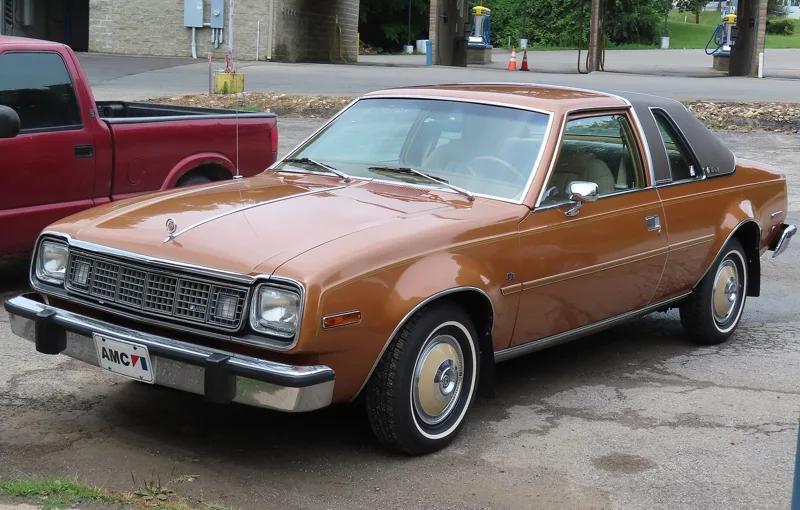
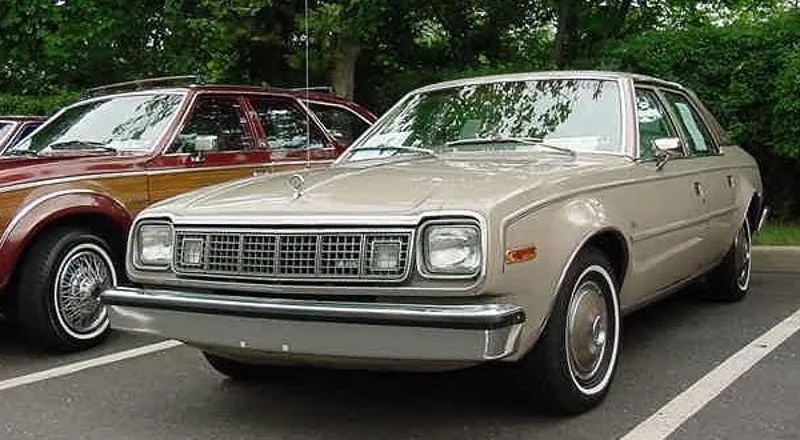
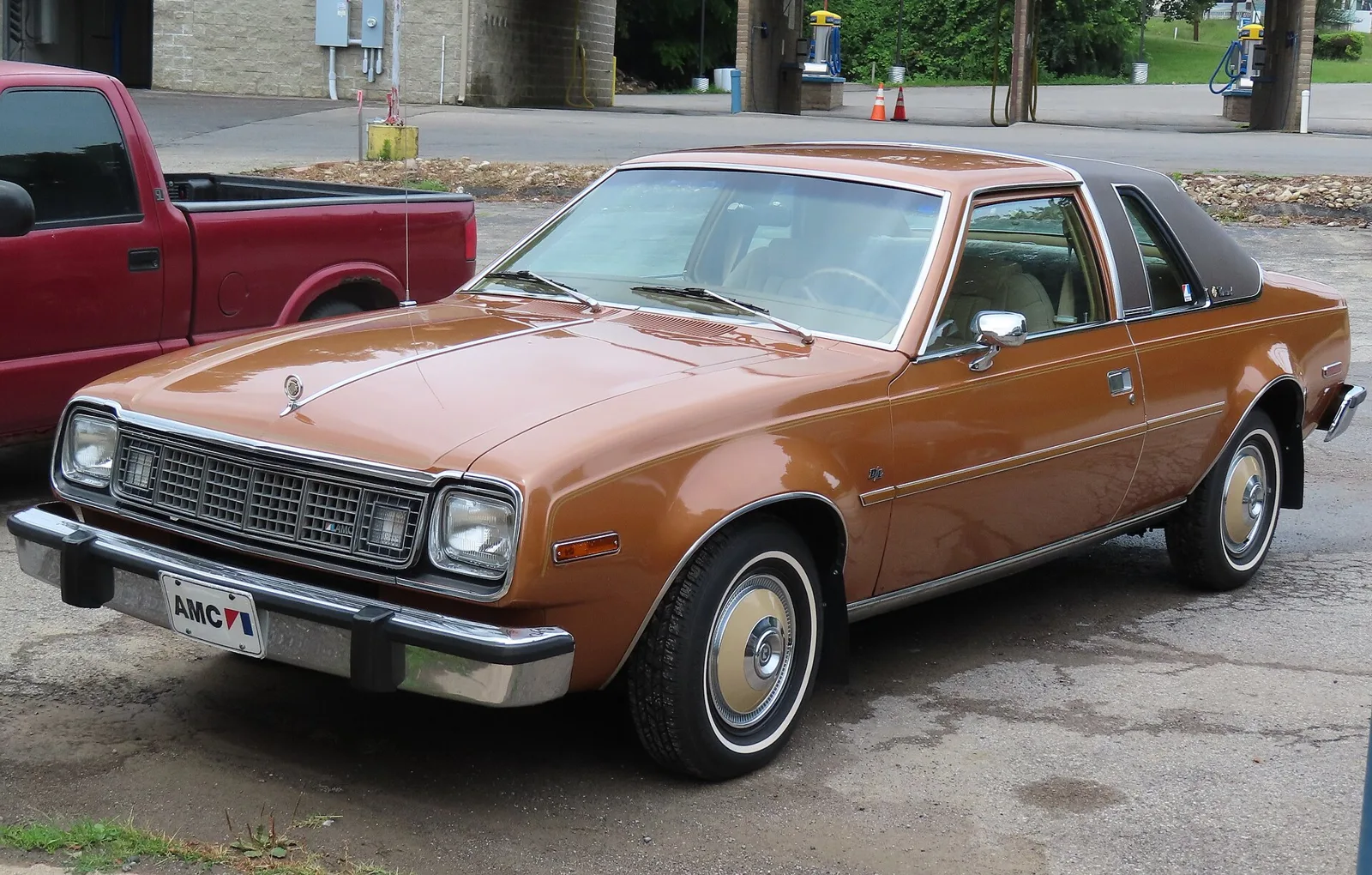
AMC did not have the money for an all-new car, so its designers reshaped the ageing Hornet into the Concord. Dick Teague's team reused the front fenders from the facelifted 1977 Gremlin, then added a new bonnet, a chrome grille with white parking lights, rectangular headlamps and a stand-up ornament bearing the Concord emblem.
Hal Sperlich, Ford's product planning chief, had pushed a world car that could sell in Europe and North America. By 1974 the differing rules and production methods had killed the idea, and development passed to North American operations in 1975.
Ford's approach was different. Development of the Fox platform began in early 1973, and the Fairmont was the first Fox model to reach the market. Ford president Lee Iacocca approved the work in December 1973, a few months after the oil crisis began.
The Fox name may have come from the Audi 80, which Ford's executives treated as the benchmark subcompact. An internal Ford report used the name as early as February 1973, which makes that link less certain. The Fairmont name itself dated back to 1965, when Ford Australia used it on an upscale Falcon.
Two compacts from the same year, one stretching a tired Hornet into a plush seller and the other launching Ford's rear-drive Fox platform.
What did the Fox platform give the Fairmont?
The Fairmont used a steel unibody with independent front suspension built around MacPherson struts, with coil springs mounted apart from the struts. At the rear, a solid axle sat on coil springs and was located by four links, which kept the layout conventional and sturdy.
The brakes were power-assisted, with vented front discs measuring 10.0 inches across and 9.0 x 1.8 inch drums at the rear, while the rack-and-pinion steering needed 3.2 turns from lock to lock. Standard wheels were 14-inch items with DR78-14 tyres.
Ford shared the Fox underpinnings with twelve other model lines spread across its Ford, Mercury and Lincoln brands. The Fairmont itself ran for six model years, but the platform carried on for about two more decades, reaching model year 2004 in updated form.
How did the Concord's body and styling work?
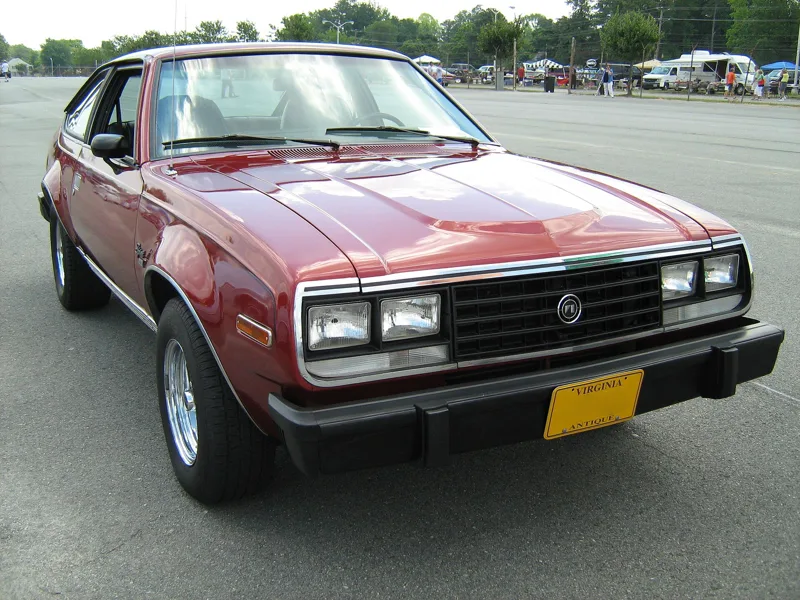
The Concord came as a four-door sedan, a two-door coupe through 1982, a three-door hatchback through 1979 and a four-door wagon with a rear liftgate. The 1978 range focused on the upscale D/L, which dressed the cabin with reclining velveteen seats and woodgrain trim.
Engineers worked on quietness as well. Extra sound insulation, sound-deadening coatings and suspension isolation were aimed at a virtually silent boulevard ride, and the front suspension and rear axle were mounted away from the body structure.
Rear-seat space improved as well, gaining an inch (25.4 mm) of headroom and two inches (50.8 mm) of legroom over the Hornet it replaced.
How did the Fairmont's body evolve?
The Fairmont debuted for 1978 as sedans in two- and four-door forms plus a five-door wagon, with the Squire wagon as a woodgrain option. The Futura coupe, with a wrap-over B-pillar and the four-headlight front of the Zephyr, arrived late in the 1978 model year.
For 1980 the Futura name expanded to a four-door sedan, and a Futura wagon followed for 1981. By 1982 Futura had become the sole trim, and in 1983 a Futura S base sedan with the 2.3-litre engine only appeared.
AMC pitched the Concord as a thriftier choice than bigger luxury cars, a message that fitted its upscale compact positioning.
The Fairmont's coupe design began as a Thunderbird-based proposal from March 1976, which explains the coupe's more sporting roofline compared with the sedans.
Which engines did each car offer?
The Concord's standard engine was a 232 cu in (3.8 L) straight-six. A 258 cu in (4.2 L) six and a V8 of 304 cu in (5.0 L) were optional on the D/L, and the V8 was the performance choice.
The 1979 Limited brought leather upholstery, thick carpeting, full courtesy lighting and an AM radio as standard, which made it well equipped for a compact of its day. Silver Anniversary editions marked 25 years since the Nash-Hudson merger.
The Concord also offered a 2.0-litre inline-four designed with Volkswagen and Audi, the same unit used in the Porsche 924. The Porsche version had Bosch fuel injection, while the AMC versions used carburettors.
The Fairmont's standard unit was a 2.3-litre, 140 cu in four-cylinder that made 88 hp at launch and 90 hp by 1983. A 3.3-litre six, sized at 200 cu in, was offered from 1978 to 1983, and it gave less power than the four but a noticeably stronger torque figure.
Ford also offered two Windsor V8s. A 302 cu in (4.9 L) unit made 139 hp in 1978 and 1979, and a 255 cu in (4.2 L) unit made 115 hp in 1980 and 1981, paired exclusively with a three-speed automatic.
| Feature | AMC Concord | Ford Fairmont |
|---|---|---|
| Model years | 1978 to 1983 | 1978 to 1983 |
| Platform | Revised AMC Hornet | New Ford Fox, rear-wheel drive |
| Body styles | Sedan; coupe to 1982; hatchback to 1979; wagon | Sedan; Futura coupe; four-door sedan; five-door wagon |
| Standard engine | 232 cu in straight-six | 140 cu in (2.3 L) inline-four, 88 hp at launch, 90 hp by 1983 |
| Optional engines | 258 six; 304 V8; 2.0-litre four from the Porsche 924 | 200 cu in (3.3 L) six; 302 V8 at 139 hp; 255 V8 at 115 hp |
| Performance figure | V8 Concord 0-60 mph in 10.4 seconds, 100 mph top speed | No figure given |
| Steering and brakes | No figure given | Rack-and-pinion, 3.2 turns lock to lock; 10.0 inch vented front discs |
| Twin or variant | AMX liftback in 1978; Sundancer convertible 1981-1982 | Mercury Zephyr twin; Durango pickup; European Sport Option |
| Sales | More than 100,000 units in 1979 | No figure given |
| Successor | Renault Alliance ended its run as volume seller | Ford Tempo, front-wheel drive, from 1984 |
How did reviewers rate the Concord?
Popular Science placed the Concord top for trim level in its 1978 comparison of four new compact sedans. It praised the reclining seats covered in velvet-like fabric and said the in-line six was close to a V8 in smoothness, power and noise.
The magazine's 1979 road test of three traditional compacts, which included the Fairmont, found the Concord the best-looking of the group inside, with a cabin that felt like a much pricier saloon.
A Popular Mechanics survey of owners covered 1,127,000 miles of driving. Thirty per cent of Concord owners named no complaints, a record that beat the 17 cars surveyed in 1977, including the Honda Accord at 18.9%.
On crash data, the NHTSA estimated a 9% probability of injury in a struck four-door Concord, compared with 97% for a two-door Nissan Sentra.
What did the Concord sell as?
AMC sold the Concord with a confident pitch, calling it the luxury America wants at the size America needs. Its two-door coupe alone made up almost half of 1978 production, and the Concord outsold AMC's other passenger cars combined in its first year.
The sales momentum held in 1979. More than 100,000 Concords were sold that year, even as Japanese imports gained share and rival domestic models moved to front-wheel drive.
Fairmont volume is not reported in the available figures, so the sales race cannot be scored with confidence. What is clear is that the Concord became AMC's volume seller until the Renault Alliance arrived.
Which variants and twins did each car spawn?
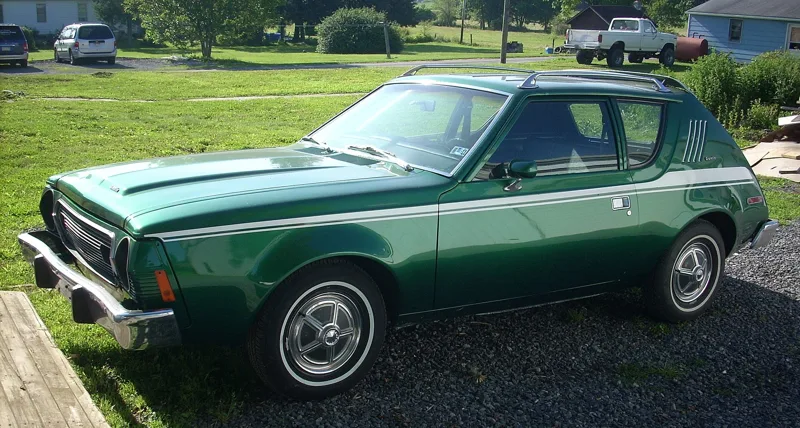
The Concord spawned several variants. The AMX liftback appeared for 1978 only, a Sundancer convertible was sold through AMC dealers in 1981 and 1982, and Vehiculos Automotores Mexicanos built its own VAM American and VAM Lerma versions.
A battery electric conversion of the Concord wagon was sold by Solargen during 1979 and 1980, independently of AMC.
Special packages added variety. The European Sport Option of 1978 to 1980 brought a black grille, stiffer springs and a rear anti-roll bar, while police and taxicab Fairmonts were offered from 1978.
The Fairmont spawned a Mercury twin. The Mercury Zephyr shared the Fairmont's range from 1978 to 1983, with four headlamps at launch and a Z-7 coupe. The Ford Durango pickup, built from the Futura coupe with National Coach Corporation, was estimated at roughly 200 units from 1978 to 1981.
What happened to each car after 1983?
The Concord's run ended as the Renault Alliance took over its role as AMC's volume seller. The Fairmont's last year brought a distinctive touch, since it alone among Fords in North America kept FORD lettering where others carried the Blue Oval.
The Fairmont was replaced for 1984 by the front-wheel-drive Ford Tempo and Mercury Topaz, which followed the Thunderbird in using aerodynamic styling. The Fox platform itself carried on for two more decades in updated form.
Which buyer suits each car?
The Concord suits a buyer who wanted an upscale compact with a comfortable cabin and a six-cylinder option. The Fairmont suits a buyer who valued Ford's broader range of bodies and engines, including the inline-six and two V8 options.
A buyer choosing in 1978 faced a clear split. The Concord leaned into luxury and comfort, while the Fairmont offered a broader family of models that could be configured in more ways.
Both cars therefore had a clear identity, even though the reviews of the period did not agree on which one was the better compact.
The reviews favour the Concord inside, while the Fairmont's advantage lies in its wider body and engine range. Neither car is shown to be the better buy overall on these facts alone.