Two cheap small cars that arrived in the same year, one an AMC reshaping of the Hornet and the other Ford's first subcompact, compared on design, engines, sales and safety reputation.
The AMC Gremlin and Ford Pinto were cheap subcompacts that both arrived in 1970. The Gremlin was built on a shortened Hornet and sold 671,475 cars, while the Pinto was Ford's first North American subcompact and passed three million built.
The AMC Gremlin and the Ford Pinto were cheap, small cars that arrived in the same year, 1970, and both were pitched at buyers who wanted something smaller than the family sedan. The Gremlin was an AMC reshaping of its Hornet, while the Pinto was Ford's first subcompact built in North America.
The two cars had different strengths. The Gremlin had a distinctive shape and a stronger record with reviewers, while the Pinto sold in far larger numbers and carried a safety controversy that outlived its production run.
Where did the two subcompacts come from?
The Gremlin began as a shortened Hornet with a kammback-like tail, and it went on sale on 1 April 1970. The Pinto was built on a completely new platform, sold from 11 September 1970 with a powertrain borrowed from the European Escort.
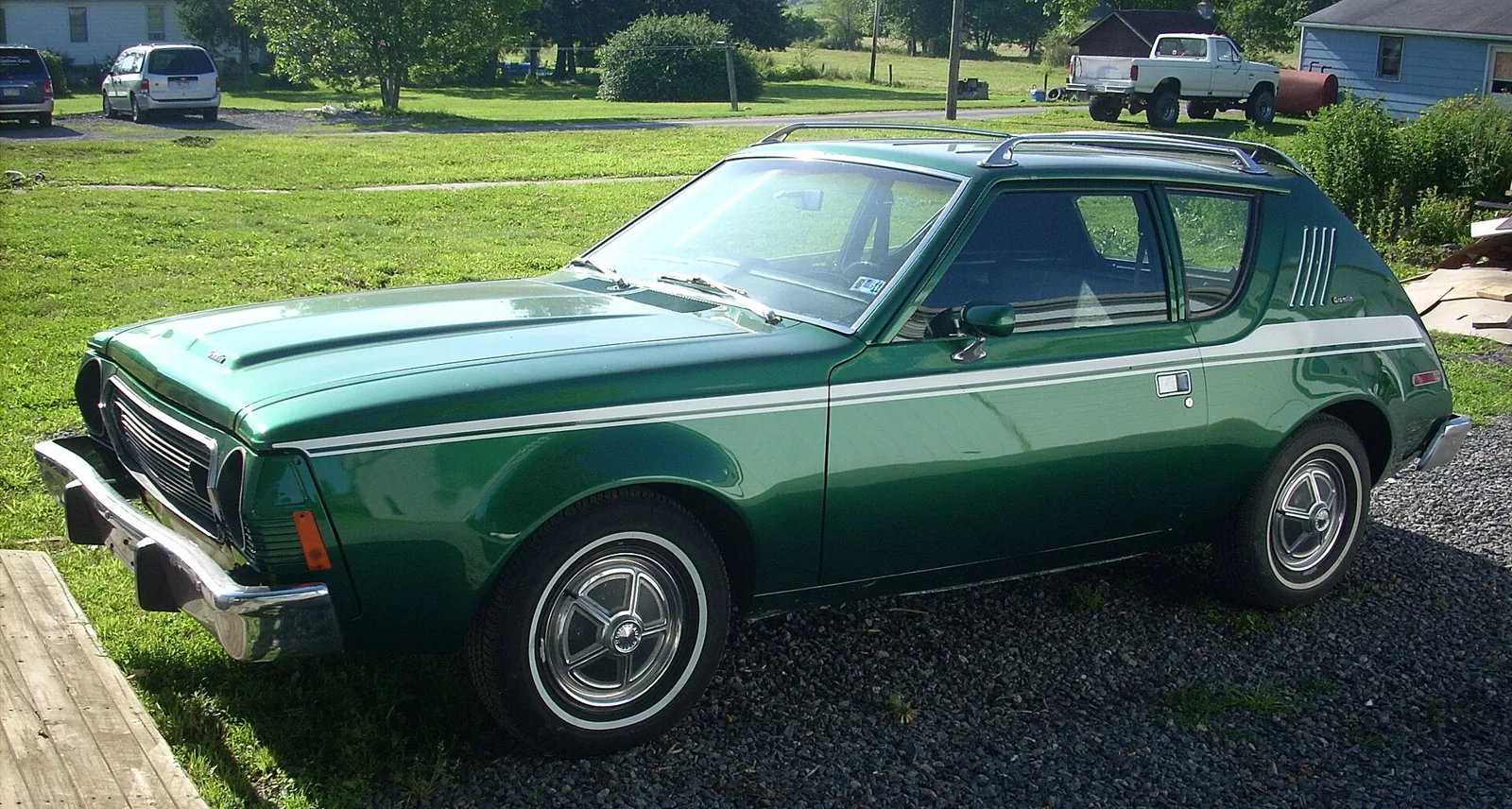
The Gremlin's idea goes back to 1966, when design chief Dick Teague and stylist Bob Nixon discussed a shorter version of AMC's compact. Teague sketched the solution on an airsick bag during a flight, truncating the tail of a Javelin. Nixon, who had joined AMC as a 23-year-old, produced the first formal sketches in 1967 and based the car on the Hornet's front end.
Ford's programme moved on a different timetable. Planning began in the summer of 1967, the Pinto was recommended in December 1968 and approved in January 1969, and Lee Iacocca wanted a car under 2,000 lb (900 kg) priced below US$2,000. Development took 25 months against an industry average of 43, and the car became known internally as Lee's car.
Robert Eidschun styled the Pinto's bodywork, and the rush schedule meant some development steps ran in parallel with tooling, which froze the basic design early.
Two subcompacts from 1970, one with a distinctive shape and warm reviews and the other with unmatched volume and a lasting safety controversy.
How did the two cars look and carry people?
The Gremlin's shortened tail and hatchback body gave it 18 cubic feet (509.7 L) of cargo space with the rear seat folded, while the Pinto's Runabout hatch gave 38.1 cubic feet (1,080 L) with its seat folded. Both were tight on space, but the Gremlin's wider stance gave its two front seats generous room.
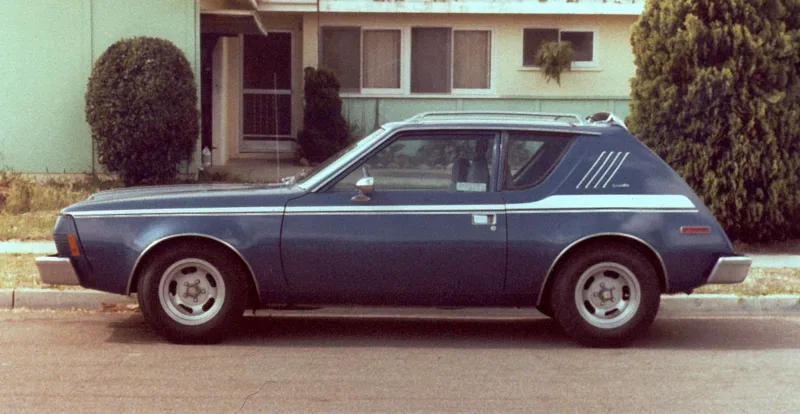
The Gremlin was barely longer than the Volkswagen Beetle, yet its long bonnet, sitting over the front-mounted engine, made the gap look far larger. Time magazine said it resembled a sawed-off station wagon, and the back seat was really only fit for small children.
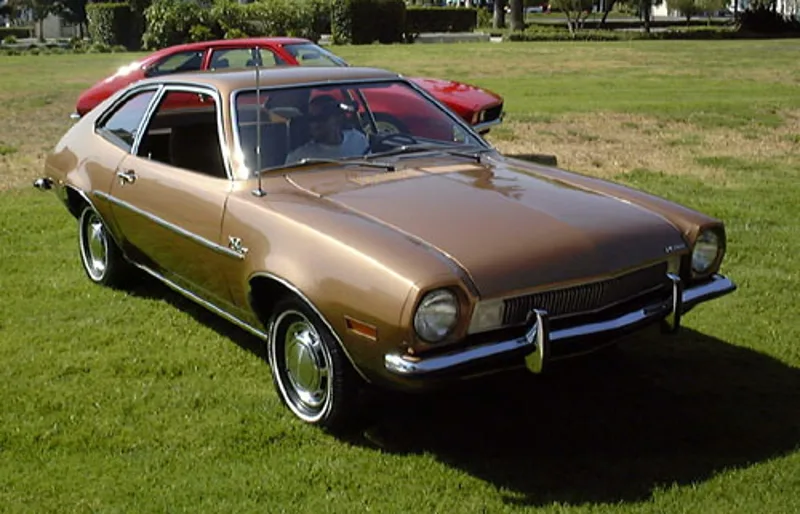
The Pinto came in three body styles across its run: a two-door fastback sedan, a hatchback and a two-door wagon. The wagon arrived in February 1972, measuring 172.7 in (4,390 mm) overall, and its load area ran to 60.5 cubic feet (1,710 L).
| Feature | AMC Gremlin | Ford Pinto |
|---|---|---|
| Launch | 1 April 1970 | 11 September 1970 |
| Body styles | Single two-door body; two-seat version dropped in 1972 | Fastback sedan, hatchback and two-door wagon |
| Platform | Shortened Hornet | New platform with an Escort-derived powertrain |
| Size | Wheelbase cut from 108 to 96 inches; length from 179 to 161 inches | Wagon length 172.7 in (4,390 mm) |
| Starting price | $1,879 two-passenger; $1,959 four-seat hatch | $1,850 entry-level sedan |
| Production | 671,475 over one generation | Over three million over ten years |
| Engines | 199 cu in six at 128 hp; 232 cu in six; 304 V8 from 1972 | 1.6-litre and 2.0-litre fours; 2.3-litre OHC from 1974; 2.8-litre V6 from 1975 |
| Successor | AMC Spirit, built through 1983 | Ford Escort, front-wheel drive |
| Recalls | No Gremlin recall recorded in this pairing | 26,000 cars in 1970; 220,000 cars in 1971 |
Which engines did each car use?
The Gremlin began with a 199 cu in (3.3 L) six rated at 128 hp, with a 232 cu in (3.8 L) six at 145 hp as an option. By 1971 the 232 was standard and a 258 cu in (4.2 L) option followed, and a V8 of 304 cu in (5.0 L) came in 1972.
The Pinto began with a 1.6-litre English engine and a 2.0-litre German unit with a two-barrel carburettor. With the 2.0 the car reached 0 to 60 mph in 10.8 seconds.
Emissions rules pushed Ford toward domestically sourced engines. The 1972 SAE standard trimmed the 1.6 to 54 bhp and the 2.0 to 86 hp, and the 1975 2.8-litre V6 gave the Pinto a feature the Vega lacked, though it lagged well behind the Gremlin's six as standard.
The Gremlin's engines were cut by the same 1972 rating change. The 232 fell to 100 hp, the 258 to 110 hp and the 304 V8 to 150 hp, but AMC still described the V8 car as the sole genuine performance machine under $2,200.
How did sales compare?
The Pinto outsold the Gremlin by a wide margin, with more than three million built over its ten years and 544,209 in its peak year of 1974. The Gremlin's best year was 1974, with 171,128 sales, which was about 40% higher than 1973.
Gremlin sales climbed each year from 25,300 in the abbreviated 1970 model year to 53,480 in 1971, 61,717 in 1972, 122,844 in 1973 and 171,128 in 1974. The 1974 total was nearly 40% above 1973 and 130% above 1971.
Pinto volumes ran higher from the start, with over 100,000 sold by January 1971 and 352,402 in the first full year. Combined, the Pinto outproduced the Vega and the Gremlin together.
How did AMC market the Gremlin?
AMC pitched the Gremlin as America's first subcompact and as cute and different, a line that drew more than 60% of its buyers under 35. AMC's own reading of the name was playful, casting the car as a friend to owners and a menace to rivals.
The first-American-import tagline overlooked the Nash Metropolitan and the earlier Crosley, both small American-conceived cars.
Ford sold the Pinto as The Little Carefree Car. Its brochure included a paper cutout that folded into a three-dimensional model, and the Runabout hatch arrived in February 1971 at $2,062.
How did owners and reviewers rate them?
Reviewers were kind to the Gremlin. Popular Science gave a new car a 10,000-mile cross-country test and found it trouble-free, while Consumer Reports rated a 1973 Gremlin top among six subcompacts, with few sample defects.
Owners surveyed by Popular Mechanics had driven their 1970 Gremlins over 1,350,000 miles. The unusual styling drew buyers, but economy came top of their likes.
The Pinto's reputation took a harder road. Its fuel tank design drew heavy press and official attention once deadly fires, linked to rear-end impacts, were reported, although later analysis suggested its overall safety was comparable to other 1970s subcompacts.
The Pinto episode is still cited widely as a business ethics and tort reform case study, long after the car ended production.
What recalls did each car face?
The Pinto faced two recalls in its first year on sale. On 30 October 1970 26,000 cars were called in over an accelerator that could stick once engaged past half throttle, and on 29 March 1971 Ford recalled all 220,000 Pintos built before 19 March 1971 over fuel vapours in the air filter that could ignite through a backfire.
No Gremlin recall is recorded in this pairing. AMC's 1972 Buyer Protection Plan promised repairs on anything wrong with a car except tyres, and it offered a free loaner car when a warranty repair ran overnight.
What happened to each car after 1979?
The Gremlin was superseded for 1979 by the restyled AMC Spirit, which continued through 1983. The Pinto ended in July 1980 after 3,150,943 cars, with the front-wheel drive Ford Escort as its replacement.
The Gremlin's successor kept its basics but was restyled and revised, while the Pinto's successor brought front-wheel drive into Ford's small-car range for the first time.
What options did the Gremlin's X package add?
The X package debuted for 1971, costing $300 on the four-passenger model, and it proved very popular. It brought body-side tape stripes, a body-colour front fascia, slotted road wheels on Goodyear Polyglas tyres, a blackout grille insert, bucket seats plus X decals.
By 1972 the list of options had grown to include an AM/FM radio, a fabric sunroof, a tilt steering wheel, an inside hood release and a trailer towing package rated at 2,000 lb (907 kg).
How did the Gremlin change through the 1970s?
The 1973 model year brought stronger bumpers, which had to withstand a 5-mile-per-hour front impact and a 2.5-mile-per-hour rear impact without damage, along with a Levi's interior trim package using nylon upholstery made to look like denim.
The 1974 facelift gave the car a deeper front fascia that made it look longer, a larger front bumper on self-restoring cylinders and a stronger rear bumper set lower. Rear-seat legroom also improved, and the X stripe took a hockey-stick shape.
For 1975 the Gremlin gained standard electronic ignition, catalytic converters and unleaded-only warnings, while manual cars with six-cylinder engines could add an electrically operated overdrive. Production was stretched into November 1974 to delay the switch.
What trims and packages did the Pinto offer?
Ford leaned on appearance packages. The Sprint Decor Group of 1972 offered two-tone paint, red pinstriping and bright trim rings for a single season, while the 1973 Sport Accent and Luxury Decor groups added accent paint, a vinyl roof and wood-tone trim.
The 1976 Stallion package brought blacked-out trim and two-tone accent paint on red, yellow, silver and white bodies, and the low-cost Pinto Pony arrived with less standard equipment. A wagon version of the Pony followed for 1979.
The 1979 ESS, short for European Sports Sedan, added black roof drip mouldings, charcoal grille and headlamp surrounds and ESS badges, and the Sports Package with a front stabiliser bar and sport steering wheel was standard.
Which buyer suits each car?
The Gremlin suits a buyer who wanted an unusual shape, six-cylinder power and the option of a V8 in a small car. The Pinto suits a buyer who wanted a cheap subcompact in several body styles, with a V6 option from 1975.
Practicality splits the two. The Gremlin's 18 cubic feet with the seat folded trailed the Pinto hatch's 38.1 cubic feet, so a buyer who needed load space would lean towards Ford.
The facts do not settle which was better overall. The Gremlin earned the warmer reviews, while the Pinto had the far larger production and the wider range of bodies.