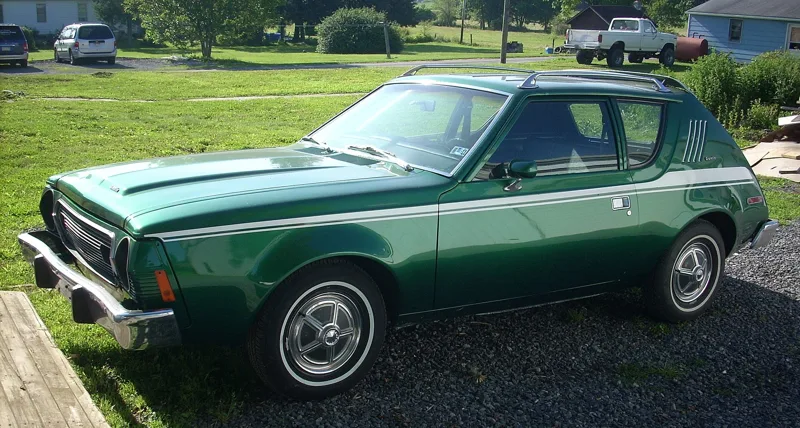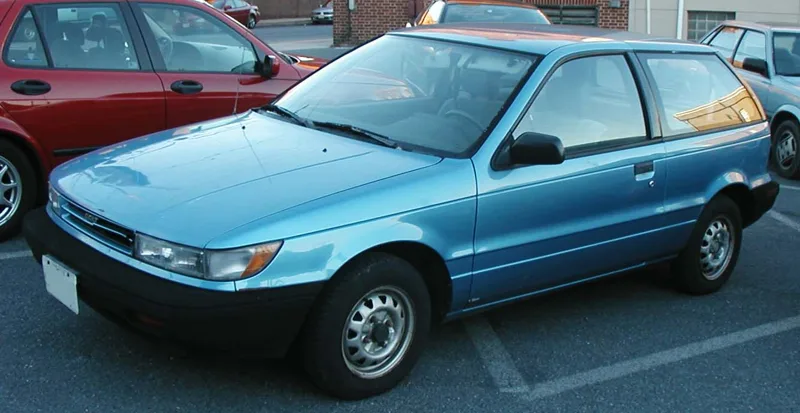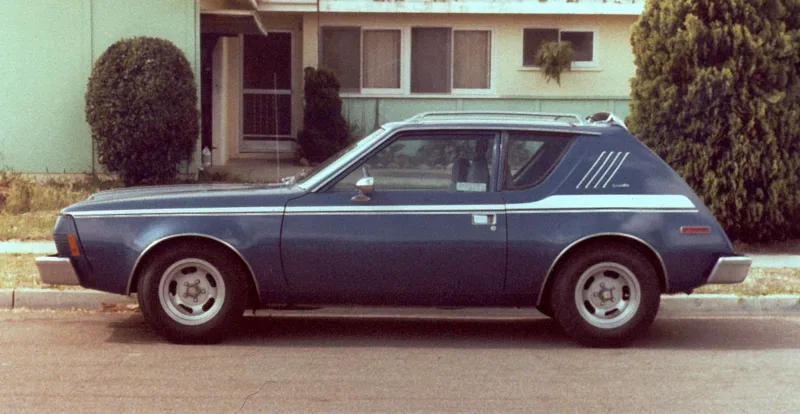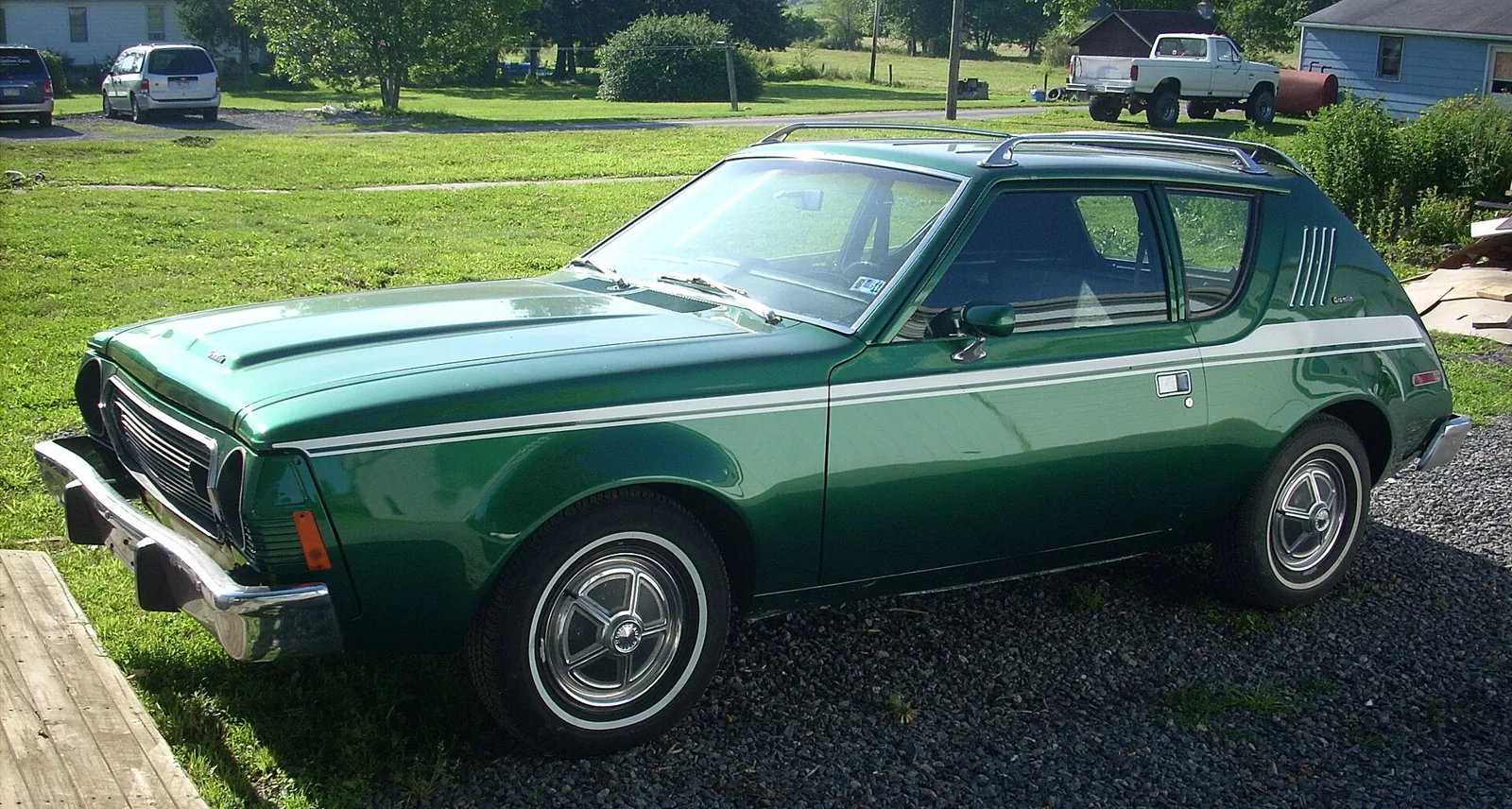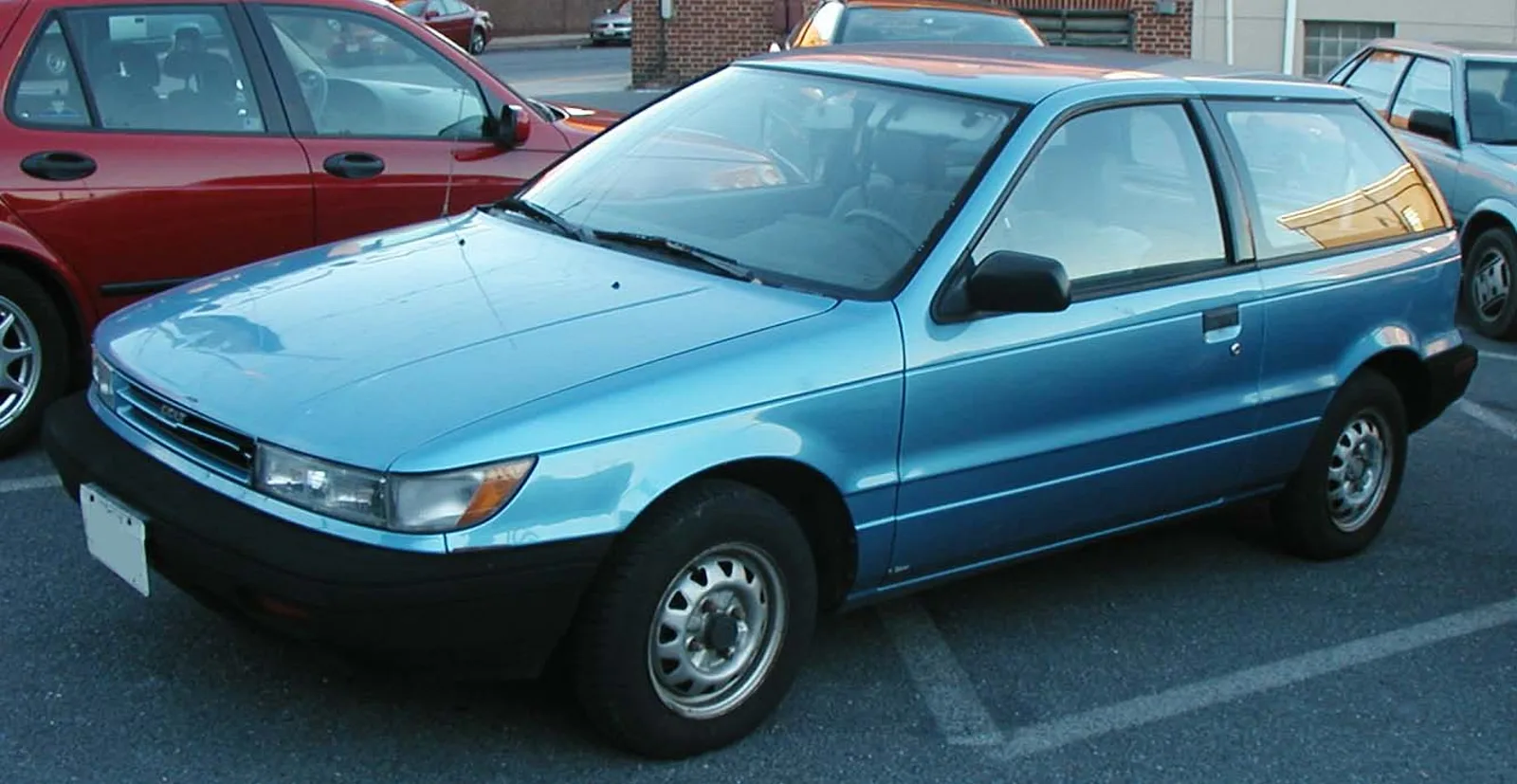
AMC's Gremlin arrived in 1970 with a chopped tail and a cartoon mascot, and Chrysler's Colt followed a year later as its answer.
The AMC Gremlin arrived in April 1970 as a two-door subcompact built on a shortened Hornet, and the Dodge Colt followed as a 1971 Mitsubishi-built answer. The Gremlin reached 671,475 units, while the Colt was sold from 1971 until 1994 as a captive import.
AMC's Gremlin and Dodge's Colt were both small, cheap American-market cars with roots in the Japanese and European small-car world. The Gremlin was a home-built subcompact that AMC promoted as the first American-built import. The Colt was a Mitsubishi design sold by Dodge, and it arrived as Chrysler's answer to a car it had reason to fear.
Why were the Colt and Gremlin rivals?
The Dodge Colt was introduced as a 1971 model and was Chrysler's response to the AMC Gremlin, the Ford Pinto and the Chevrolet Vega. The Gremlin had reached showrooms on 1 April 1970, and it had a head start on the Colt. The two cars met directly in the American subcompact class, and the Colt also competed with imports such as the Toyota Corolla and the Honda Civic.
The Gremlin had a particular advantage in one respect. AMC built it on a shortened version of its Hornet compact, which spared the company the cost of a wholly new design. Chrysler, by contrast, sourced its car from Mitsubishi and sold it through Dodge and Plymouth.
The Gremlin was a home-built answer to the imports, and the Colt was Chrysler's borrowed-engineering reply to a car it had reason to fear.
How was the Gremlin designed?
The idea began in 1966, when Dick Teague, AMC's design chief, and the stylist Bob Nixon discussed a shortened version of the company's compact. Teague is said to have sketched the solution on an airsickness bag during a flight, which was to truncate the tail of a Javelin. Nixon did the first formal sketches in 1967.
AMC could not afford a wholly new design, so the Gremlin used the front of the Hornet, from the nose to the B-pillars. The wheelbase shrank from 108 to 96 inches (2,743 to 2,438 mm), and the car's overall length dropped from 179 to 161 inches (4,547 to 4,089 mm). That made the Gremlin two inches longer than the Volkswagen Beetle, and shorter than the Ford Pinto and Chevrolet Vega.
The upright tail was the car's signature. It helped interior space and was aerodynamically efficient. Later, European and Japanese makers used similar tricks, extending or shortening the trunk on a single compact platform.
Time magazine said the long hood over the front-mounted engine made the car seem considerably longer than its real size, and it described the Gremlin as resembling a sawed-off station wagon. It also found the car stable and quiet for its two front occupants, who enjoyed more width and legroom than small cars usually gave.
Colt and Gremlin compared on paper
| Specification | Dodge Colt | AMC Gremlin |
|---|---|---|
| Introduced | 1971 model year, federalized Mitsubishi Colt Galant | 1 April 1970 |
| Body styles | Coupe, hardtop, four-door sedan and five-door wagon | Two-door body only, in two- and four-passenger forms |
| Platform | Mitsubishi Galant and Lancer families | Shortened Hornet |
| Wheelbase and length | not given | 96 in (2,438 mm) wheelbase; 161 in (4,089 mm) long |
| Early engine | 1,597 cc four-cylinder, 100 hp rating | 199 cu in six, 128 hp (95 kW) |
| Largest engine | 2-litre G52B Astron, 96 hp (72 kW) | 304 cu in V8, 150 hp (112 kW) from 1972 |
| Cargo room | not given | 18 cubic feet (509.7 L) with the seat folded |
| Base price | not given | US$1,879 for the two-passenger model in 1970 |
| Warranty | not given | 12-month, 12,000 mi bumper-to-bumper warranty from 1972 |
| Production | 1971 to 1994 as a captive import | 671,475 in a single generation, 1970 to 1978 |
| Successor | Mirage-based fourth generation from 1979 | AMC Spirit, from 1979 to 1983 |
How did the Gremlin's engines develop?
The Gremlin debuted in April 1970 with AMC's 199 cu in (3.3 L) six, a seven-main-bearing design that made 128 hp (95 kW; 130 PS) as standard. The 232 cu in (3.8 L) six, rated at 145 hp (108 kW), was the option. American Motors claimed the car offered the best gas mileage of any production car built in America.
For 1971 the 232 became standard and a longer-stroke 258 cu in (4.2 L) version was offered as the option, though compression ratios dropped from 8.5:1 to 8:1. In 1972 the V8 arrived, with a 304 cu in (5.0 L) engine rated at 150 hp (112 kW; 152 PS). Ratings were also cut to more accurate SAE net figures, so the 232 made 100 hp and the 258 made 110 hp.
Commentators called the V8 car a poor man's Corvette, able to spin its rear tyres at will and outrun some larger and more expensive pony cars. It was said to be the only real performance car available under US$2,200.
What was the first Colt like?
The first Colt was a federalized Mitsubishi Colt Galant, offered as a two-door pillared coupe, a two-door hardtop, a four-door sedan and a five-door wagon. Its unibody layout was traditional, with the engine at the front, rear-wheel drive, MacPherson struts at the front and a live rear axle.
For 1973 a GT hardtop coupe arrived with rally stripes, sport wheels and a centre console. Chrysler built the Colt to answer the Gremlin, the Pinto and the Vega, and it also competed directly with the Toyota Corolla, the Honda Civic and the Datsun 1200.
How did the Colt's engines compare?
The first Colt used a 1,597 cc four-cylinder engine rated at 100 hp, and in 1972 the figure dropped to 83 hp (62 kW) under the SAE net method. That was a modest output, and the four-speed manual was standard, with a three-speed automatic as an option.
The second-generation Colt offered a 2-litre G52B Astron engine that developed 96 hp (72 kW) at 5,500 rpm. In the third generation, the 4G32 engine of 1,597 cc made 83 hp at launch and 77 hp from 1978, when the MCA-Jet high-swirl system was introduced.
The fourth generation, sold from 1979 as a front-wheel-drive Mirage, began with a 70 hp Orion 1.4-litre. The most potent Colt of the era came in 1984, when the GTS Turbo used a fuel-injected 1.6-litre 4G32T that gave 102 hp (76 kW) at 5,500 rpm.
How did the Gremlin market itself?
Teague designed and named the Gremlin to look either cute or controversial, depending on who was looking, and the name was chosen with confidence. Time magazine noted the Webster's definition of a gremlin as a small gnome blamed for equipment malfunctions. AMC's own definition was a pal to its friends and an ogre to its enemies.
AMC promoted the car as the first American-built import, a claim that overlooked the Nash Metropolitan and the earlier Crosley. The marketing was cartoon-led, with a mascot, and it worked. More than 60 percent of buyers were under 35.
Popular Science put a new Gremlin through a 10,000-mile cross-country test and reported that it had gone without a single problem. A Popular Mechanics survey of 1970 owners concluded that the styling drew many buyers, although economy topped their likes.
How did Gremlin sales grow?
The Gremlin sold 25,300 units in its abbreviated 1970 model year, and 53,480 in 1971, its first full year. The X package, introduced in 1971 for US$300, was a popular appearance option with body side stripes, a blackout grille and slotted wheels.
Sales reached 61,717 in 1972, a rise of 15 percent. In 1973 they climbed to 122,844, nearly 30 percent more, and a Gremlin bought by Consumer Reports was top-rated among six subcompacts in the June issue. In 1974 the total reached 171,128, an increase of nearly 40 percent on 1973 and 130 percent on 1971. Set against 1971's 53,480 units, that growth showed how quickly the car had caught on.
The two-seat base model was discontinued after selling 3,017 units in 18 months. Over its single generation the Gremlin reached a total production of 671,475, and in Mexico it was built by AMC's VAM subsidiary from 1974 to 1983. Throughout its run the Gremlin stayed a two-door, while the Colt offered four-door sedans from the start.
What changed on the Gremlin in 1973 and 1974?
For 1973 AMC strengthened the bumpers to meet new federal rules, which required them to take a 5 mph front impact and a 2.5 mph rear impact without damage. A Levi's interior package used spun nylon upholstery made to look like denim, since fire safety rules ruled out real cotton denim. Rear-seat legroom was also increased.
The 1974 model year opened as the Arab Oil Embargo of October 1973 began. AMC improved the back seat, deepened the front fascia so the car looked longer, and mounted a larger front bumper on self-restoring cylinders. Production was extended into November to delay the catalytic converters that tougher emissions rules required.
The 1975 Gremlins brought standard electronic ignition from Prestolite and catalytic converters, which meant unleaded fuel only. A Laycock de Normanville overdrive became an option on the six-cylinder manual cars.
What did AMC's warranty promise?
In 1972 American Motors introduced what it called the Buyer Protection Plan, a 12-month or 12,000-mile bumper-to-bumper warranty that was then the first of its kind in the automobile industry. It came with a toll-free number and a free loaner car if a warranty repair took overnight.
The plan rested on a push for quality and durability. AMC reduced the number of models and increased standard equipment, and it said it would repair anything wrong with the car except the tyres.
How did the Colt's body and generations change?
The second-generation Colt, from 1974, was based on the Galant, with a rounder body and single headlights. It was sold as the 1974 Dodge Colt in the United States and became the Plymouth Cricket in Canada for 1974 and 1975. In South Africa it appeared as the 1600 GS, a two-door hardtop coupe.
The third generation split the line, with Lancer-based coupes and sedans and a Galant Sigma-based wagon. The Mileage Maker name set the smaller cars apart, and a five-speed manual joined the range for 1977.
The Colt wagon of 1978 was not Lancer-based. It was a rebadged Mitsubishi Galant Sigma, with the 1.6-litre MCA-Jet as standard and a 2.6-litre, 105 hp (78 kW) Astron as an option. The larger Galant Lambda coupe was also sold as the Dodge Colt Challenger from 1978, sharing the wagon's chassis and engines.
The fourth generation, from 1979, was a front-wheel-drive Mirage. Later the Colt's sedans were cut from the US line, and by the mid-1980s the Colt Vista five-door minivan had become a Mitsubishi Chariot rebadge.
How did the Colt sell in Canada?
In Canada the second-generation Colt was rebadged as the Plymouth Cricket for 1974 and 1975, and its station wagon grille was used on the Cricket range. The Cricket equivalent of the Colt GT was marketed as the Cricket Formula S. The Canada-only Crickets became Plymouth Colts for 1976.
From January 1988, Chrysler Canada sourced Colts from Thailand, assembled there from Japanese parts. The plan was to bring in 8,000 cars a year, and the Thai Colts stayed on sale in Canada until 1994. From 1988 to 1991 the Colt and Mirage were also sold there as the Eagle Vista.