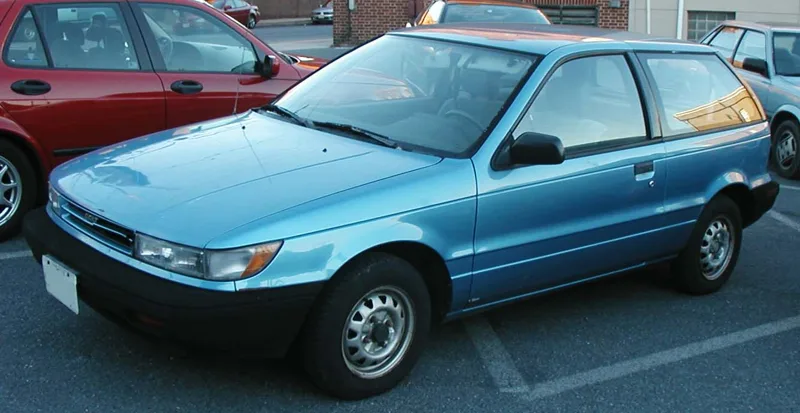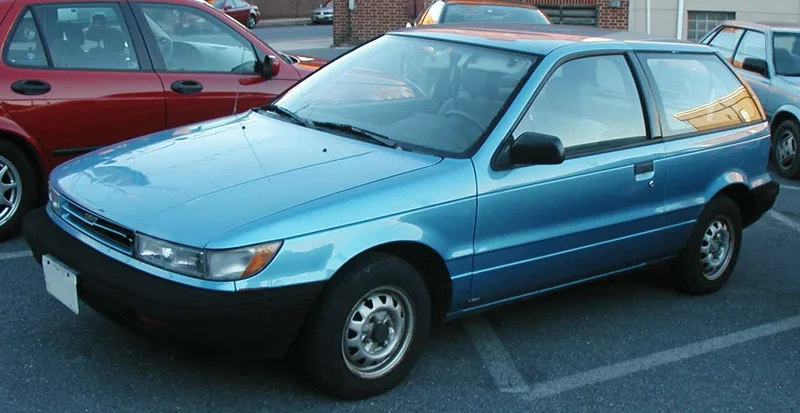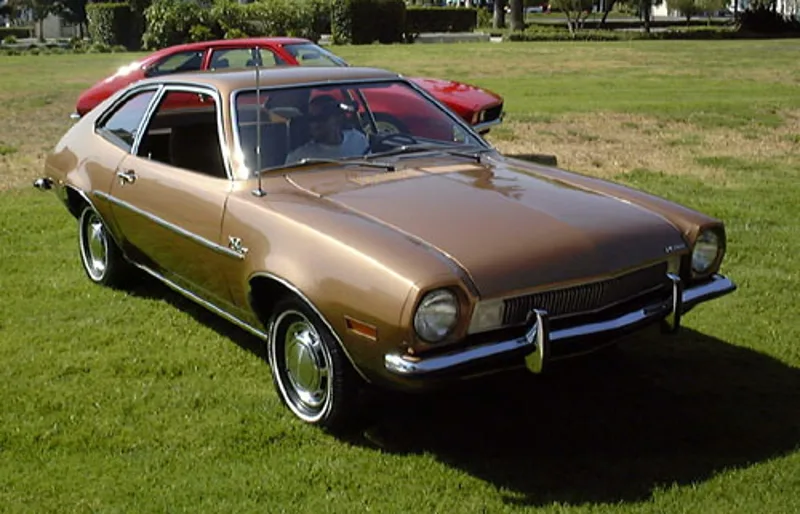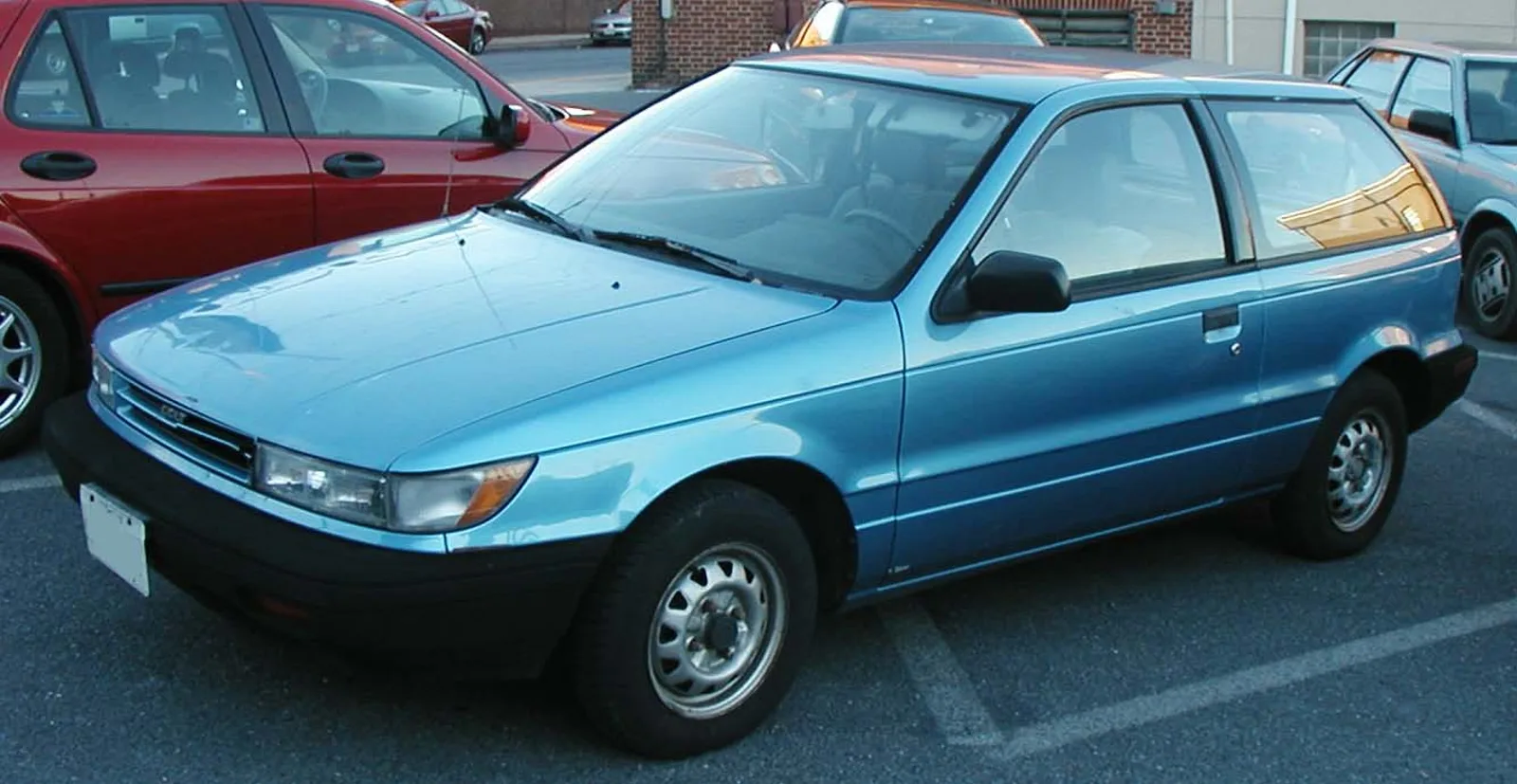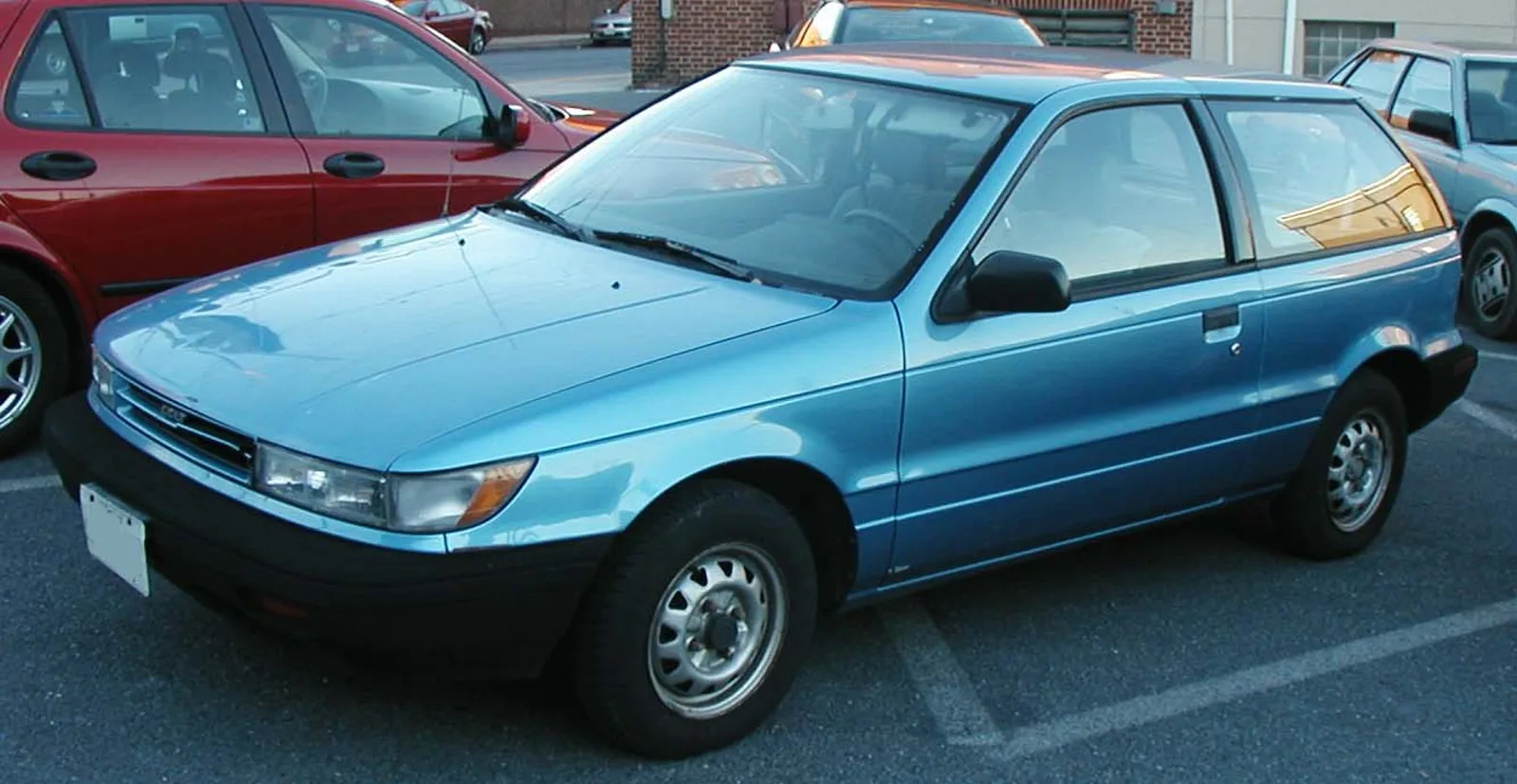
Chrysler's Dodge Colt and Ford's Pinto both arrived in 1970 and 1971 to take on the imports, and both had to live with their own reputations.
The Dodge Colt and Ford Pinto were both American subcompacts of the early 1970s. The Pinto arrived in September 1970 and was built in more than three million examples, while the Colt was a Mitsubishi-built captive import sold from 1971 until 1994.
The Dodge Colt and the Ford Pinto were both American answers to a flood of small Japanese and European cars, and both were pitched at buyers who wanted cheap, economical transport. The Colt was a Mitsubishi design sold through Dodge, while the Pinto was built by Ford in North America. They shared a market, a period and an argument about safety that the Pinto never fully escaped.
Why were the Colt and Pinto competitors?
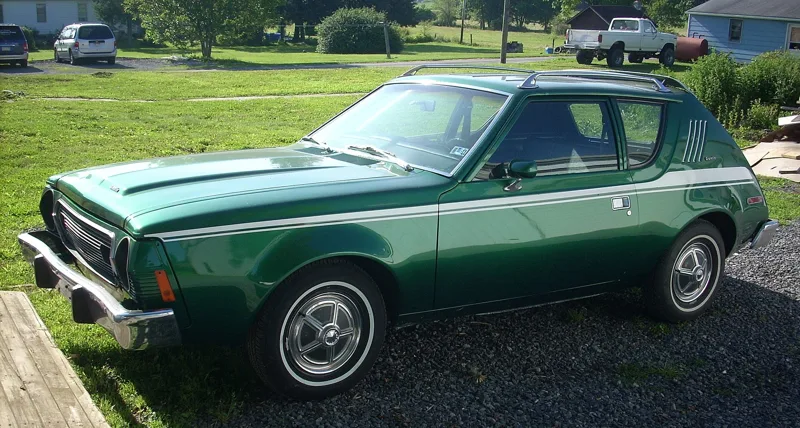
The Dodge Colt was Chrysler's response to the AMC Gremlin, the Ford Pinto and the Chevrolet Vega. It was a captive import from Mitsubishi, and it also competed with Japanese models such as the Toyota Corolla, the Honda Civic and the Datsun 1200. The Pinto, introduced on 11 September 1970, was the first subcompact that Ford built in North America.
American makers had been countering imports with compacts for years, but those cars had six-cylinder engines and sat in a larger class. The AMC Gremlin reached showrooms six months before the Pinto, and the Vega appeared the day before it. The Colt arrived in the same period, as a 1971 model.
The Pinto sold in its millions while its fuel tank became a case study, and the Colt quietly did the same job from a different catalogue.
How was the Pinto developed so quickly?
Initial planning for the Pinto began in the summer of 1967, and the board approved it in January 1969. Lee Iacocca, the Ford president, wanted a 1971 model that weighed under 2,000 lb (900 kg) and sold for less than US$2,000. The Pinto's development, from conception to delivery, took 25 months, against an industry average of 43 months.
Some stages that normally ran one after another were done in parallel, and machine tooling overlapped with product development. The team was told not to let decisions threaten the schedule, and the car became known inside Ford as Lee's car. Robert Eidschun styled the bodywork.
Colt and Pinto compared on paper
| Specification | Dodge Colt | Ford Pinto |
|---|---|---|
| Introduced | 1971 model year, a federalized Mitsubishi Colt Galant | 11 September 1970 |
| Body styles at launch | 2-door coupe, 2-door hardtop, 4-door sedan, 5-door wagon | Fastback sedan, three-door Runabout hatchback, two-door wagon |
| Engine at launch | 1,597 cc four-cylinder, 100 hp | Kent four-cylinder from Ford of England |
| Power later | 83 hp (62 kW) from 1972; 102 hp (76 kW) for the 1984 GTS Turbo | 54 bhp for the 1.6 L and 86 hp for the 2.0 L from 1972 |
| Transmission | Four-speed manual, three-speed automatic option | Manual or automatic, rack and pinion steering |
| Front suspension | MacPherson struts | Unequal-length control arms with front coil springs |
| Rear axle | Live axle | Live axle on leaf springs |
| Top model | GT hardtop coupe from 1973, with rally stripes | Sport packages from 1973 onwards |
| Years on sale | 1971 to 1994, captive import | 1970 to 1980 |
| Total built | not given | 3,150,943 cars |
| Replaced by | Mitsubishi Mirage-based models from 1979 | Front-wheel-drive Ford Escort |
How did the Colt's engines change?
The unibody was traditional, with the engine at the front driving the rear wheels, MacPherson struts at the front and a live rear axle.
The first Colt used a 1,597 cc four-cylinder engine rated at 100 hp, but in 1972 the rating dropped to 83 hp (62 kW) when manufacturers switched from gross to SAE net measurements. The second generation, from 1974 to 1977, offered a larger 2-litre G52B Astron engine producing 96 hp (72 kW) at 5,500 rpm.
The third generation used the 4G32 engine of 1,597 cc, which made 83 hp at launch and 77 hp from 1978 after the MCA-Jet high-swirl system arrived. The fourth generation, the front-wheel-drive Mirage-based car from 1979, began with a 1.4-litre Orion engine making 70 hp.
The hottest Colt came at the end of the fourth generation. The GTS Turbo of 1984 used the fuel-injected 1.6-litre 4G32T, which gave 102 hp (76 kW) at 5,500 rpm, plus an eight-speed Twin Stick transmission and ventilated front brakes.
How did the second and third Colts differ?
The second-generation Colt was based on the Galant, with a rounder body from 1973 and single headlights that set it apart from the first car. It became the 1974 Dodge Colt in the United States, and a five-speed manual arrived for 1977.
The Carousel, introduced in 1975 with larger bumpers, was the more luxurious version and wore special blue and white paint. The Silent Shaft version of the smaller engine was fitted as standard to GT and Carousel models for 1977.
The third generation split the line in two. Coupes and sedans were Lancer-based, from the A70 Mitsubishi Lancer, while the wagons were based on the Mitsubishi Galant Sigma. The Mileage Maker name distinguished the smaller cars, and the 1977 model year mixed second- and third-generation models on sale.
Abroad the second Colt had its own path. In South Africa it appeared as the 1600 GS, offered solely as a two-door hardtop, and in Canada it was rebadged as the Plymouth Cricket for the 1974 and 1975 model years.
What was the Colt wagon?
The Colt wagon of 1978 was not Lancer-based, but a rebadged version of the larger Mitsubishi Galant Sigma. Its standard engine was the 1.6-litre MCA-Jet four, with a 2.6-litre, 105 hp (78 kW) Astron optional along with a five-speed manual.
The wagon lasted until 1981, when the domestic Dodge Aries K wagon effectively replaced it. The larger Mitsubishi Galant Lambda coupe was also sold as the Dodge Colt Challenger from 1978, sharing the wagon's chassis and engine options before the Colt name was dropped.
How did the Pinto's engines compare?
The early Pinto used English and German engines, the 1.6 L and the 2.0 L, tuned for performance. With a low weight of not much above 2,000 lb (900 kg) and an overhead-cam engine, the 2.0 accelerated from 0 to 60 mph in 10.8 seconds. Emissions rules then pushed Ford towards domestic engines, and new safety legislation added weight.
Ford had not offered a four-cylinder engine in North America since the Model A engine ended in 1934, so the Kent unit from Ford of England was a notable change. Revised SAE standards in 1972 cut the 1.6 L to 54 bhp and the 2.0 L to 86 hp. In 1974 the underpowered Kent engine was dropped, and the optional overhead-cam engine grew to 2.3 litres, a unit that powered a variety of Ford vehicles for 23 years.
In 1975 Ford added a 2.8-litre V6 to compete with the AMC Gremlin's six. It was far less powerful than the Gremlin's standard 3.8-litre straight-six, but it gave the Pinto something the Vega never had. By 1980 the V6 had been dropped, leaving the 2.3 litres as the only engine.
What body styles did the Pinto offer?
The Pinto arrived as a two-door fastback sedan with an enclosed trunk. A three-door hatchback called the Runabout debuted at the Chicago Auto Show on 20 February 1971, and it was priced at US$2,062. Its cargo area held 38.1 cubic feet (1,080 L) with the seat folded.
The two-door station wagon came on 24 February 1972. Its overall length was 172.7 in (4,390 mm), and it offered 60.5 cubic feet (1,710 L) of cargo volume. It was the first two-door Ford wagon since the 1965 Falcon, and it had front disc brakes and the 2.0-litre engine as standard.
How did the Pinto's safety reputation develop?
The Pinto's first year brought recalls. On 30 October 1970, less than two months after launch, 26,000 cars were recalled over a possible accelerator sticking problem. In March 1971 Ford recalled all 220,000 Pintos built before 19 March 1971, to deal with fuel vapours in the air filter that could ignite through the carburettor.
The bigger controversy involved the fuel tank. Several deadly fires followed ruptures of the tank in rear-end collisions, and the design drew intense media and government attention. Later analysis suggested the car's overall safety was comparable to other 1970s subcompacts.
The episode is still taught as a case in business ethics and tort reform, because of how Ford responded to the problem. The Colt never had a comparable controversy of its own.
What did the Pinto's trim packages offer?
Ford offered a series of appearance packages on the Pinto, most of them cosmetic. The Sprint Decor Group of 1972 gave a white car with blue accents and red pinstriping, and the Sport Accent Group arrived for 1973 with two-tone orange or avocado accents.
The 1973 Luxury Decor Group added bright exterior dress-up mouldings, black bumper rub strips and a wood-tone interior. New slotted forged aluminium wheels were also offered that year.
The 1976 model year brought an egg-crate grille and chrome headlamp bezels borrowed from the Canada-only 1974 Mercury Bobcat. A basic Pinto Pony with less standard equipment and cheaper trim was introduced, and a Runabout Squire wore wood-grain vinyl bodysides.
The 1977 update brought slanted urethane headlamp buckets, a revised grille and tail lamps, and an optional all-glass rear hatch for the Runabout. The Pinto Cruising Wagon was a sedan-delivery version styled like a small conversion van, with round side bubble windows.
For 1979 the ESS, or European Sports Sedan, package added black roof drip mouldings, charcoal grille and headlamp surrounds and ESS fender badges. The Sports Package, with a front stabiliser bar and full instrumentation, was standard with it.
Why did Pinto sales fade after 1974?
Pinto sales peaked in 1974, when 544,209 units were sold. By 1978 Ford had introduced the Fiesta, nearly two feet shorter than the Pinto and the first front-wheel-drive Ford sold in the United States. The Pinto was then replaced by the front-wheel-drive Escort.
Mercury's Bobcat was expanded to Lincoln-Mercury dealers in the United States in 1975, as a hatchback and station wagon, and about 224,000 Bobcats were built from 1975 to 1980.
In 1980 the V6 was discontinued, leaving the 2.3-litre as the only engine, and July 1980 marked the end of Pinto production.
How many Pintos and Colts were sold?
The Pinto sold over 100,000 units by January 1971, and 352,402 were built in the 1971 production run. The peak came in 1974, with 544,209 units. In all, more than three million Pintos were made across a ten-year run, which outproduced the combined totals of the Chevrolet Vega and the AMC Gremlin.
Mercury's Bobcat, a rebadged Pinto, added about 224,000 units from 1975 to 1980, built at plants in New Jersey, Ontario and California. The Pinto's production ended in July 1980 with a total of 3,150,943 cars.
The Colt ran for more than two decades, from 1971 to 1994, as a captive import under Dodge and Plymouth badges. In Canada it was sold as the Eagle Vista for a time.
What did the later Colts look like?
The fifth generation, from 1985 to 1988, offered a three-door hatchback, a four-door sedan and the Colt Vista, and its base engine was a twin-barrel 1468 cc four with 68 hp (51 kW). The turbocharged 1.6-litre gave 102 hp on the upscale Premier sedan and the GTS Turbo hatchback.
From January 1988, Chrysler Canada began sourcing Colts from Thailand, assembled from Japanese parts, with a plan to bring in 8,000 cars a year. The Thai Colts were imported to Canada until 1994.
The sixth-generation car, sold from 1989, was an Eagle Summit rebadged Mitsubishi Mirage in some markets. The Colt sedan was not sold in the United States for that generation, as it would be replaced by the Dodge Shadow and Plymouth Sundance.