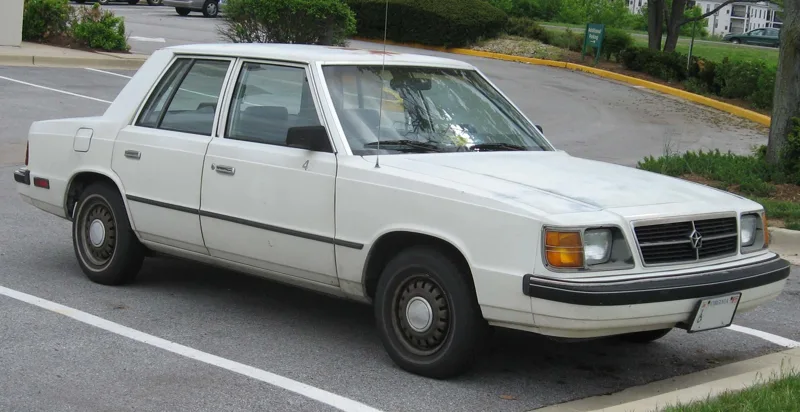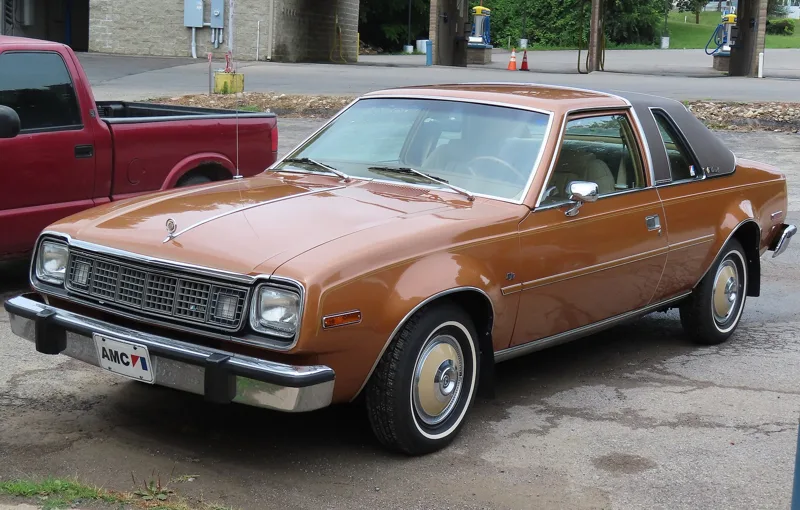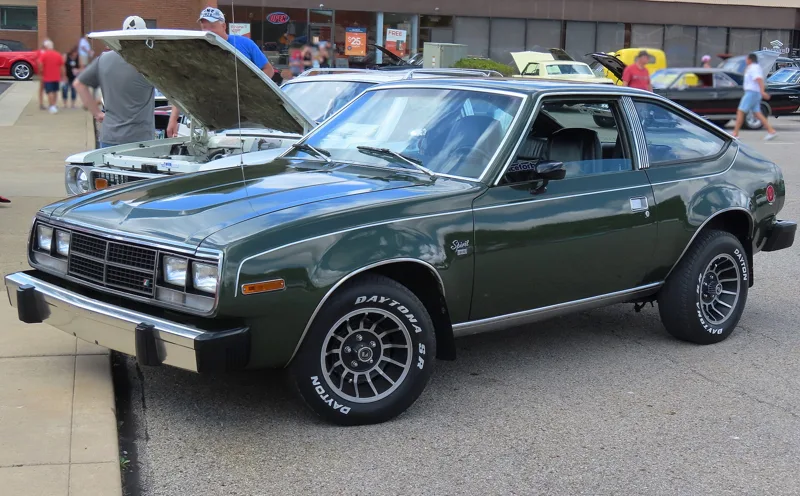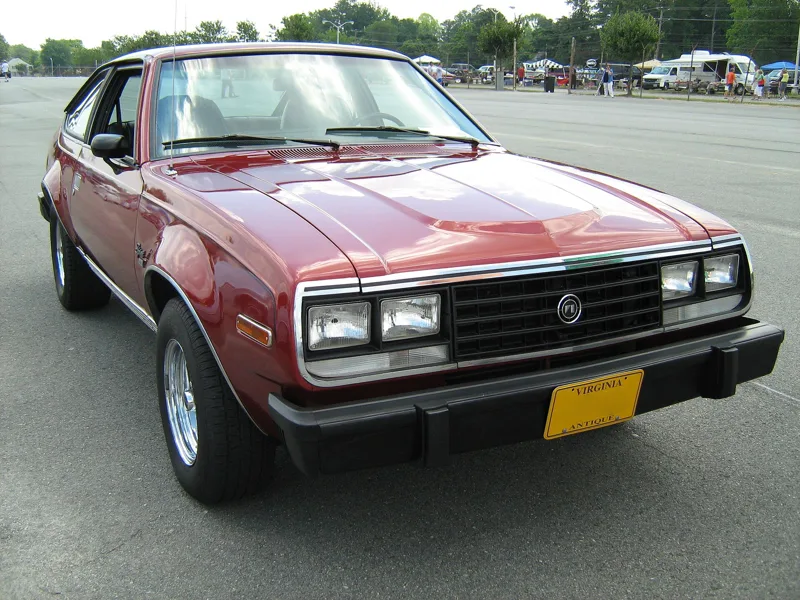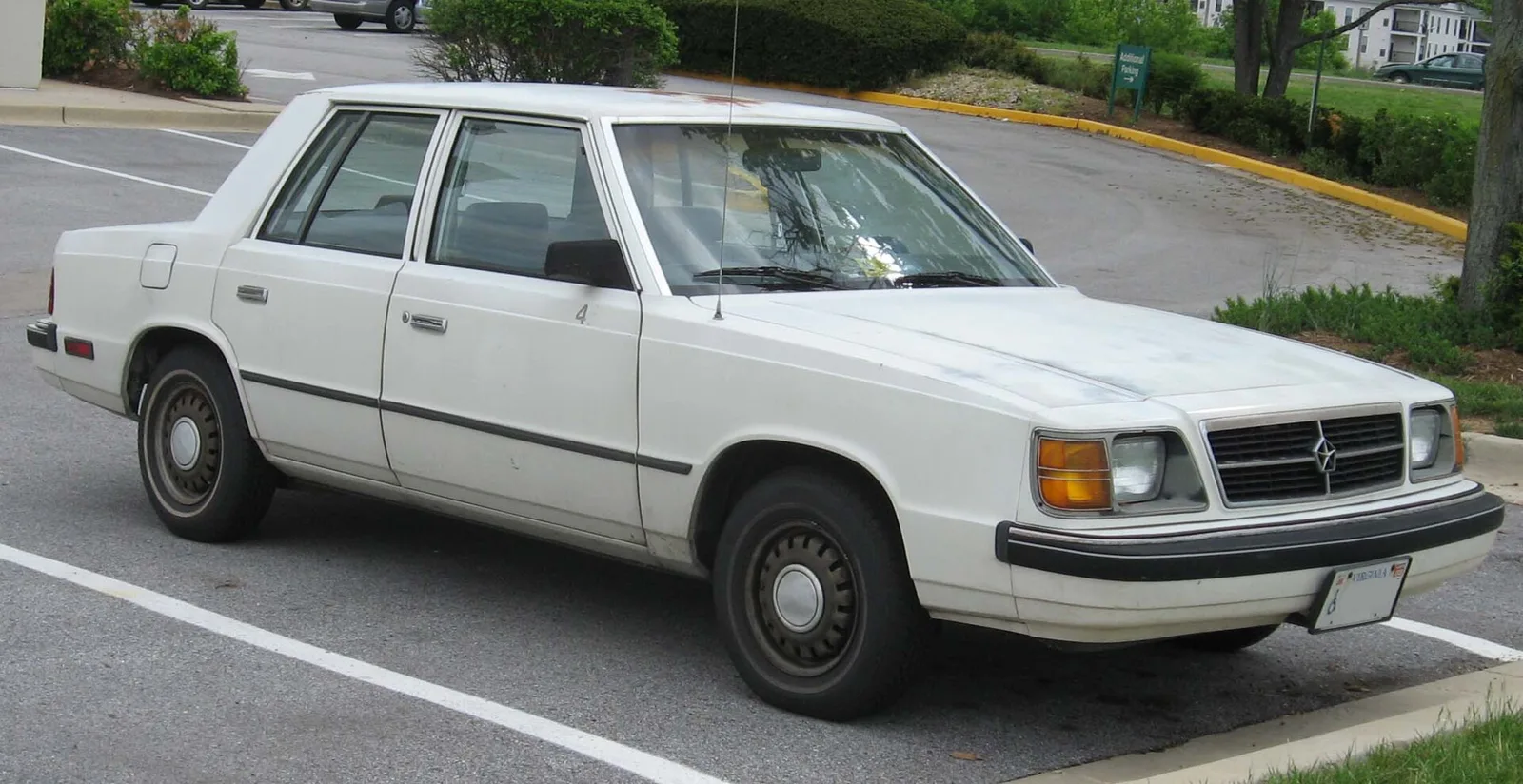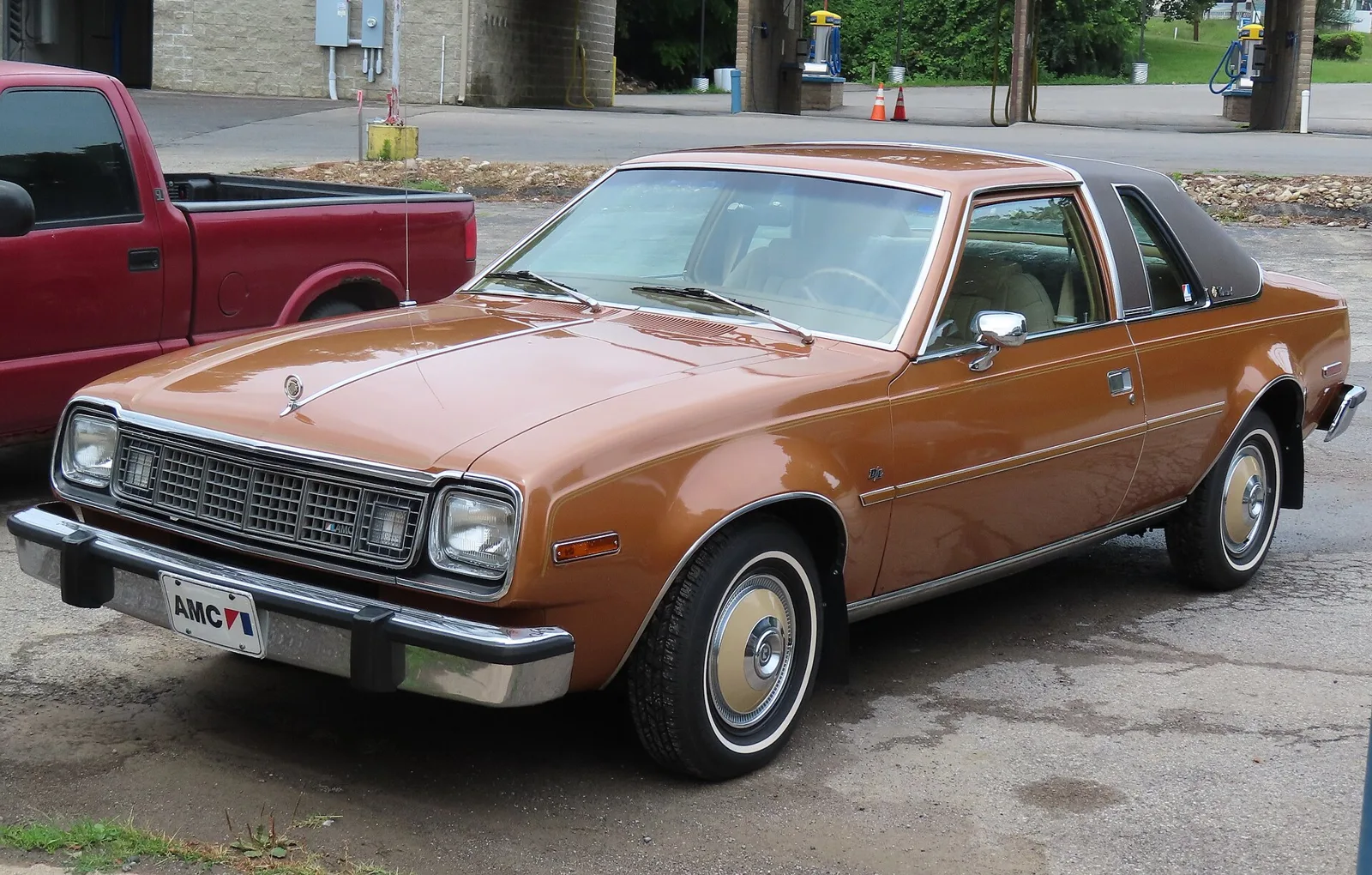
AMC's Concord was a reworked Hornet that became its best seller, while Chrysler's Aries was the first K-car and a bet the company could barely afford.
The AMC Concord began as a 1978 revision of the Hornet and became AMC's best seller. The Dodge Aries, launched for 1981 as Chrysler's first K-car, joined the Reliant as a 150,000-unit seller in its debut year.
AMC's Concord and Chrysler's Aries were both family cars built in the United States in the late 1970s and early 1980s, but they came from very different positions. The Concord was a refinement of an old compact that AMC could not afford to replace. The Aries was the first of Chrysler's K-cars, a new front-wheel-drive design that the company needed to survive. Their sales records and their history tell two different stories.
Why did the Concord and Aries compete?
The AMC Concord was sold for model years 1978 through 1983 as a compact, and the Dodge Aries came in for 1981 as a K-car. Both were pitched at family buyers, and the Aries was built to sit in the same market as the older compacts the Concord had replaced. Their paths were different, but their customers overlapped.
Chrysler's problem was that its existing cars were ageing and its finances were fragile. AMC's problem was that it had no money for a new car, so it reworked what it had. The contrast explains much of what came next.
One car was AMC's way of making an old Hornet sell, and the other was a rescue bet on a front-drive platform Chrysler could barely pay to build.
How was the Concord built from the Hornet?
The Concord was essentially a revision of the AMC Hornet, which was discontinued after 1977, but it was better equipped, quieter and smoother riding. It came as a four-door sedan, a two-door coupe through 1982, a three-door hatchback through 1979 and a four-door station wagon with a rear liftgate. It became AMC's volume seller until the Renault Alliance arrived.
American Motors could not afford a new car to replace the Hornet, which was ageing but still selling. Ford's Fox platform was expected to compete for the same buyers, and GM was shrinking its rear-drive intermediates to the same 108-inch wheelbase as the Hornet. The Concord was positioned as an upscale compact, and its starting price was in the mid US$4,000 range.
Dick Teague, AMC's top designer, used the facelifted 1977 Gremlin's front fenders with a new bonnet and a chrome egg-crate grille. The Concord's ride was engineered to be quiet, with the front suspension and rear axle isolated from the car's structure, and top models used fibreglass headlining and sound absorbers behind the trim.
Concord and Aries compared on paper
| Specification | AMC Concord | Dodge Aries |
|---|---|---|
| Launch | 1978 model year, a revised Hornet | Model year 1981, the first K-car |
| Body styles | Four-door sedan, two-door coupe, three-door hatchback, four-door wagon | Two-door coupe, four-door sedan and four-door wagon |
| Drive | Rear-wheel drive | Front-wheel drive |
| Standard engine | 232 cu in (3.8 L) straight-six | 2.2 L SOHC four |
| Options | 258 cu in six; 304 cu in V8; 2.0 L Volkswagen-Audi four | 2.6 L Mitsubishi Silent Shaft four |
| Performance | V8 tested at 0 to 60 mph in 10.4 seconds, 100 mph (160 km/h) | 0 to 60 mph in the 13-second range with the Mitsubishi engine |
| Starting price | mid US$4,000 range in 1978 | US$5,880 base |
| Trim levels | Base, D/L and Limited | Base, Custom and SE, with LE from 1985 |
| Built in | AMC plants; VAM in Mexico | Newark, Delaware; Detroit, Michigan; Toluca, Mexico |
| Sales | Above 100,000 in 1979 | Above 150,000 in 1981 for each of the Reliant and Aries |
| End | 1983 | Last K-car built 9 December 1988 |
What sporty and special Concords were offered?
The 1978 Concord was also available as a sports-oriented two-door hatchback AMX model with no Concord badges. That version moved to the Spirit platform for 1979, so the AMX name passed on to AMC's subcompact.
AMC's Concord Sundancer convertible was an authorised conversion sold through dealers in 1981 and 1982. Vehiculos Automotores Mexicanos built a modified Concord in Mexico as the VAM American, including a VAM Lerma model, and a battery electric conversion of the Concord wagon was sold separately by Solargen in 1979 and 1980.
How did the Concord's engines work?
The standard Concord engine was AMC's 232 cu in straight-six, with the 258 six and a 304 V8 as options on the D/L models. Transmission choices were a three-speed manual, a three-speed automatic or a floor-shifted four-speed manual. Car and Driver tested a V8 Concord, which reached 60 mph in 10.4 seconds and topped out at 100 mph (160 km/h).
AMC also offered a Volkswagen and Audi-designed 2.0-litre four, the same unit used in the Porsche 924, though the AMC version had carburettors rather than Bosch injection. It was economical but less powerful than the six, and AMC did not fit it as standard because of the cost of the licence.
The V8 was available in 1979 but was not popular. With the automatic it returned 15 mpg-US in the city and 21 mpg-US on the highway, while the standard six did better, at 18 mpg-US in the city and 26 mpg-US or more on the highway.
Who else built front-drive cars of this kind?
Chrysler's Omni and Horizon had shown what a front-drive subcompact could do, and the K-car took that lesson into a bigger family car. Chevrolet had introduced front-wheel drive on the Citation for 1980 to replace the Nova, though its unusual styling and recall problems hampered it.
Ford did not replace its family-sized Fairmont, Granada and LTD with a front-drive design until the 1986 Taurus. In the meantime, the Chevrolet Cavalier and the Ford Tempo were marketed as upscale compacts rather than family sedans, which left the K-car with a clear field.
What engines did the K-cars use?
The Reliant and Aries used a new 2.2-litre SOHC four as standard, with a Mitsubishi Silent Shaft 2.6-litre as an option. The 2.6 engine had hemispherical combustion chambers, and cars fitted with it carried HEMI badges on the front fenders. These K-cars were smaller than their predecessors but still seated six on two bench seats.
In 1985 the 2.2 was rated at 82 hp (61 kW), with a four-speed manual or three-speed automatic. In 1986 its carburettor gave way to throttle-body electronic fuel injection, and a fuel-injected 2.5-litre four was added before problems led to its replacement. The Mitsubishi engine needed an automatic, and the 2.6 Hemi cars accelerated from 0 to 60 mph in the 13-second range.
What did the Concord's 1979 update change?
For 1979 the Concord received a waterfall grille with a delicate chrome vertical bar, quad rectangular headlights set above slim parking and signal lamps, and lighter aluminium bumpers. The D/L sedan gained a vinyl roof that covered only the rear of the passenger compartment, and the hatchback was given a brushed aluminium Targa-style roof band.
The 1979 model year also brought the Limited, offered as a coupe, sedan and wagon, with leather upholstery, thick carpeting, full courtesy lighting and an AM radio as standard. Special-order cars for fleets were built with minimal trim and, in some cases, rear doors with fixed windows and no interior handles.
On 1 May 1979 AMC marked the 25th anniversary of the Nash-Hudson merger with limited Silver Anniversary Concords. They had a two-tone silver metallic finish, a silver vinyl roof, wire wheel covers and corduroy upholstery.
How did the Concord sell?
The Concord was popular from the start. In its inaugural 1978 year it outsold all the other AMC car lines combined, and its coupe body style accounted for almost half of 1978 production. AMC promoted it as the luxury America wants and the size America needs.
Popular Science said the Concord earned top honours for trim level, with reclining seats covered in velvet-like fabric and a six that was close to a V8 in smoothness and power. Its dash was attractive enough to suggest an expensive car, if it had not been for poor quality control. The magazine's test of the group also found the Concord the best-looking inside.
A Popular Mechanics survey of owners recorded 1,127,000 miles (1,813,731 km) of driving. Some 30 percent of Concord owners wrote no complaints at all, beating the record of every car surveyed in 1977, including the Honda Accord, which managed 18.9 percent.
Why did Chrysler need the Aries?
Chrysler was in a grave financial crisis by the end of the 1970s, caused by poor decisions, little investment in new products and external shocks such as the 1973 oil embargo. Its Aspen and Volare compacts, introduced in 1976, were rushed out with quality problems that made them among the most recalled cars in US history.
In January 1978 Chrysler released the Dodge Omni and Plymouth Horizon, the first domestic front-wheel-drive subcompacts. They came at a time when larger cars were in demand, and dealers struggled to shift them. Lee Iacocca was fired from Ford in July 1978, and three months later Chrysler offered him its presidency.
The K-platform had been designed in 1978, but the company could not afford to build it. Iacocca and Riccardo asked the government for help, and Congress approved a bailout once Chrysler set out its plans for the new front-wheel-drive platform. The first K-cars came off the line at Detroit's Jefferson Avenue plant in late 1980.
How did the Aries sell in its early years?
Both the Reliant and the Aries sold more than 150,000 units each in 1981, and the pair was named Motor Trend's Car of the Year for that year. The Reliant replaced the Plymouth Volare Road Runner, and the Aries replaced the Dodge Aspen. Together the two nameplates achieved nearly a million sales in their original form.
The early sales were brisk, but Chrysler had built too many SE and Custom models. Dealers found that base cars were scarce and that the cars buyers came to see cost hundreds or thousands of dollars more than advertised. Chrysler then built more base models, and sales rose again.
Advertising promoted the Aries' low base price of US$5,880, while the company's shortage of money meant early promotional shots used the same car with the Dodge and Plymouth badges swapped.
How was the Aries' K-car body arranged?
The Reliant and Aries were the smallest cars to seat six on two bench seats with a column shifter, the traditional American arrangement. Chrysler marketed them as able to seat six Americans.
Each car came as a two-door coupe, a four-door sedan or a four-door wagon, in base, Custom and SE trims, and the wagon was never offered in base trim. SE wagons came with woodtone siding as standard, although it could be deleted. Bucket seats were optional on all but the base models, and by 1987 they had become standard, with bench seats available at no charge.
The K-cars were built in Newark, Delaware, in Detroit, Michigan, and in Toluca, Mexico. In Mexico the Aries was sold as the Dart K, and in Japan as the Michigan.
How did the Aries change through the 1980s?
In 1983 the Aries gained roll-down rear door windows on the four-door models, replacing fixed glass with pop-out quarter panes. In 1985 the K-cars received a new, rounder front and a five-section tail lamp, and the top LE trim was added, replacing the Custom on the wagon.
In 1986 the SE trim was dropped, and LE and base remained the only trims until production ended. For 1988 the cars were renamed Reliant America and Omni America in the United States, with a single LE trim and the wagons discontinued.
Chrysler sold the Aries against a falling trend from 1984, and in 1987 it cut prices by up to 16 percent. The tooling was long paid for, so the car still earned money, and sales rose for 1988. The last K-car rolled off the line on 9 December 1988, and the Acclaim and Spirit replaced the Reliant and Aries in 1989.