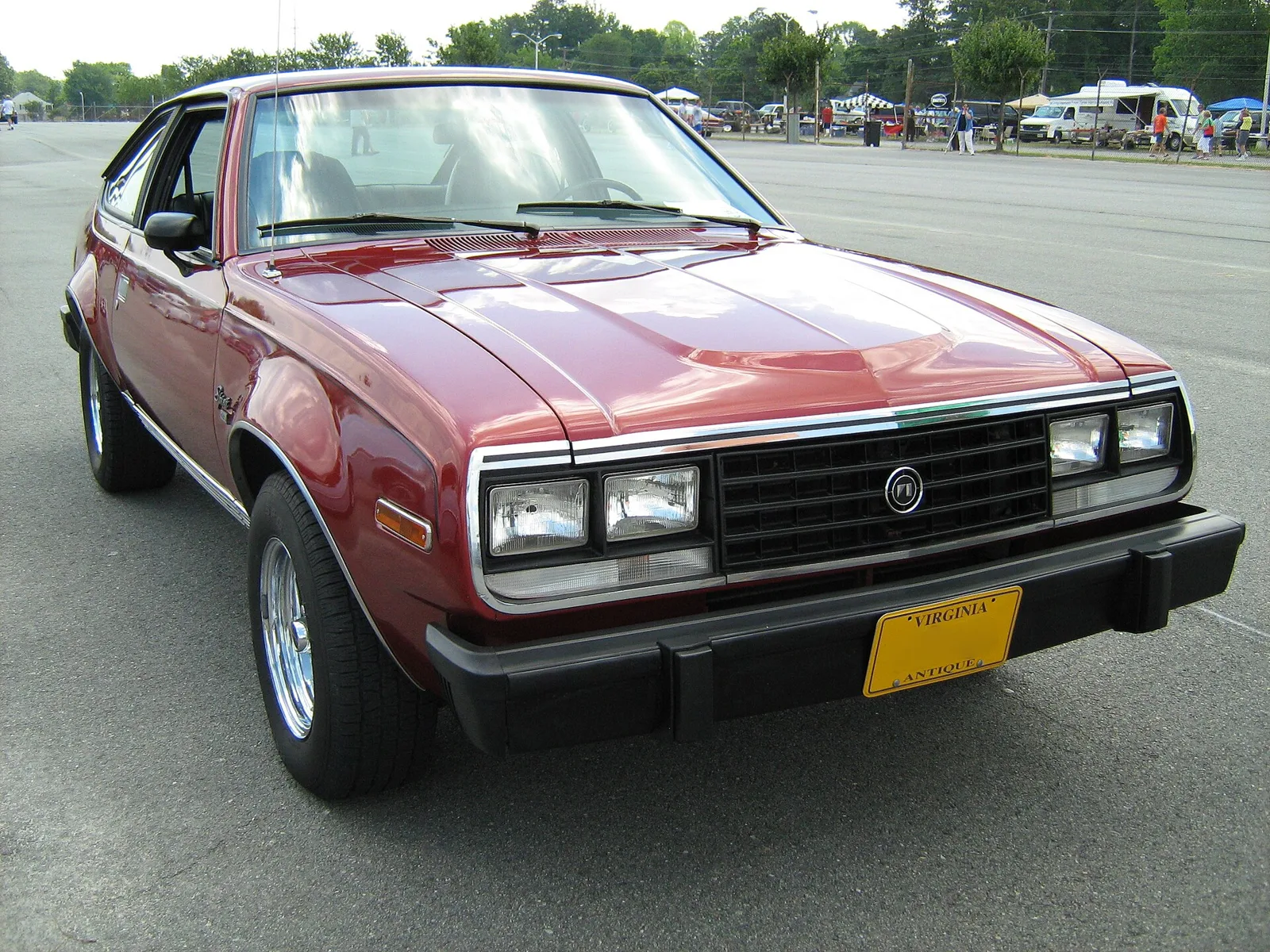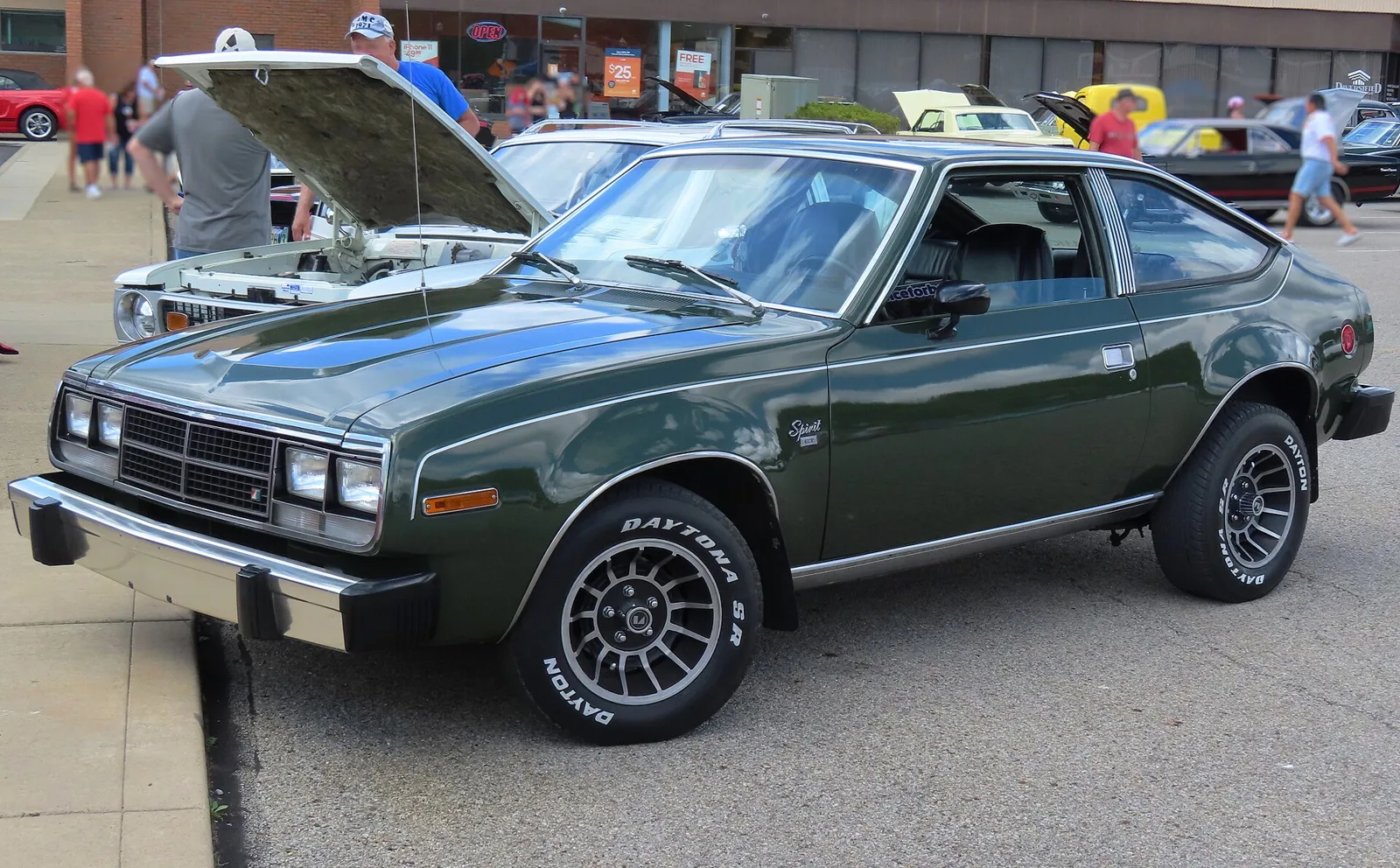
AMC's restyled Gremlin and Chrysler's front-wheel-drive Omni both arrived to save their makers' small-car ambitions, and they took very different routes.
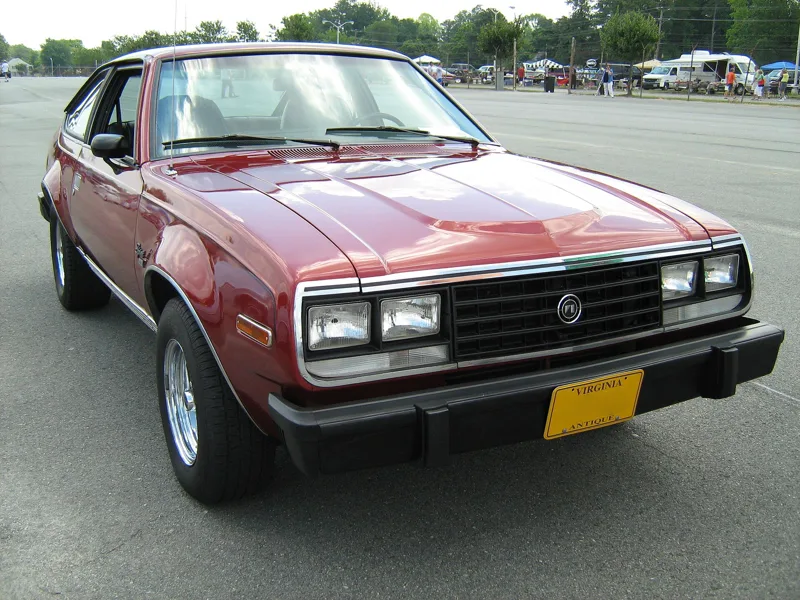
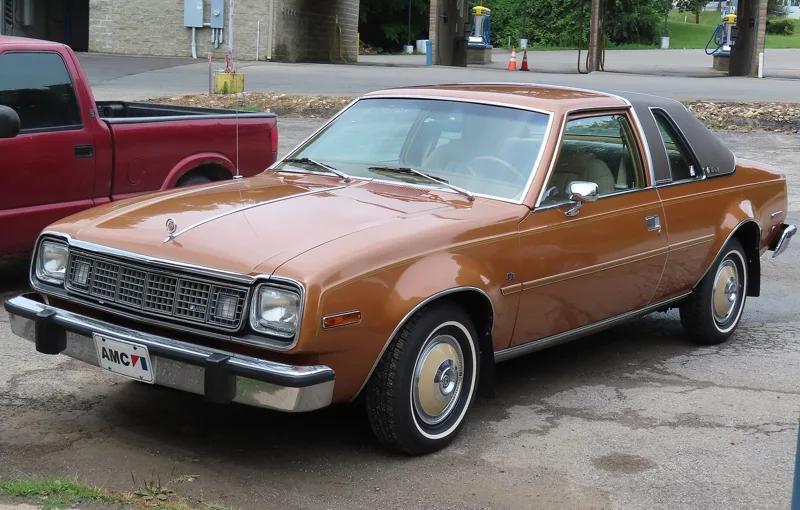
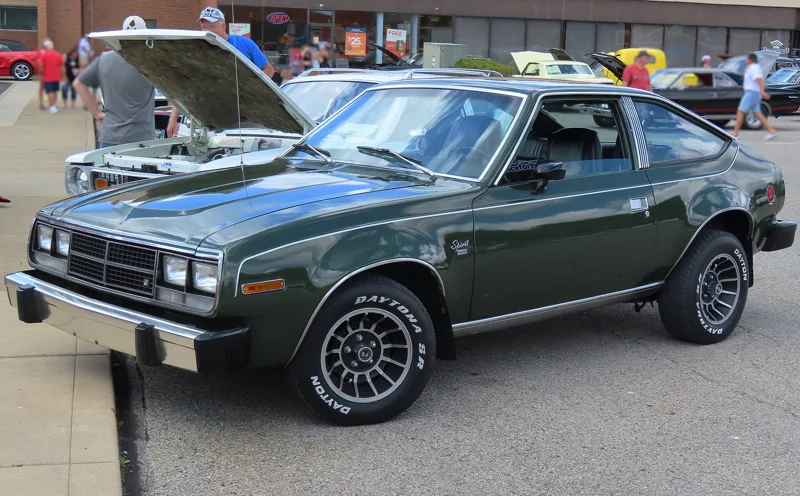
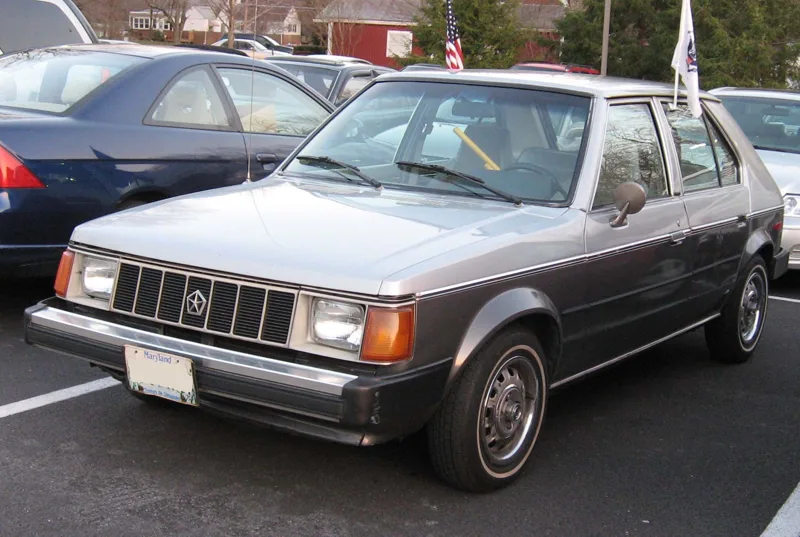
The AMC Spirit was a 1979 to 1983 restyled Gremlin that kept the rear-drive Gremlin platform, while the Dodge Omni of 1978 was a new front-wheel-drive hatchback. The Omni produced about 2.5 million vehicles, and the Spirit offered an Audi four and optional sixes.
AMC's Spirit and Chrysler's Omni were both small cars from the late 1970s, and both were sent out to shore up their makers' places in a shrinking market. The Spirit was a restyled Gremlin that shared its floorpan and much else with the car it replaced. The Omni was a new front-wheel-drive design that Chrysler had been talking about for years. The two cars rarely met head to head in showrooms, but they were natural rivals.
Why were the Spirit and Omni rivals?
The AMC Spirit was sold by American Motors from 1979 through 1983, while the Dodge Omni was a Chrysler subcompact from the 1978 to 1990 model years. The Omni arrived in January 1978, and the Spirit followed a year later, so the two cars spent their early years in the same segment. Both were aimed at the buyer who wanted a small, economical car from an American maker.
Chrysler had been slow to enter the small-car market. In the early 1970s it repeatedly announced a domestic small car, only to delay the project again and again. AMC, by contrast, already had a subcompact on the road in the Gremlin, and the Spirit was the way it kept that business going.
One car was a Gremlin with a new face, the other a front-drive car that Chrysler had hoped to build for years, and both were built to keep a small-car market alive.
How did the Spirit grow out of the Gremlin?
The Spirit was largely a restyled Gremlin, which had been built from 1970 through 1978. It shared the Gremlin's platform, its floorpan, its powertrains and many other parts, because AMC had little money for new engineering. The 1978 Concord's upgrades carried over, including a revised suspension with soft-ride mountings.
The body was newly styled, and AMC added a liftback to the two-door sedan. Dick Teague designed the more conventional liftback coupe, which had a graceful upper body for such a short car. Popular Science said the company had the cleverest engineers in Detroit, and that it was getting 200 dollars of looks for 100 dollars.
Standard equipment rose compared with the Gremlin. The DL trim had colour-keyed wheel covers, corduroy or sport vinyl seats and wood accents, and the top Limited added leather, air conditioning and a full-length centre console.
How did the Omni come about?
The Omni and its Plymouth twin, the Horizon, were developed as the C2 project, which began in 1975 as a joint effort with Chrysler Europe. American designers chose to keep the five-door hatchback rather than a coupe, favouring a European layout similar to the Volkswagen Golf's five-door. Chrysler even bought nearly 100 Volkswagen Rabbits in the United States to reverse-engineer them.
Chrysler Europe was sold to PSA Peugeot Citroen in August 1978, which put the European side of the project into new hands. The American Omni had already gone on sale with a price of around US$2,500, and it was the first front-wheel-drive Chrysler, with the first American front-drive layout built around a transverse four-cylinder engine.
Chrysler built the Omni at its Belvidere Assembly plant in Illinois from 1977 to 1987, a facility that also made the rest of the L platform range. Production then moved to the AMC Kenosha Plant in Wisconsin in 1987 and finally to the Jefferson Avenue Assembly in Detroit in 1989. The Omni and Horizon were the last models built at the two later plants.
Chrysler introduced the Dodge Shadow and Plymouth Sundance hatchback sedans for 1987 to replace the Omni and Horizon, and the Neon took over from both generations for 1993.
Spirit and Omni compared on paper
| Specification | AMC Spirit | Dodge Omni |
|---|---|---|
| Years on sale | 1979 to 1983 | 1978 to 1990 |
| Body | Two-door Kammback sedan and Liftback coupe | Five-door hatchback, with 2+2 coupe and pickup variants |
| Drive | Rear-wheel drive, from the Gremlin platform | Front-wheel drive, Chrysler L platform |
| Wheelbase | 96 in (2,438 mm), short AMC chassis | 99.2 in |
| Standard engine | 2.0 L Audi EA831 inline-four, 121 cu in | 1.7 L Volkswagen-sourced four, 75 hp (56 kW) |
| Largest engine | 4.2 L inline-six; 304 cu in V8 in 1979 only | 2.2 L K-car four, 84 hp (63 kW) from 1981 |
| Transmission | Four-speed manual; three-speed TorqueFlite automatic; five-speed from 1982 | Four-speed manual; three-speed automatic; five-speed later |
| Fuel economy | 37 mpg-US (6.4 L/100 km; 44 mpg-imp) on the highway in 1982 | not given |
| Rust protection | Ziebart Factory Rust Protection and five-year No Rust Thru | not given |
| Built in | Wisconsin and Ontario; VAM in Mexico | Belvidere, Illinois, then Kenosha and Detroit |
| Replaced by | Ended after 1983 | Dodge Shadow and Plymouth Sundance from 1987 |
What engines did the Spirit offer?
The standard Spirit engine was a 121 cu in (2.0 L) EA831 inline-four supplied by Audi. Buyers could also choose AMC's 232 cu in (3.8 L) or 258 cu in (4.2 L) inline-six, and the 258 was standard on the AMX. The 304 cu in (5.0 L) V8 was offered only on the liftback, and only in 1979, the last year it was available in the short Gremlin-based chassis.
The four-cylinder unit was the Gremlin's overhead-camshaft engine, also used on the Concord. It used the same cast parts as the Porsche 924, but it was assembled in an AMC plant in Indiana to different specifications. It had a two-barrel carburettor, where the Porsche had fuel injection and a higher compression ratio.
In 1980 the 3.8-litre six and the V8 were dropped, partly to meet the corporate fleet fuel economy standard. The four-cylinder was replaced with a Pontiac-built 2.5-litre unit that suited the car's size and weight better, and the 4.2-litre six became the most popular engine and the only one offered in the AMX.
For 1981 the 258 six was redesigned and made 90 pounds (41 kg) lighter, with smoother running and more low-end torque. Its aluminium parts brought it to 445 lb (202 kg), which AMC called the lightest in-line six in the domestic industry.
What engines did the Omni offer?
Chrysler did not have a four-cylinder engine of its own for North America, and the Simca-designed 1.1 to 1.4 litre units were judged too weak. It adopted a 1.7-litre four from Volkswagen, which made 75 hp (56 kW) and 90 lb ft of torque at first. Only a CARB-certified version with an air pump and 70 hp had been available at launch.
Power rose to 77 hp in 1979 and then fell to 68 hp (51 kW) by 1980, when the engine met the rules in all fifty states. The engine was paired with a four-speed manual or a three-speed automatic.
The K-car's 2.2-litre engine arrived for 1981 as an upmarket option, producing 84 hp (63 kW) at first. For 1983 Chrysler added a Peugeot-supplied 1.6-litre Simca unit with 62 hp (46 kW) as the base engine. The 2.2 became the standard engine from 1987, and it received fuel injection for 1988.
How was the Spirit's chassis set up?
The Spirit kept the Gremlin's rear-drive layout, with its live rear axle on leaf springs. The suspension was revised with soft-ride mountings for the coil springs above the front A-arms, which were meant to improve ride and handling, and the car gained lightweight aluminium bumpers and a lock-up converter for the automatic.
The 1981 Spirits received a new crosshatch grille and optional Noryl wheel covers. The Limited was cancelled, leaving the DL as the top model, and the AMX was dropped while the liftback kept a GT appearance package.
The Spirit's model range also shrank. The 1983 model year deleted the sedan, the 2.5-litre four and the base liftback, so every 1983 Spirit was a 4.2-litre-equipped liftback in DL or the new GT trim.
How was the Omni's chassis built?
The Omni used Chrysler's L platform on a 99.2-inch wheelbase, shared with its European namesake. Chrysler Corporation made substantial changes to the suspension for the American market, and the Omni uses front MacPherson struts where the European Horizon had a torsion-bar front suspension.
At the rear, the Omni had a semi-independent twist-beam layout, while the European car used independent trailing arms. Both versions were coil-sprung at the back. The car had power-assisted front disc brakes, rear drum brakes and a rack-and-pinion steering system.
How did the two cars sell?
The Omni was a sales success for Chrysler in its own way. It was the best-selling model line for the three years before the K-cars arrived, and it helped the company climb out of the financial trouble that had driven it to seek government support. Across its life the Omni and Horizon produced about 2.5 million vehicles.
The Spirit did not have the same scale. It sold well enough in its early years, but AMC was a much smaller company than Chrysler, and the Spirit's life ended after 1983 without a direct successor in the same form. The two cars therefore show two different kinds of ambition, one a fresh design built at scale and the other a refreshed car on a familiar platform.
The Plymouth Horizon was the final Plymouth model to outsell its Dodge counterpart, a detail that reflects how the twins sold in the market.
How did the Spirit race?
B.F. Goodrich backed a pair of Spirit AMXs entered in the 1979 Nurburgring 24 Hours. They were the first American team entries with a pair of quickly homologated cars, and they finished first and second in their class out of a field of 120. They were the only racers running street tyres.
Spirits also took part in the IMSA Champion Spark Plug Challenge and in Racing Stock Class events, and privately owned cars raced in drag competition. The Spirit's competition profile was built on privateers rather than factory budgets.
How did Chrysler and AMC promote their cars?
AMC's marketing leaned on rust protection. From 1980 every AMC, including the Spirit, received Ziebart Factory Rust Protection, which used aluminised trim screws, plastic inner fender liners, galvanised steel in every exterior panel and a deep-dip epoxy primer. The programme was backed by a five-year No Rust Thru warranty within the Buyer Protection Plan.
A 1982 television campaign showed a new Spirit dropped into 30 feet (9 m) of saltwater, to prove the rust claims. The Spirit was advertised as one tough American economy car, in a campaign built around what AMC called the Tough Americans.
Chrysler's leadership had once been openly sceptical of small cars. Its chairman, Lynn Townsend, said subcompacts were too small and that buyers would not climb into them, which made the Omni's arrival a shift in direction for the company.
How did the Omni's body and trim change?
The Omni and Horizon were largely the same car apart from grilles, tail lamps and badges. American versions had sealed-beam headlamps and 5 mph bumpers, and their body stampings were not shared with the European Horizon, which was the same chassis with different tooling.
For 1984 the model line lost much of its chrome in favour of black-painted trim, got a redesigned dashboard and a five-speed manual as standard. A driver-side airbag and rear-seat shoulder belts arrived for 1990 to meet passive-restraint rules.