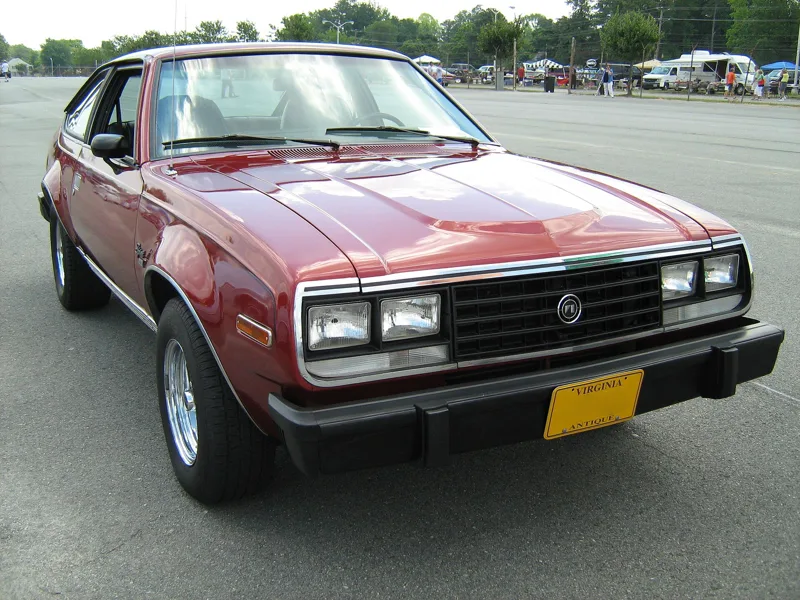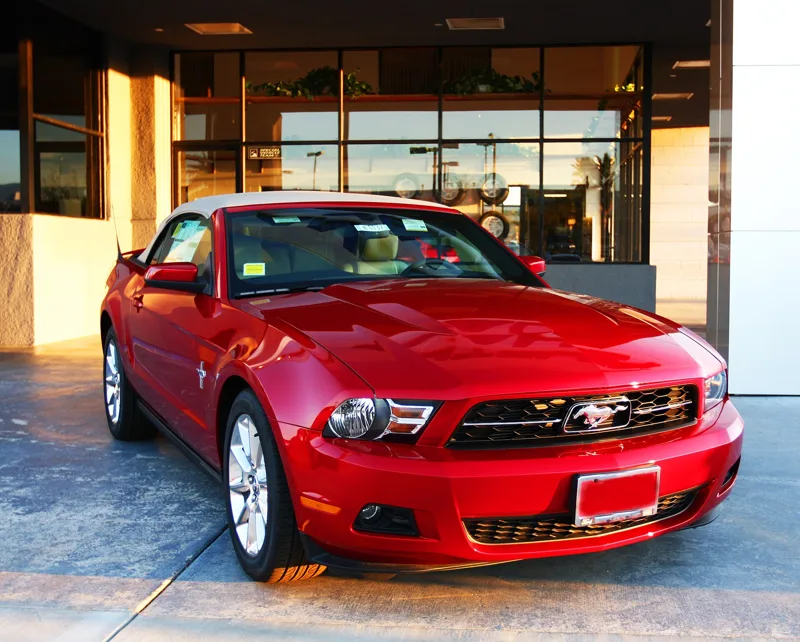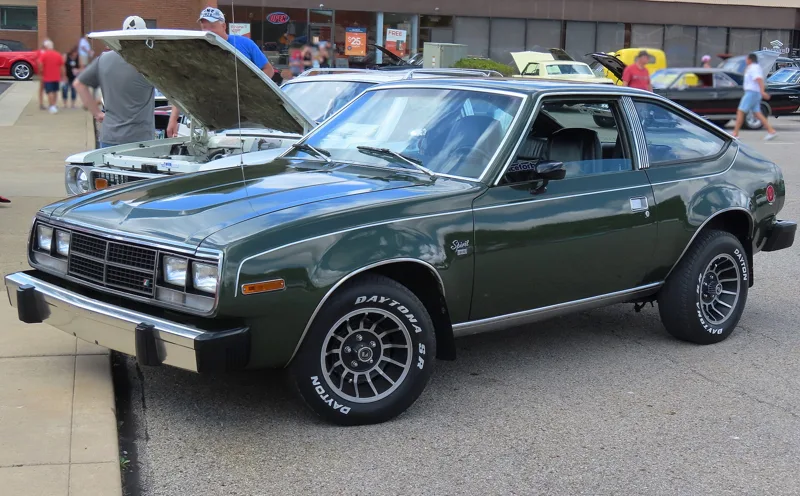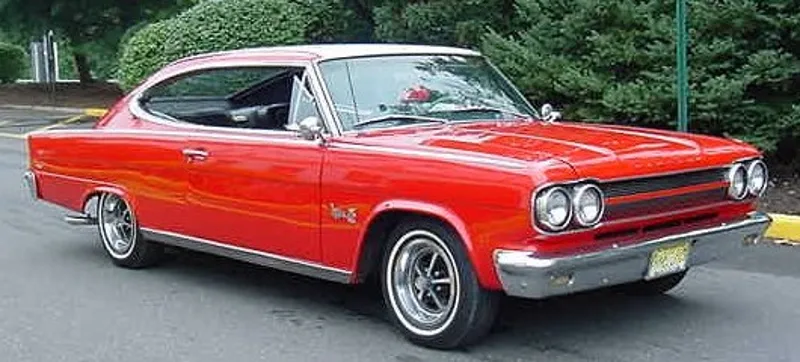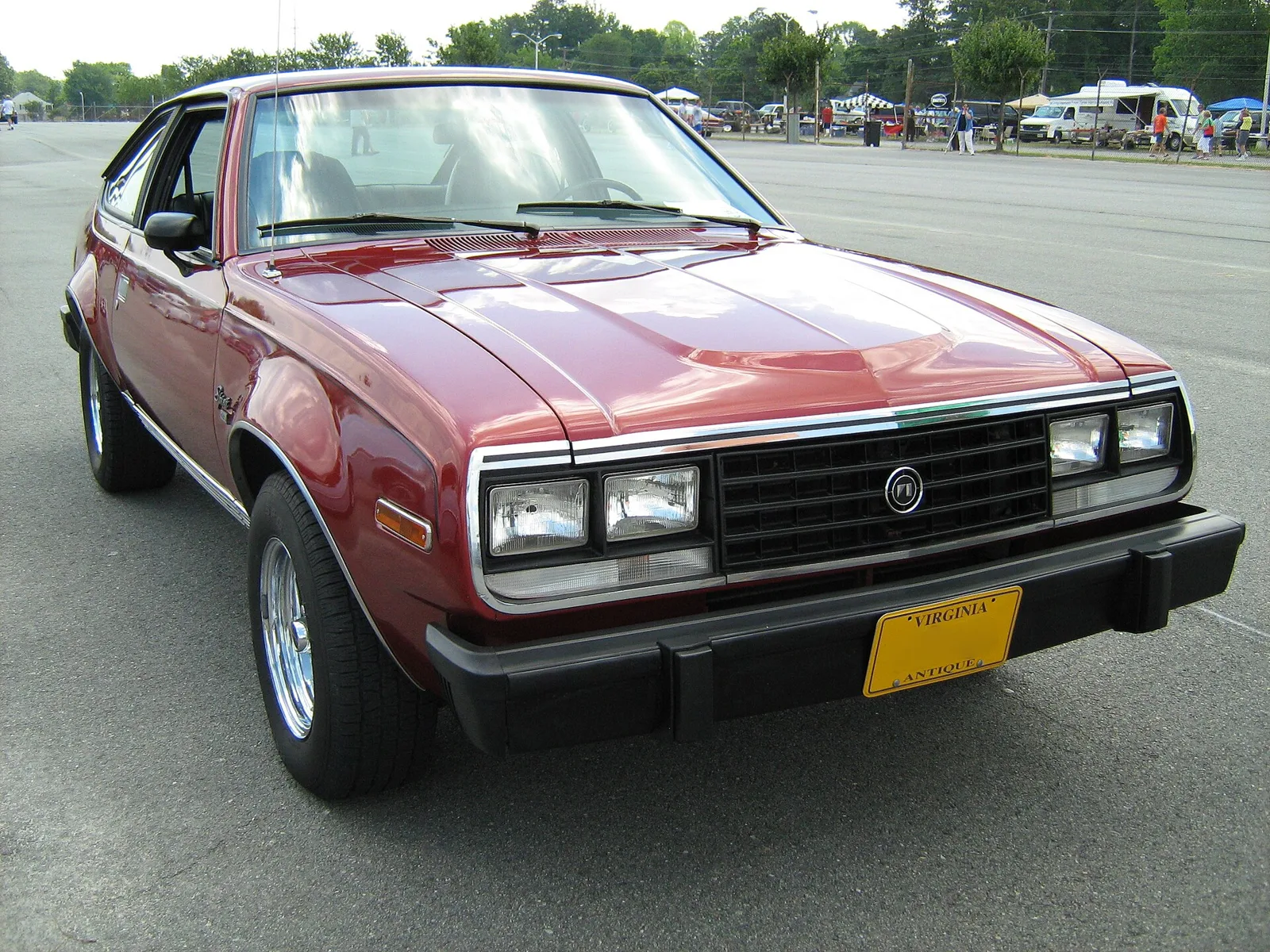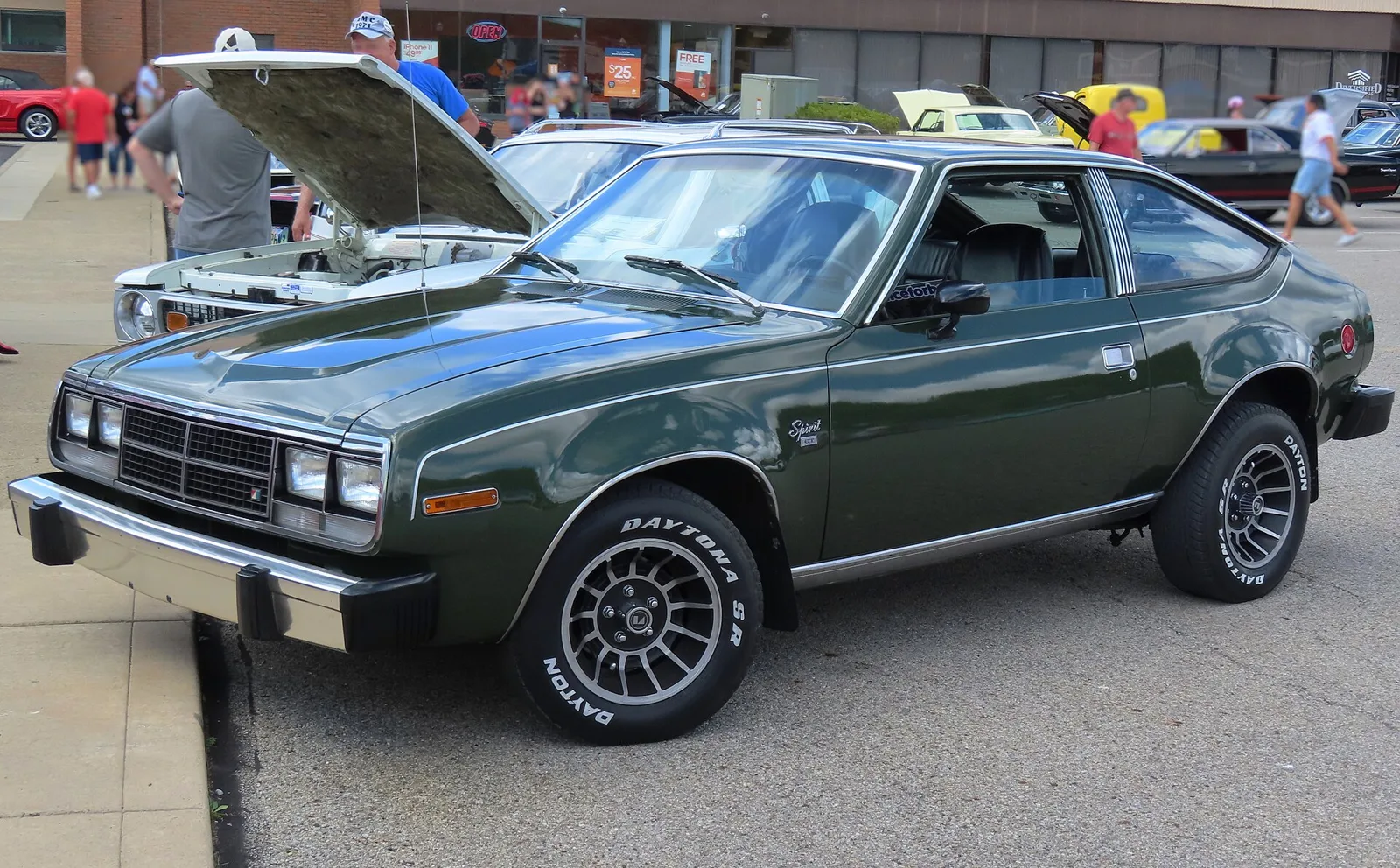
AMC built its Spirit GT to take on the 1979 Mustang, but this comparison sets the Spirit beside the fifth-generation car of 2005, a quarter century later.
The AMC Spirit was a subcompact built from 1979 to 1983 and pitched as a rival to the 1979 Mustang. This comparison sets it against the fifth-generation Ford Mustang of 2005 to 2014, a V6 and V8 pony car, and the two differ in era, engines and performance.
The AMC Spirit and the Ford Mustang are two very different American cars. The Spirit was a subcompact built by American Motors from 1979 to 1983, with a four-cylinder base and a liftback body. The Mustang compared here is the fifth-generation car, sold from 2005 to 2014 as a two-door pony car with a V6 or a V8.
Were the Spirit and the Mustang rivals?
AMC pitched the Spirit GT as a competitor to the new-for-1979 Fox-based Ford Mustang, offering a rival in design, style, price, size and performance. That earlier Mustang is not the car covered here, so this comparison pairs the Spirit with the 2005 Mustang, a quarter century later.
The two cars never shared a model year, so the comparison is about intent, design and the engines each offered rather than sales or direct racing. Where the Mustang's own record is silent, the table marks that as not reported.
AMC aimed its Spirit GT at the Fox Mustang, and this pairing shows how far apart the two cars' eras and engines really were.
How did the Spirit come about?
The Spirit was largely a restyled Gremlin, which had been built from 1970 to 1978. Its suspension used soft-ride mountings for the coil springs over A-arms at the front, with a live rear axle and leaf springs. Due to budget constraints it shared the Gremlin's platform, with its floorpan, powertrains and many other parts carried over. The body received new styling, and a liftback model was added alongside the two-door sedan.
Dick Teague designed the liftback coupe, which Popular Science found to have a graceful superstructure for such a short car. The magazine also described the transition as AMC having the cleverest engineers in Detroit, which summed up the company's approach to a small car on a tight budget.
How did the Mustang come about?
The fifth-generation Mustang was designed by Sid Ramnarace, with Hau Thai-Tang as chief engineer and J Mays as Ford's design chief. Two pre-production concepts were previewed at the 2003 North American International Auto Show, and the production car was built at the Flat Rock assembly plant in Michigan.
Production started on 7 September 2004, with the first 2005 model rolling off the line on 27 September 2004. U.S. launch and deliveries began at the end of October 2004, and its retro-futurism styling drew inspiration from the 1964 to 1970 Mustang.
How do the specifications compare?
| Feature | AMC Spirit | Ford Mustang (fifth generation) |
|---|---|---|
| Production | 1979 to 1983 | 2005 to 2014 model years |
| Body | Two-door Kammback or sedan, and two-door liftback or coupe | Two-door coupe and convertible |
| Base engine | 121 cu in (2.0 L) inline-four from Audi, with 2.5-litre Pontiac-built four from 1980 | 4.0 L Cologne SOHC V6, 210 hp (157 kW) at 5,300 rpm |
| Top engine | 304 cu in (5.0 L) V8 on the 1979 liftback only | 4.6 L Modular V8, 300 hp (224 kW) at 5,750 rpm in the GT |
| Torque | Not reported | 240 lb-ft (325 N-m) for the V6; 320 lb-ft (434 N-m) for the GT |
| Transmission | Four-speed manual; three-speed TorqueFlite optional; five-speed manual option from 1982 | Tremec T-5 five-speed manual; 5R55S five-speed automatic optional |
| Fuel economy | 1981 EPA: 23 mpg-US city and 33 mpg-US highway for the four-cylinder four-speed | Not reported |
| 0 to 60 mph | Not reported | 4.9 seconds for the GT; 7.3 seconds for an automatic V6 convertible |
| Quarter mile | Not reported | 13.7 seconds at 103 mph (166 km/h) for the GT |
| Suspension | Rally-tuned GT suspension with Hi-Control rear leaf springs | MacPherson strut front and three-link live axle rear |
| Wheel size | Turbocast II aluminium wheels optional; styled wheels on GT | 16-inch standard; 17-inch on GT; 18-inch optional from 2006 |
| Price | Not reported | US$19,115 for the 2006 V6 Standard coupe |
| Racing | 1979 Nurburgring 24 Hours: first and second in class | Not reported |
| Special editions | AMX, GT and Eagle SX/4 | Pony Package, Shelby GT-H and GT California Special |
How did the Spirit perform on the road and in racing?
The Spirit's economy was its strongest measured figure. The four-cylinder four-speed was rated at 23 mpg-US (10 L/100 km; 28 mpg-imp) in the city and 33 mpg-US (7.1 L/100 km; 40 mpg-imp) on the highway in 1981, and the 1982 Spirit reached 37 mpg-US (6.4 L/100 km; 44 mpg-imp) on the highway with its 2.5-litre engine.
The Spirit also had a racing story. In 1979 B.F. Goodrich sponsored two Spirit AMXs in the Nurburgring 24 Hours. They were the first American team entries with a pair of hastily homologated cars, and they finished first and second in their class out of a 120-car field. They were also the only racers on street tires.
The Mustang's most quoted figures belong to the GT. It ran 0 to 60 mph in 4.9 seconds and covered the quarter mile in 13.7 seconds at 103 mph (166 km/h). The V6 automatic convertible reached 60 mph in 7.3 seconds, which Motor Trend found 1.4 seconds quicker than a Pontiac G6 convertible.
What did the Mustang's engines offer?
The 2005 to 2009 base car used a 4.0 L Cologne SOHC V6, rated at 210 hp (157 kW) at 5,300 rpm, with 240 lb-ft (325 N-m) of torque arriving at 3,500 rpm. A Tremec T-5 five-speed manual was standard, with a 5R55S five-speed automatic as an option, and a 3.31:1 final drive was standard with either.
The GT used a three-valve variant of Ford's modular V8, producing 300 hp (224 kW) at 5,750 rpm, and its 320 lb-ft (434 N-m) peaked at 4,500 rpm. It also had a limited-slip differential with carbon-fibre clutch discs and standard four-channel ABS with traction control. The live-axle rear suspension was the car's most criticised choice, and Ford said an independent setup would have added $5,000 to the price.
Which Mustangs were special editions?
The Pony Package arrived for the V6 in 2006 with GT suspension, 17-inch wheels and a rear spoiler. The Shelby GT-H was built for Hertz, with 319 hp (238 kW) and 500 units ordered for 2006, and it traced its roots to the 1966 Shelby GT350H. The GT California Special, first offered in 2006, looked back to the original 1968 California Special.
The Spirit's own specials were different. The AMX, the GT package and the four-wheel drive Eagle SX/4 version were the models that gave the Spirit its performance and off-road identity. Each was built for a different niche within a short production run.
How did the Spirit handle rust protection and warranty?
Rust was a central theme of AMC's 1980s marketing, and the Spirit was part of it. For 1980 all AMCs received a factory rust-proofing process called Ziebart Factory Rust Protection, which used aluminised trim screws, plastic inner fender liners, galvanised steel in every exterior body panel and a deep-dip epoxy primer bath up to the window line.
The rust programme carried a five-year No Rust Thru warranty within the company's Buyer Protection Plan. In 1981 AMC extended galvanised steel to one-sided and two-sided panels on all its models, and Dale E. Dawkins, AMC's vice-president, said every inner surface of the exterior panels on the Spirit was galvanised.
The 1982 advertising went further. A television campaign dropped a new Spirit into 30 feet (9 m) of saltwater to make the point that the Tough Americans came with Ziebart rustproofing and a five-year rust warranty.
What did the Mustang's options and equipment include?
The 2005 Mustang came with power windows, dual power mirrors, power door locks with remote keyless entry, dual front airbags, an AM/FM stereo with CD player, and 16-inch painted aluminium wheels. Larger disc brakes with twin-piston front calipers were fitted, and the GT had standard four-channel ABS with traction control.
Options grew through the years. The Interior Upgrade package brought the MyColor configurable instrument cluster and brushed aluminium panels, and Ford offered Shaker 500 and Shaker 1000 premium audio systems. A six-way power driver's seat and leather seating surfaces were also available, and side airbags became standard in 2006.
The later years added a power passenger seat, heated seats and Sirius satellite radio in 2007, HID headlamps in 2008, and a dealer-installed Ford Sync kit for 2009. A full-length glass roof was offered for 2009 at US$1,995, splitting the difference between the coupe and the convertible.
How did the Spirit's engine line change between 1979 and 1981?
The 1979 Spirit offered an Audi-supplied 121 cu in (2.0 L) four as standard, with AMC's 232 cu in (3.8 L) and 258 cu in (4.2 L) inline-sixes as options. The 304 cu in (5.0 L) V8 was offered on the liftback only, and it was a one-year reprieve for V8 availability in the 96 in (2,438 mm) wheelbase chassis.
For 1980 the V8 and the 232 six were dropped to meet the 20 mpg-US fleet fuel economy standard, and the Audi-based four was replaced by a Pontiac-built 2.5-litre four. The 258 six stayed as the only engine in the AMX, and it was the most popular choice.
In 1981 the 258 six was redesigned, becoming 90 lb (41 kg) lighter and smoother, with higher low-end torque. Aluminium replaced iron and steel in many places, bringing the engine to 445 lb (202 kg), which made it the lightest in-line six in the domestic industry.
Which buyer suits which car?
The facts do not settle which car was better, because they belong to different decades and different classes. The Spirit suits a buyer who wanted an economical, distinctive subcompact with a GT package, a five-speed option from 1982 and a racing heritage from Nurburgring.
The Mustang suits a buyer who wanted a pony car with a V6 for everyday use or a V8 GT with strong acceleration, and who accepted a live rear axle as the price of the car's cost and weight. Both cars also offered a sporty look at a mid-range price, although the Spirit's price is not reported here.