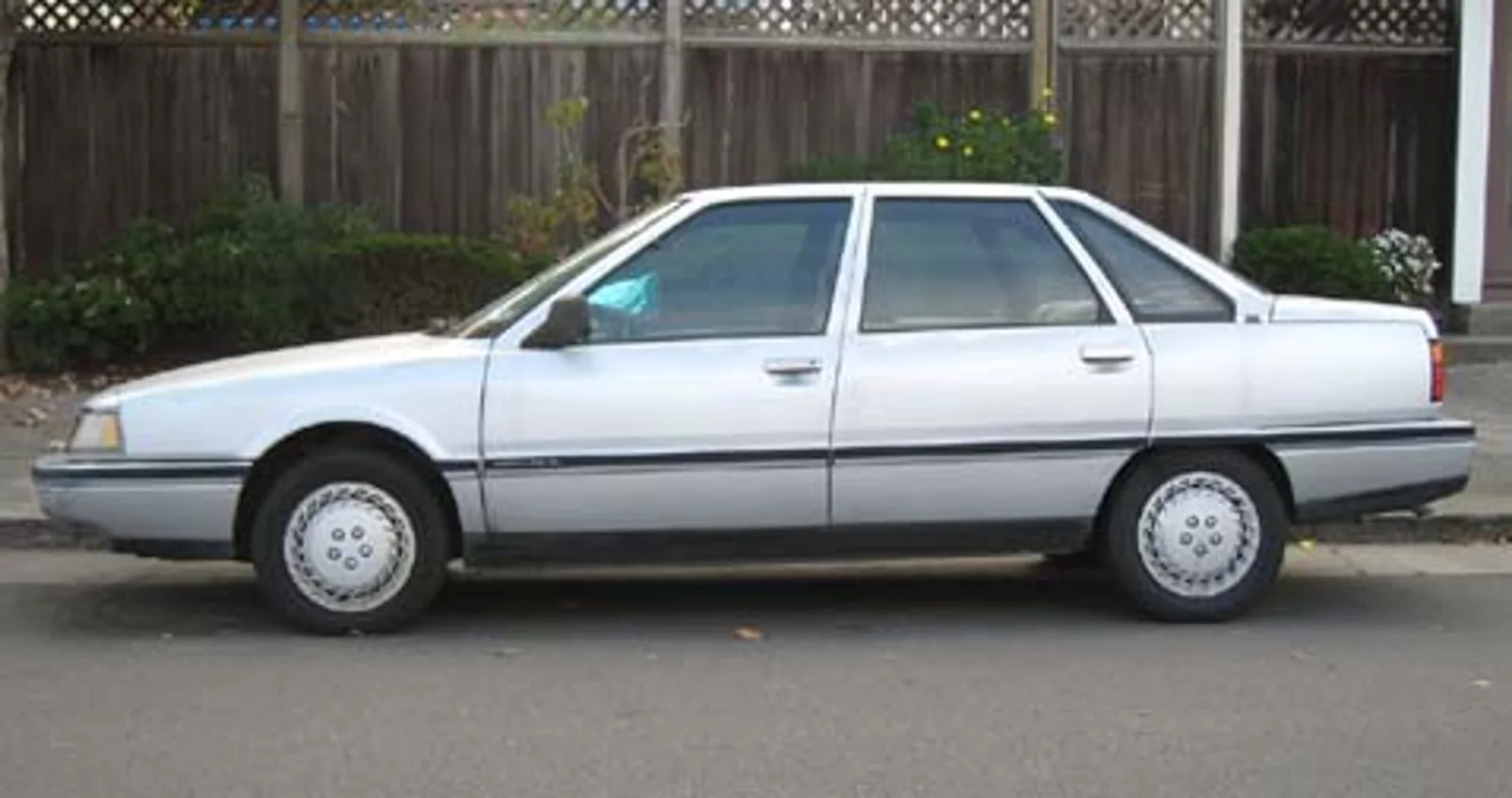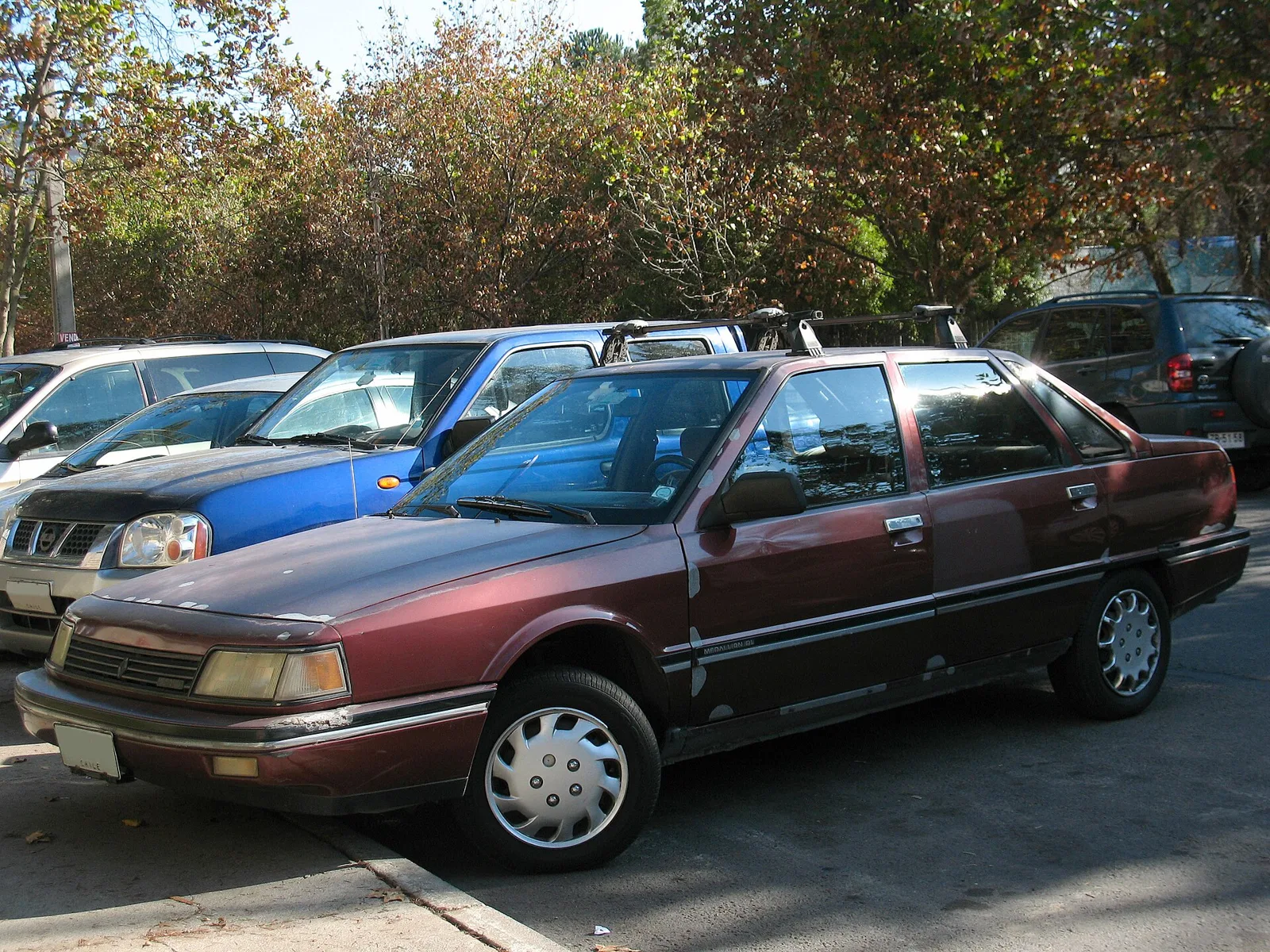
The Medallion passed through three badges in North America, while the Renault 21 it copied was a European family car with a long and varied life.
The Eagle Medallion was a rebadged, mildly re-engineered North American version of the Renault 21, sold as the Renault Medallion and then as an Eagle from 1989. The Renault 21 was a large French family car built from 1986 to 1995, with 2,096,000 units produced.
Renault and American Motors built the Medallion as a captive import, and the car was a close copy of the Renault 21 with American safety and emissions equipment. The European original was a large family saloon with a long life and several body styles. Setting the two side by side shows how little the Medallion changed and how much the market around it did.
How did the Renault 21 come to be?
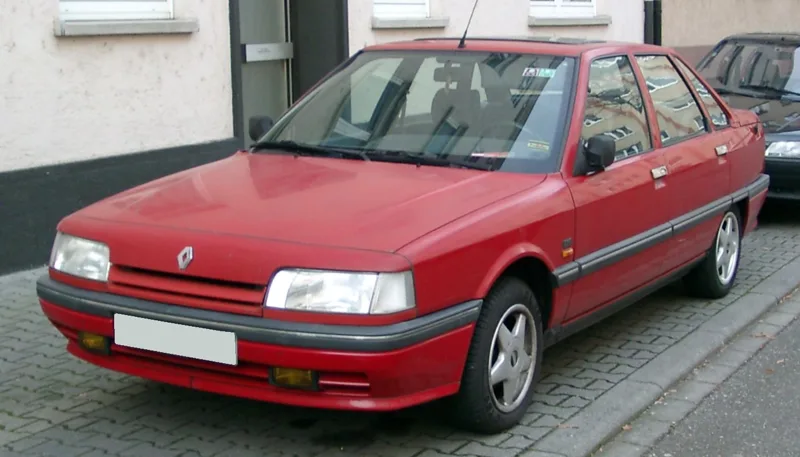
The 21 replaced the Renault 18 as Renault's large family car. It had its first public showing in late 1985, with a formal launch in February 1986, and Giorgetto Giugiaro was responsible for the shape. Renault pitched it at the large family car market that the Volkswagen Passat served.
The 21 was offered in saloon form first, and a few months later the seven-seat Nevada station wagon followed, marketed as the Savanna in the United Kingdom. The Nevada was slightly longer than the saloon and carried an optional forward-facing bench for children.
The Renault 21 won praise in its home market. What Car? named the 21 GTS its Best Family Saloon in 1987, and the Savanna estate was awarded Car of the Year as well as Best Family Estate.
The 21 received a fresh, sleeker look in May 1989, echoing the Renault 25, and a liftback joined the range at that stage.
A French family car with a wide menu of engines and bodies, and the American version that offered one engine and a short window.
How was the Medallion created for North America?
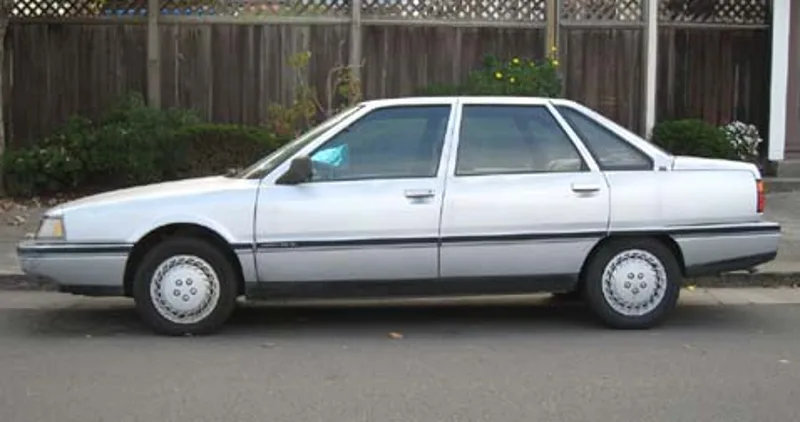
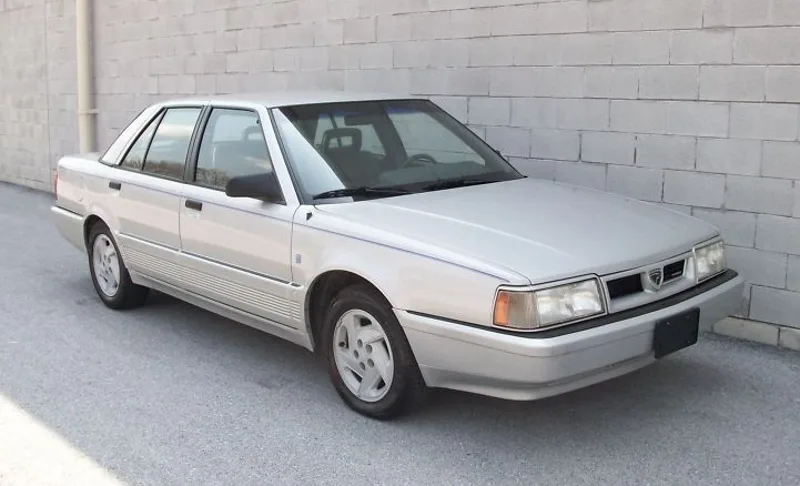
The Medallion was an Americanised version of the Renault 21, modified to meet United States safety and emissions rules. It was built in Maubeuge and imported from France, and its final trim was added at a facility at the US port of entry.
The Medallion reached showrooms on 1 March 1987, labelled a 1988 model, only a week or so before Chrysler's deal for Renault's stake in American Motors. The car was sold as a captive import for Renault's corporate partner, which was short of a larger family car.
The North American car used flush composite headlamps, which was new territory for AMC, and its grille carried the Renault diamond. Its bumpers and lighting followed American standards, which set it apart from the European car.
The Medallion filled a gap in the dealer line-up after the Renault 18i and the Concord were discontinued after 1983. The larger D-segment Medallion gave AMC and Renault dealers a bigger sedan to sell alongside the smaller Alliance.
What engine did the Medallion use?
The Medallion used a 2.2-litre overhead cam four rated 103 hp (77 kW; 104 PS) at 5,000 rpm, the same engine as the European Renault 25. It drove the front wheels through a five-speed manual or a three-speed automatic.
The engine sat longitudinally, which was unusual for a front-wheel drive car of its era. It produced 124 lbf ft (168 N m) at 2,500 rpm, and the design choice reduced torque steering as the power grew.
The 21 offered a wider range of engines in Europe, from a 1.4-litre petrol four to a 2.2-litre unit and a 2.1-litre diesel. The North American car used only the 2.2-litre engine, so it was one of the simpler variants in the range.
Turbocharged versions followed in Europe, with the 21 Turbo capable of 227 km/h (141 mph). A fuel-injected 2.2i model was introduced at the 1989 Frankfurt Motor Show, and it was built originally for the German market.
How did the Medallion's economy and space compare?
The EPA rated the manual Medallion at 33 mpg-US combined, and the automatic at 26 mpg-US combined. The sedan's interior volume was 115 cu ft (3,256 L), which placed it in the mid-size class.
Manual cars returned 42 mpg-US (5.6 L/100 km; 50 mpg-imp) on the highway, while automatics managed 33 mpg-US on the same cycle. In city driving the figures were 27 and 22 mpg-US respectively.
The station wagon was rated at 100 cu ft (2,832 L) of passenger space and 42 cu ft (1,189 L) of cargo behind the second row. Its wheelbase was 5.9 in (150 mm) longer than the sedan's, which helped third-row access.
A Milwaukee Sentinel test found an automatic sedan returning an actual combined 23 mpg-US (10 L/100 km; 28 mpg-imp). It also noted that the sedan weighed 2,420 lb (1,098 kg) and felt light in the wind.
How did the Medallion and the Renault 21 compare side by side?
| Feature | Eagle Medallion | Renault 21 |
|---|---|---|
| Launch | 1 March 1987 in North America | February 1986 in Europe |
| Design | Modified Renault 21, built in Maubeuge | Work of Giorgetto Giugiaro |
| Body styles | Sedan and station wagon | Saloon, liftback and Nevada estate |
| Engines | 2.2-litre four, 103 hp (77 kW; 104 PS) | 1.4 to 2.2-litre petrol; 1.9 to 2.1-litre diesel |
| Production | Not given | 2,096,000 units, 1986 to 1995 |
| Names | Renault Medallion, then Eagle Medallion | Renault 21 |
| What came next | Not given | Laguna liftback from 1994 |
How did the Renault 21 sit in the market?
The 21 gave Renault a new competitor in the large segment after many years of the R18, which had been declining in popularity after a strong start. It was designed to win back buyers who wanted a roomy family car with a modern look.
Its razor-like design set it apart from rivals such as the Ford Sierra, with its rounded jelly-mould look, and the Opel Ascona. Right-hand drive versions for the United Kingdom followed in June 1986.
Renault used a transverse engine for its smaller units and a longitudinal layout for larger ones, because its gearboxes could not handle more power in a transverse unit. The two wheelbases differed slightly, but the engine bay accepted either layout.
What did the Renault 21's 1989 revamp add?
The 1989 revamp brought a sleeker look, a liftback body and a sporty 2.0-litre turbo version. The Nevada estate also gained four-wheel drive in its 2.0 and 2.1-diesel versions, which widened the range further.
In France the liftback soon outsold the saloon. The front-wheel drive 21 Turbo was capable of 227 km/h (141 mph), which made it a fast family car in its class.
The Nevada and Savanna estates stayed on sale until their Laguna replacements arrived. The diesels were replaced at the end of 1994, and the estate followed at the end of 1995.
A Renault 21 TSE was given as a personal gift to Vaclav Havel by Portugal's president, Mario Soares, and it served for a while as the official state car of the Czechoslovak president in 1989.
How was the 21 built in other markets?
The R21 was built in Argentina at the Santa Isabel plant from late 1988 until early 1996, in saloon and Nevada forms with petrol and diesel engines. Production there continued for some years after the car ended in Europe.
In Turkey the 21 was built in the early 1990s in three trims: the entry 21, the Manager and the fuel-injected 2.0-litre Concorde. Later the lower-cost Optima and the Manager 2000 were added.
In Colombia the 21 launched in 1987, first as a four-door saloon with a 2.0-litre longitudinal engine. A Nevada followed that October, and by 1990 the local range had a name change to Etoile.
Why did the Medallion's launch struggle?
The Medallion's launch was hampered by AMC's limited marketing resources, and the sudden departure of Renault made the transition to Chrysler harder for dealers. Reviews were favourable, but the car was overshadowed in the market.
AMC had planned to sell between 40,000 and 45,000 Medallions a year, which was an ambitious target for a car launched without a large marketing push. The Chrysler buyout changed those plans quickly.
The new owners waited until 1989 to rebrand the car as an Eagle, which avoided selling it under two names in one year. As an Eagle it did not carry the Pentastar logo, but it had the Eagle head badge instead.
The Eagle Premier was launched ten months after the Medallion, and it formed the third part of AMC's plan to widen its dealers' range beyond the four-wheel-drive Jeep utility vehicles.
What were the Medallion's trims and warranties?
The 1988 range had DL and LX sedans and a DL wagon. Every Medallion came with a tachometer, a digital clock, AM/FM stereo and tinted glass as standard.
The 1988 Ultra Plan warranty included scheduled maintenance, and the 1989 cars were covered by Chrysler's 7/70 Protection Plan for seven years or 70,000 miles (110,000 km).
The 1989 cars carried an imported-for-Eagle badge on the rear. Chrysler decided to stop importing Medallions from Renault at the end of that model year, which closed the American chapter of the car.
Which buyer suits each car?
On the facts given, the Renault 21 suits a buyer who wanted a European family car with many engine and body options. The Eagle Medallion suits a buyer who wanted that design with American equipment and a single engine.
Buyers in Europe could choose a big range, including a turbo, a diesel and a four-wheel drive Quadra version. The Medallion offered none of those choices, and its single 2.2-litre engine was the only option.
US buyers were offered a more modest car with good reviews. Reviewers praised its ride and roominess, and one long-term test found it low on flash but high on comfort.
Neither car is shown to be better overall, and the Medallion's production total is not given. The choice depends on whether a buyer wants the European original's variety or the American version's simpler line-up.