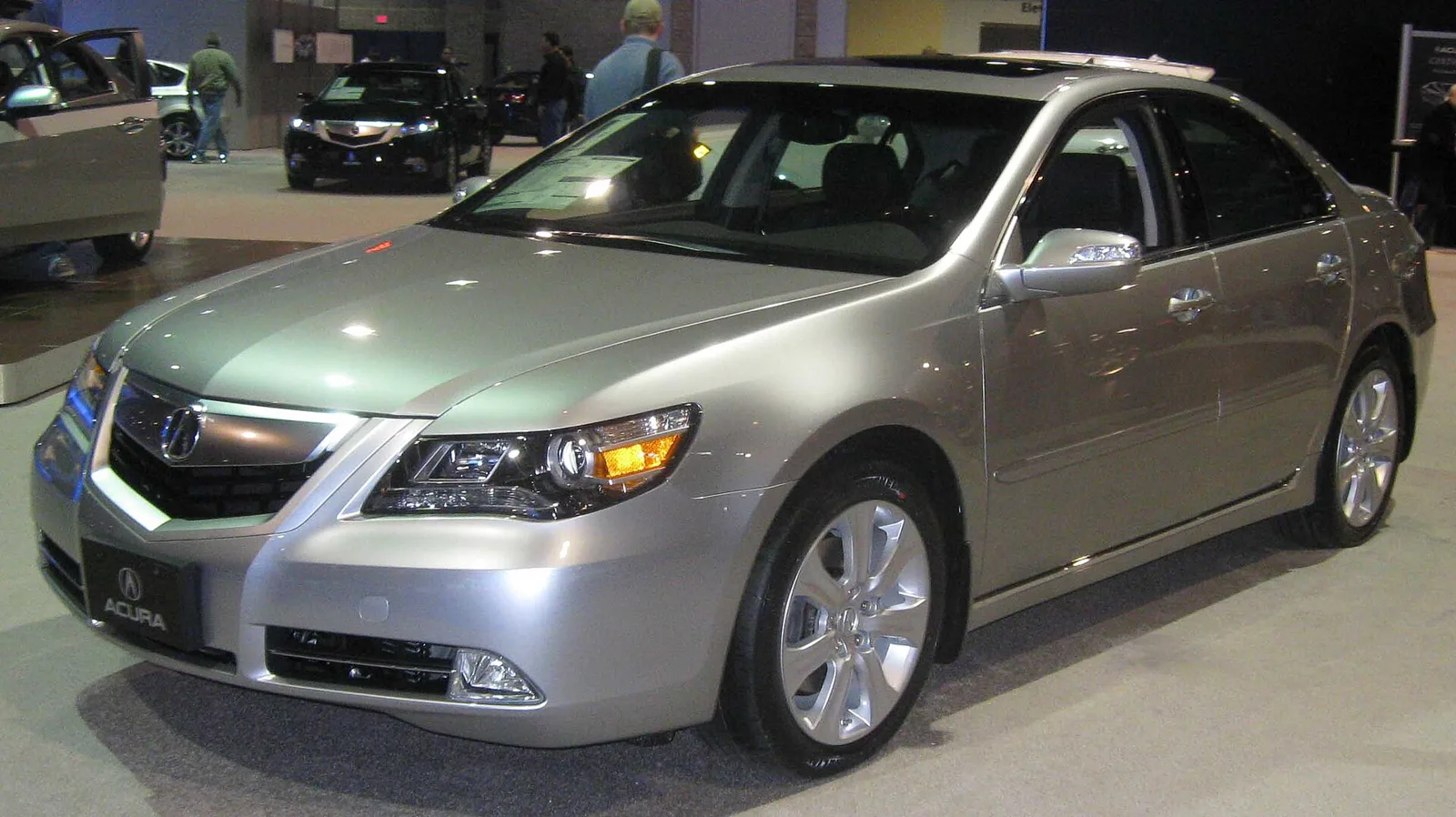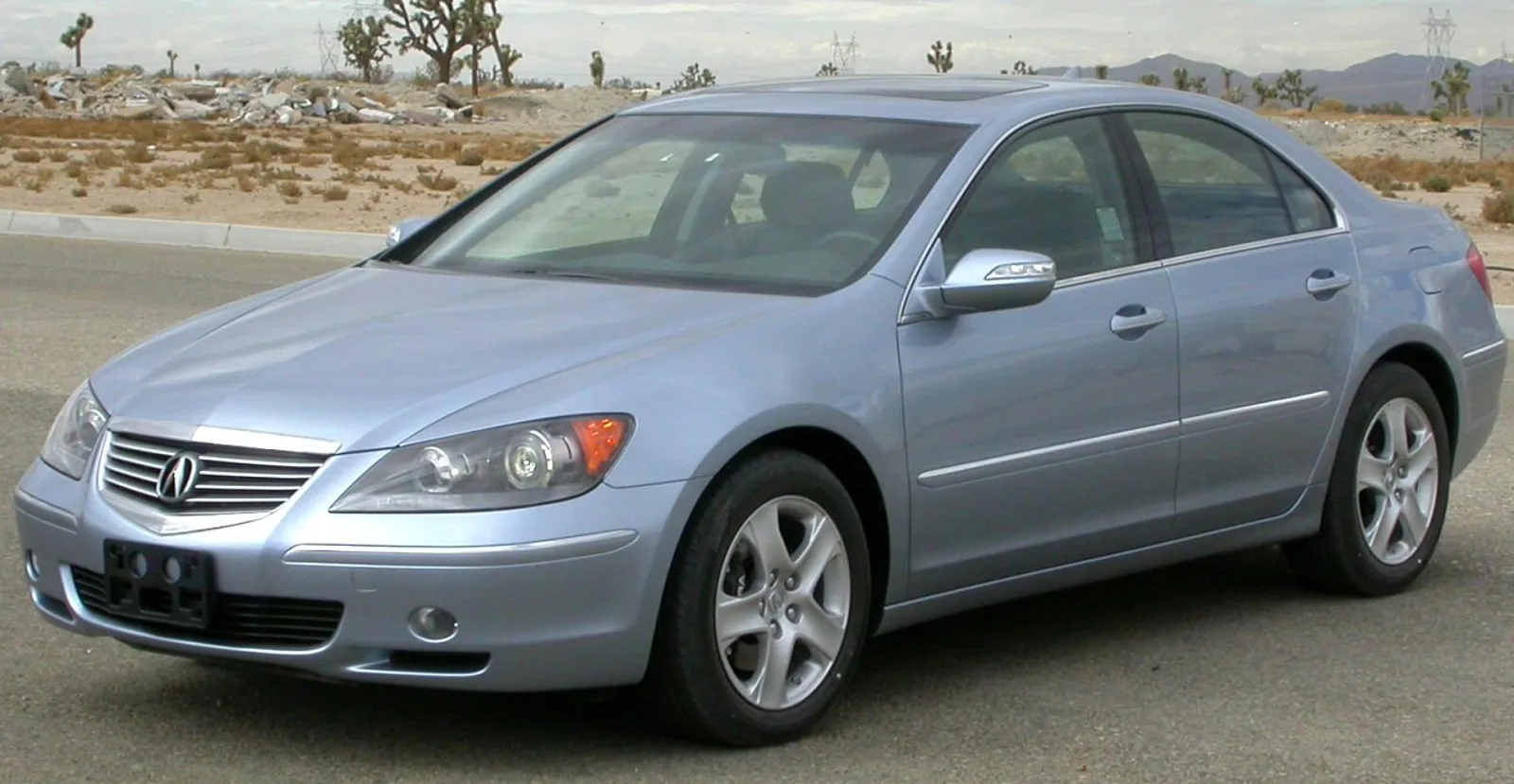
The Acura RL and the Lexus GS were both executive sedans from Japanese luxury divisions, but the RL was the Acura flagship while the GS sat below Lexus's own flagship.
The Acura RL was a mid-size luxury car made from 1996 to 2012 and the flagship of the Acura marque, succeeding the Legend. The Lexus GS is an executive car made by Toyota and sold by Lexus in four generations, first launched in Japan in 1991 as the Toyota Aristo.
The Acura RL and the Lexus GS were both executive sedans from Japanese luxury divisions, and both were sold in the same markets during the 1990s and 2000s. The RL was Acura's top model, while the GS was an executive car placed between the compact IS and the LS in the Lexus range.
Their roots are different. The RL began as a rebadged Honda Legend, while the GS began life in Japan as the Toyota Aristo in 1991. The comparison therefore sets a Honda-derived flagship against a Toyota-built executive car.
Why were the RL and GS compared?
The RL was Acura's top model from 1996 to 2012 and succeeded the Legend, while the GS was the executive car of the Lexus line-up. Both cars are executive sedans from Japanese luxury divisions, which puts them in the same market slot for buyers.
The RL's name stands for Refined Luxury. The GS's name stands for Grand Sedan, although some importers read it as Grand Sport. Those names reflect how each maker framed its car, with the RL built to show the brand's top end and the GS to fill the executive middle.
The two cars were built on different foundations, which shapes most of the comparison that follows. One is a Honda-derived flagship and the other a Toyota-built executive car sold through Lexus.
The RL began life as a rebadged Honda Legend, while the GS was Toyota's executive car, placed between the IS and the LS in the Lexus range from its first generation.
How did the two cars come to market?
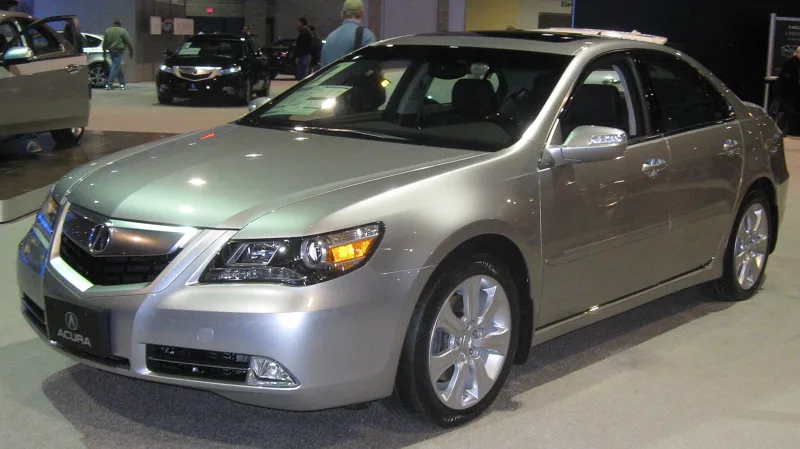
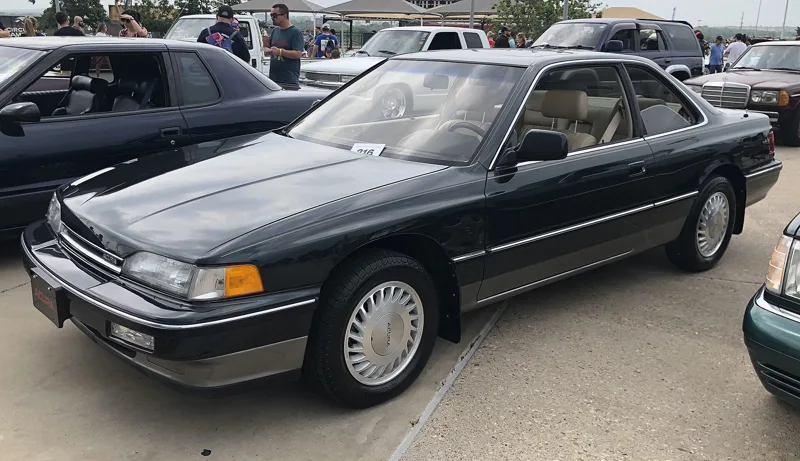
The RL's first generation rebadged the third-generation Honda Legend, and the 3.5RL replaced the Legend in North America in 1996 under the internal code KA9. The second generation rebadged the fourth-generation Honda Legend from September 2004.
Acura dropped the Legend name after market research, and the car became the 3.5RL. The record gives the RL's production as running from 1996 to 2012, so the model had a long run as the flagship before its successor, the RLX, arrived in 2013.
The GS launched in 1991 in Japan as the Toyota Aristo and reached buyers outside Japan from February 1993. The record places the GS's origins firmly in Japan, which is why its early story is told through the Aristo name.
The record's design detail for the RL is almost all about engineering, from weight distribution to aerodynamic figures. The GS's design detail is more about its generations and styling language, so a reader will find the RL described as an engineered machine and the GS as a car refined through successive generations.
The RL's engineering is described from its first generation through the 2005 model, which makes it the more complete technical story of the two.
How did the two cars differ in design?
The 3.5RL mounted its V6 longitudinally, with 56/44 front and rear weight distribution, and used a double wishbone front and multilink rear suspension. The first GS had a drag coefficient of Cd=0.31, the second generation was lower at Cd=0.30, and the third introduced the L-finesse design in 2005.
The 1999 facelift cut the 3.5RL's drag coefficient to 0.32 from 0.34 and reduced its lift coefficient to 0.102 from 0.155. The 2005 RL introduced SH-AWD with torque vectoring, able to direct up to 70% of torque to the rear wheels.
The 2005 RL also had aluminium four-piston front brake calipers over 12.6-inch rotors and five-spoke 17-inch alloy wheels. The GS's design story is one of refinement rather than a new layout, and its third generation is the main change the record describes.
Engines are where the two cars' philosophies are clearest. The RL's engine story is one of a single V6 family that was revised and then upgraded for 2005, while the GS offered a six-cylinder and a V8 in its first generation, which gave buyers a choice the RL never offered in the record.
What engines did each car use?
The 1996 3.5RL used a 3.5-litre C35A V6 without VTEC. The 2002 revised engine produced 225 hp (168 kW) and 231 lb-ft (313 N-m). The 2005 RL moved to a 60-degree J-series 3.5-litre V6 with 300 hp (224 kW), later revised to 290 hp (216 kW).
The GS's first generation used the 2JZ-GE straight-six with 169 kW (227 hp), and the GS 300's torque was 285 N-m (210 lb-ft). The GS 400 carried a 4.0-litre 1UZ-FE V8 rated at 224 kW (300 hp), and it reached 0-60 mph in 5.7 seconds.
The GS 430's torque of 441 N-m (325 lb-ft) is the highest torque figure the record gives for either car. The second-generation 1UZ V8 was offered outside Japan, so the GS's largest engine was a choice for export buyers.
The 2005 RL used a five-speed sequential automatic with paddles. The record gives the GS no transmission detail, so any comparison of drivetrains is one-sided in the material.
The engine and drivetrain sections point to the same conclusion. The RL is the more technically specified car, with its suspension, all-wheel drive and features well documented, while the GS's record is stronger on its sales and reception.
How did sales and pricing compare?
The Legend was the larger share of Acura's sales in its early years, and the RL and RLX never matched that success. The GS 300 had a debut price of US$38,000, and it sold 19,164 units in 1993, its peak year in the record.
The GS 300 price reached US$46,000 by 1997. The second-generation GS sold 30,622 vehicles in its first year and stabilised at 28,079 vehicles by 2000, a steady level for an executive car.
Acura's sales by the early 2000s were dominated by the MDX and TL, which the record names as the volume models of the period. The RL was therefore a flagship rather than a volume car, which is a key difference from the GS's role in Lexus's range.
Volume shaped how each car was judged. The RL competed for a flagship's share of a brand where other models did most of the volume work, while the GS was a model that sat in the middle of Lexus's range, so its sales and its awards were judged against a different standard.
How were the two cars received?
The GS was Motor Trend's Import Car of the Year for 1998 and made Car and Driver's Ten Best list from 1998 to 2000. The 3.5RL was the first production saloon to offer satellite radio as standard, a feature the record ties to its later specification.
The 2005 RL's feature list was extensive. Keyless entry and keyless start were new, the Bose DVD-Audio 5.1 system had 260 watt output, and Bose Active Noise Cancellation reduced engine noise. The car also had XM Satellite Radio, voice recognition with 560 commands and an Alpine DVD navigation system with an 8-inch LCD.
The GS 300 offered walnut trim, leather seating and tilt-and-telescope steering, with a moonroof and a 12-CD changer among its options. The record presents the GS as a comfortable executive car rather than a flagship with a long feature list.
Feature lists rarely decide a buyer's choice on their own, but they show what each maker thought a flagship or executive car should carry in its time. The RL's 2005 specification shows a maker chasing in-car technology, while the GS 300's walnut and leather show a more traditional idea of luxury.
Did either car have a motorsport record?
The record gives no motorsport record for the RL and none for the GS. Both cars were road-focused executive and luxury sedans, so this section cannot compare any competition results between them.
The GS's performance is measured in road figures, most notably the GS 400's 5.7 second 0-60 mph time. The RL's performance figures come from its V6 and its revised engines, which the record describes in power and torque terms only.
The comparison therefore rests on road cars, and the rest of this article follows the same basis for both.
Without a motorsport record, the two cars are judged on the road alone, which is the fairest test for executive sedans of this kind.
How do the specifications compare?
| Specification | Acura RL | Lexus GS |
|---|---|---|
| Years built | 1996 to 2012 | 1991 in Japan; export from February 1993 |
| Origin | rebadged third- and fourth-generation Honda Legend | Toyota Aristo in Japan, Lexus outside Japan |
| Engine (first) | 3.5-litre C35A V6, no VTEC | 2JZ-GE straight-six, 169 kW (227 hp) |
| Engine (later) | 60-degree J-series 3.5-litre V6, 300 hp (224 kW) in 2005 | 4.0-litre 1UZ-FE V8, 224 kW (300 hp) |
| Torque | 231 lb-ft (313 N-m), 2002 revised engine | 285 N-m (210 lb-ft) GS 300; 441 N-m (325 lb-ft) GS 430 |
| 0-60 mph | no figure given | 5.7 seconds, GS 400 |
| Drag coefficient | 0.32 after 1999 facelift (from 0.34) | Cd=0.31 first generation; Cd=0.30 second |
| Suspension | double wishbone front, multilink rear | no figure given |
| Drive | SH-AWD with torque vectoring from 2005 | no figure given |
| Sales | no figure given | 19,164 in 1993, GS 300 peak year |
Read down the table and the RL is the more technically detailed car in the record, with its all-wheel drive and suspension specified. The GS is covered in more detail on its V8 and its sales, so each car's column is strongest where its own story was told.
Test-drive both at a comparable generation, because the record's figures for the RL and the GS come from different points in each car's life.
The specification comparison shows that the RL's record is strongest on engineering and the GS's on its generations and sales, which matches the way each car was described. Neither table can show how either car felt, and the record offers no road-test verdict to fill that gap.
Which buyer suits each car?
The RL suits a buyer who wants a flagship from Acura's luxury line, with the SH-AWD system and the 2005 feature list if the later car is wanted. The GS suits a buyer who wants an executive car from Lexus with a choice of six-cylinder or V8 power in its early generations.
Buyers who want all-wheel drive and a long-running flagship will look to the RL, while those who prefer a Toyota-built executive car with a V8 option will choose the GS. Each car rewards a buyer who knows which generation they are considering.
The record gives no current values for either car, so buyers should check present-day prices and condition before comparing purchase costs.