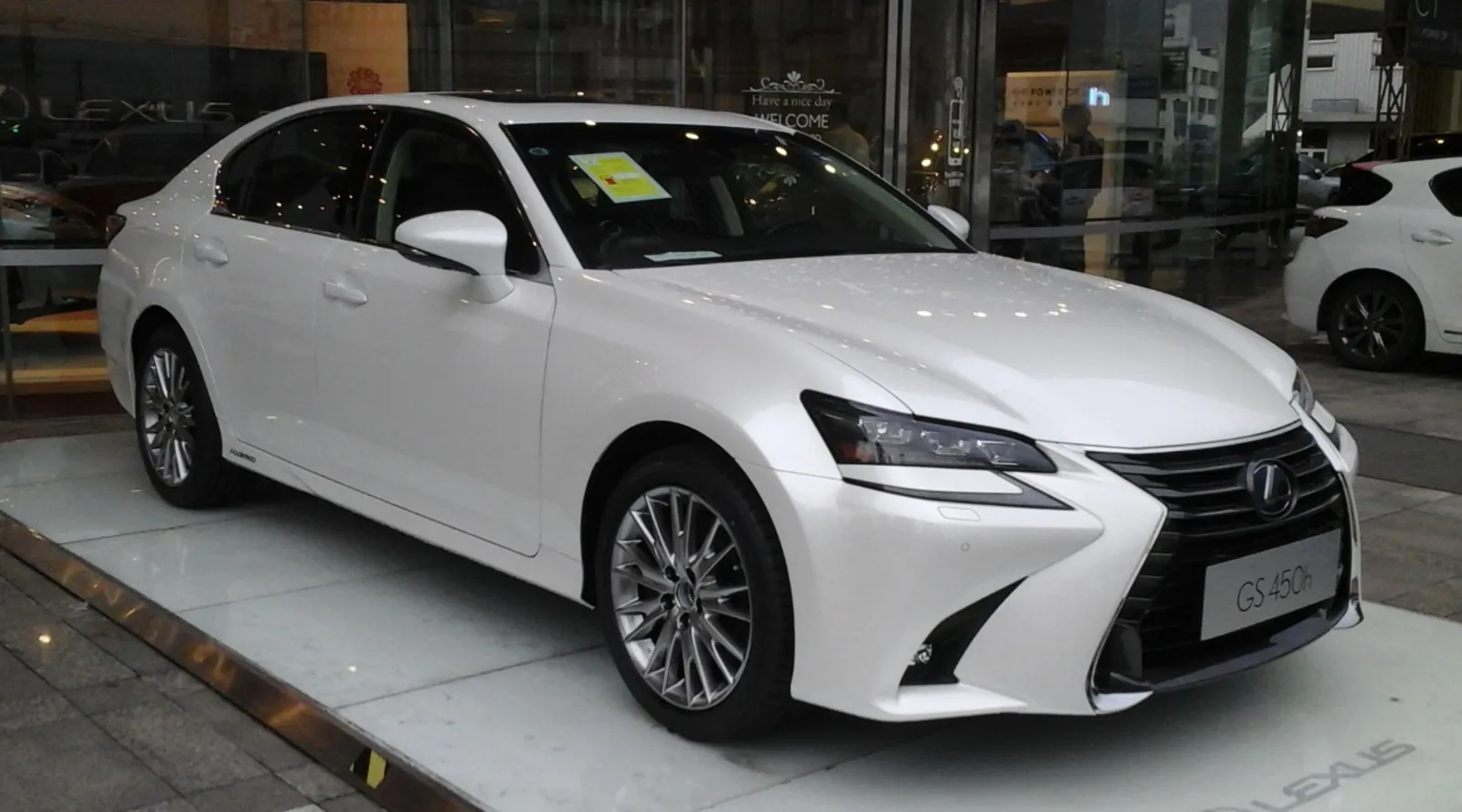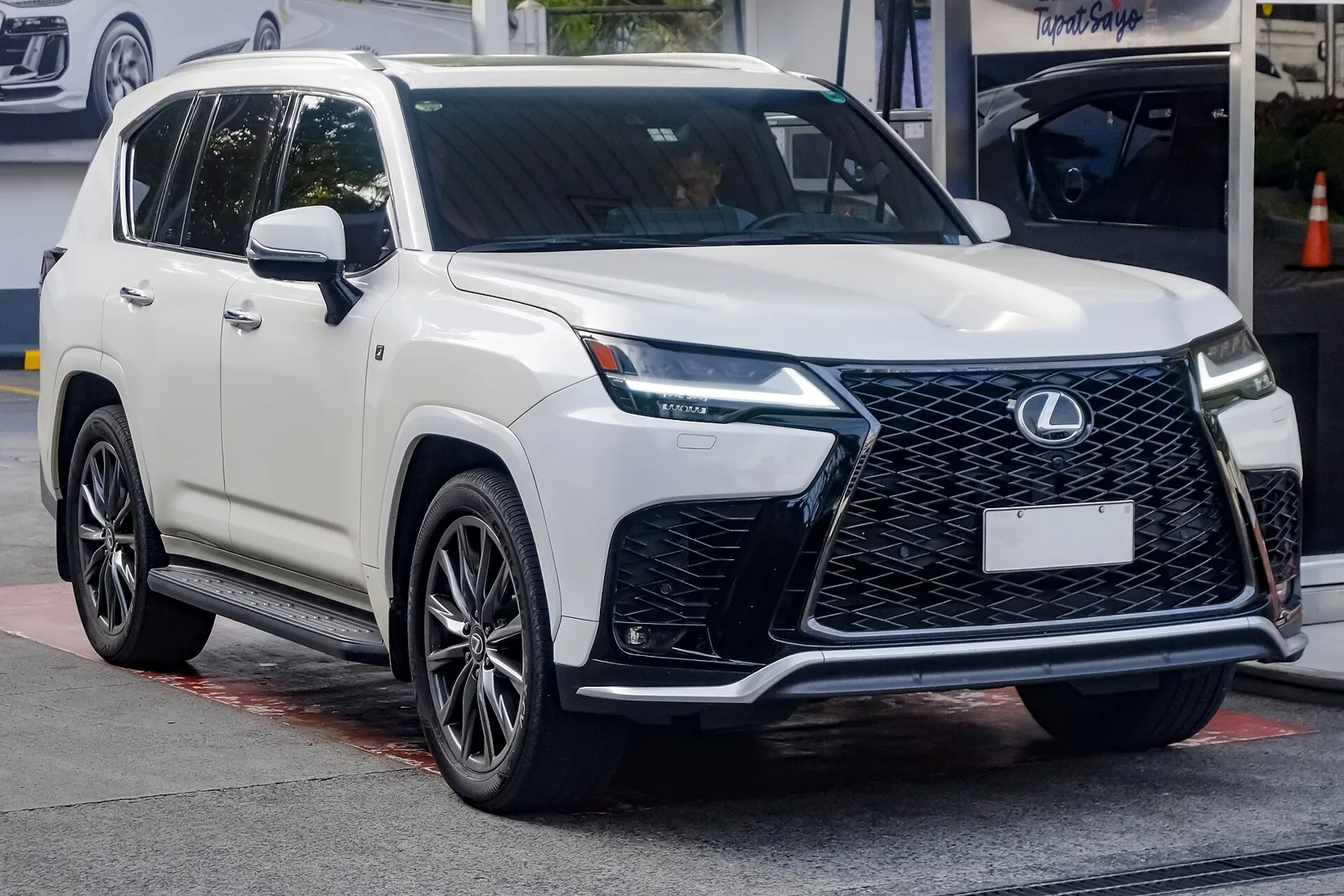
Lexus' largest and most expensive SUV began as a rebadged Land Cruiser in 1995 and has grown into a four-generation luxury flagship.
The Lexus LX is a full-size luxury SUV that Lexus has sold since January 1996 as its flagship. It is based heavily on the Toyota Land Cruiser, has reached a fourth generation, and seats seven or eight depending on the generation.
The Lexus LX is the brand's flagship full-size luxury SUV, sold since January 1996 and now in its fourth generation. Each generation was built on the Toyota Land Cruiser, although Lexus added its own interiors, suspension and equipment. The name is said by Lexus to stand for Luxury Crossover, while some importers have used Luxury Four Wheel Drive.
Where did the Lexus LX come from?
The LX 450 started production in November 1995 and reached US showrooms in January 1996 as a 1996 model. Lexus built it as its first SUV, almost entirely on the sixth-generation Toyota Land Cruiser (J80), and it went on sale in Canada from 1997.
Lexus developed it quickly in the mid-1990s after the US government threatened trade sanctions on Japanese luxury cars. Officials had proposed 100 percent tariffs on Japanese luxury imports but not on SUVs, and because the LX 450 was a rebadged Toyota, it sat outside the tax.
A gentlemen's agreement later settled the dispute, and the tariffs never arrived. Canada took the car from 1997, replacing the Land Cruiser there and reducing internal competition in a market where big, expensive SUVs have traditionally struggled.
Lexus' largest SUV began life as a rebadged Land Cruiser and has grown into a four-generation flagship.
How much did the LX 450 cost and sell for?
At its early-1996 debut the car carried a US base price of $47,995, roughly $7,000 above the Land Cruiser's $40,678 for 1996. A similarly equipped Land Cruiser would have cost $46,968. It sold over 5,000 units in 1996 and over 9,000 in 1997.
The launch sold out its first allocation and produced a two-month wait list, beating expectations that had called for 4,000 units that year. Lexus research found that one in six owners were buying large SUVs to add to their garages.
The car was targeted at luxury rivals such as the Range Rover, and it caught a wave of US interest in large SUVs with high driving positions and truck-like traits. Lexus built it as a rebadged model rather than an independent design, so it was exempt from the tariff.
Some critics thought the LX 450 underpowered for a vehicle of 2,300 kg (5,000 lb), and its model cycle was cut short as a result, with a V8-powered successor replacing it. The car was the top-ranked full-size SUV in the J.D. Power Initial Quality Survey, with the fewest problems in the first three months of ownership.
What engine and interior did the LX 450 have?
The LX 450 used a 4.5-litre twin-cam inline-six rated at 160 kW (215 hp) and 373 Nm (275 lb ft). It seated seven in three rows, and the third row was reached by tilting the second-row bench forward.
Both axles were solid, and side running boards gave step-up access. Externally the car matched the J80 Land Cruiser apart from the grille, side cladding and wheels, and extra sound insulation was added.
Amenities included leather seats, a remote entry key and pre-wiring for the Lexus remote telephone system. Options were a 6-disc CD changer mounted on the console, electronic locking differentials front and rear, and a power moonroof.
How did the second-generation LX 470 change the formula?
The second-generation LX 470, based on the J100 Land Cruiser, debuted at the Los Angeles Auto Show in December 1997 and reached showrooms in the second quarter of 1998. It used a 4.7-litre V8 and gained independent front suspension.
Engineers began work in the mid-1990s, with the final design by Hiroya Kitazumi approved in 1995 and updates approved in 2001 and 2004. Testing ran from the mid-1990s until late 1997, and the car shared its floor pan and most body panels with the Land Cruiser.
Exterior changes included a quad-headlamp nose, a larger grille and different wheels, while the interior was more luxurious. The optional electronic lockers were removed at the front and rear, though Canadian buyers could still order the rear one for 1998 and 1999.
Adjustable Height Control hydraulic suspension could raise the car for off-road use and lower it for easier entry, exit and loading. Adaptive Variable Suspension changed damper stiffness within 2.5 milliseconds at every corner, picking from 64 settings, and drivers chose between normal, comfort and sport modes.
The 4.7-litre V8 was LEV-certified and first produced 172 kW (230 hp), rising to 175 kW (235 hp) and then 200 kW (268 hp). Torque was 445 Nm (328 lb ft), and towing reached 2,900 kg (6,500 lb) when the optional tow kit was fitted.
What technology came with the LX 470?
A Nakamichi stereo with a six-disc changer built into the dash became optional in 1998 and standard in 2000. From 2001 a DVD-based navigation system was offered alongside the new standard Mark Levinson sound system, and navigation became standard from 2002.
Stability control and brake assist became standard for 2000 models, joined by Toyota's A-TRAC active traction control. Power-folding electrochromic mirrors and a smog sensor for the climate system were also available.
For the 2003 model year Lexus refreshed the exterior, moved to a five-speed transmission, and fitted larger 18-inch wheels and a new front bumper. The interior was overhauled to match the Land Cruiser's, and Bluetooth and a backup camera became available.
The engine gained a little more power, now 175 kW (235 hp), and it met CARB ULEV-II emissions rules. Front side torso airbags, side curtain airbags, electronic brakeforce distribution and rain-sensing wipers became standard, and an 11-speaker Mark Levinson system was optional.
Lexus Link offered emergency help in North America, a service much like GM's OnStar. The Night View infrared camera was an option in 2002, projecting images onto the windscreen through a head-up display, and the 2003 LX 470 added Variable Gear Ratio Steering.
That steering system varied between 12.4:1 and 18.0:1 in place of a fixed 19.8:1, easing manoeuvres in car parks while keeping highway adjustments calm.
How did the LX 470 end its run and win awards?
The LX 470 ended with 2005 refreshes that added LED tail lamps, VVT-i and 205 kW (275 hp). Lexus built 400 Limited Edition cars in Black Onyx paint, with stone leather and special badging, for the 2007 model year that closed the run.
J.D. Power named the LX 470 the best luxury SUV for initial quality in 2000, 2002 and 2004. In 2005 the same firm rated it the most reliable luxury SUV over three years in its Vehicle Dependability Study.
Kelley Blue Book gave it a value-retention prize for 1998, 1999 and 2000. Edmunds.com ranked the LX 470 first in a 2000 test against four premium rivals, and a 2003 Edmunds.com test rated its Mark Levinson audio and navigation systems highest in their categories.
What changed with the third-generation LX 570 in 2007?
The third-generation LX 570 debuted at the New York International Auto Show on April 4, 2007, as a 2008 model. It was a complete redesign and the first LX to be shown before its Land Cruiser counterpart, with a new 5.7-litre V8 and a six-speed automatic.
The 5.7-litre 3UR-FE V8 produces 286 kW (383 hp) and 546 Nm (403 lb ft). It is tied to a six-speed sequential-shift automatic and an all-new 4WD system with a Torsen centre differential, and towing capacity rose to 3,900 kg (8,500 lb).
The design by Shinichi Hiranaka was approved in 2004, and the same designer led the update approved in 2010. Development on both the Land Cruiser (J200) and the LX began in 2002, with the final patent filed on March 27, 2007.
The LX 570 measures 102 mm (4 in) more in length and 25 mm (1 in) more in width, with an unchanged wheelbase. Double wishbones replaced the torsion beam at the front, giving 230 mm (9 in) of travel, while the rear kept a multi-link layout with a solid axle for strength.
Prototype testing covered 240,000 kilometres over subtropical forest, Outback tracks and American desert. A third of the frame's body mass was high-tensile steel, and the tow hitch was integrated into the frame, as on the Toyota Tundra.
The LX 570 comes with 20-inch wheels and four-wheel electro-hydraulic suspension. The six-setting AHC can raise the car 76 mm (3 in) or lower it 51 mm (2 in) from normal ride height using a centre console knob, and the AVS damper system is cross-linked in a way similar to the 4Runner's X-REAS system.
Crawl Control, a more advanced form of Downhill Assist Control, works at low speed in forward and reverse by managing throttle and braking, with a lever to reduce speed. A multi-terrain ABS shortens stops on sand or gravel, and Hill-start Assist Control stops the car rolling back on hills.
The interior borrowed much of the 2007 LS 460 kit, including semi-aniline leather, climate control split into four zones, and a 19-speaker stereo rated at 450 Watts from Mark Levinson. Other touches included Bubinga wood trim, a console cooler, power sliding rear seats and a 229 mm (9 in) DVD rear-seat entertainment screen.
Keyless SmartAccess came as standard, with 10 airbags, knee airbags for the front seats and Adaptive Front-lighting. Pre-Collision System and Dynamic Radar Cruise Control were optional, and active front headrests debuted on an SUV in the US. A wide-view monitor uses a grille camera to show 180 degrees ahead, and Night View was discontinued.
In 2009 the LX 570 earned J.D. Power's top score in the Initial Quality Study.
What facelifts did the LX 570 receive?
The 2011 model year brought a mild facelift in 2010, with a new front bumper and sports body kits. The bumper gave the effect of Lexus' new spindle grille without redesigning the major panels, and 2011 was the first year with a heated steering wheel option.
A larger facelift for the 2013 model year arrived in 2012, changing the grille, bumpers, headlamps, tail lamp lenses and wheel designs. The 2015 update was unveiled in August 2015 at Pebble Beach, with an all-new interior and only the doors and roof carried over.
That 2015 facelift was also the first LX officially sold in Japan.
What is the fourth-generation Lexus LX?
The fourth-generation LX, unveiled on October 13, 2021, is based on the J300 Land Cruiser. Unlike its Land Cruiser sibling, it is available in North America, and it swaps the V8s for twin-turbo V6 engines.
The LX 600 uses a 3.4-litre gasoline V6, while the LX 500d uses a 3.3-litre diesel V6. Transmission across both engines is a 10-speed automatic, and the car seats seven as standard with four seats available as an option.
The F Sport trim replaced the Sport trim, and the VIP, Executive and Ultra Luxury layout offers four individual seats. An Offroad trim with three locking differentials is sold only in Japan.
Lexus revealed the LX 700h Overtrail on October 10, 2024, adding front and rear differential locks to the centre lock. It is the only LX variant with three locking differentials.
What are the Lexus LX specifications across generations?
| Specification | Detail |
|---|---|
| First-generation engine (LX 450) | 4.5-litre twin-cam inline-six, 160 kW (215 hp) |
| First-generation torque | 373 Nm (275 lb ft) |
| First-generation seating | Seven in three rows |
| Second-generation engine (LX 470) | LEV-certified 4.7-litre V8, up to 200 kW (268 hp) |
| Second-generation torque and tow | 445 Nm (328 lb ft); 2,900 kg (6,500 lb) towing with tow kit |
| Third-generation engine (LX 570) | 5.7-litre 3UR-FE V8, 286 kW (383 hp) |
| Third-generation torque and tow | 546 Nm (403 lb ft); up to 3,900 kg (8,500 lb) |
| Third-generation wheels | 20-inch as standard |
| Fourth-generation engines | 3.4-litre gasoline V6 (LX 600); 3.3-litre diesel V6 (LX 500d) |
| Fourth-generation transmission | 10-speed automatic |
| Fourth-generation seating | Seven as standard; four as an option |
| Locking differentials | Three on the LX 700h Overtrail, unveiled 10 October 2024 |