From a rear-drive sedan sold beside the Skyline and Laurel to a front-drive VQ car that became the Infiniti I30 and I35.
The Nissan Cefiro was a mid-size sedan built over three generations from 1988 to 2004. Its VQ engines were badge-engineered as Maxima, Samsung SM5 and Infiniti I30 and I35 models in different markets.
The Nissan Cefiro is a mid-size car that Nissan built over three generations, mostly as a four-door sedan. Its VQ six-cylinder engines won a long run of Ward's 10 Best Engines awards, and the same car reached other buyers as the Maxima, the Samsung SM5 and the Infiniti I30 and I35.
What was the Nissan Cefiro?
The Cefiro was a mid-size passenger car that Nissan made and sold over three generations. Nearly every example was a four-door sedan, although a five-door wagon was offered briefly between 1997 and 2000. Most versions used Nissan's VQ six-cylinder engines.
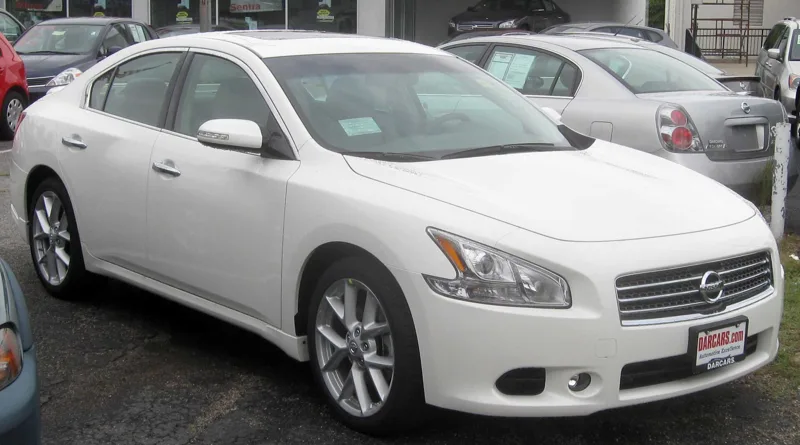
Abroad the car went by many badges. It was sold as the Maxima in North America and Australia, as the Samsung SM5 in Korea and as the Maxima QX in Europe and Russia. Models were also built under licence in Indonesia, Malaysia and Taiwan.
A mid-size Nissan that moved from rear drive to a front-drive VQ V6 and became the Infiniti I30 and I35 in North America.
Where did the Cefiro name come from?
Nissan took the name from zephyr, the Greek mythological god of the wind from the west. The company began using it in 1988, and the nameplate was officially retired in 2012.
The name was used on three main generations, and it was later reused for the Teana J31 in export markets. Nissan's Maxima codes were A34, A35 and A36, which grew out of a badge-engineered Cefiro starting with the A32.
How did the first-generation Cefiro reach buyers?
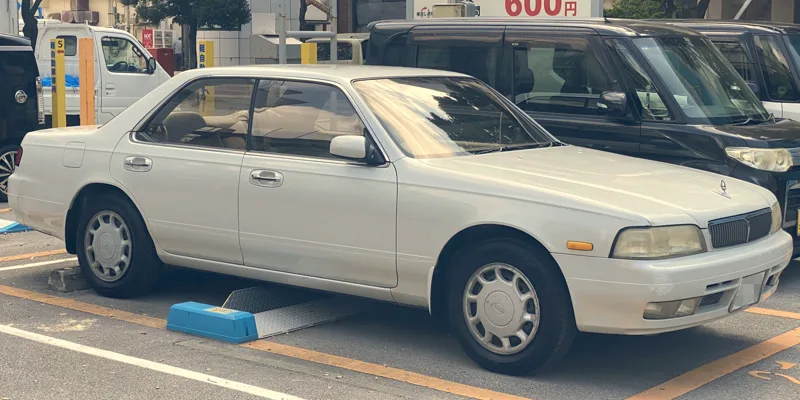
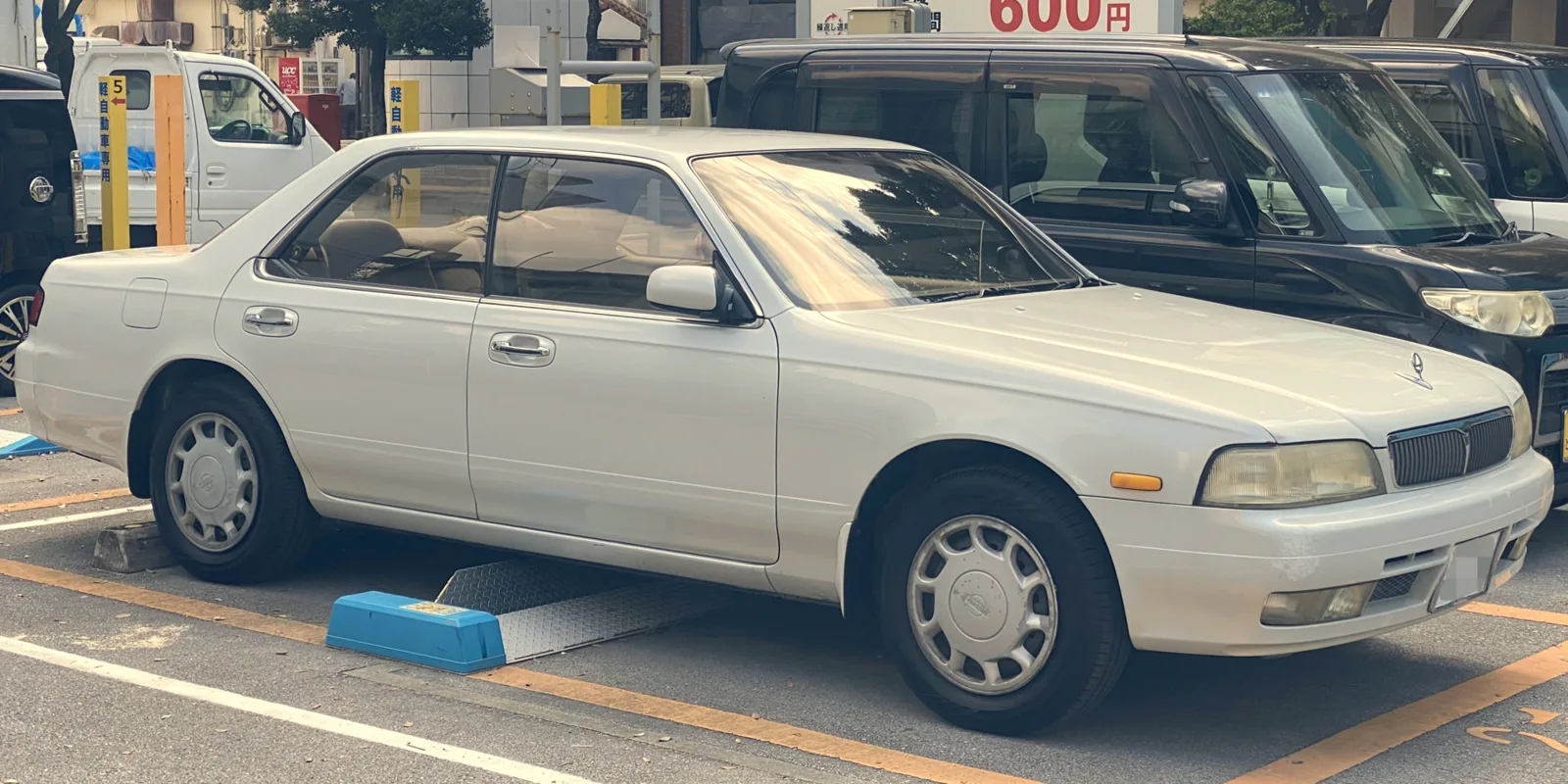
Nissan released the A31 series in Japan in September 1988. It shared its transmission, chassis, engine and suspension with the Skyline R32 and the Laurel C33, except for a diesel that was only offered in the Laurel. The ATTESA E-TS all-wheel drive system came after a mid-cycle refresh and was borrowed from the Skyline.
The Cefiro competed with the Toyota Mark II, Cresta and Chaser, which shared the X80 generation. Nissan positioned the car as a third alternative to the Laurel and Skyline, and each model went through its own dealership: the Laurel at Nissan Store, the Skyline at Nissan Prince Store and the Cefiro at Nissan Satio Store.
The A31 took the Stanza's place and matched the Cedric and Gloria in exterior size. Its model code was chosen because A30 had already been used by the Gloria of 1967 to 1971.
What suspension and drivetrain options did the A31 have?
The A31 was rear-wheel drive and offered four- and six-cylinder engines. Its suspension used MacPherson struts at the front and a semi-trailing arm at the rear, and the car was marketed to affluent married couples without children before Japan's bubble economy.
The Super Sonic Suspension, badged DUET-SS, used a sonar module under the front bumper to scan the road surface. Actuators on all four coilover struts adjusted the damping, and a switch offered Auto, Soft, Medium and Hard settings. The option also changed the steering feel and the automatic shift points.
Buyers could also order HICAS-II four-wheel steering, model code CA31, or ATTESA E-TS all-wheel drive, model code NA31. The suspension packages could be ordered separately but not combined.
How many versions of the A31 could buyers choose?
At introduction there were 810 possible combinations of engine, suspension, transmission and interior, and the specification sheet on the inside of the centre armrest lid recorded each car's choices. The Partner Comfort Seat, which tilted the top of the front passenger seat forward, was also available.
Japanese cars initially used single-cam and twin-cam RB20 inline-six engines, with a turbocharged RB20DET. The base trims were Town Ride with the RB20E, Touring with the RB20DE and Cruising with the RB20DET, and the prefixes Comfort and Sports marked the suspension and steering options.
A special Autech Version was launched in January 1990 on the Sports Cruising model. Its engine tuning raised output to 225 PS (165 kW; 222 hp), and it added PIAA 15-inch alloy wheels and a Connolly leather interior.
How did the A31 change through its life?
Nissan facelifted the A31 in August 1990, revising the bumper, grille, taillights, centre console and cabin fabrics. The Comfort and Sports prefixes were dropped, the Touring trim gained a 5-speed automatic, and the ATTESA E-TS system became optional on the turbocharged Cruising.
A further facelift arrived in May 1992, and the trim names were simplified to VL, SE and VE, with SE-T and SE-4 on the turbo. The RB25DE 2.5-litre engine was introduced for the 25SE, and the 2.5 cars were given the codes EA31 and ECA31.
Export cars took a different path. In the Caribbean, Latin America, Turkey and the Gulf states the A31 was sold as the Laurel Altima, with carburetted 2.0 and 2.4-litre engines. In much of Southeast Asia the Cefiro name was kept, with three inline-six engines.
Why was the Cefiro popular with drifters?
The A31 became popular in motorsport drifting, where its rear-wheel drive layout and six-cylinder engines suited the sport.
Why did the second generation switch to front-wheel drive?
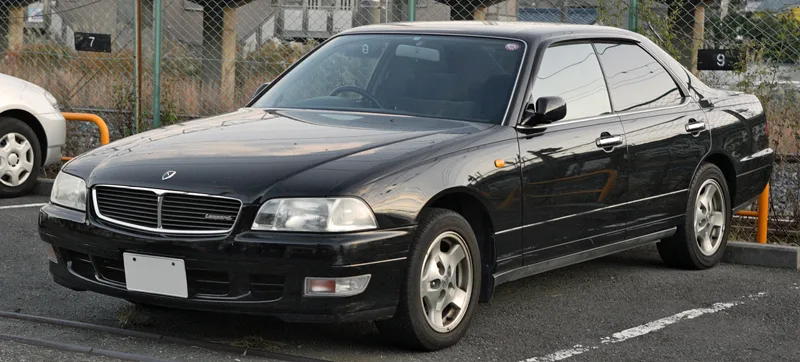
Nissan debuted the A32 for the Japanese market in August 1994. It was front-wheel drive, which changed the character of the car, and it used Nissan's VQ six-cylinder engines. Four-wheel drive was not offered on this generation or the next.
Exported A32s often carried the Maxima badge, and in Europe the car was sold as the Maxima QX. The 2.0 and 3.0-litre engines went to export markets, while the mid-range 2.5 stayed at home.
A light facelift in January 1997 added multi-reflector head and taillights, with black-backed headlamps on the sportier versions. ABS and airbags became standard across the home-market range.
How did the A32 spread across Asia?
In Taiwan the A32 was built by Yulon under the Nissan brand. Most Southeast Asian countries adopted the Cefiro name, and in South Korea the car was badge-engineered as the Renault Samsung SM5.
In the Philippines the A32 replaced the A31 in 1997 with a 2.0-litre VQ20DE V6 and a 4-speed automatic. The Japanese market also received a wagon from June 1997, which was sold as an alternative to the Toyota Mark II Qualis.
New trims kept the car fresh. The Brougham VIP arrived in 2000, the Elite followed by 2002 and the 300EX came by 2004 with a 3.0-litre VQ30DE V6. The wagon, coded WA32, was built until August 2000.
What was the Infiniti I30?
Infiniti launched the Cefiro in North America as the I30 for the 1996 model year. Production started at Oppama in Japan, where the Maxima was built, on June 27, 1995. The I30 replaced the J30 as the brand's best seller and sat between the Q45 and the Primera-based G20.
The I30 used the 3.0-litre VQ30DE V6 producing 190 hp (142 kW), shared with the North American Maxima. Its rear badge combined a cursive letter I with a serif 30, so that the emblem could not be read as 130. The sporty I30t gained five-spoke alloy wheels and firmer suspension.
A small number of early I30s had five-speed manual transmissions, many with a viscous limited-slip differential. An in-dash hands-free car phone was also an option.
How did the 2000 Infiniti I30 differ from the Maxima?
For the 2000 model year the I30 gained power, rising to 227 hp (169 kW), and the manual gearbox was dropped in North America. Compared with the Maxima, it had a different front and rear body, gauge cluster and dashboard design, a foot-pedal parking brake and standard driver's seat memory.
The I30t came with HID xenon headlamps, a viscous limited-slip differential, 17-inch wheels and a Sport Package with a decklid-mounted spoiler and side-sill extensions. The spoiler was also a dealer accessory on the non-Touring car.
What was the third-generation A33?
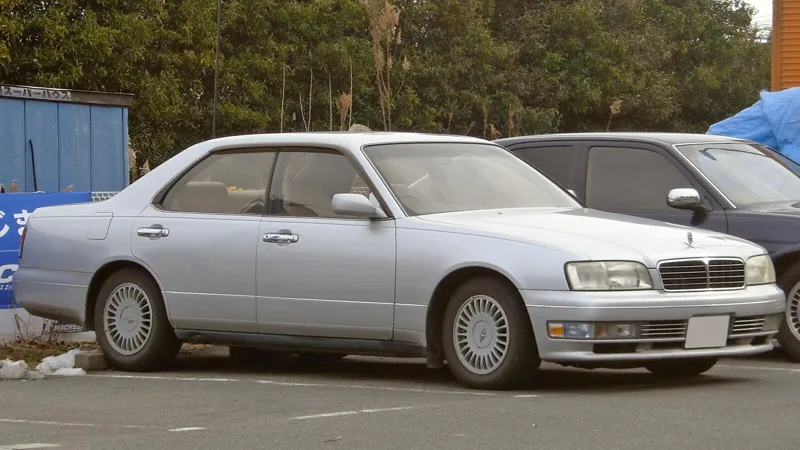
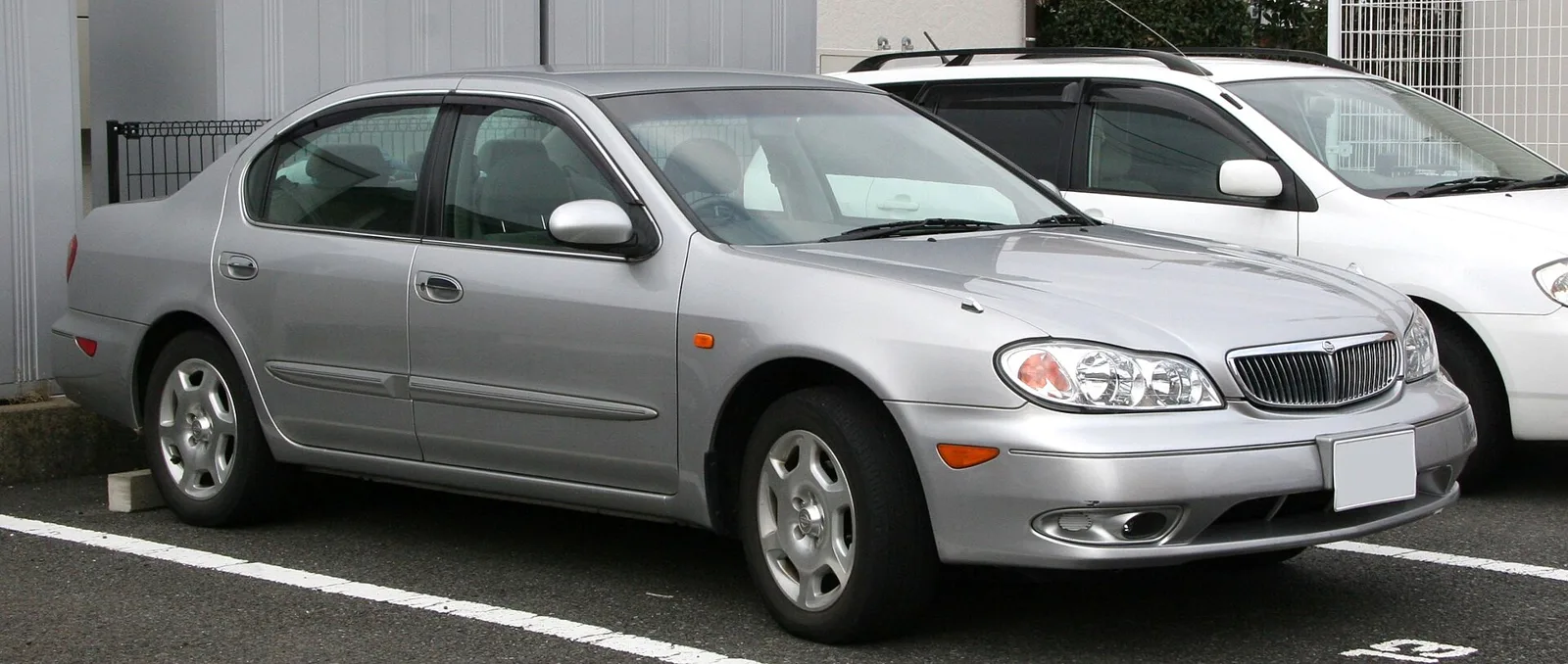
Nissan released the A33 in December 1998, initially as the Japanese-market Cefiro, and later sold it worldwide with several badges. In North America it was the Infiniti I30 and then the I35.
In Japan the A33 came as 2.0 and 2.5 Excimo, Excimo G and S Touring models, and as the 3.0 Brougham VIP. A five-speed manual was offered on the 2.0 Excimo and the 2.0 S Touring. A January 2001 facelift brought the larger export bumpers.
How did the A33 sell outside Japan?
In Australia the A33 was sold as the Maxima from 1999 to 2003, in S, ST and Ti trims, all with the 3.0-litre engine. In Europe it was the Maxima QX with 2.0 and 3.0 V6 engines producing 140 PS (103 kW) and 200 PS (147 kW).
In most Southeast Asian countries the A33 was built until 2008 under licence in Kuala Lumpur, and Pars Khodro made it in Iran from 2002 to 2012 under the Maxima name. In Indonesia the car was sold as the Infiniti I30 from 2000 to 2002, and then as the Cefiro 3.0 Brougham VIP until 2003.
What was the Infiniti I35?
Nissan updated the I30 for 2002 as the I35, its new model for the Infiniti luxury division. Sales began on September 12, 2001, at 150 retailers across the United States, behind an estimated $40 million advertising campaign that began in September 2001.
The I35 used a 3.5-litre VQ35DE V6 producing 255 hp (190 kW), mated to a four-speed automatic. Tyres grew from 16 inch to 17 inch, and the turning radius increased from 35.4 to 40.0 feet. Its drag coefficient was .31, or .30 with the rear spoiler.
Standard equipment included leather seats, an eight-way power driver's seat and a Bose 200-watt, 7-speaker audio system. Its trunk offered 14.9 cubic feet, and the interior passenger volume was 120 cubic feet.
How was the I35 advertised?
The I35 campaign used print, radio, newspaper, direct mail and internet advertising, plus a television commercial called Hummingbird by TBWA\Chiat\Day. It showed the car on a country road beside a hummingbird, with the action slowing and speeding up again.
The narration was voiced by the actress Natasha Richardson, who told viewers not to blink. The tagline read More Power, More Grace, More I, and the advert ran as the car was introduced.
What are the key specifications?
| Version | Engine | Output |
|---|---|---|
| Autech Version (1990) | Tuned RB20 six-cylinder | 225 PS (165 kW; 222 hp) |
| Laurel Altima, CA20S | 2.0 L single-cam carburetted four | 90 PS (66 kW; 89 hp) |
| Laurel Altima, RB24S | 2.4 L single-cam carburetted six | 126 PS (93 kW; 124 hp) |
| Infiniti I30 (1996) | 3.0 L VQ30DE V6 | 190 hp (142 kW) |
| Infiniti I30 (2000) | 3.0 L VQ30DE V6 | 227 hp (169 kW) |
| Maxima QX, Europe | 2.0 L V6 | 140 PS (103 kW) |
| Maxima QX, Europe | 3.0 L V6 | 200 PS (147 kW) |
| Infiniti I35 (2002) | 3.5 L VQ35DE V6 | 255 hp (190 kW) |
How is the Cefiro remembered?
The Cefiro is remembered as a car that moved through three generations, from a rear-drive sedan to a front-drive VQ car that became the Infiniti I30 and I35 in North America. Its VQ engines were named Ward's 10 Best Engines for more than ten years running.
Production stopped in Japan in 2003, and the Teana J31 later carried the name in export markets. The last plant to use it was Ghandhara Nissan in Karachi, which handed over to the Teana J32 in late 2012.