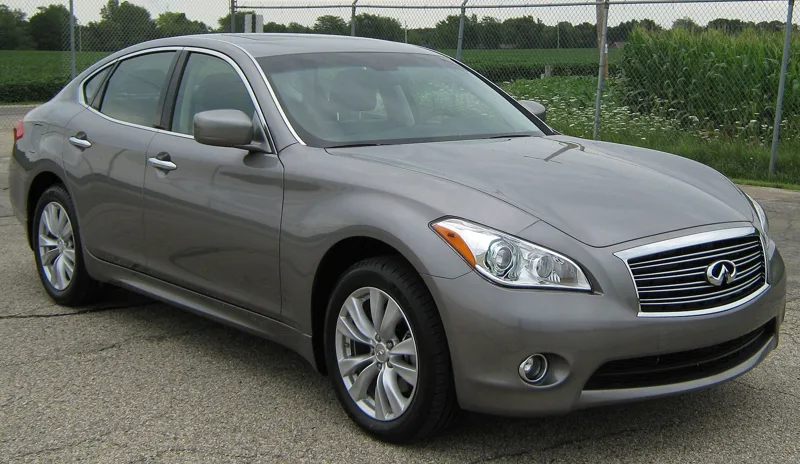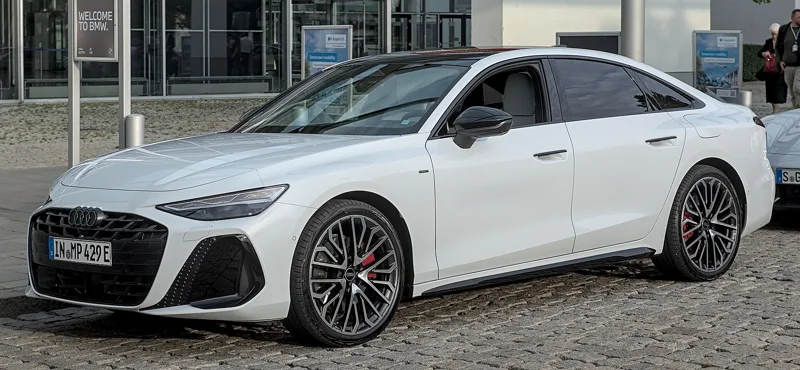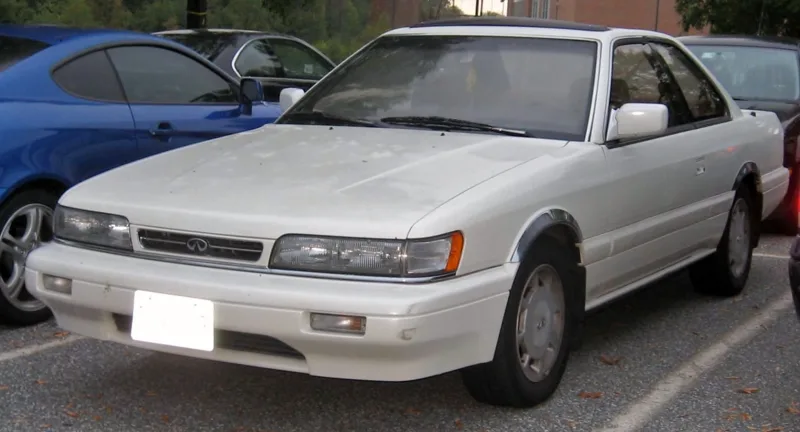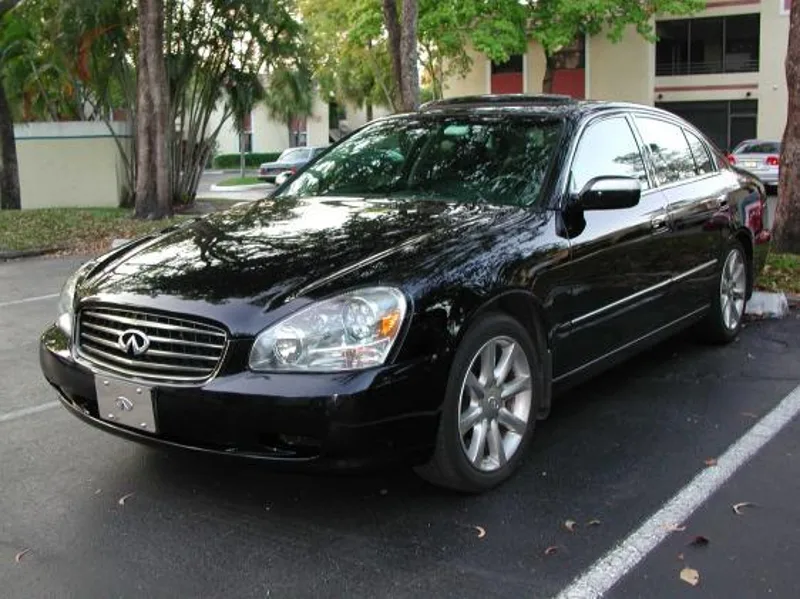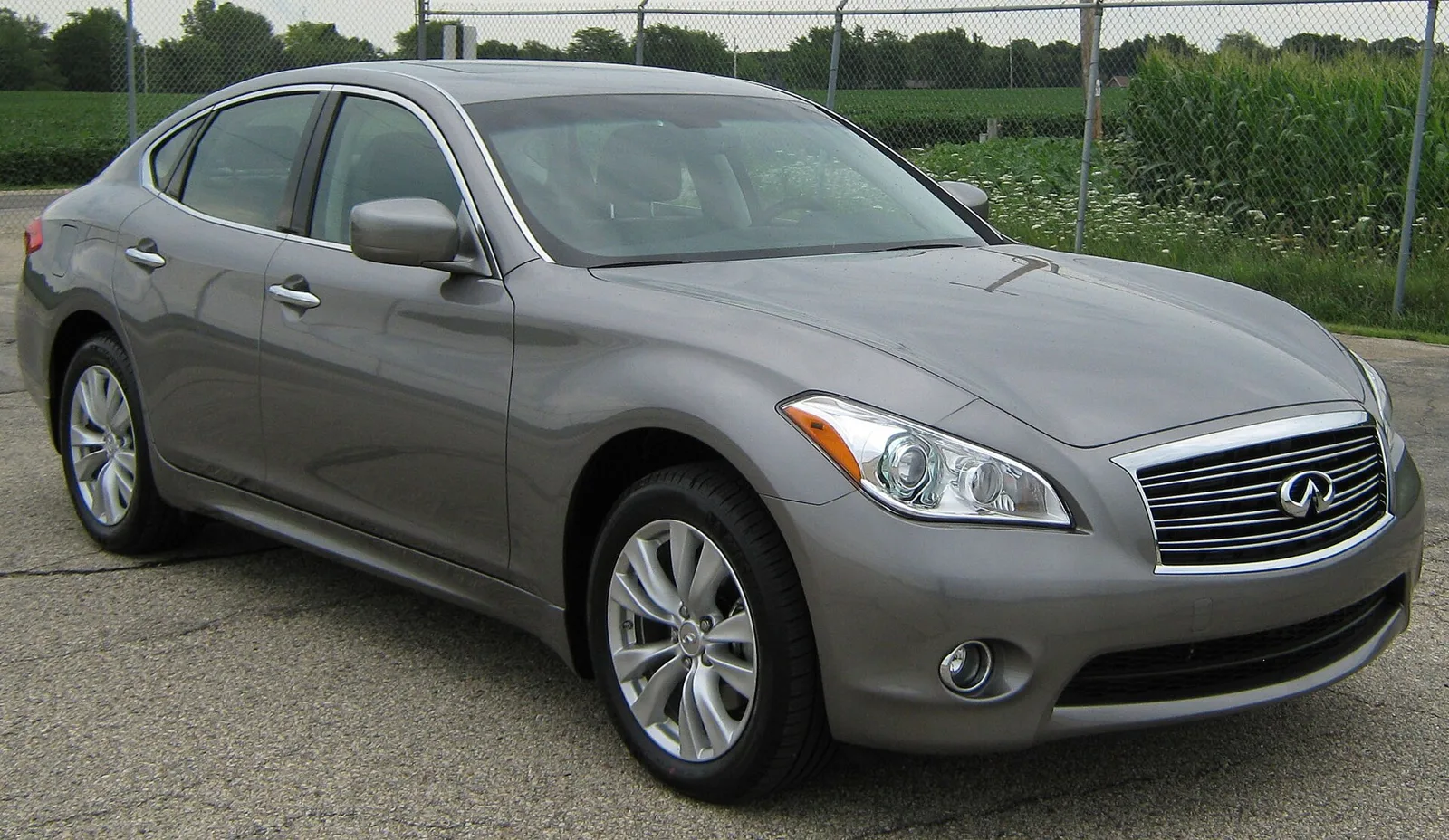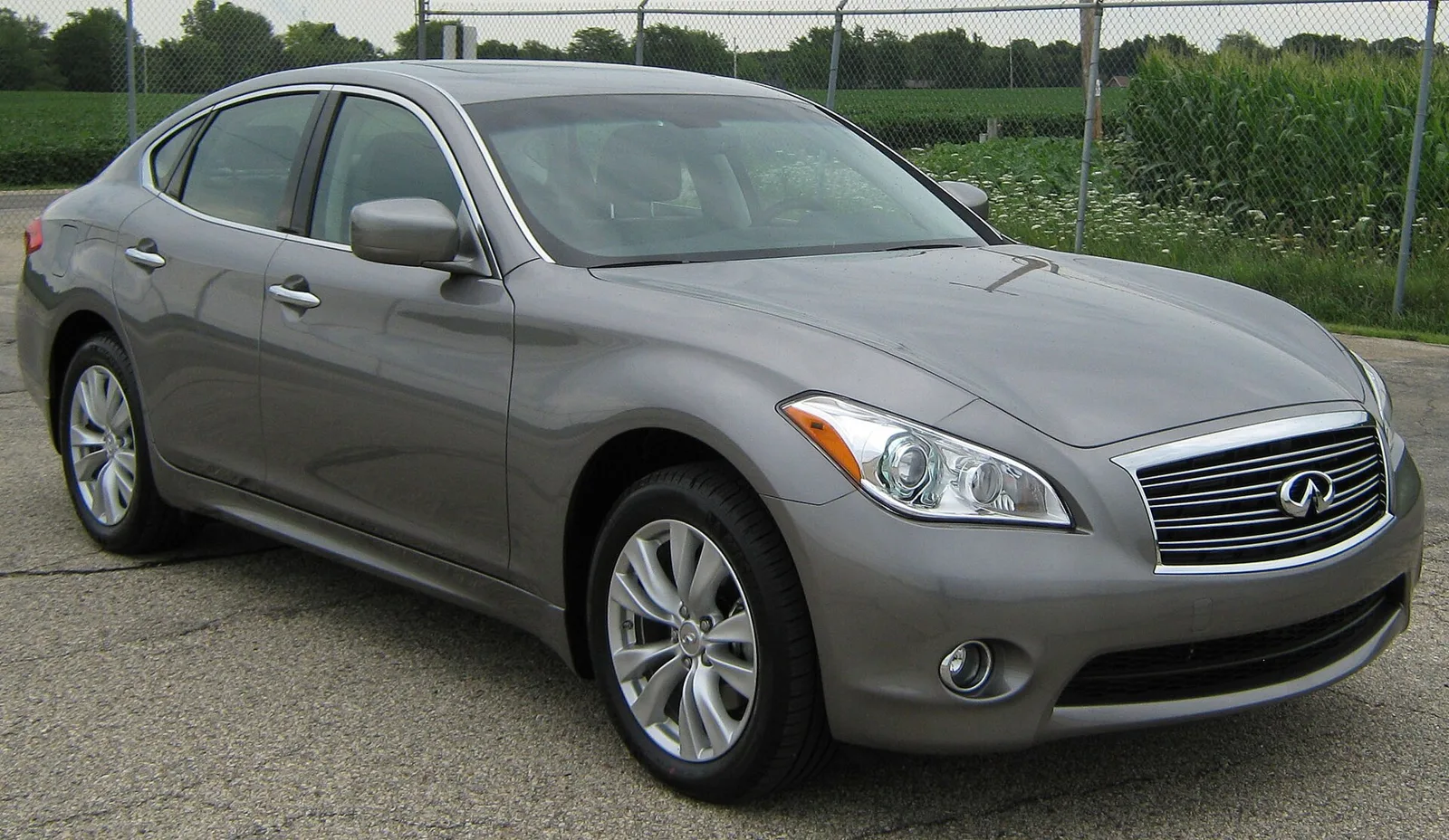
The Infiniti M and the Lexus GS were both mid-size luxury sedans from Japanese divisions, but the M grew from rebadged Nissan models and the GS from the Toyota Aristo.
The Infiniti M is a mid-size luxury car line from Nissan's Infiniti division, first introduced as the M30 coupe and convertible from 1989 to 1992 and later sold as the Q70. The Lexus GS is an executive car made by Toyota and sold by Lexus in four generations, launched in Japan as the Toyota Aristo in 1991.
The Infiniti M and the Lexus GS were both mid-size luxury sedans from Japanese divisions. The M came from Nissan's Infiniti division, while the GS was Toyota's executive car sold by Lexus, and each was offered in more than one generation.
Their roots differ. The M's first car was a coupe rebadged from a Japanese Nissan model, while the GS began as the Toyota Aristo in 1991. The comparison therefore sets a Nissan-derived luxury line against a car built from the start for Toyota's luxury division.
Why were the M and GS set against each other?
The M is Infiniti's mid-size luxury line from Nissan, and the Q70 name was adopted from 2013. The Lexus GS is an executive car sold in four generations and positioned between the compact IS and the flagship LS. Both sit in the executive segment, which is why they meet here.
The M's history runs through several rebadged Nissan models. The M30 coupe and convertible from 1989 to 1992 were rebadged from the Japanese Nissan Leopard, and the M45 sedan of 2002 was rebadged from the Japanese Nissan Gloria.
The M35 and M45 of 2005 to 2010 were based on the Japanese Nissan Fuga, and the 2005 M sat on Nissan's FM platform family. The GS's place in the range was set by Lexus, which positioned it between the IS and the LS.
The two brands began with a similar shortcut. The M's early years rested on Nissan's own models, and the GS's early years rested on the Toyota Aristo sold in Japan, so each luxury line was built on a model that already existed in its maker's home market.
The M began as a coupe rebadged from a Japanese Nissan model, while the GS was built from the start as Toyota's executive car and first sold in Japan as the Aristo.
How did the two lines come to market?
The M30 coupe and convertible ran from 1989 to 1992 and were rebadged from the Japanese Nissan Leopard. The GS launched in 1991 in Japan as the Toyota Aristo and reached buyers outside Japan from February 1993, so the two cars reached export markets within a few years of each other.
The M45 sedan of 2002 was a rebadged Japanese Gloria, and the saloon range evolved through the 2005 and 2010 generations. The record gives about 17,000 cars for the M30, which is its only production total.
The GS's export launch in February 1993 kept the Aristo name in Japan. The two stories show how each brand used Japanese models as a base for its luxury export range, although the M was built on Nissan's own platforms and the GS on Toyota's.
Both lines grew through several generations, but the record describes the M's changes more as platform moves than as styling moves. The GS's changes are reported more as styling and rigidity, so the two histories are told through different lenses.
How did the two cars differ in design?
The M30 used MacPherson struts at the front and semi-trailing arms at the rear, with Nissan's Sonar Suspension II giving comfort and sport modes. The first GS had a drag coefficient of Cd=0.31, and the GS's third generation introduced the L-finesse design.
The M30's interior was criticised as outdated and cramped, while the GS 300 offered walnut trim and leather seating. The 2005 M was 177 mm shorter than the last Q45 but had a wheelbase 30 mm longer.
The M45 used a cast aluminium front lower A-arm, and the 2005 M was built on a rigid version of the Nissan FM platform. The 2010 Y51 M was designed by Hideo Komuro, the record's named designer for that generation.
The M's engine and suspension changes are well documented for a model of its size, from the Sonar Suspension II to the later V8 options. The record is thinner on the GS's chassis changes, so the comparison of how each car handled over time is less even.
What engines did each car use?
The M30 used a VG30E V6 rated at 162 hp (121 kW; 164 PS) at 6000 rpm, with 180 lb-ft (244 N-m) of torque at 3500 rpm. The GS 300's first-generation 2JZ-GE straight-six produced 169 kW (227 hp), while the GS 400's 4.0-litre V8 was rated at 224 kW (300 hp).
The M45's VK45DE V8 produced 340 hp (254 kW) and 333 lb-ft (451 N-m), the largest engine the record gives for the M line. The 2005 M35 had a 3.5-litre V6 rated at 280 hp (209 kW), while the 2005 M45 had a 4.5-litre V8 at 335 hp (250 kW).
The 2009 M35's new V6 produced 303 hp (226 kW) with a 7-speed automatic, and the 2010 M56 used a VK56VD V8. The GS 430's torque reached 441 N-m (325 lb-ft), the highest GS figure the record gives.
The M30 coupe reached 0-60 mph in 9.4 seconds, and the convertible took 9.7 seconds. The GS 400's 5.7 second time is the quickest sprint figure in this comparison, although the record gives no 0-60 mph time for the 2005 M.
Engine tables tell only part of the story. The M's early V6 and its later V8s form a range, while the GS's first generation was built around a six, with a V8 added in the 400, so both lines offered a choice of power that buyers could weigh against cost.
How did sales and reception compare?
The M30's production was about 17,000 cars, and it started at US$23,500 with no factory options. The GS 300 sold 19,164 units in 1993, and its second generation sold 30,622 vehicles in its first year, which gives the GS the stronger sales figures in the record.
Infiniti's G37 accounted for half of marque sales in 2009. The record says that only about 10,000 of the 81,000 Infiniti cars sold that year were M models, so the M was a minority part of its own brand.
The M35x won Consumer Reports' top luxury car pick for 2006, while Motor Trend named the GS its Import Car of the Year for 1998. The GS also made Car and Driver's Ten Best list from 1998 to 2000.
Sales and reception paint a picture of two cars with different reputations. The M's reception is linked to its volume position inside Infiniti, while the GS's reception is linked to magazine awards and its place in Lexus's line-up.
Did either car have a motorsport record?
The record gives no motorsport record for the M and none for the GS. Both cars were road-focused luxury sedans, so this section cannot compare any competition results between them.
The M's performance story is told through its engines and its 0-60 mph times, and the GS's through the GS 400 and its V8. Neither car has a race result in the material used here.
Because neither car has a race history, the comparison leans on road performance and on the features each car carried.
Sales records and engine tables both show the M's narrower role inside Infiniti, while the GS's sales and engine detail show it as a steady executive model for Lexus.
What features set the two cars apart?
The 2010 M offered a driving mode selector with Standard, Sport, Eco and Snow settings, along with Active Noise Control to reduce exhaust noise inside and Kayaba double-piston shock absorbers. Lane Departure Prevention used a camera above the mirror, which was a driver-assistance feature of the period.
The GS 300 had walnut trim and leather seating, and buyers could add a moonroof and a 12-CD changer. The record gives no comparable detail on the GS's driving modes or driver assistance.
The feature lists show different priorities. The M's 2010 model focused on driving modes and assistance, while the GS 300 of the 1990s focused on interior trim and options.
Motorsport is not a factor for either car, so the feature lists and the specifications carry most of the weight in the verdict.
Feature lists and specifications tell a reader what each car offered, but not how it was used. The M's driving modes and the GS's trim options are the record's clearest evidence of how each maker expected its buyer to use the car.
How do the specifications compare?
| Specification | Infiniti M (M30 coupe, first) | Lexus GS (first generation) |
|---|---|---|
| Years | 1989 to 1992 (M30) | 1991 in Japan; export from 1993 |
| Origin | rebadged Japanese Nissan Leopard (F31) | Toyota Aristo in Japan |
| Engine | VG30E V6, 162 hp (121 kW; 164 PS) at 6000 rpm | 2JZ-GE straight-six, 169 kW (227 hp) |
| Torque | 180 lb-ft (244 N-m) at 3500 rpm | 285 N-m (210 lb-ft), GS 300 |
| 0-60 mph | 9.4 seconds (coupe); 9.7 seconds (convertible) | no figure given for the first GS |
| Suspension | Sonar Suspension II; MacPherson front, semi-trailing arms rear | no figure given |
| Larger engine | 2005 M45, 4.5-litre V8, 335 hp (250 kW) | GS 400, 4.0-litre V8, 224 kW (300 hp) |
| Production | about 17,000 cars | no figure given |
| Price | US$23,500 start, no factory options | US$38,000 GS 300 debut |
Read down the table and the M's early coupe figures sit against a GS with a larger export story. The M's later V8s and the GS 400's V8 show two V8 routes, one from Nissan and one from Toyota, with different output and different timing.
Which buyer suits each car?
The Infiniti M suits a buyer who wants a Nissan-based luxury saloon with a choice of V6 and V8 power in its later generations and modern driver aids. The Lexus GS suits a buyer who wants an executive sedan from Toyota's luxury division, with a V8 option in the GS 400 and a long run of four generations.
Buyers who value a varied engine line-up will find the M's range more varied, with the 4.5-litre V8 and the M56's V8, while buyers after the GS's sporting profile will look to the GS 400.
The record gives no current values for either car, so buyers should check present-day prices and condition before comparing purchase costs.